Kind of picture · Drawn & painted
Graphic-design styles led by drawing and painting
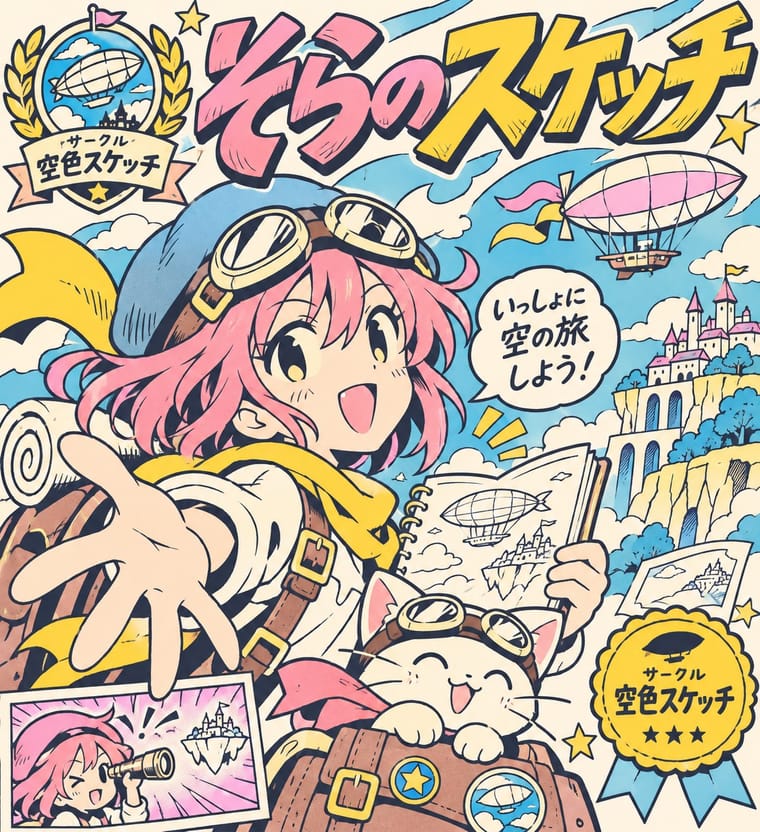
Styles whose pictures are made by hand or drawn on a screen: line drawing, painting, flat vector illustration, and comics and cartoons.
A style is here when one of this kind’s imagery choices defines it or is usual in it. 208 of the 416 have no other kind of picture; the rest mix it with another.
- styles
- 416
- defined by it
- 220
- with no other kind
- 208
- described so far
- 7
The choices in this kind
From the imagery facet of Stylogeny’s vocabulary, each with the styles here that make it.
-
Line illustration
227 styles
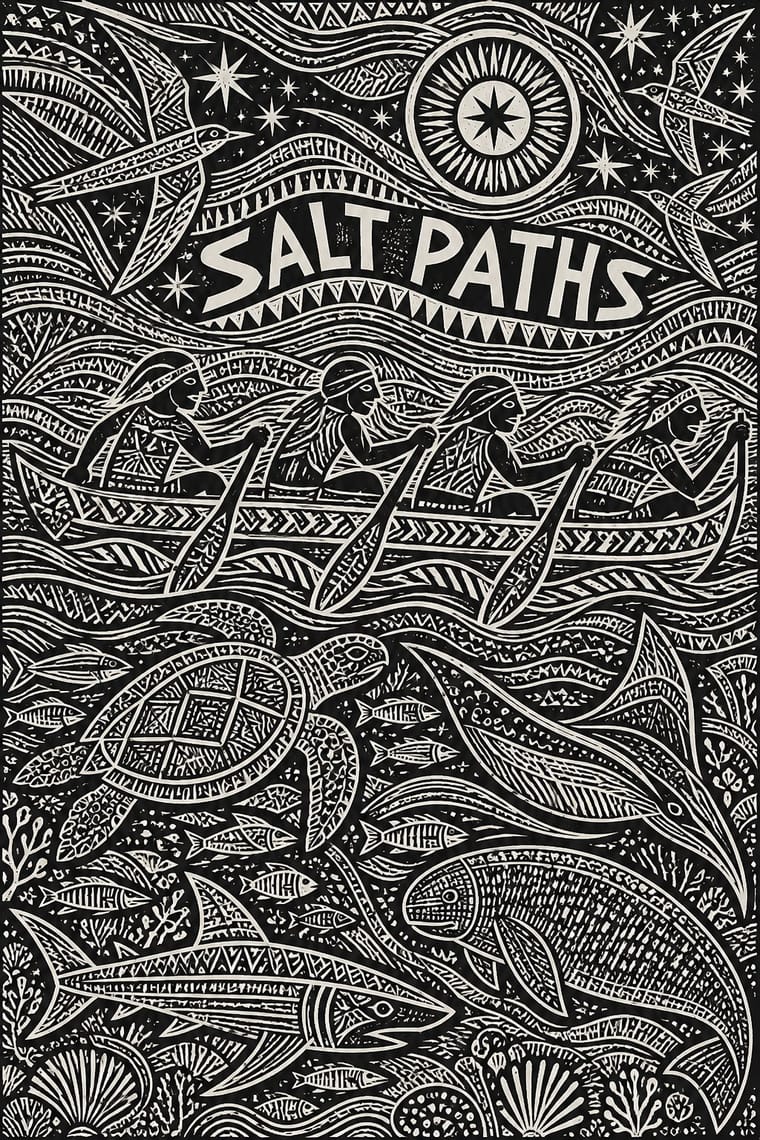
Outline drawing, engraving, pen and ink.
-
Painterly illustration
152 styles
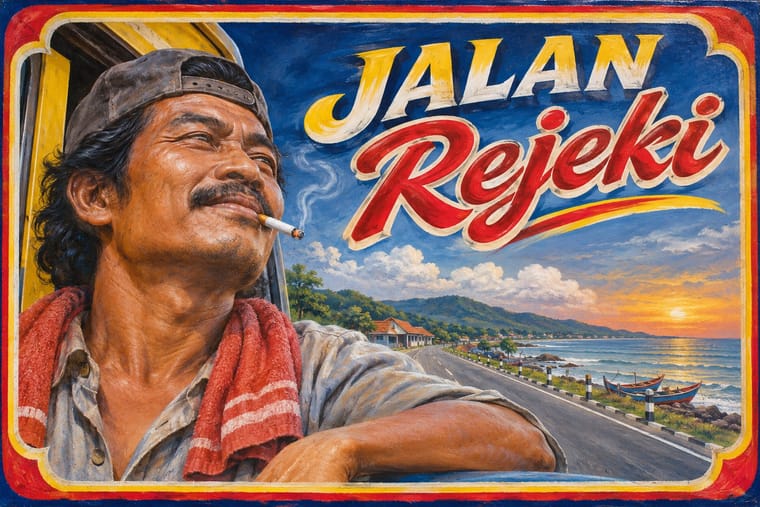
Brushed, airbrushed or painted pictures.
-
Flat vector illustration
67 styles
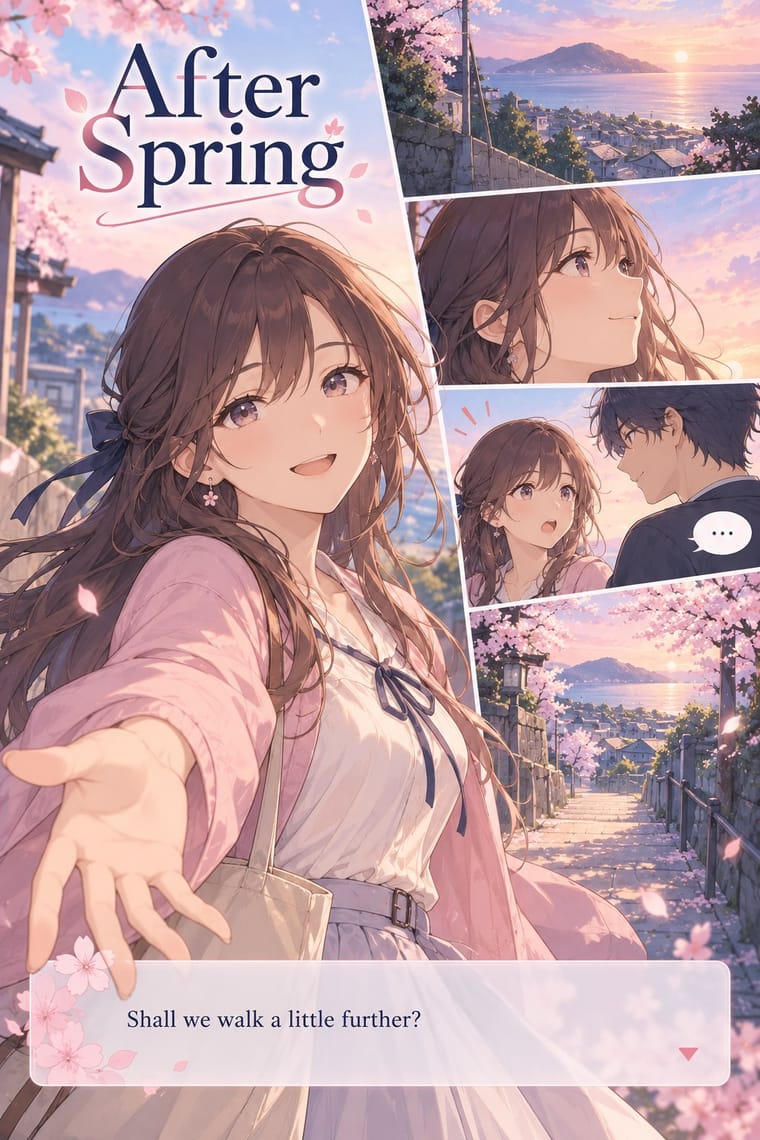
Clean shapes and geometric characters.
-
Comic & cartoon
128 styles
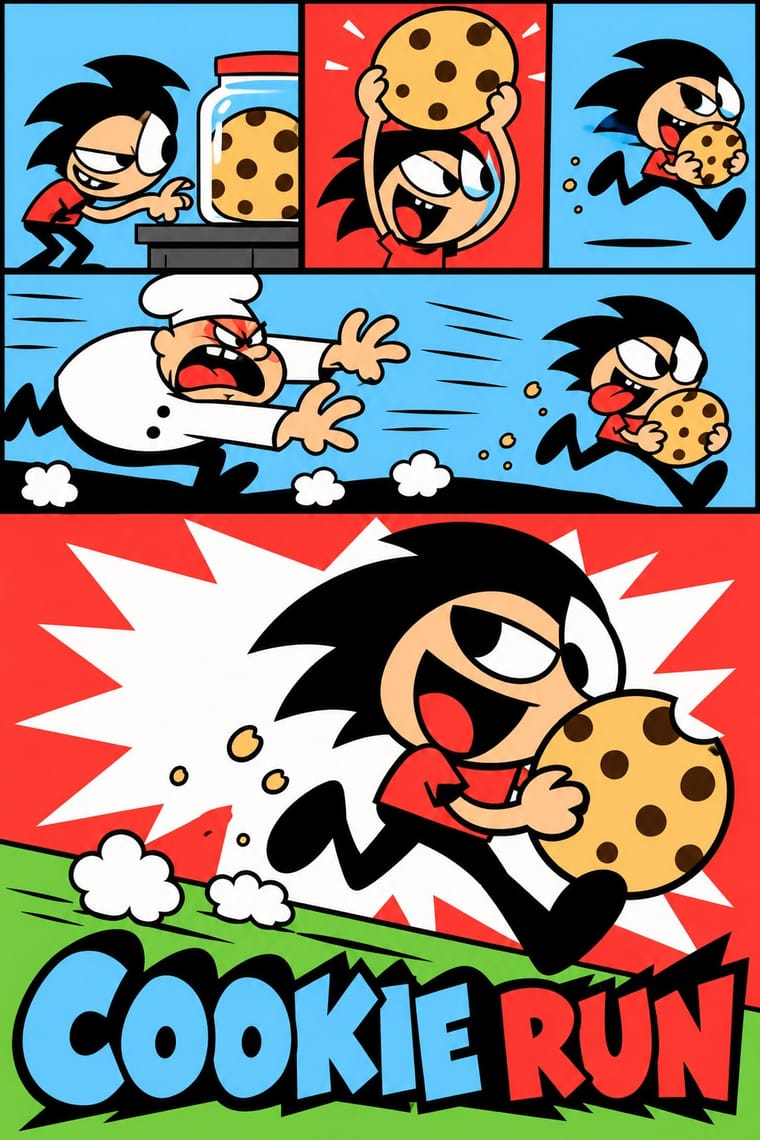
Outlines, speech balloons, character art.
What Stylogeny asks of these pictures
5 groups of questions fit this kind. The answers are researched style by style from real works: 7 of these 416 styles are described so far, and an answer shows how many of them it is recorded for. Every answer explained
- Light How are the pictures lit, and what do the shadows do?
-
- Overcast & flat daylight
- Hard, direct sun
- Golden hour
- Twilight & blue hour
- Window light
- Direct on-camera flash
- Soft studio light
- High-key 1 style
- Low-key & chiaroscuro 2 styles
- Ring light
- Backlight & rim 1 style
- Silhouette
- Raking side light
- Night & practical light
- Available light in the dark
- Coloured gels 1 style
- Warm against cool
- Uncorrected lamp colour
- Colour bounced from the surroundings
- Fog, mist & haze
- Light beams, smoke & dust
- Rain & wet surfaces
- Snow & frost
- Storm & dramatic sky
- Hard-edged shadows 2 styles
- Soft-edged shadows 1 style
- Shadowless 1 style
- Open, filled shadows
- Deep shadows 2 styles
- Black shadows 2 styles
- Coloured shadows
- Rounded, modelled form 3 styles
- Flat form 2 styles
- Cast shadows as shapes 1 style
- Patterned & dappled light
- Specular highlights & gloss 1 style
- Shaped reflections
- Coloured reflections
- Prominent catchlights
- Blown highlights
- Held highlights
- Viewpoint From where, how close and how deep is the scene seen?
-
- Eye level 5 styles
- Low angle 1 style
- High angle 1 style
- Overhead & flat lay
- Aerial & drone
- Tilted angle
- Close & intimate 4 styles
- Middle distance 7 styles
- Far & detached
- Layered depth 4 styles
- Frame within a frame
- Flattened planes 3 styles
- Horizon as divider
- Reflections & mirrors
- Pose How do people stand, turn, look and move?
-
- Standing straight
- Contrapposto & S-curve
- Wide, grounded stance 1 style
- Walking & mid-stride
- Leaning against something
- Seated upright 1 style
- Seated loosely 1 style
- Reclining & lying
- Crouching, squatting & kneeling
- Jumping & mid-air 1 style
- Shoulders square to the camera 1 style
- Three-quarter turn 3 styles
- Side-on profile 1 style
- Back to the camera
- Glance back over the shoulder
- Eyes to the lens 1 style
- Looking away 2 styles
- Eyes lowered or closed 1 style
- Looking upward 1 style
- Tilted head
- Chin down, eyes up
- Absorbed in a task 4 styles
- Relaxed & natural 1 style
- Stiff & held still
- Angular & broken lines 2 styles
- Elongated & stretched
- Fast, full-body movement
- Theatrical & acted 6 styles
- Awkward & in-between
- Neutral face
- Smiling
- Laughing
- Smouldering look
- Stern & intense 1 style
- Cute & playful faces
- Emotion shown openly 1 style
- Made with Which tool and material made the picture?
-
- Pencil & graphite 1 style
- Charcoal, chalk & crayon 1 style
- Pen & ink line 3 styles
- Brush & ink 1 style
- Marker & felt-tip
- Watercolour & wash
- Gouache & poster paint 1 style
- Oil & acrylic 2 styles
- Gold leaf & metallic paint
- Airbrush
- Spray can & stencil
- Sign & enamel paint
- Cut block
- Engraved & etched line
- Cut & torn paper
- Mosaic, tile & inlay
- Stitch, weave & dye
- Cel & flat animation paint
- Pixel by pixel
- Vector drawing
- Digital painting 2 styles
- 3D modelling & render 2 styles
- Generated by code or a model
- Figures How are people and creatures drawn?
-
- Lifelike proportions 2 styles
- Idealised & heroic 1 style
- Elongated & elegant 1 style
- Caricature 3 styles
- Cute & childlike proportions 1 style
- Manga & anime conventions 2 styles
- Naive & untrained
- Flat, frontal & hieratic 1 style
- Built from geometric shapes
- Silhouette figures
- Faceless & simplified features
- Grotesque & monstrous 3 styles
- Animals & hybrids as characters
- Stock type & fixed likeness
Styles defined by it 220
One of this kind’s choices is among those that make the style.
- Hebrew Micrography A Jewish scribal art in which lines of minute Hebrew script, usually the Masoretic notes that guard the biblical text, are written so that the line itself draws: interlaced frames and star rosettes on full carpet pages, and animals, knights, fish and grotesques in the margins.
- Jain Manuscript Painting (Kalpa Sutra) Illustrated Jain scriptures of western India, above all the Kalpa Sutra on the lives of Parshvanatha and Mahavira.
-
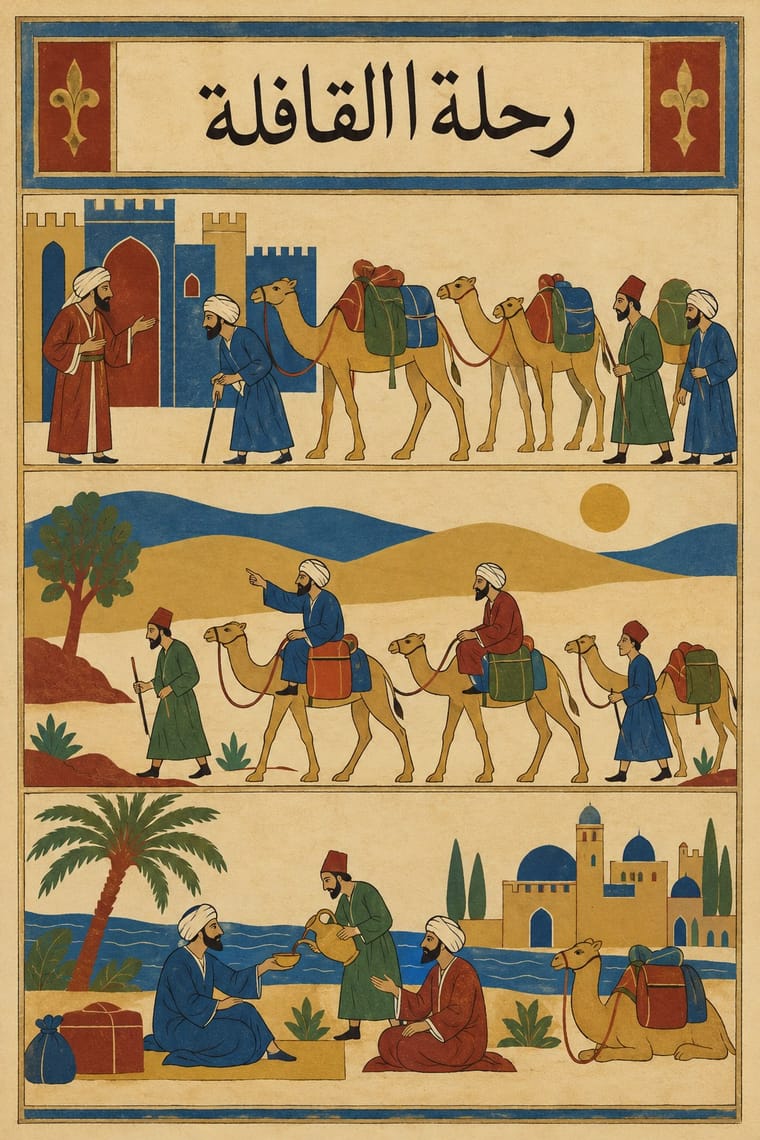
Baghdad School of Arab Book Painting (Maqamat Illustration) Illustrated copies of al-Hariri's satirical Maqamat made in Iraq, Syria and Egypt from about 1200 to the 1330s.
-
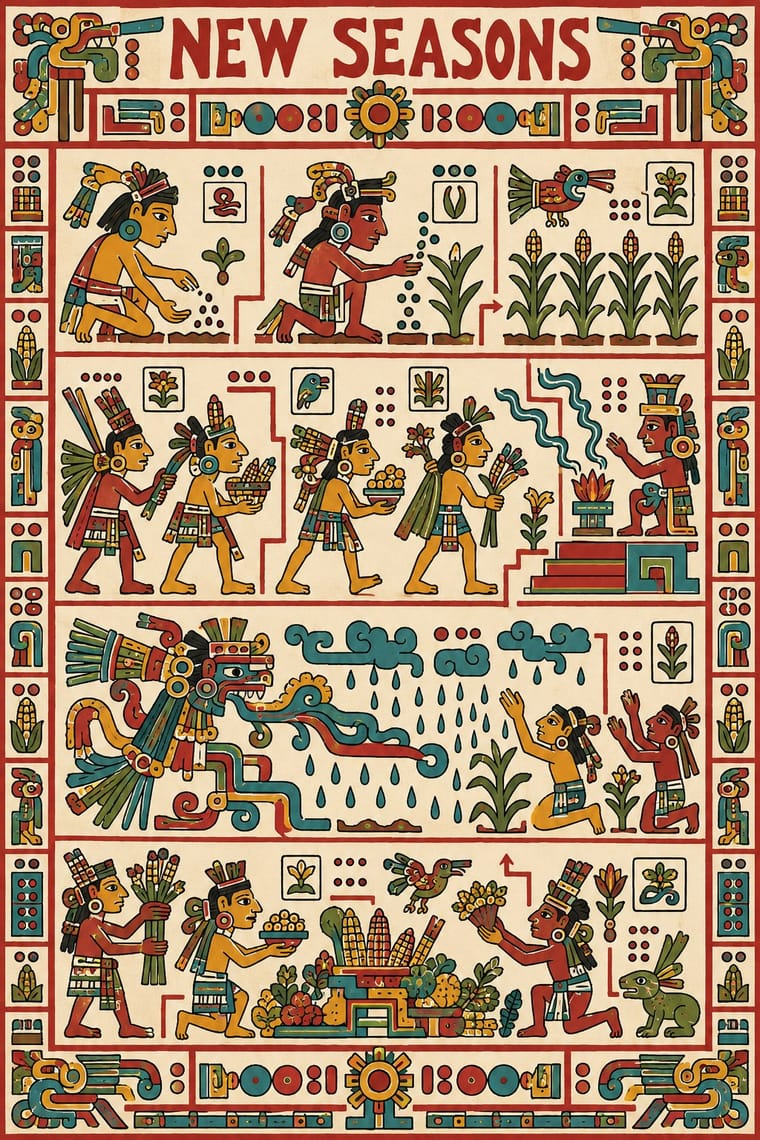
Mixteca-Puebla Codex Painting The painted screenfold books of Postclassic southern and central Mexico (not the Maya codices): long strips of gesso-coated deerskin, folded like a screen and painted on both sides.
- Gothic Book of Hours (Illuminated Devotional Book) A devotional page system for private Christian prayer: compact Gothic writing, graded painted initials, framed miniatures and ornamented margins organise a reader's progress through the hours.
-
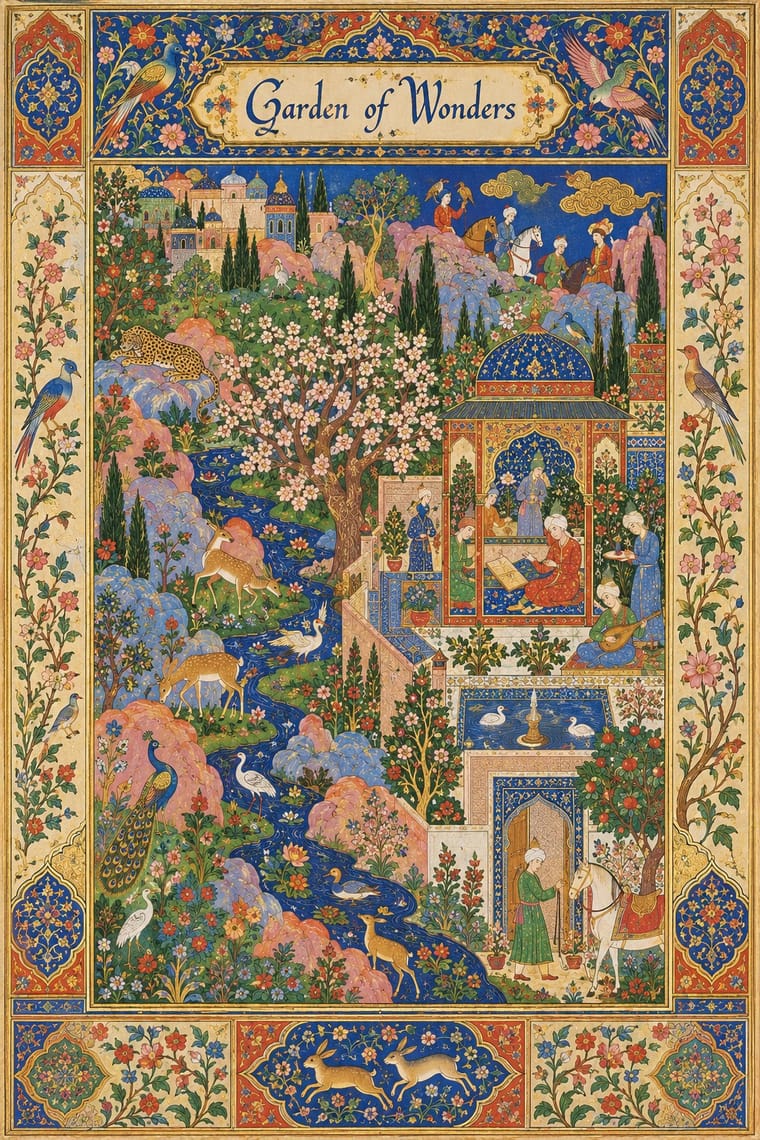
Persian Miniature (Ilkhanid, Timurid and Safavid Book Painting) The court book painting of Iran and Timurid Herat, formed in Mongol Tabriz from Islamic, Byzantine and Chinese models: from Rashid al-Din's Jamiʿ al-tawarikh (1314) and the Great Mongol Shahnama to Behzad's Herat and the Shahnama of Shah Tahmasp, ending in the album pages of Safavid Isfahan.
-
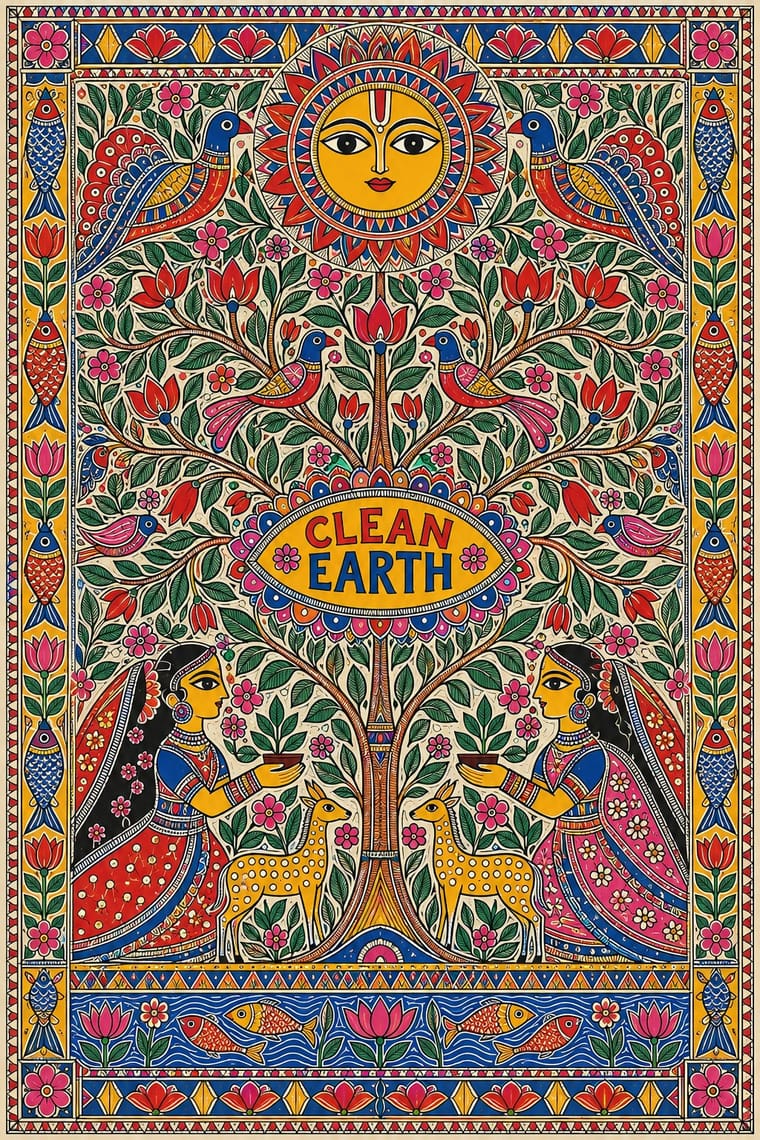
Mithila (Madhubani) Painting Women's ritual wall and floor painting from Mithila in north Bihar and Nepal's Terai, attested from at least the 14th century, seen by W.
-
Emblem Book (Motto, Picture & Epigram) A European book genre in which, from Chrestien Wechel's Paris edition of 1534 on, every page or opening repeats one fixed unit: a short motto, an allegorical picture and an explanatory verse, which only together yield a moral, amorous or religious meaning.
-
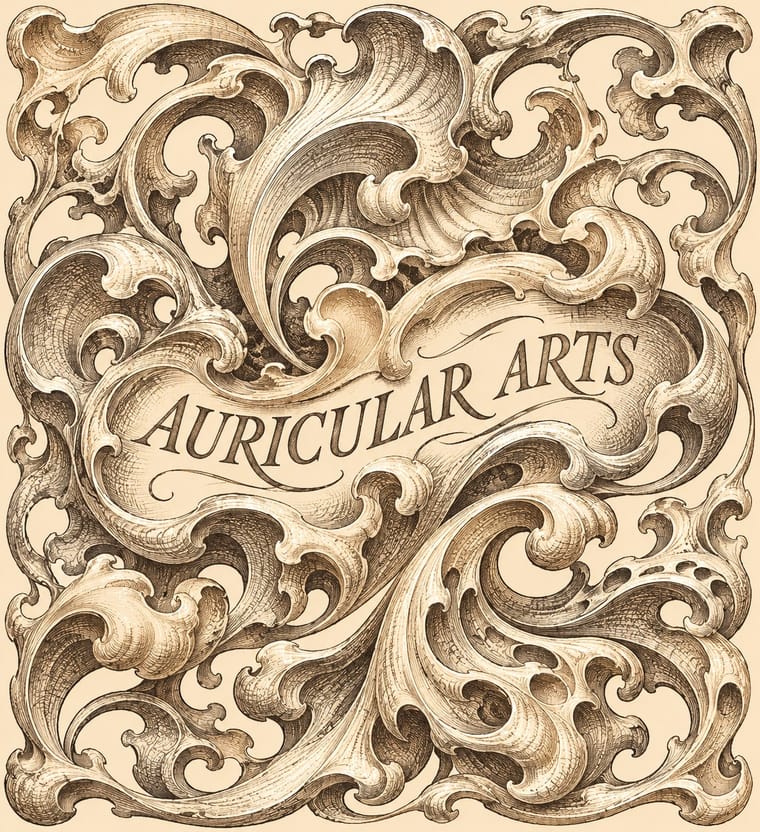
Auricular Ornament (Lobate Style) A northern European ornamental style of the early 17th century whose soft, abstract relief forms resemble molten metal or the folds of an ear.
-
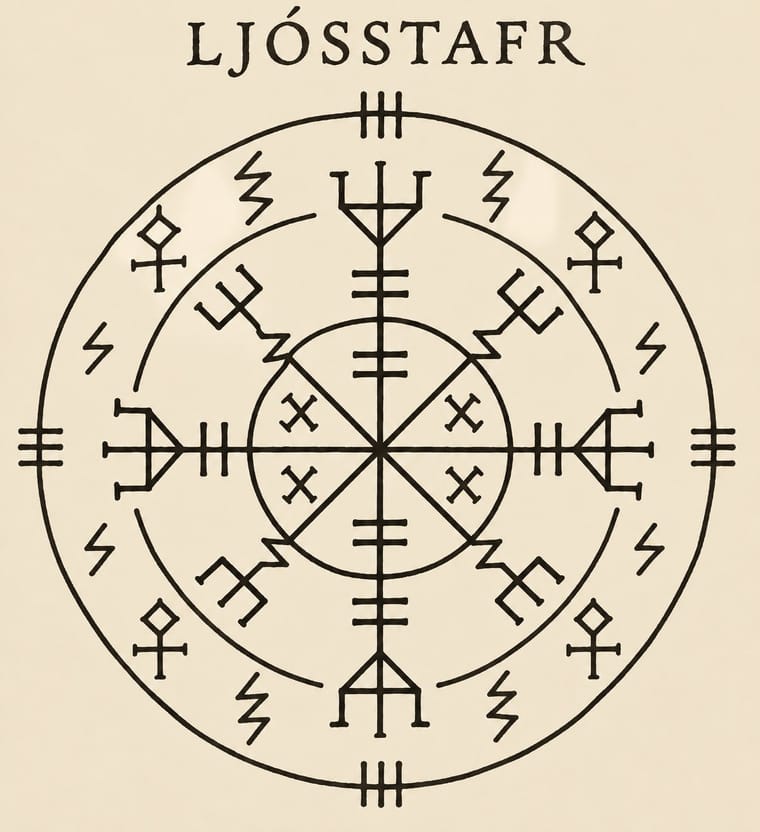
Icelandic Magical Staves (Galdrastafir) Single-line sigils drawn in ink in Icelandic grimoires, each with a named purpose: the Ægishjálmur (helm of awe) for fear and victory, the Vegvísir for finding the way, the Lukkustafir for luck.
-
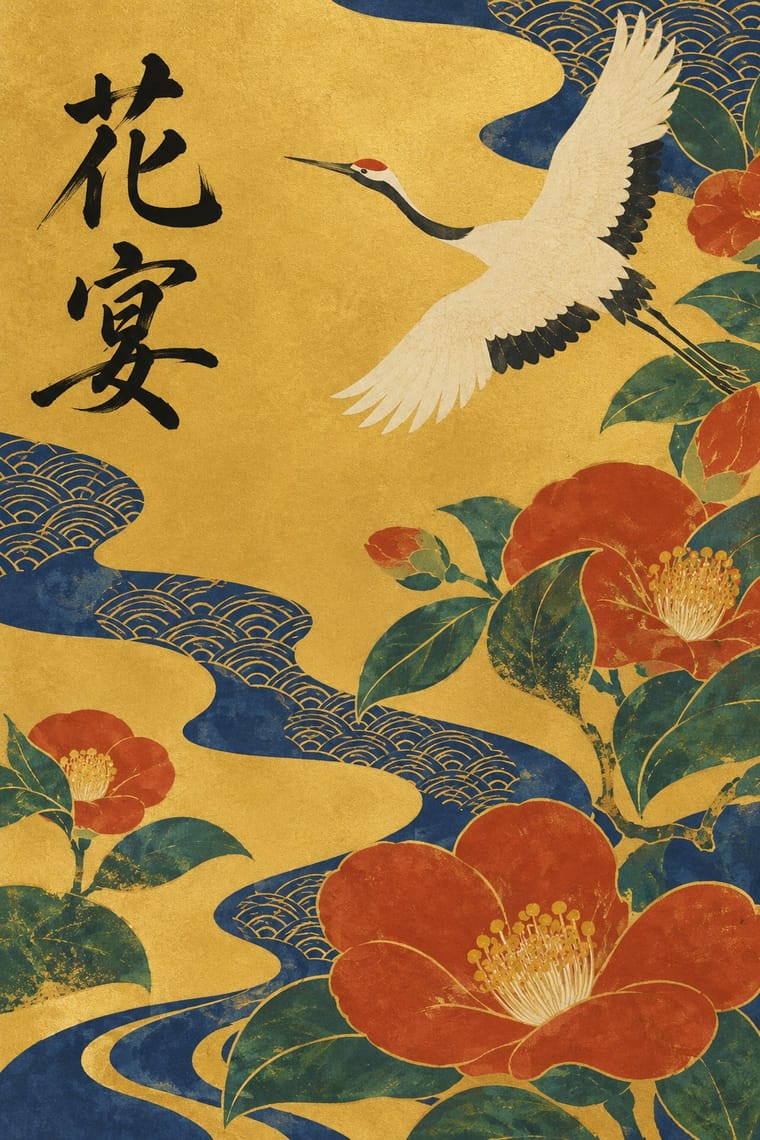
Rinpa & Saga-bon A Kyoto school of decorative design that revived the poetry and court painting of the Heian period, begun around 1600 by the calligrapher Hon'ami Kōetsu and the painter Tawaraya Sōtatsu and carried on less by teaching than by admiration across generations: Ogata Kōrin, Sakai Hōitsu, Kamisaka Sekka.
-
Ten Bamboo Studio Colour Woodblock (Douban & Gonghua) A kind of colour woodblock printing begun in late-Ming Nanjing, made so that a print looks like a brush painting.
-
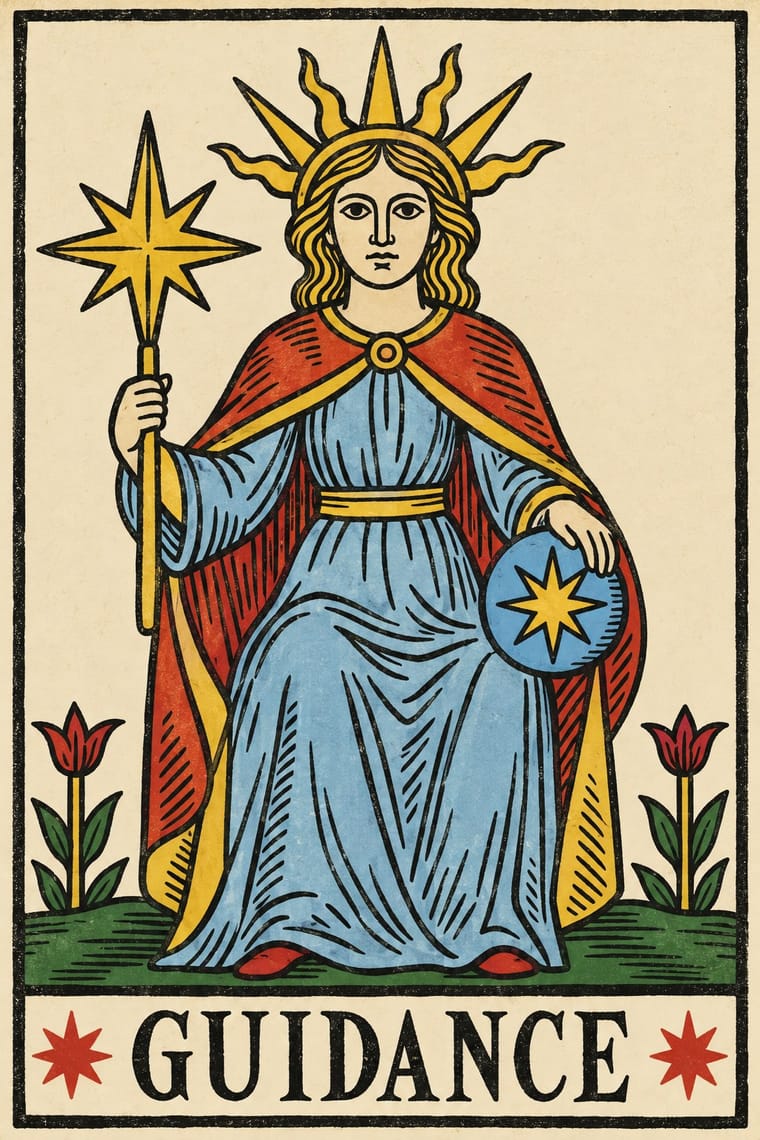
Tarot de Marseille Woodcut Cards The standard pattern of French tarot cards, descended from Milanese tarot and recut by card-makers in Paris, Lyon, Avignon, Dijon and Marseille from the 17th century.
-
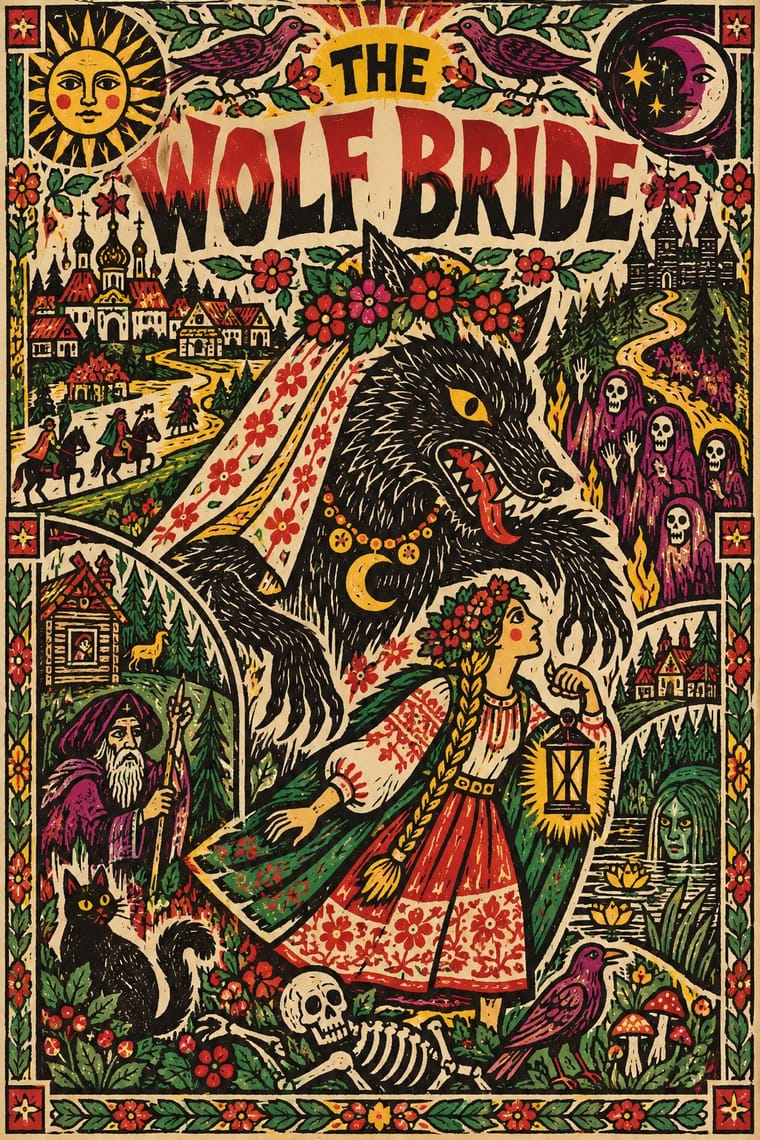
Lubok Popular Print Cheap single-sheet Russian popular prints sold at fairs and by pedlars from the later 17th century: woodcut, later engraved and lithographed pictures of saints, fables, heroes, battles and satire in which text and image share one sheet.
-
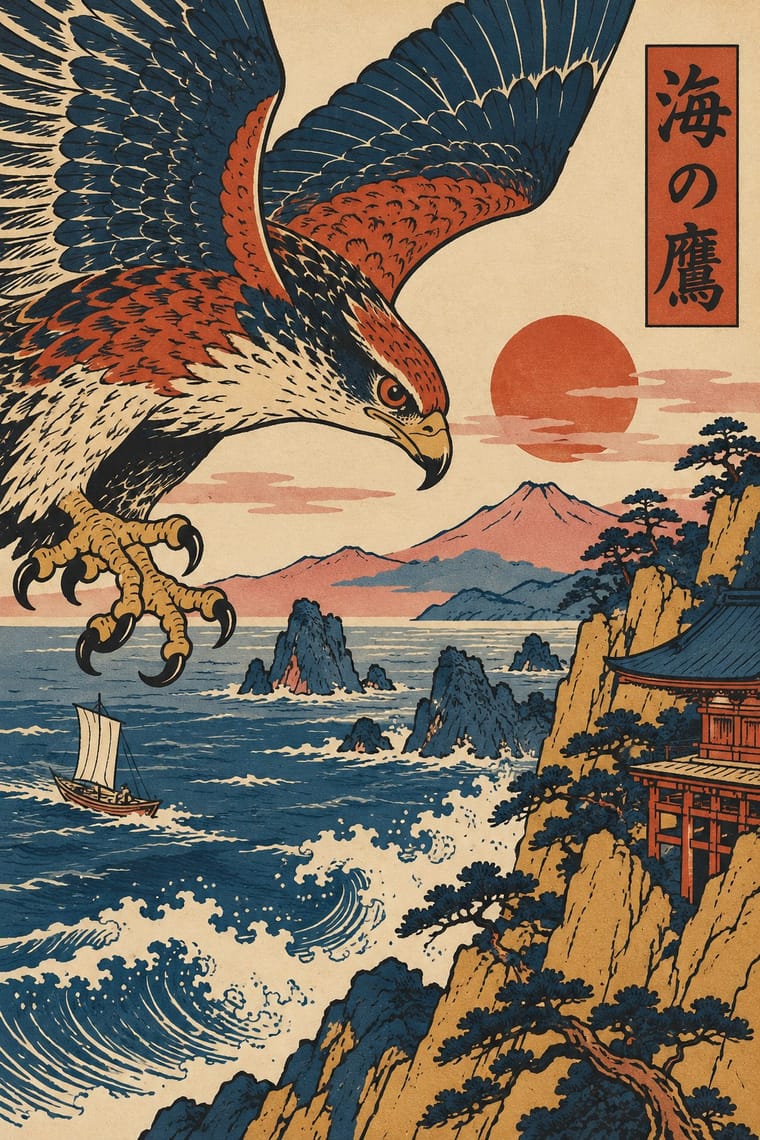
Ukiyo-e Woodblock Prints Mass-produced Edo-period woodblock prints of actors, courtesans, legends and landscapes, designed by an artist, cut and printed by specialist craftsmen and sold cheaply by commercial publishers.
-
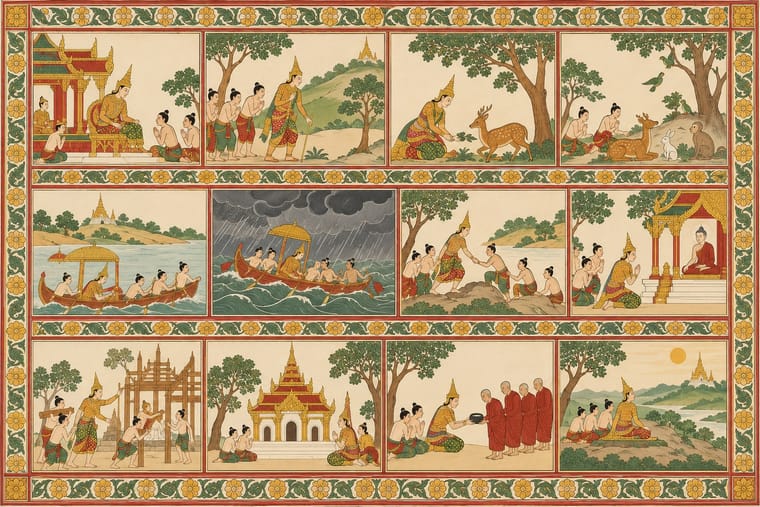
Burmese Parabaik Painting (Konbaung Folding Books) Painted Burmese folding books of the Konbaung court and its monasteries.
-
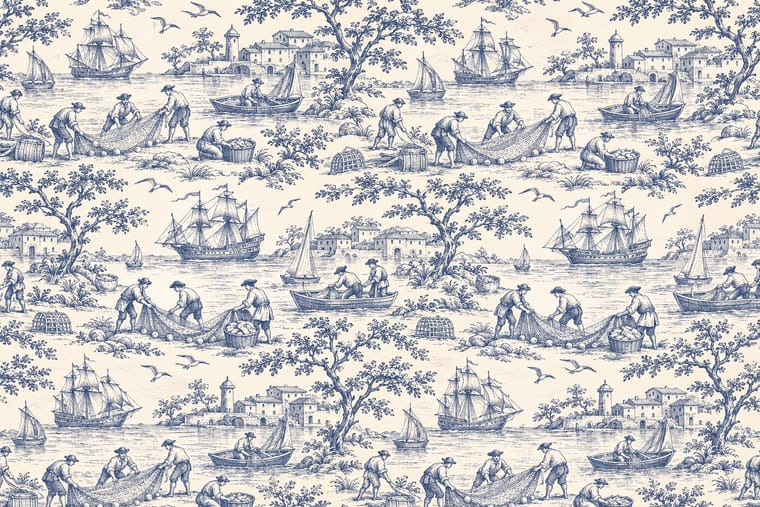
Toile de Jouy Narrative Print Fine-line scenic prints on pale cotton, in a single ink of red, blue, green or grey.
-
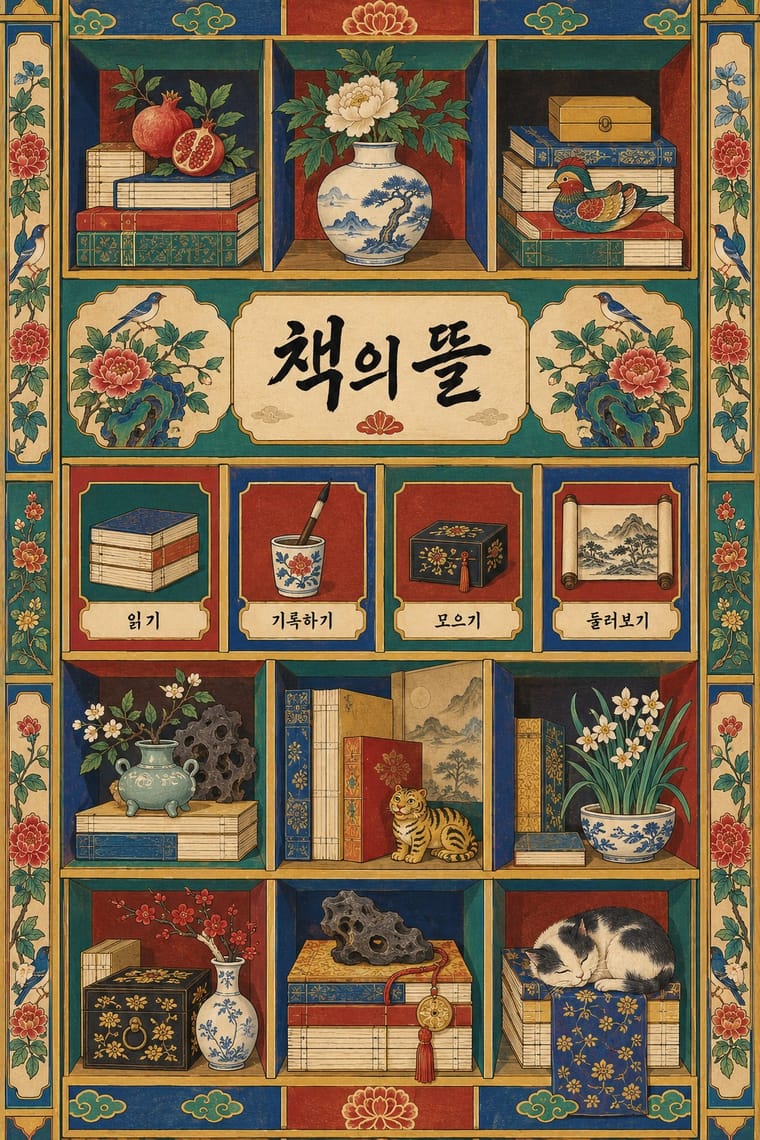
Chaekgeori & Minhwa Screen Painting Korean painted folding screens of the late Joseon period.
- Yōkai Illustration (Sekien to Mizuki) A picture-catalogue tradition in which each creature of Japanese folklore is drawn as a named specimen.
-
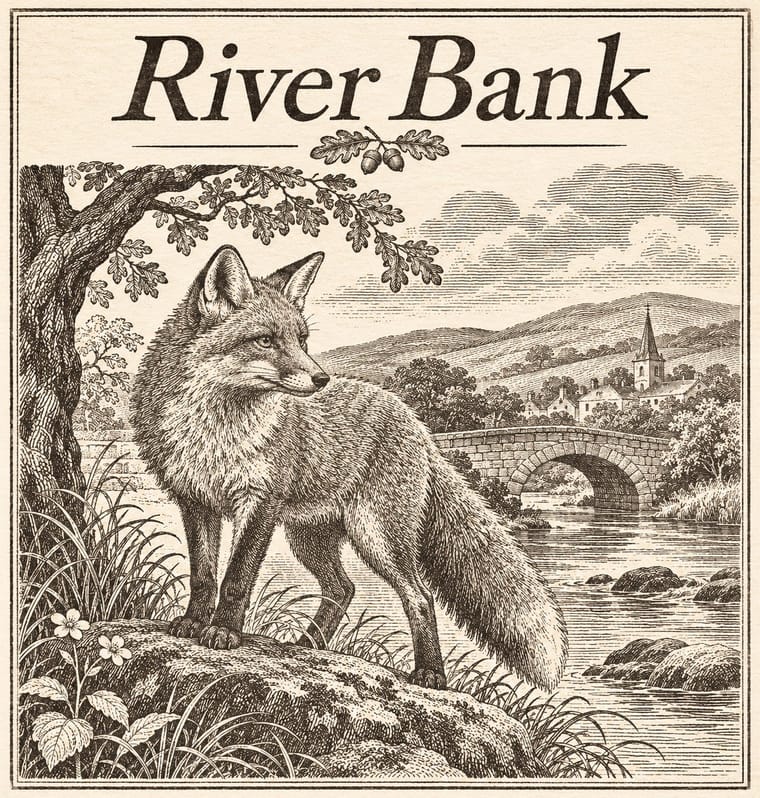
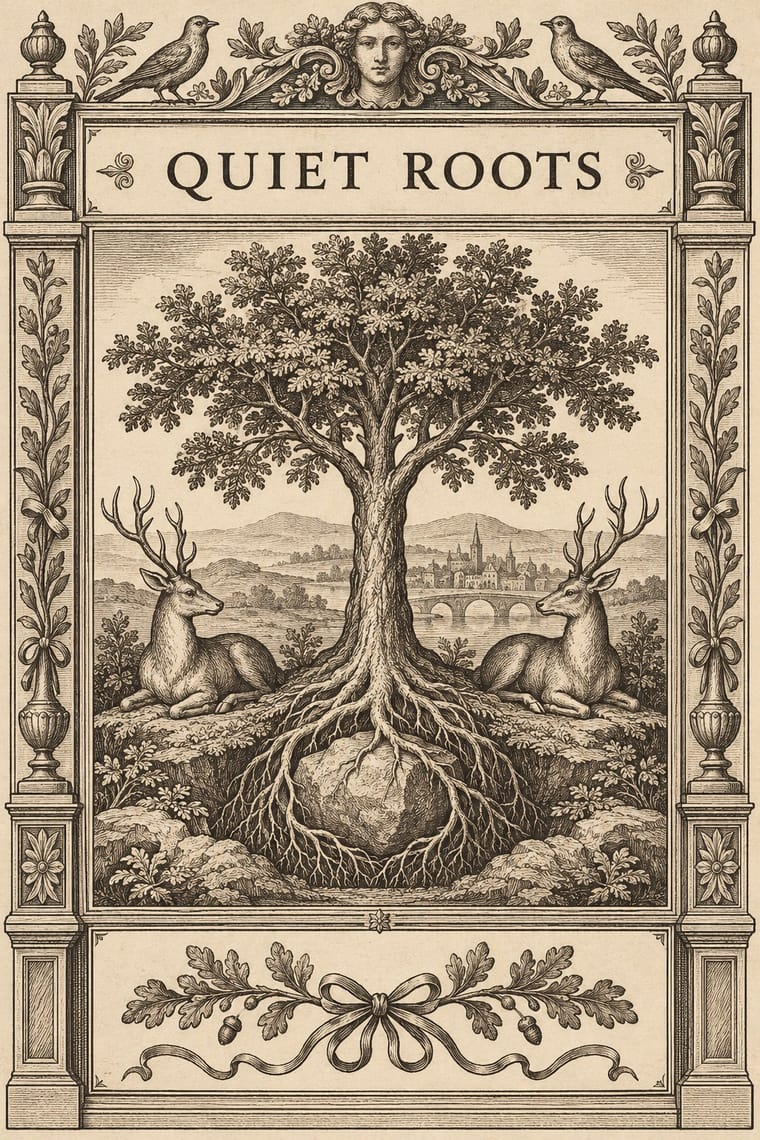
Antique Engraved Illustration & Revival A pictorial idiom in which animals, objects, portraits and small scenes are modelled in closely spaced, contour-following lines and reserved white highlights, printed in one dark ink on a light page.
-
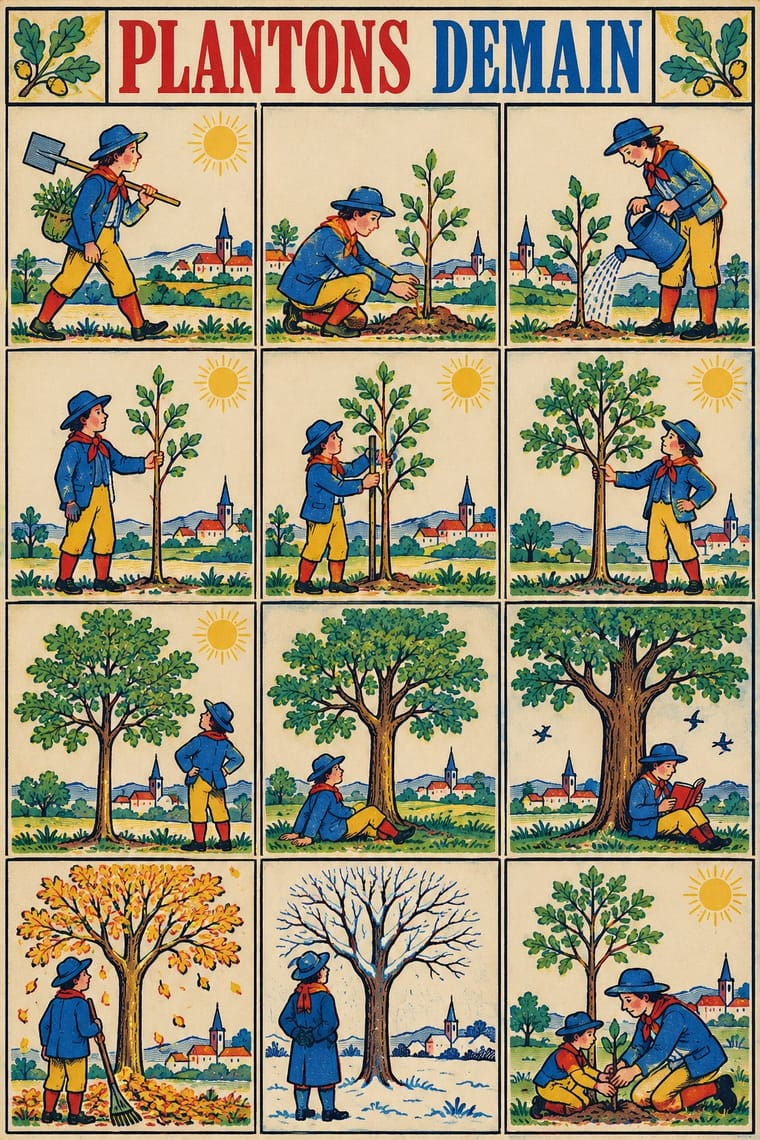
Imagerie d'Épinal & European Bilderbogen Cheap single-sheet popular prints sold by pedlars across 19th-century Europe, led by the Pellerin imagerie at Épinal and the Neuruppin Bilderbogen.
- Appenzell & Toggenburg Senntum Painting Peasant painting of the Säntis region that records the Alpfahrt, the cattle procession of herders, cows, dairy huts and farms, in bright flat colour.
-
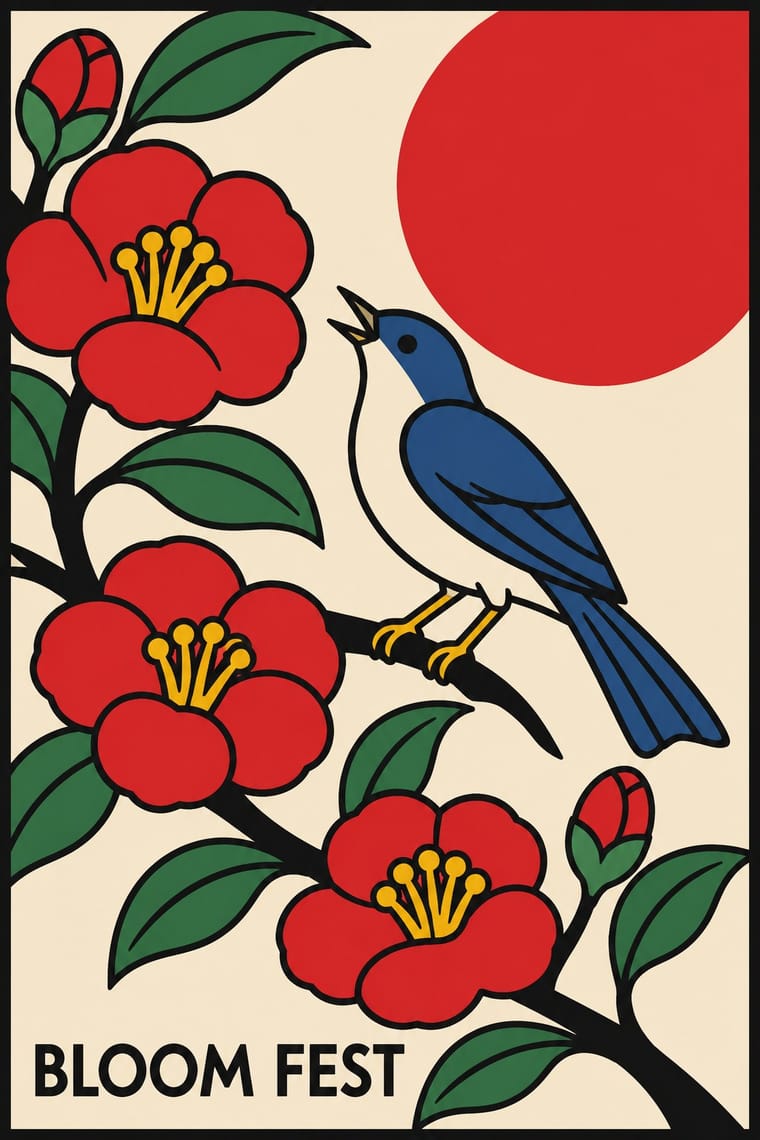
Hanafuda Card Design (Japanese Flower Cards) A 48-card Japanese deck of twelve suits, one per month, each tied to a plant such as pine, plum, cherry, peony, maple or willow.
- Fribourg Poya Procession Painting A farmhouse painting tradition of the Fribourg pre-Alps in which the spring ascent of a farmer's herd to the high pasture is shown as a long, winding procession of cattle in profile, herders and farm life, on a wide panel (usually painted on wood) displayed at the farm front.
-
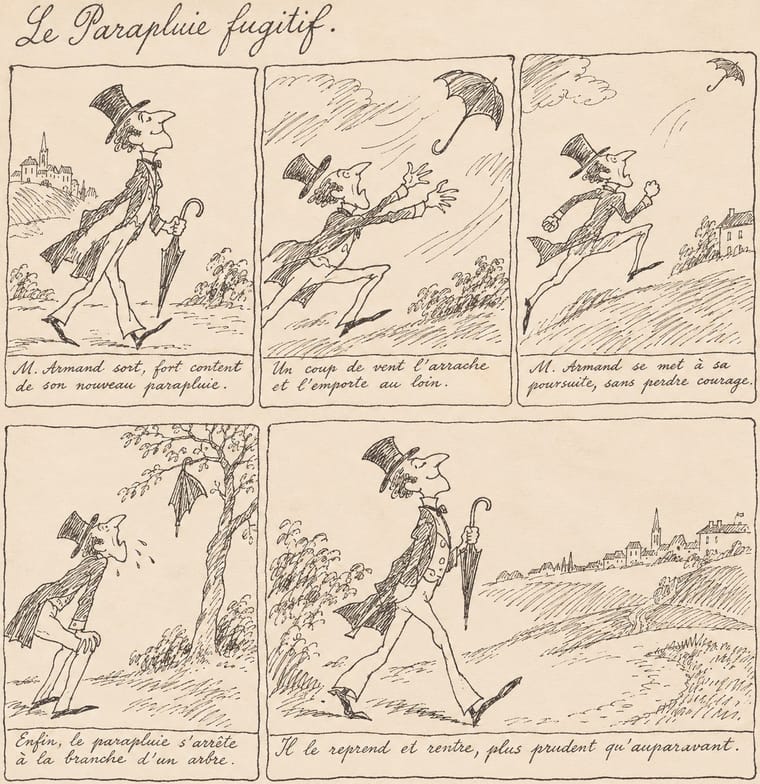
Töpffer Picture Stories (Autographic Caricature Comics) Rodolphe Töpffer's comic picture stories, drawn in loose pen line on transfer paper and printed by autography, a variant of lithography.
-
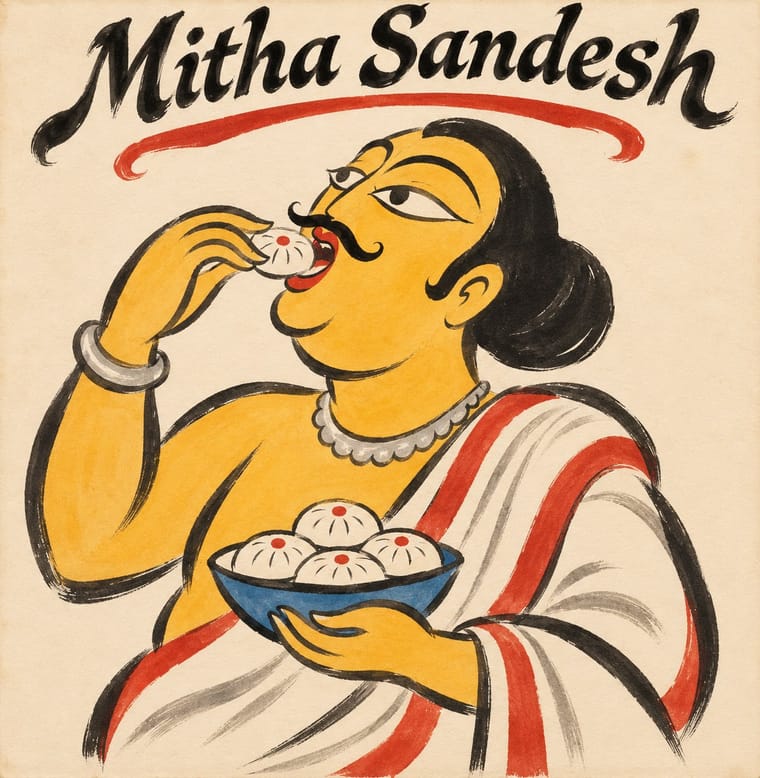
Kalighat Pat & Battala Bazaar Prints The bazaar art of nineteenth-century Calcutta: watercolours sold to pilgrims by patua painters at the Kalighat temple, and the cheap woodcuts and metal engravings that Battala presses printed for chapbooks and almanacs.
- Persian Popular Narrative (Lithographs & Coffeehouse Painting) Iran's popular picture-stories in two media.
- Basel Fasnacht Lantern Painting & Zeedel The painted, internally lit transparent lanterns of the Basel carnival, together with the Zugszeedel, rhymed sheets in Basel German printed on coloured paper, tell each clique's topical, satirical subject for the year.
-
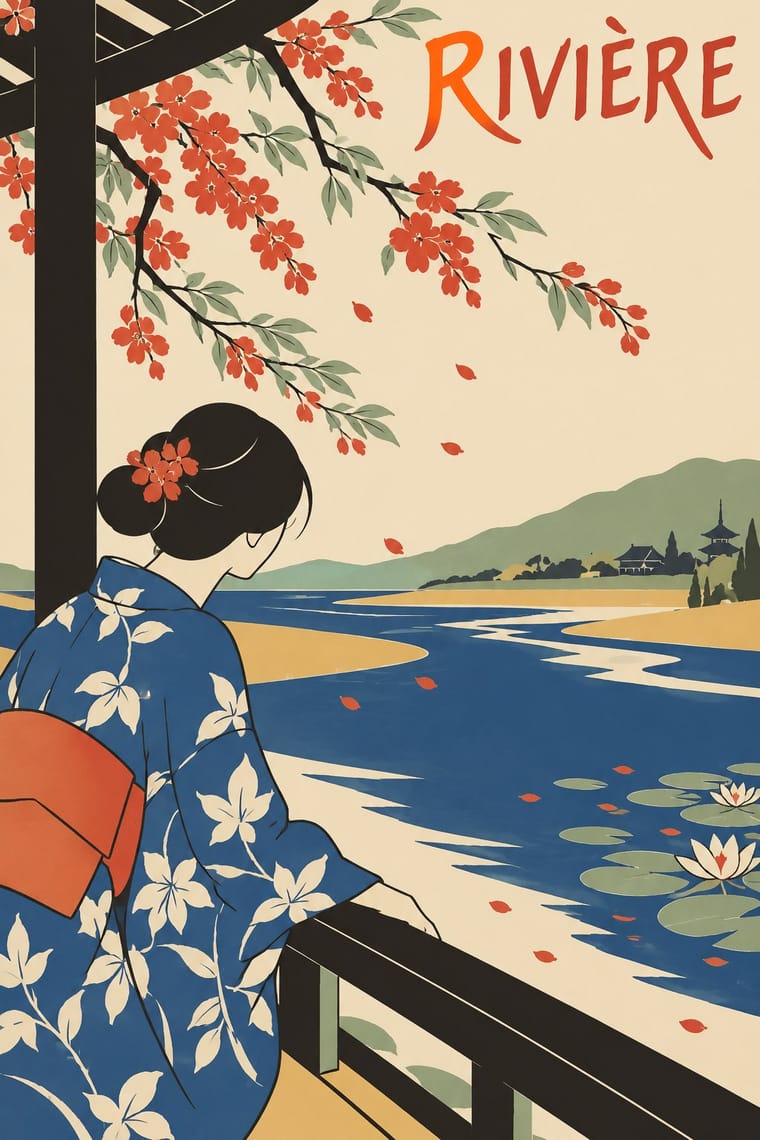
Japonisme The Western absorption of Japanese woodblock prints, textiles and crafts after Japan reopened to trade in the 1850s.
-
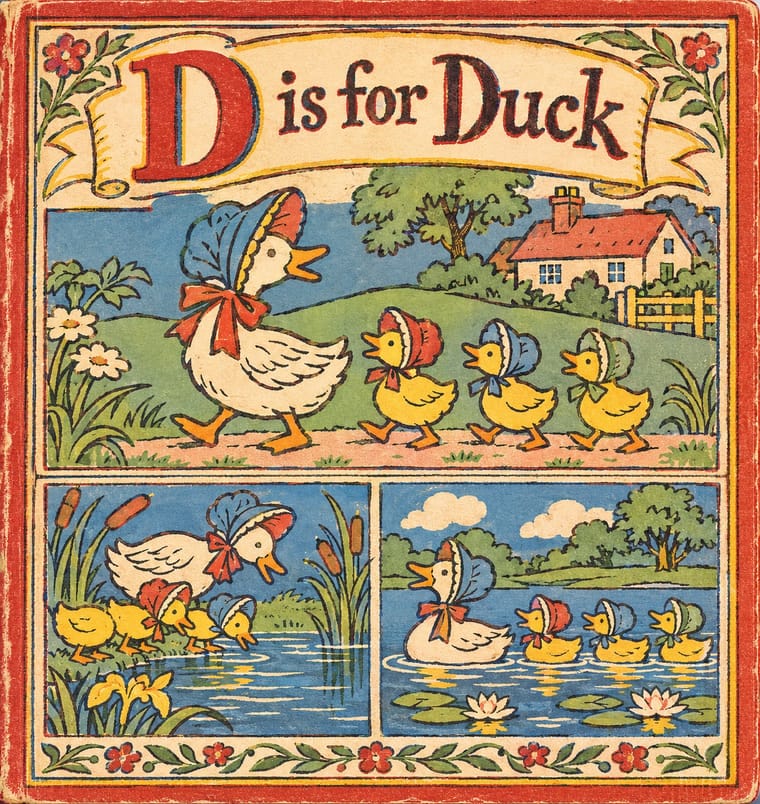
Victorian Colour Toy Books (Evans, Crane, Caldecott and Greenaway) Mass-printed children's picture books in which a black key block and flat colour blocks (generally up to a dozen, as few as four), printed by Edmund Evans from wood, carried pictures that dominated short texts.
-
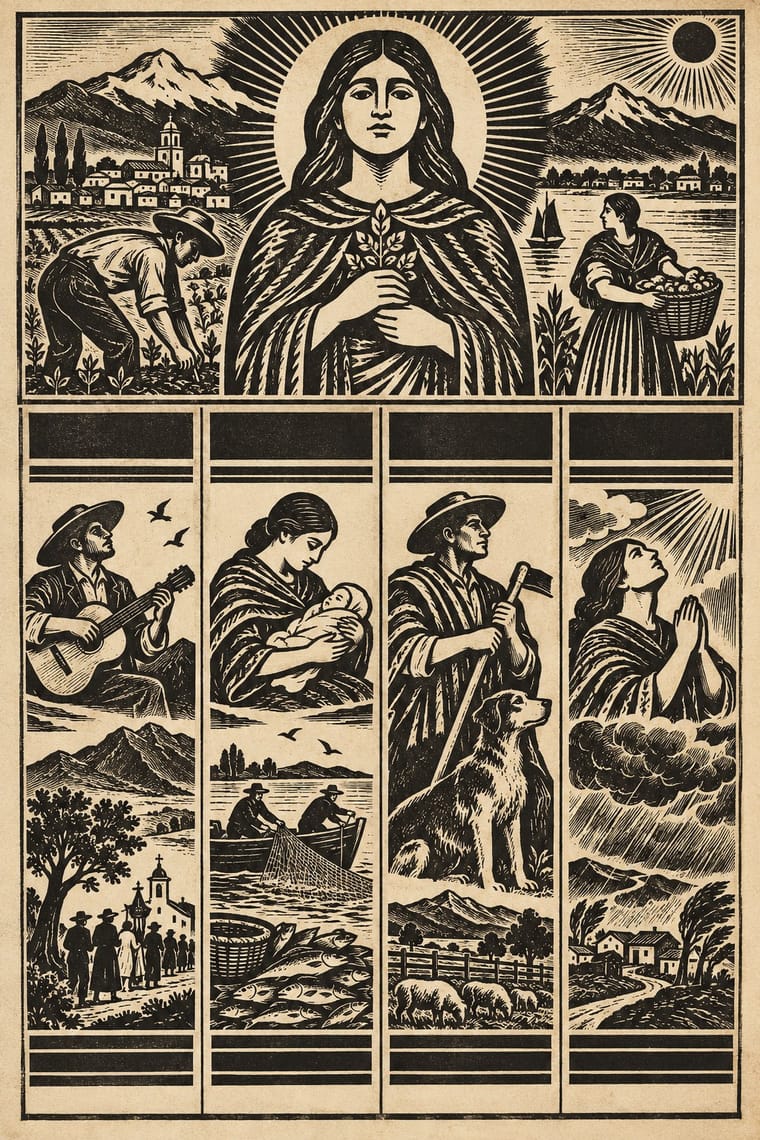
Lira Popular (Chilean Illustrated Verse Broadsheets) Loose verse sheets printed and sold in Chile's cities from 1866, peaking around 1890 and declining after 1920, though some were still printed into the 1940s.
-
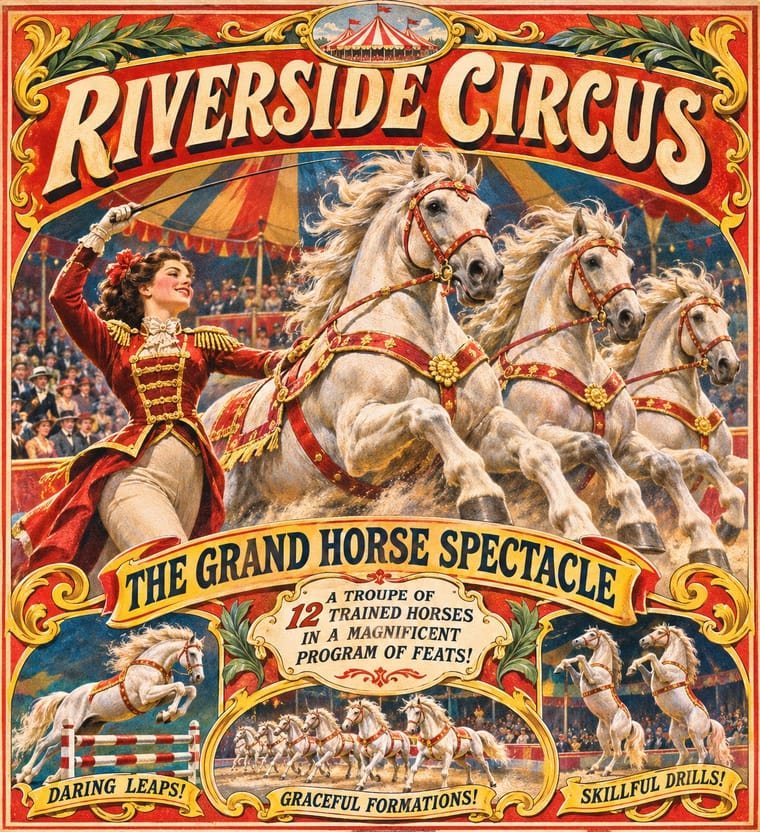
Circus Chromolithographic Show Poster American circus publicity that makes extraordinary attractions persuasive through tonally modelled colour lithography, emphatic show names and superlative captions.
- Indian Calendar & Bazaar Art Mass-printed images of Hindu deities, epic scenes, saints, nationalist heroes and film stars, sold in bazaars and given away as business calendars, from the chromolithographs of the Calcutta Art Studio and Ravi Varma Press to Sivakasi offset.
-
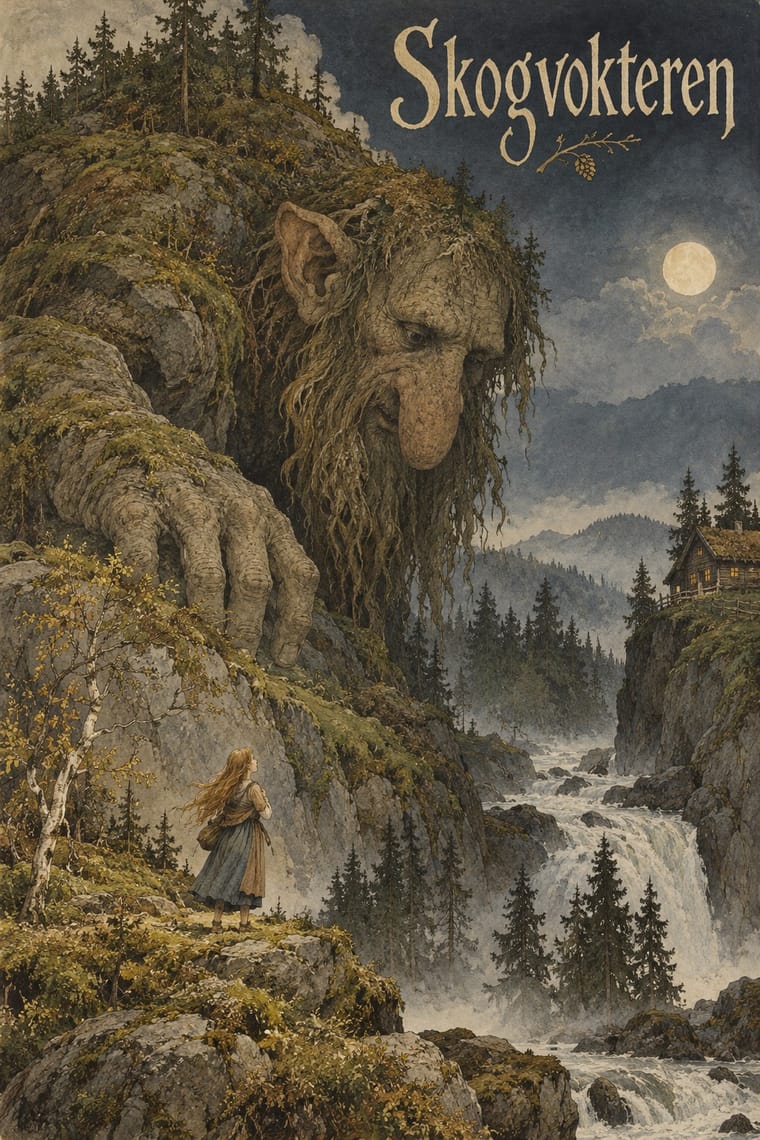
Nordic Fairy-Tale and Troll Illustration (Werenskiold, Kittelsen, Bauer) Norwegian and Swedish folk-tale illustration in which trolls, nøkken and huldra live in a real, observed northern landscape of forest, mountain, bog and farm.
-
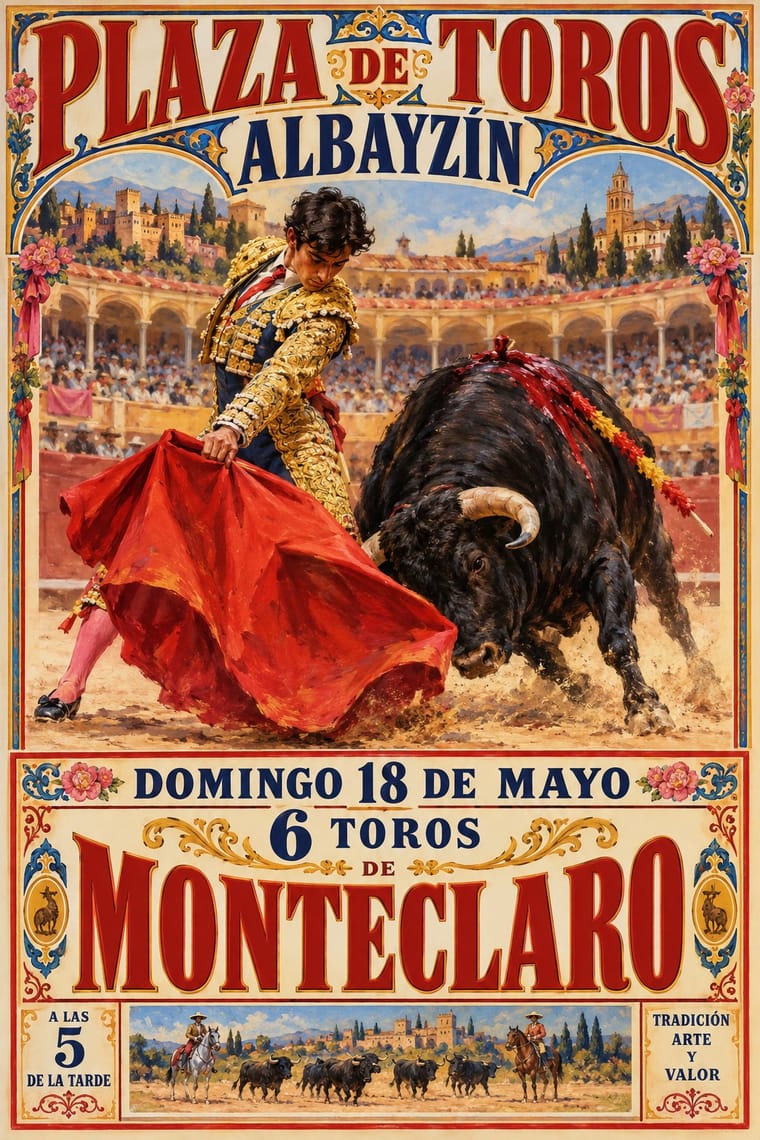
Spanish Bullfight Poster (Cartel Taurino) The Spanish bullfight poster in its illustrated form, from Marcelino de Unceta's lithographs (from 1879) to the Valencian house of Ortega, which supplied rings across Spain.
-
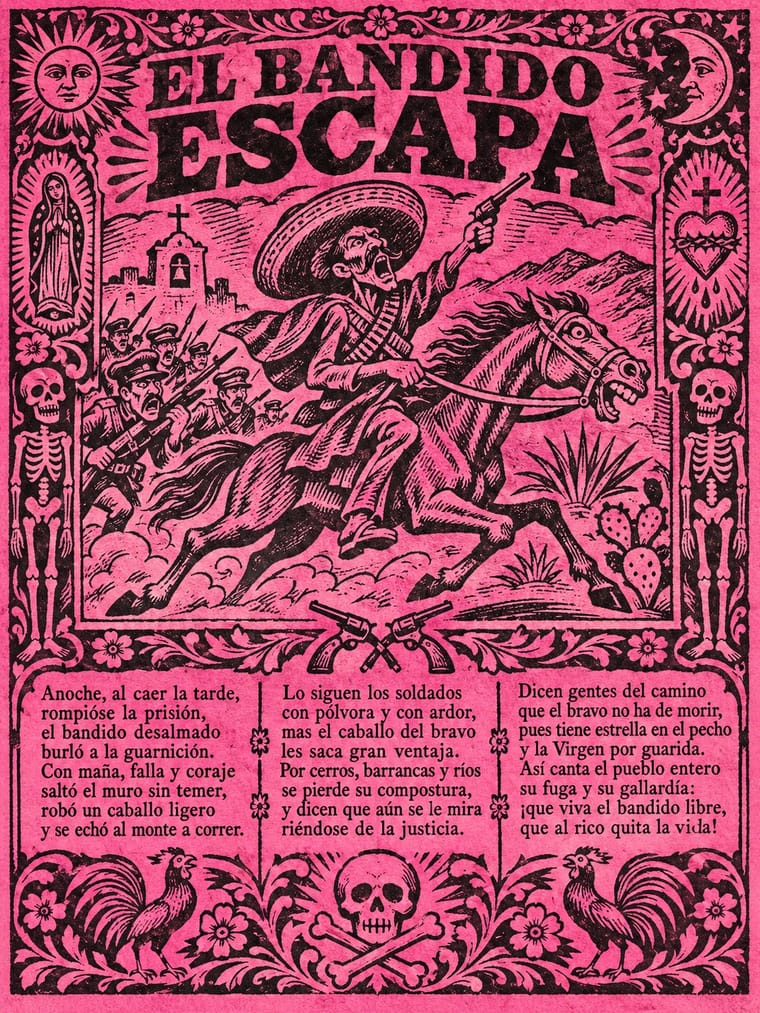
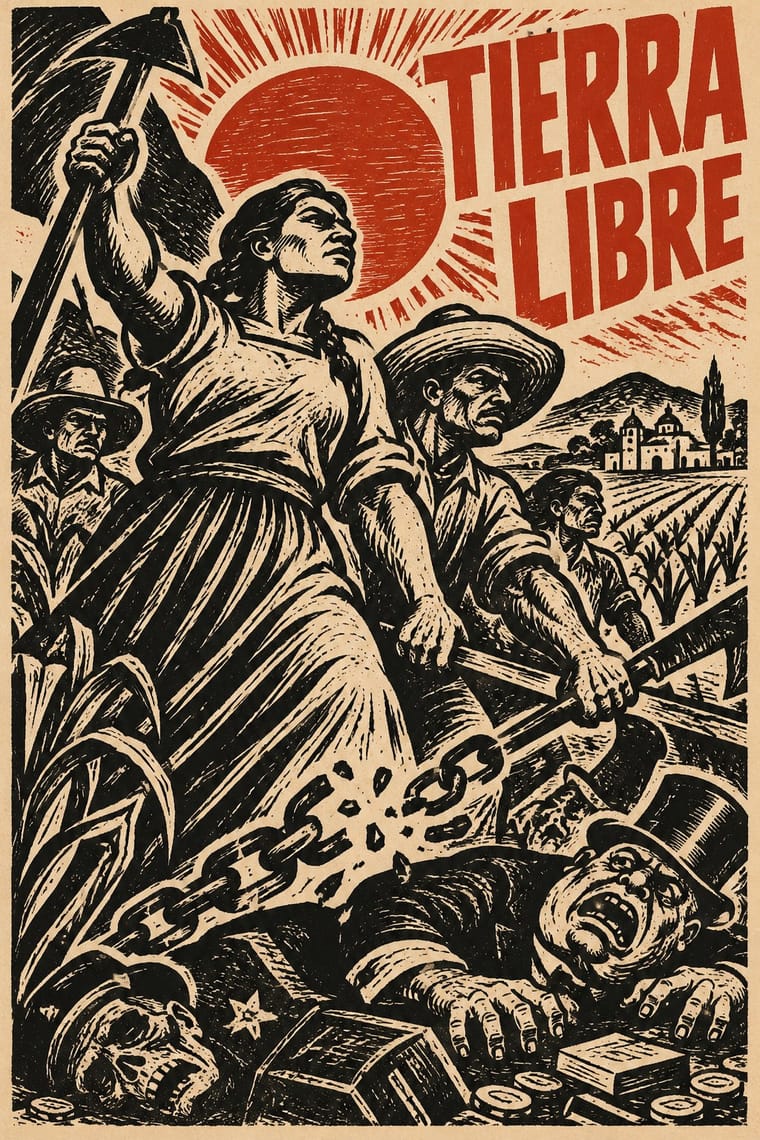
Mexican Popular Graphics (Posada) Cheap broadsheets, chapbooks and gazettes sold on the streets of Porfirian Mexico City by the publisher Antonio Vanegas Arroyo and illustrated by Manuel Manilla and José Guadalupe Posada.
-
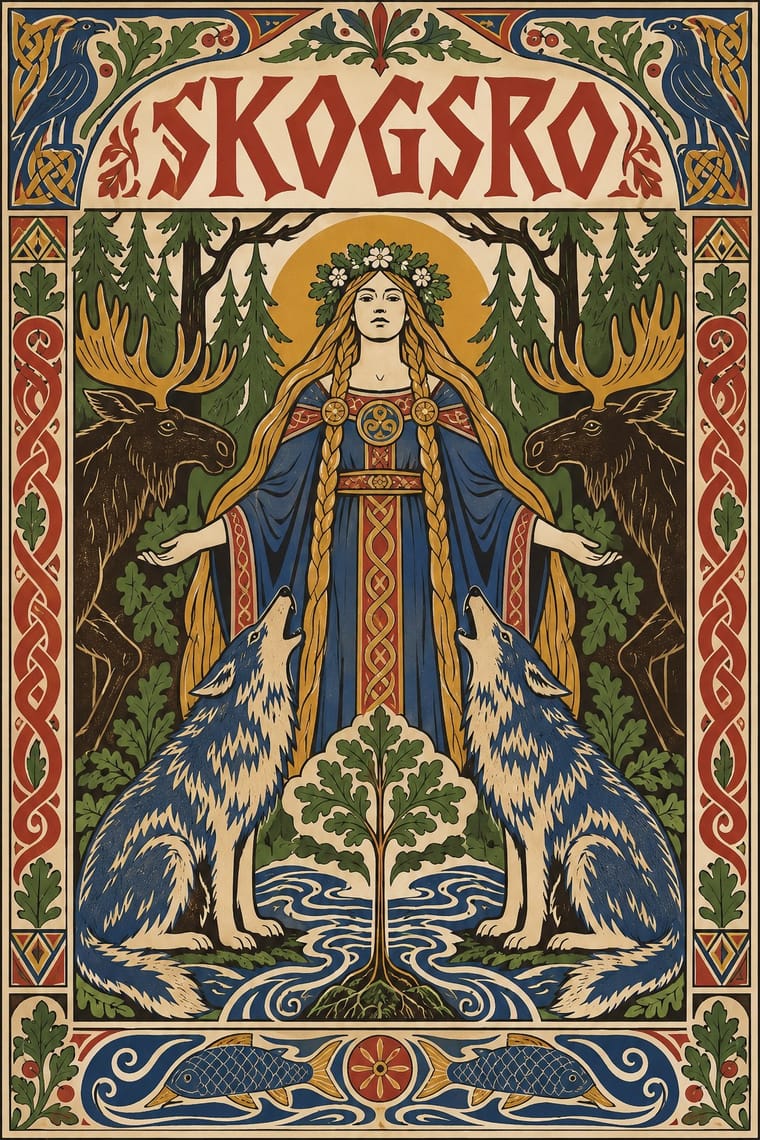
Norwegian and Finnish National Romantic Graphics (Munthe & Karelianism) The flat, decorative branch of Norway's and Finland's national romanticism, which turned Viking carving, the sagas, the Kalevala and old peasant weaving into modern ornament.
-
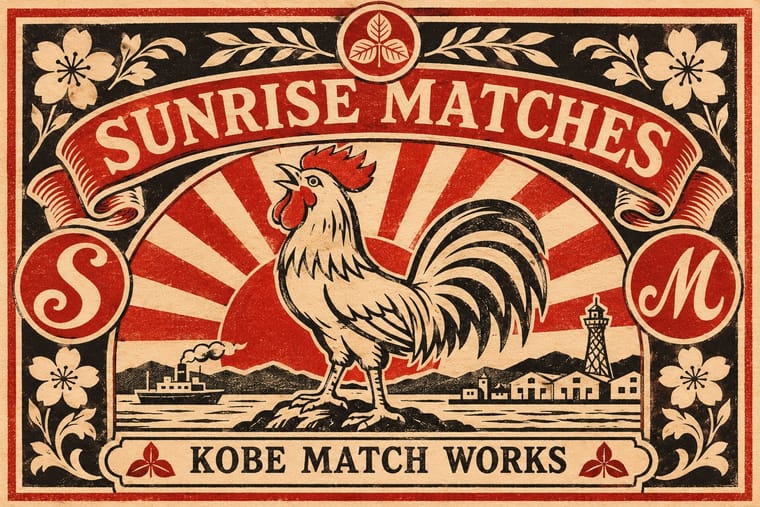
Japanese Matchbox-Label Vernacular (Rinpyō) Small commercial trademark labels pasted on Japanese matchboxes from the Meiji period, after the 1884 trademark ordinance.
-
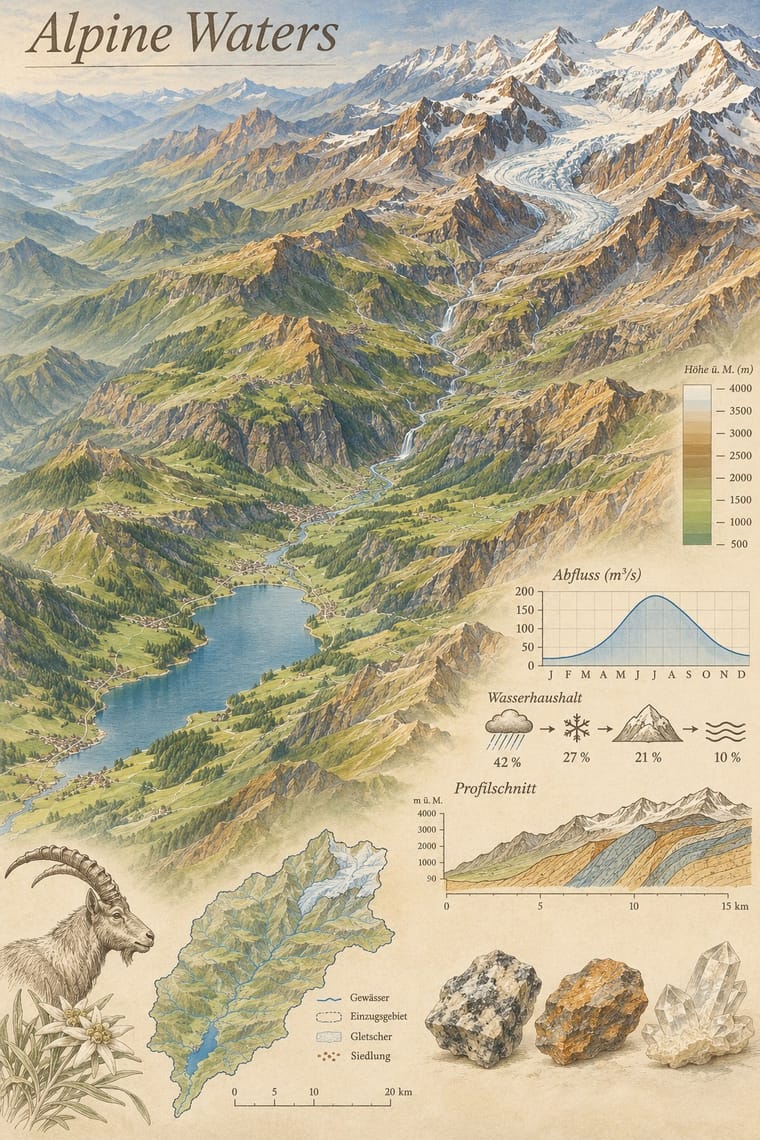
Swiss Relief Cartography (Becker–Imhof School) A tradition of terrain mapping in which contour lines, minute cliff strokes, continuous light-and-shade modelling and colour tuned to elevation, exposure and land use make mountains read as landforms.
- Glasgow Style Glasgow's distinctive answer to Art Nouveau, formed around Charles Rennie Mackintosh, Margaret and Frances Macdonald and Herbert MacNair at the Glasgow School of Art.
-
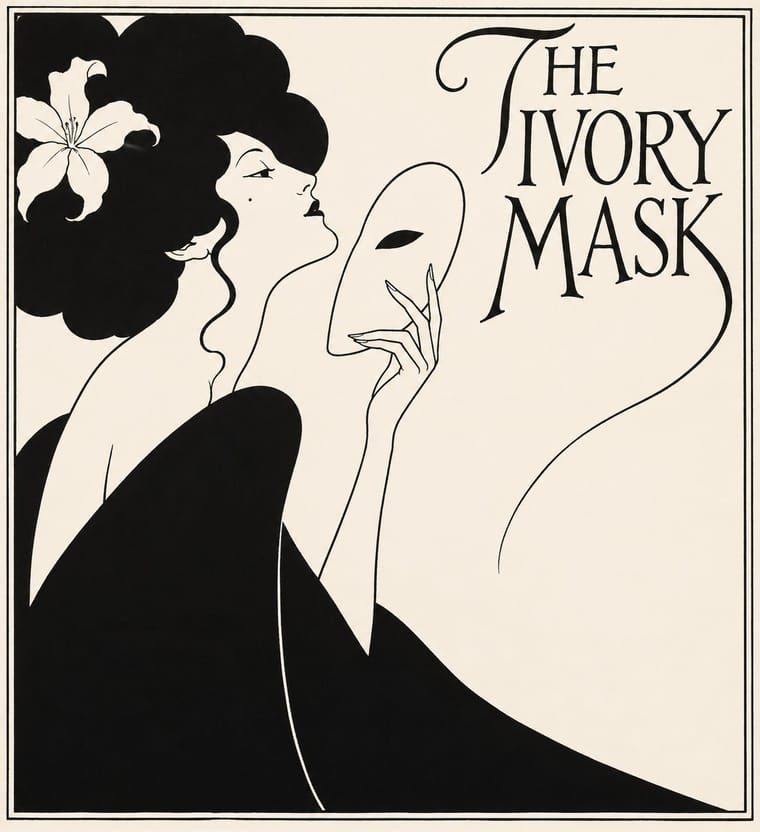
Beardsley & Decadent Black-and-White A black-and-white pen-and-ink illustration style of 1890s London, led by Aubrey Beardsley.
-
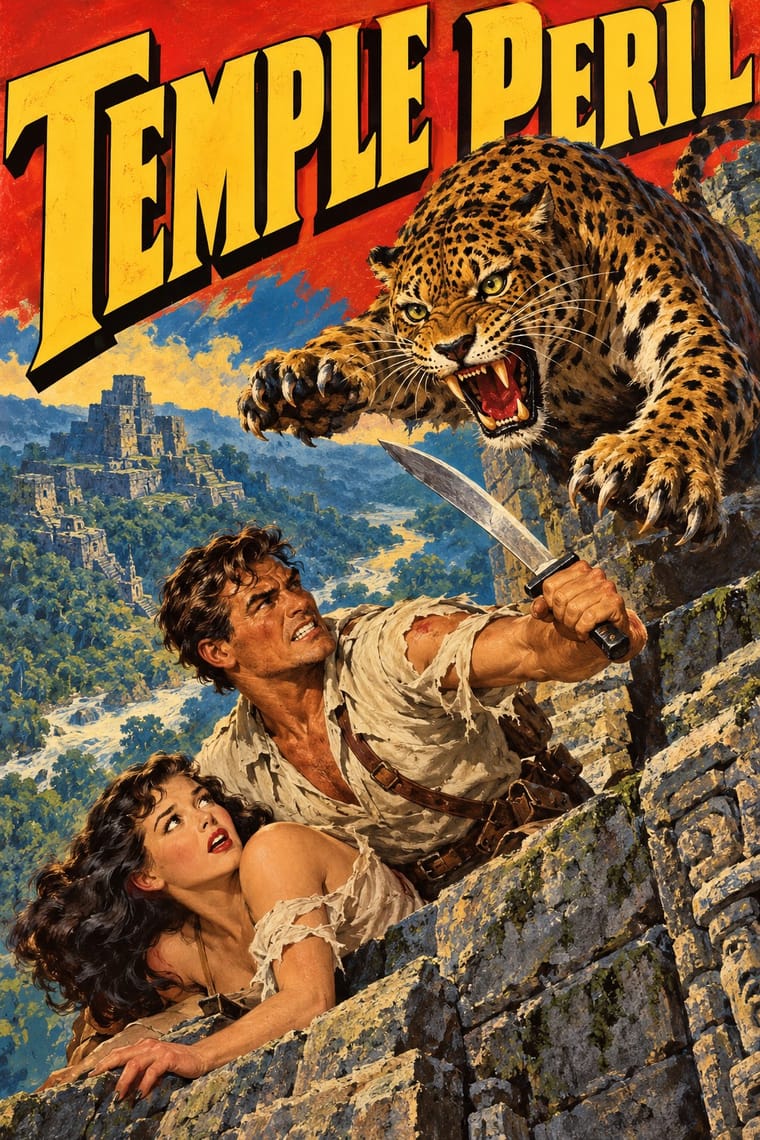
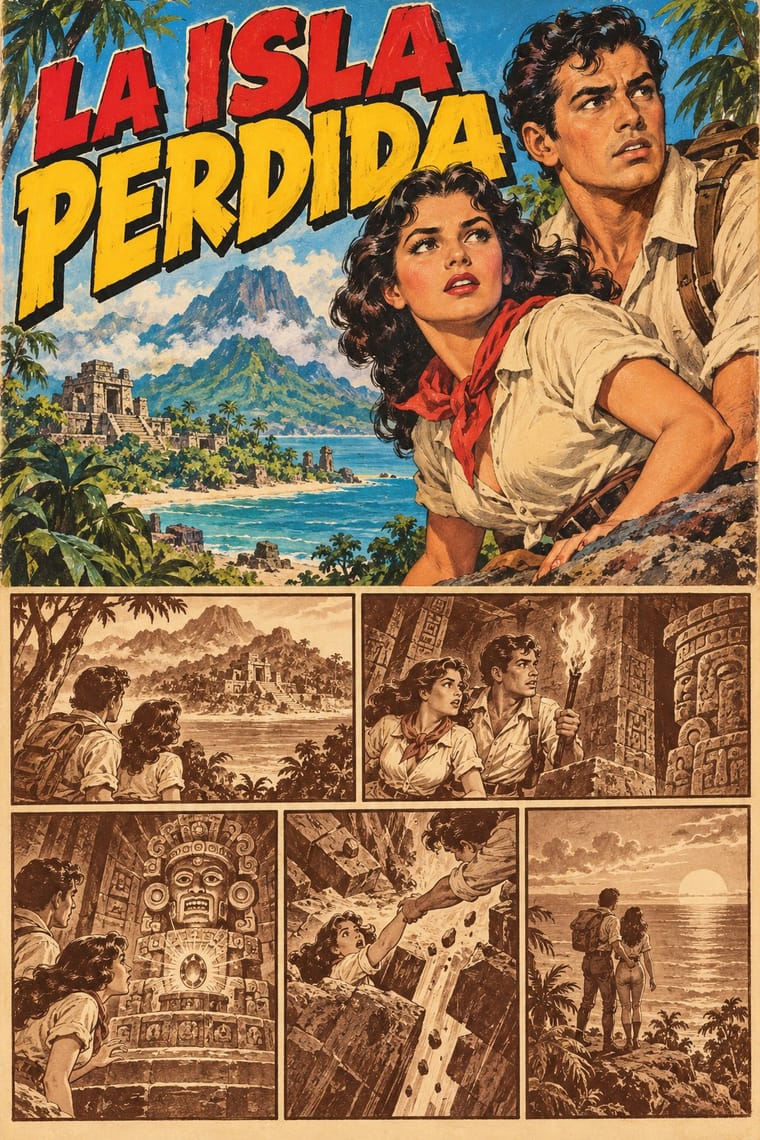
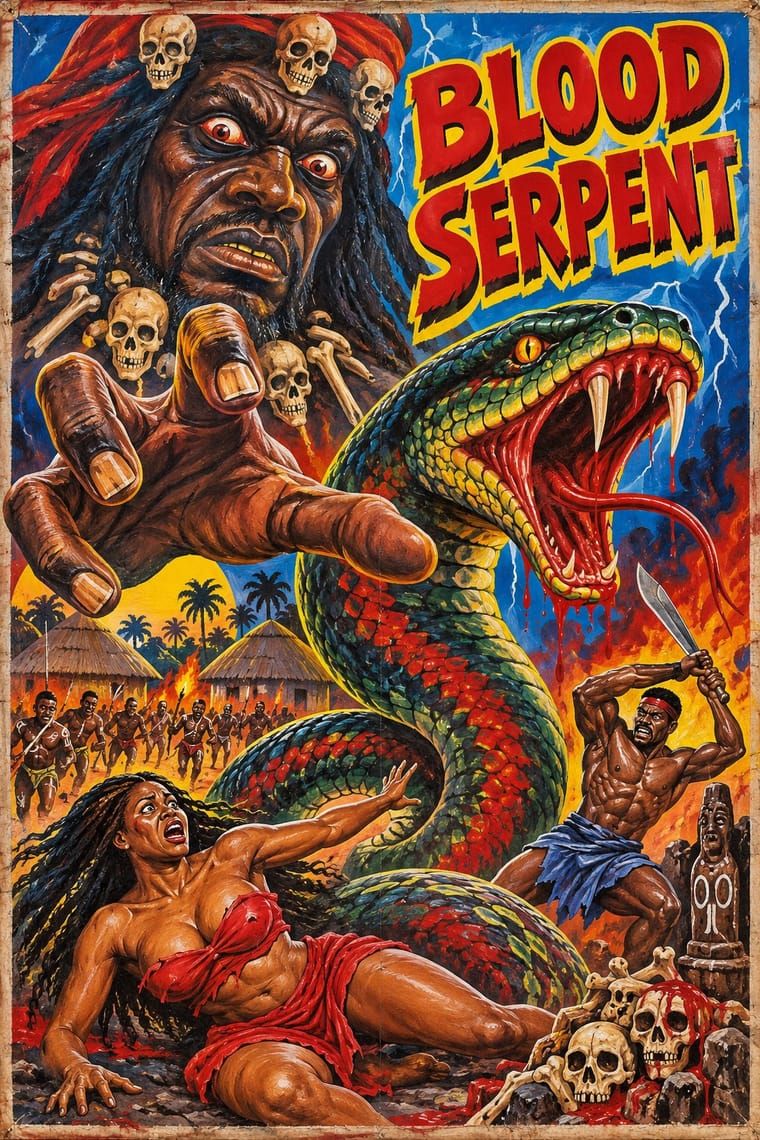
Pulp Magazine Cover The painted colour covers of American pulp fiction magazines, printed on slicker cover stock around cheap wood-pulp interiors (period 1896 to 1957, the year the American News Company was liquidated, a date sometimes taken as the end of the pulp era).
-
Simplicissimus Satirical Style (Munich) The house style of the Munich satirical weekly Simplicissimus, set by Th.
-
Mir iskusstva Book Art The graphic idiom of the St Petersburg World of Art circle (journal 1898–1904, exhibitions until Paris 1927) and the book artists around it.
-
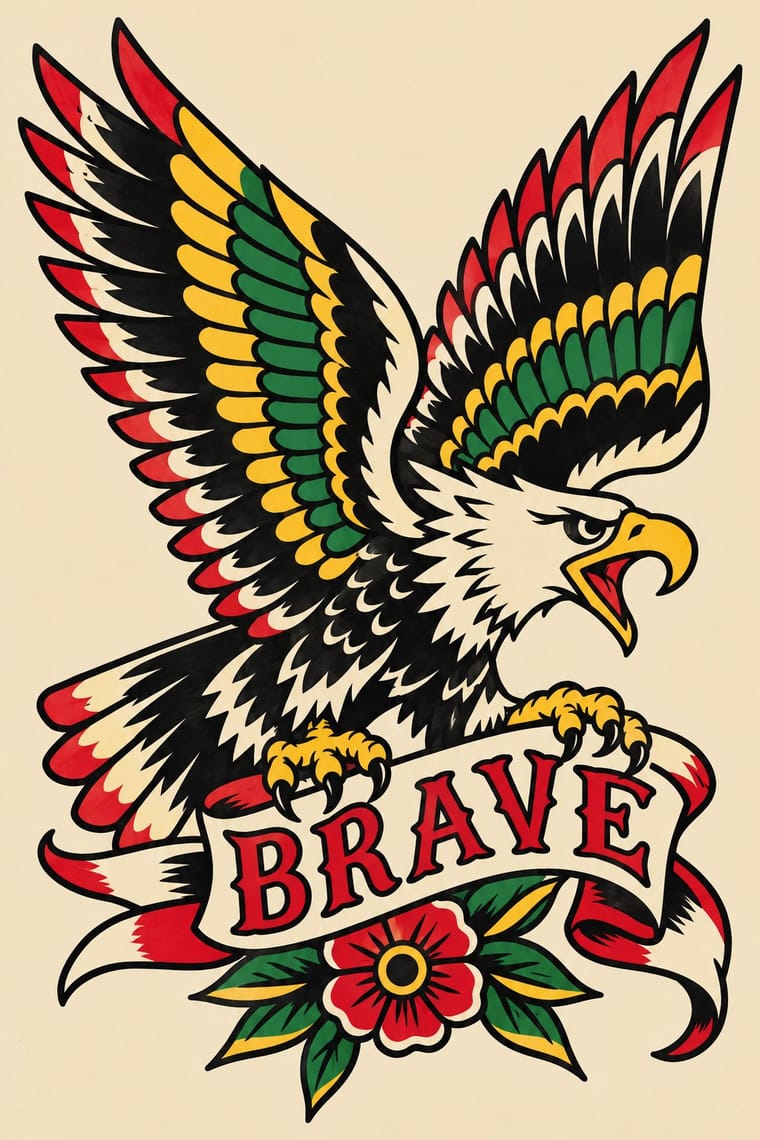
American Traditional Tattoo Flash The stock designs of twentieth-century American tattoo shops: eagles, anchors, swallows, roses, hearts, daggers, panthers, skulls, ships, pin-ups and nautical stars, each drawn as an isolated emblem with a bold black outline, black shading and a few saturated flat colours (mainly red, yellow and green) chosen to stay legible on skin for a lifetime.
- Senegalese Sufi Devotional Imagery (Souwère Glass Painting and Amadou Bamba Portraits) The devotional imagery of Senegal's Sufi brotherhoods, above all the Mourides: reverse paintings on glass (souwère), made in Senegal's cities since about 1900, and the murals, banners, prints and photocopies that multiply one 1913 photograph of Sheikh Amadou Bamba across Dakar and Touba.
-
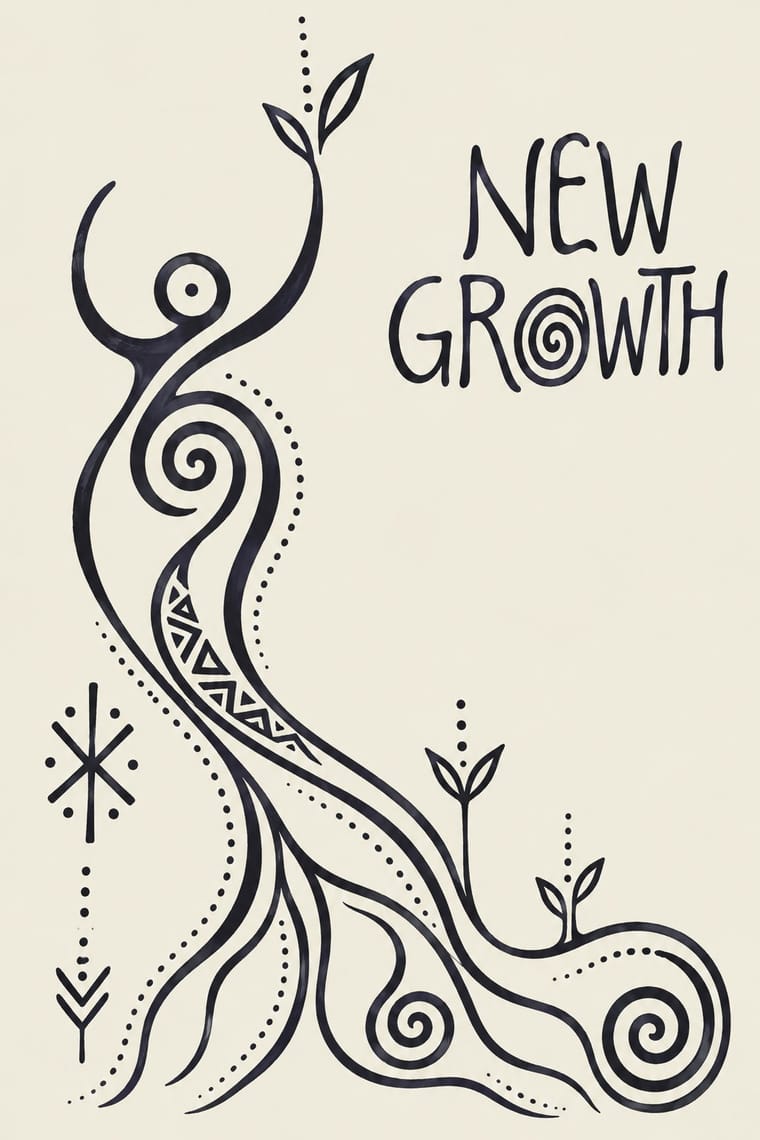
Uli & Nsibidi Line and Sign Tradition Two linked graphic languages of southeastern Nigeria.
- L'Assiette au Beurre (French Colour Satirical Press) The graphic language of the Paris satirical weekly L'Assiette au beurre (1901-1912), whose issues of at least 16 large pages were each handed to a single theme and usually a single artist, so that a number reads as a graphic essay.
-
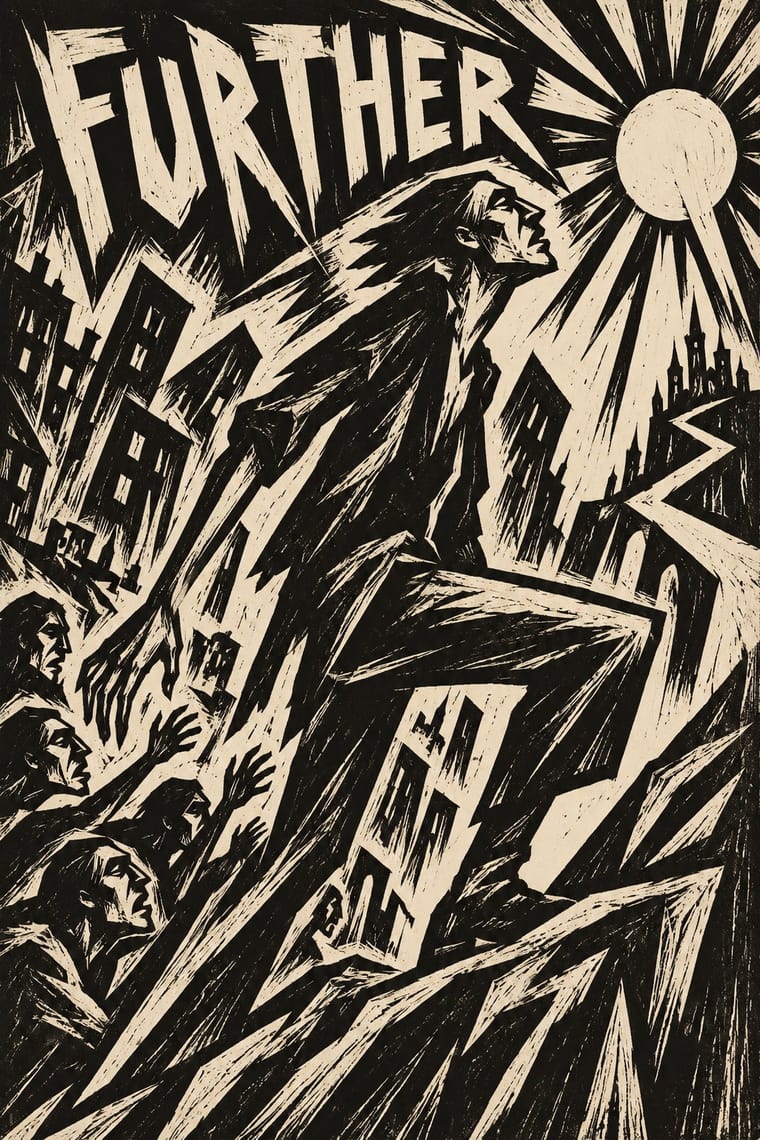
Expressionist Woodcut Graphics The graphic arm of German Expressionism, from Die Brücke in Dresden (1905) to the Berlin journals Der Sturm and Die Aktion and Frans Masereel's woodcut novels.
-
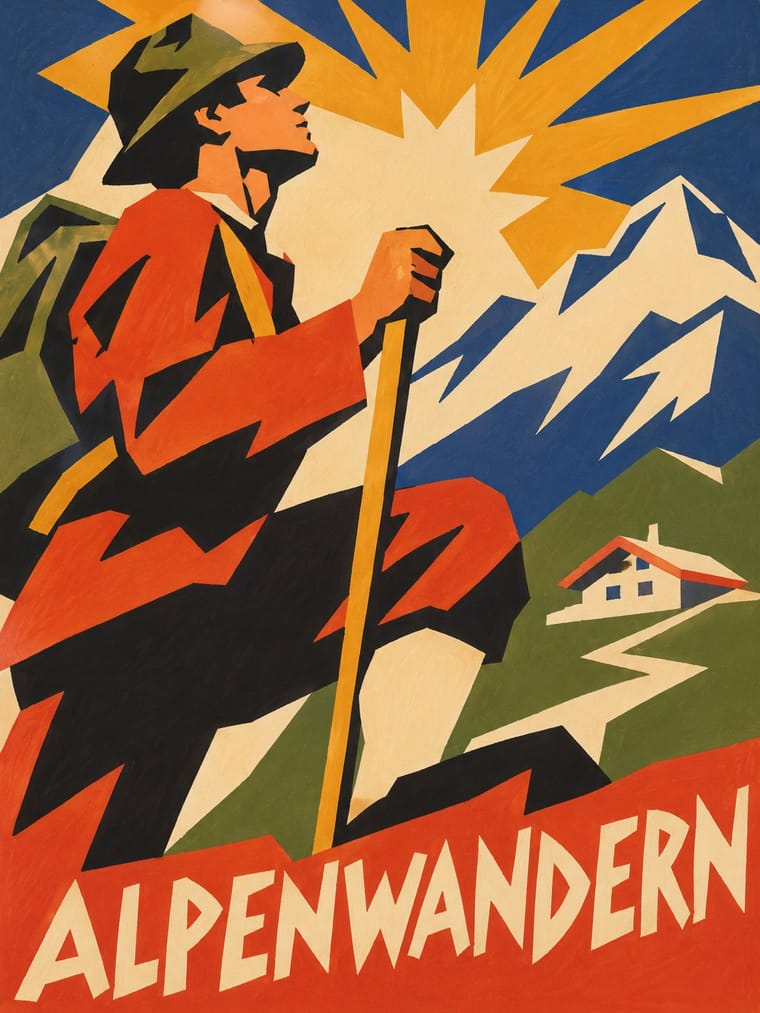
Hohlwein Munich Poster The advertising poster as developed by the Munich architect-turned-designer Ludwig Hohlwein: figures, animals and objects built from interlocking, sharply cut areas of light and dark, with a few bright colours, so that a hunter, a rider or a cigarette smoker reads as a bold silhouette.
-
Santiniketan & Bengal School Graphics The nationalist, anti-academic art of Calcutta and Santiniketan, which turned from oil-paint naturalism and chromolithograph gloss to Indian and pan-Asian sources.
-
Cuban Republican Magazine Illustration (Social and Carteles) Cover art of Havana's illustrated magazines under the Republic, led by Conrado Massaguer's Social (1916-1938) and Carteles (to 1960).
-
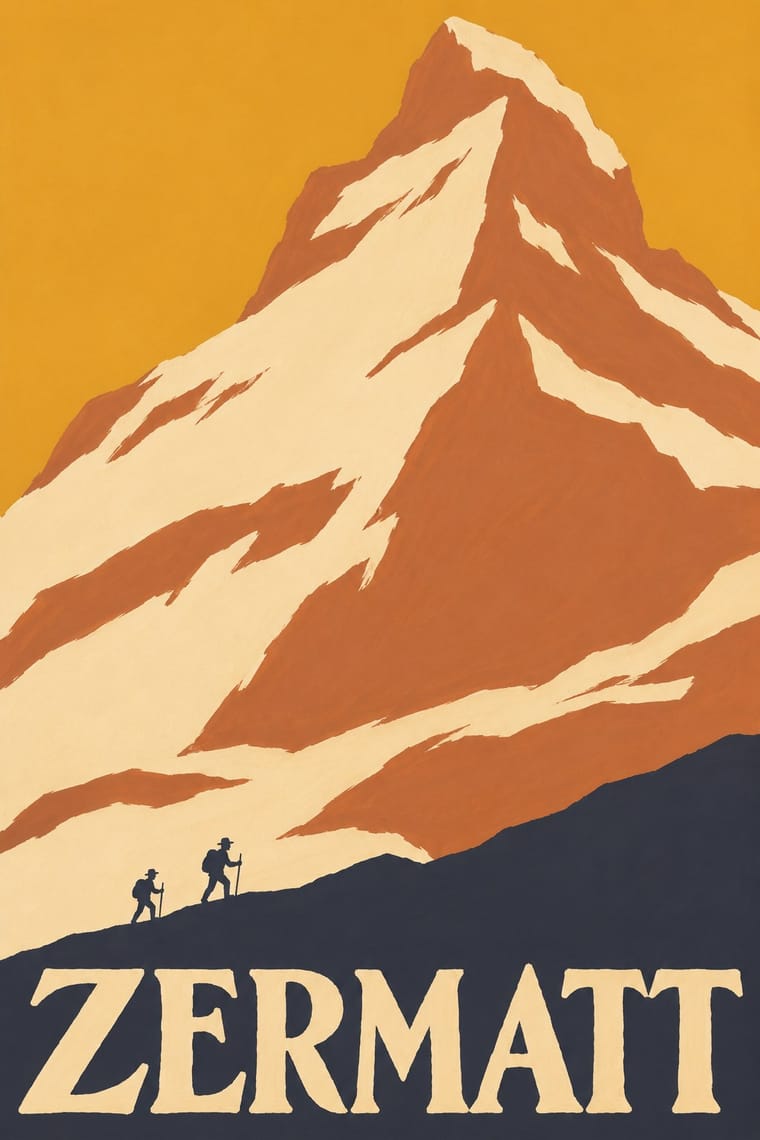
Swiss Lithographic Tourism & Alpine Poster (Cardinaux Era) Swiss railway and resort posters that, from Emil Cardinaux's Zermatt (1908), replaced timetables ringed by small views with one monumental painted landscape.
-
Russian Futurist Book The cheap, small-run books of the Russian Cubo-Futurist poets and painters, from Kruchenykh and Khlebnikov to Goncharova, Larionov and Rozanova.
-
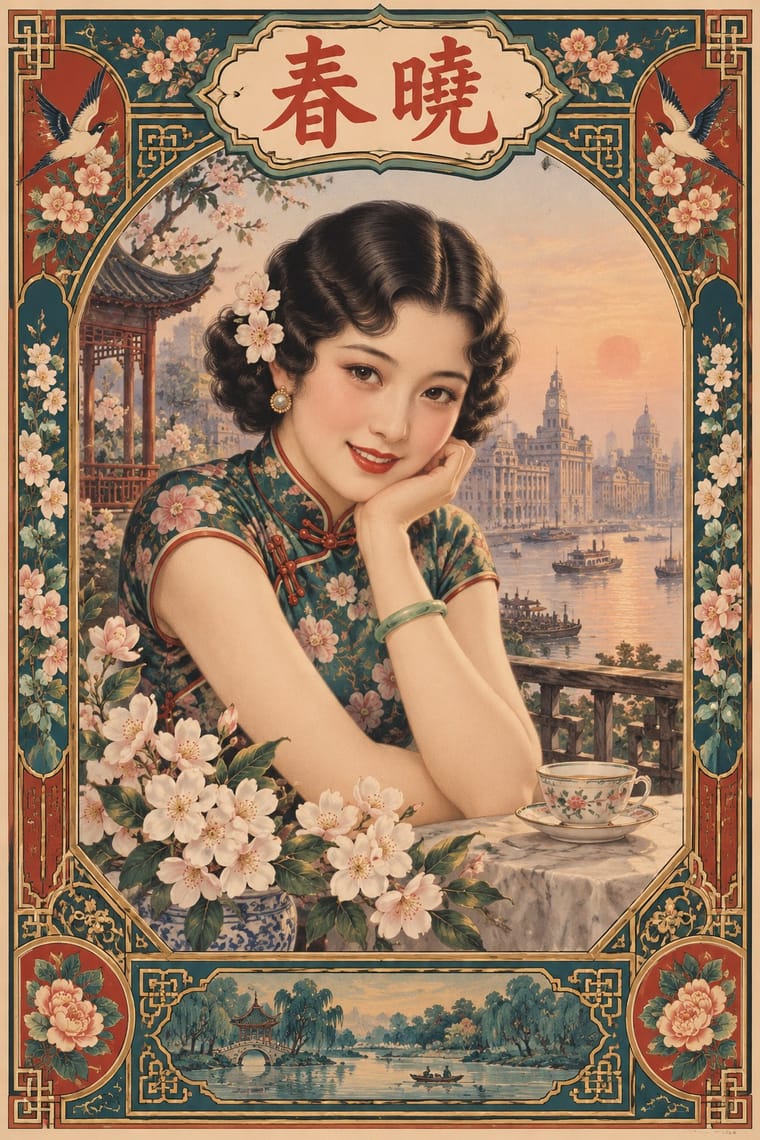
Shanghai Modern & Yuefenpai The commercial art of treaty-port Shanghai.
-
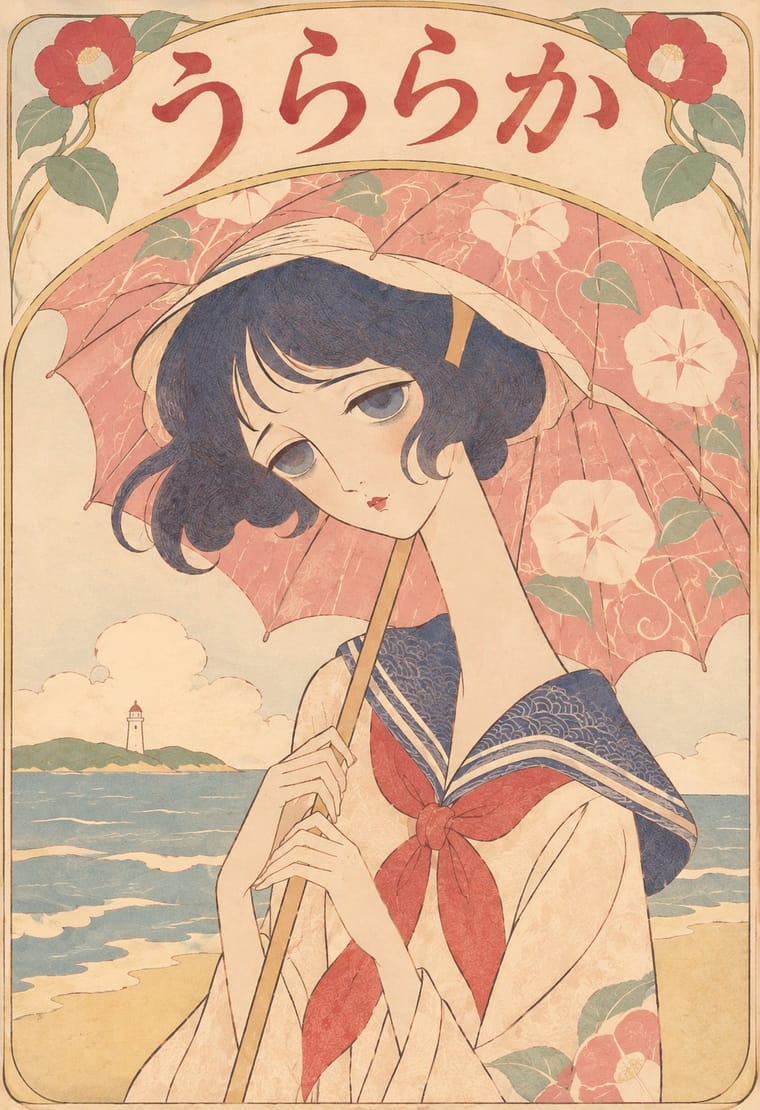
Taishō Roman & Lyrical Illustration The lyrical illustration (jojōga) of late-Meiji to early-Shōwa Japan, led by Takehisa Yumeji: willowy, large-eyed women in kimono drawn with an Art Nouveau contour, set among camellias and kimono patterns and lettered by hand.
-
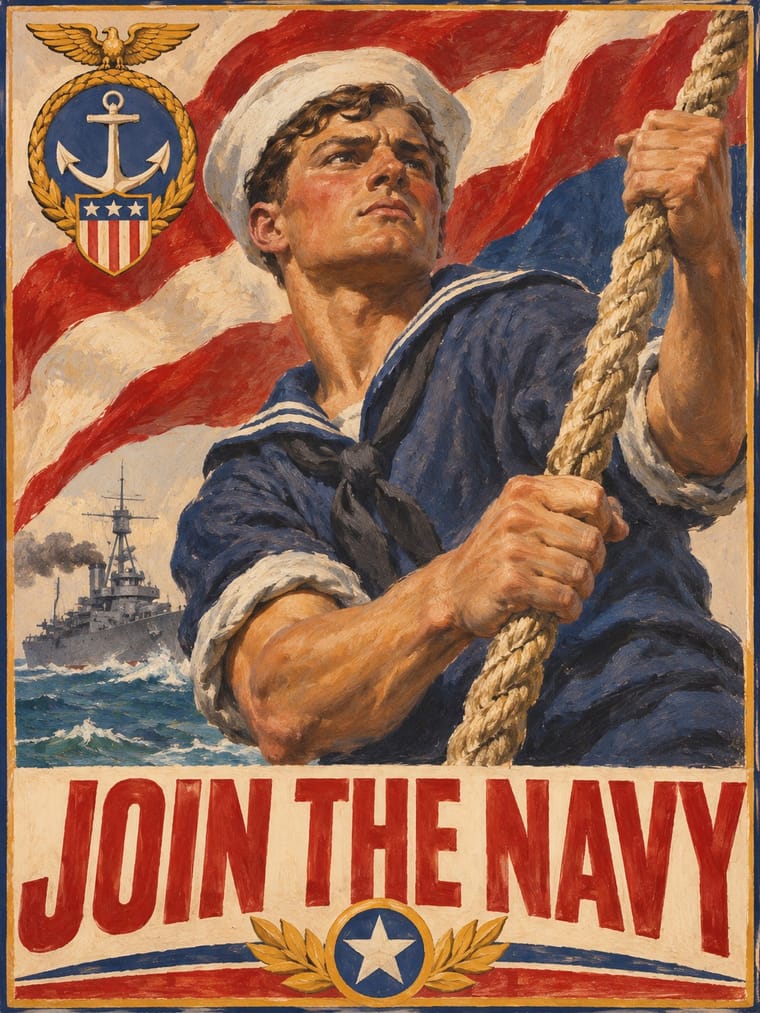
First World War Propaganda Poster The first mass poster campaigns of a state at war: one large figure or symbol and a short imperative aimed straight at the passer-by.
-
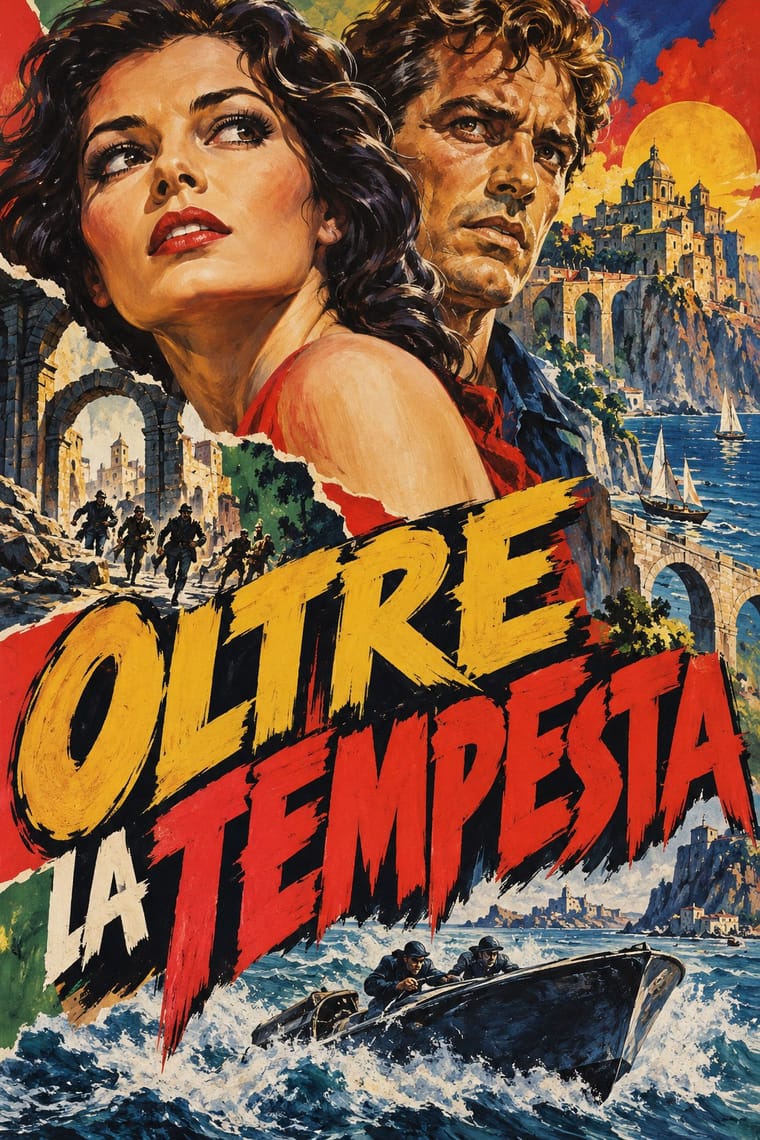
Italian Painted Film Poster (Rome Studios) Painted film advertising by Roman studios for Italian cinema and international co-productions, from the Ballester and Martinati era through peplum, spaghetti western and giallo.
-
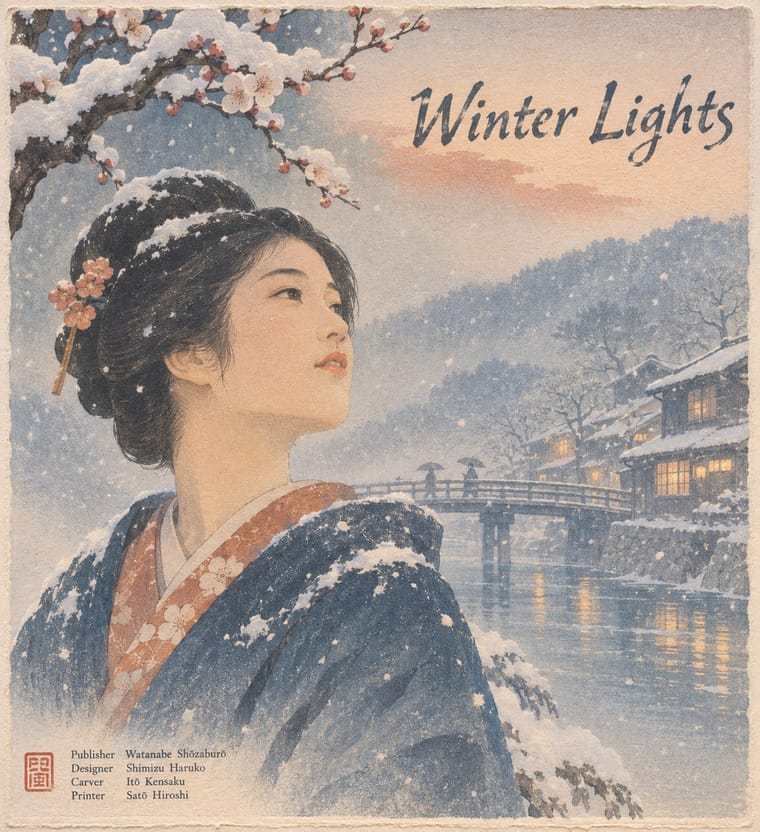
Shin-hanga (New Prints) A Taishō and Shōwa revival of the collaborative ukiyo-e woodblock print, organised largely by the publisher Watanabe Shōzaburō.
-
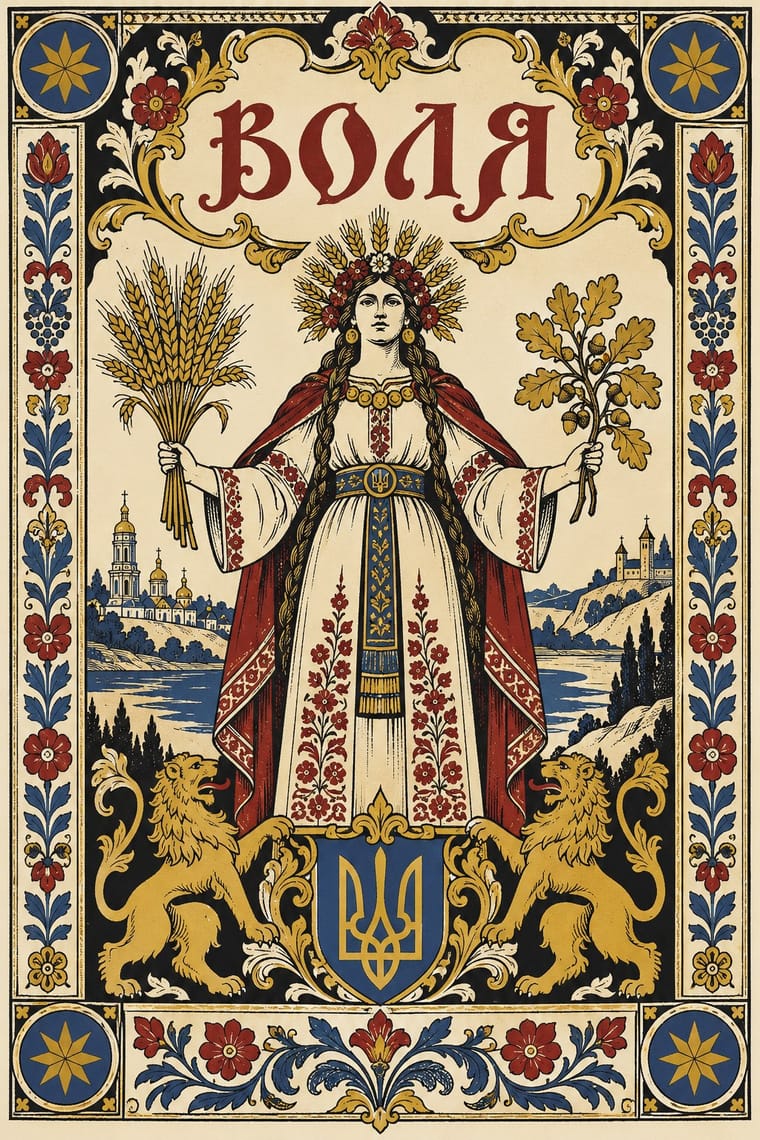
Narbut School (Ukrainian Baroque Revival Graphics) A Kyiv graphic idiom of 1917 to 1920 in which Heorhiy Narbut recast Ukrainian Baroque, Cossack heraldry and folk motifs as crisp black-and-white pen drawing, hand-drawn lettering and framed emblems.
-
Basel Object Poster (Swiss Sachplakat) The Swiss descendant of the German object poster, made in Zurich and above all Basel from 1919 to the early 1950s.
-
ROSTA Windows Hand-stencilled satirical news posters made by the Russian Telegraph Agency during the Civil War and hung in empty shop windows, first in Moscow, then in Petrograd and provincial towns.
-
Estridentismo (Stridentist) Graphics Mexico's first avant-garde (1921-27), launched when Manuel Maples Arce pasted his manifesto Actual No. 1 on Mexico City walls.
- Krokodil Satirical Magazine Style The house cartoon idiom of the Soviet state satirical magazine: clean black contour drawing with flat or lightly washed colour, caricatured figures and a printed caption.
- Peruvian Indigenista Graphics (Amauta and Neo-Peruvian Design) The woodcut-led print graphics of Peru's indigenist movement, in which the Andean face and pre-Columbian ornament stand for a modern Peruvian nation.
- Seiz Breur (Breton Modernised Folk Design) A Breton artists' and craftspeople's association that set out to build a modern Breton art by recasting regional folk motifs in simplified, flat, deco-adjacent form.
- Arab Press Caricature (Rose al-Yusuf to Naji al-Ali) The single-panel newspaper cartoon of the Arab press, from Saroukhan's covers for Cairo's Rose al-Yusuf (1928), heir to Abu Naddara (1877) and al-Kashkul (1914), to Naji al-Ali in Kuwait and Beirut and Ali Ferzat in Damascus.
-
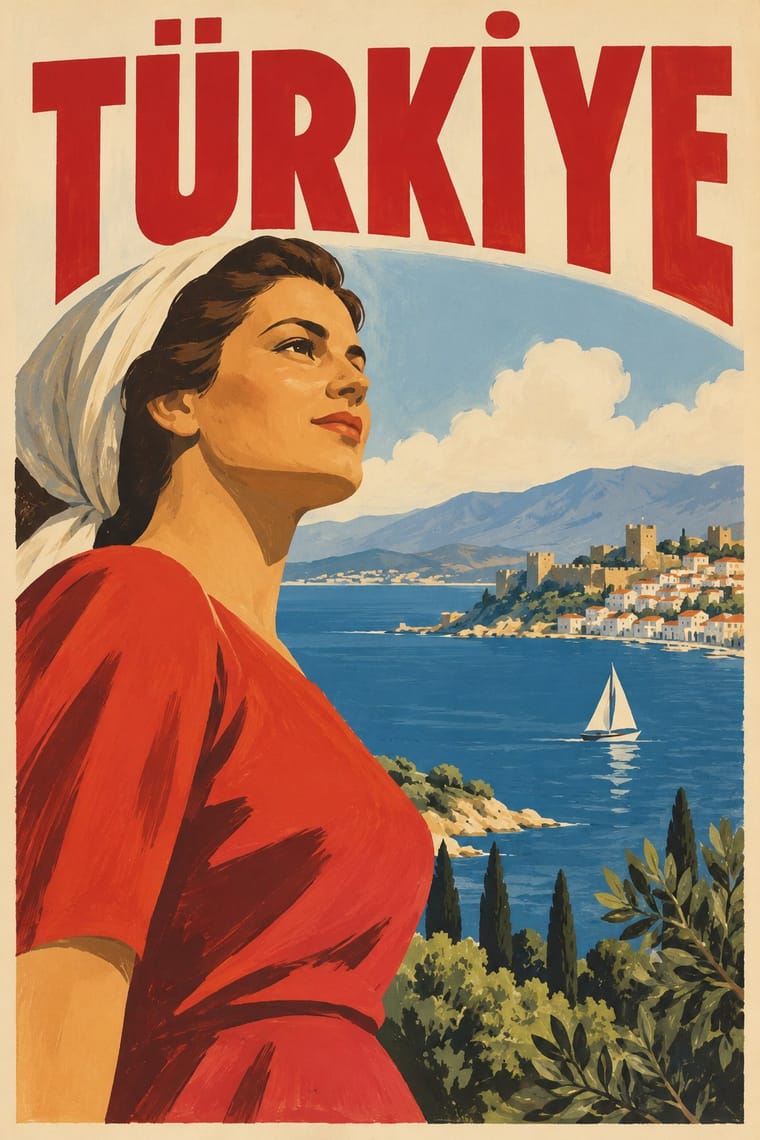
Early Turkish Republican Graphic Design The pictorial poster, label and ticket art of the young Turkish Republic, led by İhap Hulusi Görey after his Munich training in Ludwig Hohlwein's orbit, with Münif Fehim Özarman and, after 1943, Kenan Temizan.
-
Harlem Renaissance Graphic Art The illustration, cover and jacket art of the New Negro movement, set by Aaron Douglas after he moved to Harlem in 1925 and studied with Winold Reiss.
-
Lianhuanhua Picture-Story Books Palm-sized Chinese picture books, about three by five inches, that tell a novel, opera, film or revolutionary story in hundreds of single framed drawings, one to a page, each with a short caption.
-
Republican-Era Manhua (Shanghai Cartoon Magazines) Single-panel cartoons and short strips in black brush or pen line, usually with a short Chinese caption (Sanmao ran wordless), printed in Shanghai's cartoon magazines (about 17 between 1934 and 1937).
-
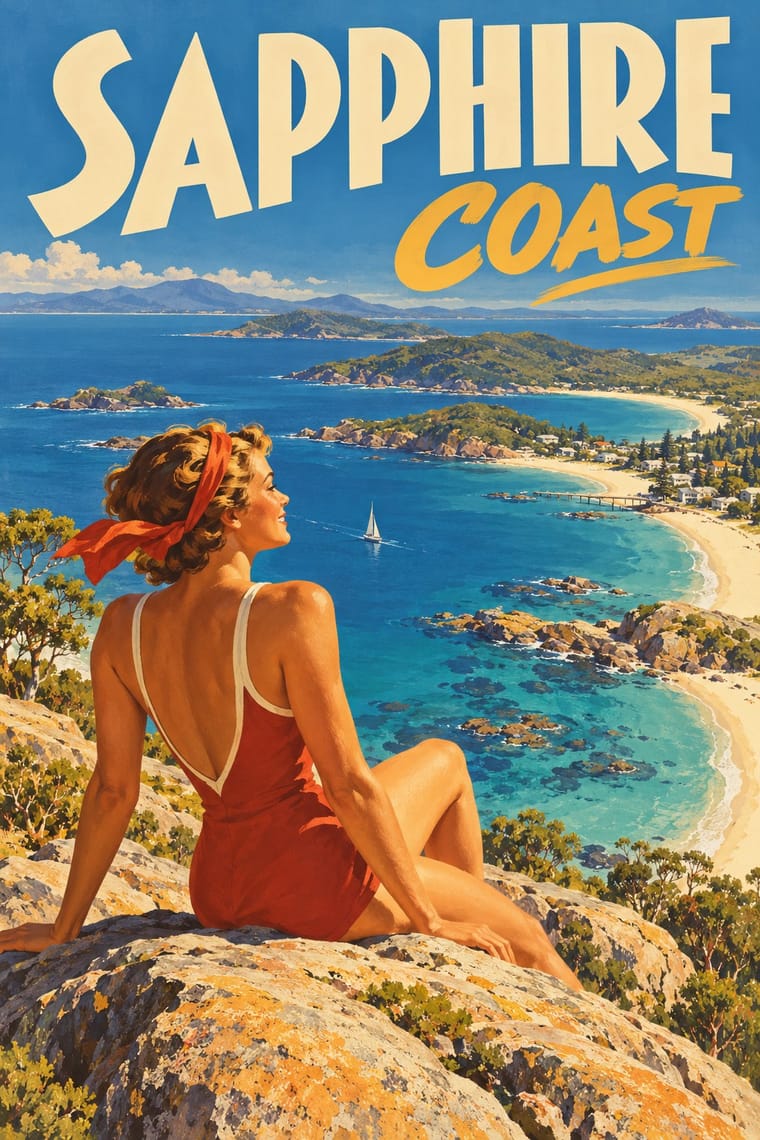
Australian Travel Poster (ANTA Era) The pictorial posters that the Australian National Travel Association (ANTA, 1929), state tourist bureaux, railways and shipping lines commissioned to sell Australia abroad and at home.
-
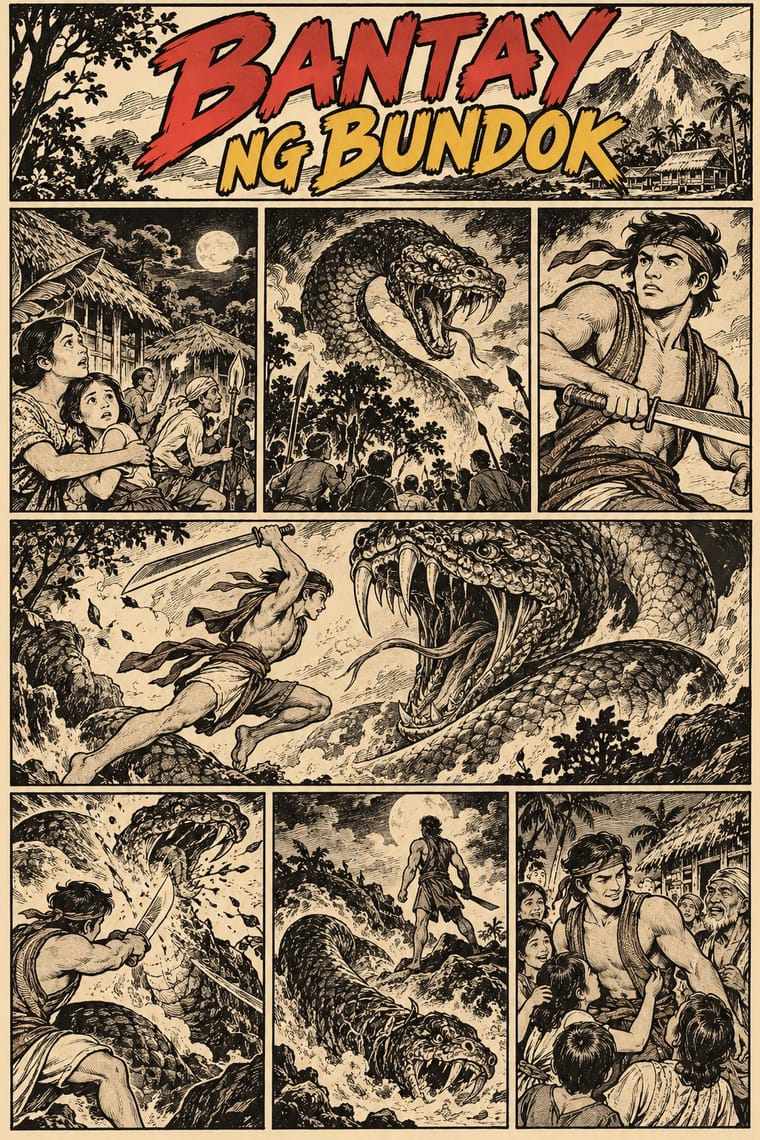
Filipino Komiks The Philippines' newsstand comics magazines, from Kenkoy in Liwayway (1929) and Ace's Pilipino Komiks (1947) to the fall of the Roces titles in the late 1990s.
-
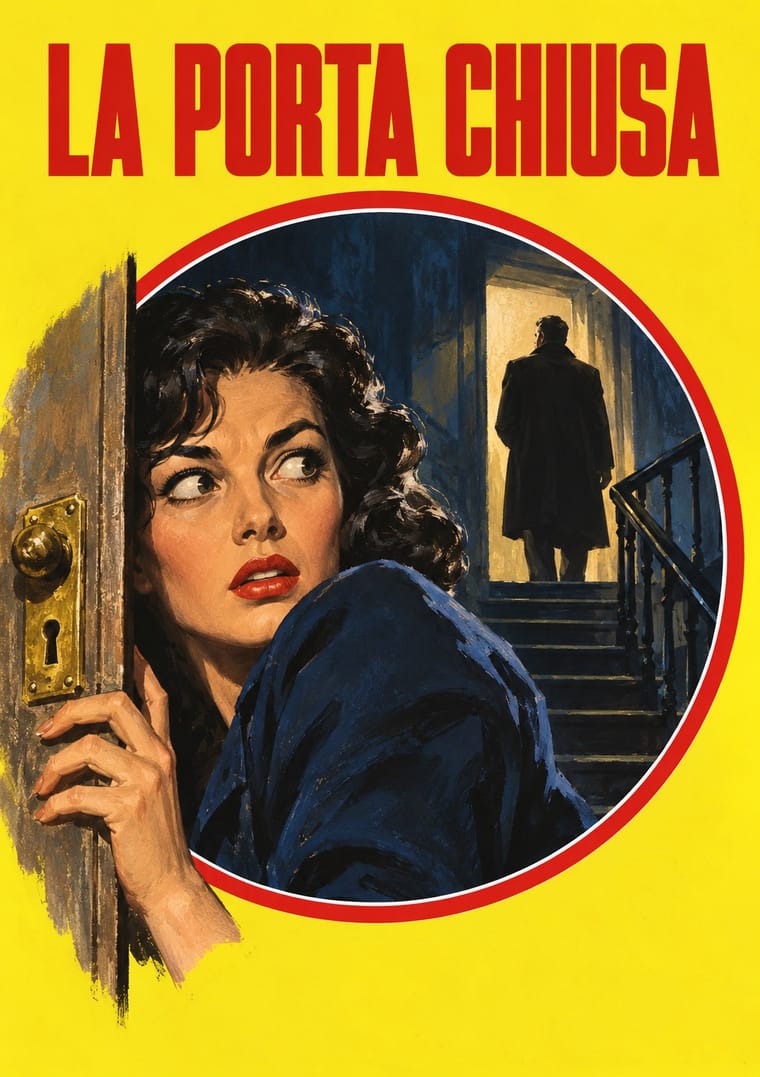
Giallo Mondadori Covers (I Libri Gialli) The cover system of Mondadori's crime series, Milan, from I Libri Gialli of 1929 to Il Giallo Mondadori today.
-
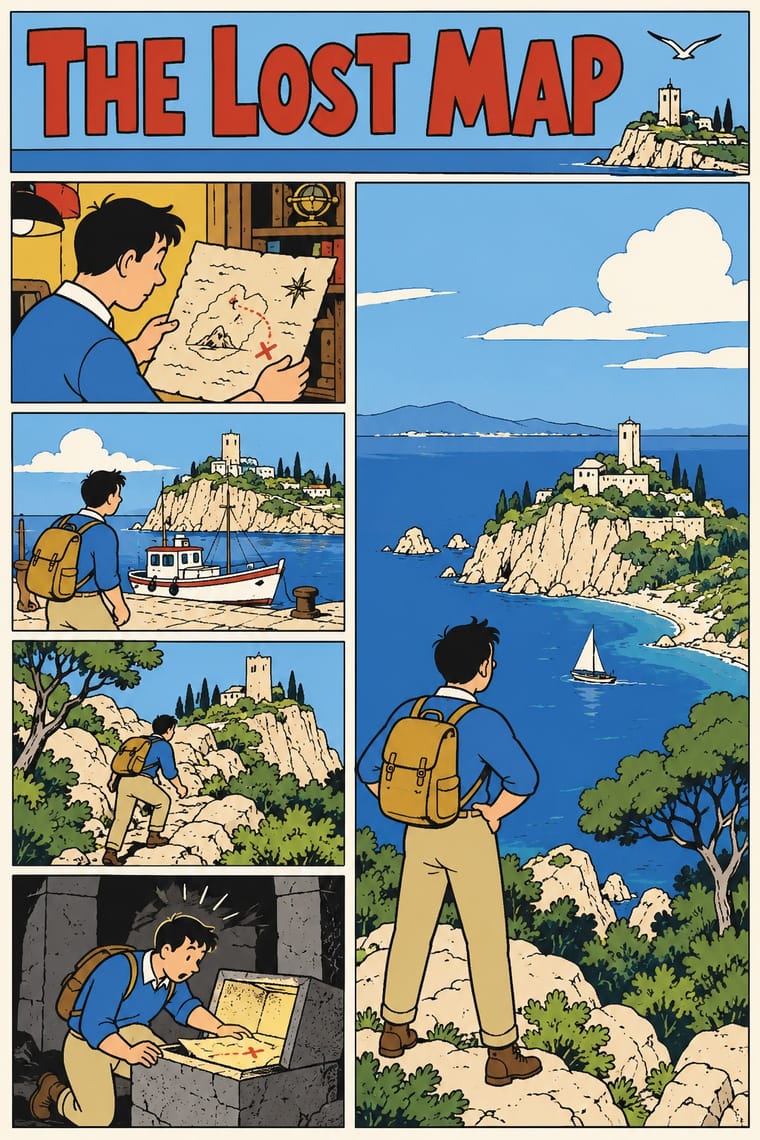
Ligne Claire (Franco-Belgian Clear Line) The comic drawing style of Hergé's Tintin and the Brussels school, named 'klare lijn' by Joost Swarte in 1977.
-
Gaito Kamishibai (Japanese Paper-Theatre Cards) Street storytelling from a stack of large hand-painted cards, shown in a small wooden stage frame while the narrator reads the script and pulls each card away.
-
Mexican Calendar Chromo (Cromos calendáricos) Mexico's give-away advertising calendars, at their height from the 1930s to the late 1960s.
-
Chinese Modern Woodcut Movement The leftist print movement launched by Lu Xun's 1931 Shanghai woodcut workshop, which made the self-cut black-and-white woodcut China's art of national crisis and revolution.
-
Egyptian Painted Film Poster The painted publicity of Egyptian cinema from the early talkies to the 1990s, designed outside the studios by artist-printers such as Hassan Mazhar Gassour and printed as colour lithographs in Cairo.
-
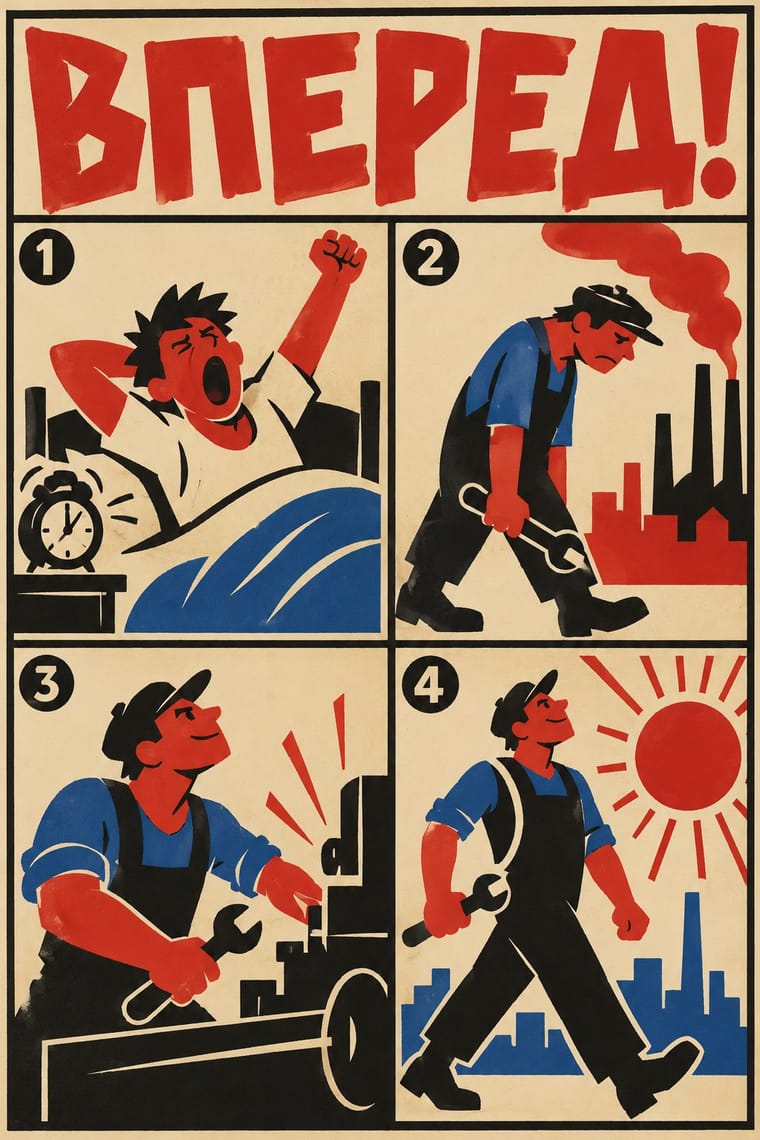
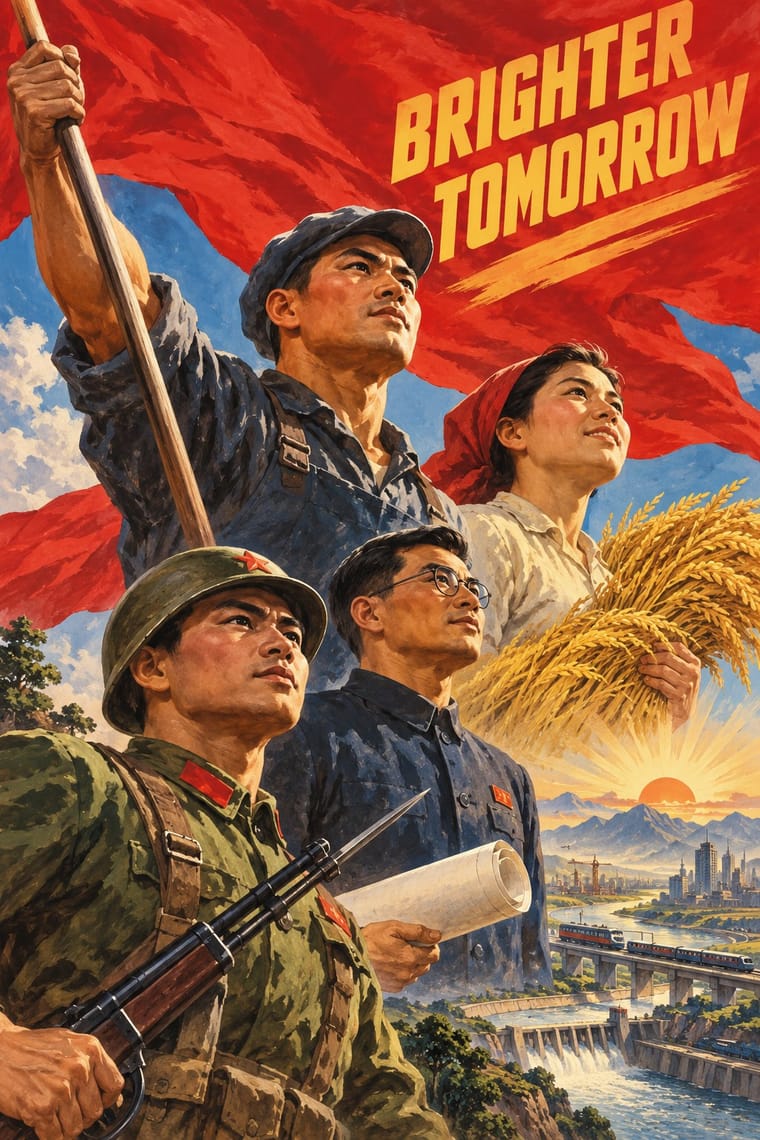
Socialist Realist Propaganda Poster The official art doctrine of the Soviet Union from 1932, later exported across the socialist world, which replaced avant-garde experiment with legible, heroic realism 'national in form, socialist in content'.
-
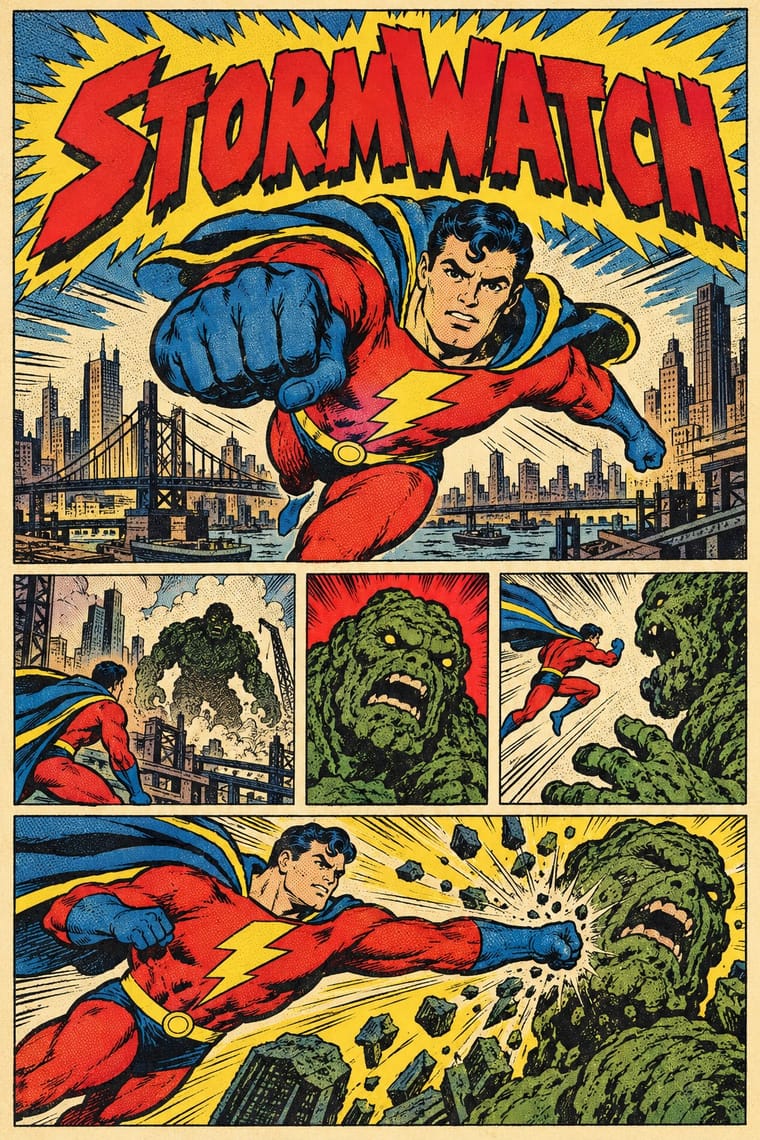
American Four-Colour Comic Book (Golden to Bronze Age) The American newsstand comic book from Famous Funnies (1934) and Action Comics #1 (1938) through the Golden, Silver and Bronze Ages, and past the Bronze Age's end in 1985 until computer colour replaced hand separations in the early 1990s.
-
Mexican Historieta (Pepines to Sensacionales) The mass newsstand comics of Mexico, read by adults as much as children, whose format shrank from the large pepines of the 1930s to pocket digests.
-
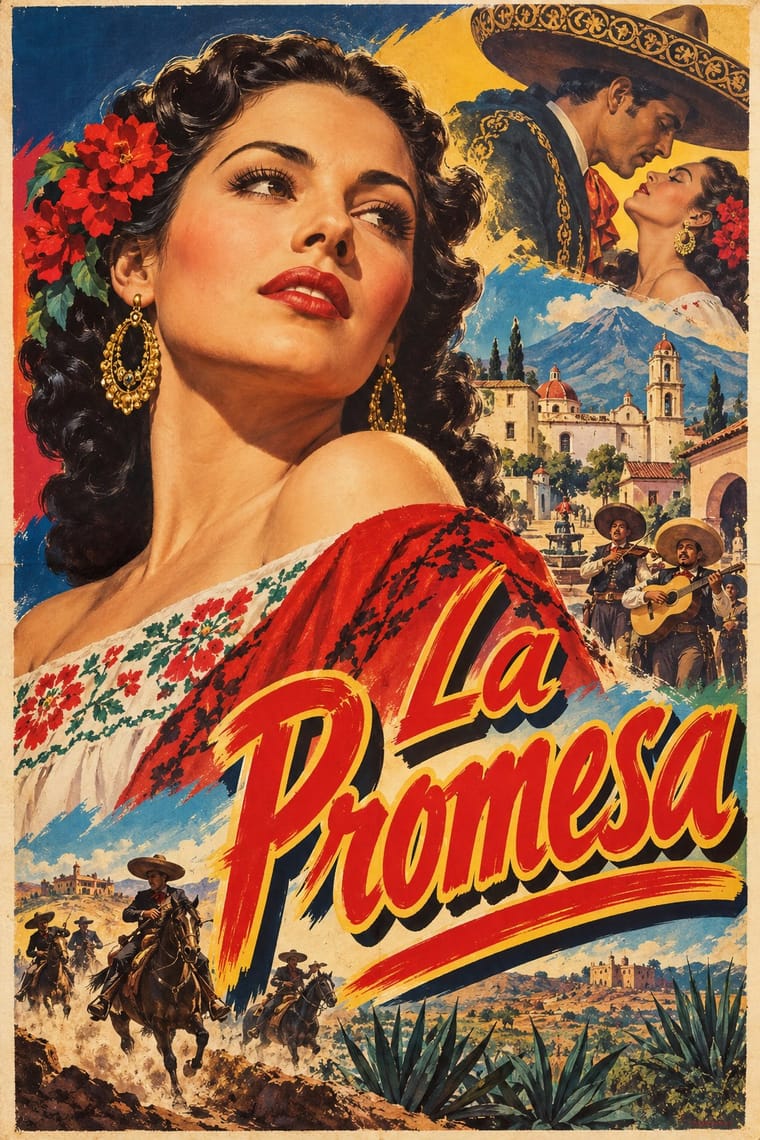
Mexican Golden Age Film Poster Painted posters for Mexico City's studio-era films, built from star portraits and melodrama scenes in saturated colour.
-
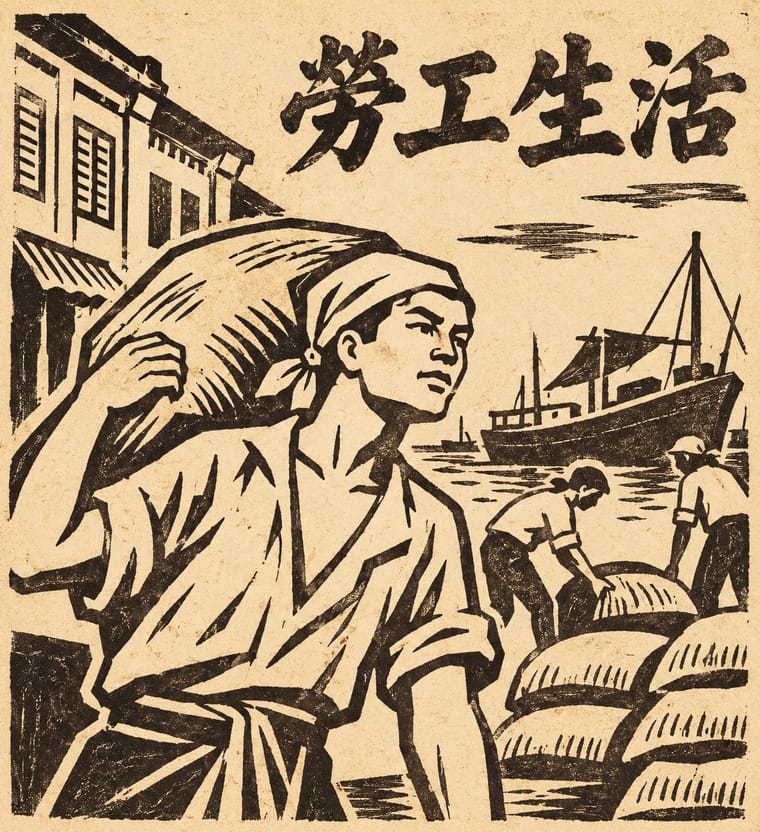
Singapore–Malayan Social Woodcut Graphics A regional sub-style of the Chinese modern woodcut: black-and-white woodcuts made by Chinese-educated artists in Singapore and Malaya from the 1930s to the 1960s, printed in Chinese-language newspaper supplements and literary magazines.
-
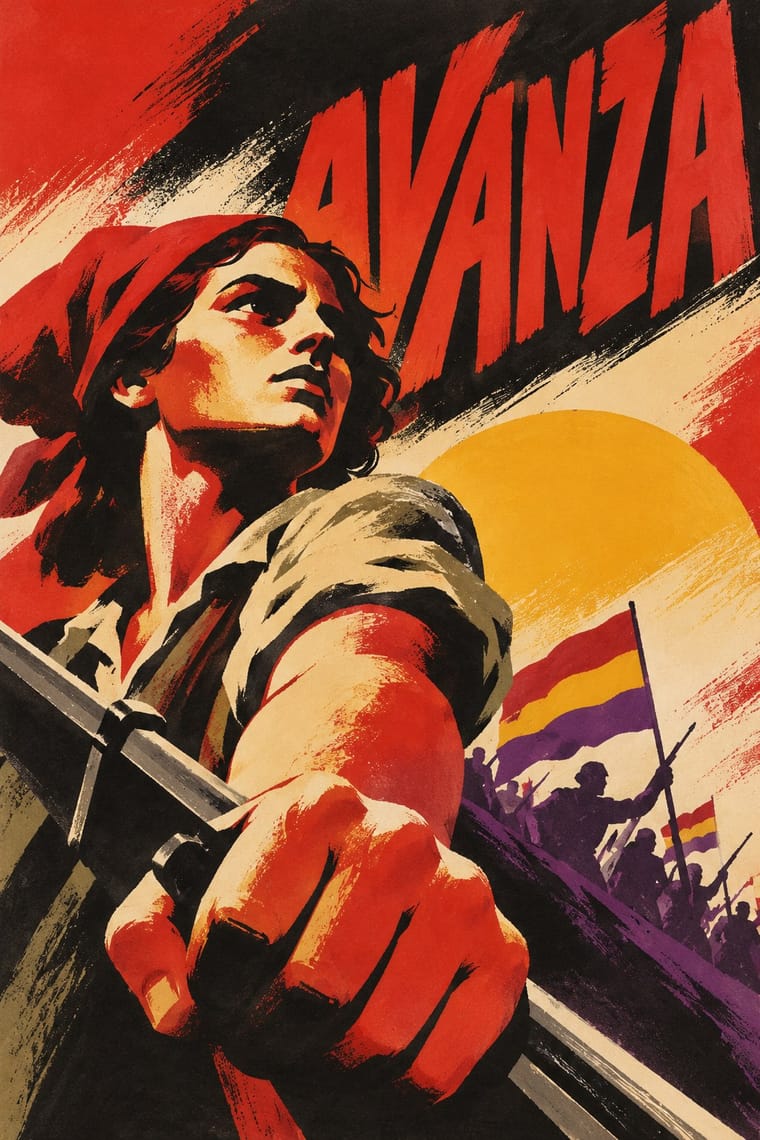
Spanish Civil War Poster The poster war waged by the Spanish Republic, its unions and its anarchist, communist and socialist parties against Franco's uprising.
-
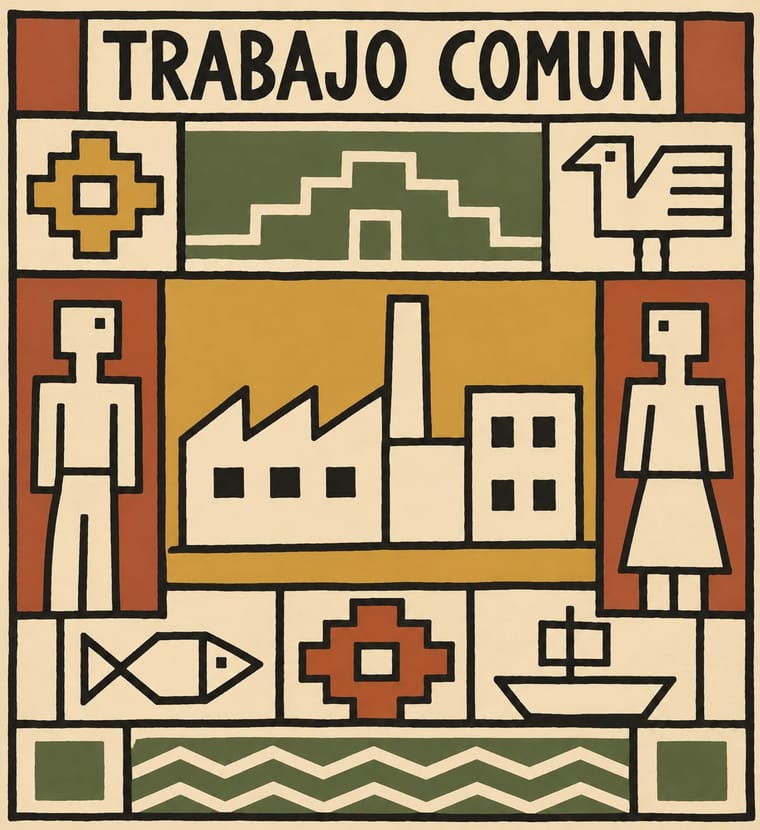
Uruguayan Constructive Symbol Graphics (Círculo y Cuadrado) The printed face of Joaquín Torres-García's Universal Constructivism in Montevideo: a journal and drawings organised on an orthogonal scaffold whose compartments hold reduced, hand-drawn pictographic signs, with lettering that treats words as signs.
-
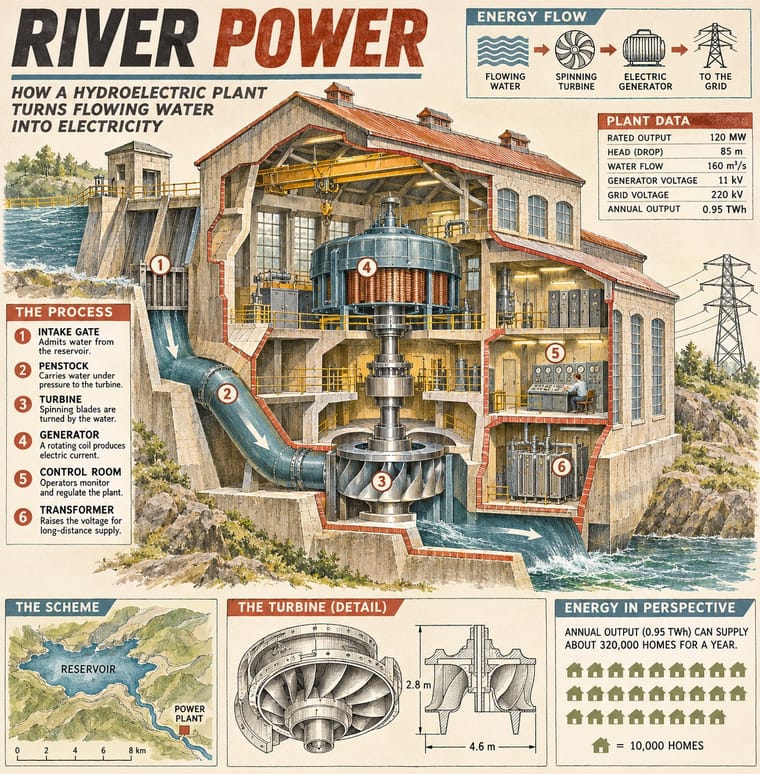
Explanatory Cutaway & Cross-Section Illustration An explanatory illustration tradition that removes walls or casing from a machine, vehicle or building to show its working interior in a legible oblique view.
-
Taller de Gráfica Popular A Mexico City printmaking collective founded in 1937 around Leopoldo Méndez, Pablo O'Higgins and Luis Arenal to put art at the service of popular and anti-fascist struggles.
-
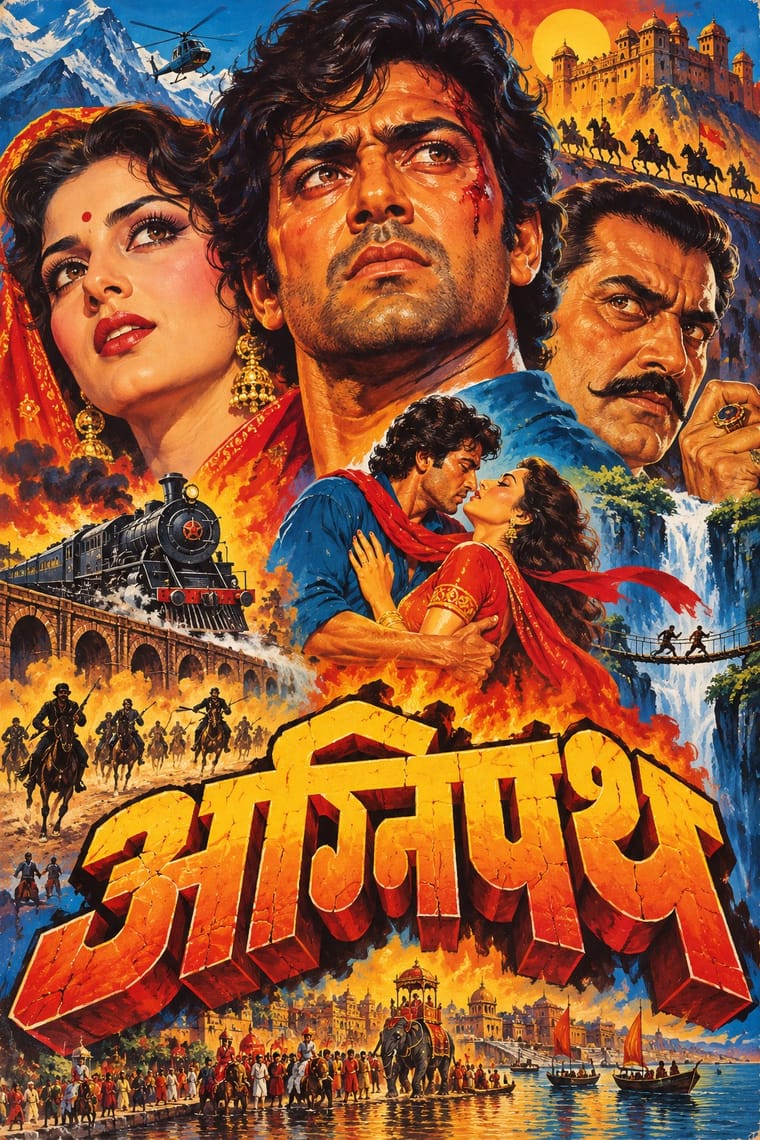
Hand-Painted Bollywood Poster The painted publicity of Bombay's Hindi film industry, at its height from the 1940s to the 1980s.
-
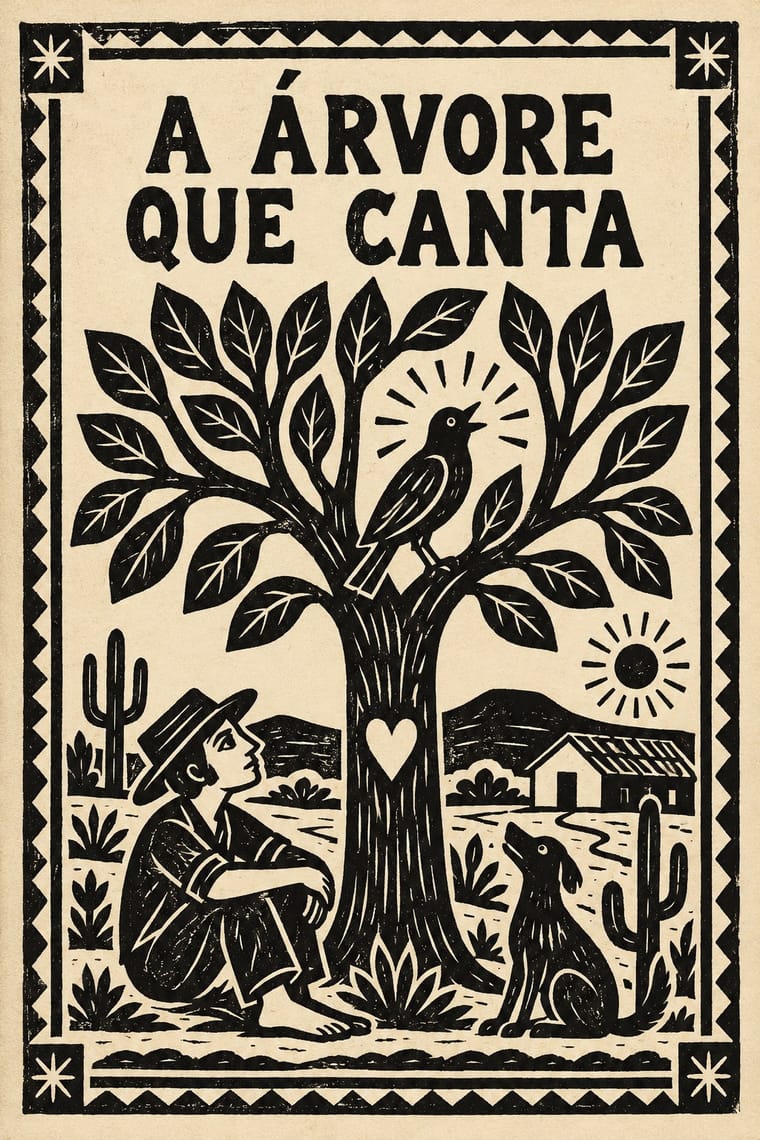
Literatura de Cordel Woodcut The cover art of Brazil's literatura de cordel, pocket chapbooks of verse whose single picture is a small woodcut cut in soft umburana wood and printed in black above a plain letterpress title.
- La Codorniz (Spanish Absurdist Humour Weekly) A Spanish weekly of graphic and literary humour (1941-1978) founded by Miguel Mihura.
-
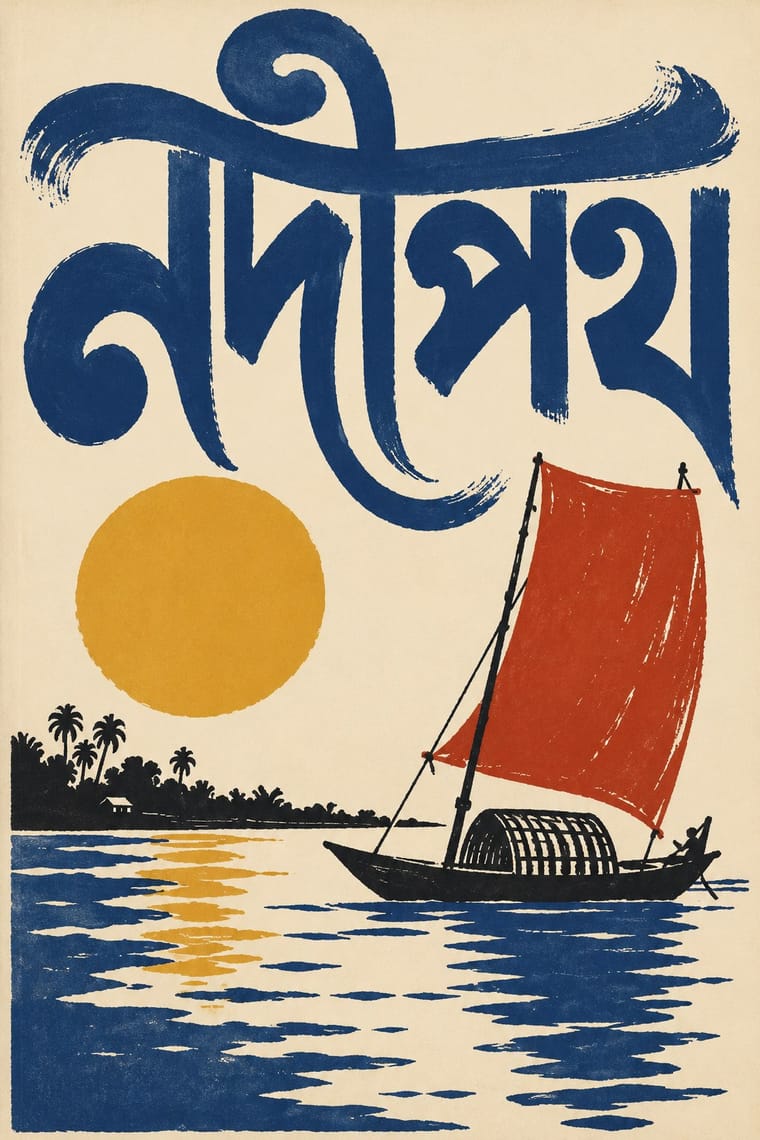
Bengali Modernist Book Cover (Prachchhad) A literary book-jacket culture that began at Calcutta's Signet Press in 1943, where Satyajit Ray and later Purnendu Pattrea made the hand-drawn Bengali title the main image of the cover.
-
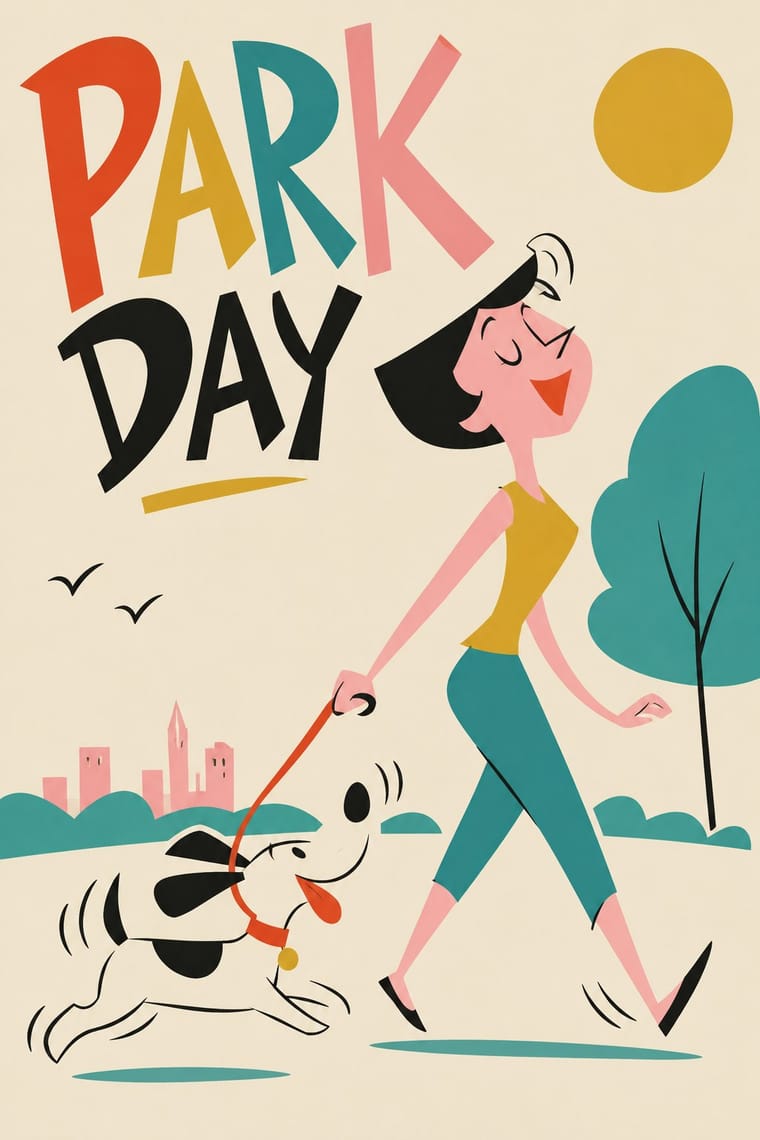
UPA & Cartoon Modern The modern cartoon of United Productions of America (UPA) and the 1950s films, commercials and books it inspired.
-
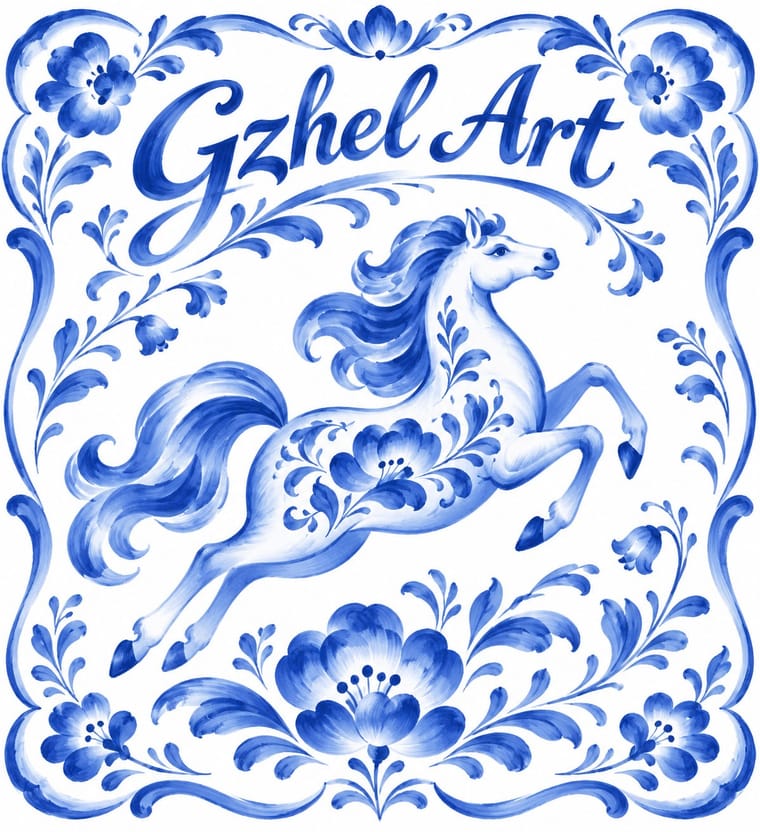
Gzhel Cobalt Ceramic Painting A living regional painting language of cobalt flowers, leaves and curling stems on white porcelain, rebuilt in the mid-1940s from older Gzhel ceramics.
- Moomin Graphics (Tove Jansson's Pen-Drawn World and its Licensed Afterlife) The pen-and-ink world of Tove Jansson's Moomin books (1945-1977) and newspaper strip (1947-1975): round, white, snouted trolls drawn in a sure, fine black line, small against hatched forests, seas and night skies, in strips of framed panels with hand-lettered balloons.
-
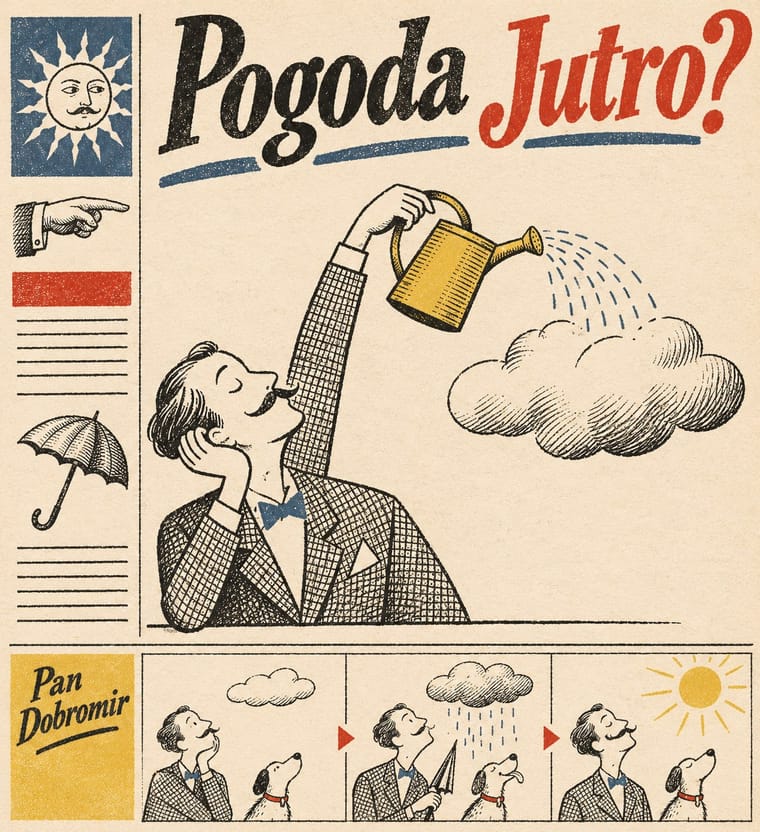
Przekrój Magazine Illustration (Eile Era) A weekly general magazine in post-war Poland whose editor Marian Eile gave it a witty, literary graphic voice: drawings by Daniel Mróz, cartoons by Bohdan Butenko and a weekly last-page strip by Zbigniew Lengren.
-
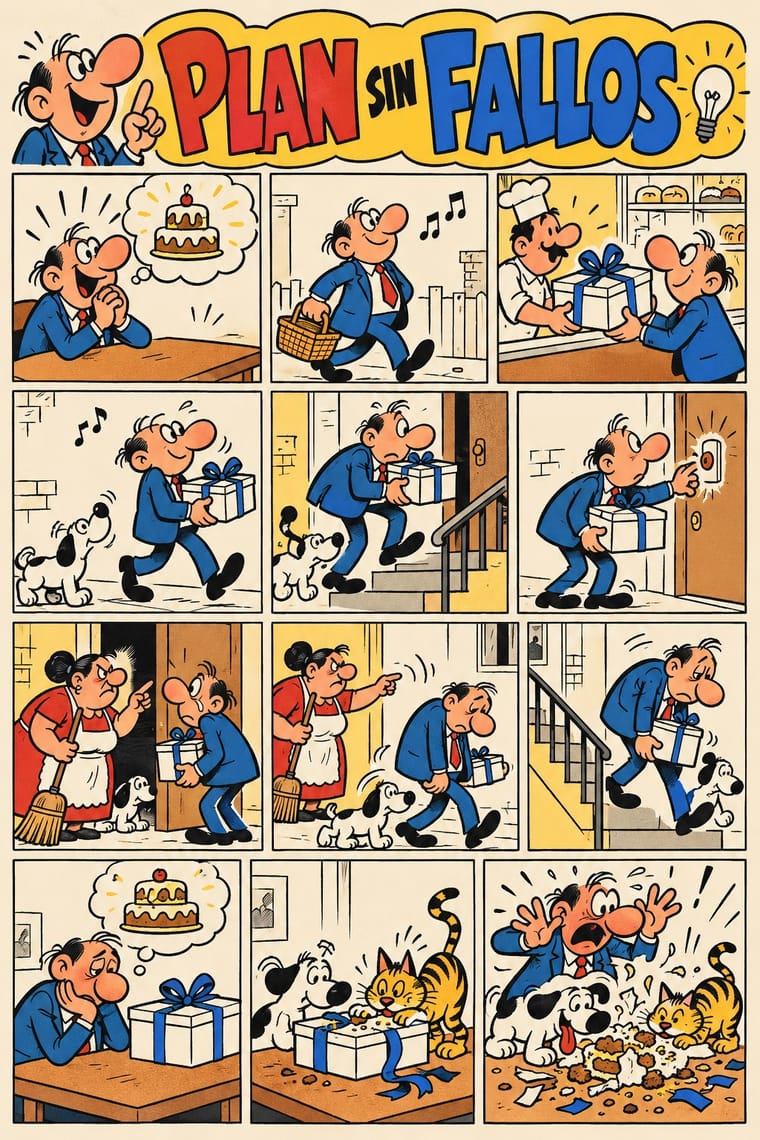
Escuela Bruguera (Spanish Humour Comics) The house style of Editorial Bruguera's humour cartoonists in Barcelona from 1947 to 1986, named the 'Escuela Bruguera' by Terenci Moix in 1968.
-
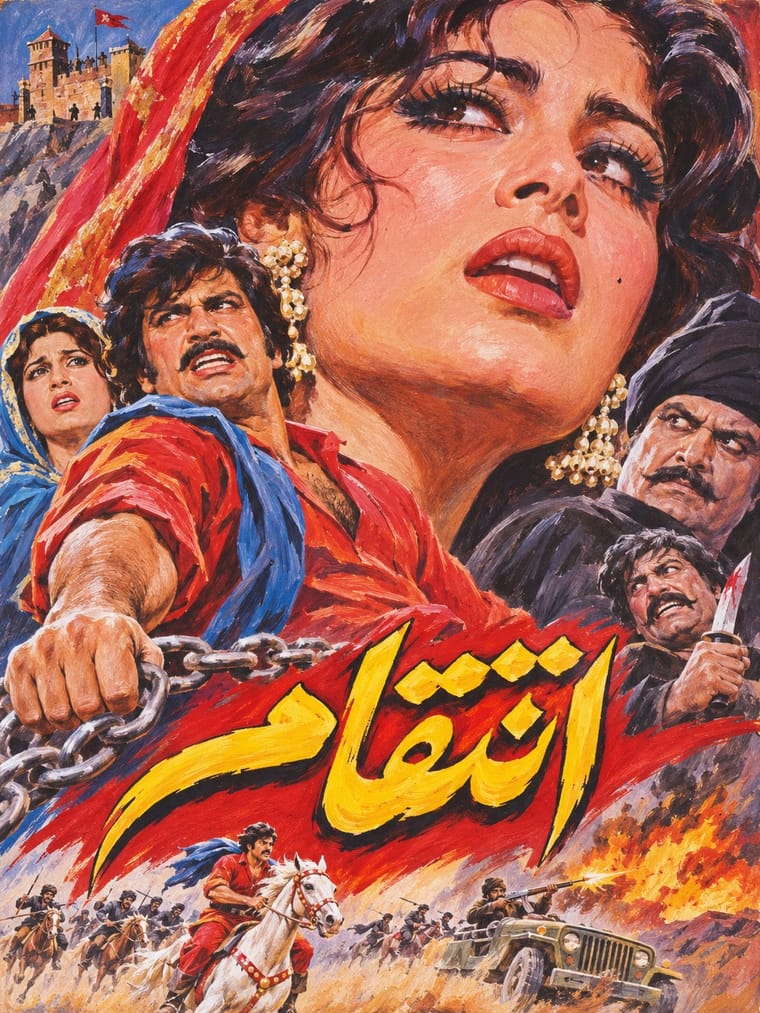
Lahore Hand-Painted Film Poster and Billboard (Lollywood) The painted publicity of Lahore's Urdu and Punjabi cinema.
-
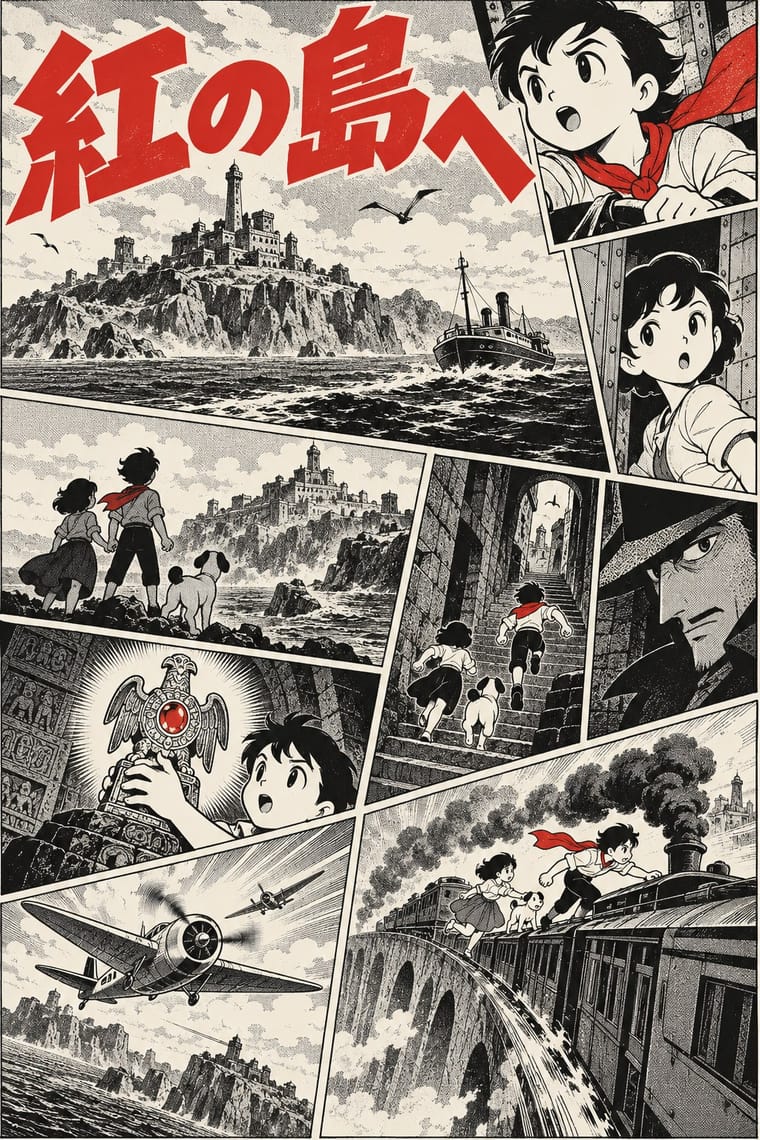
Story Manga (Postwar Japanese Comics) The black-and-white narrative comic of postwar Japan, from Tezuka Osamu's Shin Takarajima (1947) to the weekly boys' magazines of 1959 and 1968 and the paperbacks that collect them.
-
Argentine Adventure Historieta (Oesterheld–Breccia) The adult adventure comics of Buenos Aires newsstand magazines, from Misterix (1948) and Oesterheld's Hora Cero (1957) to Skorpio and Fierro; the humour line of Patoruzú, Rico Tipo and Mafalda is another tradition.
-
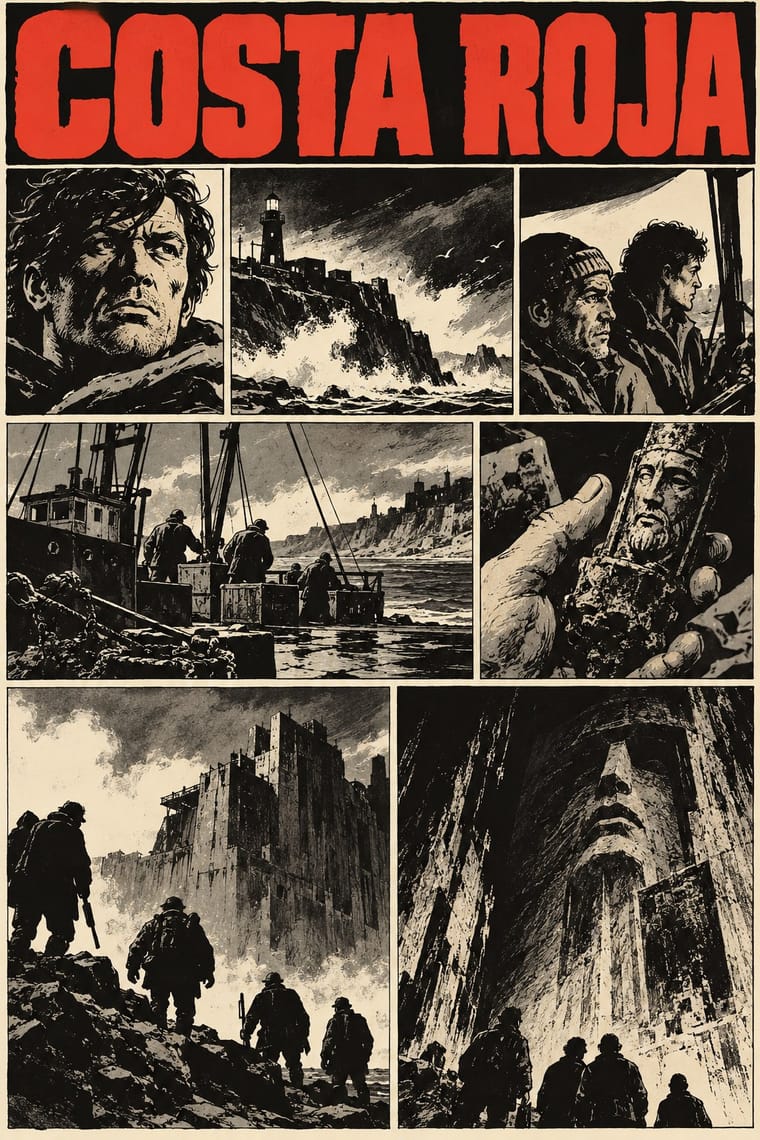
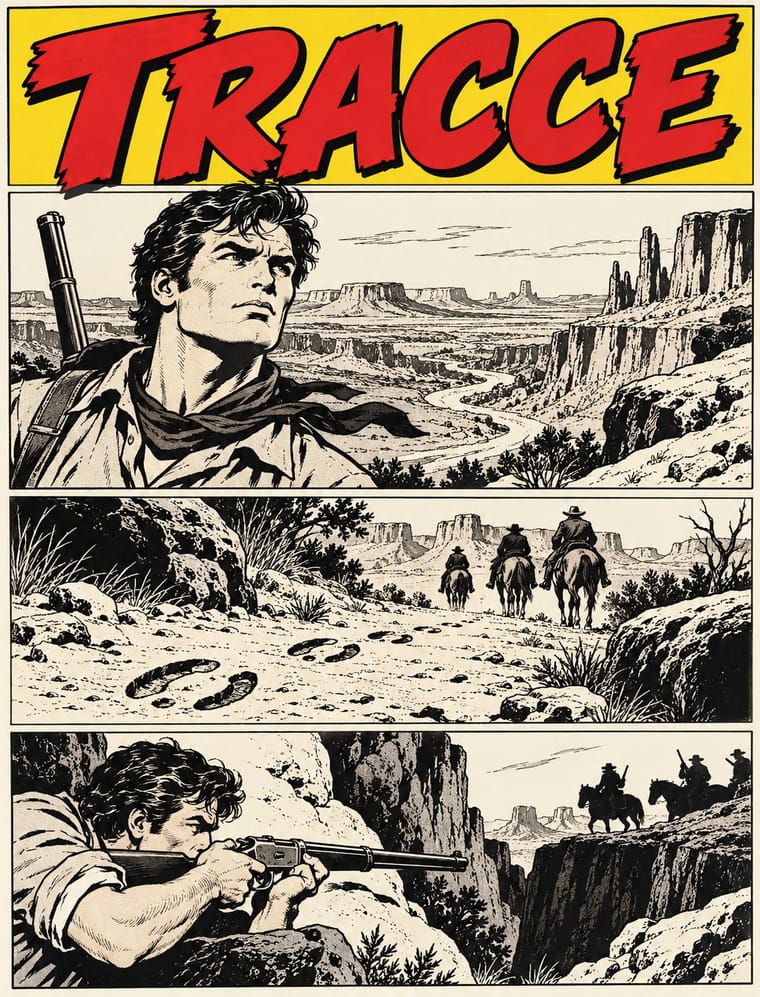
Bonelli Fumetto (Italian Popular Adventure Comics) The house format of Milan's Bonelli publishing house and its imitators (Tex, Zagor, Dylan Dog, Nathan Never): monthly newsstand paperbacks of 16 x 21 cm with about a hundred black-and-white pages, each a long episode of a serial hero.
- North Korean Propaganda Poster & Mansudae Studio Style The state-controlled poster and painting language of North Korea: brightly coloured, idealised workers, soldiers and children rendered in smooth, naturalistic paint, set against luminous skies and topped with bold hangul slogans.
-
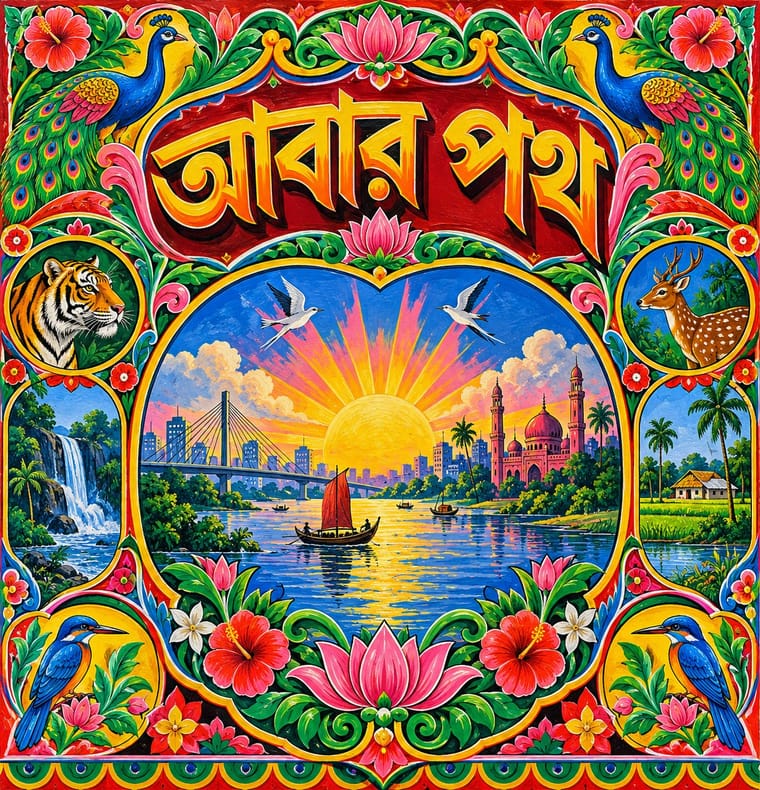
Dhaka Rickshaw Painting Oil paintings made by street artists on the metal back-board and canvas hood of cycle rickshaws in Bangladesh.
- Ethiopian Popular Strip Painting Long oil paintings on cloth, made in Addis Ababa and sold to visitors and Ethiopians, that tell the story of the Queen of Sheba and Solomon in stacked registers of small framed scenes, are laid out like a comic strip.
-
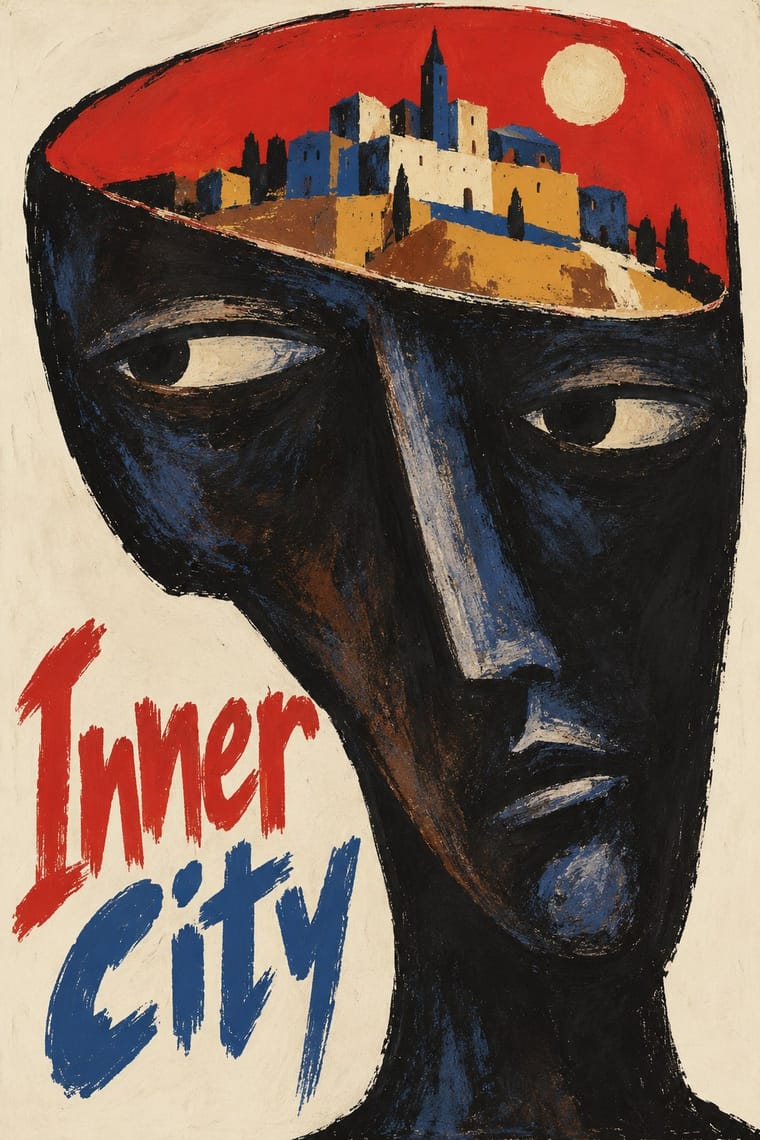
Polish Poster School A painterly, metaphorical poster culture that flourished in communist Poland, chiefly for film, theatre, opera and circus.
-
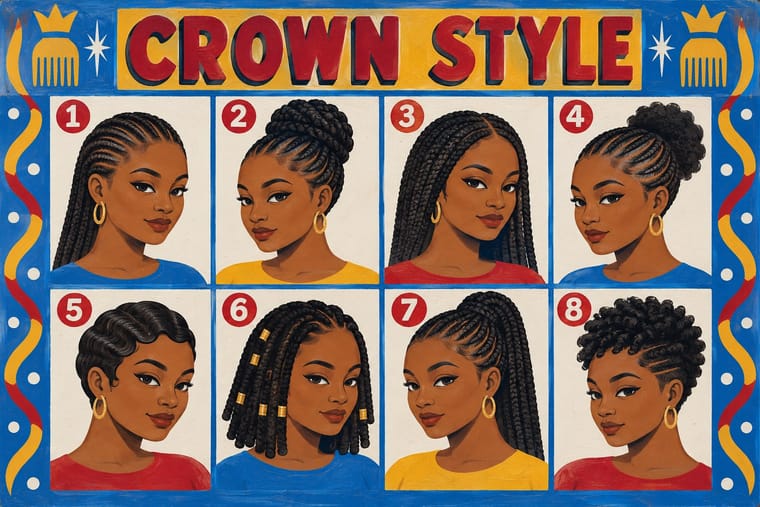
West African Barbershop & Hair Salon Signs Hand-painted boards advertising barbershops and braiding salons across West and Central Africa, made by self-taught, often anonymous sign painters since the mid-20th century.
-
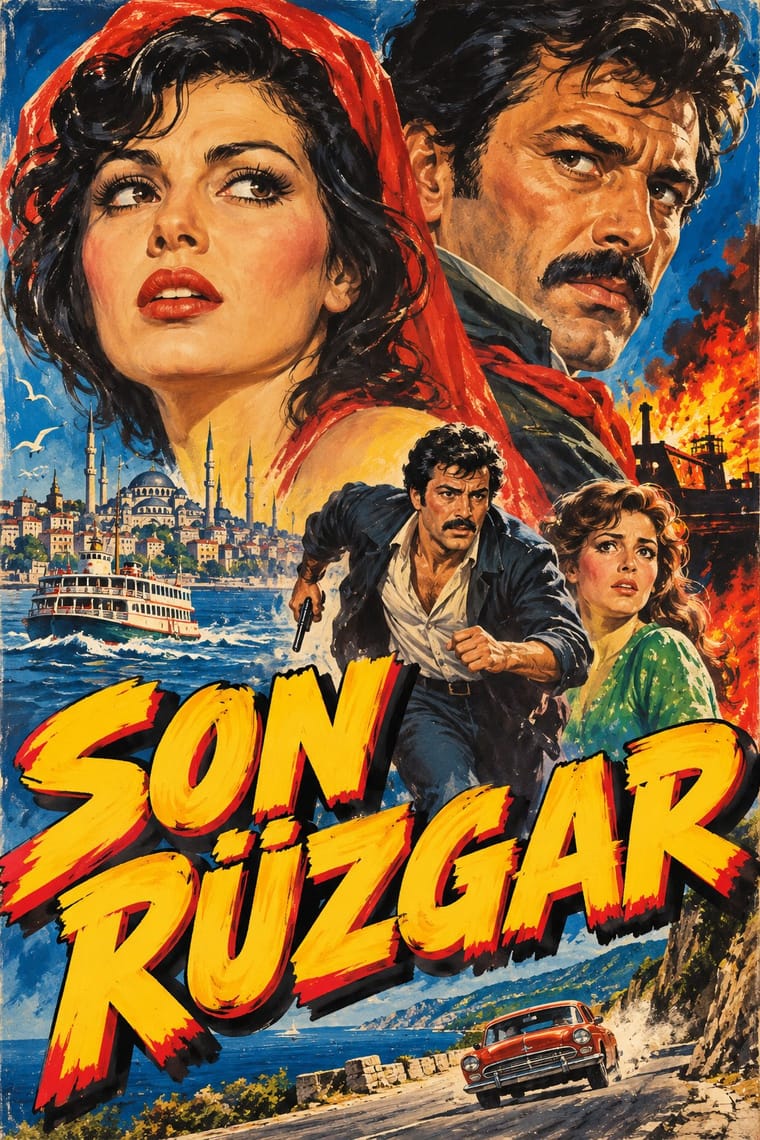
Yeşilçam Film Poster (Turkish Hand-Painted Afiş) Painted publicity of Turkish popular cinema by workshop artists such as Mehmet Bal, Kemal Borteçin and İbrahim Enez.
-
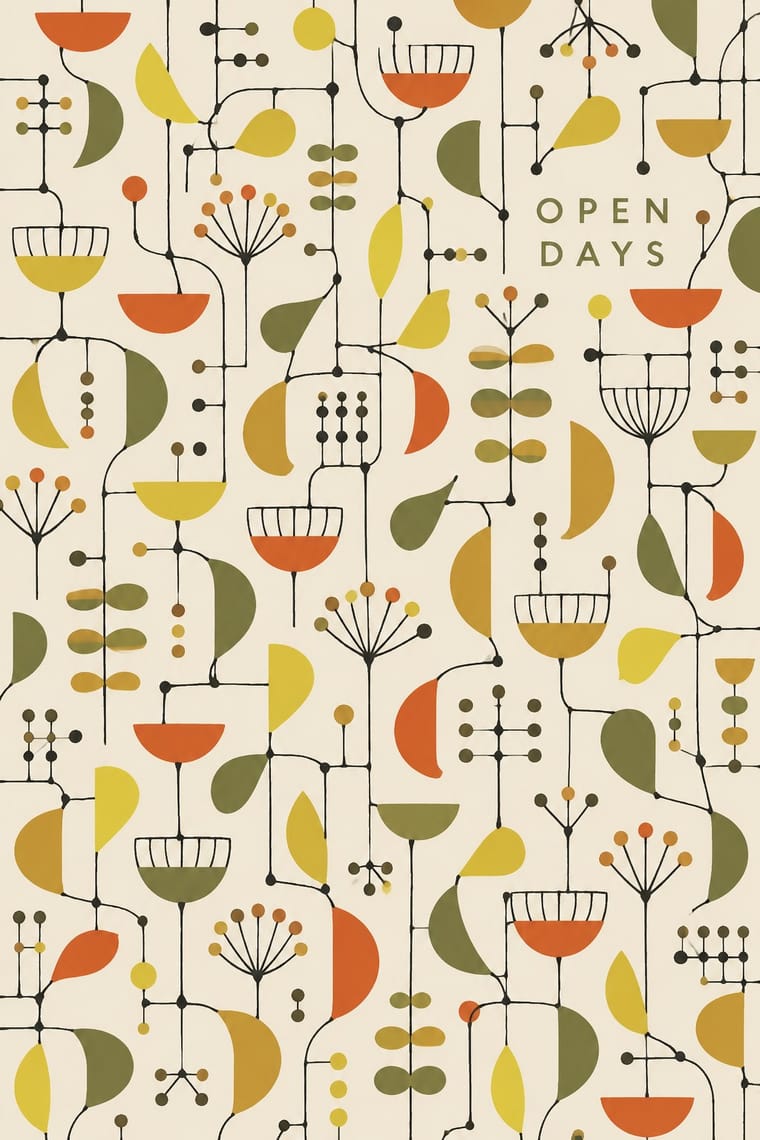
Festival of Britain 'Contemporary' Pattern (Lucienne Day and the Festival Pattern Group) The post-war British pattern language launched at the 1951 Festival of Britain.
-
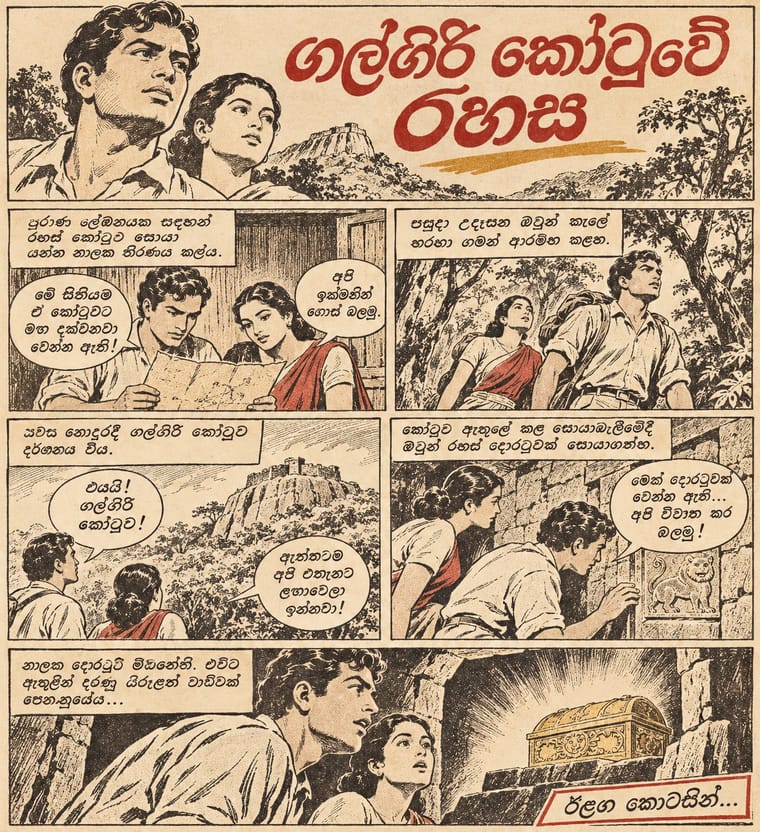
Sinhala Chithra Katha (Popular Narrative Comics) Serialised picture stories in Sinhala, begun in Colombo newspapers with Neela (Lankadeepa, October 1951, G.
-
Cairo–Beirut Arab Modernist Book & Periodical Design The illustrated book, magazine and children's-book culture that ran from Cairo's post-1952 publishing houses to the Arab nationalist and leftist presses of Beirut.
-
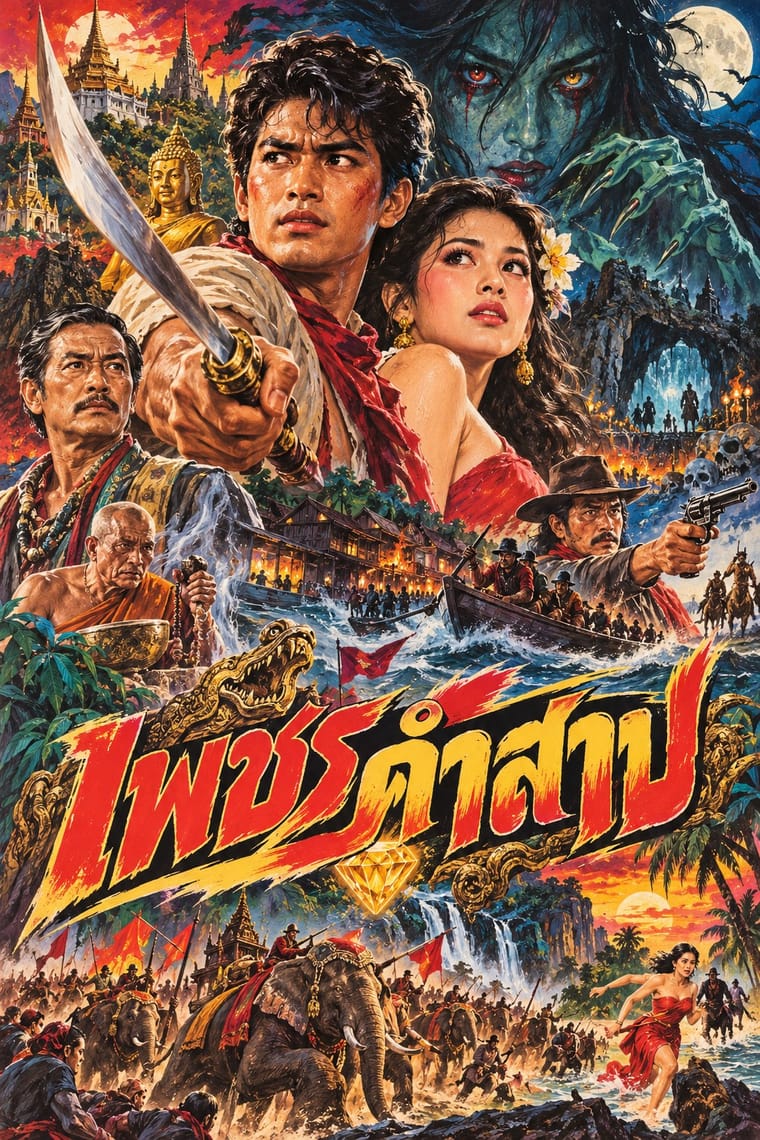
Thai Hand-Painted Film Poster and Billboard Cinema advertising painted by hand at the largest possible size on billboards and on touring pick-up trucks, copied from lobby cards and posters and enlarged with the grid method.
-
Push Pin Style The eclectic illustrative style of New York's Push Pin Studios, founded by Seymour Chwast, Milton Glaser and Edward Sorel.
-
Kustom Kulture Graphics (Pinstriping, Monster Art and Hot-Rod Lettering) The graphic language of American hot-rod, custom-car and chopper culture: freehand pinstriping, flames and scrolls laid over metal-flake paint, brush-drawn lettering, and grotesque cartoon monsters such as Rat Fink airbrushed onto T-shirts.
-
Arab Children's Comic Magazines (Samir to Majid) Arabic children's comics weeklies, from Dar al-Hilal's Samir in Cairo (1956) to Abu Dhabi's Majid (1979), mixing translated Western strips with house characters by Egyptian, Lebanese, Armenian and European artists.
-
Chinese National-Style Animation (Shanghai Animation Film Studio) The 'national style' of the Shanghai Animation Film Studio, which turned from Disney and Soviet models to Chinese media: Peking-opera masks and movement, paper-cut and folded-paper figures, mural and New Year print colour and, from 1960, ink-wash painting set in motion after Qi Baishi and Li Keran.
-
Soviet and Eastern Bloc Matchbox Labels Tiny box-top posters issued by state match factories across the Eastern Bloc from the 1950s: one bold picture in a few flat colours, often a public message on safety, hygiene or saving alongside state themes such as space and industry.
- Gekiga (Dramatic Pictures) Japanese comics for adult readers, a term coined by Yoshihiro Tatsumi in 1957 for work by artists who wanted consistently dramatic stories rather than comic children's manga, with aesthetics influenced by film noir and crime novels.
-
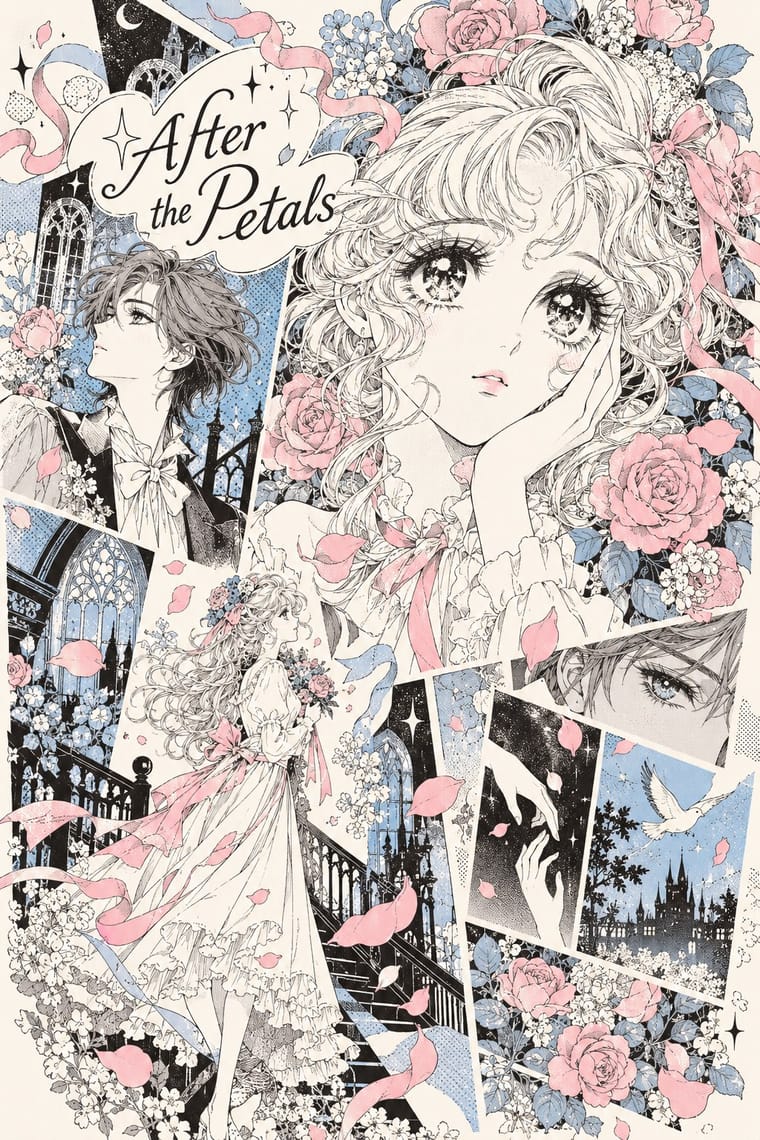
Shōjo Manga (Japanese Girls' Comics) The look of Japan's girls' comics (strictly a readership, not a style), which Takahashi Macoto fixed in 1958 from the lyrical illustration (jojōga) of Nakahara Jun'ichi and the Year 24 Group remade in the 1970s.
-
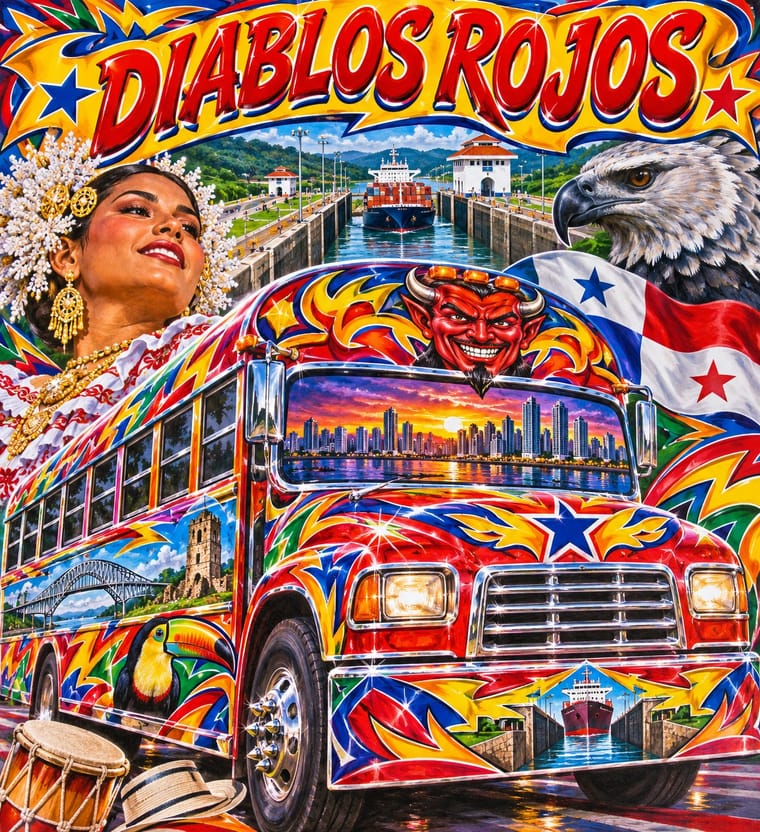
Panamanian Painted Buses (Diablos Rojos) and Their Central American Kin The decoration of retired North American school buses run as public transport, best documented as the Diablos Rojos of Panama and echoed in the bold paint of Guatemalan camionetas.
-
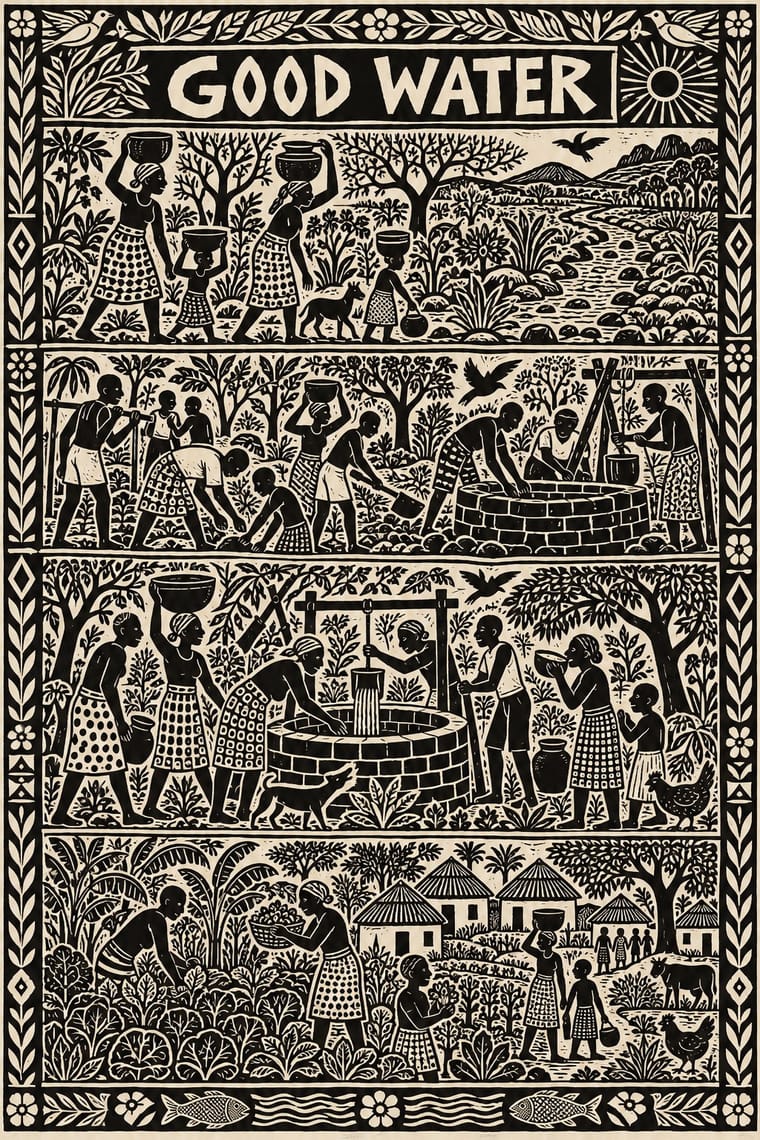
Rorke's Drift Linocut The prints of the Lutheran art centre that Swedish teachers Peder and Ulla Gowenius started at Ceza Hospital in 1962 and moved to Rorke's Drift in 1963: under apartheid, which denied Black South Africans formal fine-art education, the chief training ground for many Black artists.
-
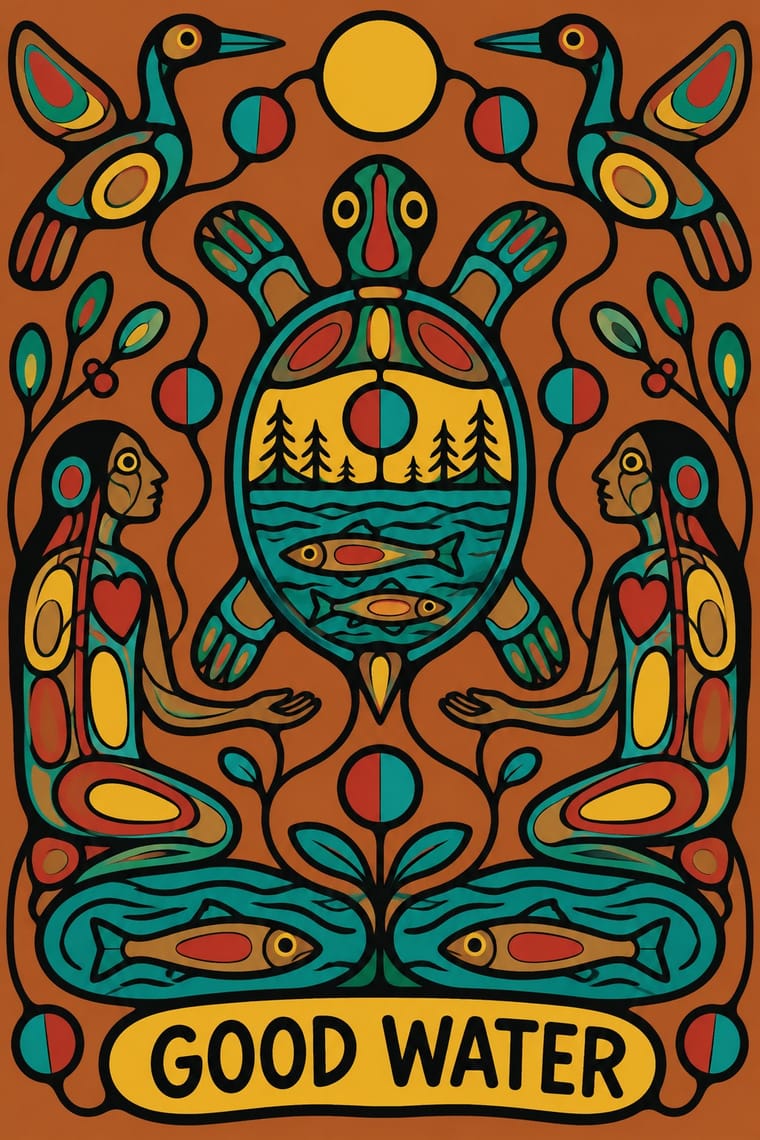
Woodland School (Legend Painting) A school of painting from northwestern Ontario, made public when Norval Morrisseau showed at Toronto's Pollock Gallery in 1962 and carried on by Ojibwe, Odawa, Oji-Cree and Cree artists such as Daphne Odjig and Carl Ray.
-
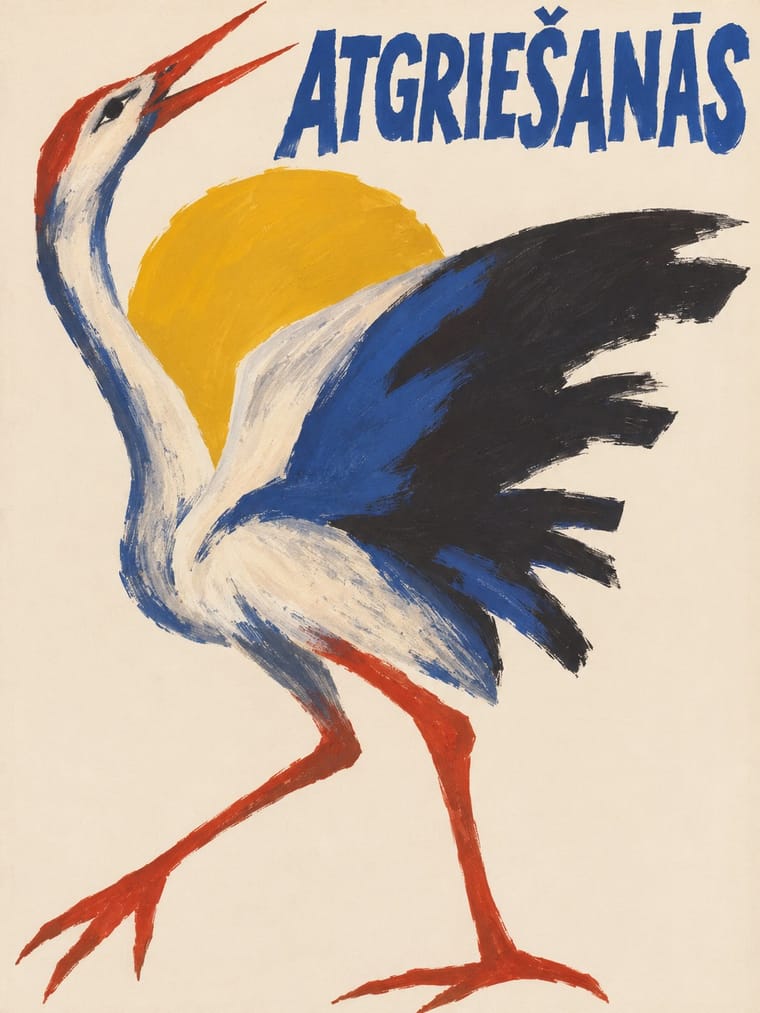
Latvian Soviet-Era Poster School Poster art of Soviet-occupied Latvia, where after the 1962 Manezh exhibition new limits fell on painting and sculpture and artists moved into design and applied arts, where abstraction and modern tendencies were tolerated.
- Oz Magazine and Sydney-London Psychedelia The graphic language of the satirical underground magazine Oz, begun in Sydney in 1963 and relaunched in London in 1967.
-
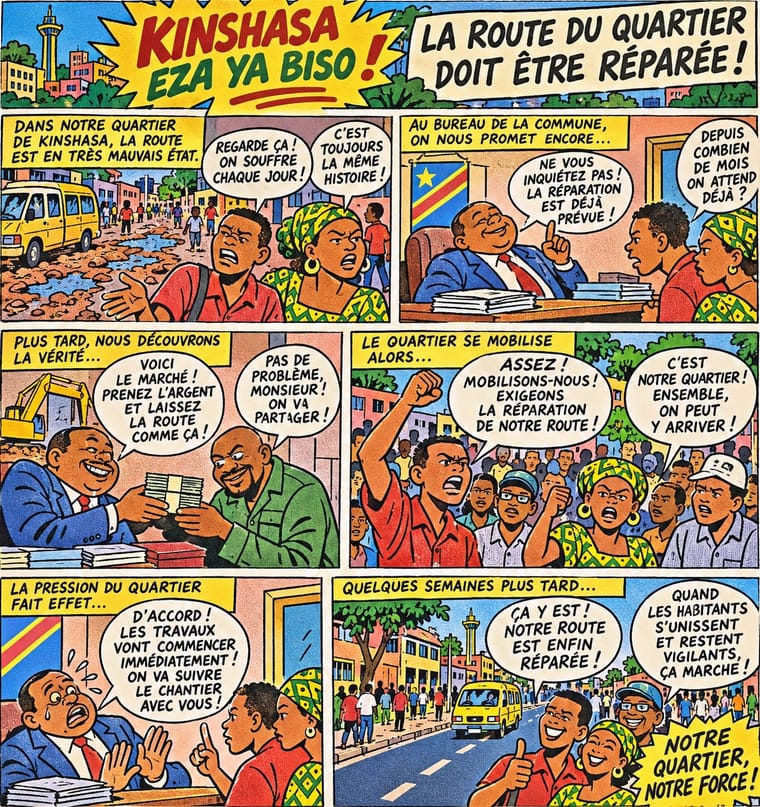
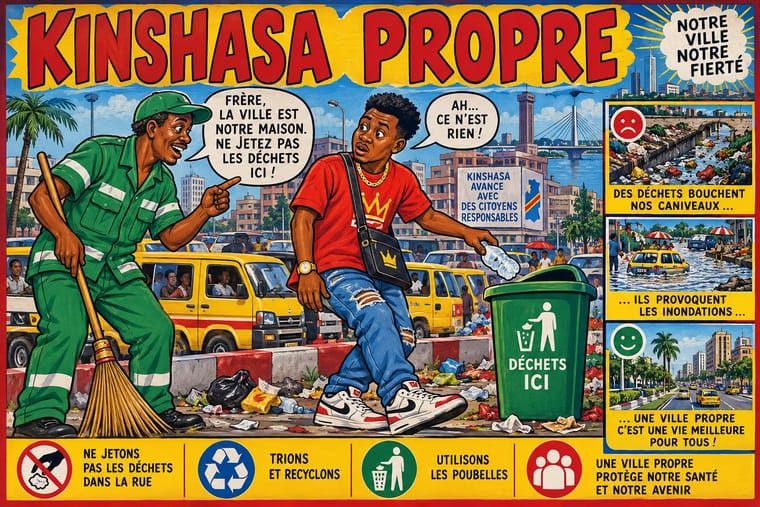
Congolese Bande Dessinée (Kinshasa Comics Scene) The comics of Congolese cartoonists, set in Kinshasa street life and politics and written in Lingala and French.
- Yellow Submarine Pop (Heinz Edelmann and Late-Sixties European Illustration) A European illustration language of the late 1960s, formed around Heinz Edelmann's art direction of the Beatles film Yellow Submarine and his later book work, with his twen magazine illustration (from 1961) as a precursor.
-
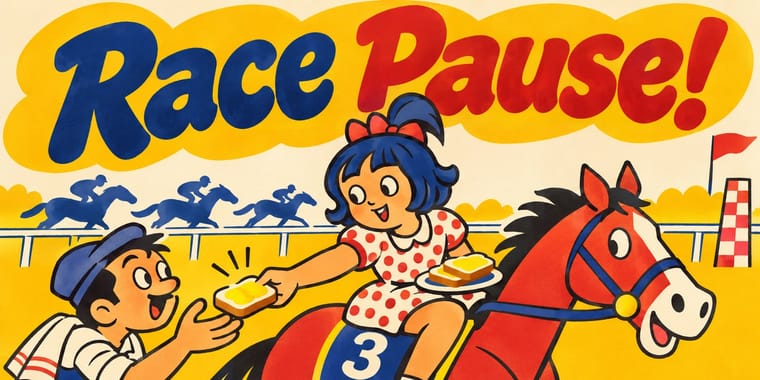
Amul Topical Hoardings A Bombay advertising idiom in which a single cartoon mascot, the blue-haired, polka-dotted Amul girl, comments on the week's news in a one-line pun, closed by the 'Utterly Butterly Delicious Amul' tagline.
-
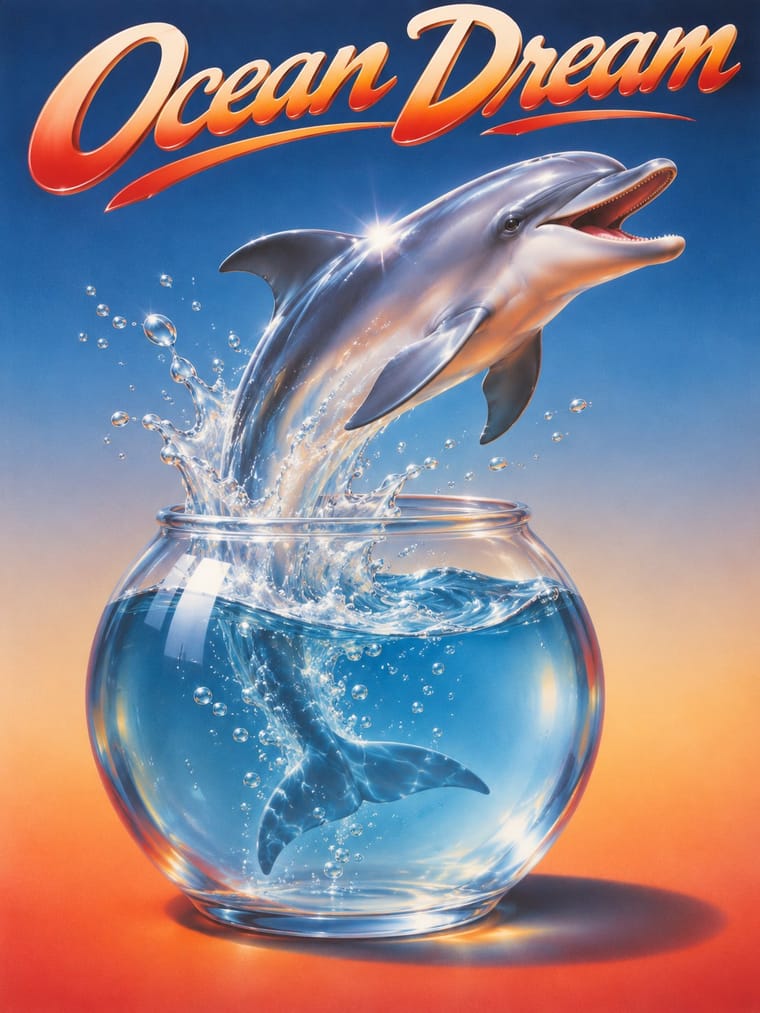
Airbrush Surrealism (1970s–80s Illustration) A commercial illustration idiom of the late 1960s to mid-1980s in which an impossible object or encounter is rendered with the polished finish of a product advertisement: seamless airbrushed gradients, convincing volume, glossy highlights and, often, mirror-metal modelling.
-
Amar Chitra Katha Comics The Bombay comic-book series that from 1967 retold Hindu myth and epic, Buddhist and Jain tales, saints, folk legends, the jests of the court wits Birbal and Tenali Raman, and Indian history for children, in English and Indian languages, with well over 500 titles by the early 1990s.
- Black Panther Party Graphics The visual language of the Black Panther Party, created largely by its Minister of Culture, Emory Douglas, for the weekly newspaper The Black Panther.
- Picó Sound-System Painting (Colombian Caribbean) The hand-painted fronts of the picós, the giant sound systems that play dances in the barrios of Barranquilla and Cartagena.
-
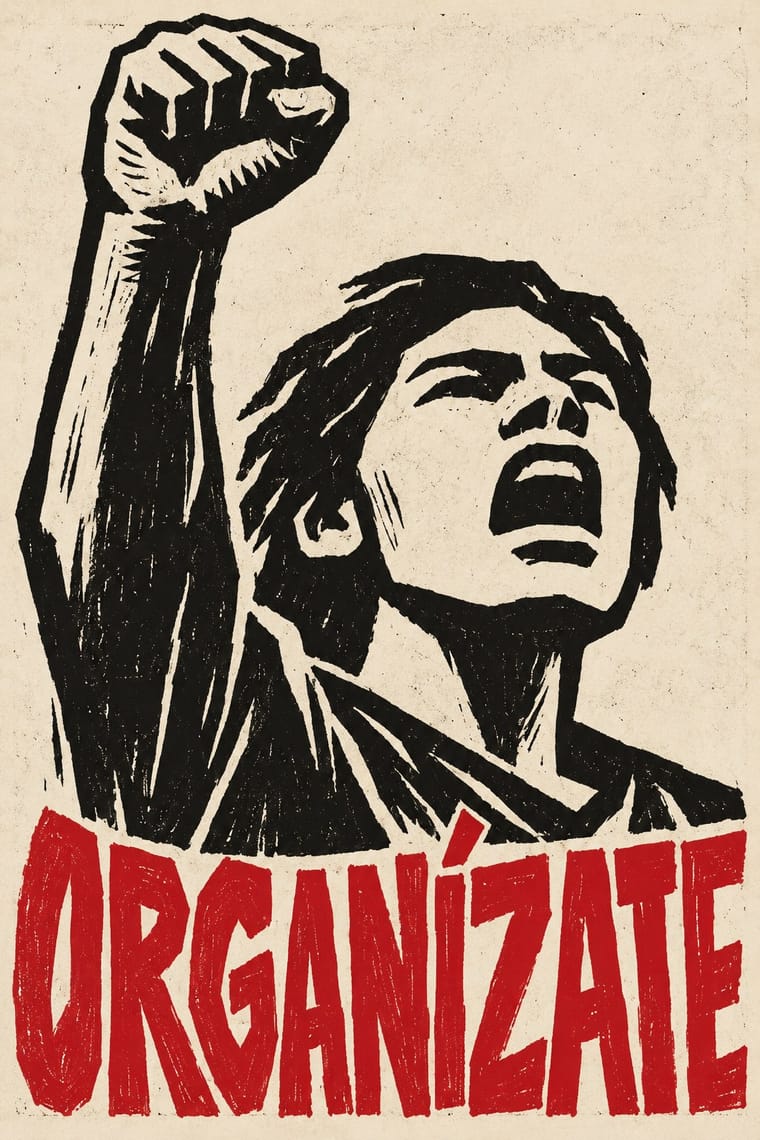
Gráfica del 68 (Mexican Student Movement Graphics) The graphics of the 1968 Mexican student movement, made in days by brigades in the print workshops of San Carlos and La Esmeralda and in improvised school workshops.
-
Tingatinga Painting A Tanzanian popular painting school begun in Dar es Salaam by Edward Tingatinga (1932–1972), who from 1968 painted animals, birds and village scenes in glossy bicycle enamel on square hardboard ceiling boards for residents and tourists.
-
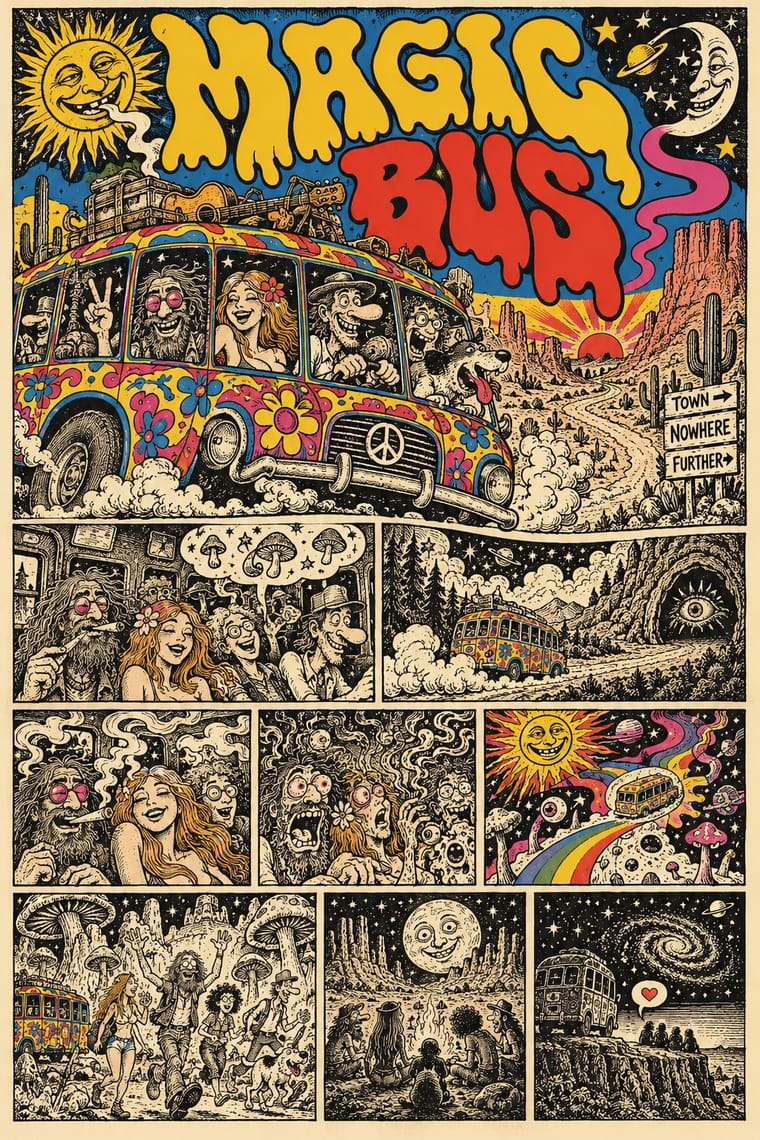
Underground Comix Self-published, adults-only comic books from the San Francisco counterculture, made outside the Comics Code on the newsstand comic's format.
- Wimmelbook Panoramic Illustration A children's picture-book grammar of wordless, crowded panoramas: a street, village, harbour or season is spread across an uninterrupted double page and filled with many small figures, each doing something of their own.
-
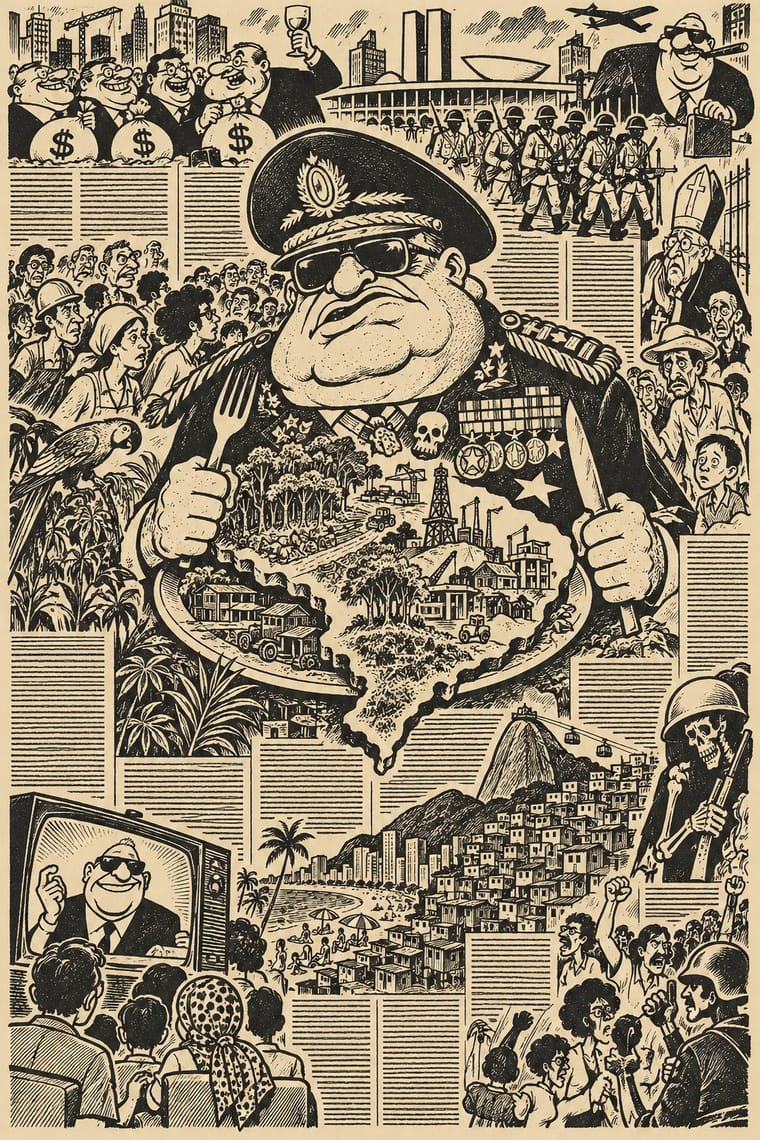
O Pasquim Satirical Press A weekly satirical tabloid from Rio de Janeiro that made cartoonists co-editors: hand-lettered headlines, cartum and caricature, and long interview and chronicle columns on one dense newsprint page.
-
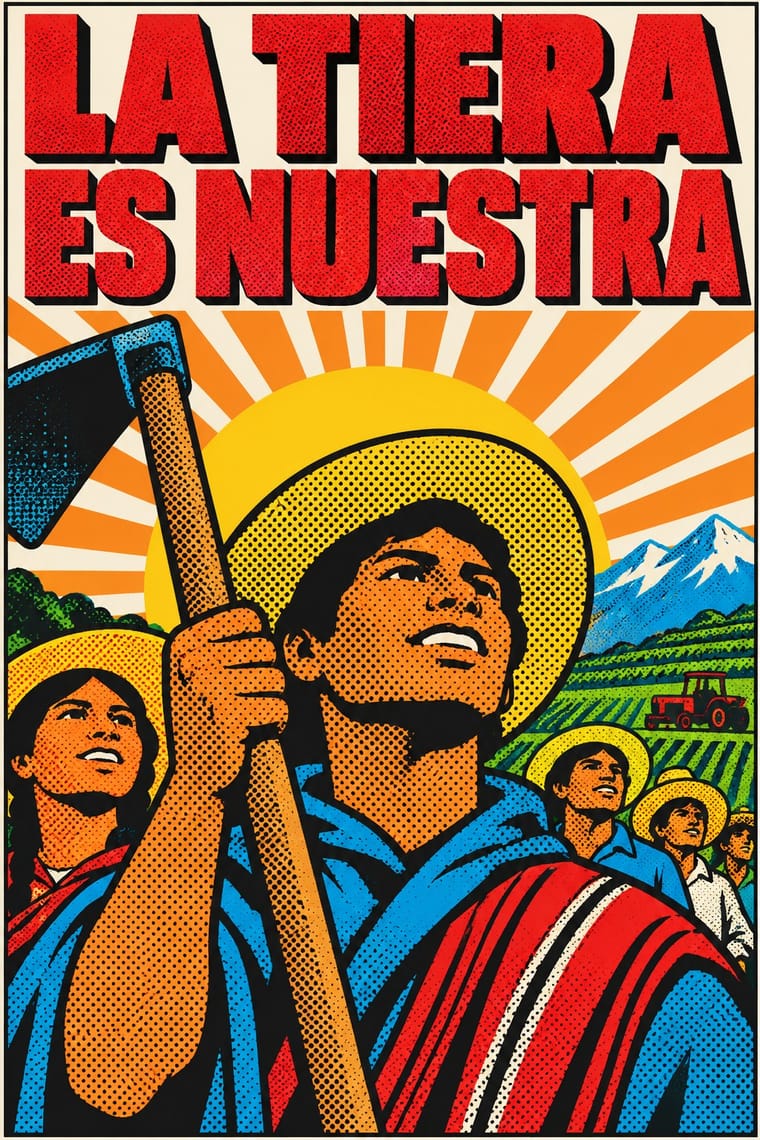
Pop Achorado (Peruvian Agrarian Reform Posters) Posters for the Peruvian military government's agrarian reform, made in Lima from 1969 by Jesús Ruiz Durand and colleagues at the state's reform publicity office.
-
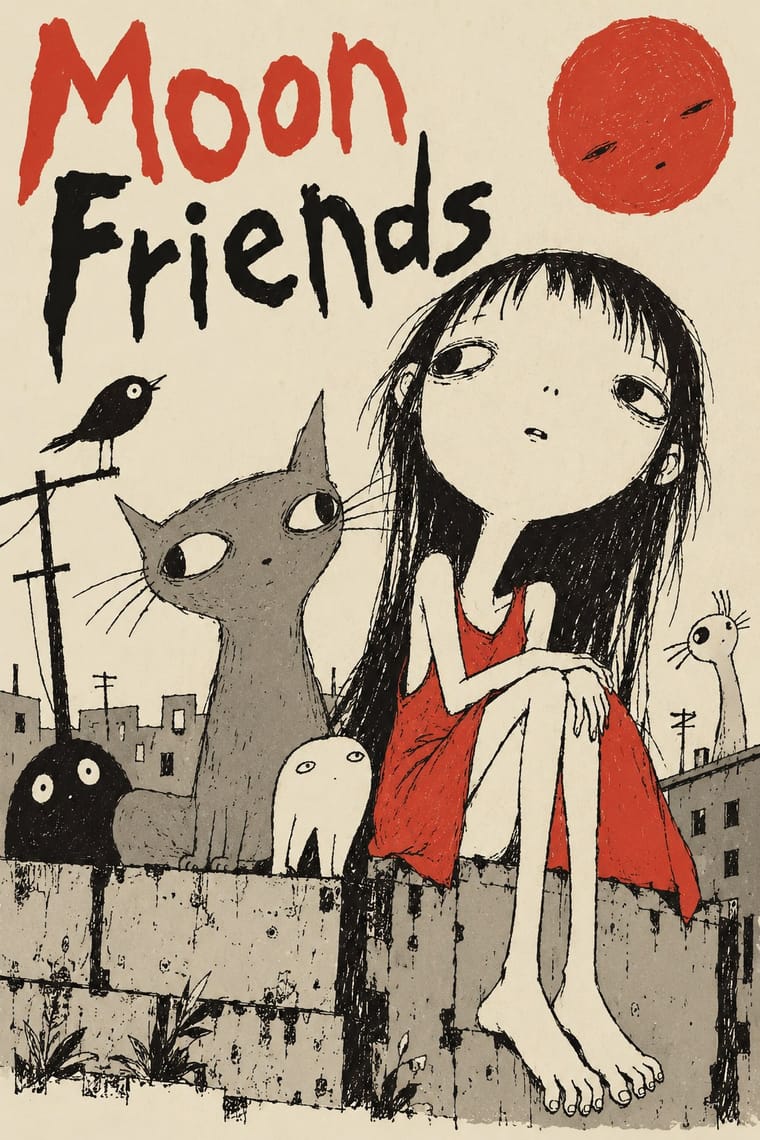
Garo and Heta-uma (Japanese Underground Manga and 'Bad-Good' Illustration) The deliberately crude, naive-looking drawing of Japan's alternative manga and illustration, centred on the magazine Garo (1964-2002) from the 1970s.
-
Kinshasa Popular Painting A school of easel painting founded in Kinshasa in the early 1970s by Chéri Samba, Moké, Chéri Chérin and Pierre Bodo, largely self-taught painters, several of them trained in Kinshasa's billboard and sign workshops.
-
Photorealist Painting and Illustration in Print Paint an ordinary object or a close crop of the body with photographic precision, then reproduce the painting as a poster, advertisement or cover.
- Senegalese Car Rapide Painting and Lettering The painted decoration of Dakar's Renault minibuses: colourful bodywork, described by CETUD as kitsch and often yellow and blue, carrying plants, animals, historical figures and moral or protective inscriptions in Wolof, Arabic and French.
-
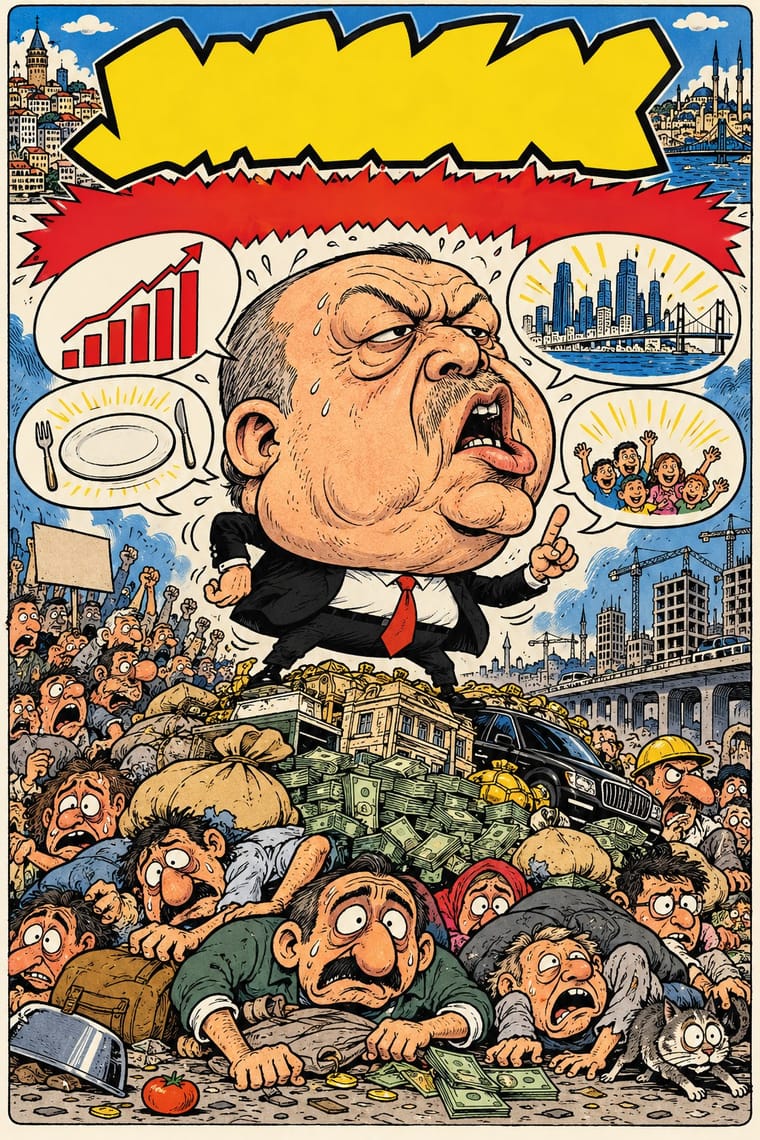
Turkish Weekly Humour Magazines (Gırgır to Uykusuz) Istanbul's weekly cartoon magazines, from the Aral brothers' Gırgır (1972), which sold up to about half a million copies, through the chain of breakaways that followed it: Limon, LeMan, Penguen and Uykusuz.
-
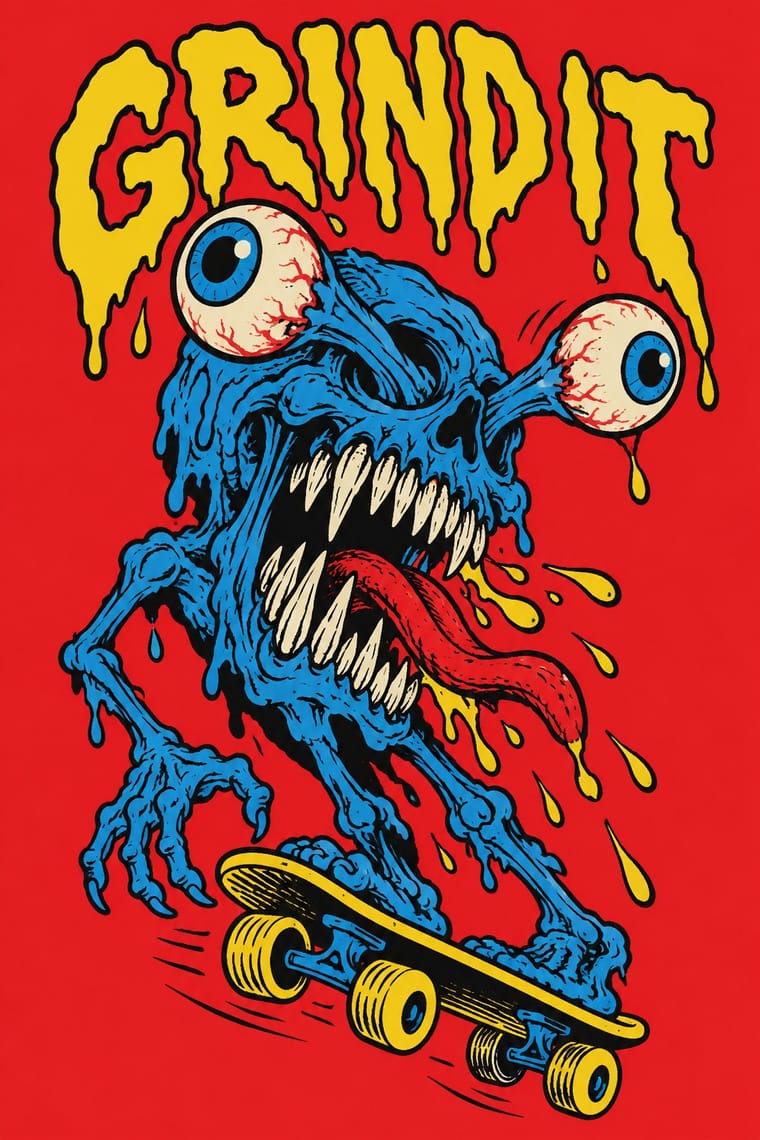
Skateboard Deck Graphics The graphics printed on the underside of skateboard decks, developed by Californian skate companies in the 1970s and 80s (the scope here; later photographic and parody decks are not covered).
-
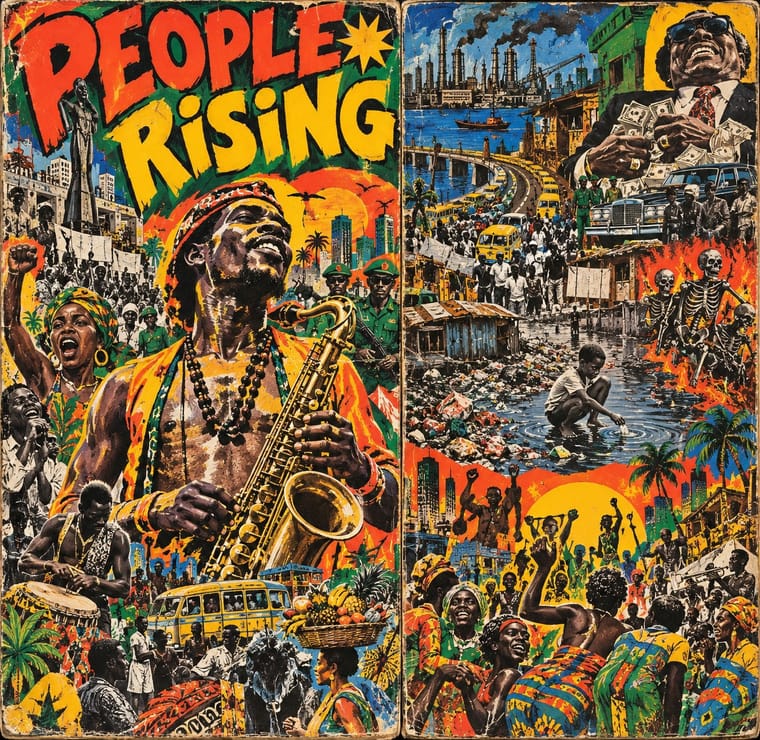
Afrobeat Sleeve Art The painted and collaged record covers of Nigerian Afrobeat, defined by Lemi Ghariokwu's sleeves for Fela Kuti from Alagbon Close (1974) onward.
- Ethiopian Revolutionary Poster (Derg Era) The poster and mural art of the Derg military government and its successor, Mengistu's People's Democratic Republic of Ethiopia (1974–1991), made mostly by teachers and students of the Addis Ababa School of Fine Arts.
-
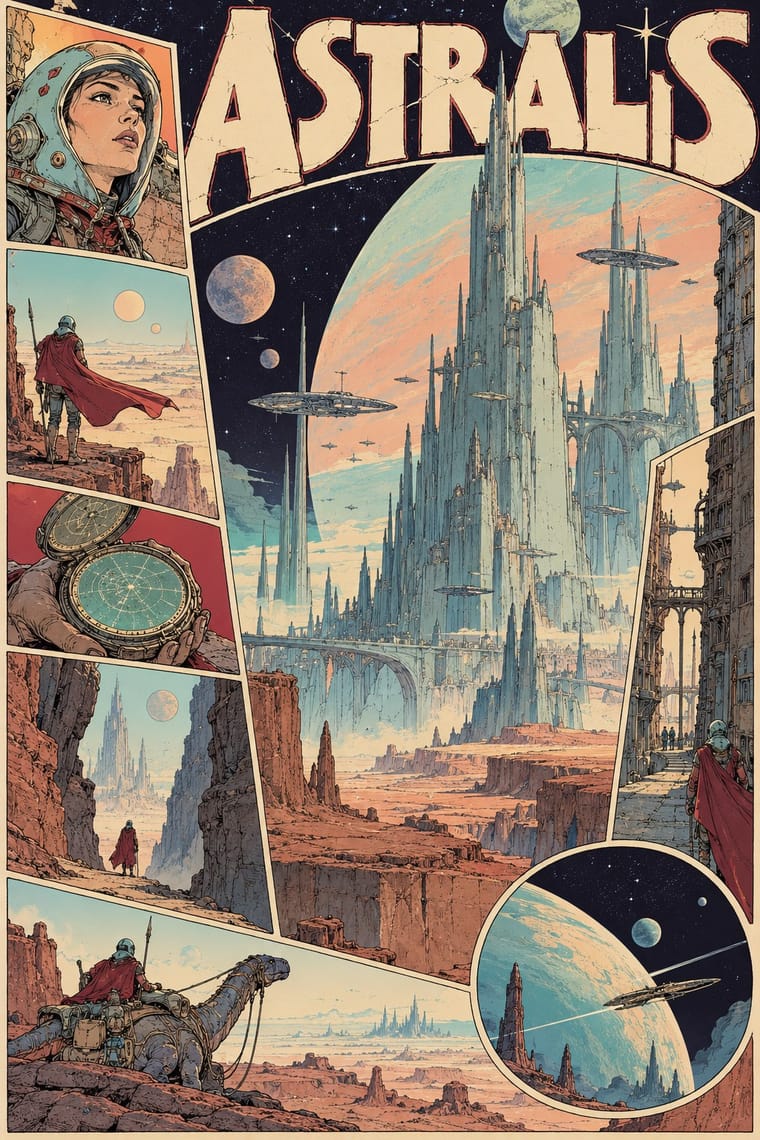
Métal hurlant Science-Fiction Comics (Mœbius, Druillet & Les Humanoïdes Associés) The adult science-fiction comics of Métal hurlant, the Paris magazine founded in 1974 by Mœbius, Philippe Druillet, Jean-Pierre Dionnet and Bernard Farkas.
-
See Red Women's Workshop Feminist Screenprints Screenprinted posters of a London feminist collective founded in 1974 to answer negative images of women in advertising and the media, designed and approved by the group and credited to no one member.
-
Dojinshi & Comiket Circle Graphics The cover graphics of Japan's amateur self-published comics (dojinshi), sold by small 'circles' at fairs such as Comiket.
-
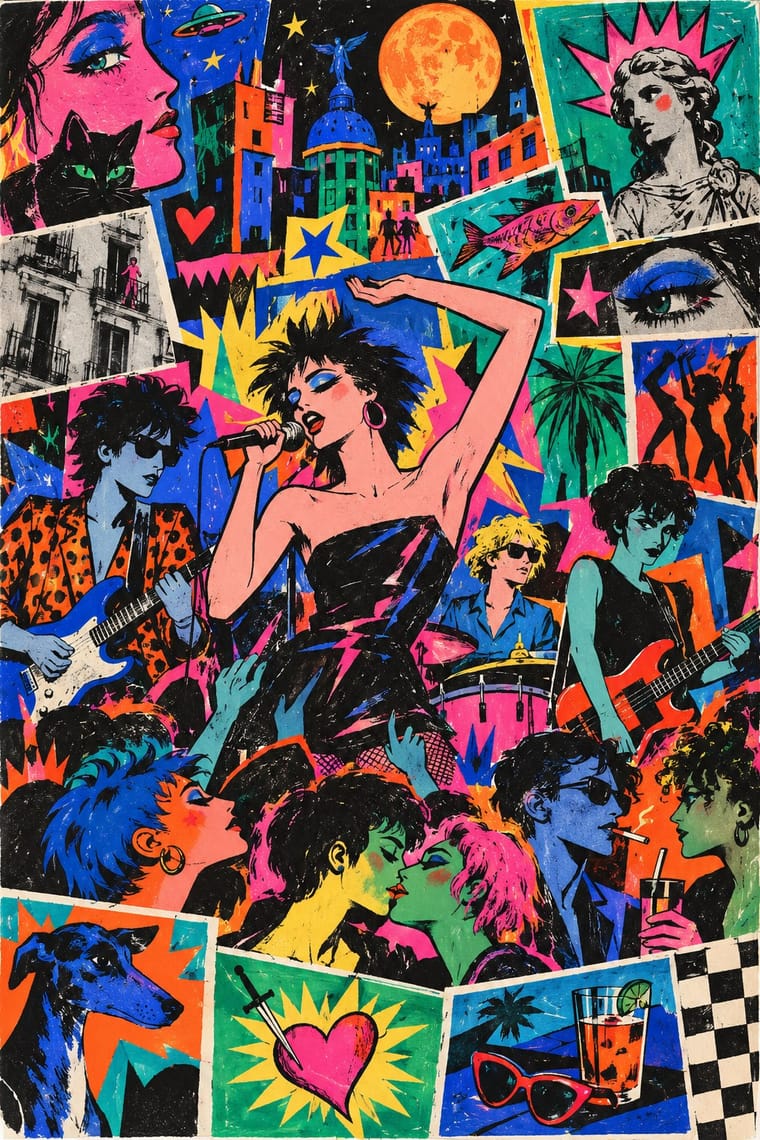
La Movida Madrileña Graphics The graphics of Madrid's Movida, the post-Franco scene of new-wave bands, fanzines and night life usually dated from the Canito concert of 9 February 1980 and later backed by the city council.
-
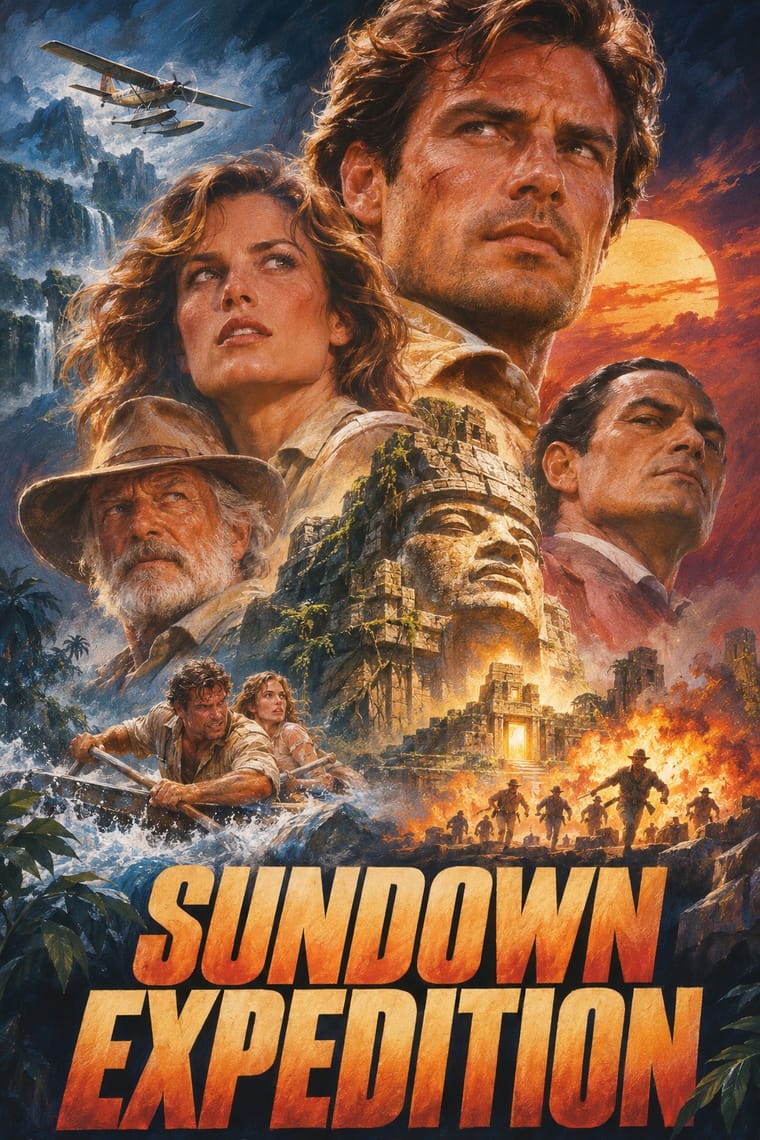
American Painted Blockbuster Film Poster (Struzan Era) Painted key art for American blockbuster one-sheets, in its montage mode: stars' faces modelled almost photographically, stacked down the sheet with action vignettes and a warm glow, painted in oil, airbrushed acrylic and coloured pencil, then offset-printed.
- Iranian Revolutionary & Sacred Defence Poster Posters, murals and stamps of the 1978–79 Iranian Revolution and the 1980–88 war with Iraq, which fused the red-white-black international revolutionary poster with Persian miniature and coffeehouse narrative painting.
-
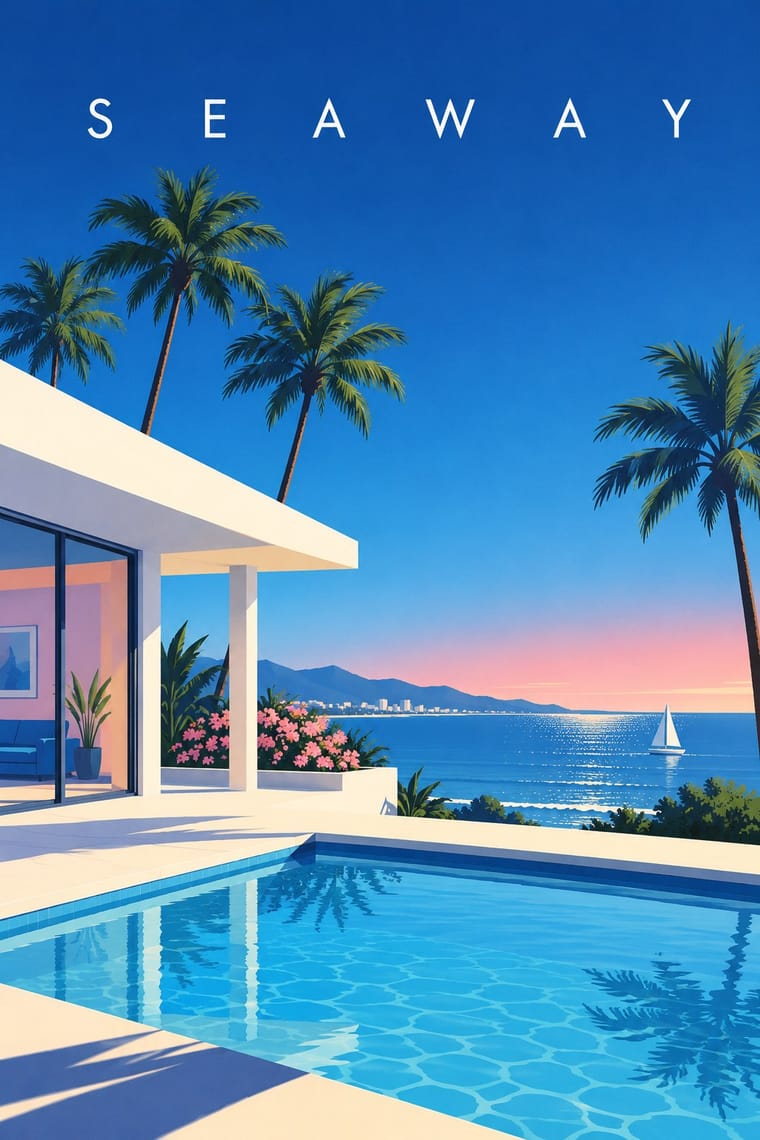
City Pop Illustration The painted look of Japanese city pop record sleeves and magazine covers, fixed by Hiroshi Nagai's sleeve for Eiichi Ohtaki's A Long Vacation (1981) and Eizin Suzuki's for Tatsuro Yamashita's For You (1982).
-
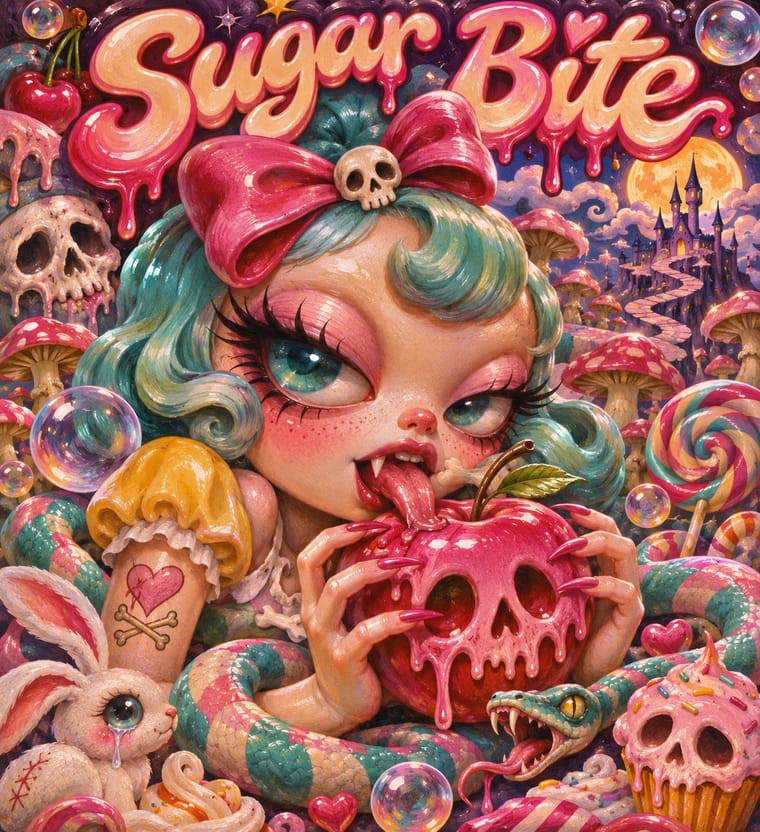
Lowbrow and Pop Surrealism (Juxtapoz Scene) A Los Angeles-born movement that takes the cartoon, hot-rod and underground-comix vocabulary and paints it as glossy, finely rendered surreal scenes of big-eyed, grotesque or saccharine figures.
- Mexican High-Energy Sound-System Graphics The illustrated identity of Mexico City's electronic sound systems, documented from 1979 and possibly earlier.
-
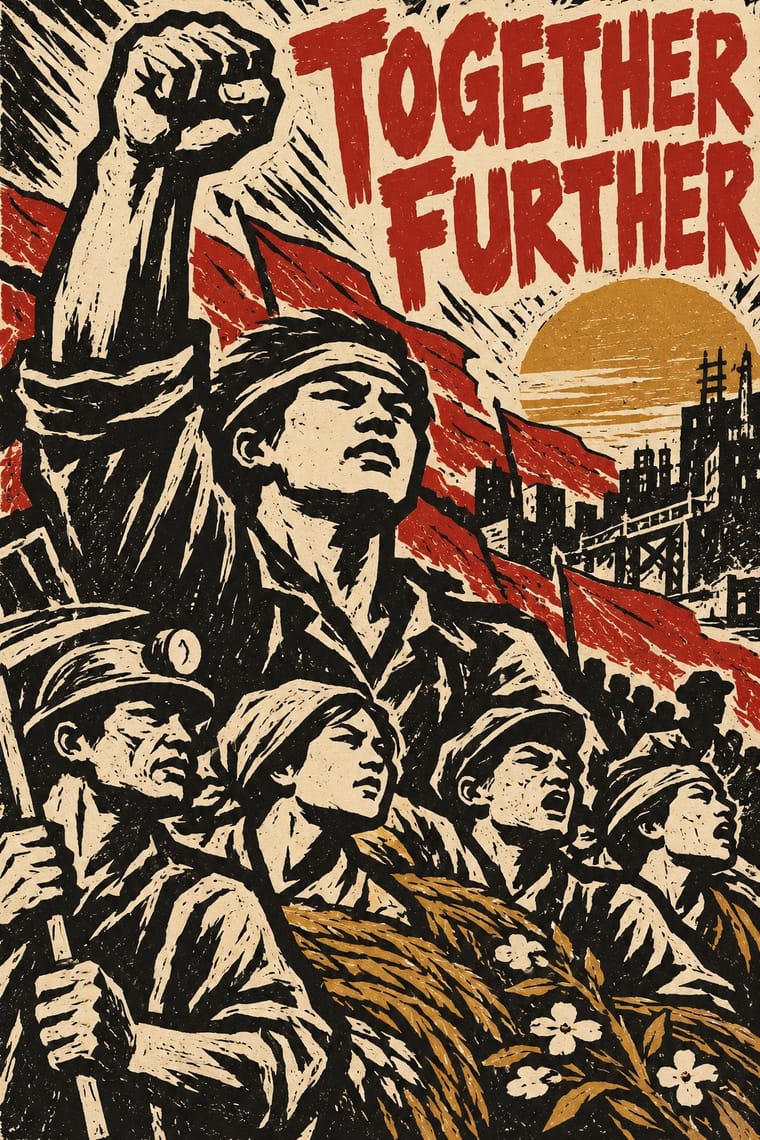
Minjung Woodcut Graphics (Korean People's Art) The reproducible graphic branch of Minjung misul (people's art), South Korea's art of the 1980s democracy and labour movements.
- Sani and Swahili Humour-Magazine Comics A Swahili-language humour-magazine comic tradition from Dar es Salaam, built on caricatured characters such as Madenge.
-
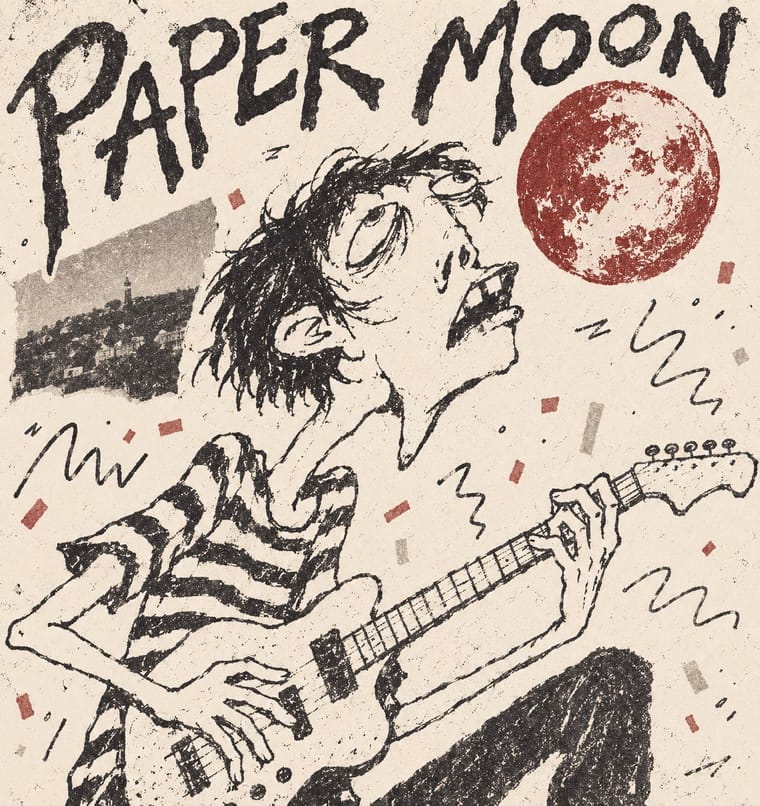
Flying Nun DIY Sleeves (Dunedin Sound Cover Art) The home-made sleeve art around Flying Nun Records, founded in Christchurch in 1981 by Roger Shepherd, who had covers produced through friends.
- Pardhan Gond Painting (Jangarh Kalam) Painting on paper and canvas by Pardhan Gond artists of Patangarh and Bhopal, begun when Bharat Bhavan, Bhopal, recruited Jangarh Singh Shyam in 1981; the style was later named Jangarh Kalam after him.
-
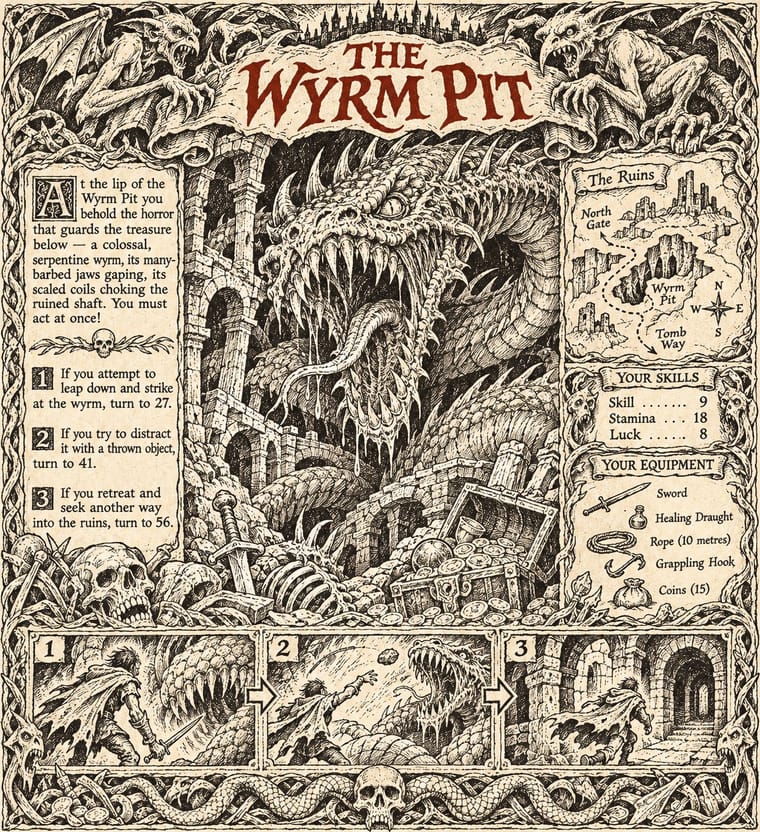
Fighting Fantasy Gamebook Illustration The black-and-white pen illustration of the Fighting Fantasy solo gamebooks, begun with The Warlock of Firetop Mountain (Puffin, 1982).
-
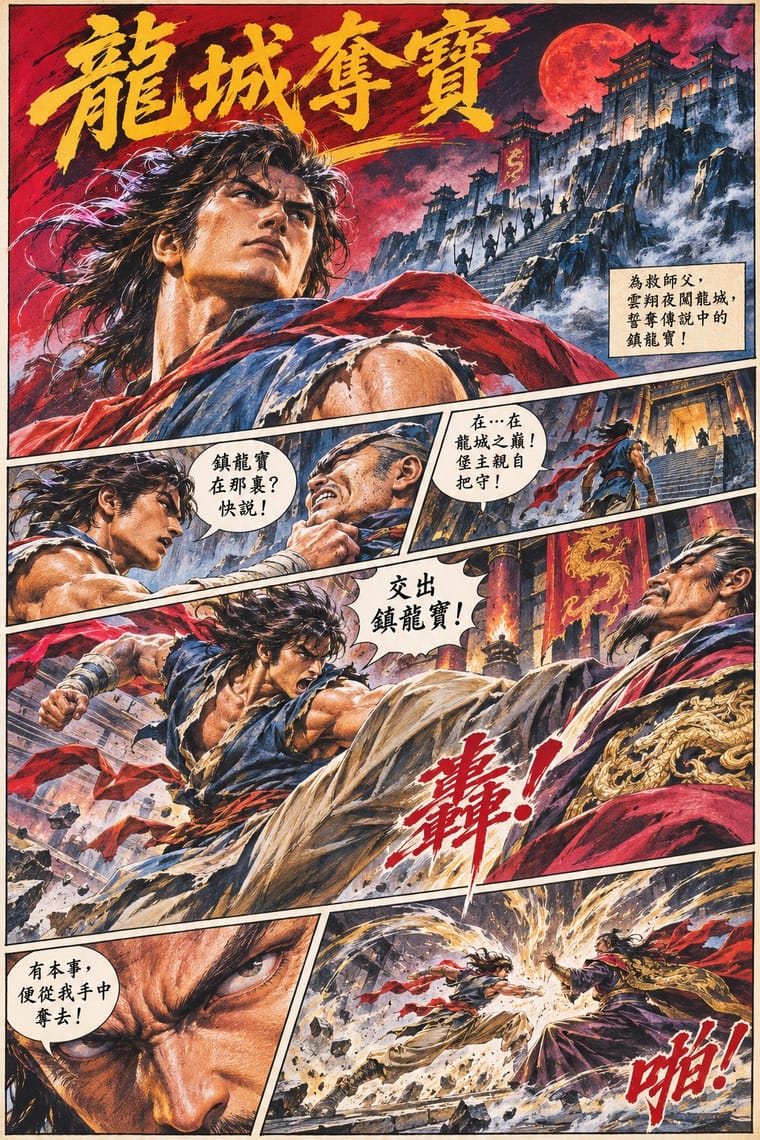
Hong Kong Martial-Arts Manhua Serialised kung fu and wuxia comics from Hong Kong's commercial publishers, built on realistically modelled heroes and the cinematic expression Ma Wing-shing brought to the form in the 1980s, drawing its camera grammar from Hong Kong action cinema and wuxia fiction.
-
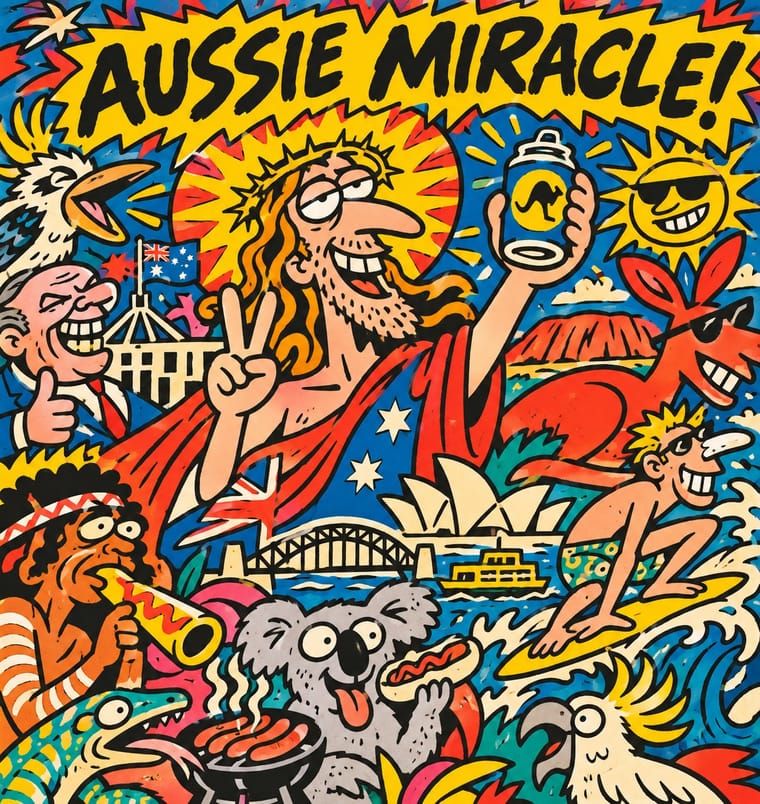
Mambo Graphics (Sydney Loud Shirt Art) Satirical surfwear graphics from the Sydney label Mambo, founded in 1984.
-
Ghanaian Movie Poster Hand-painted posters commissioned by Ghana's mobile video clubs from about 1985, painted by apprenticed sign painters on stitched flour sacks to advertise VHS screenings of Hollywood, Hong Kong, Nigerian and Indian films.
-
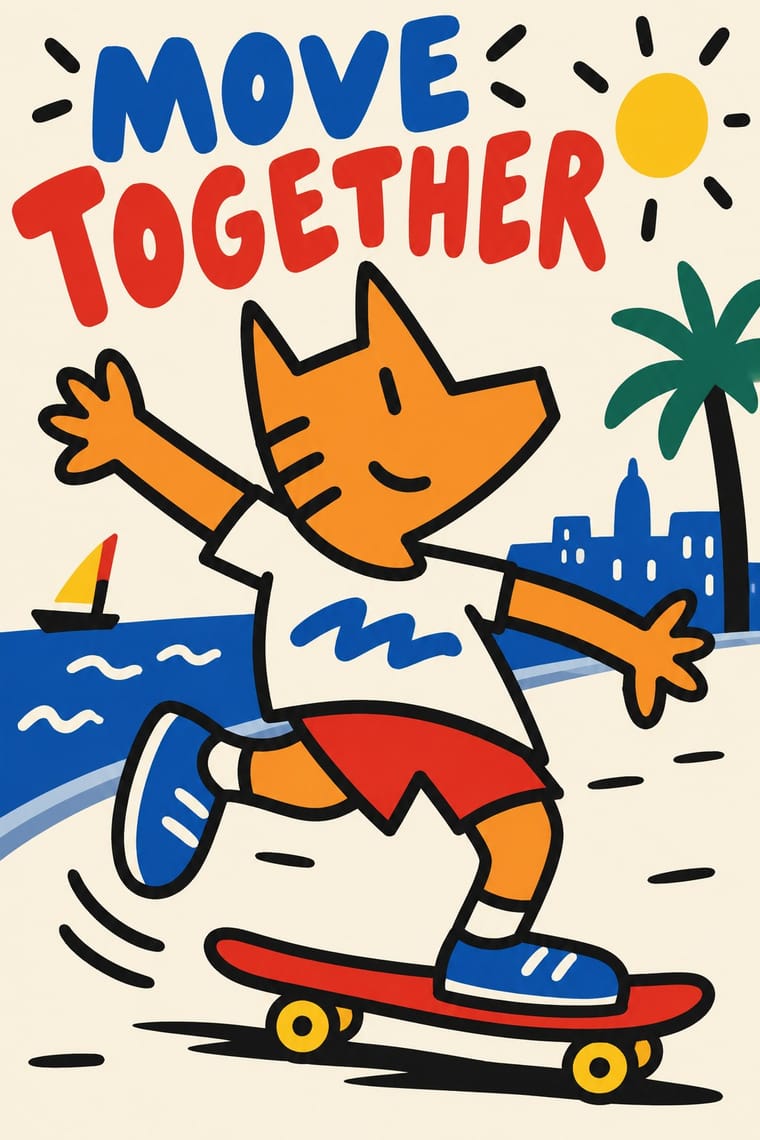
Cobi and Mariscal's Barcelona '92 Mascot Graphics A mascot-led strand of the Barcelona '92 Games, narrowed here to the character and not the emblem or pictograms.
-
Global Village Coffeehouse The faux-naive, earth-toned illustration style that late-1980s American designers set against Memphis, and that chain cafés, bookstores, packaging and clip art spread through the 1990s.
-
1990s Skateboard Parody & Appropriation Graphics Deck graphics of the early 1990s that quote a familiar cartoon, celebrity, brand or national symbol and alter it into an irreverent joke or social accusation.
-
L'Association and French Alternative Comics The black-and-white auteur comics of L'Association, the Paris publisher founded by seven cartoonists in 1990, and the 1990s small-press scene it led.
-
Matatu & Nganya Art The commissioned livery of Kenya's privately owned minibus taxis, at its most elaborate the Nairobi nganya.
-
Torres Strait Islander Linocut Relief prints by Torres Strait Islander artists of Zenadth Kes, which grew from an Indigenous visual art course at Cairns College of TAFE by 1991 and the Mualgau Minaral collective on Mua (Moa) Island.
- Bitterkomix (Afrikaans Underground Comics) The Afrikaans underground comics magazine founded in Stellenbosch in 1992 by Anton Kannemeyer (Joe Dog) and Conrad Botes (Konradski), with Mark Kannemeyer (Lorcan White).
-
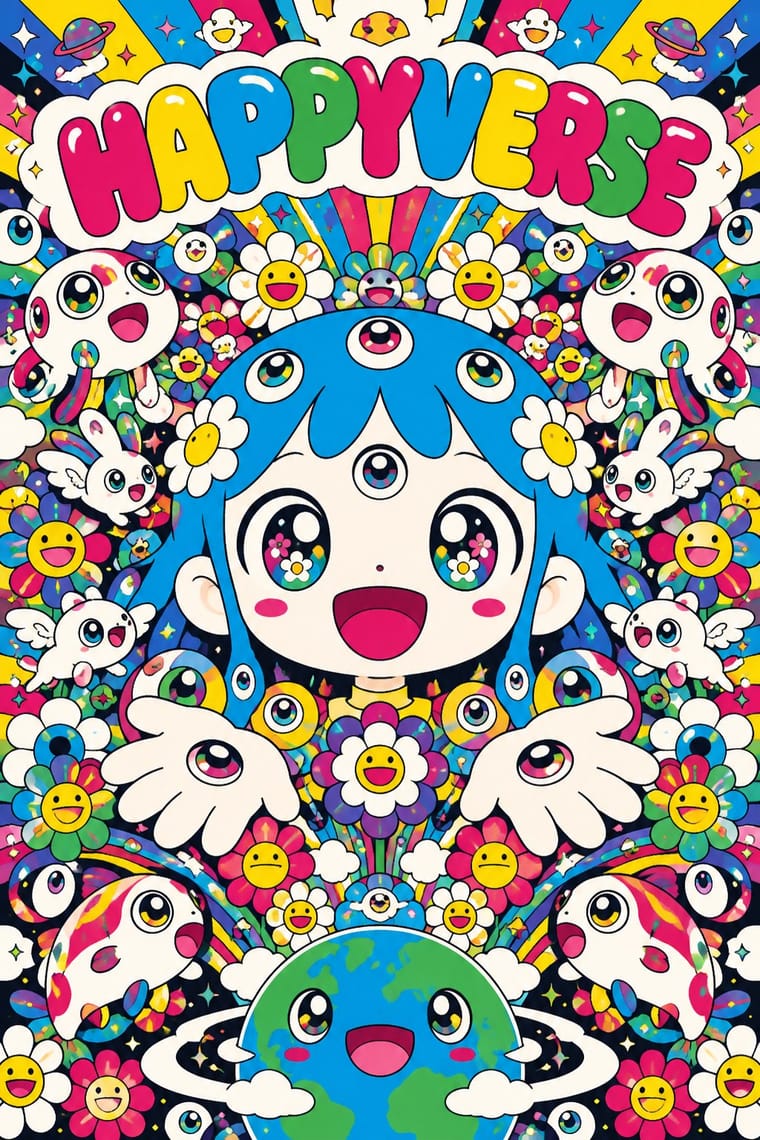
Superflat The flat, saturated, cartoon-crowded look that Takashi Murakami named in his exhibition and manifesto Superflat (Tokyo, 2000; US tour 2001).
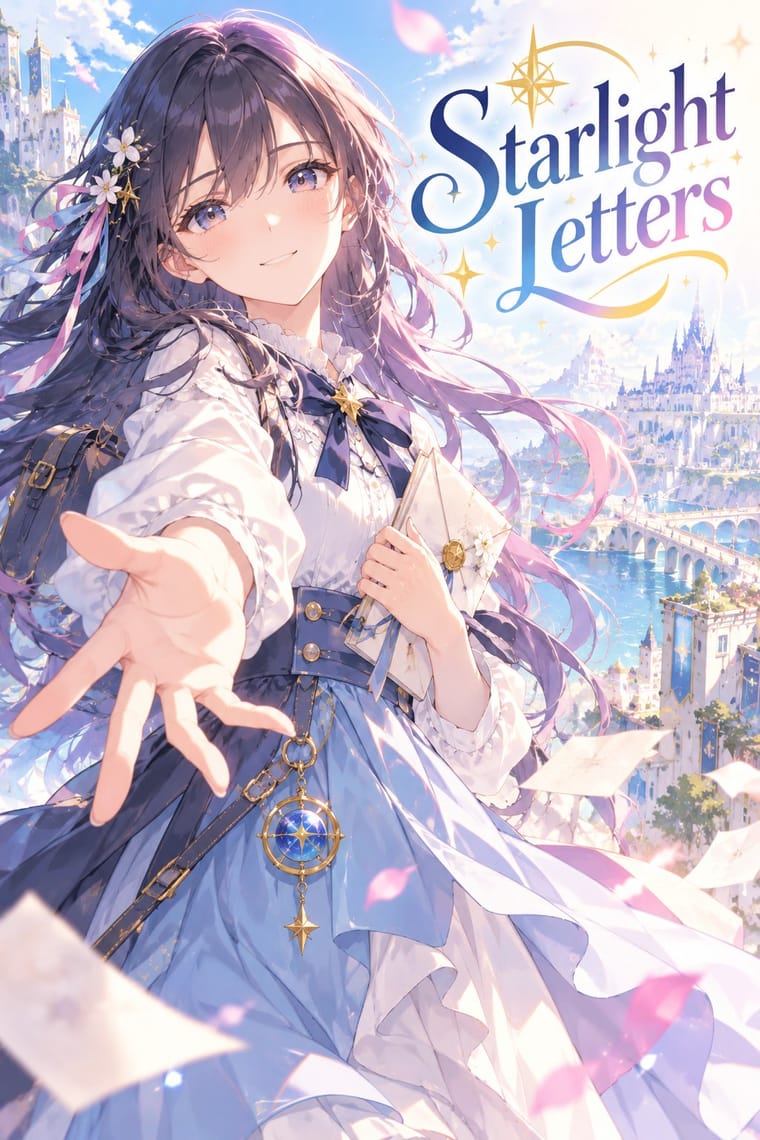
- Moe Character Illustration Character design built to provoke protective affection in fans: a single anime-coded figure with large eyes, pale smooth skin, soft rounded proportions and attribute props such as cat ears, maid dress or a signature hair colour.
-
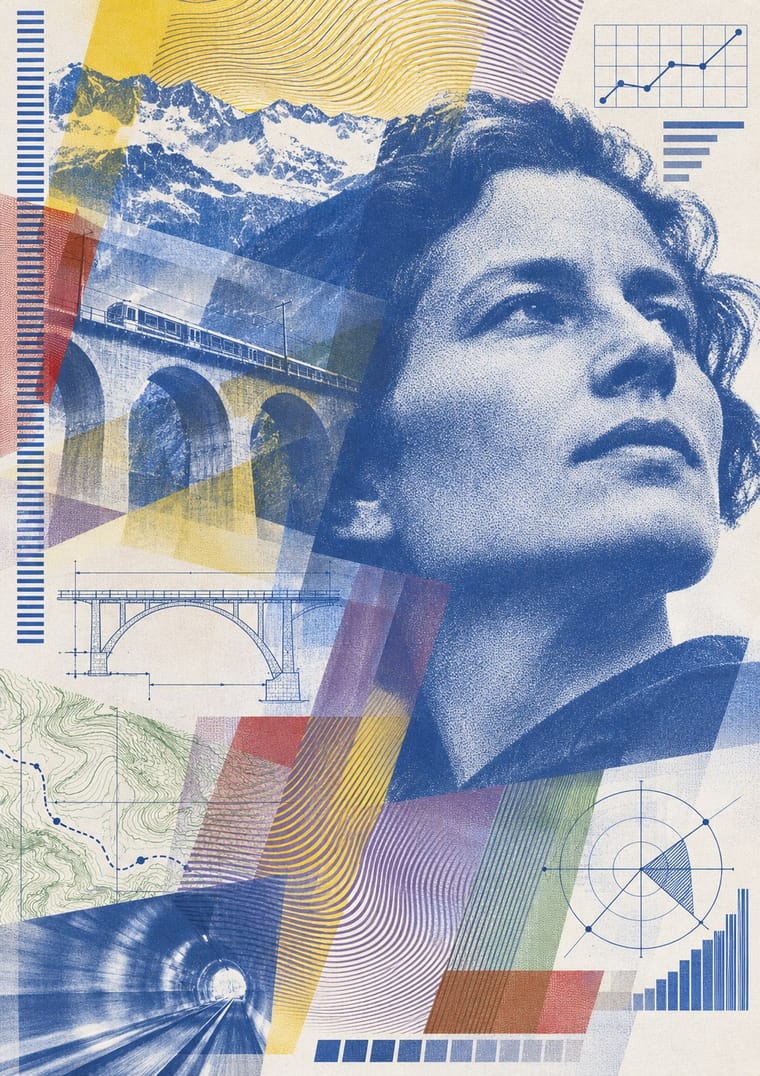
Swiss Eighth-Series Banknote Design (Zintzmeyer) The six-note graphic programme of the Swiss franc's eighth series: upright notes with a large processed portrait of a Swiss cultural figure on the front and a montage of that person's work on the back.
-
Pantura Truck Painting (Lukisan Bak Truk) Painted pictures on the rear cargo panel of Indonesian trucks, commissioned by drivers from roadside painters.
-
Visual Novel Graphics (Sprites, Backgrounds and Textbox UI) A fixed screen language for interactive reading: anime-derived character sprites stand over painted backgrounds, a semi-transparent textbox runs along the bottom (ADV) or fills the screen (NVL), and full-screen event illustrations replace the scene at dramatic moments.
-
Flash Vector Cartoon (Newgrounds-Era Web Animation) Short cartoons drawn and animated in Macromedia Flash for the browser and passed around portals such as Newgrounds.
-
Google Doodle Logo-Play Illustration A brand-play tradition in which a search company's wordmark is redrawn for a person, event or anniversary, while staying legible as the logo.
-
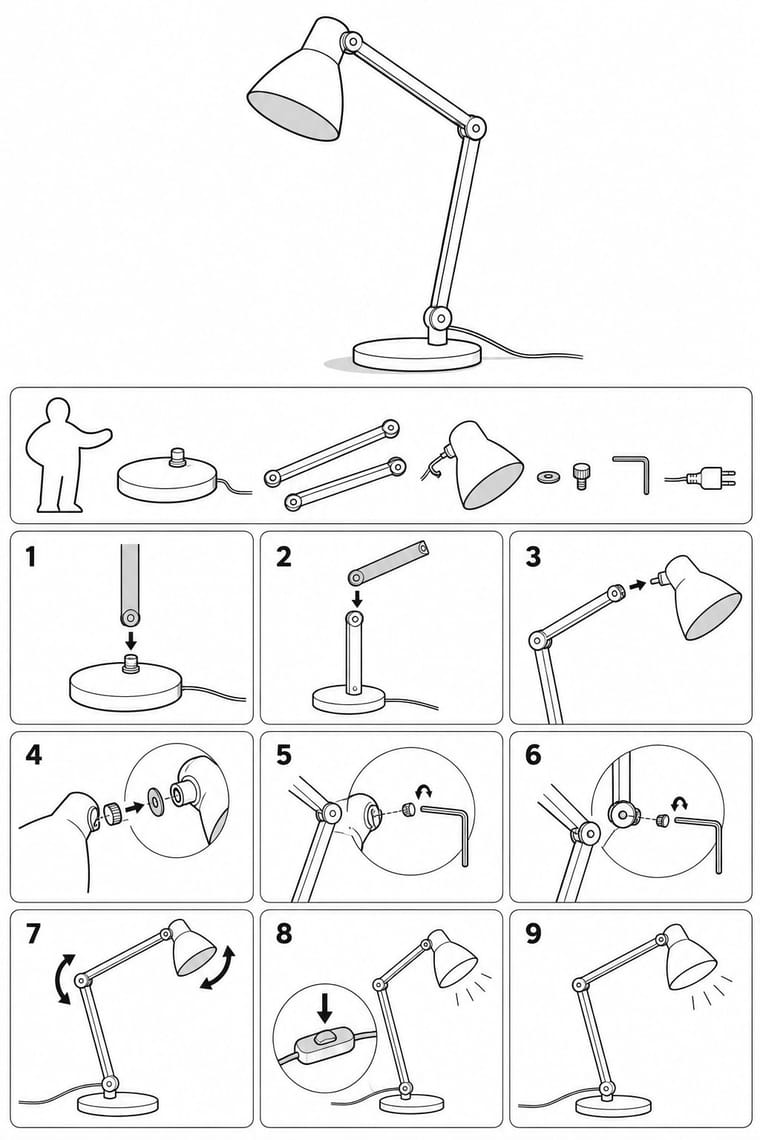
Wordless Flat-Pack Assembly Instructions The wordless flat-pack booklet as IKEA drew it up after 1999, which replaced the exploded view of older instruction manuals with step-by-step pictures: the product is drawn in black outline on white as it looks at each stage of building, with grey only to pick out the part being fitted.
-
Cel-Shaded Game Graphics (Toon-Shaded Real-Time 3D) A look for real-time 3D video games in which normally lit models are quantised into two or three hard bands of flat, saturated colour and ringed with ink outlines, so a freely moving 3D world reads as a moving cartoon, anime cel or comic panel.
- La Nueva Gráfica Chilena (Independent Vernacular Print) A Santiago collective founded in 2000 by artists and designers whom no publisher would take on, so they self-published.
-
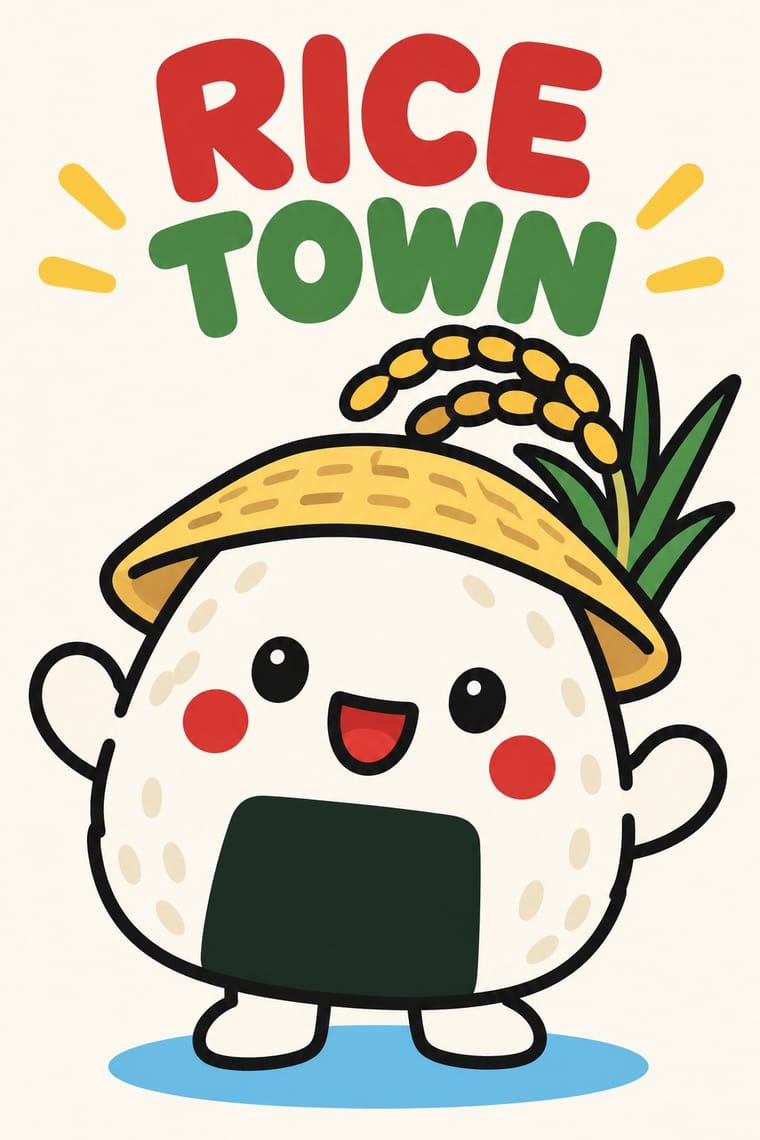
Yuru-chara (Japanese Local Mascot Design) Japan's local mascots: characters commissioned by prefectures, towns and tourism bodies to stand for a place, named yuru-kyara ('loose characters') by the illustrator Jun Miura around 2000.
-
Korean Webtoon Graphics The full-colour, vertical-scroll comic that Korean web portals made standard in the 2000s and smartphone apps took worldwide.
-
Light Novel Cover Illustration The cover of the Japanese light novel, a prose paperback sold as much by its illustrator as by its author: one or two anime-style characters, usually a heroine, digitally painted with large eyes, cel-shaded hair and soft glow, against a pale or softly painted ground, under a designed title logo that mixes Japanese lettering with Latin or katakana subtitles.
-
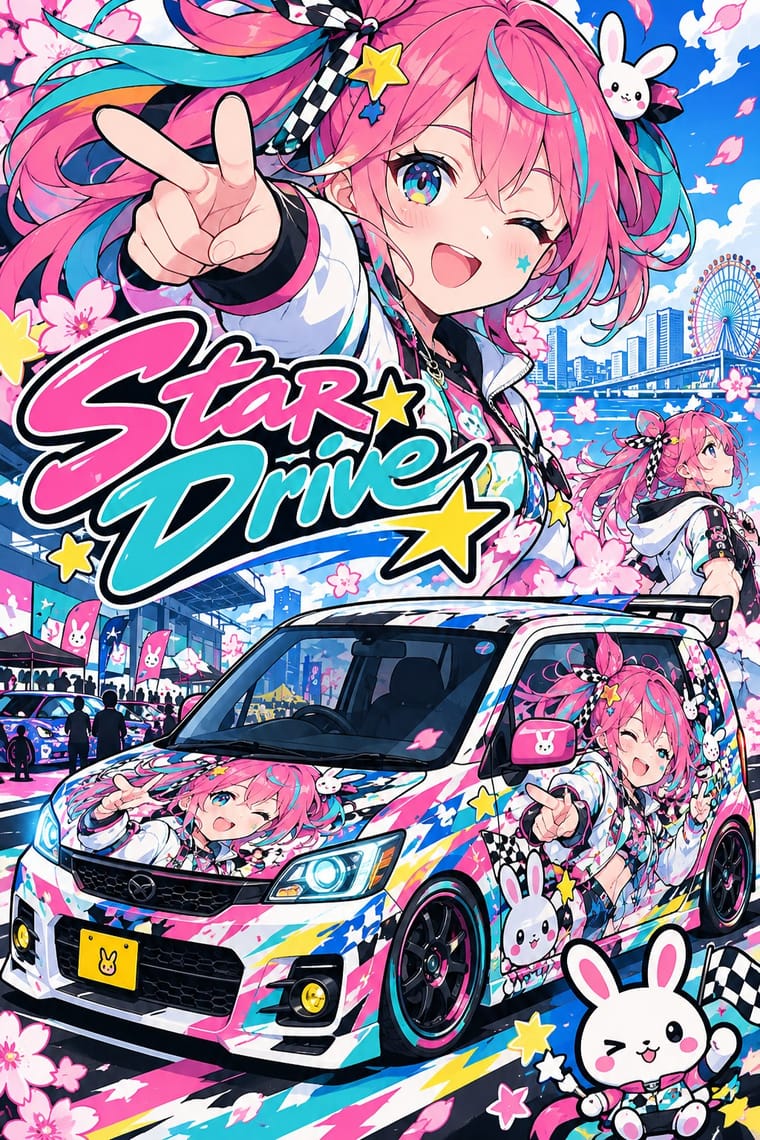
Itasha (Anime Character Car Graphics) Private cars, motorbikes and bicycles that Japanese fans of anime, manga and games cover with their favourite characters, named by the mid-2000s with the self-mocking word itasha, 'painful car'.
- Oaxacan Protest Printmaking & Street Graphics (ASARO) The street graphics of Oaxaca City since the 2006 teachers' strike and APPO uprising, when ASARO, the stencil collective Lapiztola and later workshops such as Colectivo Subterráneos made the colonial centre's walls a newspaper.
-
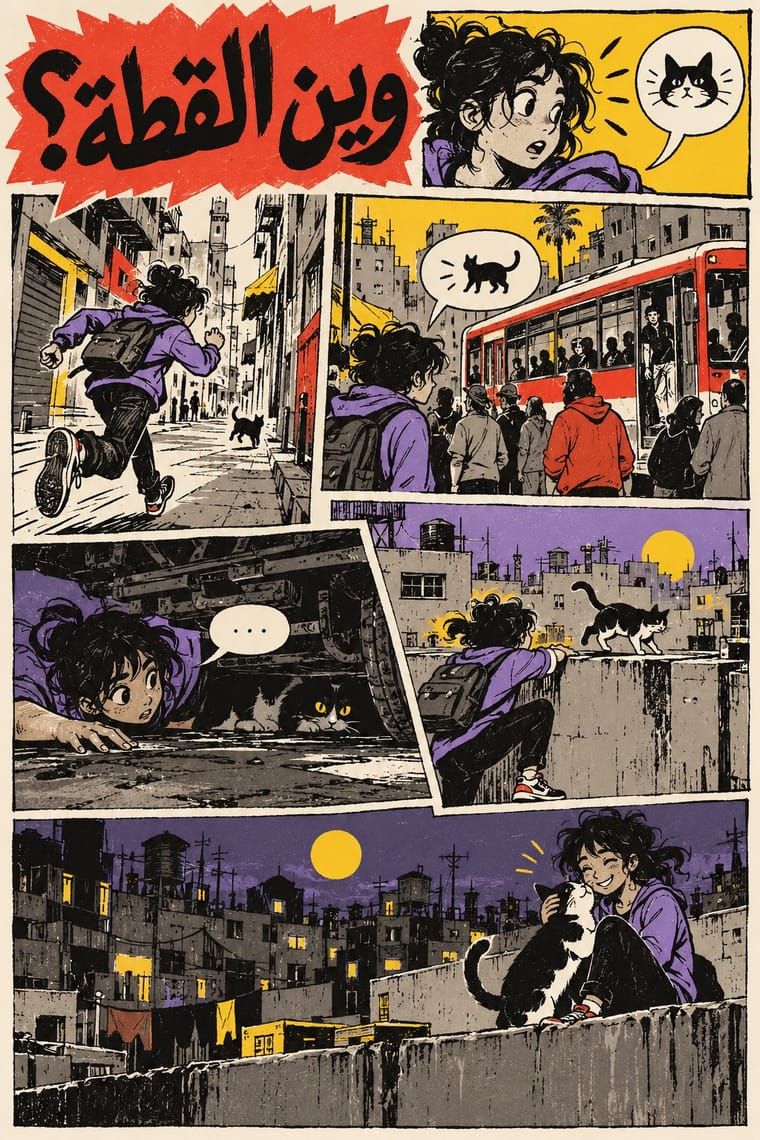
Arab Independent Comics (Samandal, TokTok, Lab619, Skefkef) Adult comics magazines edited by Arab artists' collectives since 2007, at times with a ministry grant or an NGO partner: Samandal in Beirut, TokTok in Cairo, Lab619 in Tunis and Skefkef in Casablanca.
-
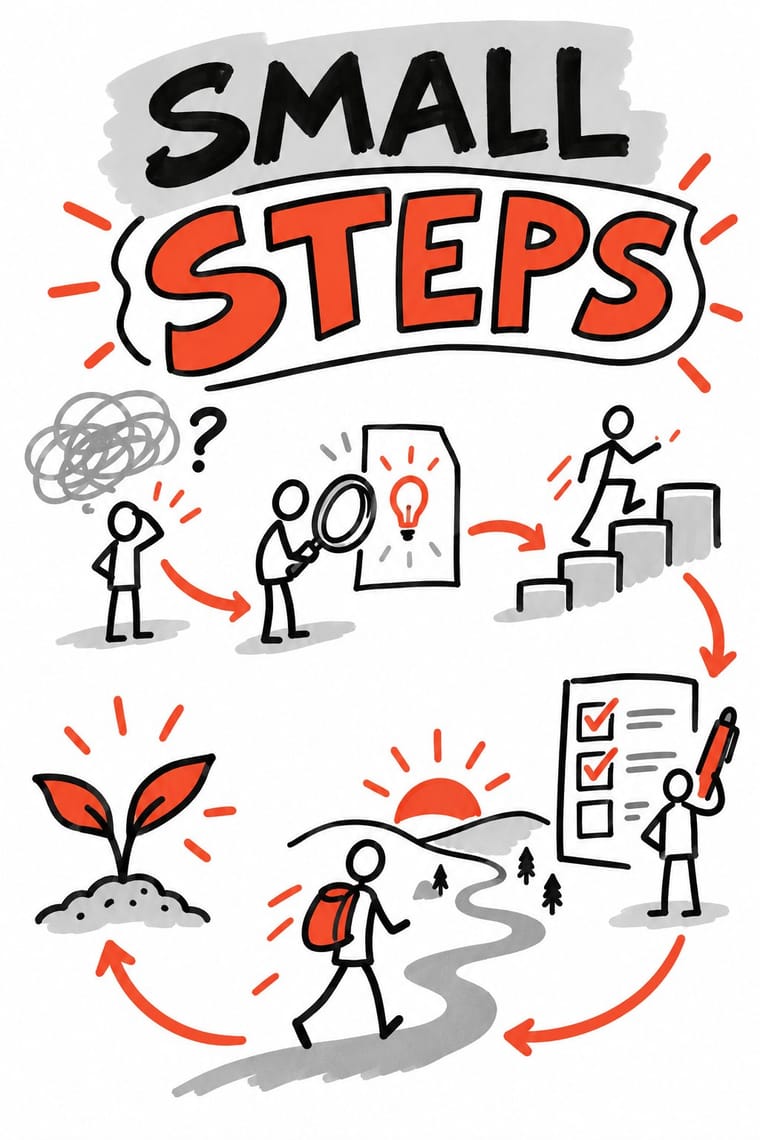
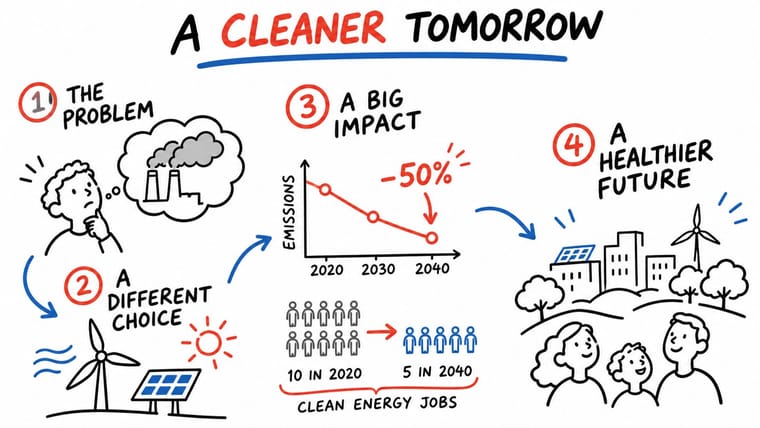
Sketchnoting and Graphic Recording Notes of a talk, book or meeting drawn live by hand on a single page, mixing hand-lettered headings, simple icons, containers and connectors.
-
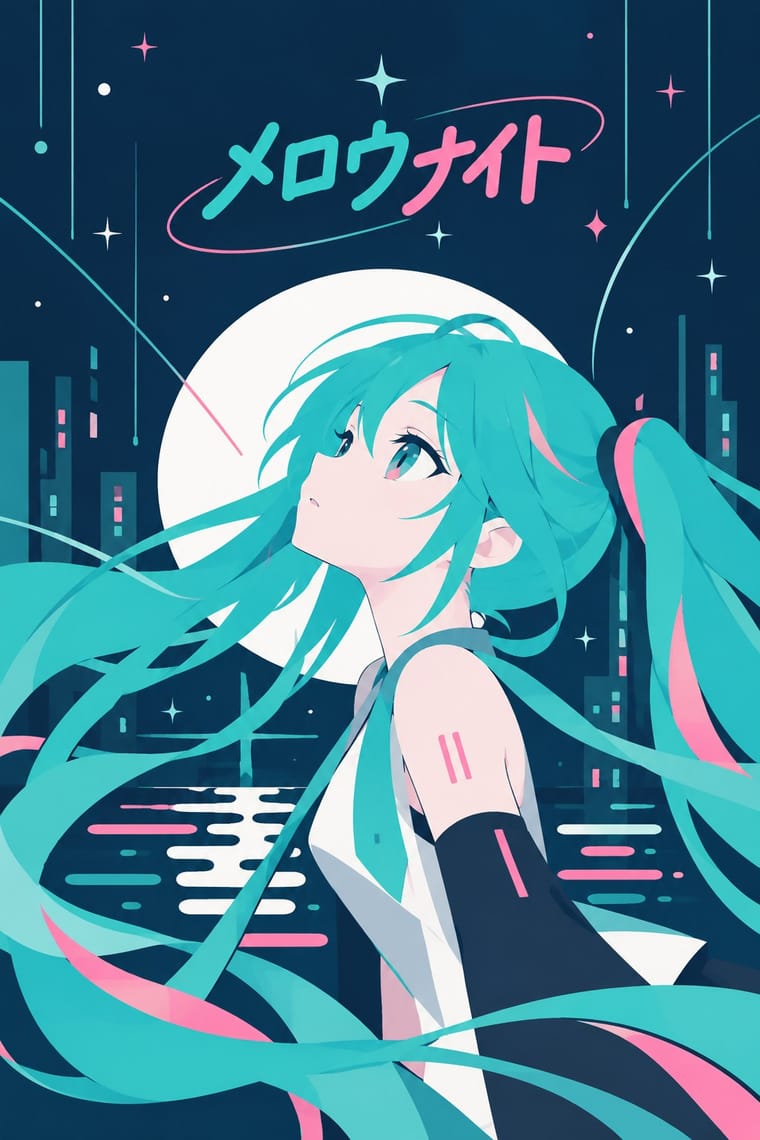
Vocaloid Fan Illustration (Hatsune Miku Culture) A fan illustration culture around one licensed character, Hatsune Miku, whose turquoise twin tails and synthesizer-sleeve motifs are redrawn for songs, videos and covers.
-
Polish Information Picture Book (Dwie Siostry) Mostly large-format information picture books made since 2008 by the Warsaw publisher Dwie Siostry with young illustrators led by Aleksandra and Daniel Mizieliński, graduates of the city's Academy of Fine Arts: atlases, cross-sections, labyrinths, activity books and wordless seek-and-find board books.
-
CalArts Style (Rounded Cartoon Character Design) A pejorative, disputed label for the rounded character design of 2010s American TV animation: big heads, dot or sliver eyes, thin limbs, soft uniform outlines and flat candy colours.
-
Lambe-Lambe Posters (Brazilian Paste-Up Street Posters) Paper posters and stickers in sheets of varying sizes, pasted with hand-made glue onto walls, poles and bins in densely urbanised Brazilian cities.
-
Whiteboard Explainer Animation (RSA Animate) A produced film in which a speaker's recorded talk is illustrated by a single hand drawing on a white field: black marker line, thin spot colour, icons, arrows and lettering accumulate and are wiped away scene by scene.
-
Chat Reaction-Sticker Cartooning (LINE) Cartoon character art made to be sent in chat: one figure performing one reaction, such as thanks, sulking, panic or a greeting, cut out on a transparent ground and sold in sets of a recurring cast.
-
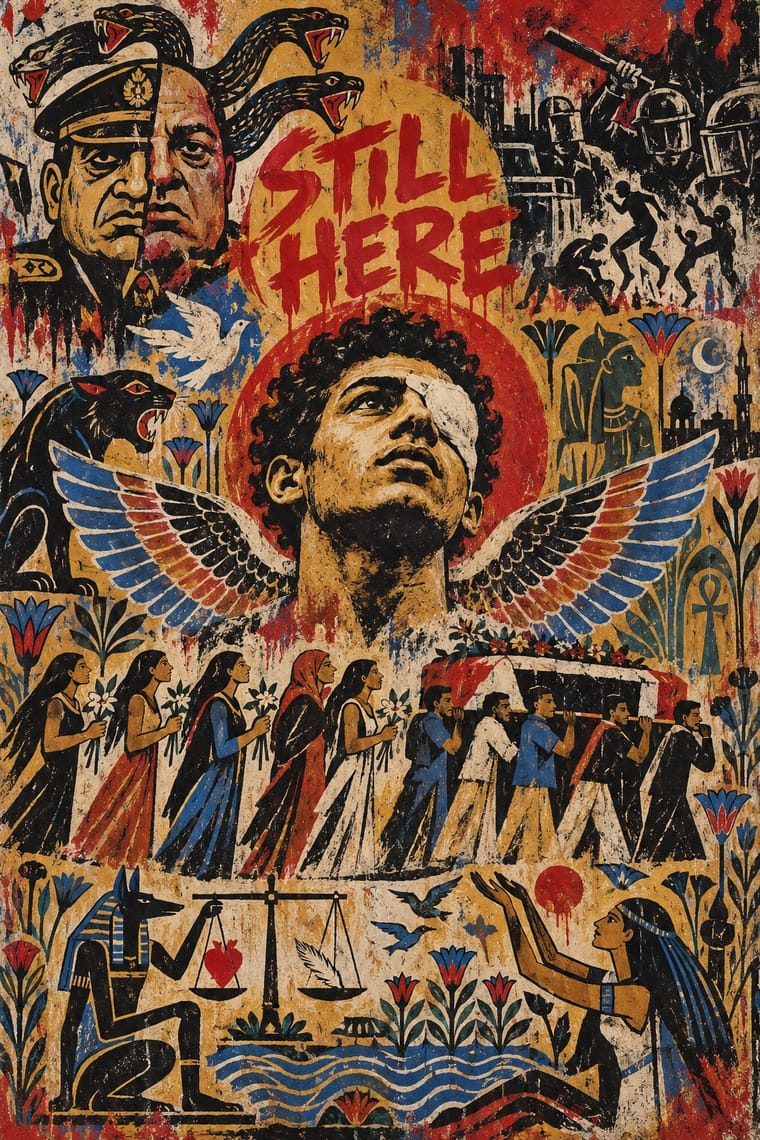
Egyptian Revolutionary Street Art (Mohamed Mahmoud Murals) The street art of Egypt's 2011 revolution and the years after it, when Cairo's walls, above all around Tahrir and Mohamed Mahmoud Street, became what Ammar Abo Bakr called a newspaper.
-
Príncipe Hand-Painted Record-Sleeve Graphics A bounded sleeve idiom made for the Lisbon label Príncipe Discos, in which Márcio Matos, by Crack's account, hand-paints and stencils every copy of the early releases, so no two records match.
-
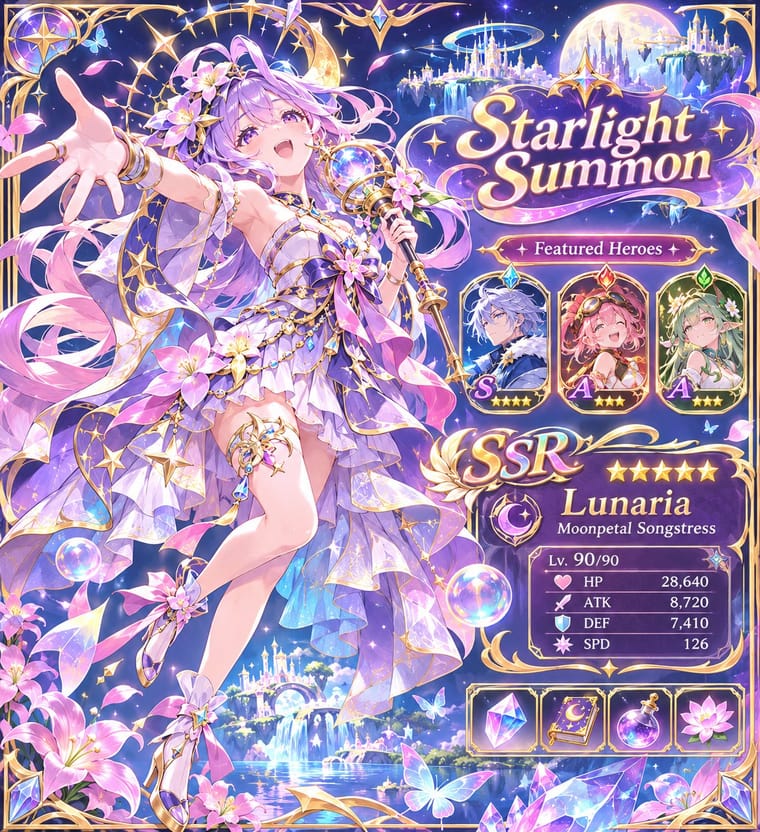
Gacha Game Key Art and Interface (Mobile Anime RPG Look) A game-UI and key-art idiom for collectible-character mobile games, not general anime illustration: a full-body anime figure in an ornate costume and dramatic pose, wrapped in particles, rarity stars and gilded frames, set over a glowing gradient fantasy backdrop.
- Contemporary Nigerian Superhero Comics Superhero comics made in Nigeria since the 2010s and distributed digitally; wider pan-African reach is not documented in the cited sources.
-
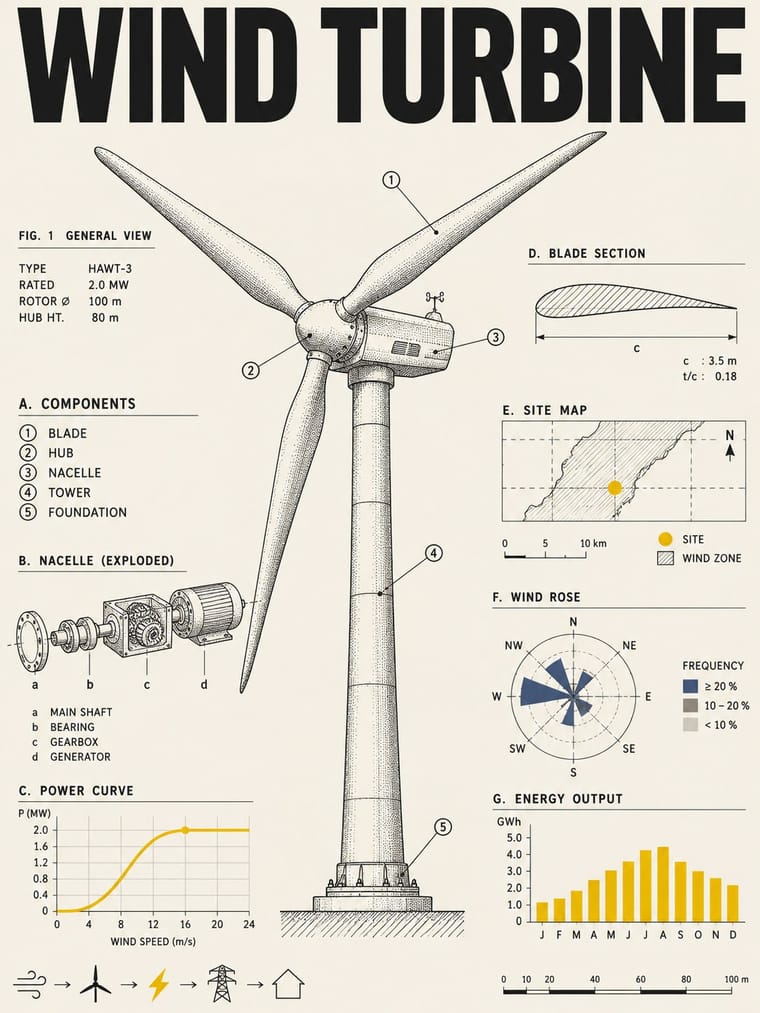
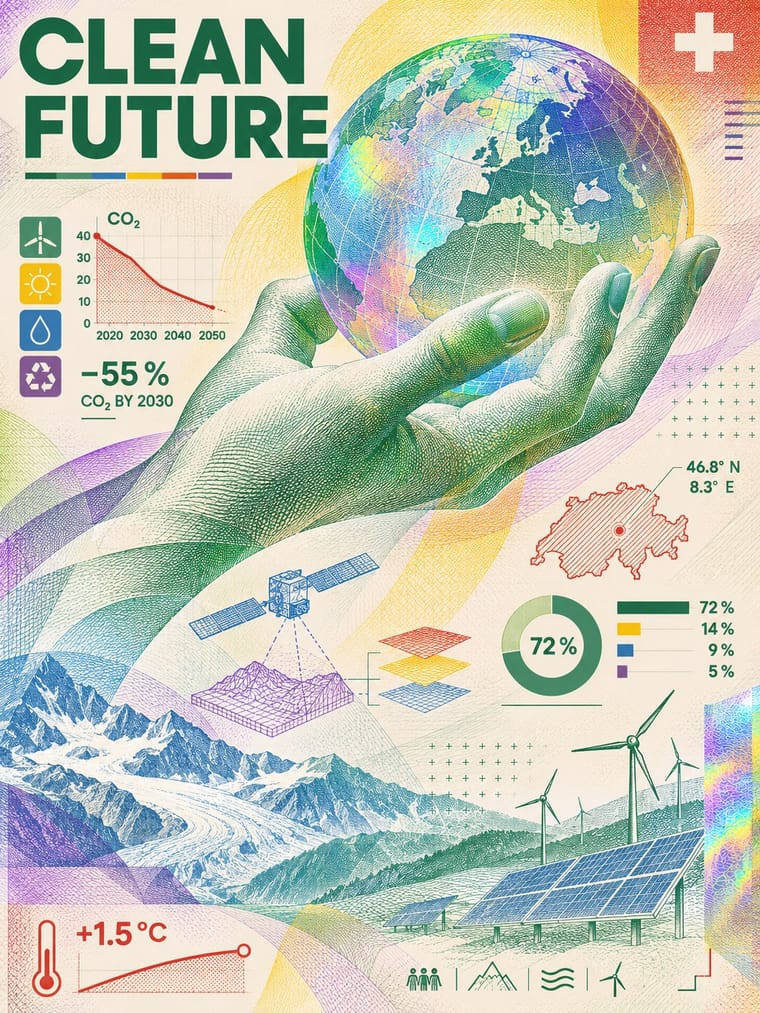
Scientific-Diagram Graphics (Contemporary Revival) A contemporary idiom that treats the scientific diagram itself as graphic material: labelled parts, technical line illustration, optical constructions and encyclopaedic figures from textbooks, patents and old cyclopaedias are redrawn into posters, lettering and identities.
-
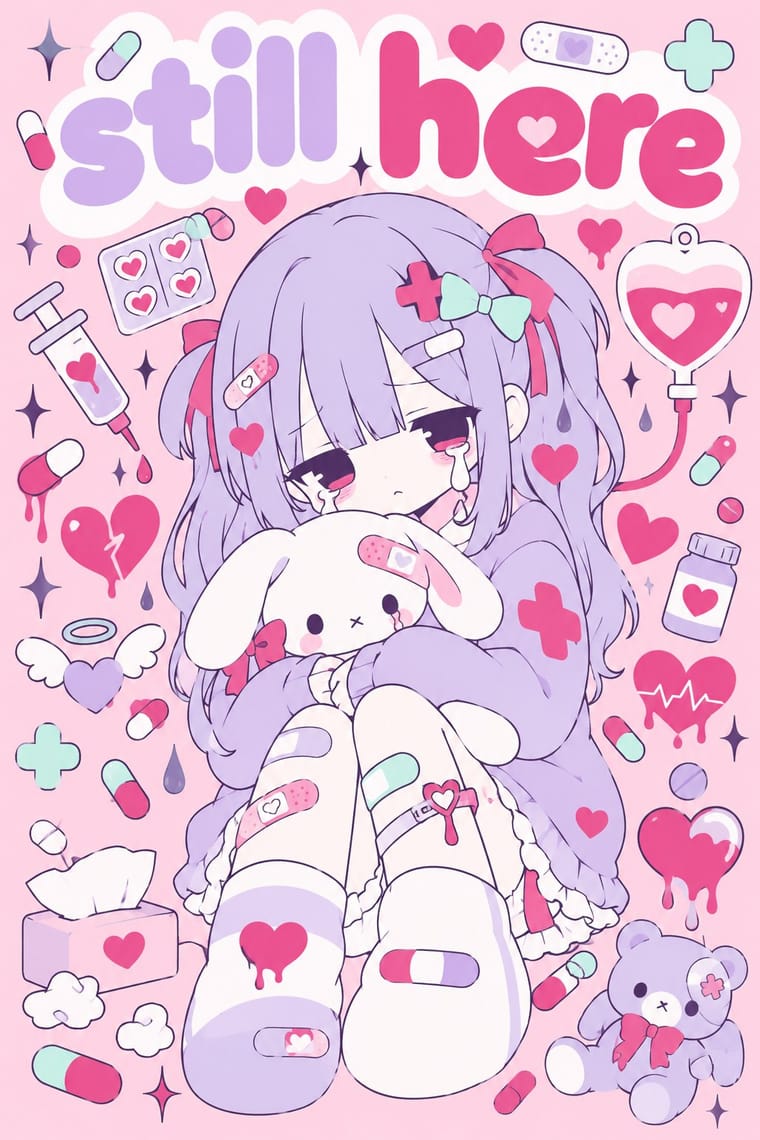
Yami-Kawaii (Sick-Cute) A darker variant of kawaii that keeps pastel pinks, lavenders and rounded characters but fills them with medical and self-harm motifs: pills, syringes, razor blades, bandages and tears.
- Hong Kong Protest Art (Umbrella Movement to the 2019–20 Protests) The graphics of Hong Kong's democracy protests, from the 2014 Umbrella Movement to the national security law of 2020, in two linked media.
-
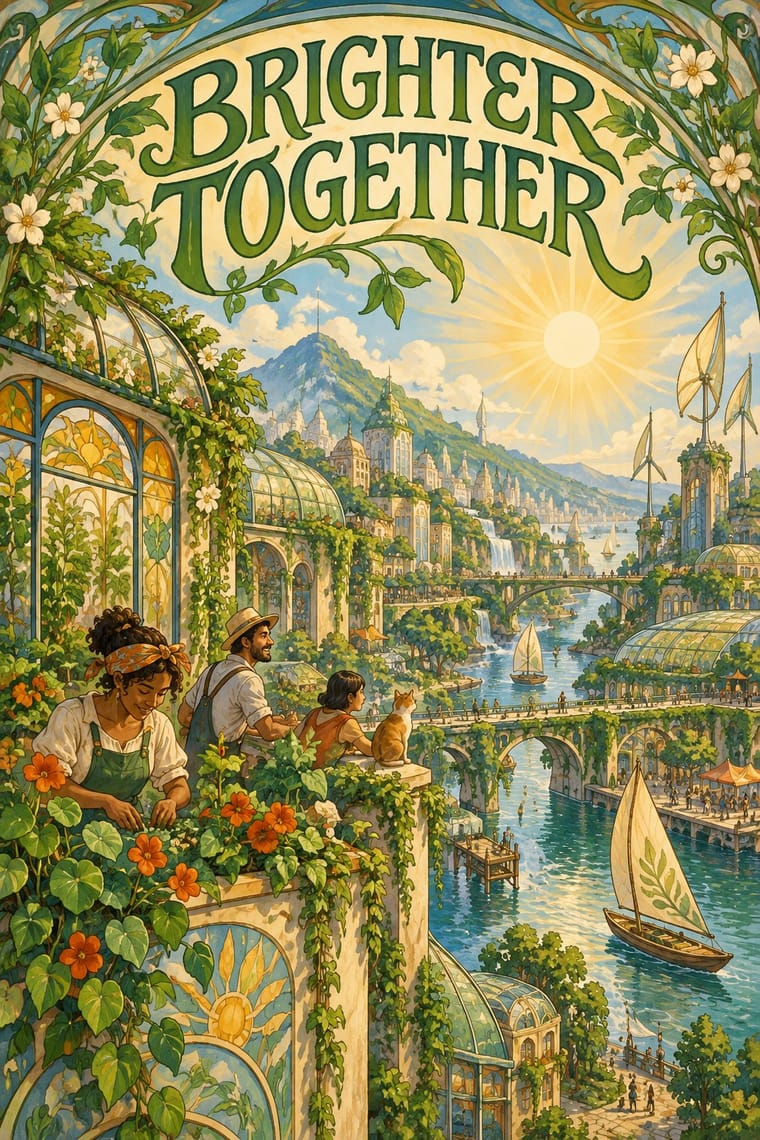
Solarpunk Hopeful eco-futurist imagery born online.
-
Isometric Tech Illustration Small diorama worlds of devices, servers, desks, factories and city blocks drawn on one isometric grid (about 30 degrees; pixel work uses a 2:1 step, about 26.6 degrees) with no vanishing point.
-
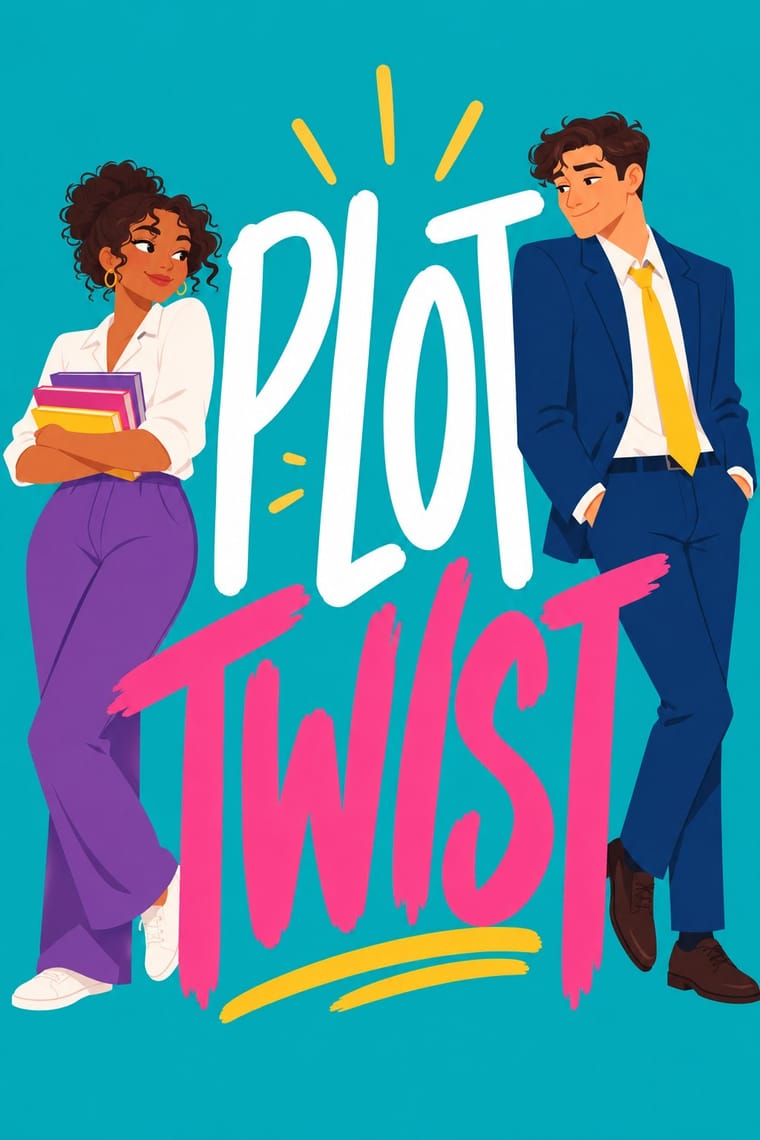
Illustrated Rom-Com Book Cover (Cartoon Couple Cover) The illustrated cover of the contemporary romantic comedy: a couple drawn as flat cartoon figures with simplified faces, from silhouettes and hidden faces to a few cartoon features, caught in one gesture that states the premise, on a single saturated ground of teal, pink, yellow or purple, under a hand-lettered title so large that the figures often lean on it.
-
Swiss Ninth-Series Banknote Design (Pfrunder) The ninth series of Swiss franc banknotes (from 2016), designed by Manuela Pfrunder for the Swiss National Bank under the title 'The many facets of Switzerland'.
-
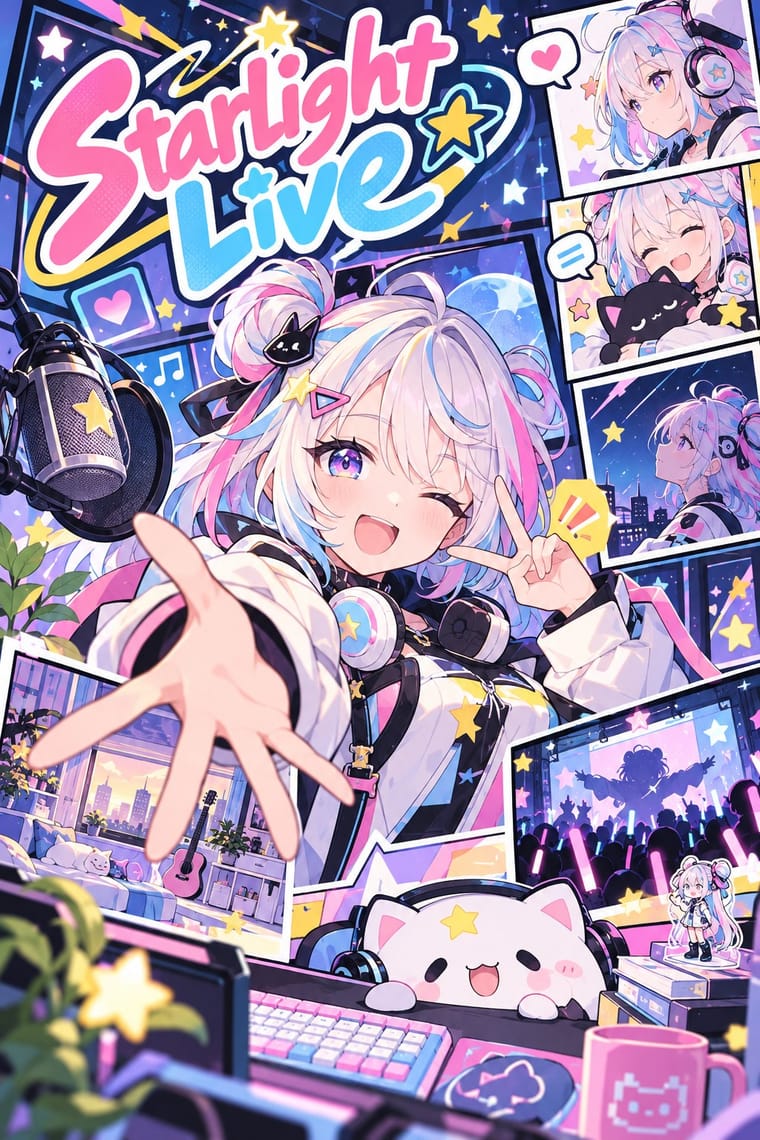
VTuber Avatar and Stream Graphics The graphic kit of virtual YouTubers, streamers who perform behind an animated anime-style character instead of their own face.
-
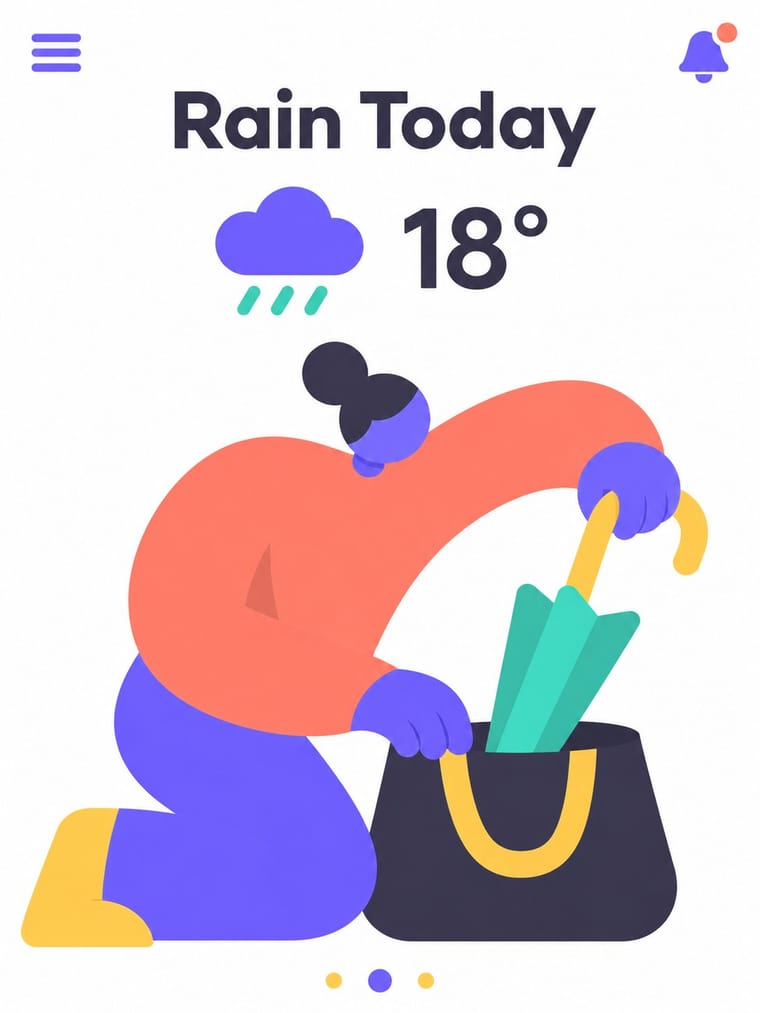
Corporate Memphis The flat vector illustration style that became the default visual voice of big tech in the late 2010s: faceless, ethnically non-specific figures with elongated limbs and tiny heads, drawn in bright flat colour among blobs, leaves and confetti.
-
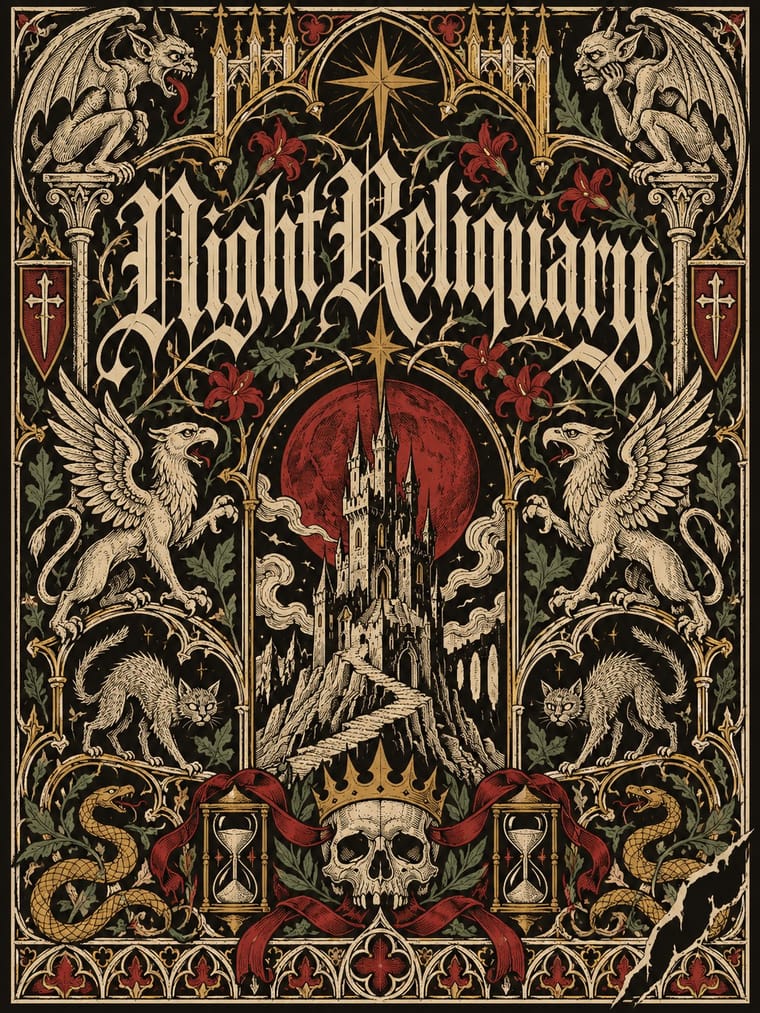
Future Medieval Graphics A contemporary register of illustration, album art, titles and branding that borrows medieval and Renaissance sources: blackletter, bestiary creatures, marginalia and bordered, symmetrical pages.
-
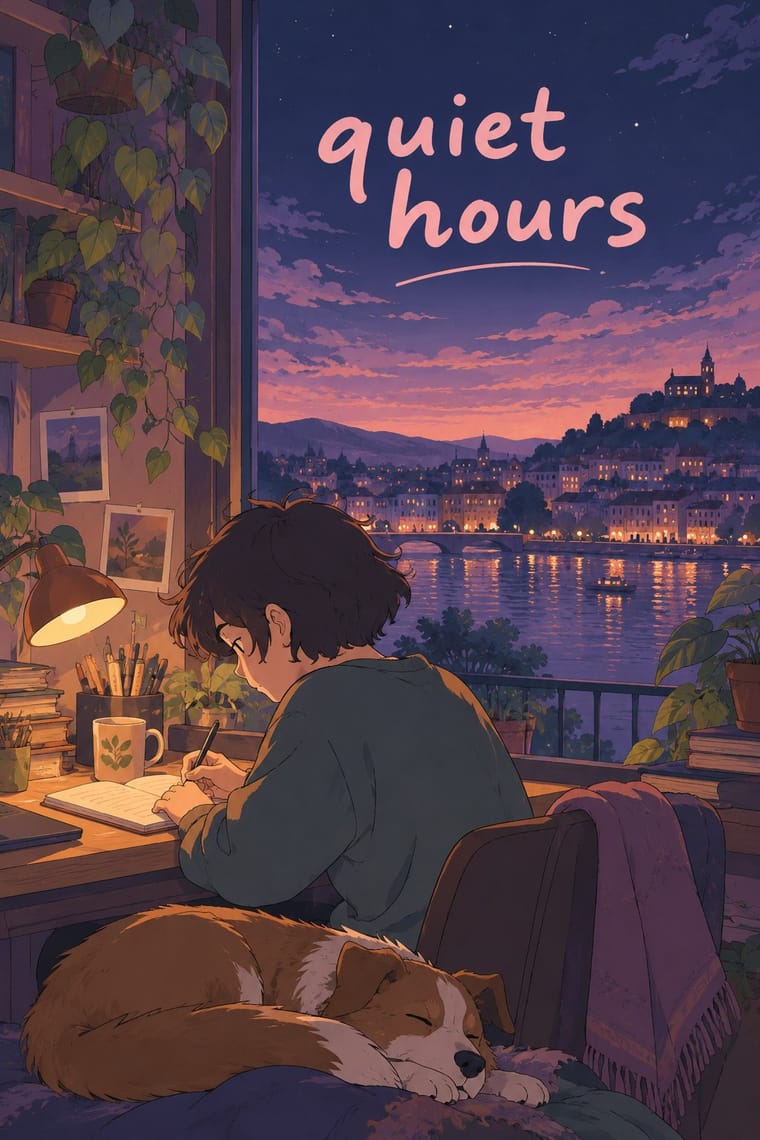
Lo-fi Anime Aesthetic The look of YouTube's 24/7 lo-fi hip hop streams.
-
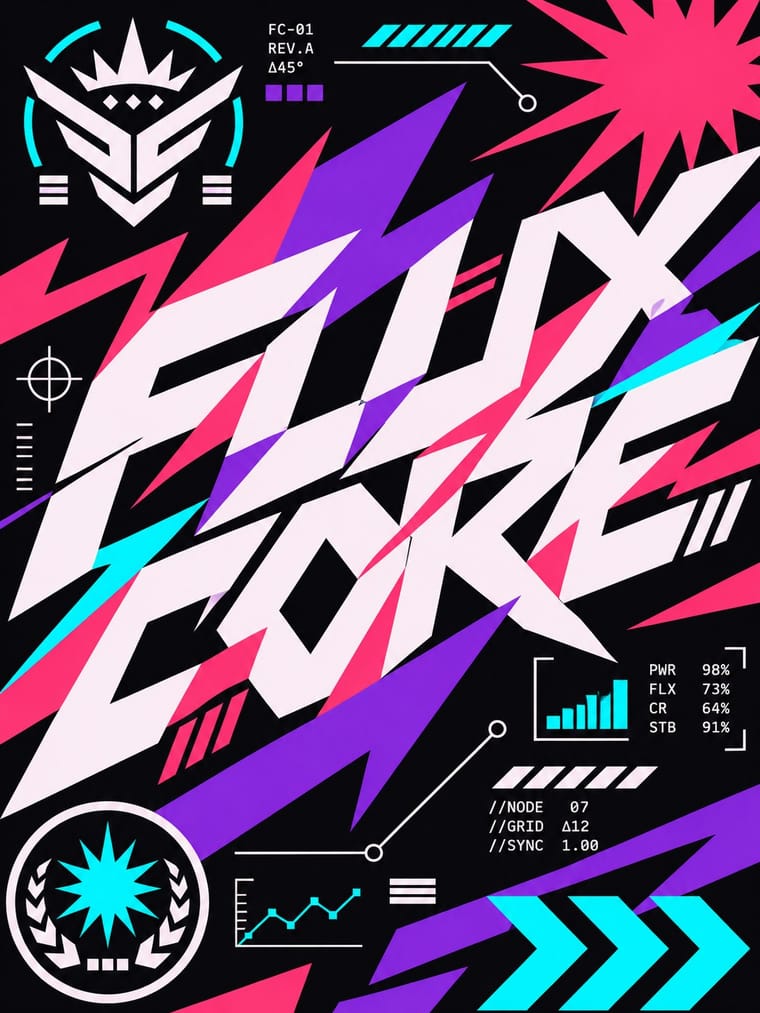
Neo-Vectorheart A half-revival of circa-2000 Vectorheart (flat vector, Swiss and industrial codes) blended with maximalist gamer-grunge: punchy, high-contrast, 45-degree angles (CARI).
-
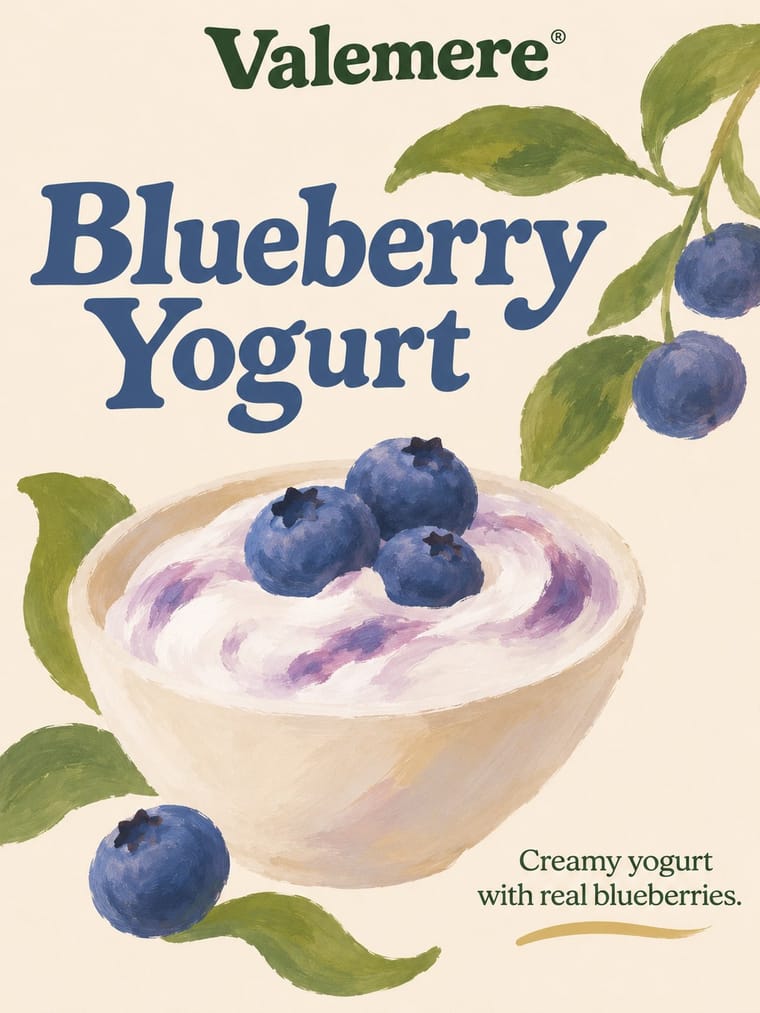
Paperback Chic (Chobanicore) A late-2010s branding tendency, evidenced chiefly by Chobani, in which a food brand speaks through a warm retro serif and soft illustration on a light ground, drawing on folk-art quilts and fairytale-book lettering.
-
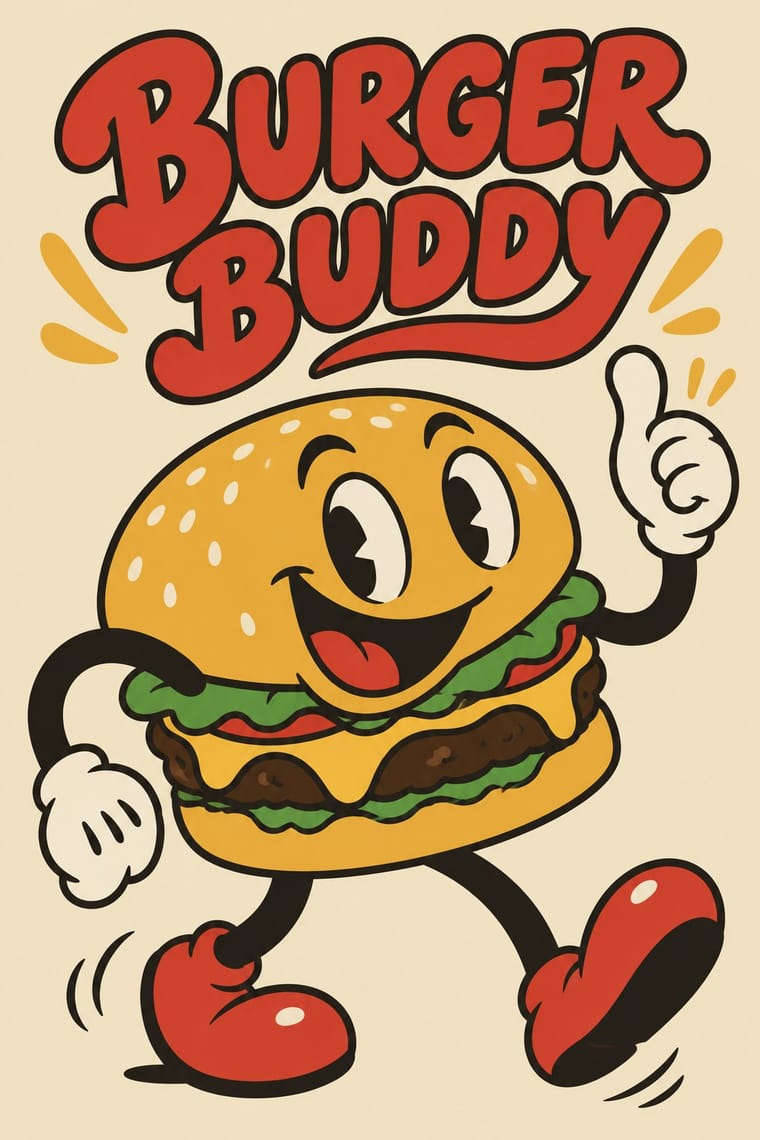
Rubber-Hose Revival (Cartoon Mascot Graphics) A present-day revival of 1920s and 1930s American cartoon drawing: characters with bendy, jointless 'rubber hose' limbs, round bodies, big white eyes and gloved hands, drawn in a confident black outline and filled with a few flat colours.
-
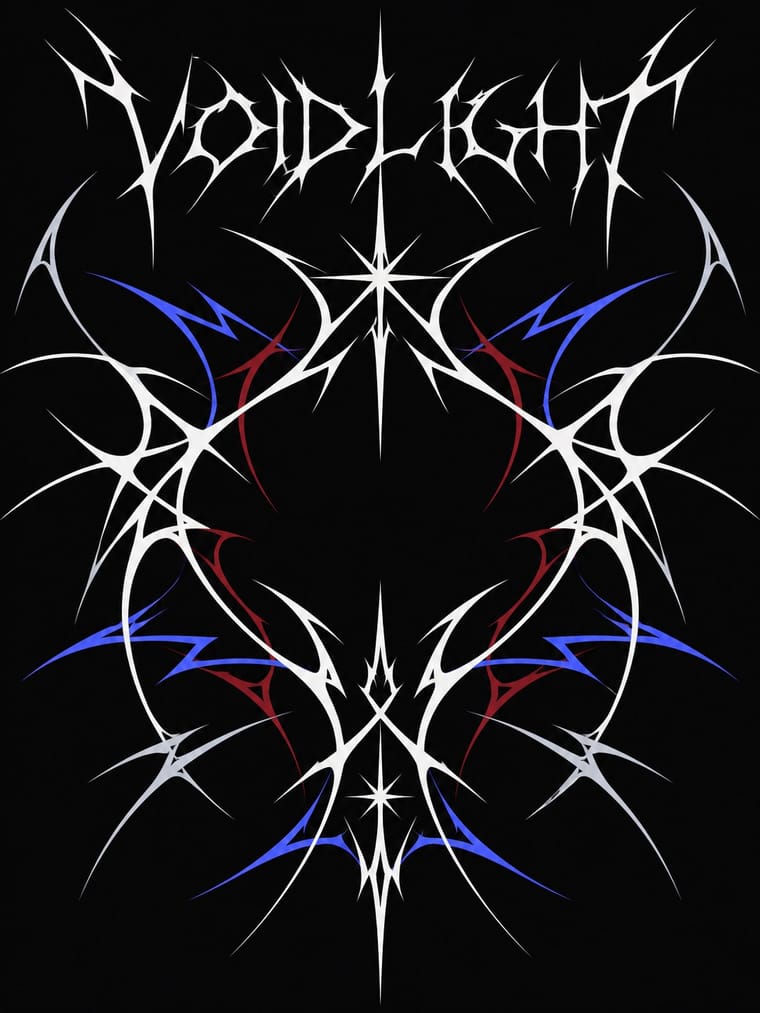
Cybersigilism A contemporary linework style of tapering hooks, thorns, open webs and long curving spikes, often mirrored on a vertical axis.
-
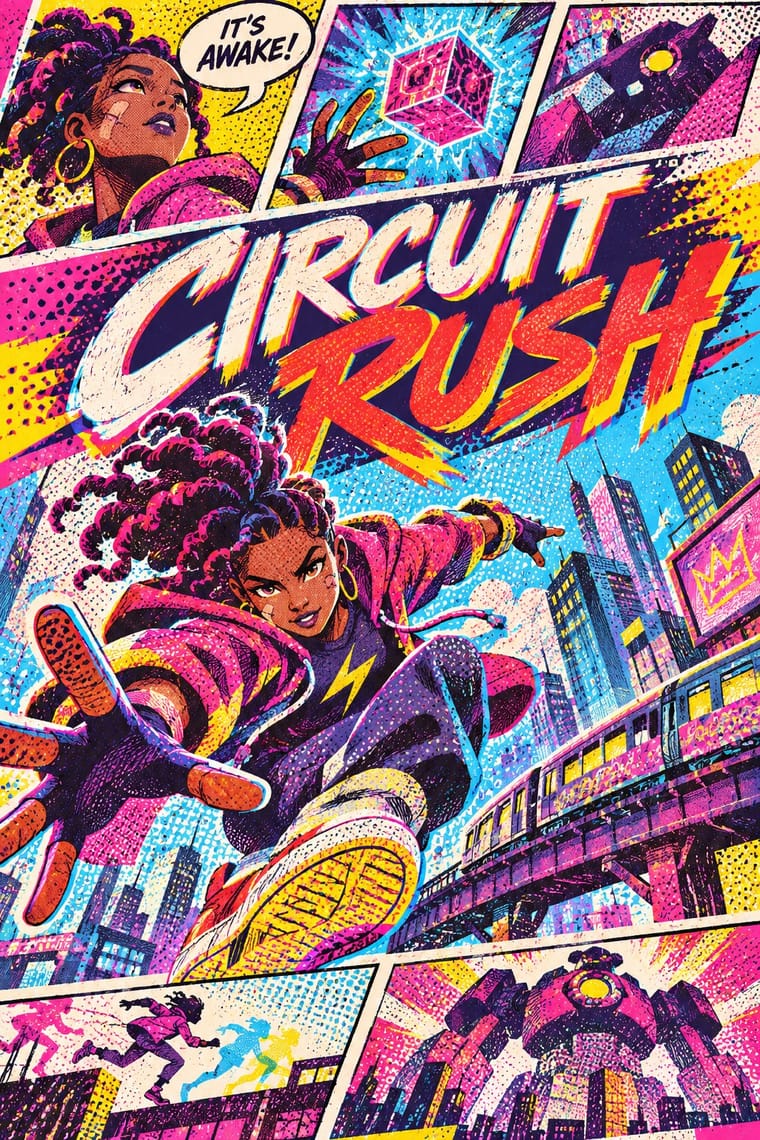
Spider-Verse Comic-Print 3D Hybrid A look for animated film and its key art in which rendered 3D characters and cities are worked over by hand in 2D, so each frame reads as a printed comic panel: Ben-Day halftone dots and line hatching carry tone in place of soft gradations, colour layers sit deliberately out of register, and motion lines, Kirby Krackle, caption boxes and onomatopoeia are drawn into the picture.
- Sudanese Revolution Graphics (Digital Illustrations and Sit-in Murals) The graphics of Sudan's December Revolution from 2018: digital illustrations and cartoons shared on Instagram and Facebook from inside Sudan and the diaspora, and the murals of the 2019 Khartoum sit-in.
- Algerian Hirak Humorous Poster and Meme Graphics The humorous placards and online posters of Algeria's Hirak protests.
-
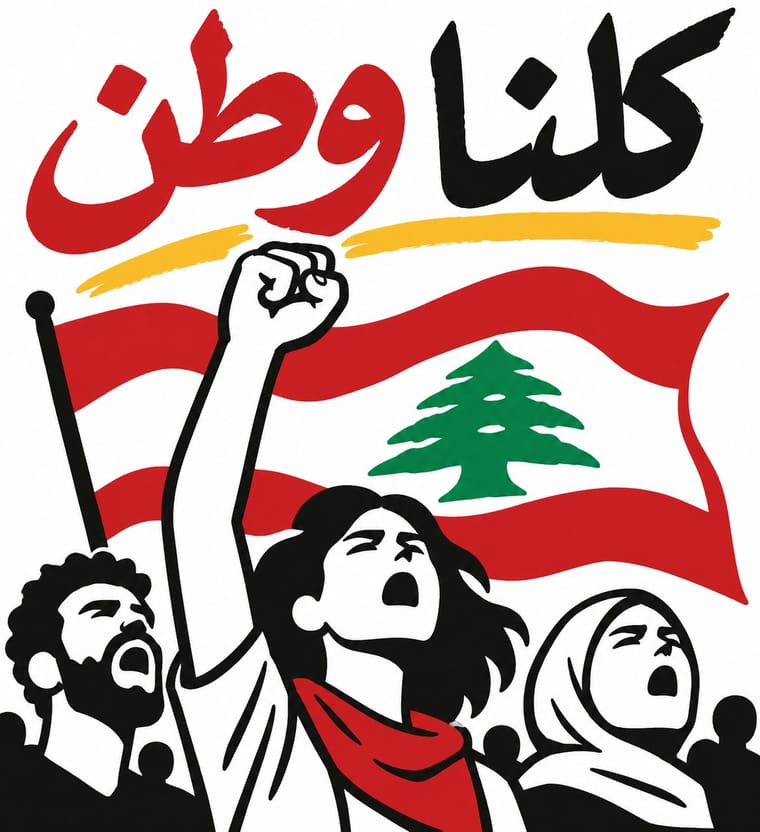
Lebanese October Uprising Graphics (Thawra 2019) Drawn, quickly shared protest imagery from Lebanon's October 2019 uprising: illustrators, graffiti writers and poster makers turned gestures and scenes of the protests into simple flat icons, fused Arabic lettering and dates into compact marks, and used collective figures or the map of Lebanon to picture solidarity above sectarian and party identity.
- Tishreen Protest Graphics (Baghdad, Tahrir Square) Murals, posters, poster poems and cartoons of the Tishreen protests and the Tahrir Square sit-in, Baghdad, from October 2019.
- Milk Tea Alliance Graphics A digital solidarity vocabulary in which regional milk teas stand in for nations: bubble tea, Hong Kong milk tea, Thai tea and Burmese tea are drawn as friendly cups, flags in tea-brown shades and cartoon personifications.
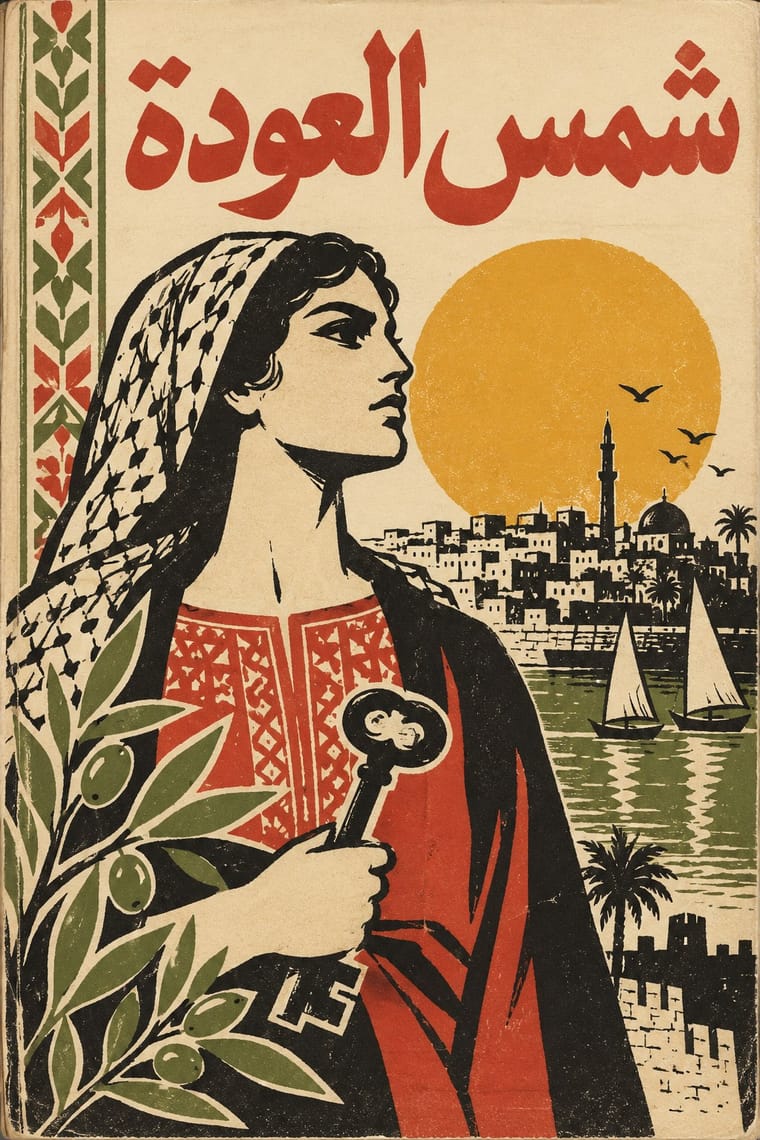
- Palestinian Watermelon and Keffiyeh Graphics Graphics of Palestinian identity and of solidarity with Palestinians, made by Palestinian artists, the diaspora and supporters worldwide and shared mainly online, above all since the Gaza war began in October 2023.
-
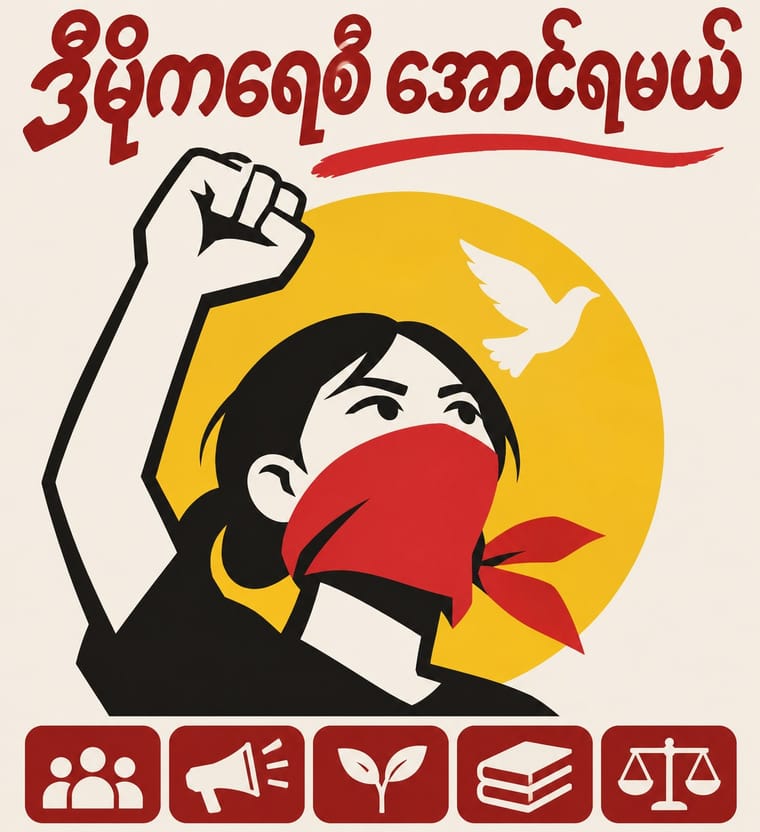
Spring Revolution Protest Art (Myanmar) Protest art of the 2021 anti-coup movement in Myanmar, made as free digital files, free to download, print and carry as placards.
-
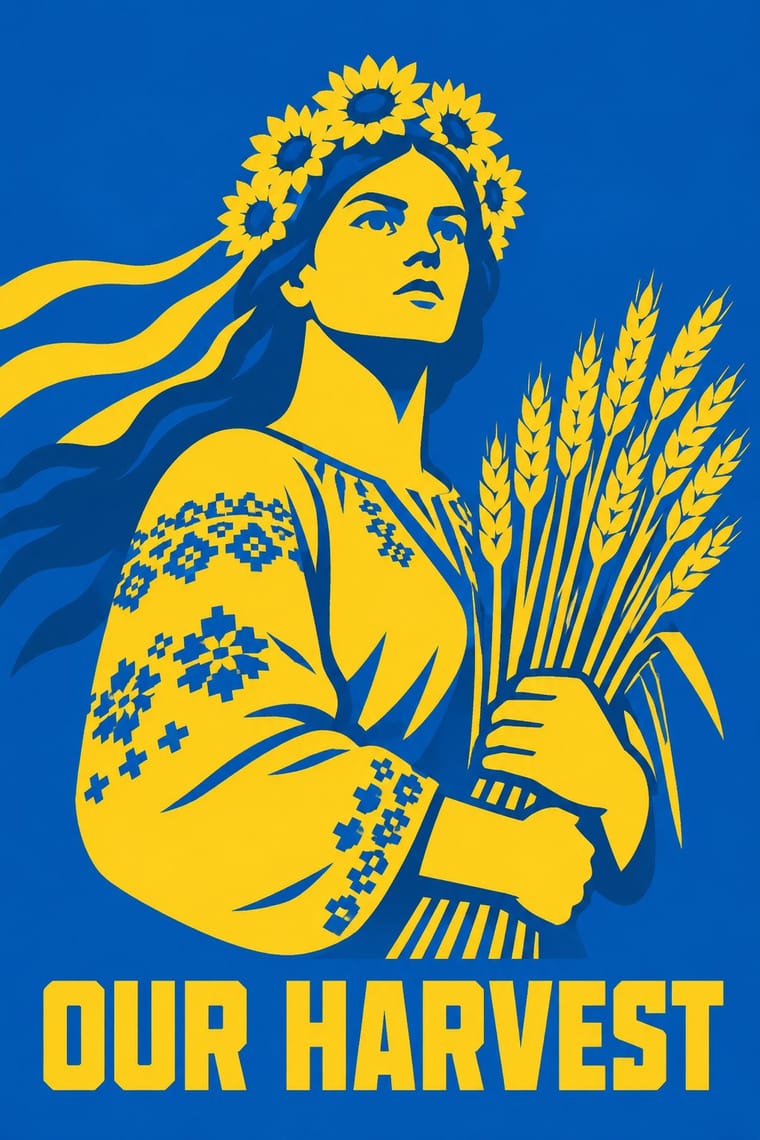
Ukrainian Wartime Graphics (Saint Javelin, War Stamps and Be Brave Like Ukraine) The graphics of Ukraine's defence since Russia's full-scale invasion in February 2022, made by the state, the national post, agencies, illustrators and volunteers at home and abroad.
-
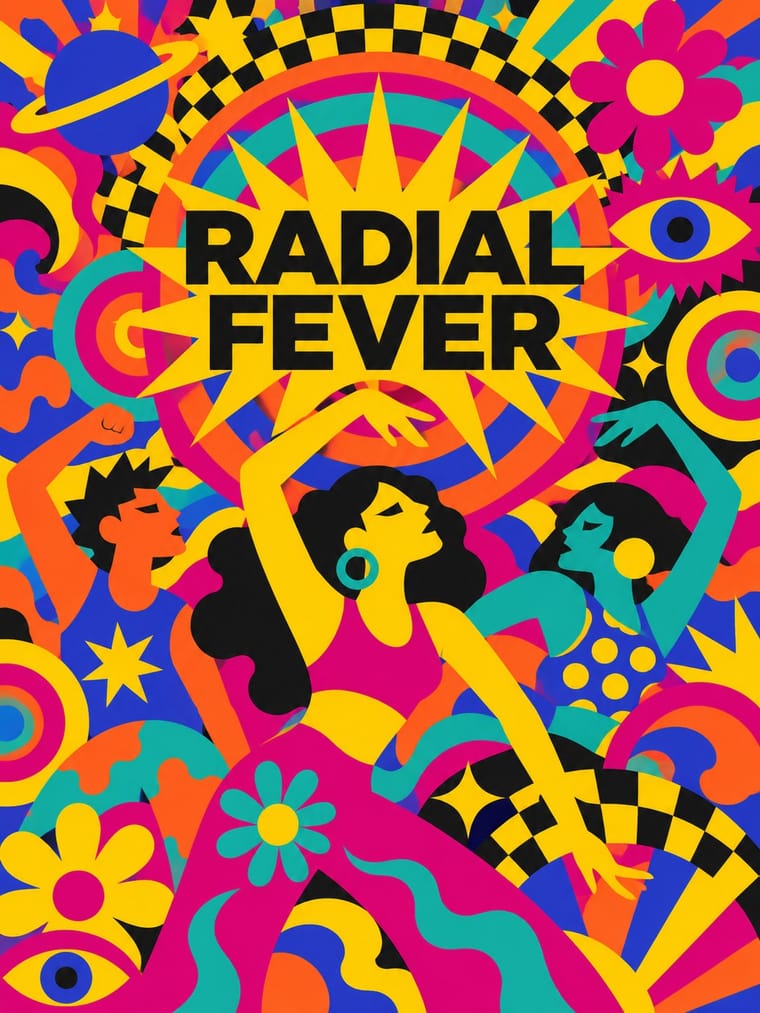
Vectordelia and Its Contemporary Revival A revival look built from crisp, high-contrast vector shapes in saturated flat colour: circles, overlapping ovals, floral flourishes, dancing silhouettes and colour blocks piled into maximalist fields, with minimalist grotesk type set small against them or layered into the ornament.
Styles that usually have it 196
A characteristic choice: usual in these styles, though not essential.
- Ancient Egyptian Hieroglyphic & Register Composition c. 0–394
- Ethiopian Ge'ez Manuscript & Haräg Illumination c. 500–present
- Viking Age Animal Styles (Borre, Jellinge, Mammen, Ringerike, Urnes) c. 800–1150
- Armenian Manuscript Illumination c. 862–1800
- Nianhua & Chinese Folk Print c. 1100–present
- European Heraldry c. 1140–present
- Gothic Blackletter & Fraktur Tradition c. 1180–present
- Tibetan Woodblock Print Culture (Pecha & Prayer Flags) c. 1410–present
- Renaissance Book Typography c. 1460–1600
- Ma & Wabi-sabi Aesthetics 1500–present
- Zoomorphic & Figural Calligraphy (Islamic Calligrams) 1500–present
- Karagöz and Hacivat Shadow-Theatre Figures 1512–present
- Đông Hồ & Hàng Trống Folk Prints 1600–present
- Northwest Coast Formline Design 1700–present
- Thai Yantra (Yant) Diagrams 1700–present
- Swedish Painted Wall Hangings (Dalmålning, Bonadsmålning and Kurbits) 1750–present
- Neoclassical Book Typography 1757–1830
- Botanical Specimen-Plate Illustration 1787–present
- Victorian Letterpress & Wood Type 1810–1900
- Cuban Tobacco Lithography (Habilitaciones & Marquillas) 1845–present
- Arts & Crafts Movement 1860–1920
- British Fairground Art 1860–present
- Celtic Revival Illumination & Lettering 1861–1951
- Belle Époque Lithographic Poster 1866–1914
- Western Americana Graphics (Wild West, Rodeo & Ranch Marks) 1869–present
- Egyptian Cigarette Packaging (Cairo Tobacco Houses) 1871–1970
- Kanga (Swahili Message Cloth) 1886–present
- Lotería Card Imagery (Mexican Lotería) 1887–present
- Art Nouveau 1890–1910
- Nieuwe Kunst (Dutch Art Nouveau) 1892–1914
- German Book Art Movement (Buchkunstbewegung) 1895–1933
- Vienna Secession 1897–1918
- Egyptian Hajj Wall Painting 1900–present
- Sōsaku-hanga (Japanese Creative Prints) 1904–present
- Plakatstil / Sachplakat 1905–1920
- Bezalel School 1906–1929
- Cubist Pictorial Space 1907–1925
- London Transport Design 1908–1966
- Art Deco 1910–1939
- Hungarian Revolutionary Poster 1912–1919
- Vorticism & BLAST Typography 1914–1920
- Kultur-Lige & Yiddish Avant-Garde Book Design 1917–1924
- Colonial Maghreb Tourism Poster 1920–1956
- Mexican Rótulos (Hand-Painted Shop Lettering) 1920–present
- Italian Fascist Graphics (Romanità & Exhibition Photomontage) 1921–1943
- Brazilian Modernismo Graphics (Klaxon and the Semana de 22) 1922–1929
- Leningrad Avant-Garde Picture Book 1922–1936
- Romanian Avant-Garde Magazines (Contimporanul) 1922–1932
- Mavo 1923–1925
- Republican Chinese Book Cover Design (Lu Xun & Tao Yuanqing) 1923–1949
- Sivakasi Firecracker & Matchbox Label Art 1923–present
- Stenberg Brothers Constructivist Film Poster 1924–1933
- Surrealist Graphics 1924–1960
- Showa Modern Commercial Art and Zuan-moji 1925–1940
- American Large-Letter Linen Postcard 1930–1955
- Kiwiana 1930–present
- Lucha Libre Masks & Posters 1930–present
- Scandinavian Functionalism 1930–present
- Streamline Moderne 1930–1945
- Estado Novo Folk Modernism (SPN) 1933–1949
- Milanese Industrial Modernism (Olivetti, Pirelli, Studio Boggeri) 1933–1975
- Nippon Kōbō & Tōhōsha Photo-Propaganda Magazines (NIPPON & FRONT) 1933–1945
- Hebrew Poster Lettering & Early Israeli State Design 1934–1974
- Josef Frank and Svenskt Tenn Botanical Prints 1934–present
- Tiki Pop (Polynesian Pop) 1934–present
- Penguin Paperback Design (Three Bands to the Marber Grid) 1935–1972
- WPA Silkscreen Posters 1935–1943
- American Mid-Century Modernism 1940–1970
- Satyajit Ray Graphic Design (Book, Type and Film Poster) 1943–1992
- Indonesian Revolution Poster (Poster Perjuangan) 1945–1949
- Vietnamese Propaganda Poster (Tranh cổ động) 1945–present
- East German (DDR) Poster and Gebrauchsgrafik 1946–1990
- Jeepney Art 1946–present
- Puerto Rican Silkscreen Poster (DIVEDCO & ICP) 1946–1989
- Fotoromanzo (Italian Photo-Romance) 1947–present
- Pakistani Truck Art 1947–present
- French Post-War Visual-Gag Poster (Savignac, Villemot, Morvan) 1948–1979
- Hurufiyya Calligraphic Modernism 1949–present
- Filmfarsi Film Poster (Pre-Revolutionary Iranian Cinema) 1950–1979
- West German Conceptual Film & Culture Poster (Hillmann and Rambow) 1953–1990
- Finnish Symbol Poster (the 'Finnish School', 1954–1995) 1954–1995
- Saul and Elaine Bass Conceptual Film Graphics 1954–1995
- Zagreb School of Animated Film 1954–1980
- Pop Art Graphics 1955–1975
- Ambedkarite Visual Culture (Blue Suit, Constitution, Jai Bhim) 1956–present
- Polish Cold War Neon (PRL Neonisation) 1956–1981
- Situationist Détournement Graphics 1956–1972
- Thaw Modernism (Soviet and Czechoslovak) 1956–1968
- Black Orpheus, Mbari and Oshogbo Graphics 1957–1975
- Kinngait (Cape Dorset) Inuit Printmaking 1957–present
- Hong Kong Cinema Poster (Shaw Brothers and Golden Harvest era) 1958–1995
- Czechoslovak Film Poster 1959–1989
- Turkish Modernist Poster & Graphic Design 1959–2000
- Bossa Nova Sleeve Modernism (César Villela and Elenco) 1960–1968
- Cuban Revolutionary Poster (OSPAAAL & ICAIC) 1960–1990
- Greek Tourism Modernism (EOT) 1960–1974
- Iranian Modernist Graphic Design 1960–present
- Fluxus Graphics (Maciunas) 1962–1978
- Mail Art (Correspondence Art, Rubber Stamps and Artistamps) 1962–present
- Early Computer Art & Plotter Graphics 1963–1980
- Fania and Nuyorican Salsa LP Sleeves 1964–1985
- Hong Kong East–West Graphic Modernism 1964–present
- Tropicália Graphic Design 1964–1975
- Angura Theatre Poster 1965–1985
- Kanoon Children's Book Illustration (Iran, 1965 to 1979) 1965–1979
- Palestinian Resistance Poster 1965–1993
- Psychedelic Poster 1965–1973
- Cultural Revolution Propaganda Poster (Red, Bright, Shining) 1966–1976
- Chilean Unidad Popular & Nueva Canción Graphics 1967–1973
- AfriCOBRA 1968–present
- Atelier Populaire (May '68 Screenprint Poster) 1968
- Ultras Graphics (Curva Banners and Tifo) 1968–present
- 10-gruppen (Tiogruppen) Printed Textiles 1970–2015
- Afrofuturist Design 1970–present
- Grapus (French Militant Graphic Collective) 1970–1990
- Kawaii Design 1970–present
- Warli Painting 1970–present
- Bangladesh Liberation War Poster (Muktijuddho Poster) 1971–1972
- Graffiti & Hip-Hop Graphics 1972–present
- Roots Reggae Sleeve Art & Rasta Iconography 1973–1985
- Carnation Revolution Posters and Murals 1974–1976
- Lebanese Civil War Party Poster 1975–1990
- Il Male Newspaper-Forgery Satire 1978–1982
- Japanese Handwritten Retail POP (Discount and Variety-Store Graphics) 1978–present
- LGBTQ Pride Graphics (Rainbow Flag to Progress Flag) 1978–present
- South African Resistance Poster 1978–1994
- Staffrider and South African Community Arts Graphics 1978–1996
- Jamaican Dancehall Signs & Sleeve Art 1980–present
- Solidarność & Polish Underground Graphics 1980–1989
- Extreme Metal Band-Logo Lettering 1985–present
- Rocambole's Ricotero Rock Graphics 1985–1988
- Techno-Futurist Graphics 1986–2002
- Steampunk Graphics 1987–present
- Industrial Americana (CSA Commercial-Vernacular Revival) 1988–present
- Rave & Acid House Graphics 1988–2000
- Black Metal Graphics 1990–present
- Screenprinted Gig & Alt-Movie Poster 1991–present
- Gabber and Hardcore Graphics (Rotterdam and Thunderdome) 1992–present
- Collectible Card Game Design (Magic and Pokémon Frames) 1993–present
- Korean Variety-Show Captions (Yeneung Jamak) 1994–present
- Purikura Photo-Sticker Decoration 1995–present
- Emoji Pictographic Language 1997–present
- Flash-Era Web Design (Flash Portfolio Sites) 1997–2010
- Indian Pop-Kitsch Design (Desi Kitsch) 1997–present
- Conversational Brand-Voice Packaging 1998–present
- Indonesian Woodcut Activism (Taring Padi) 1998–present
- Isometric Pixel Art 1998–present
- Legible City Wayfinding (Heads-Up Pedestrian Maps) 1999–present
- McBling Graphics 2000–2008
- Cyworld Minihompy & Minimi (Korean Mini-Homepage Culture) 2001–2015
- Euro Banknote Design (Ages and Styles of Europe) 2002–present
- Contemporary Chinese Book Design ('Most Beautiful Books of China') 2003–present
- Internet Ugly & Meme Vernacular 2003–present
- Forum Signature Art (Sig & C4D Render Graphics) 2004–2013
- Modern Calligraphy and Brush Lettering 2005–present
- Showa and Heisei Retro Revival (Japanese Packaging and Kissaten Graphics) 2005–present
- Synthwave / Outrun 2006–present
- Hipster Artisanal Revival 2007–2018
- Natural Wine Label Art 2007–present
- Risograph & Indie Print Culture 2008–present
- Atompunk / Atomic Retrofuturist Graphics 2009–present
- Flat Design 2010–2016
- Internet Awesomesauce (Epic-Random Meme Graphics) 2010–2013
- Kidcore 2010–present
- Syrian Revolution Graphics (Kafranbel Banners & Poster Collectives) 2011–2024
- Craft Beer Can & Label Art 2012–present
- Low Poly Illustration 2012–present
- Sovietwave 2012–present
- China Dream Folk-Art Propaganda Posters 2013–present
- Gezi Park Protest Graphics (Turkey, 2013) 2013–2014
- Data Humanism 2014–present
- Instapoetry Visual Style 2014–present
- Sticker Bombing (All-Over Sticker Collage) 2014–present
- Latin American Feminist Protest Graphics (Ni Una Menos and the Green Wave) 2015–present
- Newtro (Korean New-Retro) 2017–present
- NFT Profile-Picture Collections (CryptoPunks to Bored Apes) 2017–present
- Contemporary Folk Botanical Illustration (Elemental Folk) 2018–present
- Cottagecore 2018–present
- Dakku (Korean Diary-Decoration Graphics) 2018–present
- Extinction Rebellion Graphics 2018–present
- Guochao (China-Chic National Trend) 2018–present
- Blind-Box Designer Toy Packaging and Character Branding 2019–present
- Book Blob (Abstract Colour-Blob Literary Fiction Cover) 2019–2023
- Chilean Estallido Social Graphics (Revuelta Popular of 2019–20) 2019–2022
- Naive Scribble Branding 2019–present
- Belarusian Protest Illustration (2020 Uprising) 2020–2021
- Black Lives Matter Street Murals 2020–present
- Contemporary ASCII & Character-Grid Graphics 2020–present
- EndSARS Protest Graphics (Nigeria, 2020) 2020–2021
- Instagram Slideshow Activism (Social-Justice Infographics) 2020–present
- Light Academia 2020–present
- Generative-AI Image Aesthetic 2022–present
- Retro Grocery Packaging Revival 2022–present
- Woman, Life, Freedom Protest Graphics (Iran and the Diaspora) 2022–present
- Bangladesh July 2024 Uprising Graffiti and Wall Art 2024–present
- Ornamental Romantasy Book Cover 2024–present