Traditions & vernacular · 1970–present · Sub-Saharan Africa
Kinshasa Popular Painting
Also known as Peinture populaire, Congolese popular painting, School of Popular Painting, Les peintres populaires
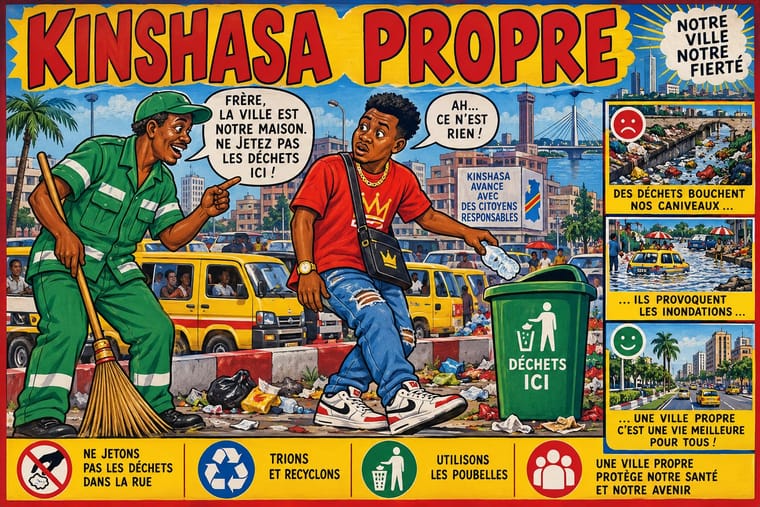
A school of easel painting founded in Kinshasa in the early 1970s by Chéri Samba, Moké, Chéri Chérin and Pierre Bodo, largely self-taught painters, several of them trained in Kinshasa's billboard and sign workshops. Bright, flatly outlined scenes of city life carry painted titles, speech balloons and long captions, mostly in French and Lingala, so that a canvas reads like a satirical editorial cartoon at painting scale on sex, AIDS, money, corruption and politics, often with the painter in the picture as narrator; Moké instead reported the city's streets, bars and ceremonies.
Make something in this styleGet advice in this styleMix it with another style
Use it with care
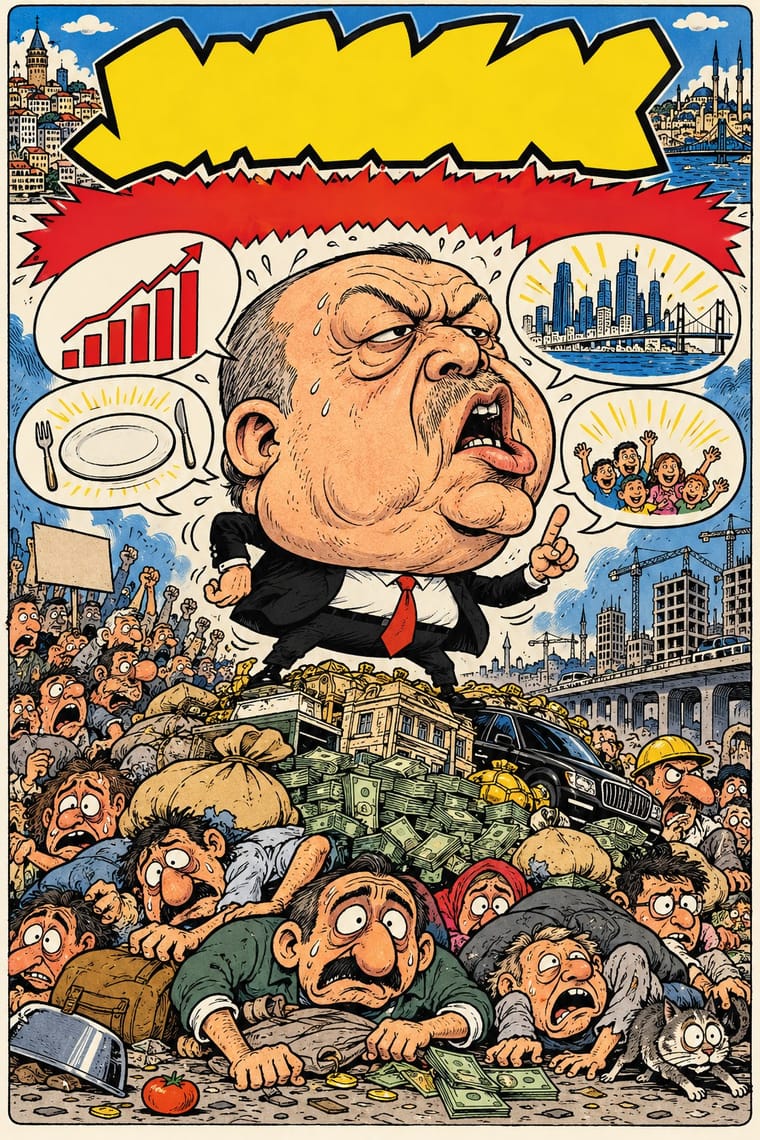
This is the signed work of named Congolese painters, not anonymous folk art: Chéri Samba and younger painters such as JP Mika are living, and the work of the late Moké, Bodo and Chéri Chérin is still exhibited and sold, as in Magnin-A's 2024 Moké show. Borrow the method of words inside a painted scene, but do not copy a particular painter's self-portrait, signature or 'artiste populaire' tag. The caricature is self-critique from inside Kinshasa, aimed at conduct, money and power: never exaggerate racial features or sexualise Black bodies for a laugh, the colonial cartoon language of Tintin au Congo, which Zairian newspapers reissued as a serial in the 1970s, just as this school began. Never fill balloons and captions with invented pseudo-Lingala; write real French or Lingala checked by a speaker, and commission Congolese artists where you can.
01
How it works
- Put the words inside the picture: a painted title, speech balloons from the figures and a long explanatory or moralising caption block, so the canvas is read as well as looked at.
- Write in the city's own languages, French and Lingala above all, with Swahili, Ciluba, Kikongo or English where the message needs them, in a sign painter's even hand-lettered capitals and upright hand, legible from a few steps away.
- Paint one topical scene of city life (a bar, a street, a couple, an official, the painter at work) in flat, saturated acrylic or alkyd enamel with clean outlines and little modelling, sometimes with touches of glitter for sheen, and exaggerate gesture, dress and expression to make the point about what people do.
- Take a position: treat sex, AIDS, money, corruption and politics with satire, irony and moral advice, address the passer-by directly, and show the canvases on the studio front, where the street stops to read and argue.
- Often put the painter in the scene as witness and narrator, and sign the canvas boldly as a popular artist, as Chéri Samba does with 'Chéri Samba, artiste populaire'.
- Or report rather than argue, as Moké the 'painter-reporter' did: crowded street scenes, bars, sapeurs, all-night parties and public ceremonies, with robust figures boldly outlined without concern for likeness or perspective, in a more painterly hand and a rich palette; Bodo's later canvases turn to dreamlike fantasy, with hybrid figures such as bird-headed sapeurs.
Kinshasa, Zaire (now Democratic Republic of the Congo), in street-facing studios around Avenue Kasa-Vubu, a district of billboard and advertising painters, set up by largely self-taught painters, several of them trained in Kinshasa's billboard and sign workshops; a parallel genre-painting movement in Lubumbashi and the other towns of Katanga (then Shaba)
02
Its design choices
From Stylogeny’s vocabulary of design choices: defining choices make the style, characteristic ones are usual, occasional ones turn up now and then.
- Layout & composition
- Space & hierarchy
- Colour
- Form & shape
- Surface & texture
- Medium & production
- Tone & intent
- Avoids
- Straight photography, Photomontage, Typography only, Generous white space, Non-representational, Modular grid, Rational & objective, Calm & contemplative
Palette
#d7262e#f4c20d#1d72b8#2e9e4f#f6f1e3#121212
Typefaces
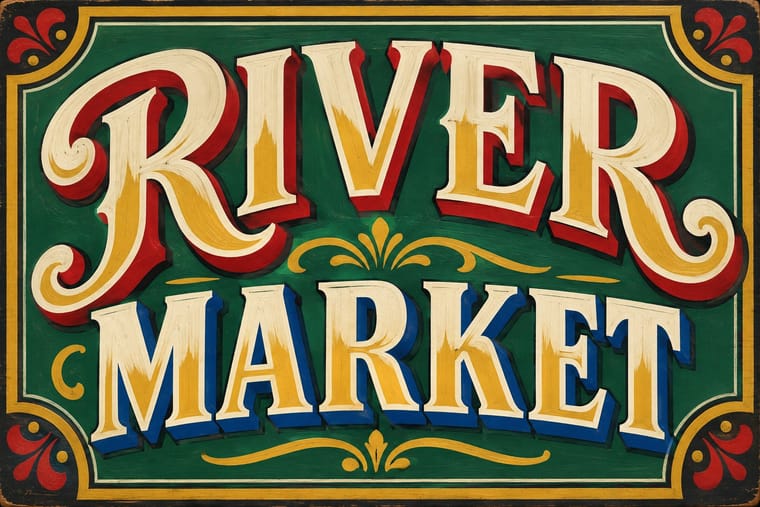
Sign painter's hand-lettered capitals for painted titles and banners
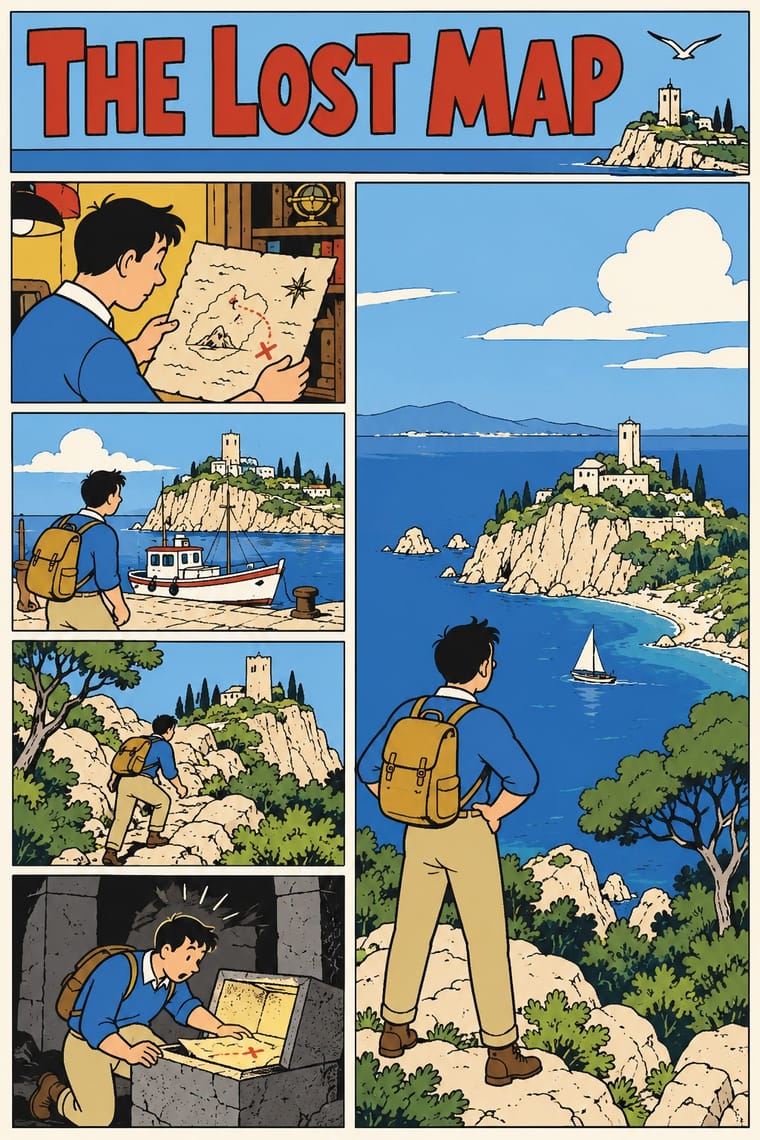
Comic-strip lettering in speech balloons, after the comics Samba copied as a schoolboy (Jeunes pour jeunes) and drew for
Bilenge Info
Long hand-lettered caption blocks in an upright, even hand, in French and Lingala above all, and in Swahili, Ciluba, Kikongo or English where the message needs them
The signature as a logo, e.g. 'Chéri Samba, artiste populaire'
Known for
Chéri Samba, Une vie non ratée
A Successful Life, 1995
Chéri Samba, Condemnation without Trial
1989–90, alkyd enamel and glitter on canvas, MoMA, New York
Chéri Samba, Problème d'eau. Où trouver l'eau
2004, acrylic on canvas; shown at the 2007 Venice Biennale
Pierre Bodo, Monde en tourbillon! Où l'on va?
2006
Moké, Untitled
self-portrait as a successful artist, 2001
Chéri Chérin, Lutte pour la survie
2002
JP Mika (b. 1980, Kinshasa; worked with Chéri Chérin while at art school), Kiese na Kiese (2014, oil and acrylic on fabric), chosen for the catalogue cover and advertising of Beauté Congo
Tshibumba Kanda Matulu, History of Zaire, a series of about 100 paintings (Lubumbashi, 1973–74), recorded in conversation with Johannes Fabian
03
Make something in this style
Say what you need, and Stylogeny’s image studio draws it from Kinshasa Popular Painting’s design choices and checks it against them. It takes about a minute, and you get a link to share.
04
Where it comes from, and what it’s close to
Before it
The style it grew out of, and the styles it borrowed from.
After it
The styles that grew out of it.
No later style in the atlas grew out of it yet.
Alike in its design choices
Styles that make many of the same choices, related or not, besides those above.
05
Sources
- https://www.tate.org.uk/press/press-releases/popular-painting-kinshasa (Tate Modern, 'Popular Painting' from Kinshasa, 2007: 'largely self-taught' painters, founders, dates including Moke 1950–2001, comic strips and billboard and sign painting, subjects, named works)
- https://www.sothebys.com/en/articles/cheri-samba-and-congolese-popular-painting (founded 'in the early 1970s' by the four named founders, billboard origins, subjects, Une vie non ratée 1995, 'artiste populaire' signature)
- https://post.moma.org/?p=167 (Aline Pighin, MoMA post, 2019, on Chéri Samba's Problème d'eau, 2004: title as speech balloon, English caption; Samba uses six languages, French, Lingala, Swahili, Ciluba, Kikongo and English; APUZA sign workshops; Jeunes pour jeunes and Hergé's clear line; studio walls as an open-air exhibition; Nancy Rose Hunt on the entanglement of Tintin and Congolese comics, and Tintin au Congo reissued in Zairian newspapers in the 1970s)
- https://www.moma.org/collection/works/86629 (MoMA, Chéri Samba, Condemnation without Trial, 1989–90, alkyd enamel and glitter paint on canvas)
- https://www.fondationcartier.com/en/collection/artists/cheri-samba (Fondation Cartier: biography, text added 'as sign painters did', Magiciens de la Terre, Beauté Congo 2015–16, works in 'acrylique et paillettes sur toile', 2010 and 2011)
- https://magnin-a.com/en/artists/47-cheri-samba (Magnin-A: Samba in Kinshasa from 1972 with the sign painter Mbuta-Masunda, his own studio from 10 October 1975 at Avenues Kasa-Vubu and Birmanie, Jeunes pour Jeunes, Bilenge Info, 'often glittering palette', banners outside the studio)
- https://en.wikipedia.org/wiki/Chéri_Samba (billboard painter and comic-strip artist, Bilenge Info, word bubbles, text in French and Lingala, paints himself at the centre)
- https://www.magnin-a.com/en/artists/79-moke/ (Magnin-A: Moké 1950–2001, self-taught on discarded cardboard, studio at Avenues Kasa-Vubu and Bolobo in a district of billboard and advertising painters, 'painter-reporter', 1965 Mobutu parade painting; Moké, peintre, 2024)
- https://artsandculture.google.com/story/yAXB-7Tgah0oKw (Google Arts & Culture, Pigozzi collection: Moké's subjects, bold outlines without concern for likeness or perspective, painterly handling and rich palette; unlike Samba he rarely depicted social conflict)
- https://en.wikipedia.org/wiki/Bodo_(painter) (Bodo, 1953 to 5 March 2015, co-founder; turn to fantasy and hybrid figures in the 1990s)
- https://www.artcomoedia.fr/wp-content/uploads/2020/12/BIOGRAPHIE_PIERRE_BODO_COMOEDIA_ESPACE_DART.pdf (Comoedia Espace d'Art: Bodo joined the LOMAVIN and Mbuta Masunda sign workshop in 1970, own studio two years later, studios open to the street, tree-women from 2005, bird-headed sapeurs from 2010)
- https://en.wikipedia.org/wiki/Chéri_Chérin (Lutte pour la survie, 2002; Académie des Beaux-Arts, Kinshasa; died 19 October 2025)
- https://mg.co.za/friday/2020-02-05-jp-mika-is-a-congolese-artist-in-full-bloom/ (Riason Naidoo, Mail & Guardian, 2020: JP Mika born 1980 in Kinshasa, with Chéri Chérin while at art school, Kiese na Kiese, 2014, chosen for the Beauté Congo catalogue cover and advertising)
- https://elephant.art/beaute-congo-at-the-fondation-cartier (Beauté Congo: JP Mika, Kiese na kiese, 2014, oil and acrylic on fabric)
- https://acp.cd/culture/loeuvre-picturale-molato-une-celebration-de-lelegance-et-de-lidentite-congolaise/ (Agence Congolaise de Presse, 3 March 2026: JP Mika's Molato (La Sape) shown in his Kinshasa gallery)
- https://lpca.socsci.uva.nl/aps/tshibumbaintro.html (Archives of Popular Swahili, University of Amsterdam: Tshibumba's History of Zaire in one hundred pictures, 1973–74, recorded in conversations with Johannes Fabian; Katanga genre painting from the late 1960s to the late 1970s, then Shaba)
- https://cafebabel.com/en/article/painting-congolese-history-tshibumba-kanda-matulu-5ae004d0f723b35a145dbdd9 (Tshibumba worked as a painter in Lubumbashi; Fabian met him there in 1973)
- Johannes Fabian, Remembering the Present: Painting and Popular History in Zaire (University of California Press, 1996)
How Stylogeny researches and checks a style: where the facts come from.