Pictorial & machine age · 1956–present · South Asia
Ambedkarite Visual Culture ( Blue Suit, Constitution, Jai Bhim )
Also known as Ambedkar iconography, Jai Bhim visuals
A counter-iconography of the Dalit and Ambedkarite movement. B. R. Ambedkar appears in a blue three-piece suit, holding the Constitution in one hand with the other raised or pointing, often under the Buddha, the Ashoka Chakra and the Lion Capital, against blue and white fields and the greeting Jai Bhim. Its print format is in dialogue with the Indian calendar print, putting a political leader where gods usually stand.
Use it with care
This is the living visual language of Dalit and Ambedkarite communities, for whom Ambedkar is a political leader and, for Navayana Buddhists, a religious figure; statues of him have been vandalised and defaced as attacks on Dalit presence. Do not use the portrait, the blue colour or Jai Bhim as ornament, a costume, a joke or a brand mood, and do not distort, caricature or generate his face casually; the template is a statement of dignity and claim to public space, so work with Ambedkarite makers or organisations and credit them. The palette is inferred from the sources' blue and white (a mid blue tint and a dark navy are added as shades of that blue); no source gives exact values. Scholars differ on who devised the statue's pose, and no source read here confirms a direct descent from calendar art, so the link is given only as an affinity.
01
How it works
Palette
-
#1b3fa0 -
#ffffff -
#14213d -
#8aa4d8
Typefaces
-
Hand-painted Devanagari banner and sign lettering
-
Bold Devanagari display type on posters and flags
-
Bold Latin sans captions for Jai Bhim slogans
- Show Ambedkar in the fixed template: blue suit, white shirt, tie, spectacles, the Constitution in one hand and the other raised or pointing.
- Place Buddhist and constitutional emblems above or around him: the Buddha, the Ashoka Chakra, the Lion Capital.
- Make blue the movement's colour in flags, banners, statues and backgrounds, with white as its partner.
- Centre the single figure and keep it upright and frontal so that it reads as a monument at any size, from a wallet photo to a statue.
- Write Jai Bhim or a short slogan in bold hand-lettered or display type that can be read across a crowd.
Where and when India, Dalit and Ambedkarite communities.
India, Dalit and Ambedkarite communities. After B. R. Ambedkar's death on 6 December 1956, weeks after his conversion to Buddhism at Nagpur (14 October 1956), his image spread as statues, posters, prints and murals. Statues followed, and a 3.66 m bronze by B. V. Wagh was installed in the Parliament of India on 2 April 1967. The image is renewed at Ambedkar Jayanti (14 April) and, more recently, in digital painting.
02
Its design choices
From Stylogeny’s vocabulary of design choices: defining choices make the style, characteristic ones are usual, occasional ones turn up now and then.
- Layout & composition
- Space & hierarchy
- Colour
- Surface & texture
- Imagery
- Medium & production
- Tone & intent
- Avoids
- Abundant decoration, Floral & vegetal, Full polychrome, Ironic & self-aware, Playful & witty, Dynamic asymmetry, Non-representational, Experimental & distorted
How its pictures are made Photographic, Drawn & painted
Kind of picture: Photographic · Drawn & painted
Known for
-
B. V. Wagh, bronze statue of Ambedkar, Parliament of India
installed 2 April 1967; the template-faithful exemplar
-
Ambedkar Jayanti at Parliament Street, Delhi
14 April; blue Jai Bhim flags, statues and posters, TwoCircles.net, 2023
-
Vikrant Bhise, Labour Leader (acrylic, 2021) and Babasaheb With Labour (2022)
critical reinterpretations of the template, not faithful examples of it
-
Digital 3D paintings of Ambedkar with a halo under the Buddha, Lion Capital and Ashoka Chakra shown at Ambedkar Jayanti stalls
2023
03
Where it comes from, and what it’s close to
Borrowed from
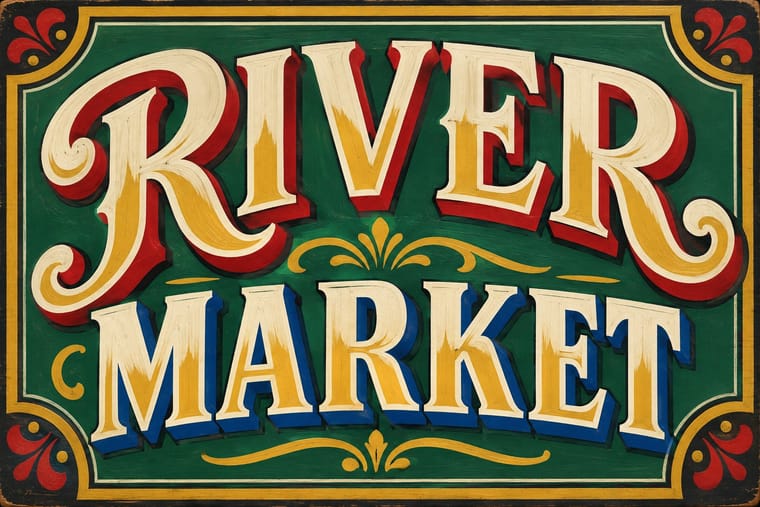
Ambedkarite Visual Culture (Blue Suit, Constitution, Jai Bhim) 1956–present
No later style in the atlas grew out of it yet.
Alike in its design choices
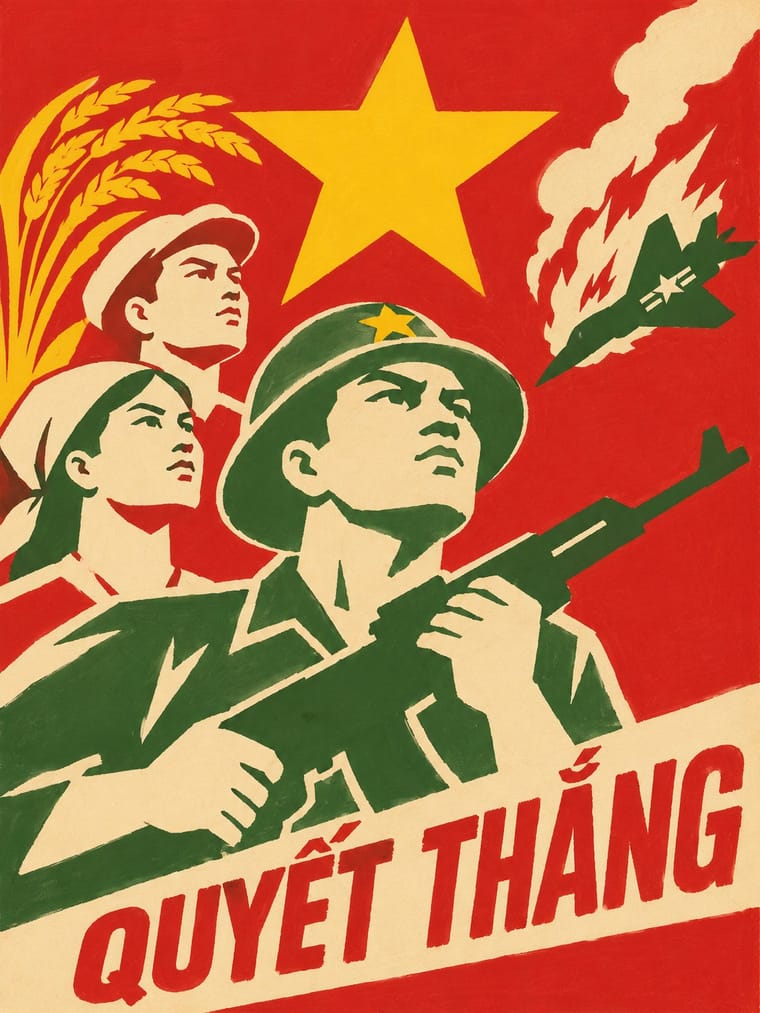
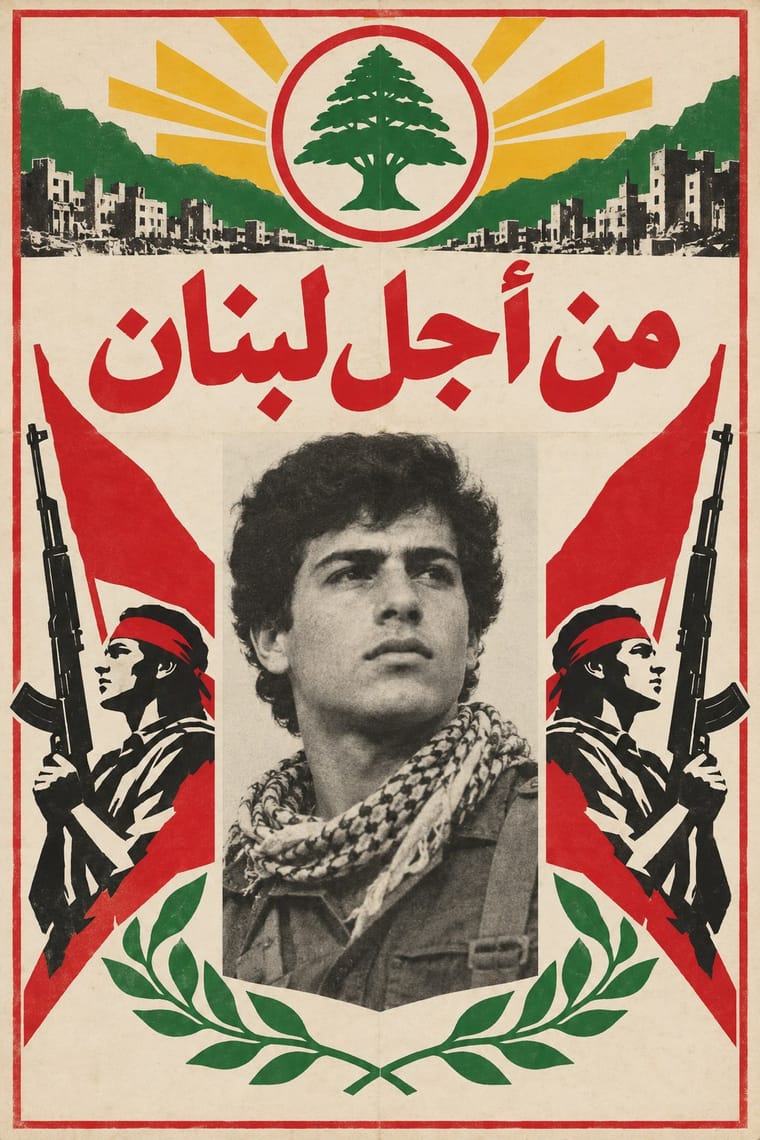
04
Often taken for
Ambedkarite Visual Culture has no real works recorded yet, so these are its nearest styles by its choices alone, with the choices that tell them apart.
-
Vietnamese Propaganda Poster (Tranh cổ động)
Vietnamese Propaganda Poster is one of Ambedkarite Visual Culture’s nearest styles by choices; no real work of either fits the other better.
Choices that tell Ambedkarite Visual Culture and Vietnamese Propaganda Poster apart Choice Ambedkarite Visual Culture Vietnamese Propaganda Poster Isolated object defining — Full polychrome avoids occasional Treated photography characteristic — Diagonal axis — characteristic Architecture & signage characteristic — No shared descent in the atlas: they reached these choices separately.
-
Lebanese Civil War Party Poster
Lebanese Civil War Party Poster is one of Ambedkarite Visual Culture’s nearest styles by choices; no real work of either fits the other better.
Choices that tell Ambedkarite Visual Culture and Lebanese Civil War Party Poster apart Choice Ambedkarite Visual Culture Lebanese Civil War Party Poster Full polychrome avoids characteristic Straight photography — defining Floral & vegetal avoids occasional Borders & frames — characteristic Folk & sacred symbols — characteristic No shared descent in the atlas: they reached these choices separately.
-
Palestinian Resistance Poster
Palestinian Resistance Poster is one of Ambedkarite Visual Culture’s nearest styles by choices; no real work of either fits the other better.
Choices that tell Ambedkarite Visual Culture and Palestinian Resistance Poster apart Choice Ambedkarite Visual Culture Palestinian Resistance Poster Found & vernacular imagery occasional avoids Folk & sacred symbols — defining Treated photography characteristic — Full polychrome avoids occasional Architecture & signage characteristic — No shared descent in the atlas: they reached these choices separately.
-
Tishreen Protest Graphics (Baghdad, Tahrir Square)
Tishreen Protest Graphics is one of Ambedkarite Visual Culture’s nearest styles by choices; no real work of either fits the other better.
Choices that tell Ambedkarite Visual Culture and Tishreen Protest Graphics apart Choice Ambedkarite Visual Culture Tishreen Protest Graphics Central symmetry characteristic — Brush & pen calligraphy — defining Authoritative & institutional characteristic avoids Full polychrome avoids occasional Icons & pictograms occasional defining No shared descent in the atlas: they reached these choices separately.
— means the choice isn’t among the style’s recorded choices. Critics recorded each work’s choices with the styles’ descriptions in view, so this shows whether the descriptions hold together, not proof that they are right.
05
Sources
- TwoCircles.net, 'Ambedkar Jayanti at Parliament Street, Delhi', 20 April 2023 (https://twocircles.net/2023apr20/448765.html: blue flags, Jai Bhim, statues, posters, digital painting with Buddha, Lion Capital, Ashoka Chakra)
- TwoCircles.net, Vikrant Bhise feature, 6 February 2023 (https://twocircles.net/2023feb06/448274.html: blue suit and Constitution in posters, busts, murals; Labour Leader 2021)
- Wikipedia: 'B. R. Ambedkar' (https://en.wikipedia.org/wiki/B._R._Ambedkar: dates, conversion, Constitution, Wagh's Parliament statue 1967)
3 more sources
- Nicolas Jaoul, 'Learning the Use of Symbolic Means: Dalits, Ambedkar Statues and the State in Uttar Pradesh' (not read; cited from a search summary only, no claim drawn from it)
- EPW, 'Ambedkar Will Teach the Nation from His Statues', 2017 (https://www.epw.in/journal/2017/25-26/web-exclusives/ambedkar-will-teach-nation-his-statues.html, via search summary: Constitution and pointing finger)
- Scout brief: 'The making of a new icon: B. R. Ambedkar's visual hagiography' (academia.edu) and 'Resistance in Popular Visuals and Iconography' (ResearchGate), not directly read
How Stylogeny researches and checks a style: where the facts come from.