Pictorial & machine age · 1960–1990 · Latin America & Caribbean
Cuban Revolutionary Poster (OSPAAAL & ICAIC)
Also known as Cuban poster, Cartel cubano, Tricontinental posters
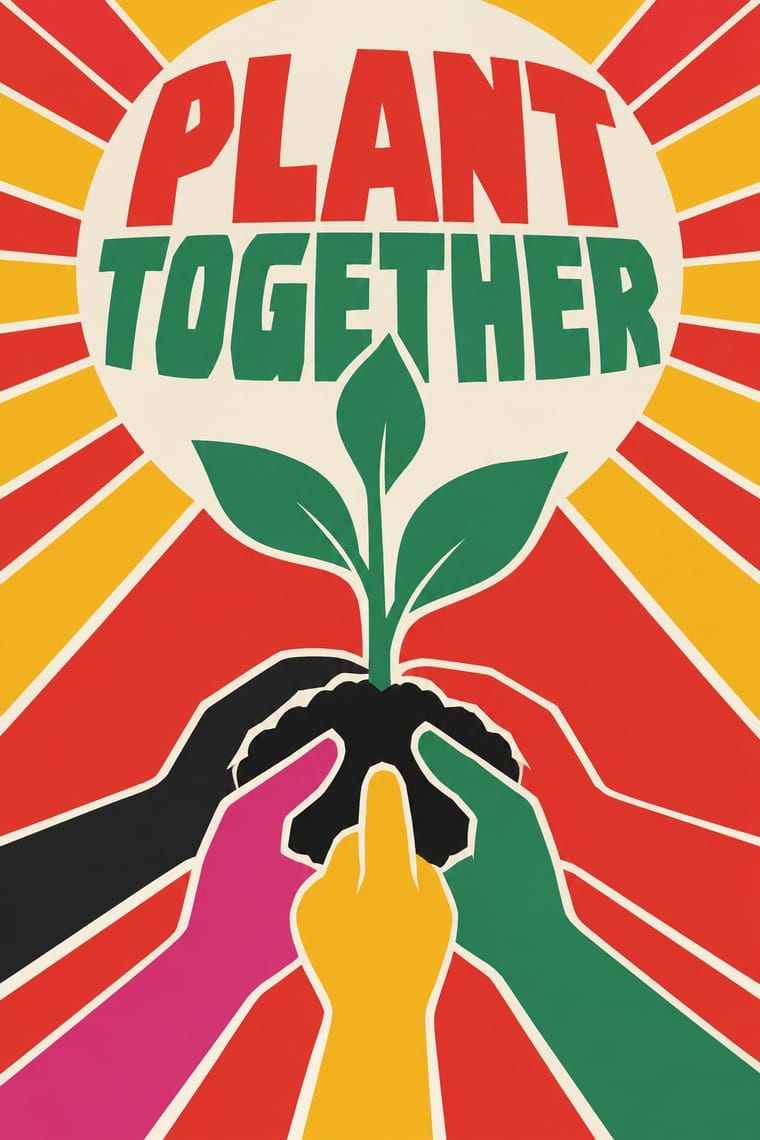
The poster culture of revolutionary Cuba, produced for the film institute ICAIC and the solidarity organisation OSPAAAL. With no commercial advertising and scarce materials, designers made bold silkscreen and offset posters that combined Pop and psychedelic colour, op-art pattern, flat silhouettes and single conceptual images, for cinema and for internationalist causes from Vietnam to Africa.
Make something in this styleGet advice in this styleMix it with another style
01
How it works
- Reduce the message to one emblematic image: a silhouette, a symbol or a conceptual visual pun.
- Print flat, saturated layers in silkscreen and let bright, unexpected colour combinations carry the energy.
- For film posters, interpret the film metaphorically rather than showing stills or stars.
- Treat portraits and photographs as high-contrast silhouettes or posterised flat shapes.
- Set solidarity slogans in a plain sans-serif and repeat them in several languages for international circulation.
Havana, Cuba (ICAIC film institute, OSPAAAL and state propaganda bodies)
02
Its design choices
From Stylogeny’s vocabulary of design choices: defining choices make the style, characteristic ones are usual, occasional ones turn up now and then.
- Layout & composition
- Space & hierarchy
- Typography
- Colour
- Surface & texture
- Imagery
- Medium & production
- Tone & intent
- Avoids
- Naturalistic depiction, Straight photography, Abundant decoration, Horror vacui, Gloss & highlights, Blackletter
Palette
#f2ede0#1c1c1c#e3342b#f5b81c#d6337a#2d8a57
Typefaces
Hand-cut silkscreen display lettering
Neo-grotesque sans captions repeated in Spanish, English, French and Arabic
OSPAAAL
Psychedelic and op-art hand-drawn letterforms
ICAIC film posters
Known for
OSPAAAL
Organization of Solidarity with the Peoples of Asia, Africa and Latin America, founded 1966
ICAIC
Cuban Institute of Cinematographic Art and Industry, founded 1959
Alfredo Rostgaard
Hanoi, Martes 13, 1967
Elena Serrano
Day of the Heroic Guerrilla, 1968
Eduardo Muñoz Bachs
René Azcuy
Antonio Fernández Reboiro
Tricontinental magazine
from 1967
03
Make something in this style
Say what you need, and Stylogeny’s image studio draws it from Cuban Revolutionary Poster (OSPAAAL & ICAIC)’s design choices and checks it against them. It takes about a minute, and you get a link to share.
04
Where it comes from, and what it’s close to
Before it
The style it grew out of, and the styles it borrowed from.


Alike in its design choices
Styles that make many of the same choices, related or not, besides those above.


05
Real works
Artefacts in museums, libraries and archives that show the style, linked at their source.
- Hanoi, martes 13Alfredo Rostgaard · 1967 · Victoria and Albert Museum, London (E.454-1968)
- Solidarity with the African American People, August 18, 1968Lázaro Abreu (after a drawing by Emory Douglas) · 1968 · Victoria and Albert Museum, London (E.798-2004)
- De la guerra americanaRené Azcuy · 1969 · Victoria and Albert Museum, London (E.766-2003)
- 10 aniversario de los CDREduardo Muñoz Bachs · 1970 · Victoria and Albert Museum, London (E.770-2003)
- South Africa / Sudáfrica / Afrique du Sud (OSPAAAL solidarity poster)Rafael Enríquez · 1983 · Victoria and Albert Museum, London (E.362-2018)
06
Sources
- Lincoln Cushing, ¡Revolución! Cuban Poster Art (2003)
- Richard Frick, OSPAAAL: The Tricontinental Solidarity Poster (2003)
- Georgetown University Library, 'Soy Cuba: The Art of the Film Poster in Cuba' (library.georgetown.edu)
How Stylogeny researches and checks a style: where the facts come from.