Rational modernism · 1957–1975 · Sub-Saharan Africa
Black Orpheus, Mbari and Oshogbo Graphics
Also known as Mbari Mbayo, Osogbo school, Oshogbo art school, Black Orpheus magazine, Ibadan Mbari Club
The pictures of the Osogbo school, made in the literary and arts milieu of post-independence Nigeria that the journal Black Orpheus and the Mbari clubs of Ibadan and Osogbo supported as patron and publisher: painters and printmakers who recast Yoruba myth as dense, flat, pattern-filled ink drawings, paintings, etchings and linocuts, with spirits, animals and plants packed into segmented, repeating fields. Cover and typographic design for the journal and Mbari books is not documented; the idiom here is the artists' own.
Use it with care
Much of this imagery draws on living Yoruba religion (orisha such as Osun and the Osun Sacred Grove at Osogbo); treat the motifs and spirit figures as expressions of a living faith, not as free decoration. The artists, Twins Seven-Seven, Rufus Ogundele and others, are individually credited makers: name them. The scene was shaped by European patrons (the Beiers, Susanne Wenger), so avoid presenting it as a spontaneous folk tradition; the account that the workshops gave tools and space, not technique, is the patrons' own telling and a contested patron story. Cover designs of Black Orpheus and Mbari books are not confirmed here; the graphic idiom described comes from the Osogbo artists' own work.
01
How it works
Palette
-
#1a1713 -
#efe3c8 -
#b5502d -
#d9a52b -
#2f5d8a -
#4f6b3a
Typefaces
-
Hand-drawn and hand-painted titles and signatures in the picture
Osogbo painters and printmakers
-
No typeface is documented for Black Orpheus or Mbari publication covers (unconfirmed); none is prescribed here
- Fill the whole picture with interlocking figures, spirits, animals and plants, leaving little empty ground.
- Divide the image into segmented, repeated units so that forms echo one another like carved Yoruba panels.
- Draw people and gods as flat, stylised and elongated figures, letting forms transform between human, animal and spirit.
- Let each maker develop a personal line and colour language, as the workshop context encouraged.
- Place the work in its 1960s Nigerian workshop and literary-club setting: pictures made for patrons, exhibitions and publications, not anonymous folk decoration.
Ibadan and Osogbo, Nigeria. Ulli Beier founded the journal Black Orpheus in 1957 and co-founded the Mbari clubs in Ibadan (1961) and Osogbo (1962); at the Mbari Mbayo club in Osogbo, Georgina Beier ran experimental art workshops from 1963 that launched the Osogbo school.
02
Its design choices
From Stylogeny’s vocabulary of design choices: defining choices make the style, characteristic ones are usual, occasional ones turn up now and then.
- Layout & composition
- Space & hierarchy
- Typography
- Colour
- Form & shape
- Surface & texture
- Ornament
- Imagery
- Medium & production
- Tone & intent
- Avoids
- Modular grid, Generous white space, Ornament-free, Grotesque & neo-grotesque, Straight photography, Gloss & highlights, Rational & objective, Ironic & self-aware
How its pictures are made Drawn & painted, Systematic
Kind of picture: Drawn & painted · Systematic
Known for
-
Black Orpheus
A Journal of African and Afro-American Literature (Ibadan, 1957 to 1975)
-
Mbari Club, Ibadan (1961) and Mbari Mbayo Club, Osogbo
1962
-
Twins Seven-Seven, Dreams of the Abiku Child
1967
-
Georgina Beier's Osogbo workshops
from 1963
-
Rufus Ogundele, linocuts made under Georgina Beier's mentorship
03
Where it comes from, and what it’s close to
Nothing earlier is recorded: in the atlas it is a starting point.
Black Orpheus, Mbari and Oshogbo Graphics 1957–1975
No later style in the atlas grew out of it yet.
Alike in its design choices
04
Often taken for
Black Orpheus, Mbari and Oshogbo Graphics has no real works recorded yet, so these are its nearest styles by its choices alone, with the choices that tell them apart.
-
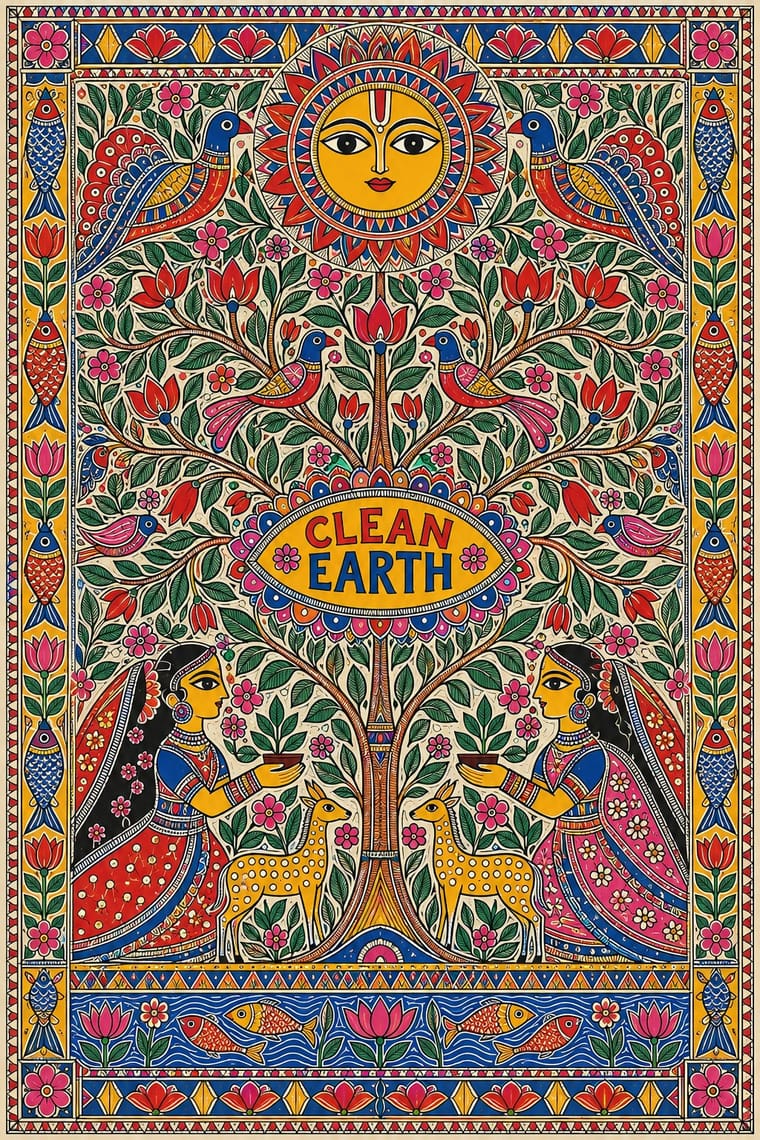
Mithila (Madhubani) Painting
Mithila Painting is one of Black Orpheus, Mbari and Oshogbo Graphics’s nearest styles by choices; no real work of either fits the other better.
Choices that tell Black Orpheus, Mbari and Oshogbo Graphics and Mithila Painting apart Choice Black Orpheus, Mbari and Oshogbo Graphics Mithila Painting All-over field defining occasional Borders & frames — defining Distortion & exaggeration characteristic — Framed panels occasional defining Flat hierarchy characteristic — No shared descent in the atlas: they reached these choices separately.
-
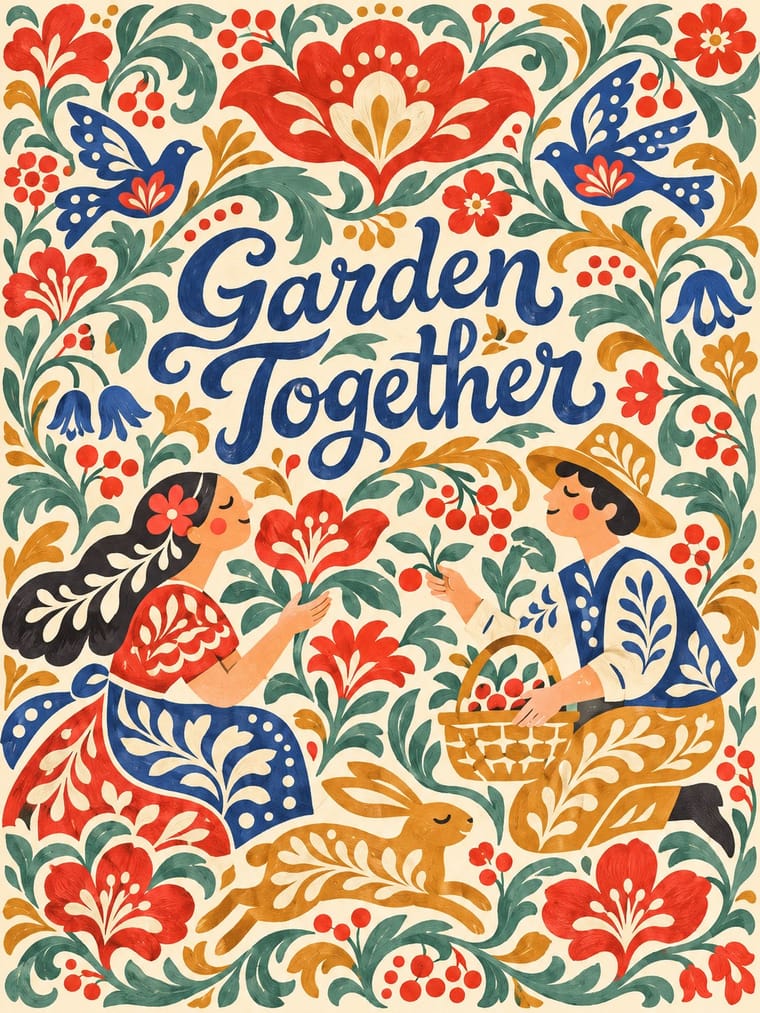
Contemporary Folk Botanical Illustration (Elemental Folk)
Contemporary Folk Botanical Illustration is one of Black Orpheus, Mbari and Oshogbo Graphics’s nearest styles by choices; no real work of either fits the other better.
Choices that tell Black Orpheus, Mbari and Oshogbo Graphics and Contemporary Folk Botanical Illustration apart Choice Black Orpheus, Mbari and Oshogbo Graphics Contemporary Folk Botanical Illustration Folk & sacred symbols defining — Floral & vegetal occasional defining Distortion & exaggeration characteristic — Light ground — characteristic Spiritual & sacred defining — No shared descent in the atlas: they reached these choices separately.
-
Pardhan Gond Painting (Jangarh Kalam)
Pardhan Gond Painting is one of Black Orpheus, Mbari and Oshogbo Graphics’s nearest styles by choices; no real work of either fits the other better.
Choices that tell Black Orpheus, Mbari and Oshogbo Graphics and Pardhan Gond Painting apart Choice Black Orpheus, Mbari and Oshogbo Graphics Pardhan Gond Painting All-over field defining — Generous white space avoids characteristic Horror vacui defining occasional Isolated object — defining Painterly illustration characteristic — No shared descent in the atlas: they reached these choices separately.
-
Al-Qatt Al-Asiri (Asiri Women's Wall Painting)
Al-Qatt Al-Asiri is one of Black Orpheus, Mbari and Oshogbo Graphics’s nearest styles by choices; no real work of either fits the other better.
Choices that tell Black Orpheus, Mbari and Oshogbo Graphics and Al-Qatt Al-Asiri apart Choice Black Orpheus, Mbari and Oshogbo Graphics Al-Qatt Al-Asiri Stylised figuration defining — Light ground — characteristic Distortion & exaggeration characteristic — Non-representational — characteristic Biomorphic curves characteristic — No shared descent in the atlas: they reached these choices separately.
— means the choice isn’t among the style’s recorded choices. Critics recorded each work’s choices with the styles’ descriptions in view, so this shows whether the descriptions hold together, not proof that they are right.
05
Sources
- Wikipedia, Black Orpheus (magazine): founded 1957, ceased 1975; editors; Mbari Club 1961 and its 17 titles
- Wikipedia, Ulli Beier: Black Orpheus 1957; Mbari clubs in Ibadan (1961) and Osogbo (1962)
- Wikipedia, Twins Seven Seven: first workshop 1964 at Mbari Mbayo, Osogbo; Dreams of the Abiku Child (1967)
2 more sources
- Wikipedia, Susanne Wenger: Osogbo from 1961, New Sacred Art and the Osogbo school
- Corpus Intellectual, tribute to Georgina Beier (1938 to 2021), on her Osogbo workshops and printmaking
How Stylogeny researches and checks a style: where the facts come from.