Traditions & vernacular · c. 1100–1700 · South Asia
Jain Manuscript Painting ( Kalpa Sutra )
Also known as Western Indian manuscript painting, Kalpasutra illumination, Jain palm-leaf and paper manuscripts
Illustrated Jain scriptures of western India, above all the Kalpa Sutra on the lives of Parshvanatha and Mahavira. Roughly square painted panels sit inside columns of text on the leaf, drawn in wiry line with brilliant flat colour and, by the 15th century, lavish gold. Figures are angular, in three-quarter view with protruding far eyes, and no perspective is used.
Use it with care
This is the sacred art of a living religion: the Kalpa Sutra is a scripture recited by monks during Paryushana, and Tirthankaras such as Mahavira and Parshvanatha are worshipped. Do not place them on disposable or trivial goods, do not invent scenes or alter their iconography, and have any Sanskrit or Prakrit text written or checked by a fluent reader rather than filled with pseudo-script. Credit manuscripts to their own copies and collections, and commission Jain scholars or living painters rather than imitating them.
01
How it works
Palette
-
#c8321f -
#1b3f8f -
#e0a82e -
#f1e3b8 -
#2e6b45 -
#1a1410
Typefaces
-
Devanagari-based Jain Nagari manuscript hand
Sanskrit and Prakrit
-
Noto Serif Devanagari
modern setting
- Set square-ish painted panels inside the columns of text so picture and script share one page grid.
- Draw wiry, angular outlines and fill them with flat, unshaded jewel colour.
- Show figures in three-quarter view with the far eye projecting, and keep them stylised.
- Condense a whole episode into one simple scene and convey space without perspective.
- Spend gold on the ground and ornament, and keep every figure at equal weight.
Gujarat and western India, under Jain patronage
02
Its design choices
From Stylogeny’s vocabulary of design choices: defining choices make the style, characteristic ones are usual, occasional ones turn up now and then.
- Layout & composition
- Space & hierarchy
- Typography
- Colour
- Form & shape
- Surface & texture
- Imagery
- Medium & production
- Avoids
- Illusion of depth, Straight photography, Gloss & highlights, Gradients, Naturalistic depiction, Grotesque & neo-grotesque
How its pictures are made Drawn & painted, Systematic
Kind of picture: Drawn & painted · Systematic
Known for
-
Illustrated Kalpa Sutra manuscripts of western India from the 14th century, when paper replaced palm leaf
-
Illustrated Kalpa Sutra manuscripts of western India from the mid-15th century, with heavy use of gold
-
Early Jain palm-leaf manuscripts of western India
11th-13th century
03
Where it comes from, and what it’s close to
Nothing earlier is recorded: in the atlas it is a starting point.
Jain Manuscript Painting (Kalpa Sutra) c. 1100–1700
No later style in the atlas grew out of it yet.
Alike in its design choices
04
Often taken for
Stylogeny checks the choices recorded in each of Jain Manuscript Painting’s 4 real works against all 702 styles. All 4 fit its own choices best, so these are its nearest styles by choices, with the choices that tell them apart.
-
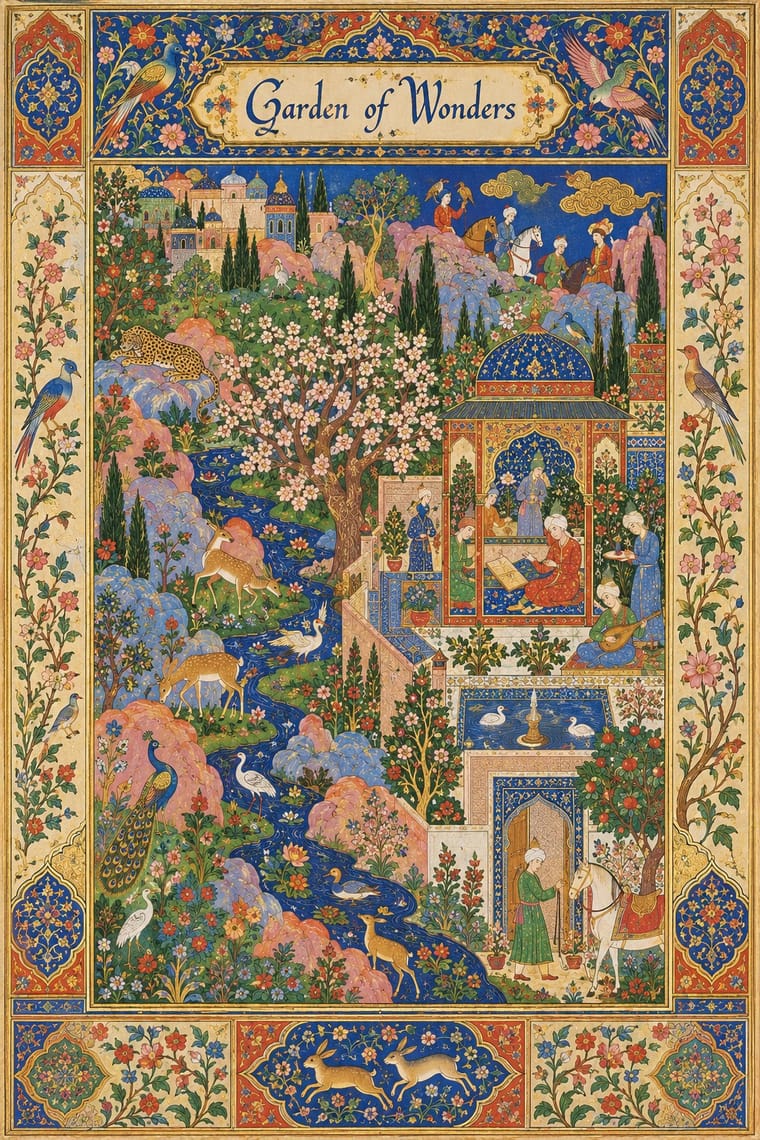
Persian Miniature (Ilkhanid, Timurid and Safavid Book Painting)
Persian Miniature is one of Jain Manuscript Painting’s nearest styles by choices; no real work of either fits the other better.
Choices that tell Jain Manuscript Painting and Persian Miniature apart Choice Jain Manuscript Painting Persian Miniature Angular & zigzag defining — Abundant decoration — defining Distortion & exaggeration characteristic — Horror vacui — defining Icons & pictograms characteristic — No shared descent in the atlas: they reached these choices separately.
-
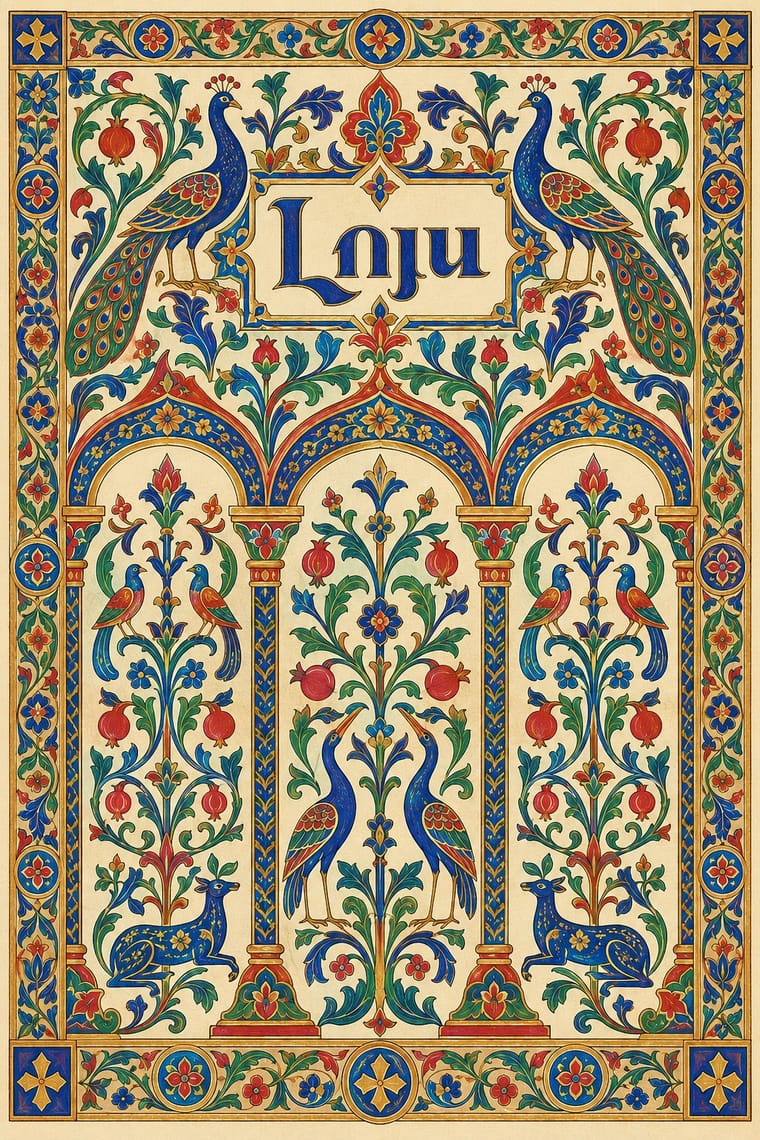
Armenian Manuscript Illumination
Armenian Manuscript Illumination is one of Jain Manuscript Painting’s nearest styles by choices; no real work of either fits the other better.
Choices that tell Jain Manuscript Painting and Armenian Manuscript Illumination apart Choice Jain Manuscript Painting Armenian Manuscript Illumination Angular & zigzag defining — Central symmetry — defining Flat hierarchy defining — Abundant decoration — defining Distortion & exaggeration characteristic — No shared descent in the atlas: they reached these choices separately.
-
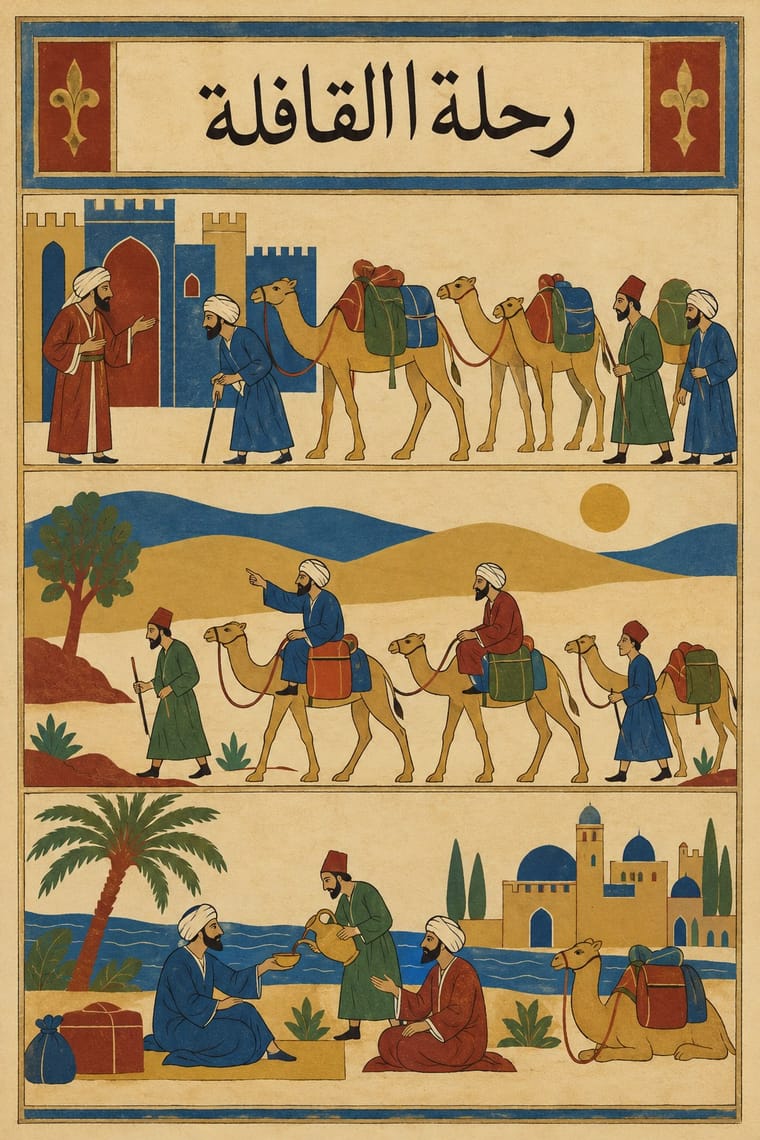
Baghdad School of Arab Book Painting (Maqamat Illustration)
Baghdad School of Arab Book Painting is one of Jain Manuscript Painting’s nearest styles by choices; no real work of either fits the other better.
Choices that tell Jain Manuscript Painting and Baghdad School of Arab Book Painting apart Choice Jain Manuscript Painting Baghdad School of Arab Book Painting Angular & zigzag defining — Light ground — characteristic Column grid defining — Limited spot colours — characteristic Distortion & exaggeration characteristic — No shared descent in the atlas: they reached these choices separately.
-
Ethiopian Ge'ez Manuscript & Haräg Illumination
Ethiopian Ge'ez Manuscript & Haräg Illumination is one of Jain Manuscript Painting’s nearest styles by choices; no real work of either fits the other better.
Choices that tell Jain Manuscript Painting and Ethiopian Ge'ez Manuscript apart Choice Jain Manuscript Painting Ethiopian Ge'ez Manuscript Jewel & metallic defining — Limited spot colours — defining Flat hierarchy defining — Earth & mineral — characteristic Angular & zigzag defining occasional No shared descent in the atlas: they reached these choices separately.
— means the choice isn’t among the style’s recorded choices. Critics recorded each work’s choices with the styles’ descriptions in view, so this shows whether the descriptions hold together, not proof that they are right.
05
Real works
Artefacts in museums, libraries and archives that show the style, linked at their source.
- Parsvanatha's Austerities: Folio from a Kalpasutra Manuscript 15th century · The Metropolitan Museum of Art
- Aristanemi's Bridal Pavilion (top) and Witnessing Animals for Slaughter (bottom): Folio from a Kalpasutra Manuscript 15th century · The Metropolitan Museum of Art
- Indra Reverences Mahavira's Embryo: Folio from a Kalpasutra Manuscript 1461 (Samvat 1519) · The Metropolitan Museum of Art
- Birth of Mahavira, folio 40 (verso) from a Kalpa-sutra c. 1400 · The Cleveland Museum of Art
06
Sources
How Stylogeny researches and checks a style: where the facts come from.