Rational modernism · 1944–1960 · North America
UPA & Cartoon Modern
Also known as Cartoon Modern, UPA style, The modern cartoon, Mid-century modern animation
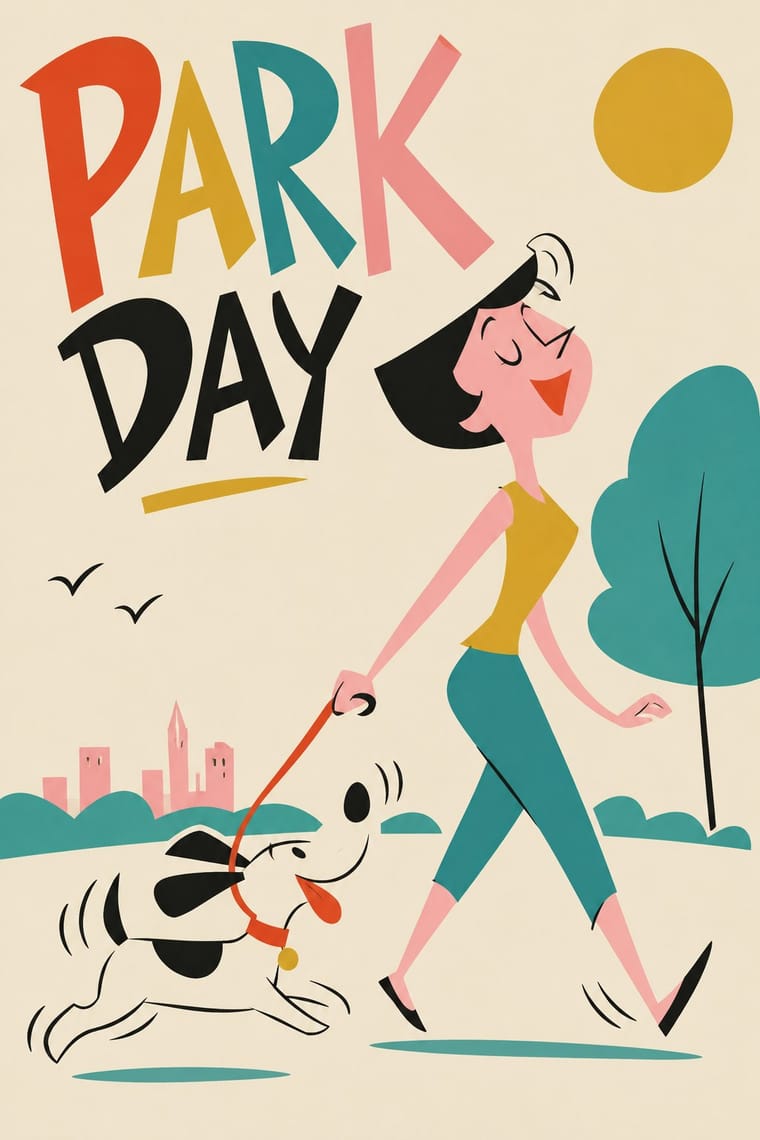
The modern cartoon of United Productions of America (UPA) and the 1950s films, commercials and books it inspired. Former Disney artists who looked to Matisse, Klee, Dufy, Léger and Picasso turned against Disney's illusionism. They flattened character and setting into one plane: caricatures in a clean line, colour laid flat and often slipped off that line, rooms cut to a few shapes on one shade or tilted askew, and limited animation. Gerald McBoing-Boing (1950), its drawings likened to Saul Steinberg's, and Mr. Magoo carried the look to Warner Bros., MGM, Disney and television.
Make something in this styleGet advice in this styleMix it with another style
Use it with care
Mr. Magoo and Gerald McBoing-Boing are still licensed characters, and the films are not free to copy. Borrow the method (a flat field, a caricature, colour slipping off the line), never the characters, and do not present new work as a UPA film. Leave out the Asian caricature of Magoo's houseboy Charlie, which was dropped in the late 1960s, and gags that mock disability: blind and low-vision groups, including the National Federation of the Blind, protested the 1997 Magoo film.
01
How it works
- Flatten character and setting into one plane: no modelling, no correct deep perspective, often no horizon line. Let the size of a shape say whether it is near or far, and when a room needs depth, tilt and skew it instead of constructing it (Engel's horizonless backgrounds for Gerald McBoing-Boing; Hubley's skewed perspective in Rooty Toot Toot).
- Strip the set to what the action needs: one flat shade for the ground, a line or a shape for a wall, a door or a chair. Bring props in only when the gag needs them.
- Build people as caricatures from simple shapes drawn in a clean, economical line, and often let the colour shape slip off that line (Dufy's 'divorced line') instead of filling it exactly.
- Choose colour for mood, film by film and scene by scene: try the same layout in several flat colour combinations before committing to one.
- Let design, not motion, carry the wit: use key poses, holds and cycles instead of full, rubbery movement.
- Hand-letter titles and credits in a playful cartoon hand and give them prominence as a design element in their own right.
Los Angeles, then Burbank, California: a studio founded in 1941, during the animators' strike at the leading cartoon studio, by three of its former artists (the Industrial Film and Poster Service of Zack Schwartz, David Hilberman and Stephen Bosustow, renamed United Productions of America, UPA, in the mid-1940s). Its theatrical shorts went out through a major distributor from 1948 (Columbia Pictures), and the look spread to rival cartoon studios, television commercials and picture books (Warner Bros., MGM, Disney).
02
Its design choices
From Stylogeny’s vocabulary of design choices: defining choices make the style, characteristic ones are usual, occasional ones turn up now and then.
- Layout & composition
- Space & hierarchy
- Typography
- Colour
- Form & shape
- Surface & texture
- Ornament
- Imagery
- Medium & production
- Tone & intent
- Avoids
- Naturalistic depiction, Gloss & highlights, 3D render, Horror vacui, Abundant decoration, Straight photography
Palette
#f1e8d2#1c1c1c#d8a32b#2e8c87#d6482c#e893a4
Typefaces
Playful hand-drawn cartoon lettering
the hand lettering of mid-century American advertising, after 1920s and 1930s comics and newspaper cartoons, which animation title designers set apart as a design element; carried on by Phil Norman's titles and credits for UPA in the early 1960s
Gestural biomorphic display letters
Alvin Lustig's UPA logo, 1947, whose gestural letters reflect his interest in biomorphic surrealism
Known for
Hell-Bent for Election (1944), directed by Chuck Jones for the United Auto Workers as part of Roosevelt's re-election campaign
Brotherhood of Man (1945), directed by Robert 'Bobe' Cannon for the UAW, whose 'very flat, stylized design' defied the Disney approach
The Ragtime Bear (1949), directed by John Hubley
the first Mr. Magoo, created by Hubley with the writer Millard Kaufman
Gerald McBoing-Boing (released November 1950), directed by Robert Cannon from a Dr. Seuss story, with layouts by William T. Hurtz and backgrounds by Jules Engel and Herbert Klynn; it won the Academy Award and joined the National Film Registry in 1995
Rooty Toot Toot (November 1951), directed by John Hubley with layouts by Paul Julian, in an even stronger skewed perspective than Hubley's earlier UPA backgrounds such as Punchy De Leon (January 1950); Oscar-nominated
The Tell-Tale Heart (December 1953), directed by Ted Parmelee, designed and coloured by Paul Julian and narrated by James Mason; National Film Registry, 2001
Christopher Crumpet (1953) and Fudget's Budget (1954), directed by Robert Cannon
backgrounds reduced to a single shade, and, in Fudget's Budget, the designer T. Hee's figures drawn as lines on a graph against black graph paper
Alvin Lustig's UPA studio logo (1947; Cooper Hewitt 2017-22-1) and second trademark (1950), which became the studio's identity
on a letterhead, Cooper Hewitt 1993-31-161
03
Make something in this style
Say what you need, and Stylogeny’s image studio draws it from UPA & Cartoon Modern’s design choices and checks it against them. It takes about a minute, and you get a link to share.
04
Where it comes from, and what it’s close to
Before it
The style it grew out of, and the styles it borrowed from.
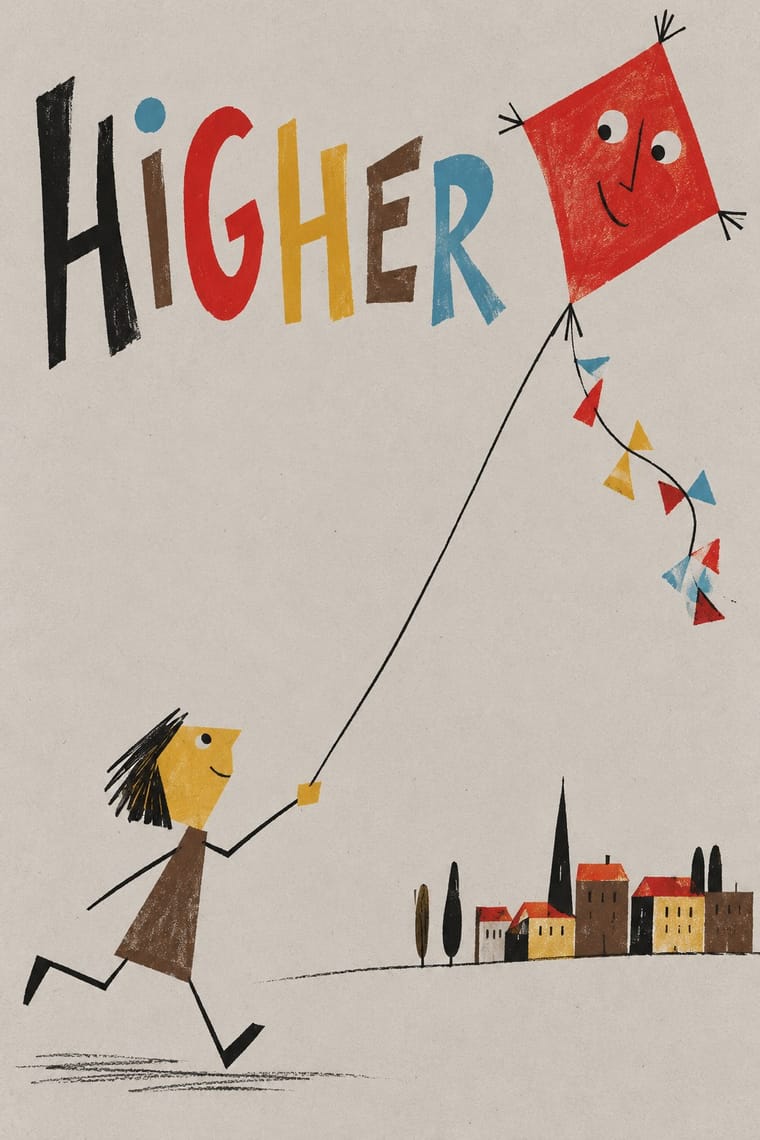
Alike in its design choices
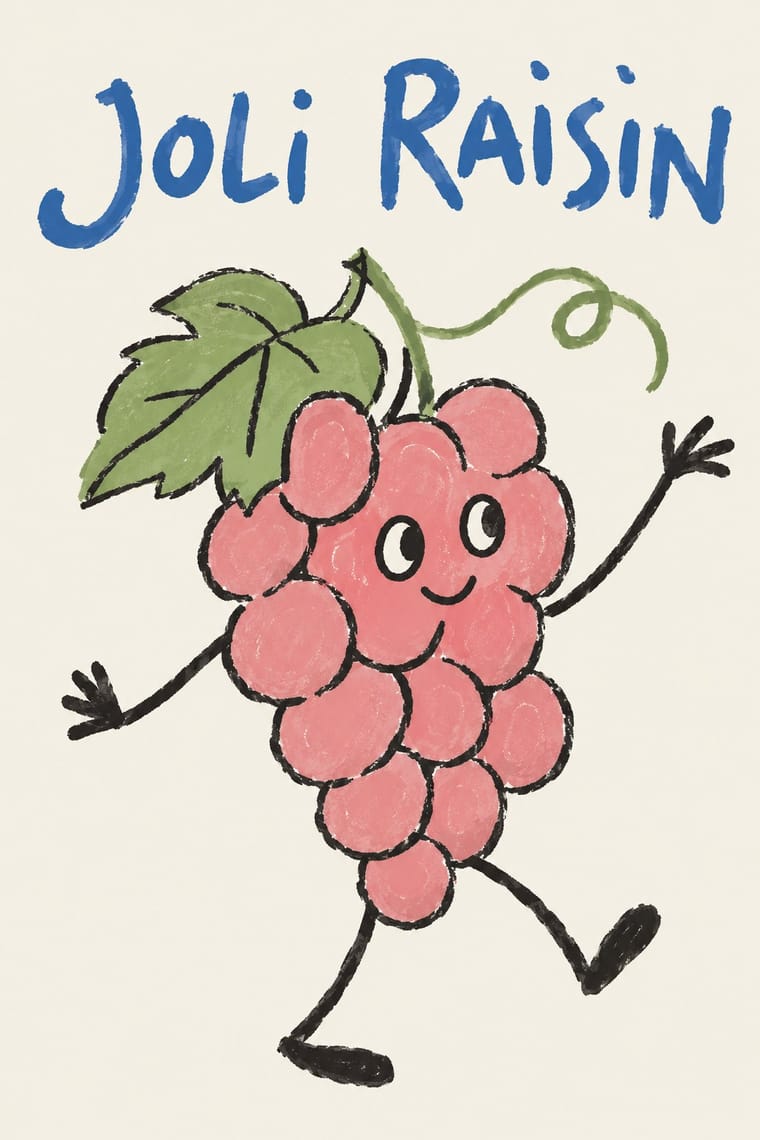
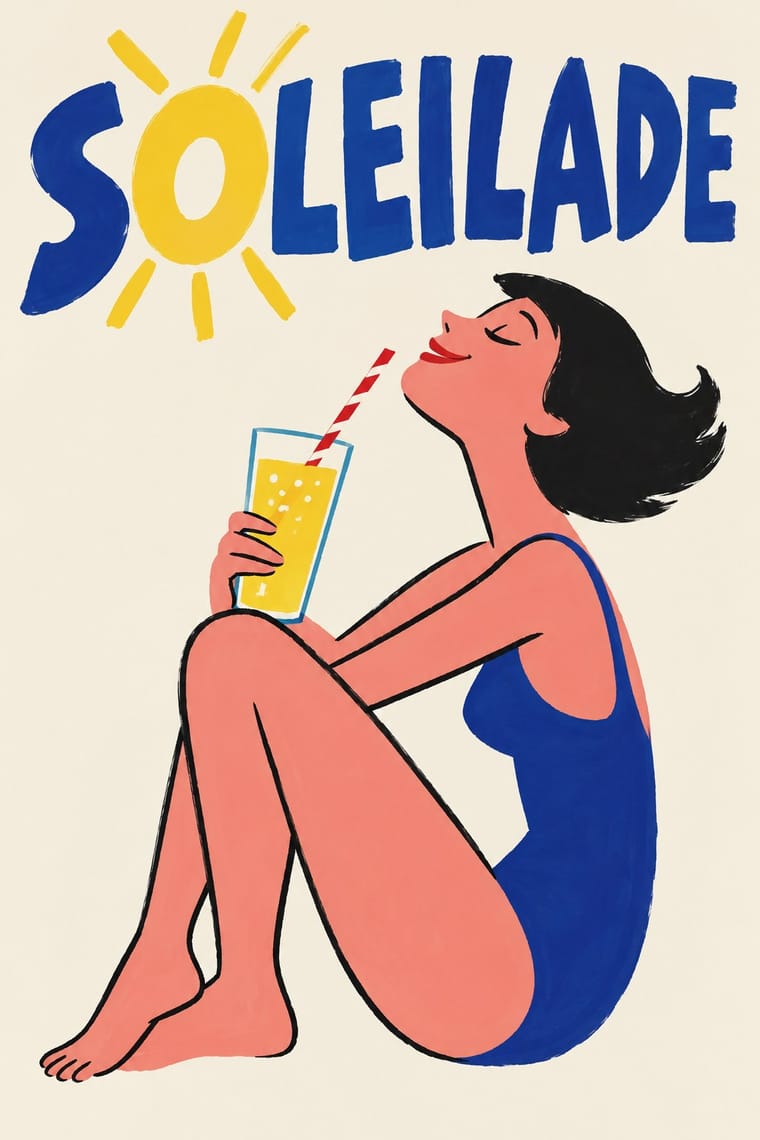
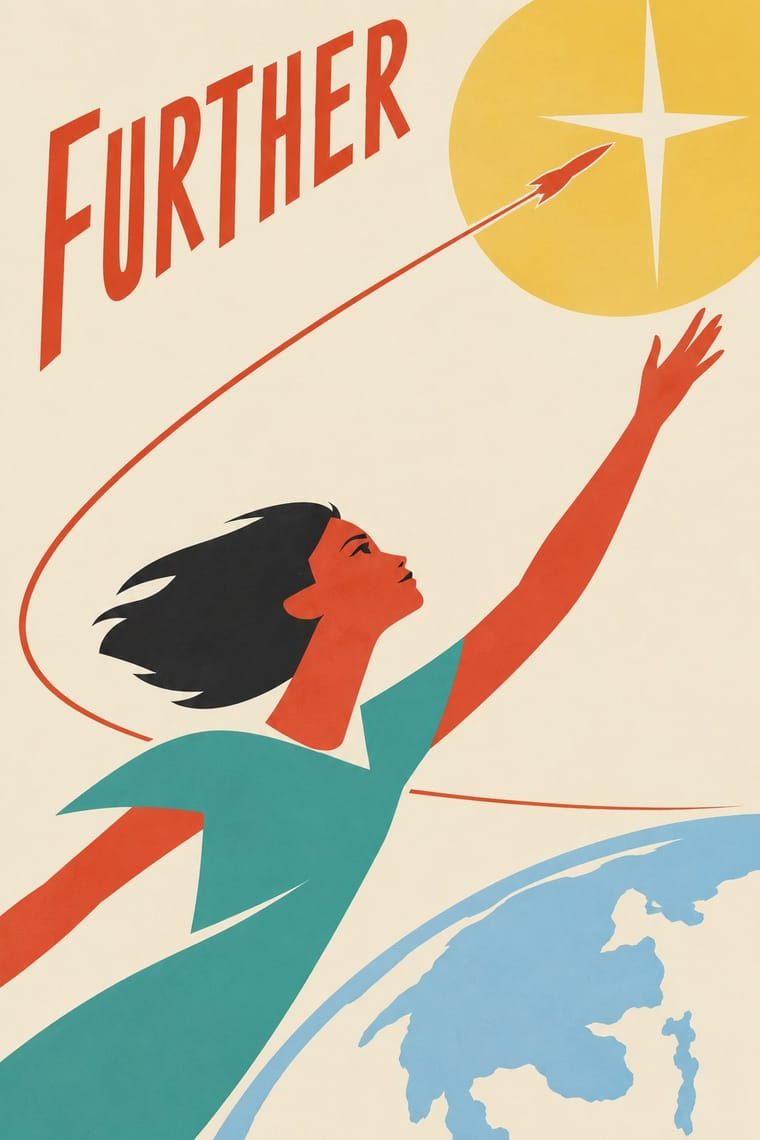
Styles that make many of the same choices, related or not, besides those above.
05
Sources
- Museum of Modern Art, press invitation and release for 'UPA: Form in the Animated Cartoon', 13 and 22 June 1955 (UPA 'make no attempt to copy nature or real life people but instead capitalize on the humor, charm and dramatic effect of line drawing itself'; 'went back to the original meaning of cartoon -- a flat line drawing'; 'The screen is stripped for action'; props 'appear when needed and vanish when not'; 'the identical sketch made in several color combinations'), https://www.moma.org/documents/moma_press-release_325991.pdf
- Museum of Modern Art, film schedule and exhibition schedule, summer 1955 (the UPA programmes and 'a critical exposition of recent developments in the animated cartoon form'), https://www.moma.org/docs/press_archives/1956/releases/MOMA_1955_0071_54.pdf
- Jules Engel oral history transcript, interviewed by Milton Zolotow and Lawrence Weschler (UCLA Oral History Program, 1985), pp. 67-72: Matisse, Klee, Kandinsky, Dufy and Léger as influences; 'flatten out the background, flatten out the character'; no line 'where the floor stops and the walls start'; 'do away with a horizon line'; Dufy's 'divorced line', though 'we couldn't quite work Dufy in the film'; Matisse, Klee, Léger, Braque and Picasso for colour, and on the American scene Josef Albers, Hans Hofmann ('the use of the wild colors') and Stuart Davis, https://archive.org/details/julesengeloralhi00enge
- Cooper Hewitt, Smithsonian Design Museum, 'A Modern Identity' (10 July 2017), on Alvin Lustig's UPA logo of 1947 (2017-22-1) and 'a second trademark in 1950' that 'became the iconic graphic identity of the studio', visible on a letterhead (1993-31-161); 'the gestural qualities of the "UPA" letters reflect Lustig's interest in biomorphic surrealism'; UPA's 'stylized and abstract look', https://www.cooperhewitt.org/2017/07/10/amodernidentity/
- People's Graphic Design Archive, 'Various title graphics for UPA' (Phil Norman), after Louise Sandhaus, Earthquakes, Mudslides, Fires & Riots: California and Graphic Design, 1936-1986, p. 160: the playful hand-lettered type, 'a staple of midcentury American advertising', came from the comics and newspaper cartoons of the 1920s and 1930s; Amid Amidi: title designers 'isolated the funny type and gave it renewed prominence as a design element'; Norman joined when UPA was busy with Mister Magoo and Dick Tracy shorts and did all its titles, credits and lettering for three years, https://peoplesgdarchive.org/item/2709/various-title-graphics-for-upa
- John M. Miller, 'UPA Cartoons', Turner Classic Movies (16 July 2012): colours 'sometimes splashed impressionistically, with little regard for staying "in the line"'; each background in Christopher Crumpet 'reduced to a single shade'; in Fudget's Budget the designer T. Hee draws every character 'as literal lines on a graph' on 'black graph paper', in colours 'almost all primary'; The Tell-Tale Heart designed by Paul Julian 'as a series of detailed, manic paintings', with 'eerie light and shadows', https://www.tcm.com/articles/499721/upa-cartoons
- Cinzia Bottini, Redesigning Animation: United Productions of America (Routledge, 2019), publisher's description: 'stylized layout designs, asymmetrical compositions', 'colors applied flatly and in contrast with each other', https://www.routledge.com/products/9780815381785
- United Productions of America, Wikipedia (founding during the Disney strike; the 'UPA style' influencing Warner Bros., MGM, Famous Studios and Disney; the CBS series 'premiered in December 1956. Supervised by Bobe Cannon'), https://en.wikipedia.org/wiki/United_Productions_of_America
- Gerald McBoing-Boing, Wikipedia (Robert Cannon's drawings 'strongly reminiscent of a [Saul] Steinberg cartoon', quoting The New York Times, 14 January 1951; the Sunday CBS show 'proved too expensive and lasted only three months', and its episodes 'were repeated on Friday nights in the summer of 1957'), https://en.wikipedia.org/wiki/Gerald_McBoing-Boing
- The Tell-Tale Heart (1953 American film), Wikipedia ('the surrealistic images help convey his descent into madness'; Paul Julian 'both designer and color artist'), https://en.wikipedia.org/wiki/The_Tell-Tale_Heart_(1953_American_film)
- https://en.wikipedia.org/wiki/Rooty_Toot_Toot
- John Hubley, Wikipedia (Hubley's UPA films 'more flat and graphic' than Disney's or Warner Bros.'; Punchy De Leon's background 'uses skewed perspective, large blocks of color, and exaggerated shape language'; Rooty Toot Toot 'implements even stronger skewed perspective and stylized line art backgrounds' and 'experimented with different patterns and brush types'), https://en.wikipedia.org/wiki/John_Hubley
- https://en.wikipedia.org/wiki/Toot,_Whistle,_Plunk_and_Boom
- https://en.wikipedia.org/wiki/Mary_Blair
- https://en.wikipedia.org/wiki/Mr._Magoo
- Robert Cannon (animator), Wikipedia (Cannon 'worked as a producer on UPA's short-lived The Gerald McBoing-Boing Show in 1956'), https://en.wikipedia.org/wiki/Robert_Cannon_(animator)
- List of UPA cartoons, Wikipedia (Christopher Crumpet, 25 June 1953, and Fudget's Budget, 17 June 1954, both Robert Cannon; Punchy De Leon, 12 January 1950, John Hubley; the last theatrical short, I Was a Teenage Magoo, November 1960), https://en.wikipedia.org/wiki/List_of_UPA_cartoons
- Jerry Beck, 'Van Citters launches Magoo's Christmas Carol blog', Cartoon Brew (21 September 2010): Phil Norman, 'the unsung title card artist and lettering genius of UPA in the early 1960s', https://www.cartoonbrew.com/classic/van-citters-launches-magoos-christmas-carol-blog-28216.html
- Animation Obsessive Staff, 'Winnie-the-Pooh in Moscow', Animation Obsessive (30 August 2021): Stalin-era mandates kept Soviet animation 'realistic and Disney-esque', then the thaw brought 'a film called The Story of a Crime in 1962'; 'Rather than Disney, this cartoon looked more like UPA', https://animationobsessive.substack.com/p/winnie-the-pooh-in-moscow
- Dr. Grob's Animation Review, 'Story of One Crime' (23 February 2024): 'the film is a rare example of Soviet cartoon modern design', designs by Sergei Alimov, https://drgrobsanimationreview.com/2024/02/23/%D0%B8%D1%81%D1%82%D0%BE%D1%80%D0%B8%D1%8F-%D0%BE%D0%B4%D0%BD%D0%BE%D0%B3%D0%BE-%D0%BF%D1%80%D0%B5%D1%81%D1%82%D1%83%D0%BF%D0%BB%D0%B5%D0%BD%D0%B8%D1%8F-story-of-one-crime/
- Amid Amidi, Cartoon Modern: Style and Design in Fifties Animation (Chronicle Books, 2006) (book; cited from Wikipedia's UPA bibliography, not consulted directly)
How Stylogeny researches and checks a style: where the facts come from.