Digital native · 2012–present · East Asia, Global / networked
Gacha Game Key Art and Interface ( Mobile Anime RPG Look )
Also known as Gacha splash art, Wish banner art, Gacha UI
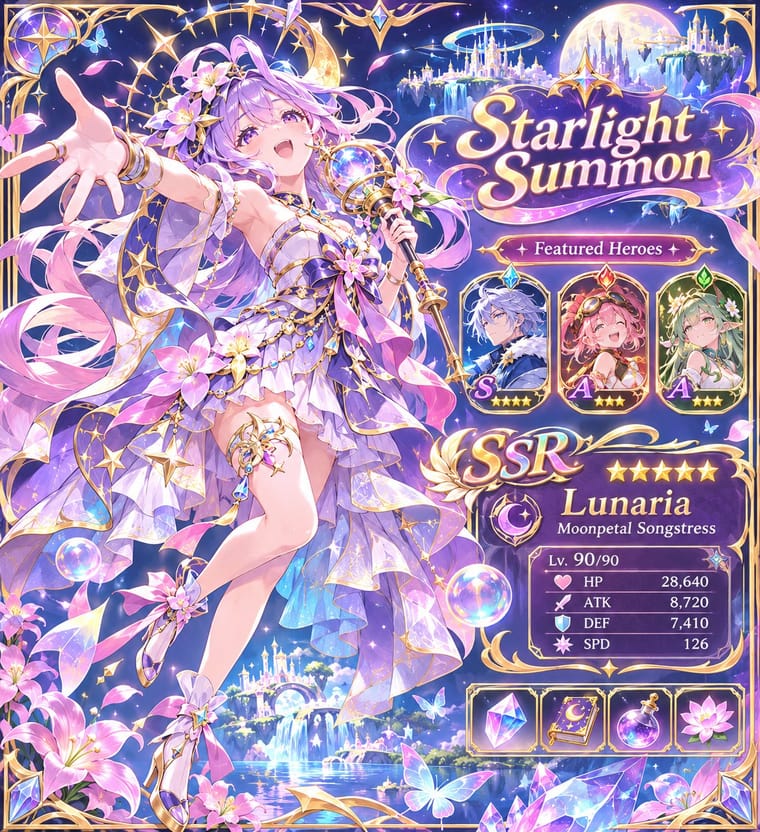
A game-UI and key-art idiom for collectible-character mobile games, not general anime illustration: a full-body anime figure in an ornate costume and dramatic pose, wrapped in particles, rarity stars and gilded frames, set over a glowing gradient fantasy backdrop. Built to stage the random draw of a character, it layers banner art, character cards and menus into one glossy, gold-trimmed interface. Caution: the look serves loot-box style random-purchase mechanics, which draw gambling comparisons and regulation, and its sexualised-figure convention is contested.
Make something in this style Get advice in this style Mix it with another style
01
Its picture in other colours
Change a colour and every picture on this page follows. It happens in your browser, from the same pictures: nothing new is made or saved.
Choose a colour to change it
-
#1b1f4a -
#f4c86a -
#7c5cd6 -
#ff8fb1 -
#7fd6f0 -
#fff6e0
A faded colour isn’t in these pictures, so changing it changes nothing.
Light and dark stay where they are; greys hardly move.
More colours: any style’s, or your own
The pictures show the style’s own colours.
02
Make something in this style
Say what you need, and Stylogeny’s image studio draws it from Gacha Game Key Art and Interface (Mobile Anime RPG Look)’s design choices and checks it against them. It takes about a minute, and you get a link to share.
03
How it works
Palette
-
#1b1f4aaccent · 2% -
#f4c86anot in its pictures -
#7c5cd6ground · 19% -
#ff8fb1accent · 15% -
#7fd6f0not in its pictures -
#fff6e0ink · 11%
Shares measured from its picture. The ground is what the pictures sit on (of the colours covering most, the most neutral), the ink stands out from it most, the rest are accents.
Typefaces
-
Custom fantasy display faces and logotypes
-
Humanist sans and Japanese gothic (sans-serif) UI text
-
Stylised hand-lettered skill and rarity names
- Pose one full-body character as the unmistakable hero of the splash, cropped to break out of its frame.
- Dress the figure in dense, ornate costume detail so each character reads as a distinct, collectable rarity.
- Encode rarity in the interface: stars, tier letters, gold frames and colour-coded glows that escalate with value.
- Light the backdrop with luminous gradients, bokeh and drifting particles to stage the reveal.
- Stack the interface in layers, with currency, timers, banner titles and buttons framing the art in ornate gilded chrome.
Japan, then China: monster-collecting mobile games such as Puzzle & Dragons (GungHo, 2012) and the early-2010s gacha boom, taken to a global audience by Genshin Impact (miHoYo, 2020)
Effects on its surface Holographic foil
- Holographic foil From its design choice “Iridescent & holographic”.
Change it with an idea. Any of the 73 moves that make a design say something can go on this style.
04
Its design choices
From Stylogeny’s vocabulary of design choices: defining choices make the style, characteristic ones are usual, occasional ones turn up now and then.
- Layout & composition
- Space & hierarchy
- Colour
- Form & shape
- Surface & texture
- Ornament
- Imagery
- Medium & production
- Tone & intent
- Avoids
- Modular grid, Generous white space, Ornament-free, Straight photography, Typography only, Non-representational, Flat, Photocopy & distress, Rational & objective, Agitational & persuasive
How its pictures are made Drawn & painted, Systematic
Kind of picture: Drawn & painted · Systematic
Known for
-
Puzzle & Dragons (GungHo, 2012), monster-collecting mobile game with egg-machine draws
-
Genshin Impact (miHoYo, 2020), Wish banners
-
Fate/Grand Order (Delightworks / Aniplex, 2015), servant art; its illustrations have been called overly sexualised and some were censored in China
-
Dragon Ball Z
Dokkan Battle (Akatsuki / Bandai Namco, 2015), rarity-tiered character cards
05
Where it comes from, and what it’s close to
Grew out of
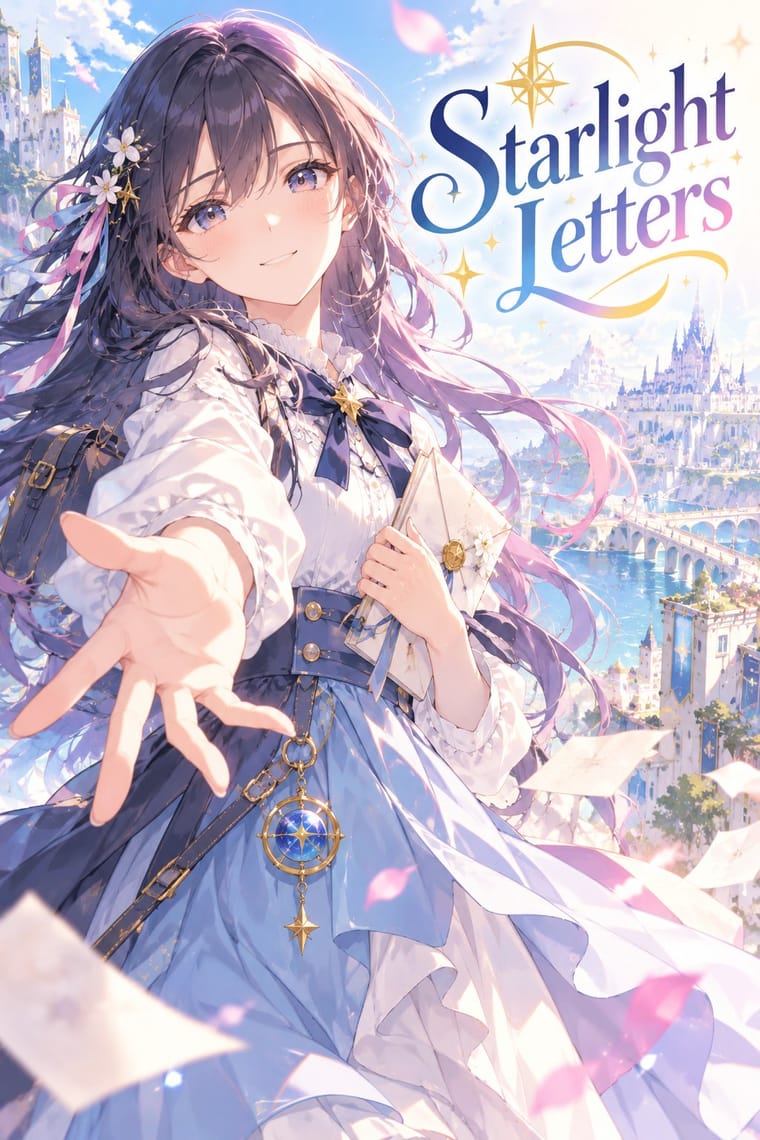
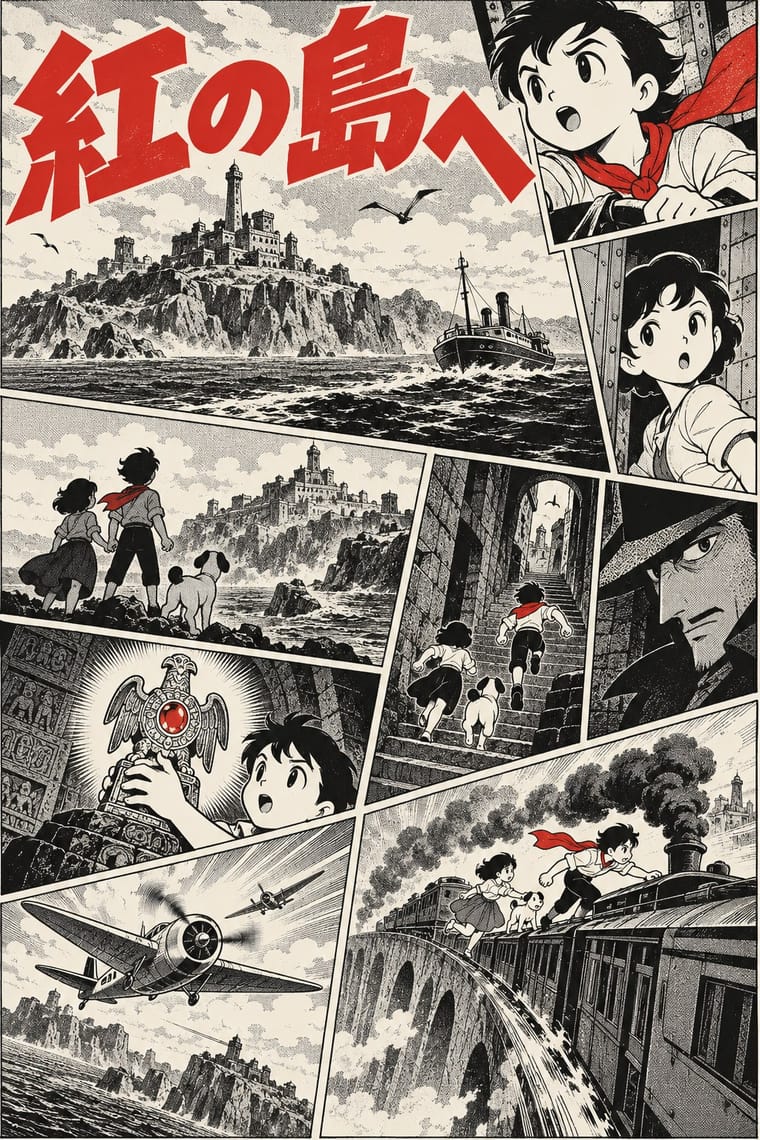
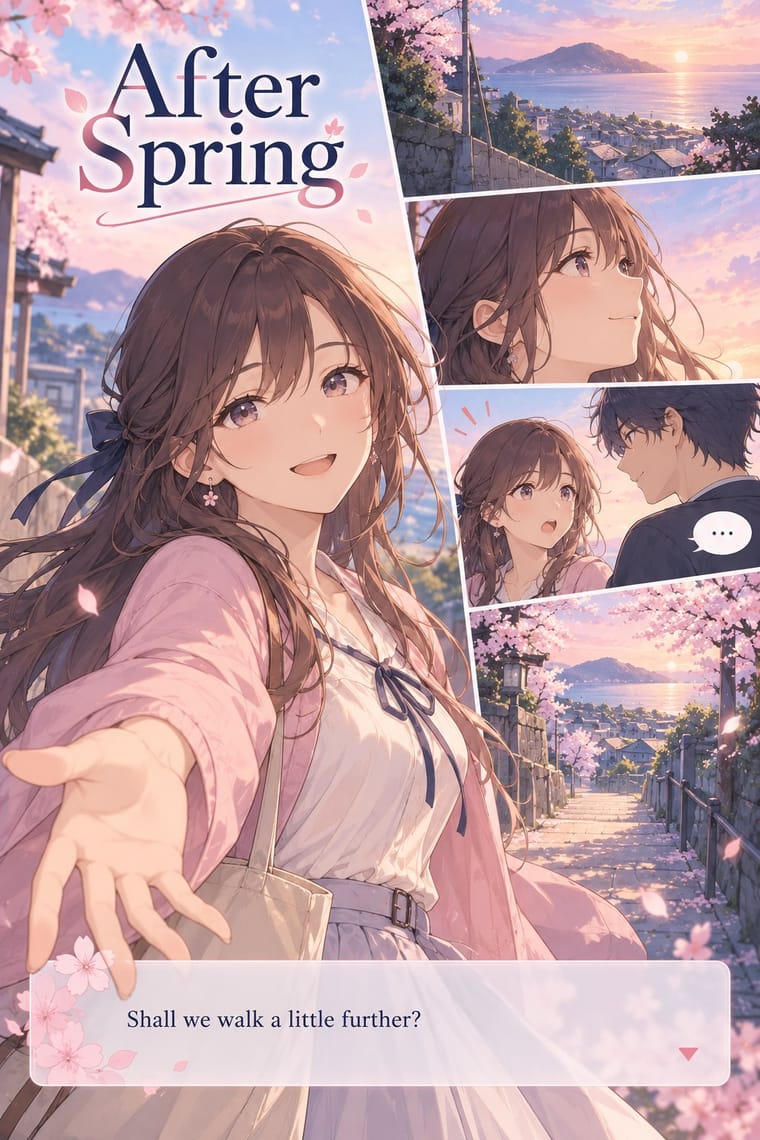
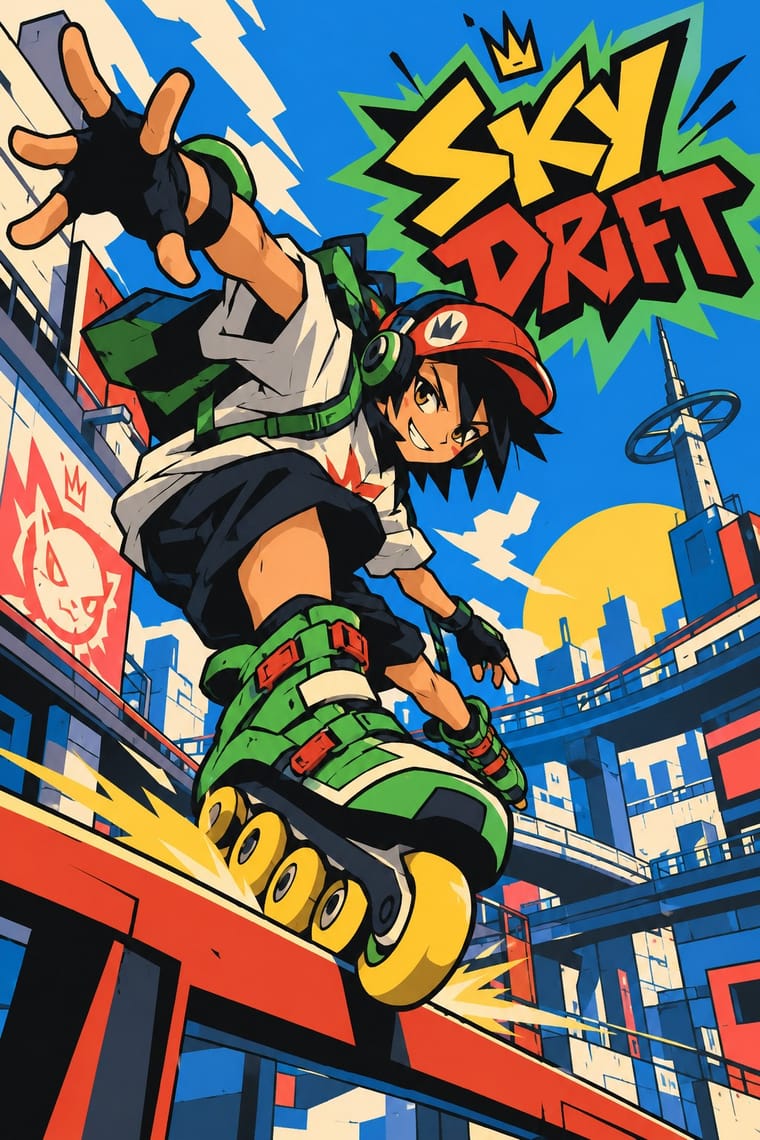
Gacha Game Key Art and Interface (Mobile Anime RPG Look) 2012–present
No later style in the atlas grew out of it yet.
Alike in its design choices
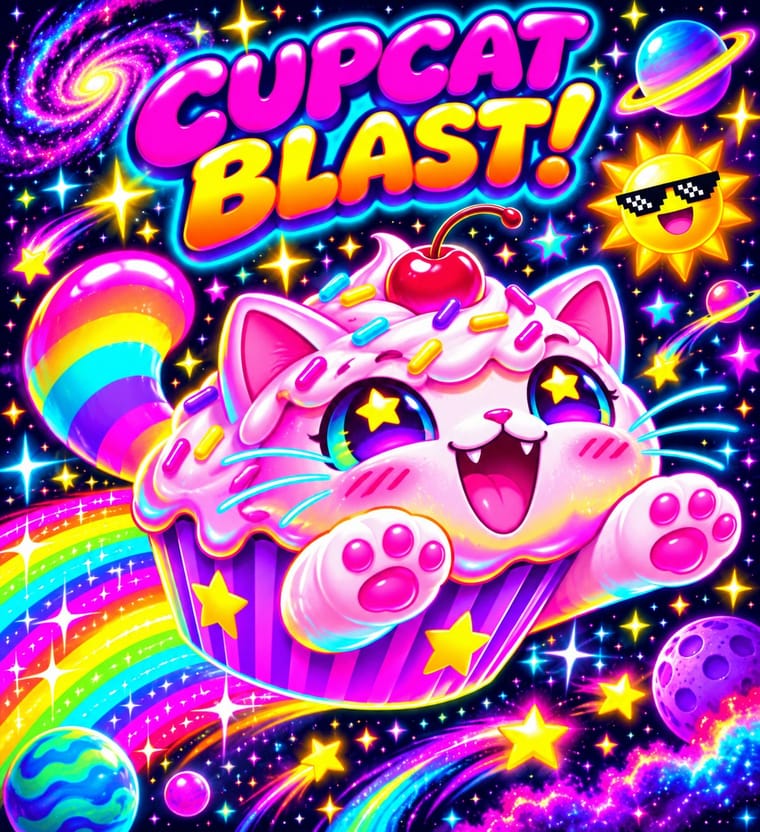
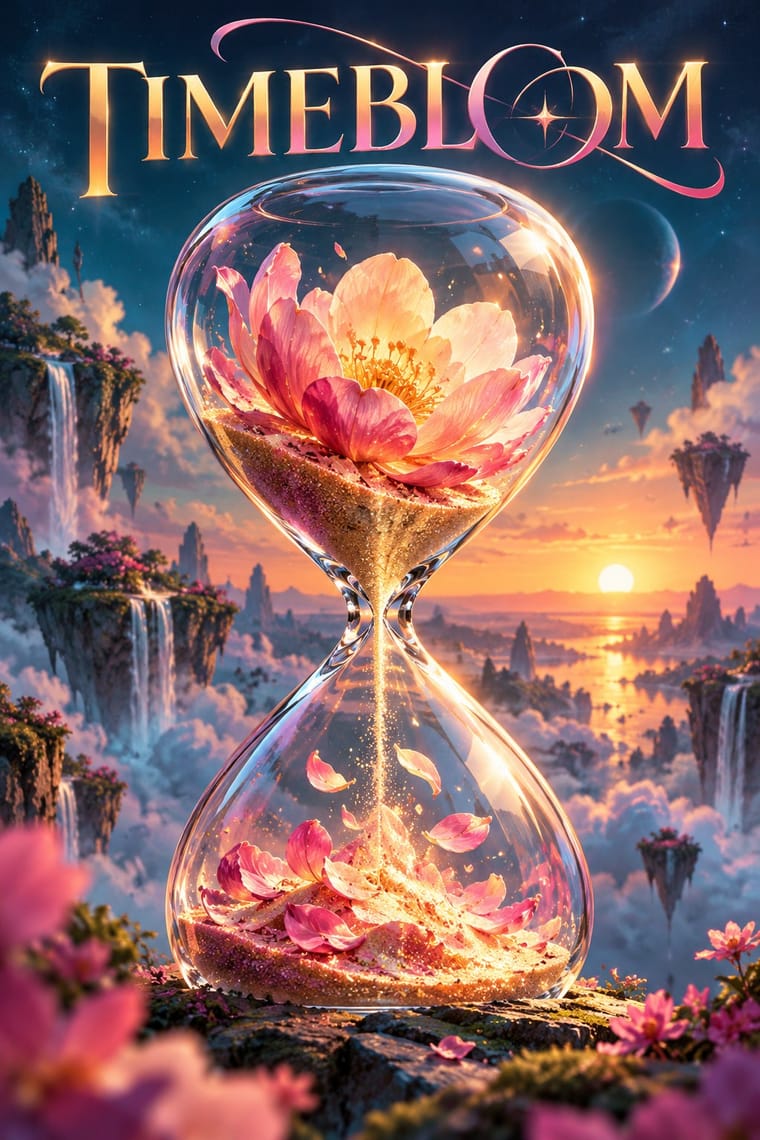
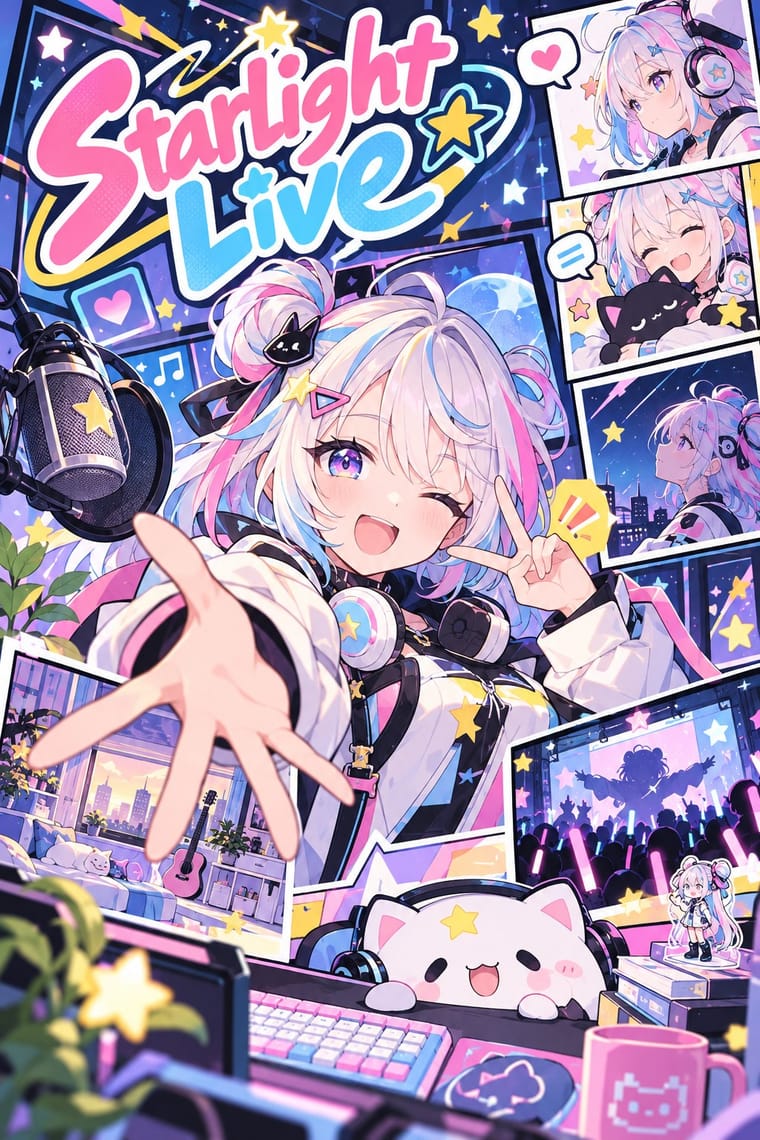
06
Combine it with
Styles Gacha Game Key Art and Interface (Mobile Anime RPG Look) pairs well with or plays against, from the research. Each is worked out as a combination: which style gives the type, the colours and the forms.
- Flat Design Contrasts · Strip the gloss, gold and particles to see how much the rarity cue depends on ornament.
- Visual Novel Graphics (Sprites, Backgrounds and Textbox UI) Pairs well · Its sprite-and-textbox grammar supplies the story scenes between pulls.
- Cel-Shaded Game Graphics (Toon-Shaded Real-Time 3D) Pairs well · Its outlined 3D character models can carry the splash figure into gameplay; the splash itself is glossy painted 2D, not flat-shaded.
- Fantasy User Interface (FUI) & Sci-Fi HUD Contrasts · Fantasy-ui is film-screen HUD graphics, cyan and amber hairlines on black; this is warm, gold-trimmed fantasy chrome built for play.
07
Often taken for
Gacha Game Key Art and Interface has no real works recorded yet, so these are its nearest styles by its choices alone, with the choices that tell them apart.
-
Light Novel Cover Illustration
Light Novel Cover Illustration is one of Gacha Game Key Art and Interface’s nearest styles by choices; no real work of either fits the other better.
Choices that tell Gacha Game Key Art and Interface and Light Novel Cover Illustration apart Choice Gacha Game Key Art and Interface Light Novel Cover Illustration Abundant decoration defining — Comic & cartoon — defining Borders & frames defining — Light ground — characteristic Iridescent & holographic characteristic — Gacha Game Key Art and Interface descends from Light Novel Cover Illustration: a shared line, so the likeness is inherited.
-
Visual Novel Graphics (Sprites, Backgrounds and Textbox UI)
Visual Novel Graphics is one of Gacha Game Key Art and Interface’s nearest styles by choices; no real work of either fits the other better.
Choices that tell Gacha Game Key Art and Interface and Visual Novel Graphics apart Choice Gacha Game Key Art and Interface Visual Novel Graphics Abundant decoration defining — Comic & cartoon — defining Gloss & highlights defining occasional Sequential narrative — defining Iridescent & holographic characteristic — Both descend from Story Manga in the family tree.
-
Internet Awesomesauce (Epic-Random Meme Graphics)
Internet Awesomesauce is one of Gacha Game Key Art and Interface’s nearest styles by choices; no real work of either fits the other better.
Choices that tell Gacha Game Key Art and Interface and Internet Awesomesauce apart Choice Gacha Game Key Art and Interface Internet Awesomesauce Painterly illustration defining — Fluorescent & neon — defining Borders & frames defining — Dark ground — characteristic Layered information defining — No shared descent in the atlas: they reached these choices separately.
-
Generative-AI Image Aesthetic
Generative-AI Image Aesthetic is one of Gacha Game Key Art and Interface’s nearest styles by choices; no real work of either fits the other better.
Choices that tell Gacha Game Key Art and Interface and Generative-AI Image Aesthetic apart Choice Gacha Game Key Art and Interface Generative-AI Image Aesthetic Stylised figuration defining — Naturalistic depiction — defining Borders & frames defining — Generative imagery — defining Layered information defining — No shared descent in the atlas: they reached these choices separately.
— means the choice isn’t among the style’s recorded choices. Critics recorded each work’s choices with the styles’ descriptions in view, so this shows whether the descriptions hold together, not proof that they are right.
08
Sources
- Wikipedia, Gacha game (named after gashapon machines; widespread in Japanese mobile games in the early 2010s; gambling and regulation criticism)
- Wikipedia, Puzzle & Dragons (GungHo; iOS Japan 20 February 2012; monster collecting with Egg Machines; listed under gacha games)
- Wikipedia, Genshin Impact (miHoYo, released 28 September 2020; Wish banners)
3 more sources
- Wikipedia, Fate/Grand Order (Japan release July-August 2015; illustrations described by some as overly sexualized; some censored in China)
- Wikipedia, Dragon Ball Z: Dokkan Battle (2015 release; summoning banners)
- Josh Bycer, A Study on Gacha Progression, Game Developer, 20 July 2020 (banners; star-rating tiers from 1-2 star to 6 star set a unit power ceiling)
How Stylogeny researches and checks a style: where the facts come from.