Counterculture · 1978–present · North America, Global / networked
LGBTQ Pride Graphics ( Rainbow Flag to Progress Flag )
Also known as Pride visual identity, Rainbow flag design, Progress Pride flag, Queer protest graphics
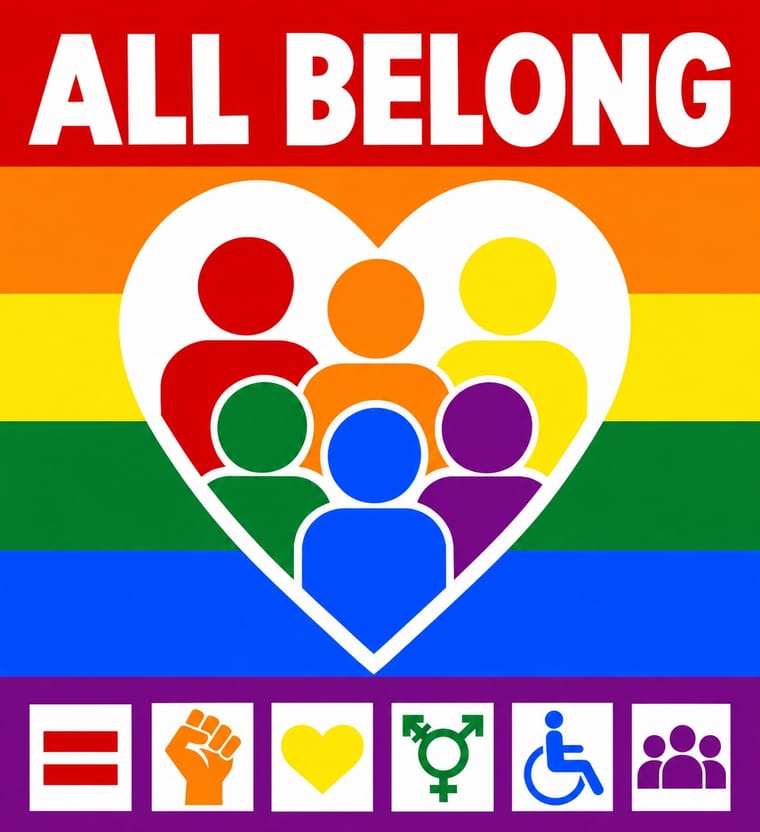
A flag-based colour code of the queer movement: horizontal spectrum bands with red at the top, first hand-dyed by Gilbert Baker in San Francisco in 1978 (eight colours, six from 1979). Open and extensible, it gains stripes, chevrons and symbols for more identities (Progress Pride flag, 2018), and now spreads as a spectrum motif across logos, merchandise and Pride-month campaigns.
Make something in this style Get advice in this style Mix it with another style
Use it with care
This is the living identity of LGBTQ communities, whose members are still campaigning against discrimination and criminalisation, and who fight over who is included in the flag. Do not use the rainbow, the Progress flag or the pink triangle as decoration, a seasonal sales tactic or a marketing colour scheme for an organisation that does not support those communities; that is the rainbow-washing the movement criticises. Include the added Progress flag stripes only knowingly, since Quasar's Creative Commons licence excludes commercial use, and do not pass generated work off as Baker's or Quasar's actual flags.
01
Its picture in other colours
Change a colour and every picture on this page follows. It happens in your browser, from the same pictures: nothing new is made or saved.
Choose a colour to change it
-
#e40303 -
#ff8c00 -
#ffed00 -
#008026 -
#004dff -
#750787
A faded colour isn’t in these pictures, so changing it changes nothing.
Light and dark stay where they are; greys hardly move.
More colours: any style’s, or your own
The pictures show the style’s own colours.
02
Make something in this style
Say what you need, and Stylogeny’s image studio draws it from LGBTQ Pride Graphics (Rainbow Flag to Progress Flag)’s design choices and checks it against them. It takes about a minute, and you get a link to share.
03
How it works
Palette
-
#e40303accent · 14% -
#ff8c00ground · 13% -
#ffed00accent · 9% -
#008026accent · 10% -
#004dffaccent · 16% -
#750787ink · 11%
Shares measured from its picture. The ground is what the pictures sit on (of the colours covering most, the most neutral), the ink stands out from it most, the rest are accents.
Typefaces
-
Friendly geometric and rounded sans for Pride campaign slogans
common practice; the flag itself has no lettering
-
Hand-lettered banner and placard lettering at marches
-
Plain pictogram symbols such as the pink triangle and the inclusive flag chevron
- Stack flat horizontal bands in spectrum order, red at the top, so the colours read as a flag at any size and on any surface.
- Assign each colour a meaning, and state it, so the palette works as a vocabulary and not as decoration.
- Leave the system open: successive designers add a stripe, a chevron or a symbol to name the people not yet included, and each revision is known by its maker (Tierney, Quasar, Vecchietti).
- Pair the colour code with a plain emblem such as the pink triangle, which Baker's flag was made as an alternative to, when a single mark must carry the cause.
- Campaign slogans around the flag are often set in friendly sans type or hand-lettered on banners and placards; the flag itself carries no type.
- The rainbow is tied to a statement of pride or protest, and the movement criticises its use by organisations that make no commitment (rainbow-washing).
San Francisco: Gilbert Baker and a team of volunteers hand-dyed and stitched the first rainbow flags, flown at the Gay Freedom Day Parade on 25 June 1978; variants have since been made worldwide
Change it with an idea. Any of the 73 moves that make a design say something can go on this style.
04
Its design choices
From Stylogeny’s vocabulary of design choices: defining choices make the style, characteristic ones are usual, occasional ones turn up now and then.
- Layout & composition
- Space & hierarchy
- Typography
- Form & shape
- Surface & texture
- Imagery
- Medium & production
- Tone & intent
- Avoids
- Blackletter, Didone, Floral & vegetal, Abundant decoration, Horror vacui, Skeuomorphic material, Monochrome, Calm & contemplative
How its pictures are made Drawn & painted, Systematic
Kind of picture: Drawn & painted · Systematic
Known for
-
Gilbert Baker, Rainbow Flag
first flown 25 June 1978; six-stripe standard from 1979; acquired by the Museum of Modern Art in 2015
-
Philadelphia 'More Color More Pride' eight-stripe flag, with black and brown stripes added
Tierney agency, 2017
-
Daniel Quasar, Progress Pride flag (2018)
chevron of black, brown, light blue, pink and white stripes at the hoist
-
Valentino Vecchietti (Intersex Equality Rights UK), Intersex-Inclusive Progress Pride flag
2021
-
Gilbert Baker, nine-stripe flag with a lavender stripe
March 2017
05
Where it comes from, and what it’s close to
Nothing earlier is recorded: in the atlas it is a starting point.
LGBTQ Pride Graphics (Rainbow Flag to Progress Flag) 1978–present
No later style in the atlas grew out of it yet.
Alike in its design choices
06
Combine it with
Styles LGBTQ Pride Graphics (Rainbow Flag to Progress Flag) pairs well with or plays against, from the research. Each is worked out as a combination: which style gives the type, the colours and the forms.
- Corporate Memphis Pairs well · Flat, friendly, bright and inclusive visuals; use the Pride palette to give corporate-style work an assigned meaning instead of generic cheer.
- Pop Art Graphics Pairs well · Both turn flat saturated colour and a simple recognisable sign into a mass-media symbol.
- ACT UP & Gran Fury AIDS Activist Graphics Contrasts · AIDS activism used one slogan, black grounds and advertising polish; Pride uses an open colour code. Take ACT UP's accusation when a campaign needs an argument rather than a mood.
- Fante Asafo Flags (Frankaa) Contrasts · Both are flags carrying a community's identity, but Asafo flags are figurative appliqué narratives, while Pride flags are abstract stripes whose colours stand for meanings.
07
Often taken for
LGBTQ Pride Graphics has no real works recorded yet, so these are its nearest styles by its choices alone, with the choices that tell them apart.
-
Milk Tea Alliance Graphics
Milk Tea Alliance Graphics is one of LGBTQ Pride Graphics’s nearest styles by choices; no real work of either fits the other better.
Choices that tell LGBTQ Pride Graphics and Milk Tea Alliance Graphics apart Choice LGBTQ Pride Graphics Milk Tea Alliance Graphics Rectilinear defining — Analogous harmony — characteristic Full polychrome defining occasional Earth & mineral — characteristic Repetition & rhythm defining occasional No shared descent in the atlas: they reached these choices separately.
-
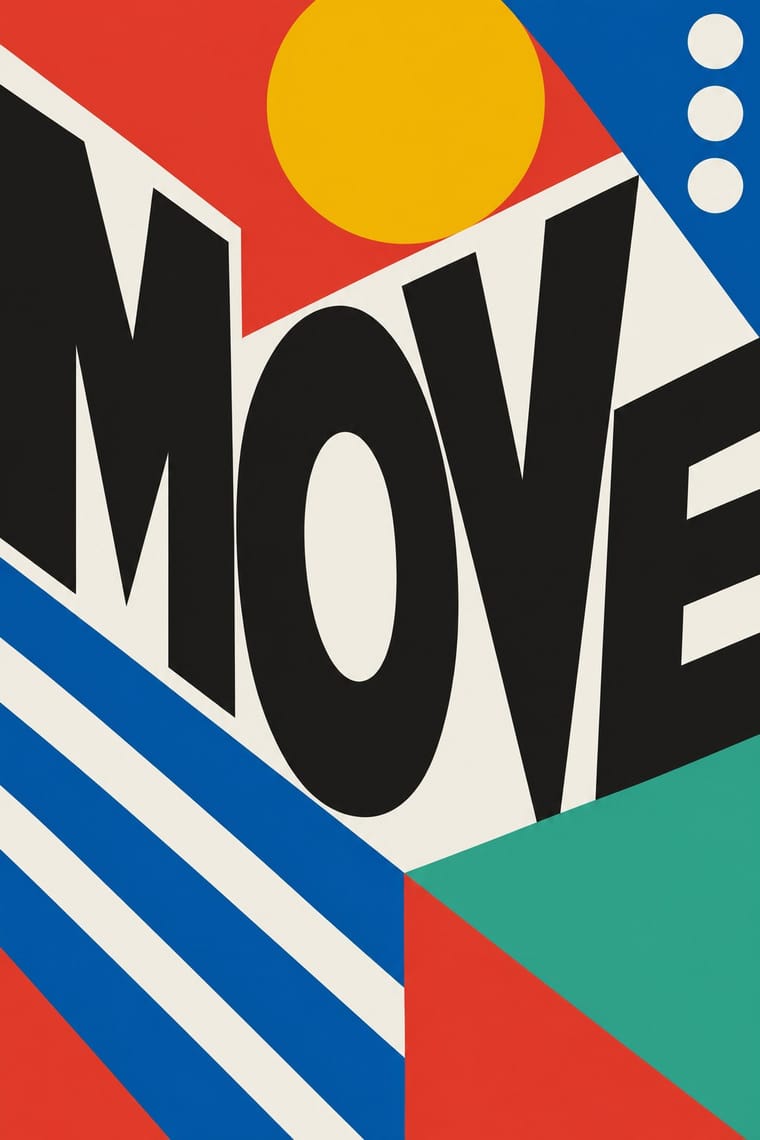
Supergraphics
Supergraphics is one of LGBTQ Pride Graphics’s nearest styles by choices; no real work of either fits the other better.
Choices that tell LGBTQ Pride Graphics and Supergraphics apart Choice LGBTQ Pride Graphics Supergraphics Rectilinear defining — Extreme scale contrast — defining Flat vector illustration characteristic — Type as image occasional defining Emblems & badges characteristic — No shared descent in the atlas: they reached these choices separately.
-
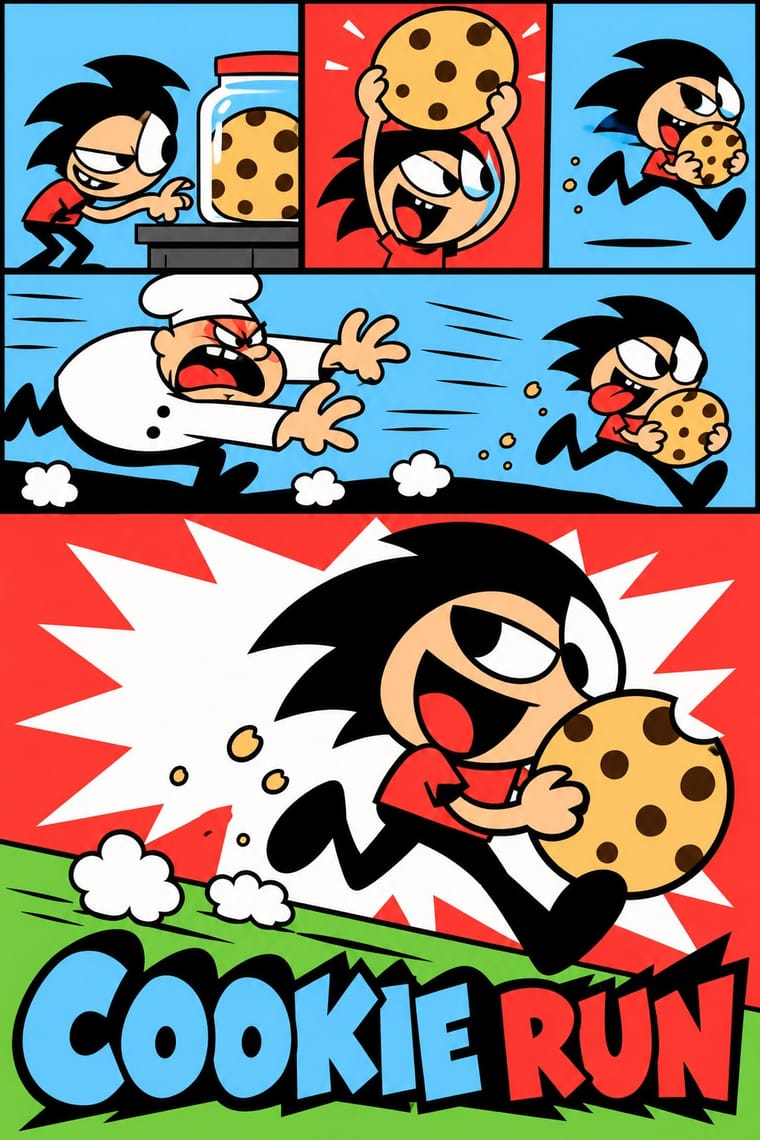
Flash Vector Cartoon (Newgrounds-Era Web Animation)
Flash Vector Cartoon is one of LGBTQ Pride Graphics’s nearest styles by choices; no real work of either fits the other better.
Choices that tell LGBTQ Pride Graphics and Flash Vector Cartoon apart Choice LGBTQ Pride Graphics Flash Vector Cartoon Rectilinear defining — Stylised figuration — defining Pictogram characteristic — Comic & cartoon — defining Icons & pictograms characteristic — No shared descent in the atlas: they reached these choices separately.
-
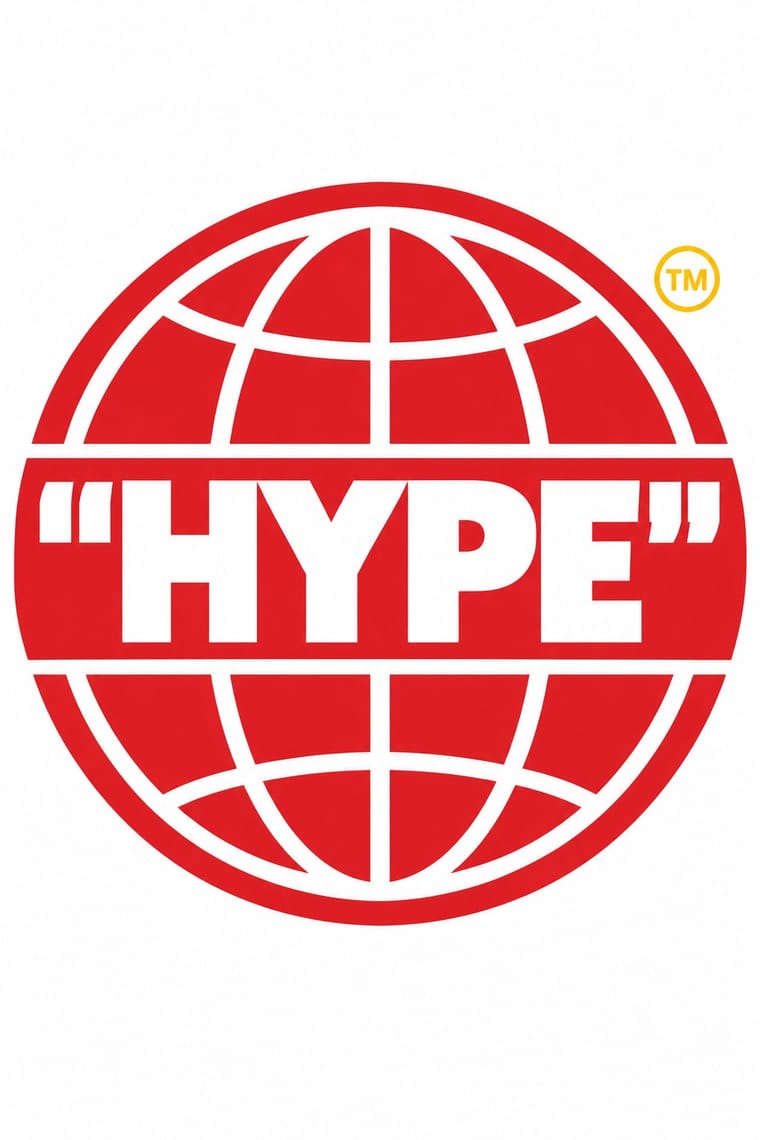
Hype Streetwear Graphics (Box Logo to Quotation Marks)
Hype Streetwear Graphics is one of LGBTQ Pride Graphics’s nearest styles by choices; no real work of either fits the other better.
Choices that tell LGBTQ Pride Graphics and Hype Streetwear Graphics apart Choice LGBTQ Pride Graphics Hype Streetwear Graphics Full polychrome defining — Monochrome avoids characteristic Gradients occasional avoids Limited spot colours — defining Flat vector illustration characteristic — No shared descent in the atlas: they reached these choices separately.
— means the choice isn’t among the style’s recorded choices. Critics recorded each work’s choices with the styles’ descriptions in view, so this shows whether the descriptions hold together, not proof that they are right.
08
Sources
- Wikipedia: 'Rainbow flag (LGBTQ movement)' (https://en.wikipedia.org/wiki/Rainbow_flag_(LGBTQ_movement): first flags 25 June 1978; eight colours and their meanings; six stripes from 1979; Philadelphia flag 2017 by Tierney; Progress Pride flag 2018; Intersex-Inclusive version 2021; nine-stripe 2017; MoMA acquisition 2015)
- Wikipedia: 'Gilbert Baker (artist)' (https://en.wikipedia.org/wiki/Gilbert_Baker_(artist): 1951-2017; hand-dyed and stitched by volunteers; hot pink and turquoise dropped)
How Stylogeny researches and checks a style: where the facts come from.