Digital native · 2020–present · North America, Global / networked
Instagram Slideshow Activism (Social-Justice Infographics)
Also known as Slideshow activism, PowerPoint activism, Instagram infographics, Social justice slideshows, '(Instagram) Infographic Industrial Complex' (ironic label; the title of a Kinfolk essay and of a 2021 Masters of Media post on Brad Troemel's parodies)
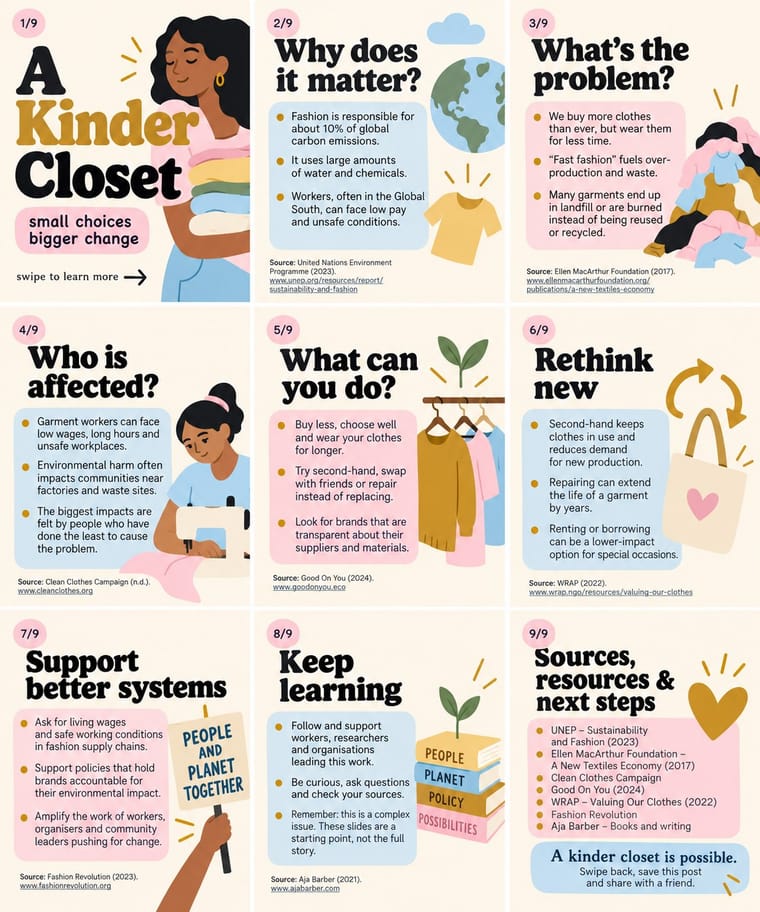
The text-led explainer slideshows that filled Instagram after George Floyd's murder in May 2020. Up to ten square or 4:5 slides in one carousel (twenty since August 2024) are read like a PowerPoint deck: a title card in big type with a swipe arrow, then bullet-point slides with sources and a call to action. Pastel pink, yellow and blue grounds, large serif or bubbly, wide sans headings, gradients and playful flat figures, often from Canva templates, borrow the look of millennial brands to reach apolitical readers.
Make something in this styleGet advice in this styleMix it with another style
Use it with care
The look grew out of the 2020 Black Lives Matter protests, and critics such as the sociologist Eve Ewing warned that slides flatten complex problems and summarise the work of often Black authors without credit: name and link every source, credit the people whose work you condense, and check claims before posting. Do not turn the names and faces of people killed by police into decorative or shareable motifs; Vox quotes a warning that the look can 'commodify tragedy and obfuscate revolutionary messages' and notes that Breonna Taylor's death 'devolved into a meme'. Do not dress brand marketing in the look to perform allyship without action, and remember that its friendly packaging works for any message, including an army's messaging in an armed conflict (the IDF slideshow of May 2021) and misinformation, which text inside images makes hard to moderate. Write the slide text into the caption or alt text so screen-reader users can follow it.
01
How it works
- Split one issue into a carousel of square or 4:5 portrait slides (up to ten in 2020, twenty since Instagram raised the limit in August 2024), and open on a title card that names it in big type with an arrow or 'swipe' prompt.
- Give each slide one question or point in a few short bullets, with a source line at the foot of the slide, and close the deck with sources, resources and what the reader can do.
- Repeat one template on every slide: the same soft pastel or light ground, heading face and text box, so the deck reads as a single post.
- Borrow the friendly packaging of millennial brands (pastels, soft text boxes, gradients, playful flat figures) so a hard subject feels approachable rather than alarming.
- Design for the reshare: keep text legible at phone size and on a Story, and make the title card work on its own.
Instagram, from late May 2020: after the murder of George Floyd, amid COVID-19, users turned the platform's ten-image carousel into informative slideshows 'akin to a PowerPoint presentation' (Salzano, AoIR 2021), often built with free design software such as Canva and its pre-made templates (The Washington Post, 15 August 2020, as cited by Salzano); Canva later reported more than 330,000 downloads of its Black Lives Matter and Juneteenth templates (Kinfolk). A prominent early example was @soyouwanttotalkabout, whose maker, a New York marketing consultant, took its branding from 'the deluge of inspirational graphics popular among millennial women'; brands such as the streetwear label CHNGE also made and re-posted such guides (Vox). Terry Nguyen called the trend 'PowerPoint activism' in Vox on 12 August 2020 and traced its look to millennial-facing direct-to-consumer brands: 'Design-wise, the brands got there first', naming Casper, Buffy, Tend, Glossier and Kin Euphorics. That is why this entry descends from DTC blanding rather than from Corporate Memphis, whose cartoon illustrations the slideshows only occasionally borrow (Masters of Media, 2021). The format outlived the 2020 protests: in May 2021 the Israel Defense Forces used it during the conflict of that month, and that spring meme accounts and the artist Brad Troemel parodied it
02
Its design choices
From Stylogeny’s vocabulary of design choices: defining choices make the style, characteristic ones are usual, occasional ones turn up now and then.
- Layout & composition
- Space & hierarchy
- Typography
- Colour
- Surface & texture
- Imagery
- Medium & production
- Tone & intent
- Avoids
- Photocopy & distress, Glitch, Experimental & distorted, Complementary clash, Fluorescent & neon, Abundant decoration, Visual tension, Ironic & self-aware
Palette
#fdf6ec#f6cfd8#f9e4a0#b9d7ee#c9962c#1e1e1e
Typefaces
Large display serifs on the title card
Vox described 'large serif fonts' with colourful gradients and pastel backgrounds
Ovo (Nicole Fally, Sorkin Type, 2011), a medium-contrast serif with soft serifs and old-style letter widths
the oversized face of Canva's peach-coloured template, on Canva since March 2019, exported nearly 200,000 times by August 2020 and notably popular for social-justice slideshows (Vox)
Rounded, 'bubbly' display sans
Vox on @soyouwanttotalkabout's 'bright colors and bubbly fonts'
Wide, letterspaced sans-serifs for headings and bullet points
the 'spaced-out fonts' on @soyouwanttotalkabout's light backgrounds; Vox's 'wide chunky typefaces'
Known for
@soyouwanttotalkabout
(2020–), slideshows parsing progressive politics by Jess, a New York marketing consultant, launched in February 2020 and grown from about 10,000 followers in early June to a million by August: first on bolder mustard-yellow, olive and coral grounds, then a subdued palette of creamy pinks, yellows and blues, with bright colours, 'bubbly fonts' and sources at the bottom of every slide (Vox); light-coloured backgrounds with spaced-out fonts, sourcing, resources and action items (Refinery29)
@sa.liine, 'Virtual Protesting 101' (29 May 2020), a tie-dye-themed slideshow on using Instagram's algorithm and hashtags to protest safely
@ghostdumps, slideshow 'Why the refusal to post online is often inherently racist' (30 May 2020), set in a black-and-white theme, over 400,000 likes
Slow Factory (@theslowfactory), Juneteenth slideshow (19 June 2020)
'Juneteenth' in a colourful bold face on black
Eric Hu (@_erichu), carousel on police abolition (#8toabolition, 25 June 2020), made over two weeks with two other artists
informative text over images of flowers and nature, with a clear 'SWIPE →' prompt on the first slide, about 32,000 likes; its caption was later edited to flag an inaccuracy on slide 8. Hu, a former global design director for Nike Sportswear, said of such slides: 'From a design perspective, they're pretty horrible, but it is that type of Instagrammable graphic that the platform favors'
CHNGE (@chnge), a streetwear brand by Jacob Castaldi whose account emulated a progressive advocacy organisation, with posts on allyship, police defunding, climate change and international issues
@norajmaxwell, 'your solidarity shouldn't follow the news cycle' (28 October 2020), with dark blue dots in a calendar grid marking days of allyship between the killings of George Floyd and Walter Wallace Jr
Israel Defense Forces (@idf), slideshow of 13 May 2021, over 144,000 likes
two cartoon characters with bubblegum-pink text boxes in dialogue, one with a rifle at the waist, each slide posing a major question about the conflict with a very brief answer
03
Make something in this style
Say what you need, and Stylogeny’s image studio draws it from Instagram Slideshow Activism (Social-Justice Infographics)’s design choices and checks it against them. It takes about a minute, and you get a link to share.
04
Where it comes from, and what it’s close to
Before it
The style it grew out of, and the styles it borrowed from.


After it
The styles that grew out of it.
No later style in the atlas grew out of it yet.
Alike in its design choices
Styles that make many of the same choices, related or not, besides those above.
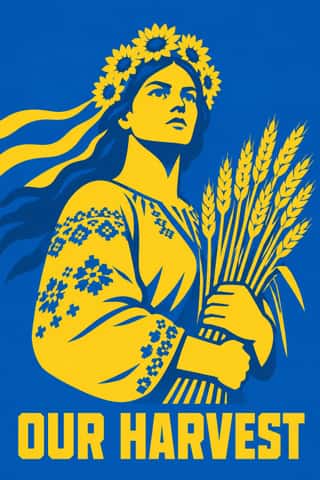
- Woman, Life, Freedom Protest Graphics (Iran and the Diaspora)55% alike




05
Sources
- Terry Nguyen, 'How social justice slideshows took over Instagram', Vox, 12 August 2020 (https://www.vox.com/the-goods/21359098/social-justice-slideshows-instagram-activism), main source: 'Consider it something like PowerPoint activism'; 'wide chunky typefaces and bold gradient graphics'; 'colorful gradients, large serif fonts, pastel backgrounds, and playful illustrations'; 'Design-wise, the brands got there first: Think of ... Casper (mattresses), Buffy (bedding), Tend (dentistry), Glossier (beauty), and Kin Euphorics (booze)'; Jess of @soyouwanttotalkabout, a marketing consultant (launched in February, about 10,000 followers in early June, a million by August; 'bright colors and bubbly fonts' inspired by 'the deluge of inspirational graphics popular among millennial women'; first 'mustard yellow, olive, and coral', then 'creamy pinks, yellows, and blues'; 'I'm trying to appeal to the apolitical people'; 'I was including sources at the bottom of every slide'); Eric Hu, formerly global design director for Nike Sportswear, spent two weeks in June with two other artists on a carousel on police abolition with 'a clear indication to swipe left on the first graphic', 'merging images of flowers and nature with informative text', and said 'From a design perspective, they're pretty horrible, but it is that type of Instagrammable graphic that the platform favors'; CHNGE, a streetwear brand by Jacob Castaldi; Canva's peach-colored template in 'the oversized serif font Ovo', on Canva since March 2019 and exported nearly 200,000 times (Canva PR manager Mitch Holmes), notably popular for social justice slideshows; Eve Ewing's Canva post; @disintegration.loops: 'commodify tragedy and obfuscate revolutionary messages', and Breonna Taylor's death 'has devolved into a meme'; misinformation in images is harder to detect than in text
- Matthew Salzano, 'Technoliberal Participation: Black Lives Matter and Instagram Slideshows', AoIR Selected Papers of Internet Research (2021), doi:10.5210/spir.v2021i0.12034 (https://spir.aoir.org/ojs/index.php/spir/article/view/12034): the ten-image carousel 'as an informative slideshow akin to a PowerPoint presentation' after May 2020; slides '[co-opt] popular design aesthetics from brands' (Nguyen, 2020) and are 'easily created with free design software like Canva and its pre-made design templates' (Ables, The Washington Post, 15 August 2020); @sa.liine 'Virtual Protesting 101' (29 May 2020, tie-dye themed); @ghostdumps (30 May 2020, black-and-white theme, more than 400,000 likes); @norajmaxwell (28 October 2020, calendar grid of dots); reference to M. Guerrero, 'Swipe-Through Activist Guides Are the New Zines', The New York Times, 19 August 2020
- Instagram Slideshow Archive (Omeka, collection 'What are Instagram Slideshows?', contributed by Matthew Salzano), item record for Terry Nguyen, 'How social justice slideshows took over Instagram', Vox, 2020-08-12 (https://instagramslideshows.omeka.net/items/show/7): 'PowerPoint activism is everywhere on Instagram. Why do these posts look so familiar?'
- GIGAZINE, machine-translated Japanese summary of the Vox article (14 August 2020) (https://gigazine.net/gsc_news/en/20200814-social-justice-slideshows-instagram), used only for its embedded Instagram posts: Slow Factory's Juneteenth post of 19 June 2020 ('Juneteenth' in a 'colorful and powerful font on a black background'); Eric Hu's post of 25 June 2020 (#8toabolition, 'SWIPE →', about 32,000 likes, caption edit 'slide 8 has an inaccuracy'); Eve Ewing's post of 24 July 2020 ('sometimes these slides take whole books that someone (usually Black) put blood sweat and tears and sacrifice into ... without so much as saying their name')
- Liz Kraisinger, 'Aestheticization of activism', The Cavalier Daily (30 April 2021) (https://www.cavalierdaily.com/article/2021/04/aestheticization-of-activism): quoting Nguyen in Vox, 'text-based slideshow graphics' with 'colorful gradients, large serif fonts, pastel backgrounds, and playful illustrations', 'deliberately neutral' and similar to the graphics of millennial-oriented brands; the 10-slide carousel limit
- Erin Corbett, 'The Aesthetics Of Activism: How Instagram Changed Protesting', Refinery29 (May 2021) (https://www.refinery29.com/en-us/2021/05/10335757/instagram-activism-aesthetics-impact): 'so you want to talk about' posts on 'light-colored backgrounds with spaced-out fonts' with sourcing, resources and action items; Ría Thompson-Washington: 'Pastels make people feel comfortable', 'Nobody wants blood red or black messaging'; Shirien Damra's pastel portraits in floral frames
- Sarah Manavis, 'The trouble with Instagram infographics as political discourse', New Statesman (26 May 2021) (https://www.newstatesman.com/science-tech/2021/05/trouble-instagram-infographics-political-discourse): IDF slideshow of 13 May 2021, over 144,000 likes, with 'two cartoon characters with bubblegum-pink text boxes, having a dialogue about a political issue', 'a rifle strapped to one of the cartoon's waists'; each image displayed a major question about the conflict with a very brief answer; 'hyper-basic bullet points against the backdrop of a pastel background'
- Sarah Manavis, 'The Infographic Industrial Complex', Kinfolk, Issue 41 (https://www.kinfolk.com/stories/the-infographic-industrial-complex/): Canva 'has had a big hand in defining the appearance' of the infographics and reported over 330,000 Black Lives Matter and Juneteenth template downloads; 'a handful of pastel-hued slides'; slides usually shared to Stories; meme accounts' faux-sincere parody infographics during the European Super League news in spring 2021
- Marta Ceccarelli, 'Visual vernaculars, Brad Troemel and the Instagram Infographic Industrial Complex', Masters of Media, University of Amsterdam (3 October 2021) (https://mastersofmedia.hum.uva.nl/blog/2021/10/03/visual-vernaculars-brad-troemel-and-the-instagram-infographic-industrial-complex/): Troemel's Instagram posts 'visually resemble infographics created by activists'; 'Pastel coloured illustrations of cartoonish people with disproportionate limbs are intertwined with inspirational messages filled with buzzwords, often creating nonsensical text'; such posts 'occasionally referred to as the "Instagram Infographic Industrial Complex"'; activist slideshows 'carefully designed with sleek, minimalist colour schemes, occasionally accompanied by illustrations belonging to the genre often referred to as "Corporate Memphis"'; four slideshows that begin on issues such as climate change and the war on Iraq and end with advertisements for companies, with commenters who 'take these ads at face value'. The four linked posts are dated 18, 19, 20 and 21 May 2021 on Instagram
- Gretchen Oestreicher, 'Instagram Carousel Limit Increased to 20 Photos or Videos', Metricool (9 August 2024) (https://metricool.com/instagram-increases-carousel-content-limit/): global rollout of carousels of up to 20 photos and videos, up from 10, after tests with up to 15 images
- Brittanie Dreghorn, 'Instagram Dimensions and Sizes Guide for 2021', Sked Social (updated 26 July 2024) (https://skedsocial.com/blog/instagram-dimensions-and-sizes): carousels 'can use all three post sizes', square, horizontal or vertical, consistent across the carousel; for vertical posts 'the best ratio is 4:5', 1080 by 1350 px
- Ovo, Google Fonts (https://github.com/google/fonts/tree/main/ofl/ovo): designed by Nicole Fally, Sorkin Type Co, 2011; 'inspired by a set of hand lettered caps seen in a 1930's lettering guide', with a 'soft serif treatment', 'a medium contrast serif font' with 'old style variable letter widths'
- Delia Dumitrica and Hester Hockin-Boyers, 'Slideshow activism on Instagram: constructing the political activist subject', Information, Communication & Society 26:16 (2023), 3318–3336, doi:10.1080/1369118X.2022.2155487: qualitative content analysis of 50 posts from one popular slideshow account; slideshow activism 'adapts the production and consumption of political information to the logic of the platform'
How Stylogeny researches and checks a style: where the facts come from.