Pictorial & machine age · 1993–present · Global / networked, North America, East Asia
Collectible Card Game Design ( Magic and Pokémon Frames )
Also known as CCG card frames, Trading card game design, TCG card layout, Magic: The Gathering card frame
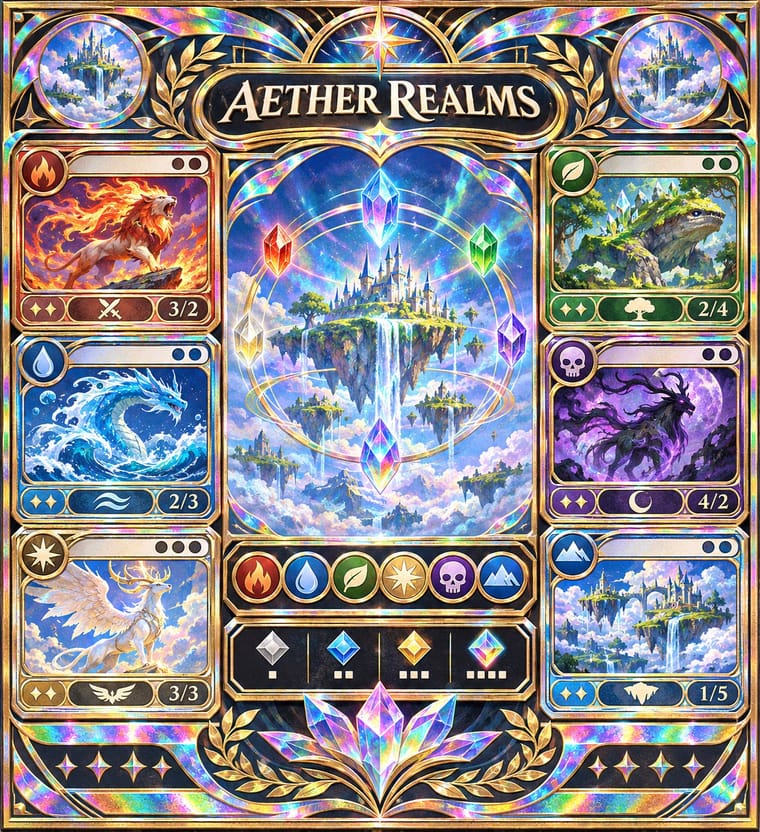
Magic is the model and Pokémon the variant: a fixed, modular card template for collectible games: name bar, commissioned art window, type line, rules box and a stat box, with frame colour and small symbols encoding the card's game colour, cost and rarity. Born with Magic in 1993 and Pokémon in 1996, it is a layout system meant to be read quickly across hundreds of cards, with foil marking the rare ones.
Make something in this style Get advice in this style Mix it with another style
01
Its picture in other colours
Change a colour and every picture on this page follows. It happens in your browser, from the same pictures: nothing new is made or saved.
Choose a colour to change it
-
#0f0f0f -
#c8a45a -
#f1e6c8 -
#a33a2b -
#2f6fa8 -
#3f7d43
A faded colour isn’t in these pictures, so changing it changes nothing.
Light and dark stay where they are; greys hardly move.
More colours: any style’s, or your own
The pictures show the style’s own colours.
02
Make something in this style
Say what you need, and Stylogeny’s image studio draws it from Collectible Card Game Design (Magic and Pokémon Frames)’s design choices and checks it against them. It takes about a minute, and you get a link to share.
03
How it works
Palette
-
#0f0f0fink · 2% -
#c8a45anot in its pictures -
#f1e6c8not in its pictures -
#a33a2bnot in its pictures -
#2f6fa8ground · 12% -
#3f7d43not in its pictures
Shares measured from its picture. The ground is what the pictures sit on (of the colours covering most, the most neutral), the ink stands out from it most, the rest are accents.
Typefaces
-
Beleren
Magic, 2015 frame, a proprietary font
-
Matrix
Zuzana Licko, 1986; used for Yu-Gi-Oh! Trading Card Game cards in western languages
- Fix one template for every card so any card can be read at a glance and compared with any other.
- Reserve a framed art window for a commissioned illustration and let the frame, not the art, carry the data.
- Encode game colour, type and rarity in the frame tint and small symbols rather than in words.
- Stack information in a set order: name and cost on top, art, type line, rules text, stat box at the foot.
- Mark rarity with foil, holographic or textured finishes, and give every card the same back.
- In the base frame, keep the art inside its window; borderless and full-art variants are later exceptions to the canonical template.
United States and Japan: Magic: The Gathering (Richard Garfield, Wizards of the Coast, 1993) and the Pokémon Trading Card Game (Media Factory, Japan 1996; English edition by Wizards of the Coast, 1999). Precursors: collectible trade cards such as tobacco and baseball cards; the Trading card game page names Cosmic Encounter and Strat-O-Matic as game-design influences
Effects on its surface Holographic foil
- Holographic foil From its design choice “Iridescent & holographic”.
Change it with an idea. Any of the 73 moves that make a design say something can go on this style.
04
Its design choices
From Stylogeny’s vocabulary of design choices: defining choices make the style, characteristic ones are usual, occasional ones turn up now and then.
- Layout & composition
- Space & hierarchy
- Typography
- Colour
- Surface & texture
- Imagery
- Medium & production
- Tone & intent
- Avoids
- Dynamic asymmetry, Generous white space, Ornament-free, Experimental & distorted, Rotated & vertical setting, Typography only
How its pictures are made Drawn & painted, Systematic
Kind of picture: Drawn & painted · Systematic
Known for
-
Magic
The Gathering, first printing (1993, Richard Garfield, Wizards of the Coast)
-
Magic
The Gathering 8th Edition frame (2003), a redesigned border
-
Magic
The Gathering Core Set 2015 frame, with a holographic foil for certain rarities
-
Pokémon Trading Card Game
Japan 1996, Media Factory; English Base Set 1999, Wizards of the Coast
05
Where it comes from, and what it’s close to
Borrowed from
Collectible Card Game Design (Magic and Pokémon Frames) 1993–present
No later style in the atlas grew out of it yet.
Alike in its design choices
06
Combine it with
Styles Collectible Card Game Design (Magic and Pokémon Frames) pairs well with or plays against, from the research. Each is worked out as a combination: which style gives the type, the colours and the forms.
- Tarot de Marseille Woodcut Cards Contrasts · Another card system with a shared back and fixed frame, but its pips and trumps carry no rules text; use it when the card should be symbolic rather than data-bearing.
- Pulp Magazine Cover Pairs well · A painterly, dramatic illustration fits the art window and gives a card its genre.
- Bitmap & Pixel Graphics Pairs well · Pixel-art sprites in the art window make a retro digital-collectible card inside the same frame logic.
- European Heraldry Pairs well · Its emblem-and-field logic suits the frame colours and set symbols that identify a card's allegiance.
07
Often taken for
Collectible Card Game Design has no real works recorded yet, so these are its nearest styles by its choices alone, with the choices that tell them apart.
-
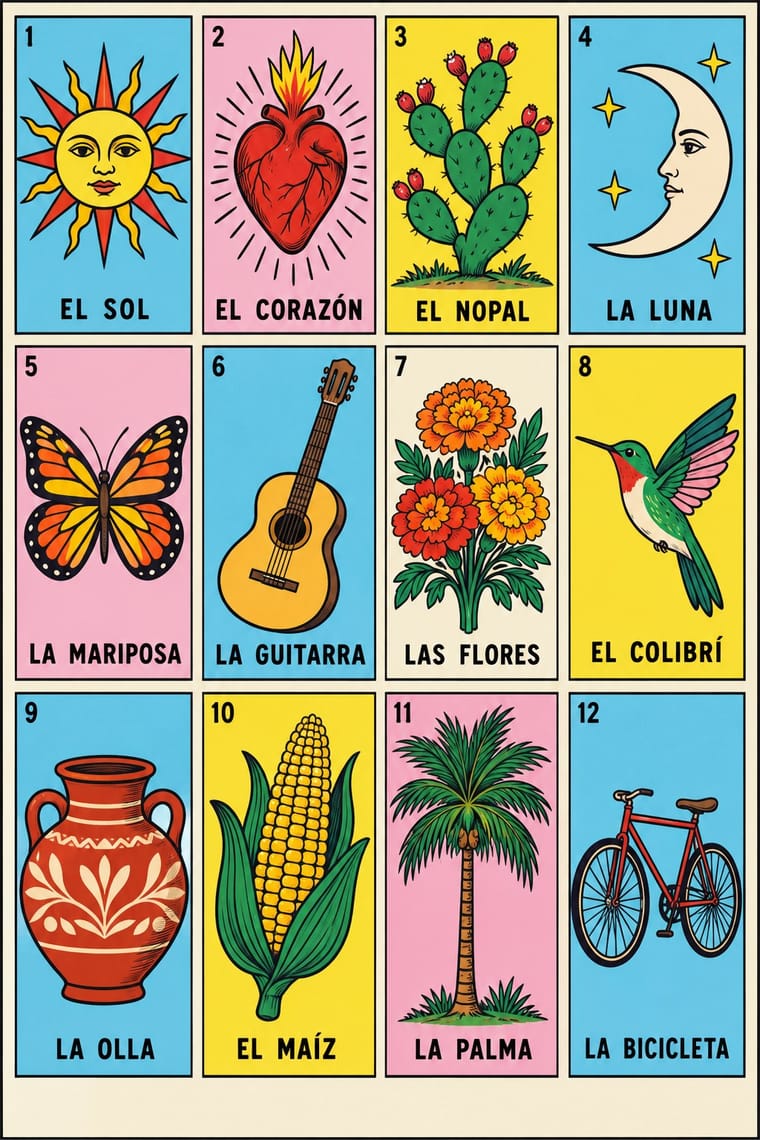
Lotería Card Imagery (Mexican Lotería)
Lotería Card Imagery is one of Collectible Card Game Design’s nearest styles by choices; no real work of either fits the other better.
Choices that tell Collectible Card Game Design and Lotería Card Imagery apart Choice Collectible Card Game Design Lotería Card Imagery Layered information defining — Stylised figuration — defining Horror vacui occasional avoids Isolated object — defining Pictogram defining occasional No shared descent in the atlas: they reached these choices separately.
-
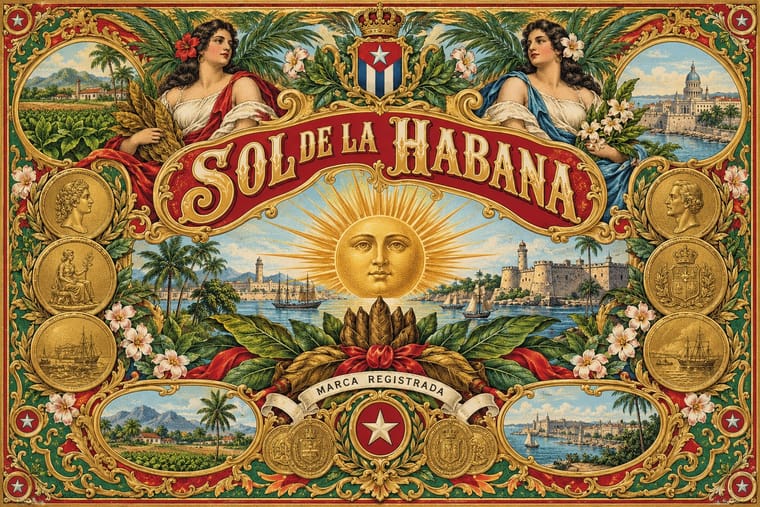
Cuban Tobacco Lithography (Habilitaciones & Marquillas)
Cuban Tobacco Lithography is one of Collectible Card Game Design’s nearest styles by choices; no real work of either fits the other better.
Choices that tell Collectible Card Game Design and Cuban Tobacco Lithography apart Choice Collectible Card Game Design Cuban Tobacco Lithography Pictogram defining — Abundant decoration — defining Modular grid defining — Ornamented display — defining Repetition & rhythm defining occasional Collectible Card Game Design borrowed from Cuban Tobacco Lithography, but neither descends from the other.
-
K-pop Physical Album Packaging (Photobook, Versions and Photocards)
K-pop Physical Album Packaging is one of Collectible Card Game Design’s nearest styles by choices; no real work of either fits the other better.
Choices that tell Collectible Card Game Design and K-pop Physical Album Packaging apart Choice Collectible Card Game Design K-pop Physical Album Packaging Painterly illustration characteristic avoids Straight photography — defining Pictogram defining — Isolated object — defining Borders & frames defining — No shared descent in the atlas: they reached these choices separately.
-
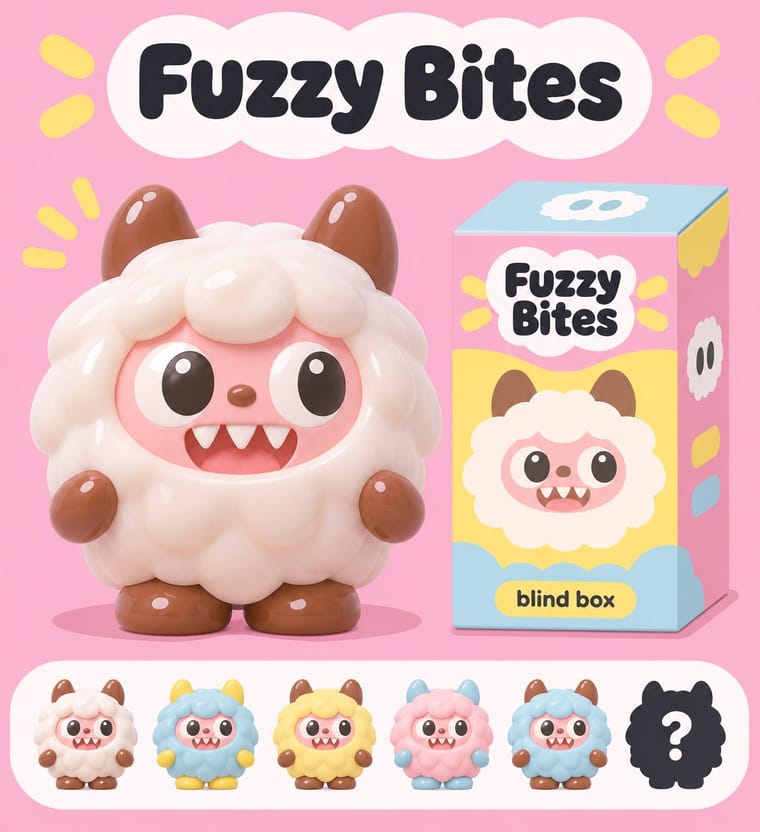
Blind-Box Designer Toy Packaging and Character Branding
Blind-Box Designer Toy Packaging and Character Branding is one of Collectible Card Game Design’s nearest styles by choices; no real work of either fits the other better.
Choices that tell Collectible Card Game Design and Blind-Box Designer Toy Packaging and Character Branding apart Choice Collectible Card Game Design Blind-Box Designer Toy Packaging and Character Branding Borders & frames defining — Stylised figuration — defining Layered information defining — Isolated object — defining Horror vacui occasional avoids No shared descent in the atlas: they reached these choices separately.
— means the choice isn’t among the style’s recorded choices. Critics recorded each work’s choices with the styles’ descriptions in view, so this shows whether the descriptions hold together, not proof that they are right.
08
Sources
- Wikipedia, Magic: The Gathering (release 5 August 1993, Richard Garfield; 8th Edition frame 2003; Core Set 2015 holo-foil stamp)
- Wikipedia, Pokémon Trading Card Game (Japan 20 October 1996, Media Factory; US Base Set 9 January 1999, Wizards of the Coast)
- Wikipedia, Trading card game
1 more source
- Wikipedia, Matrix (typeface) (Zuzana Licko, 1986; Yu-Gi-Oh! western card typeface)
How Stylogeny researches and checks a style: where the facts come from.