Branch
Counterculture graphic-design styles
Psychedelia, punk, street and club cultures that reject polish and authority. Stylogeny describes 53 of them. The earliest began in 1955, the latest in 2022. Of these, 28 are still in use.
The 53 styles
Oldest first. Each has its own page: its design choices, where it comes from, and real works.
Pop Art GraphicsPop turned the commercial imagery of post-war consumer culture (comics, packaging, celebrity photographs and advertising) into both its subject and its method.
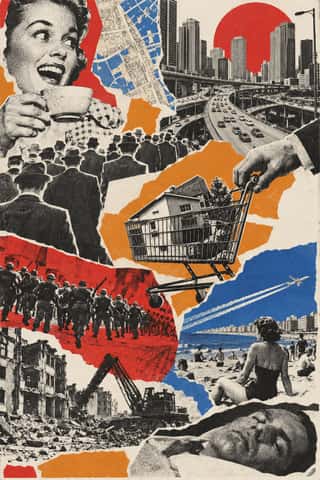
Situationist Détournement GraphicsGraphics of the Letterist and Situationist Internationals (1956–1972), built on détournement: taking existing words and pictures (comic strips, advertisements, news photographs, city maps, classic texts) and turning them against their source.
- Dazibao (Big-Character Posters)Handwritten wall posters in large brush characters that turned the walls of Mao-era China into a public forum for criticism, denunciation and, at the Democracy Wall, dissent.
Fluxus Graphics (Maciunas)The house graphics George Maciunas made from 1962 until his death in 1978 for Fluxus, a network of artists who staged events and sold cheap multiples.
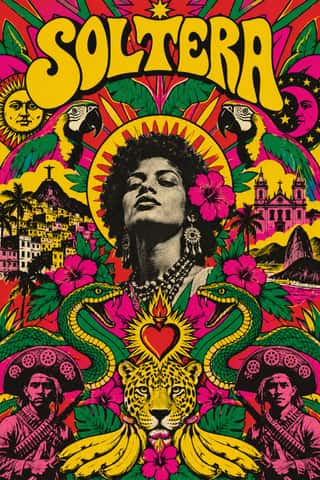
Tropicália Graphic DesignThe graphic language of Brazil's Tropicália, foreshadowed by Rogério Duarte's poster for Deus e o Diabo na Terra do Sol (1964), which already devours Ulm modernism, and set by his 1968 covers for Caetano Veloso and Gilberto Gil.
Angura Theatre PosterThe posters of Japan's underground (angura) theatre from the mid-1960s to the mid-1980s, made for troupes such as Kara Jūrō's Jōkyō Gekijō and Terayama Shūji's Tenjō Sajiki.
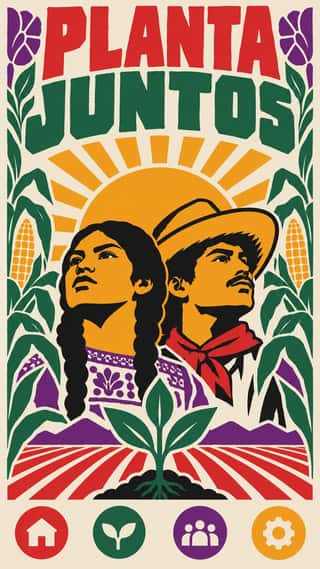
Chicano Screenprint PosterThe screenprinted poster of the Chicano Movement and its heirs, made from the mid-1960s in community workshops across California and the Southwest for farmworker strikes and boycotts, teatro, dances, anti-war marches and immigrant rights.
Psychedelic PosterThe concert-poster language of the 1960s counterculture, born in San Francisco's Fillmore and Avalon ballrooms and echoed in London's underground press.
- Black Panther Party GraphicsThe visual language of the Black Panther Party, created largely by its Minister of Culture, Emory Douglas, for the weekly newspaper The Black Panther.
AfriCOBRAThe Black Arts Movement collective founded in Chicago in 1968 by Jeff Donaldson, Wadsworth and Jae Jarrell, Barbara Jones-Hogu and Gerald Williams, after OBAC's Wall of Respect mural.
- Atelier Populaire (May '68 Screenprint Poster)The posters of the Atelier populaire, set up when students, teachers and artists occupied the École des Beaux-Arts in Paris on 14 May 1968, until police cleared the school on 27 June.
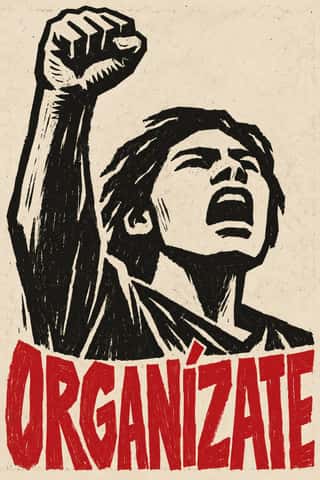
Gráfica del 68 (Mexican Student Movement Graphics)The graphics of the 1968 Mexican student movement, made in days by brigades in the print workshops of San Carlos and La Esmeralda and in improvised school workshops.
Hipgnosis Photographic Concept SleeveThe sleeves the London studio Hipgnosis made for Pink Floyd, Led Zeppelin, Genesis, Peter Gabriel, 10cc and others from 1968 to 1983.
- Ultras Graphics (Curva Banners and Tifo)The graphic language of Italy's organised football supporters, the ultras, from the late 1960s, and of the groups that copied them across Europe, North Africa and beyond.
Underground ComixSelf-published, adults-only comic books from the San Francisco counterculture, made outside the Comics Code on the newsstand comic's format.
Afrofuturist DesignA visual language of Black futures that fuses African and diasporic iconography (pyramids and ankhs, Adinkra and Nsibidi glyphs, textile patterning) with spacecraft, cosmic fields and technology.
- Grapus (French Militant Graphic Collective)The posters and identities of Grapus, a Paris collective founded in 1970 by Communist Party members who had met in the 1968 poster workshops.
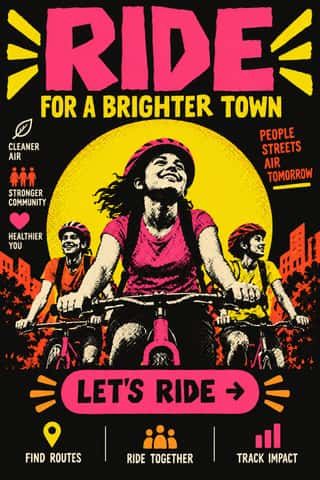
Australian Poster Collective ScreenprintsScreenprinted posters from the political poster collectives and community workshops that spread across Australia from Sydney's Tin Sheds, where Earthworks began in 1971.
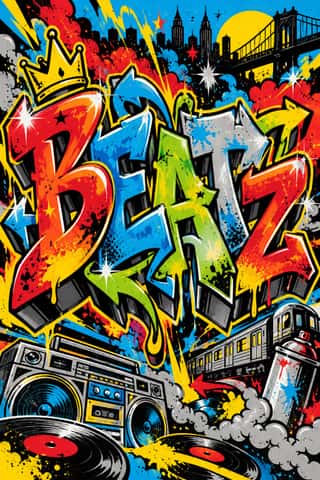
Graffiti & Hip-Hop GraphicsBorn on New York's subway cars and Bronx party flyers, graffiti writing turns the writer's name into a monumental letter-sculpture: bubble, block and wildstyle letters with arrows, 3D drop shadows, fades and highlights, painted freehand in aerosol.
- Roots Reggae Sleeve Art & Rasta IconographyThe record sleeves of roots reggae, from Catch a Fire (1973) until dancehall took over in the 1980s.
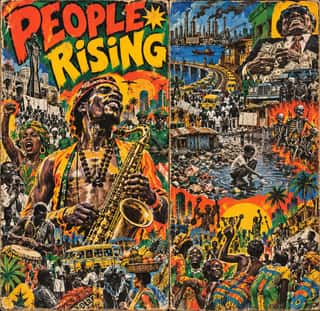
Afrobeat Sleeve ArtThe painted and collaged record covers of Nigerian Afrobeat, defined by Lemi Ghariokwu's sleeves for Fela Kuti from Alagbon Close (1974) onward.
- Punk & DIY ZineThe graphic voice of punk rock in fanzines, record sleeves and gig flyers: images and words cut from newspapers, typed or scrawled, pasted down and run off on a photocopier.
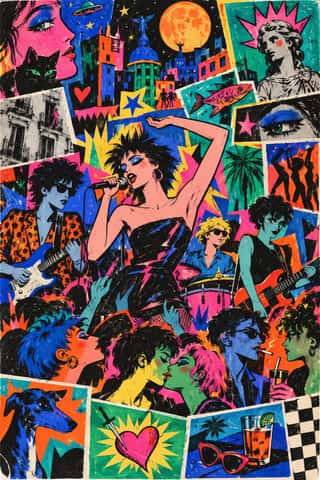
La Movida Madrileña GraphicsThe graphics of Madrid's Movida, the post-Franco scene of new-wave bands, fanzines and night life usually dated from the Canito concert of 9 February 1980 and later backed by the city council.
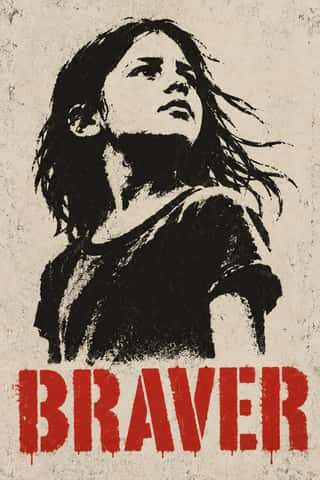
Stencil Street ArtPictures cut rather than drawn: a photograph is reduced to two or three flat tones, cut into card and sprayed onto a wall, usually uninvited, so one hard-edged figure appears in the street, in black with at most one accent colour.
- Chicha PosterFluorescent screen-printed street posters that emerged in the 1980s to promote chicha (Andean cumbia) concerts in Lima, made by printers from Andean migrant communities.
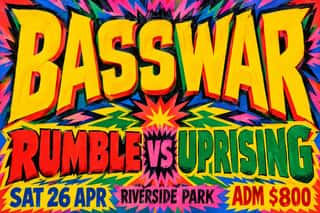
Jamaican Dancehall Signs & Sleeve ArtThe street graphics of Jamaica's dancehall era.
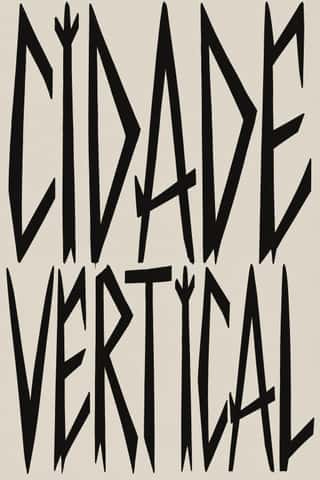
Pixação (São Paulo Tag Reto)The name-writing of São Paulo's pixadores, which since the 1980s has covered walls and façades and, from the 1990s, the upper floors of tower blocks.
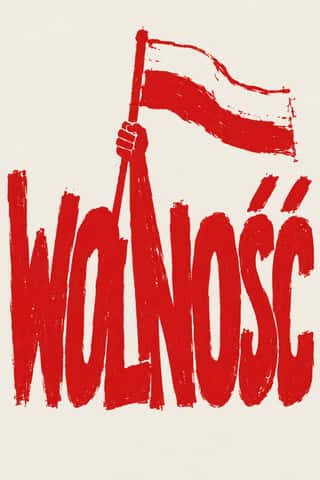
Solidarność & Polish Underground GraphicsThe graphic language of Poland's Solidarność movement, from the August 1980 shipyard strike to the semi-free election of 4 June 1989.
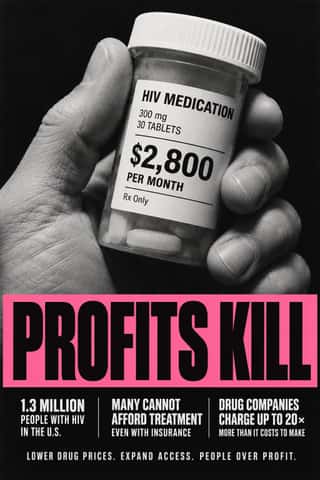
ACT UP & Gran Fury AIDS Activist GraphicsThe graphics of New York's AIDS activist movement: the SILENCE=DEATH poster of 1987, a pink triangle above white capitals on black, and the posters, stickers, T-shirts, billboards and bus ads of Gran Fury (1988–1995), ACT UP's 'unofficial propaganda ministry'.
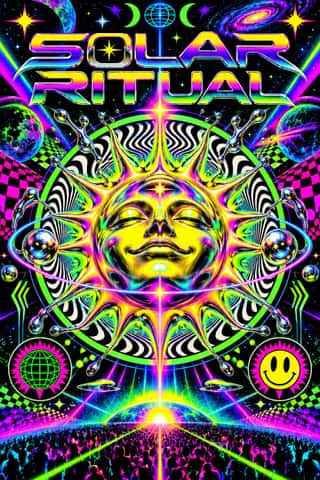
Rave & Acid House GraphicsThe pocket-sized promotional art of acid house, rave and early techno, handed out in record shops and car parks to advertise all-night parties.
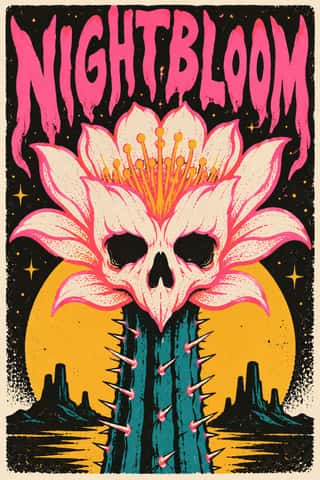
- Black Metal GraphicsThe visual language of black metal, fixed by Norway's second wave in the early 1990s, now worldwide, since the 2010s borrowed by mainstream acts (Szpajdel's Rihanna and Metallica logos, 2016).
Grunge TypographyThe 1990s magazine and music-industry style in which type was layered, eroded, overlapped and cropped until legibility became negotiable.
Screenprinted Gig & Alt-Movie PosterHand-pulled, numbered screenprints that revived the rock poster in Austin from 1991, led by Frank Kozik, and spread via Flatstock fairs and, from 2004, Mondo to 'alternative' film posters, for collectors as much as the show.
- Bitterkomix (Afrikaans Underground Comics)The Afrikaans underground comics magazine founded in Stellenbosch in 1992 by Anton Kannemeyer (Joe Dog) and Conrad Botes (Konradski), with Mark Kannemeyer (Lorcan White).
Hype Streetwear Graphics (Box Logo to Quotation Marks)The logo-led graphics of streetwear since the 1990s: one wordmark or emblem on a plain T-shirt, hoodie or object is the product.
- Indonesian Woodcut Activism (Taring Padi)The protest graphics of Taring Padi, the collective founded by students and activists in Yogyakarta in 1998 as Suharto fell, and of the punk and activist woodcut scenes around it.
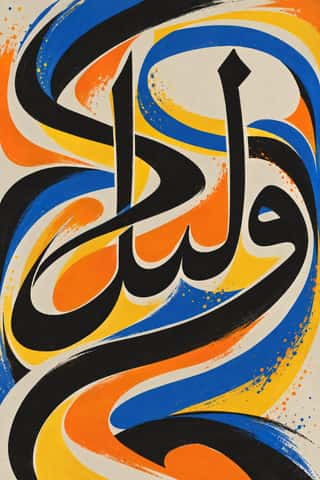
Arabic CalligraffitiArabic letters sprayed, rolled and brushed at the scale of buildings.
- Cartonera Books (Latin American Cardboard Publishing)Books of Latin America's cartonera presses, begun by Eloísa Cartonera in Buenos Aires in 2003 after Argentina's 2001 crash: photocopied texts stapled and glued by hand into covers cut from used boxes, usually bought from cartoneros (waste pickers) above the market price.
- Oaxacan Protest Printmaking & Street Graphics (ASARO)The street graphics of Oaxaca City since the 2006 teachers' strike and APPO uprising, when ASARO, the stencil collective Lapiztola and later workshops such as Colectivo Subterráneos made the colonial centre's walls a newspaper.
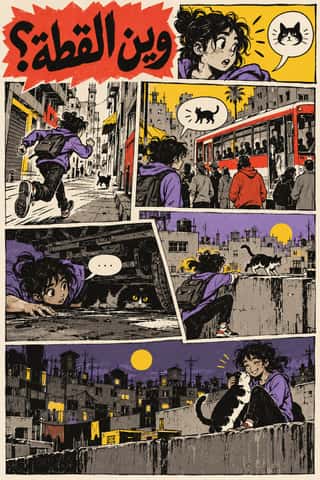
Arab Independent Comics (Samandal, TokTok, Lab619, Skefkef)Adult comics magazines edited by Arab artists' collectives since 2007, at times with a ministry grant or an NGO partner: Samandal in Beirut, TokTok in Cairo, Lab619 in Tunis and Skefkef in Casablanca.
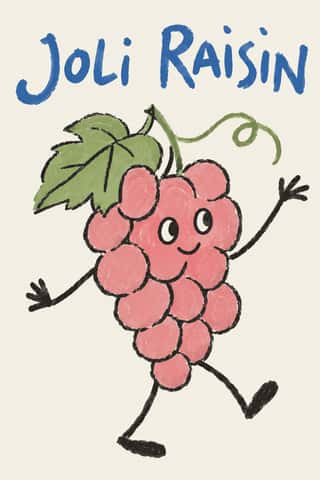
Natural Wine Label ArtThe labels of the natural (low-intervention) wine scene, which grew from Beaujolais into a worldwide network of small growers, bars and importers.
Risograph & Indie Print CultureA contemporary culture of zines, art books, posters and prints made on Japanese Risograph stencil duplicators, whose soy-based spot inks (fluorescent pink, yellow, blue, teal) are laid down one drum at a time.
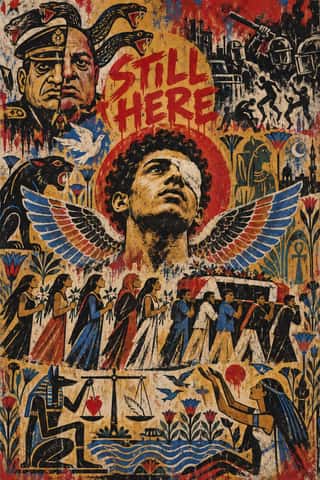
Egyptian Revolutionary Street Art (Mohamed Mahmoud Murals)The street art of Egypt's 2011 revolution and the years after it, when Cairo's walls, above all around Tahrir and Mohamed Mahmoud Street, became what Ammar Abo Bakr called a newspaper.
Syrian Revolution Graphics (Kafranbel Banners & Poster Collectives)Protest graphics of the Syrian uprising from 2011, made to be photographed and shared online rather than to last on a wall.
- Hong Kong Protest Art (Umbrella Movement to the 2019–20 Protests)The graphics of Hong Kong's democracy protests, from the 2014 Umbrella Movement to the national security law of 2020, in two linked media.
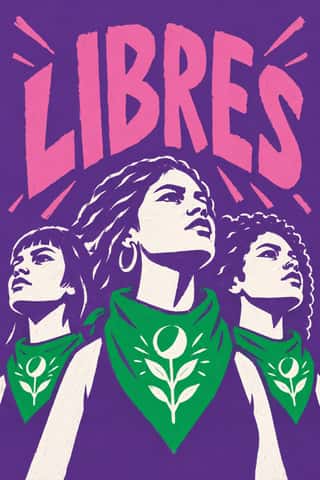
Latin American Feminist Protest Graphics (Ni Una Menos and the Green Wave)The graphics of Latin America's feminist tide, a mass movement since Ni Una Menos (Buenos Aires, 3 June 2015) and the 2018 'marea verde' for legal abortion, though its scarf dates from 2003.
Acid Graphics / New UglyA late-2010s club and poster style that updates 1990s rave graphics with modern 3D tools: liquid-chrome and melting lettering, neo-tribal spikes, wireframes, op-art patterns and acid-green palettes on black, mixed with blackletter and stretched grotesques.
Extinction Rebellion GraphicsThe visual identity of Extinction Rebellion, the climate movement founded in Stroud in 2018, built by its volunteer Art Group as a free kit anyone may print.
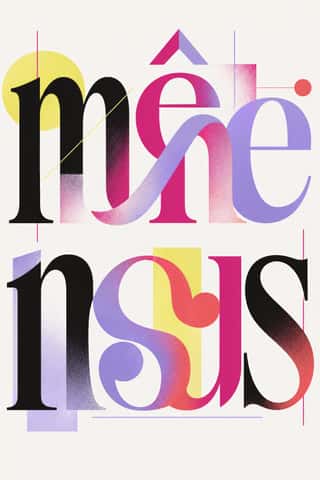
Post-Binary Typography (Bye Bye Binary and Inclusive French Type)A Franco-Belgian type practice that redesigns written French for gender inclusion inside the word.
Chilean Estallido Social Graphics (Revuelta Popular of 2019–20)The street graphics of Chile's popular revolt, from 18 October 2019 to the March 2020 lockdowns, when a leaderless movement covered Santiago's Plaza de la Dignidad, the Alameda and other cities' walls.
Black Lives Matter Street MuralsA single protest slogan painted along the roadway in capitals 20 to 35 feet tall, filling the street from kerb to kerb, so it reads whole only from rooftops, drones and helicopters.
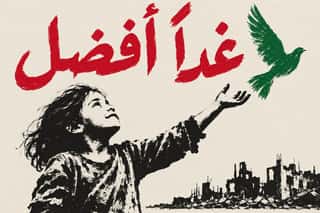
- Palestinian Watermelon and Keffiyeh GraphicsGraphics of Palestinian identity and of solidarity with Palestinians, made by Palestinian artists, the diaspora and supporters worldwide and shared mainly online, above all since the Gaza war began in October 2023.
- Woman, Life, Freedom Protest Graphics (Iran and the Diaspora)Posters and digital graphics made in Iran and the diaspora after Mahsa (Jina) Amini died in morality-police custody in September 2022.
The design choices they share
The choices these styles make more often than the 359 styles in the atlas as a whole, most telling first.
- Rebellious & subversivein 50 of 53
- Screen printingin 30 of 53
- Ironic & self-awarein 31 of 53
- Agitational & persuasivein 35 of 53
- Communal & popularin 46 of 53
- Found & vernacular imageryin 29 of 53
- Collage & layeringin 32 of 53
- Comic & cartoonin 29 of 53