The 38 styles
Oldest first. Each has its own page: its design choices, where it comes from, and real works.
- Bossa Nova Sleeve Modernism (César Villela and Elenco)The cover language of bossa nova, made in Rio by the self-taught designer César Villela, first at Odeon and then on the first sixteen LPs of Aloysio de Oliveira's label Elenco (from 1963), often around Francisco Pereira's photographs.
Cuban Revolutionary Poster (OSPAAAL & ICAIC)The poster culture of revolutionary Cuba, produced for the film institute ICAIC and the solidarity organisation OSPAAAL.
Di Tella Graphic Design (Instituto Torcuato Di Tella)The in-house graphics of Buenos Aires' Instituto Torcuato Di Tella, 1960–1970, led by Juan Carlos Distéfano with Juan Andralis, Rubén Fontana, Norberto Coppola and Carlos Soler.
- Greek Tourism Modernism (EOT)The modernist image of Greece made for the National Tourism Organisation (EOT) by Michalis Katzourakis, its art adviser in 1960-1967, and by Frederick Carabott, who advised it until 1967; in 1962 the two also founded the K&K Athens Advertising Centre.
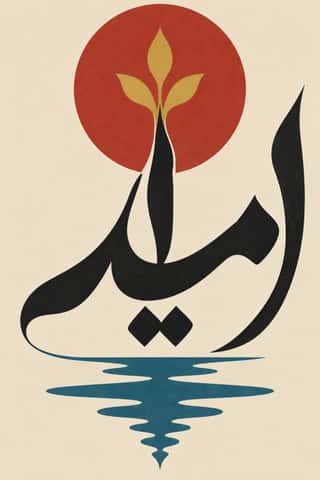
Iranian Modernist Graphic DesignIranian graphic design came of age in the 1960s and 1970s.
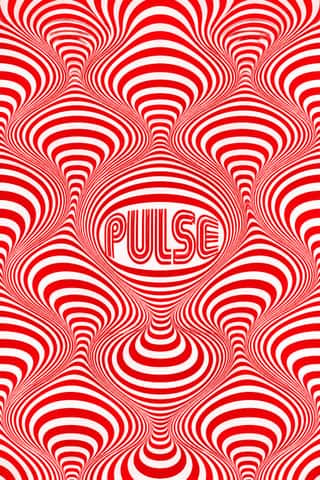
Op Art GraphicsA 1960s style that turned perceptual research into graphic effect: precisely drawn lines, checks, concentric rings and modular grids, usually black and white or complementaries of equal value, that seem to vibrate, swell or move.
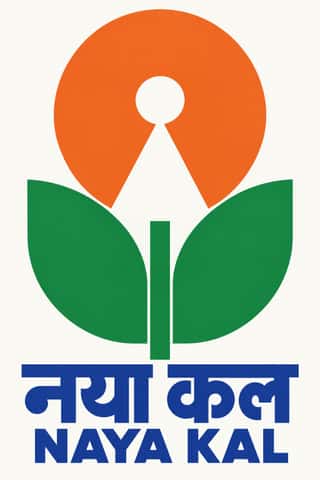
Indian Institutional Modernism (NID)The design culture of independent India's public institutions, banks and broadcasters.
- Casablanca School Graphic ModernismA postcolonial modernism formed at the Casablanca fine-art school under Farid Belkahia, where Mohamed Melehi, Mohammed Chabâa and colleagues set Amazigh rugs and jewellery, painted ceilings and calligraphy beside a Bauhaus-style merging of art, craft and design.
Fluxus Graphics (Maciunas)The house graphics George Maciunas made from 1962 until his death in 1978 for Fluxus, a network of artists who staged events and sold cheap multiples.
Phototype Expressive Typography (Lubalin & U&lc)The display typography of the phototype era, led in New York by Herb Lubalin, his lettering partners John Pistilli, Tom Carnase and Tony DiSpigna, and the International Typeface Corporation.
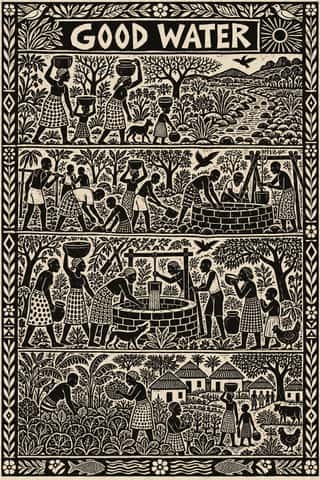
Rorke's Drift LinocutThe prints of the Lutheran art centre that Swedish teachers Peder and Ulla Gowenius started at Ceza Hospital in 1962 and moved to Rorke's Drift in 1963: under apartheid, which denied Black South Africans formal fine-art education, the chief training ground for many Black artists.
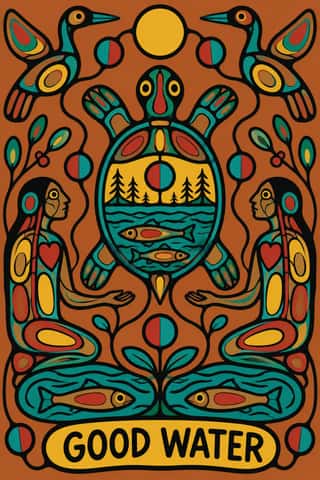
Woodland School (Legend Painting)A school of painting from northwestern Ontario, made public when Norval Morrisseau showed at Toronto's Pollock Gallery in 1962 and carried on by Ojibwe, Odawa, Oji-Cree and Cree artists such as Daphne Odjig and Carl Ray.
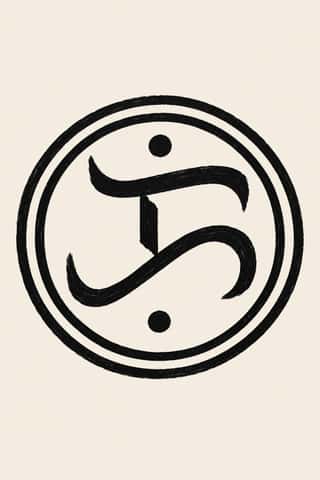
Baybayin Revival GraphicsThe revival of baybayin, the precolonial Tagalog abugida, as a mark of Filipino identity.
Total Design & Dutch FunctionalismThe Dutch strand of systematic modernism took shape when Wim Crouwel, Benno Wissing, Friso Kramer and Paul and Dick Schwarz founded Total Design in Amsterdam in 1963 as the country's first multidisciplinary studio.
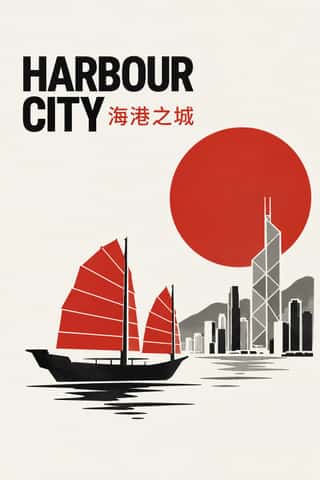
Hong Kong East–West Graphic ModernismThe studio design of Hong Kong from the 1960s, made for banks, developers, trade bodies, hotels and cultural events in a city that had to speak Chinese and English at once.
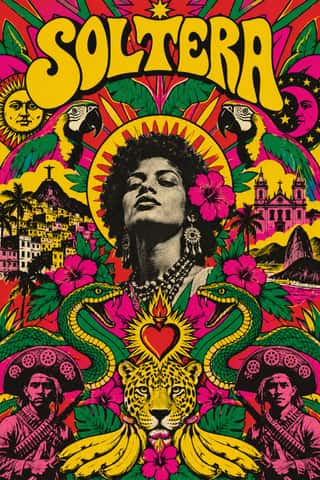
Tropicália Graphic DesignThe graphic language of Brazil's Tropicália, foreshadowed by Rogério Duarte's poster for Deus e o Diabo na Terra do Sol (1964), which already devours Ulm modernism, and set by his 1968 covers for Caetano Veloso and Gilberto Gil.
Angura Theatre PosterThe posters of Japan's underground (angura) theatre from the mid-1960s to the mid-1980s, made for troupes such as Kara Jūrō's Jōkyō Gekijō and Terayama Shūji's Tenjō Sajiki.
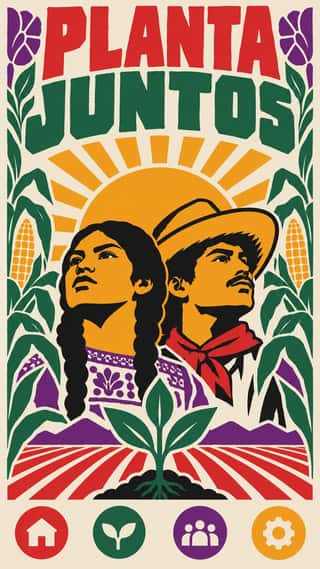
Chicano Screenprint PosterThe screenprinted poster of the Chicano Movement and its heirs, made from the mid-1960s in community workshops across California and the Southwest for farmworker strikes and boycotts, teatro, dances, anti-war marches and immigrant rights.
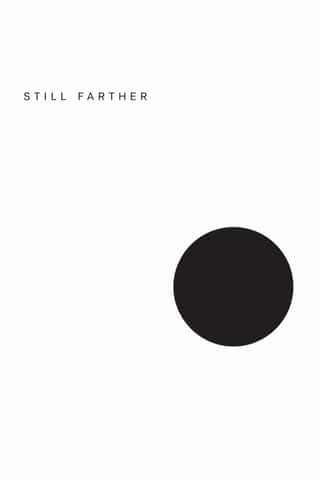
Minimalist Graphic DesignModernism reduced to its barest means, informed by 1960s Minimal art and Japanese emptiness: one image or line of type, vast white or neutral space, a monochrome or near-monochrome palette and meticulous typographic detail.
- Palestinian Resistance PosterThe poster culture of the Palestinian national movement after 1965, issued by the PLO and its factions from Beirut and other Arab capitals for refugee camps, homes and solidarity audiences abroad.
Psychedelic PosterThe concert-poster language of the 1960s counterculture, born in San Francisco's Fillmore and Avalon ballrooms and echoed in London's underground press.
- Mexico 68 Olympic & Metro IdentityThe graphic programme of the 1968 Mexico City Olympics and the city's first Metro line.
Munich 1972 Olympic Design (Otl Aicher)The visual programme Otl Aicher's department made for the 1972 Munich Olympics, the 'cheerful Games' meant to show a democratic, modest West Germany.
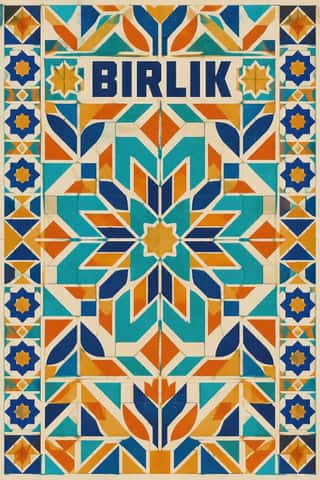
Soviet Central Asian Ornamental ModernismThe monumental art of Soviet Central Asia after the 1966 Tashkent earthquake: a strand of Socialist Realism mixed with Islamic and national ornament.
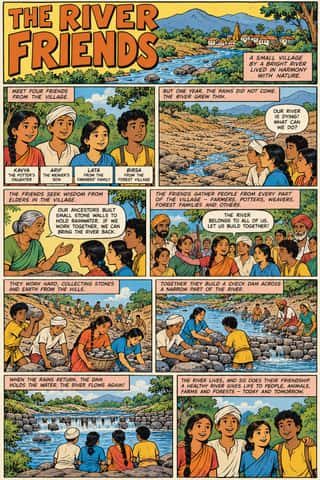
Amar Chitra Katha ComicsThe Bombay comic-book series that from 1967 retold Hindu myth and epic, Buddhist and Jain tales, saints, folk legends, the jests of the court wits Birbal and Tenali Raman, and Indian history for children, in English and Indian languages, with well over 500 titles by the early 1990s.
- Black Panther Party GraphicsThe visual language of the Black Panther Party, created largely by its Minister of Culture, Emory Douglas, for the weekly newspaper The Black Panther.
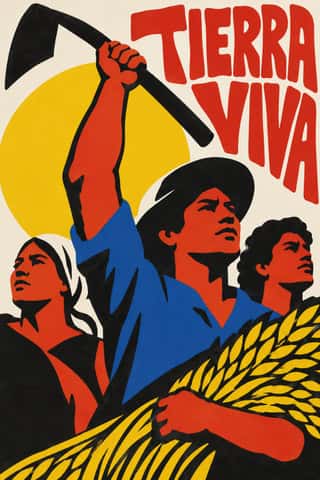
Chilean Unidad Popular & Nueva Canción GraphicsThe graphics of the Nueva Canción Chilena and Allende's Unidad Popular, 1967–1973.
- Picó Sound-System Painting (Colombian Caribbean)The hand-painted fronts of the picós, the giant sound systems that play dances in the barrios of Barranquilla and Cartagena.
AfriCOBRAThe Black Arts Movement collective founded in Chicago in 1968 by Jeff Donaldson, Wadsworth and Jae Jarrell, Barbara Jones-Hogu and Gerald Williams, after OBAC's Wall of Respect mural.
- Atelier Populaire (May '68 Screenprint Poster)The posters of the Atelier populaire, set up when students, teachers and artists occupied the École des Beaux-Arts in Paris on 14 May 1968, until police cleared the school on 27 June.
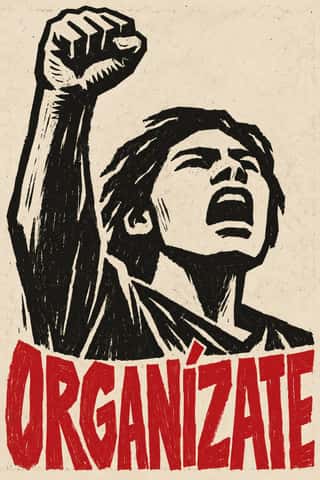
Gráfica del 68 (Mexican Student Movement Graphics)The graphics of the 1968 Mexican student movement, made in days by brigades in the print workshops of San Carlos and La Esmeralda and in improvised school workshops.
Hipgnosis Photographic Concept SleeveThe sleeves the London studio Hipgnosis made for Pink Floyd, Led Zeppelin, Genesis, Peter Gabriel, 10cc and others from 1968 to 1983.
- Swiss Punk / New Wave TypographyA rebellion from inside the Swiss school: Wolfgang Weingart and his Basel students kept the grotesque and the grid but set them in motion with extreme letterspacing, stepped and angled lines, rules and bars, enlarged halftone screens and layered film montage.
Tingatinga PaintingA Tanzanian popular painting school begun in Dar es Salaam by Edward Tingatinga (1932–1972), who from 1968 painted animals, birds and village scenes in glossy bicycle enamel on square hardboard ceiling boards for residents and tourists.
- Ultras Graphics (Curva Banners and Tifo)The graphic language of Italy's organised football supporters, the ultras, from the late 1960s, and of the groups that copied them across Europe, North Africa and beyond.
Underground ComixSelf-published, adults-only comic books from the San Francisco counterculture, made outside the Comics Code on the newsstand comic's format.
ECM Sleeve Aesthetic (Munich)The cover language of the Munich label ECM, made since 1970 by Barbara Wojirsch, Dieter Rehm and later Sascha Kleis and Mayo Bucher with co-founder Manfred Eicher.
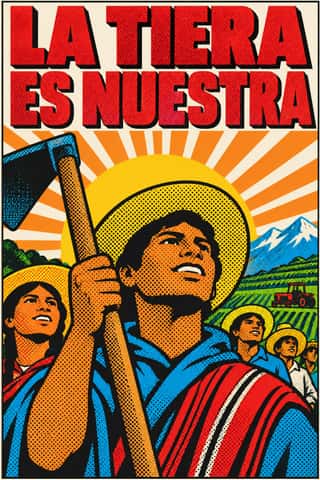
Pop Achorado (Peruvian Agrarian Reform Posters)Posters for the Peruvian military government's agrarian reform, made in Lima from 1969 by Jesús Ruiz Durand and colleagues at the state's reform publicity office.
The design choices they share
The choices these styles make more often than the 359 styles in the atlas as a whole, most telling first.
- Offset printingin 32 of 38
- Screen printingin 15 of 38
- Treated photographyin 15 of 38
- Geometric primitivesin 20 of 38
- Complementary clashin 14 of 38
- Flat fieldsin 35 of 38
- Agitational & persuasivein 18 of 38
- Rebellious & subversivein 18 of 38