Counterculture · 2007–present · Middle East & North Africa
Arab Independent Comics (Samandal, TokTok, Lab619, Skefkef)
Also known as New Arab comics, Arab alternative comics magazines, Arab comics collectives, Arab adult comics
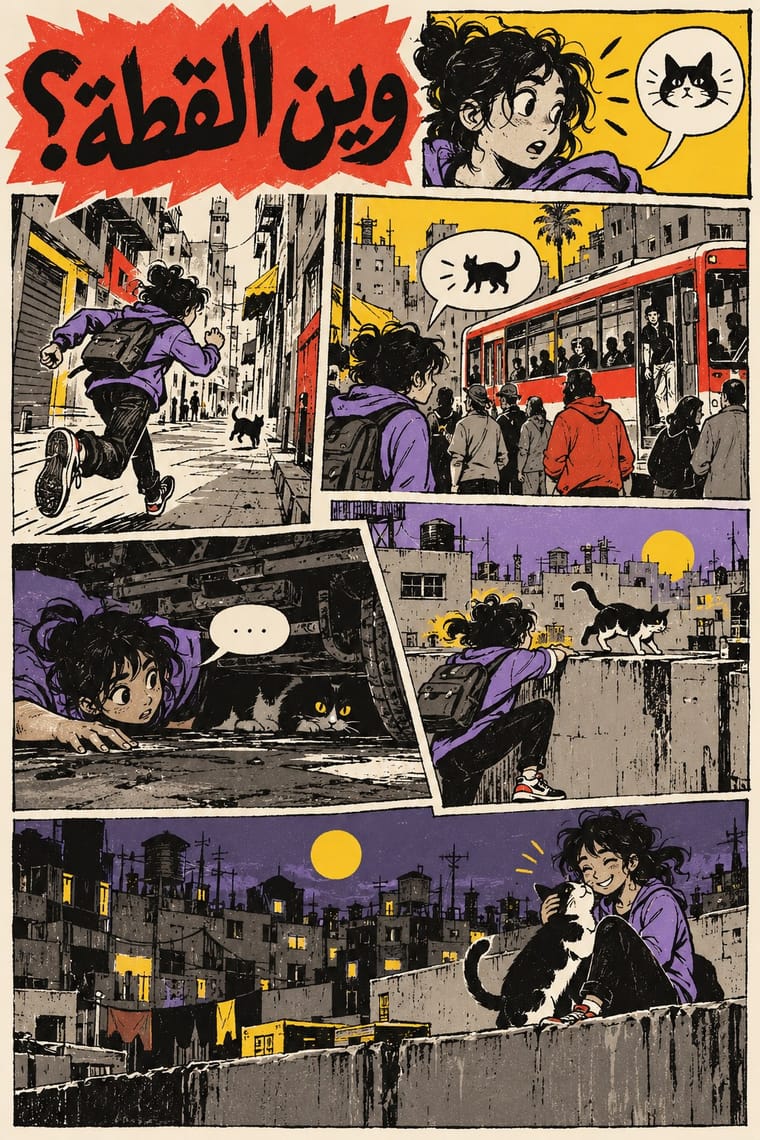
Adult comics magazines edited by Arab artists' collectives since 2007, at times with a ministry grant or an NGO partner: Samandal in Beirut, TokTok in Cairo, Lab619 in Tunis and Skefkef in Casablanca. Each issue gathers many hands and no house style, from grubby brush caricature to fine-art pages, much of it in black ink. Balloons mostly speak street dialect, not classical Arabic, and Samandal ran Arabic right to left beside French and English left to right. Satire aims at police, sect, sex and religion; two comics deemed blasphemous cost Samandal's editors a conviction and fines in 2015.
Make something in this styleGet advice in this styleMix it with another style
Use it with care
These are living, named artists working under real censorship: Samandal's editors were prosecuted and fined over two comics, and an Egyptian cartoonist was arrested in January 2016, so never attribute invented political or religious satire to a real artist or collective, and never ask an image model for their work by name. Draw the contemporary city life these artists draw, not Orientalist shorthand: no camels, veiled women, sheikhs or gunmen as stand-ins for 'Arab', and no pseudo-Arabic squiggles. Have every line of dialect Arabic, Darija or Amazigh written or checked by a fluent speaker; if no fluent reader can check it, leave the balloons empty or letter them in Latin script only. Do not borrow the religious and sectarian jokes as edgy decoration outside the communities that made them.
01
How it works
- Gather many artists in one anthology and let every story keep its own hand and its own lettering, from grubby, atmospheric Cairo streets and hard, patterned lines to wavy brush strokes in frames without a hard grid; hold the issue together with a shared theme and a strong cover, not a house style.
- Letter the balloons by hand, mostly in the dialect of the street, Egyptian, Tunisian or Moroccan Arabic, rather than the classical Arabic of most older Arabic comics, so that the characters talk like the people of the city they walk through.
- When one issue mixes Arabic with French or English, let the Arabic stories read right to left and the Latin ones left to right, joined by mirrored pages that make the reader turn the magazine round with the script, or print a separate edition for each language.
- Draw the pages in black pen, brush and wash, and keep colour for the cover, a bright centrefold or a few Risograph and screen-printed inks, so that a small collective can afford to print the issue itself.
- Aim the satire at authority and taboo, the police, the army, sect, sex and religion, and at the grind of everyday city life, with caricature, dark humour, wordless strips, mock adverts and altered logos; address adults, and say so on the cover.
Beirut, where Lebanese artists founded the trilingual comics magazine Samandal in 2007 ('salamander'; founding editors Fadi Baki, Hatem Imam, Omar Khouri and Lena Merhej); then Cairo, where five young graphic artists launched TokTok in January 2011, two weeks before the 25 January uprising (Shennawy, Makhlouf, Andeel, Hicham Rahma and Tawfik, mentored until his death in 2010 by Mohieddin Ellabbad, a figure of Cairo–Beirut book design); then Tunis and Casablanca (Lab619, first issue March 2013; Skefkef, first issue 2013, by fourteen young Moroccan cartoonists guided by Shennawy), with later Egyptian titles such as Shakmagia (2014) and Garage (2015)
02
Its design choices
From Stylogeny’s vocabulary of design choices: defining choices make the style, characteristic ones are usual, occasional ones turn up now and then.
- Layout & composition
- Space & hierarchy
- Typography
- Colour
- Form & shape
- Surface & texture
- Ornament
- Imagery
- Medium & production
- Tone & intent
- Avoids
- Authoritative & institutional, Luxurious & glamorous, Calm & contemplative, Gloss & highlights, Chrome & 3D render, Abundant decoration
Palette
#f1ece1#161514#8a857c#e2463a#f0c419#9c8ac4
Typefaces
Hand-lettered colloquial Arabic balloons
Egyptian ʿāmmiyya in TokTok and Garage, Tunisian in Lab619, Moroccan darija, with Amazigh, in Skefkef
Hand-lettered Latin-script balloons
French and English in Samandal's trilingual issues, read left to right against the Arabic stories' right to left
Block-faced Arabic text
Barrack Rima's 'Nap Before Noon', Samandal
Three-dimensional cover title lettering
Jérôme Dubois's screen-printed covers for Samandal's Topia, 2017
Known for
Samandal no. 7, the 'Revenge' issue
(Beirut, December 2009, financed by Lebanon's Ministry of Culture as part of the Beirut World Capital of Books campaign), with Lena Merhej's 'Recipes for Lebanese Revenge' and Valfret's 'Ecce Homo', the two comics for which editors Hatem Imam, Omar Khouri and Fadi Baki were charged and, in 2015, convicted and fined
Barrack Rima, 'Nap Before Noon' (Samandal)
wavy brush strokes, frames without a hard grid and block-faced Arabic text
Samandal, Topia (Beirut, 2017), edited by Raphaelle Macaron and designed by Studio Safar
separate Arabic, French and English editions, printed by Risograph under three screen-printed covers by Jérôme Dubois
Samandal, Experimentation (Beirut), winner of the Prix de la bande dessinée alternative at Angoulême in 2019
TokTok no. 1 (Cairo, January 2011)
44 pages and 500 copies at LE5, which sold out within two hours of its launch at the Townhouse gallery, with Shennawy's cover of a policeman writing a fine, Hicham Rahma's interpretation of Ibrahim Aslan's 'White and Black', mock adverts and altered logos
TokTok no. 7 (Cairo, 2012), devoted to Egyptian girls and women, with Hicham Rahma's frameless 'Al-ʿAr bi-l-Zayt al-Harr' and the wordless strip 'Shawk' (Thorn), signed Rim, whose panels grow larger towards the end
TokTok no. 11, Mohamed Salah's 'Friday of Anger'
Cairo, 2014
Lab619 no. 1 (Tunis, March 2013)
the first issue of a magazine billed as a quarterly, by a collective that began with seven members, sold for 2 dinars and also put online free
03
Make something in this style
Say what you need, and Stylogeny’s image studio draws it from Arab Independent Comics (Samandal, TokTok, Lab619, Skefkef)’s design choices and checks it against them. It takes about a minute, and you get a link to share.
04
Where it comes from, and what it’s close to
Before it
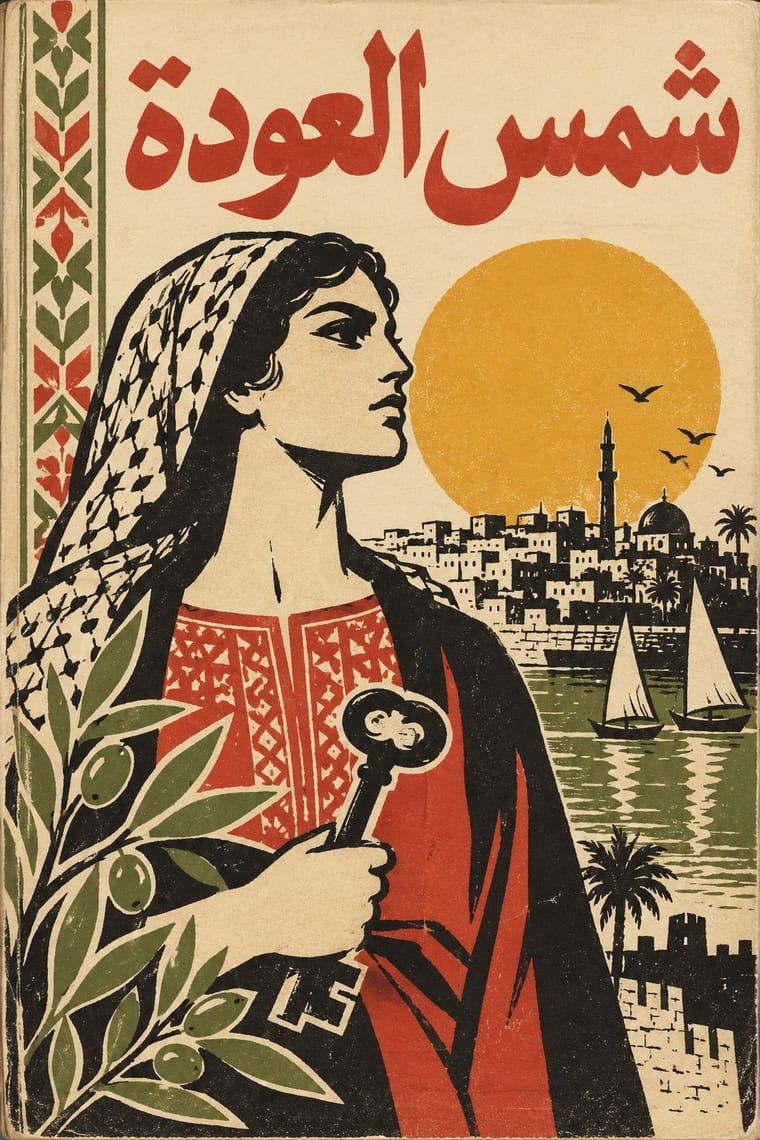
The style it grew out of, and the styles it borrowed from.
After it
The styles that grew out of it.
No later style in the atlas grew out of it yet.
Alike in its design choices
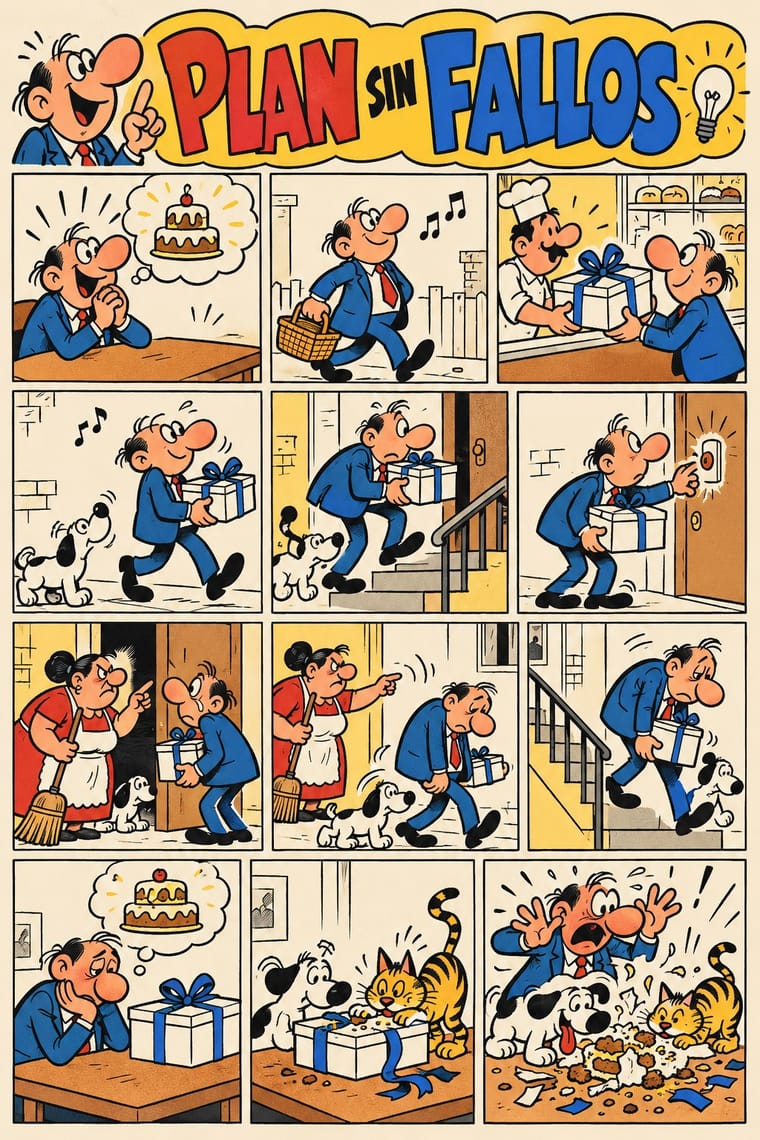
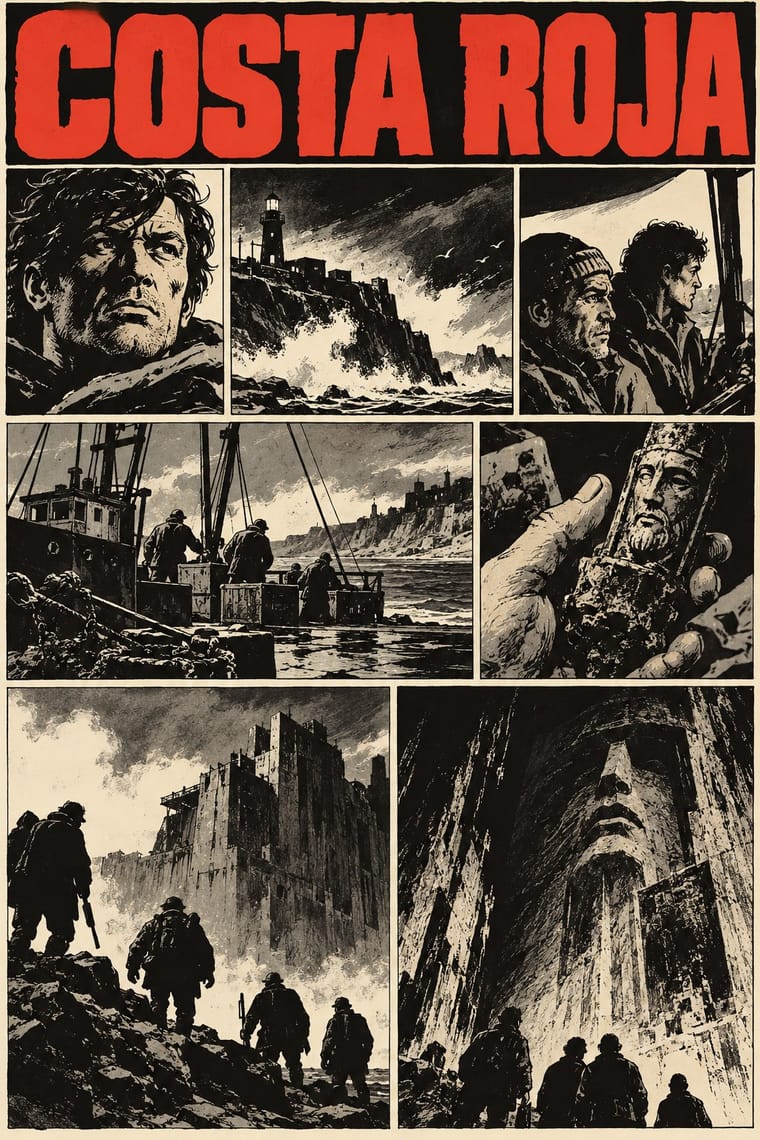
Styles that make many of the same choices, related or not, besides those above.
05
Sources
- Madeleine Morley, 'After a Controversial Lawsuit, Lebanese Comic Publisher Samandal Has Returned Stronger Than Ever', AIGA Eye on Design, 8 June 2018, https://eyeondesign.aiga.org/after-a-controversial-lawsuit-lebanese-comic-publisher-samandal-has-returned-stronger-than-ever/ (founding editors; earlier issues joining right-to-left Arabic and left-to-right French and English; Topia 2017, Studio Safar, Risograph, screen-printed covers by Jérôme Dubois, 3D typography; a fine of 20 million Lebanese liras each)
- George Jad Khoury, 'Rebellion Resurrected: The Will of Youth Against History', The Markaz Review, 15 August 2021, https://themarkaz.org/?p=3527 (Samandal's mirror pages, turned in different directions depending on the alphabet; TokTok's texts 'exclusively written in Arabic, both classical or dialectal'; TokTok, Lab619, Skefkef, Garage, Masaha, Habka and their dialects; a new-wave aesthetic inspired by European comics, Japanese manga and American animated series; caricature, comics and graffiti; CairoComix)
- Lina Ghaibeh, 'Telling Graphic Stories of the Region: Arabic Comics after the Revolution', IEMed Mediterranean Yearbook 2015, pp. 324ff., https://www.iemed.org/publication/telling-graphic-stories-of-the-region-arabic-comics-after-the-revolution/ (TokTok's five founders; Makhbar 619; Skef Kef; Shakmagia; local dialects making a comeback during the uprisings, where most older comics used classical Arabic)
- Jacob Høigilt, 'Egyptian Comics and the Challenge to Patriarchal Authoritarianism', International Journal of Middle East Studies 49/1 (2017), pp. 111–131, https://www.cambridge.org/core/product/4E1F66FE0C8A370C6F768D057FCAD67F (TokTok nos. 5, 7 and 11; Shakmajiyya, started in 2014 with the support of the feminist organisation Nazra; Dushma, made with the Hisham Mubarak Law Center in 2011–12; Garage; Hanan al-Kararji)
- Jacob Høigilt, Comics in Contemporary Arab Culture: Politics, Language and Resistance (London: I.B. Tauris, 2019)
- Jenifer Evans, 'Tok Tok: A magazine marks a new era for Egyptian comics', Egypt Independent, 13 January 2011, https://egyptindependent.com/tok-tok-magazine-marks-new-era-egyptian-comics/ (issue 1: 44 pages, 500 copies at LE5; the five founders; contributors' drawing styles; Rahmah's interpretation of Ibrahim Aslan's story; mock adverts and altered logos; Mohieddin Ellabbad, mentor to the founders until his death the year before; Andeel: 'Superhero culture is foreign'; Sindbad and Samir)
- Jonathan Guyer, 'Comic Relief', The Cairo Review of Global Affairs, Winter 2014, https://www.thecairoreview.com/midan/comic-relief/ (TokTok always penned in colloquial dialects; bright centrefold; wordless strips; drawing on the aesthetics of Mad Magazine and Walt Disney)
- Jonathan Guyer, 'Understanding Arab Comics', Los Angeles Review of Books, 9 July 2016, https://lareviewofbooks.org/article/understanding-arab-comics/ (Barrack Rima's 'Nap Before Noon', in block-faced Arabic; the Muqtatafat anthology, 13 of its 14 chapters in black and white)
- Islah Bakhat, 'Arab comic strips experience their own spring', swissinfo.ch, 28 March 2013, https://swissinfo.ch/eng/culture/arab-comic-strips-experience-their-own-spring/35337848 (Samandal in Arabic, French and English; TokTok in Egyptian vernacular, its cover styled as a medicine to keep out of the reach of children; Merhej on refusing to write about the war)
- 'Drawing dangerously: Arab comics push the boundaries', Al Jazeera, 22 April 2016, https://www.aljazeera.com/news/2016/4/22/drawing-dangerously-arab-comics-push-the-boundaries (Samandal no. 7, December 2009, financed by Lebanon's Ministry of Culture as part of the Beirut World Capital of Books campaign; 'Ecce Homo' and 'Recipes for Lebanese Revenge'; charges including blasphemy; Lab619; Islam Gawish's arrest)
- Alexander Liddington-Cox, 'Accused of Blasphemy, Lebanese Comic Book Combats Censorship', Egyptian Streets, 17 December 2015, https://egyptianstreets.com/2015/12/17/accused-of-blasphemy-lebanese-comic-book-combats-censorship/ (issue 7, 'Revenge'; the four charges; guilty verdict of April 2015; a combined fine of 30 million Lebanese pounds, against AIGA's 20 million each, so the amount is not settled)
- American University of Beirut, Arabic comics online exhibit, 'Protest and Contention', https://online-exhibit.aub.edu.lb/exhibits/show/comics/comics-in-the-curriculum-/arab-identity/protest-and-contention (TokTok no. 11; Skefkef no. 3)
- American University of Beirut, Rada and Mutaz Sawaf Center for Arab Comics Studies, 'Wled Caza: Engaged Moroccan Comics and Street Art' (2018), https://www.aub.edu.lb/cacs/Pages/Engaged-Morrocan-Comics-18.aspx (the Skefkef collective in Casablanca, working across comics, street art and music; Moroccan dialect and Amazigh)
- 'Skefkef : un peu gluant mais appétissant', La Vie éco, 20 September 2013, https://www.lavieeco.com/?p=47585 (Skefkef's first issue, by fourteen young Moroccan cartoonists guided by TokTok's Mohamed Shennawy; short stories in darija, in black and white)
- 'Le collectif de bande dessinée LAB619 de retour avec un nouveau numéro', Webdo, 25 August 2014, https://www.webdo.tn/fr/actualite/culture/collectif-bande-dessinee-lab619-nouveau-numero/116916/ (Lab619's first issue, March 2013, put online free; the collective born two years earlier)
- 'Lab 619 : Nouveau magazine de bande dessinée', Tuniscope, https://www.tuniscope.com/article/27820/kiosque/tech/bande-dessinee-312715 (a quarterly comics magazine dated March 2013, sold for 2 dinars; a collective that began with seven members)
- Festival international de la bande dessinée d'Angoulême, Prix de la bande dessinée alternative, 2019 winner Experimentation (Samandal, Beirut), as listed at https://fr.wikipedia.org/wiki/Prix_de_la_bande_dessinée_alternative
- 'Goethe-Institut : Résidence de création à Dar Eyquem', Kapitalis, 13 September 2017, https://kapitalis.com/tunisie/2017/09/13/goethe-institut-residence-de-creation-a-dar-eyquem/ (a Goethe-Institut residency at Dar Eyquem, Hammamet, for Lab619's ninth issue, 'Identités', to be printed by Risograph and bound by hand, its release planned for December 2017)
How Stylogeny researches and checks a style: where the facts come from.