Rational modernism · 1930–present · Northern Europe
Scandinavian Functionalism
Also known as Funkis, Nordic modernism, Scandinavian design
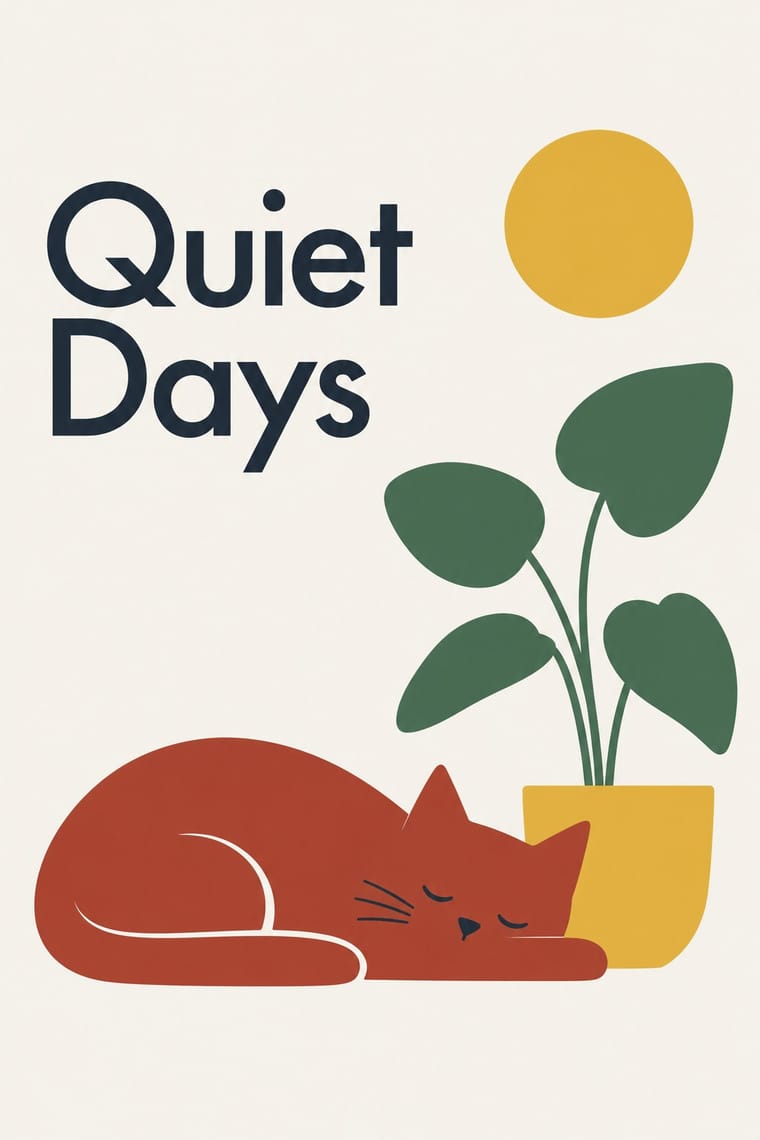
Nordic functionalism (funkis) arrived in graphic form with Sigurd Lewerentz's posters and winged emblem for the 1930 Stockholm Exhibition. It adapted Bauhaus rationalism to a social-democratic ideal of beautiful everyday things for everyone. Its graphic language is modernism with warmth: clear sans-serif or humane serif type, generous space, friendly simplified symbols and colours taken from nature, applied to public services, consumer goods and national identities.
Make something in this styleGet advice in this styleMix it with another style
01
How it works
- Design for everyday use and public service first; clarity should serve ordinary people rather than impress them.
- Soften modernist geometry with rounded forms, simple pictorial symbols and a touch of humour.
- Pair a clean sans-serif with generous margins and calm, light grounds.
- Take colour from nature and craft (muted blue, birch, forest green, brick red) and add one bright accent.
- Keep materials honest: uncoated paper and plain print, with no simulated gloss.
Stockholm, Copenhagen, Helsinki and Oslo
02
Its design choices
From Stylogeny’s vocabulary of design choices: defining choices make the style, characteristic ones are usual, occasional ones turn up now and then.
- Layout & composition
- Space & hierarchy
- Typography
- Colour
- Form & shape
- Surface & texture
- Imagery
- Medium & production
- Tone & intent
- Avoids
- Abundant decoration, Horror vacui, Gloss & highlights, Chrome & 3D render, Fluorescent & neon, Complementary clash, Ornamented display, Agitational & persuasive
Palette
#f6f3ec#1f2a37#a63a2a#3e6b50#e3b53a
Typefaces
Futura
Berling Antikva
Karl-Erik Forsberg
Akzidenz-Grotesk
Helvetica
Known for
Sigurd Lewerentz
Stockholm Exhibition poster and winged emblem, 1930
Olle Eksell
Mazetti 'Ögon Cacao' identity, 1956; Design = Ekonomi, 1964
Karl-Erik Forsberg
Berling Antikva typeface, 1951–58
Stockholm Design Lab
SAS identity
Neue Design Studio
Norwegian passport, competition won 2014
03
Make something in this style
Say what you need, and Stylogeny’s image studio draws it from Scandinavian Functionalism’s design choices and checks it against them. It takes about a minute, and you get a link to share.
04
Where it comes from, and what it’s close to
Before it
The style it grew out of, and the styles it borrowed from.


Alike in its design choices
Styles that make many of the same choices, related or not, besides those above.


05
Real works
Artefacts in museums, libraries and archives that show the style, linked at their source.
- DSB (Danish State Railways)Per Arnoldi · 1975 · The Museum of Modern Art, New York (854.1979.1)
- Teacup and saucer, 'Eva' service, with the Mazetti 'ögon' (eyes) borderOlle Eksell (Mazetti eye mark, 1955); Karlskrona Porslinsfabrik (manufacturer) · 1957–1958 · Blekinge Museum, Karlskrona (Blm 23150)
- Poster, 'Stockholmsutställningen 1930' (Stockholm Exhibition 1930)Sigurd Lewerentz; printed by Ivar Haeggströms boktryckeri AB · designed 1929 · Nationalmuseum, Stockholm (NMK 151/2012)
- Karhula-IittalaTimo Sarpaneva · c. 1955 · The Museum of Modern Art, New York (1537.2000)
06
Sources
- Nationalmuseum Stockholm, Sigurd Lewerentz, poster for the Stockholm Exhibition 1930 (https://collection.nationalmuseum.se/en/collection/item/138967/)
- Olle Eksell, Design = Ekonomi (1964)
- Widar Halén & Kerstin Wickman (eds.), Scandinavian Design Beyond the Myth (2003)
How Stylogeny researches and checks a style: where the facts come from.