Traditions & vernacular · 1600–present · Northern Europe
Icelandic Magical Staves ( Galdrastafir )
Also known as Galdrastafir, Icelandic magical sigils, Vegvísir and Ægishjálmur staves
Single-line sigils drawn in ink in Icelandic grimoires, each with a named purpose: the Ægishjálmur (helm of awe) for fear and victory, the Vegvísir for finding the way, the Lukkustafir for luck. Built from crossed and branching arms ending in forks, crosses and rune-like bars, often inside a circle, they were copied and varied by hand. Today they circulate as tattoos, t-shirts and pendants, often wrongly sold as Viking.
Make something in this style Get advice in this style Mix it with another style
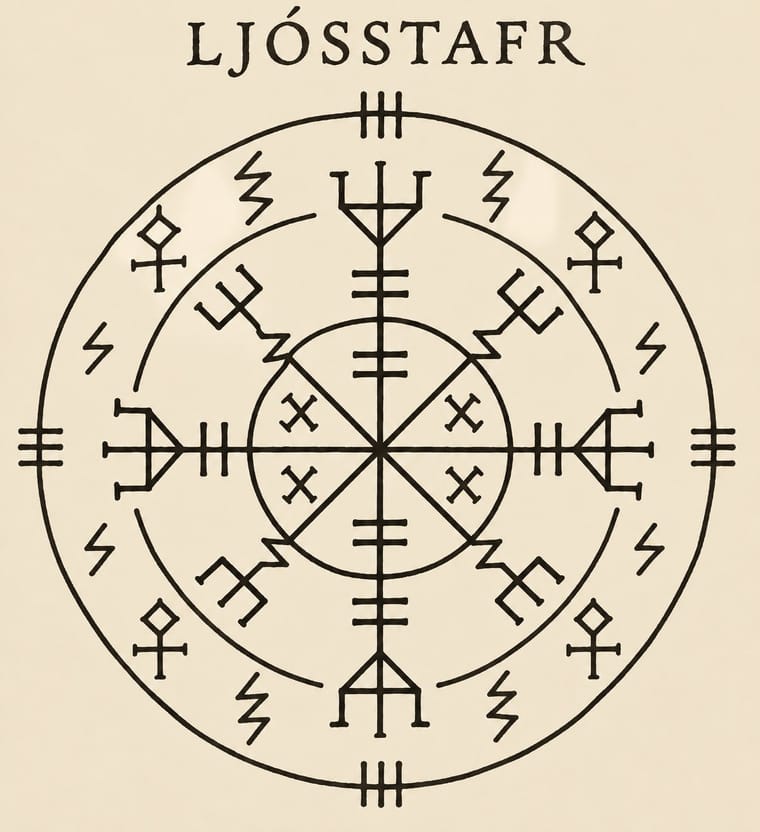
Use it with care
Icelandic magical staves are historically real occult practice, recorded in grimoires, and are now a living part of Icelandic heritage and of Nordic neo-pagan practice. The Vegvísir has no known attestation before 1860 and is often falsely sold as a Viking compass, and the Ægishjálmur has been taken up by some extremist groups, including in the logo of a Swedish party. Do not present them as Viking Age symbols, do not use them as neutral decoration for brands tied to hate or far-right politics, credit the manuscripts and Icelandic sources, and do not invent new staves and claim they work. Date it honestly: these are a post-Reformation Icelandic book tradition, not a Viking Age emblem.
01
Its picture in other colours
Change a colour and every picture on this page follows. It happens in your browser, from the same pictures: nothing new is made or saved.
Choose a colour to change it
-
#efe6d2 -
#1f1a15 -
#5b3a29 -
#8a2f26 -
#7b8a8e
A faded colour isn’t in these pictures, so changing it changes nothing.
Light and dark stay where they are; greys hardly move.
More colours: any style’s, or your own
The pictures show the style’s own colours.
02
Make something in this style
Say what you need, and Stylogeny’s image studio draws it from Icelandic Magical Staves (Galdrastafir)’s design choices and checks it against them. It takes about a minute, and you get a link to share.
03
How it works
Palette
-
#efe6d2ground · 77% -
#1f1a15not in its pictures -
#5b3a29not in its pictures -
#8a2f26not in its pictures -
#7b8a8eink · 15%
Shares measured from its picture. The ground is what the pictures sit on (of the colours covering most, the most neutral), the ink stands out from it most, the rest are accents.
Typefaces
-
Icelandic hand-written manuscript scripts (post-medieval cursive) of the grimoires
-
Runic letters and rune-like bars used as terminals and in the instructions
-
Latin-alphabet handwriting for stave names and recipes
- Draw the stave as one continuous ink line: crossed, forked and branching strokes of even weight, with no fill, shading or outline.
- Build it around a centre, with arms radiating or crossing at a single point, and close it with a ring or let it stand alone on the page.
- End the arms in tridents, crosses, bars or rune-like ticks so that the terminals do the decorating.
- Give each stave one named purpose and write the name or instruction beside it in plain hand-written text, as a recipe for use.
- Set staves in a grimoire page as small sigils among lines of handwriting and instructions, not as logos, and let hand variation between copies stand: no stave has one fixed form.
Iceland: sigils copied into grimoires and manuscripts of the 17th century and later (Galdrabók; Galdrakver, Lbs 143 8vo, c. 1670) and into later compilations such as the Huld manuscript (Geir Vigfússon, Akureyri, 1860; National Library of Iceland, ÍB 383 4to)
Change it with an idea. Any of the 73 moves that make a design say something can go on this style.
04
Its design choices
From Stylogeny’s vocabulary of design choices: defining choices make the style, characteristic ones are usual, occasional ones turn up now and then.
- Layout & composition
- Space & hierarchy
- Colour
- Form & shape
- Surface & texture
- Medium & production
- Avoids
- Abundant decoration, Floral & vegetal, Horror vacui, Full polychrome, Gradients, Naturalistic depiction, Skeuomorphic material, Straight photography
How its pictures are made Drawn & painted, Systematic
Kind of picture: Drawn & painted · Systematic
Known for
-
Galdrabók (17th century and later), an Icelandic grimoire that gives instructions for helms of awe and other staves
-
Galdrakver (Lbs 143 8vo, c. 1670, National Library of Iceland), which describes a 'Terror Helm' to be marked on the forehead
-
Huld manuscript (Geir Vigfússon, Akureyri, 1860; National Library of Iceland, ÍB 383 4to), which holds the earliest known appearance of the Vegvísir, on page 60
-
Ægishjálmur (helm of awe), a stave drawn in many non-standard forms across the manuscripts
-
Museum of Sorcery and Witchcraft (Galdrasýning á Ströndum), Hólmavík, which shows the history of Icelandic sorcery including its magical staves
05
Where it comes from, and what it’s close to
Nothing earlier is recorded: in the atlas it is a starting point.
Icelandic Magical Staves (Galdrastafir) 1600–present
No later style in the atlas grew out of it yet.
Alike in its design choices
06
Combine it with
Styles Icelandic Magical Staves (Galdrastafir) pairs well with or plays against, from the research. Each is worked out as a combination: which style gives the type, the colours and the forms.
- European Heraldry Contrasts · Heraldry fixes an emblem by blazon and fills it with colour on a shield; a stave has no fixed form, no colour and no blazon.
- Thai Yantra (Yant) Diagrams Pairs well · Both are protective diagrams copied by hand for a named use; a yantra packs script into closed shapes, while a stave is one open line, so set them side by side to see how each encodes purpose.
- Viking Age Animal Styles (Borre, Jellinge, Mammen, Ringerike, Urnes) Contrasts · Animal styles are medieval carved interlace; staves are later, written, linear and have no animals, so do not blend them to make a Viking look.
07
Often taken for
Icelandic Magical Staves has no real works recorded yet, so these are its nearest styles by its choices alone, with the choices that tell them apart.
-
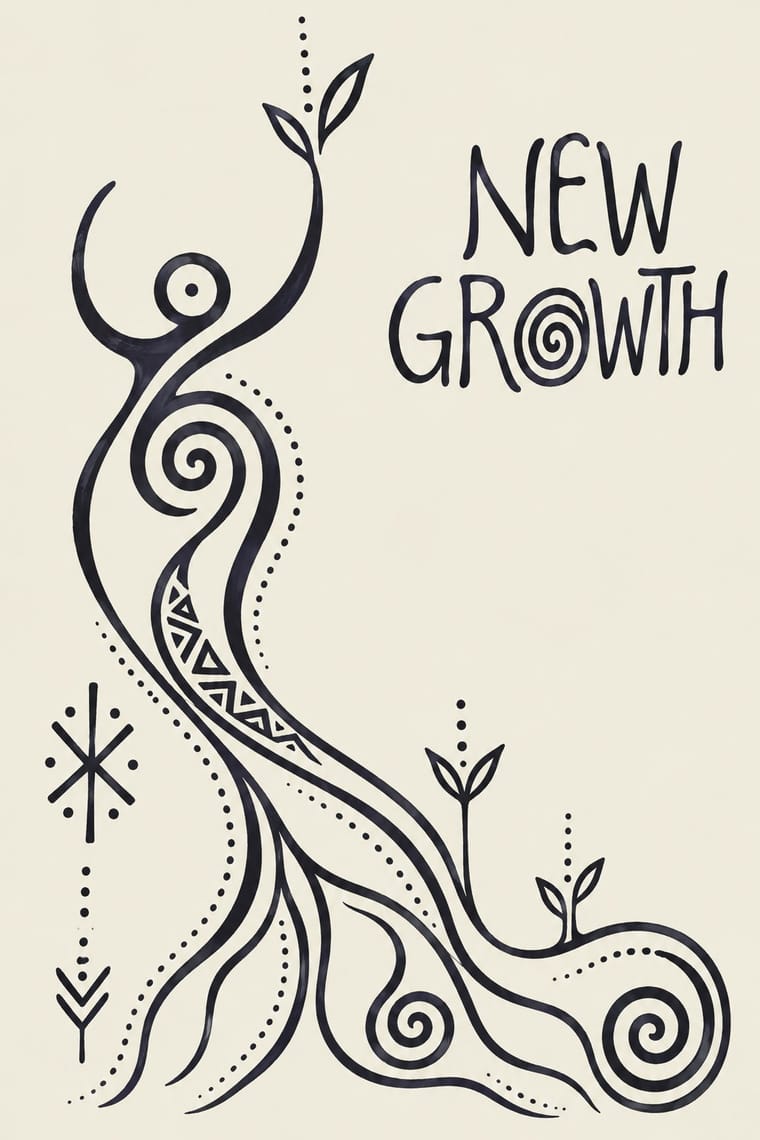
Uli & Nsibidi Line and Sign Tradition
Uli & Nsibidi Line and Sign Tradition is one of Icelandic Magical Staves’s nearest styles by choices; no real work of either fits the other better.
Choices that tell Icelandic Magical Staves and Uli apart Choice Icelandic Magical Staves Uli Radial & concentric defining — Dynamic asymmetry — defining Single focal point defining — Biomorphic curves — characteristic Central symmetry characteristic — No shared descent in the atlas: they reached these choices separately.
-
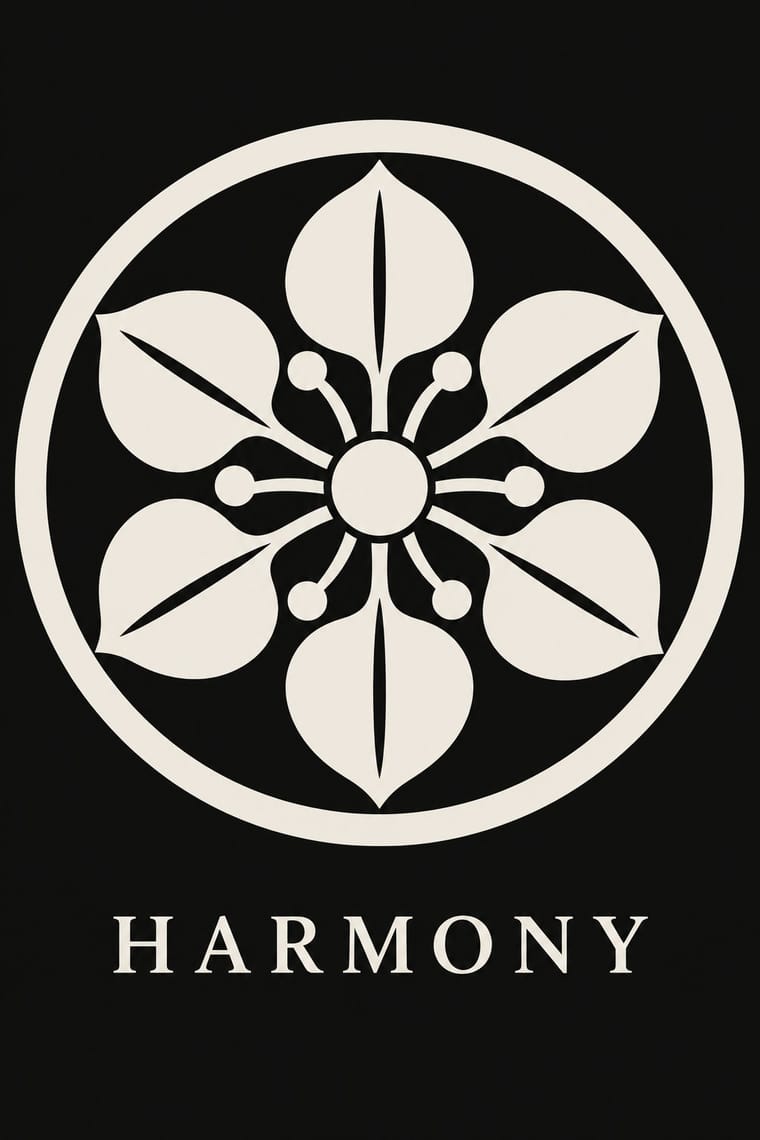
Kamon (Japanese Family Crests)
Kamon is one of Icelandic Magical Staves’s nearest styles by choices; no real work of either fits the other better.
Choices that tell Icelandic Magical Staves and Kamon apart Choice Icelandic Magical Staves Kamon Non-representational defining occasional Floral & vegetal avoids characteristic Line illustration defining occasional Emblems & badges — defining Angular & zigzag characteristic — No shared descent in the atlas: they reached these choices separately.
-
Thai Yantra (Yant) Diagrams
Thai Yantra Diagrams is one of Icelandic Magical Staves’s nearest styles by choices; no real work of either fits the other better.
Choices that tell Icelandic Magical Staves and Thai Yantra Diagrams apart Choice Icelandic Magical Staves Thai Yantra Diagrams Icons & pictograms defining — Horror vacui avoids characteristic Pictogram defining occasional Diagram & data — defining Angular & zigzag characteristic — No shared descent in the atlas: they reached these choices separately.
-
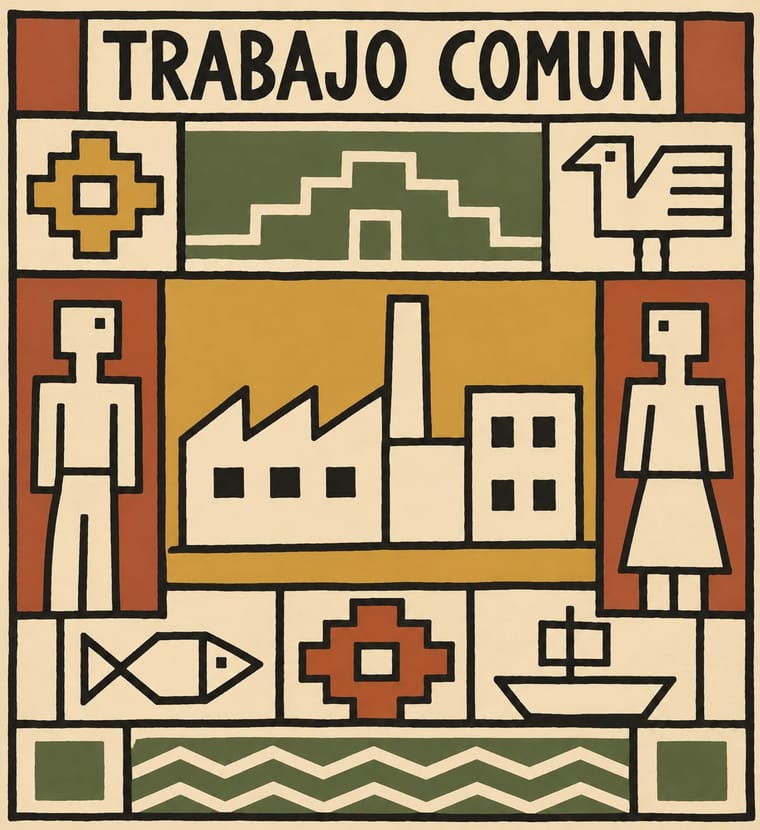
Uruguayan Constructive Symbol Graphics (Círculo y Cuadrado)
Uruguayan Constructive Symbol Graphics is one of Icelandic Magical Staves’s nearest styles by choices; no real work of either fits the other better.
Choices that tell Icelandic Magical Staves and Uruguayan Constructive Symbol Graphics apart Choice Icelandic Magical Staves Uruguayan Constructive Symbol Graphics Non-representational defining — Rectilinear — defining Radial & concentric defining — Framed panels — defining Single focal point defining — No shared descent in the atlas: they reached these choices separately.
— means the choice isn’t among the style’s recorded choices. Critics recorded each work’s choices with the styles’ descriptions in view, so this shows whether the descriptions hold together, not proof that they are right.
08
Sources
- Wikipedia, 'Icelandic magical staves' (https://en.wikipedia.org/wiki/Icelandic_magical_staves)
- Wikipedia, 'Vegvísir' (https://en.wikipedia.org/wiki/Vegv%C3%ADsir)
- Wikipedia, 'Ægishjálmur (occult symbol)' (https://en.wikipedia.org/wiki/%C3%86gishj%C3%A1lmur_(occult_symbol)), citing Bauer and Pesch (2023)
2 more sources
- Museum of Sorcery and Witchcraft, Hólmavík (https://www.galdrasyning.is/en)
- National Library of Iceland, manuscripts ÍB 383 4to (Huld) and Lbs 143 8vo (Galdrakver)
How Stylogeny researches and checks a style: where the facts come from.