Traditions & vernacular · c. 1100–present · East Asia
Nianhua & Chinese Folk Print
Also known as New Year pictures, Chinese folk woodblock prints, Door gods (menshen)
Woodblock pictures bought each New Year and pasted on doors, walls and kitchen shrines to invite luck and ward off harm: paired door gods, plump babies with carp, the Kitchen God, opera scenes and auspicious rebuses. A black keyline block is overprinted or hand-coloured in saturated red, green, yellow and pink, and compositions are dense, frontal and often mirrored in pairs.
Make something in this styleGet advice in this styleMix it with another style

01
How it works
- Print a black keyline block first, then add flat colour blocks or hand-colour in saturated red, green, yellow and pink.
- Mirror compositions as left-right pairs for doorways, with the figures turned towards each other.
- Fill the frame with figures, auspicious objects and pattern, leaving almost no empty ground.
- Encode wishes as visual rebuses (a fish for surplus, a bat for fortune) and add a short auspicious inscription.
- Draw plump, rounded, smiling figures with large heads and clear outlines.
Kaifeng and Pingyang; later Yangliuqing (Tianjin), Taohuawu (Suzhou), Yangjiabu (Weifang), Zhuxianzhen and Mianzhu, China
02
Its design choices
From Stylogeny’s vocabulary of design choices: defining choices make the style, characteristic ones are usual, occasional ones turn up now and then.
- Layout & composition
- Space & hierarchy
- Colour
- Surface & texture
- Ornament
- Medium & production
- Tone & intent
- Avoids
- Generous white space, Dynamic asymmetry, Monochrome, Non-representational, Ornament-free, Straight photography
Palette
#c8252c#f2c230#2f8a4e#e5739a#1a1a1a#f1e6cf
Typefaces
Kaishu
regular brush script
Lishu (clerical script) for auspicious couplets
Carved Songti (Ming-style) woodblock characters
Known for
Yangliuqing workshops, Tianjin
printed keyline, hand-painted colour
Taohuawu workshops, Suzhou
Yangjiabu workshops, Weifang, Shandong
Zhuxianzhen workshops, Kaifeng, Henan
Mianzhu workshops, Sichuan
Four Beauties (Si mei tu), Pingyang print excavated at Khara-Khoto
State Hermitage Museum
03
Make something in this style
Say what you need, and Stylogeny’s image studio draws it from Nianhua & Chinese Folk Print’s design choices and checks it against them. It takes about a minute, and you get a link to share.
04
Where it comes from, and what it’s close to
Before it
The style it grew out of, and the styles it borrowed from.
Nothing earlier is recorded: in the atlas it is a starting point.

After it
The styles that grew out of it.


Alike in its design choices
Styles that make many of the same choices, related or not, besides those above.
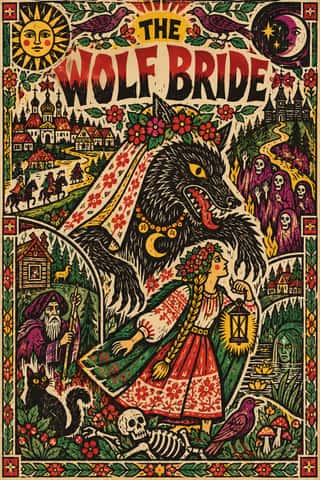
- Đông Hồ & Hàng Trống Folk Prints71% alike
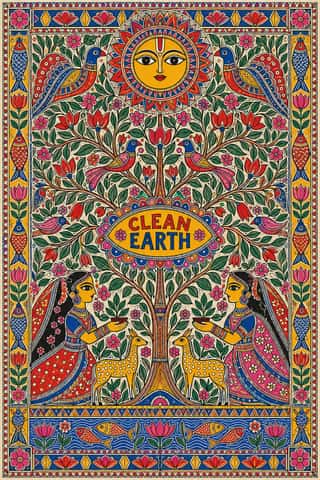
- Senegalese Sufi Devotional Imagery (Souwère Glass Painting and Amadou Bamba Portraits)64% alike
- Persian Popular Narrative (Lithographs & Coffeehouse Painting)63% alike


05
Real works
Artefacts in museums, libraries and archives that show the style, linked at their source.
- Zhao Gongming (God of Wealth) riding a black tiger, Taohuawu door-god printAnonymous Taohuawu workshop, Suzhou · Qing dynasty (Shanghai Museum) · Shanghai Museum (via Wikimedia Commons)
- Four Beauties (Suichao yaotiao cheng qingguo zhi fangrong)Ji family workshop of Pingyang · Jin dynasty, 12th–13th century (Commons gives 13th–14th century) · State Hermitage Museum, St Petersburg (ХХ-2520); image via Wikimedia Commons
- Dancing Beauty with a SwallowAnonymous Mianzhu workshop · 1930–1932 · National Museum in Warsaw (SKAZgr 231, Wikidata Q41251774); image via Wikimedia Commons (from a Rzeczpospolita gallery)
- Lian nian yu li (Continuous Years of Surplus Profit): boy with carp and lotusAnonymous Yangliuqing workshop · Qing dynasty (impression undated) · Yangliuqing Nianhua Museum, Tianjin (as reproduced in Feng Jicai, ed., 2007); image via Wikimedia Commons
- Kitchen God (Zao jun) and his wife, with the calendar for the 12th year of TongzhiAnonymous workshop · 1873 (12th year of Tongzhi, printed in the title band) · Wikimedia Commons (holding institution not recorded; uploader cites a csupomona.edu page)


06
Sources
- James A. Flath, The Cult of Happiness: Nianhua, Art, and History in Rural North China (UBC Press, 2004)
- Ellen Johnston Laing, Art and Aesthetics of Chinese Popular Prints (University of Michigan Press, 2019)
- Wang Shucun, Paper Joss: Deity Worship Through Folk Prints (1992)
How Stylogeny researches and checks a style: where the facts come from.