Digital native · 2012–present · Eastern Europe, Global / networked
Sovietwave
Also known as Soviet wave, Retro-Soviet synth aesthetic, Совьетвейв
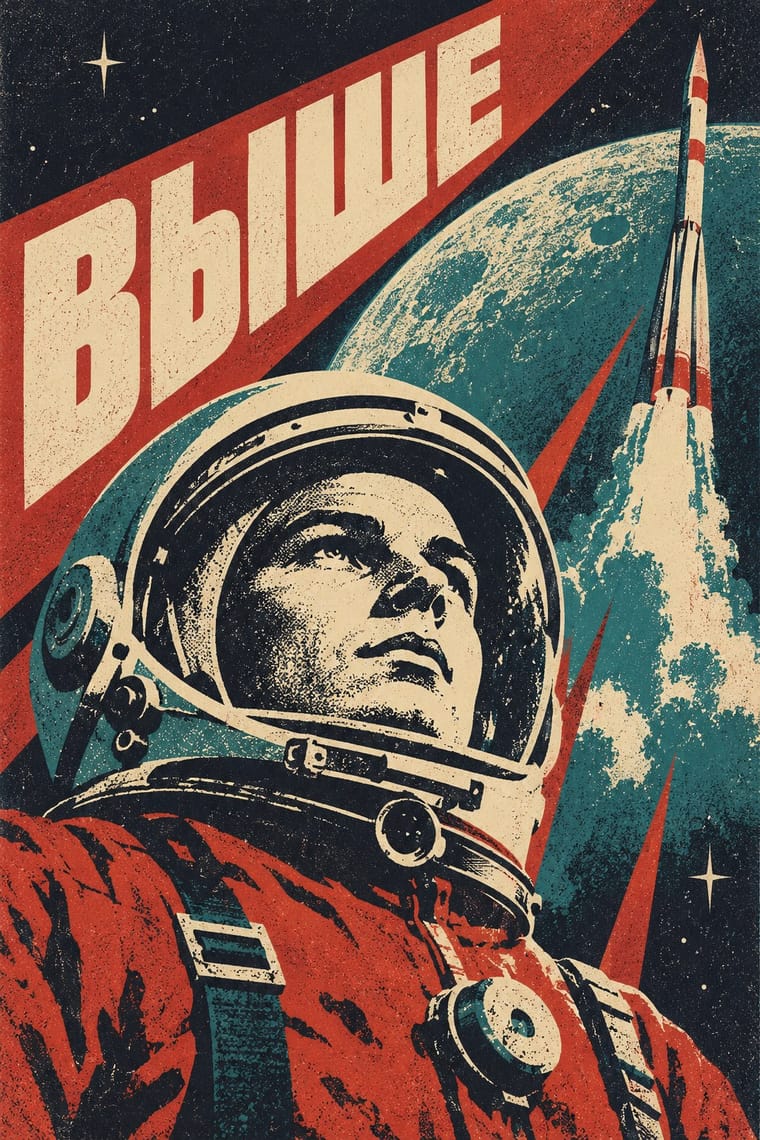
A post-Soviet internet aesthetic pairing synthwave's music and VHS glow with Space Age Soviet imagery and Cyrillic captions: nostalgia for the past future (Natalija Majsova), a lost technological optimism. Visually it diverges from synthwave, with muted print colours and little neon. It is not endorsement of the Soviet state; critics call it a romanticised myth (Shevchenko) or one that ignores harsh realities (Molchat Doma), and Ukrainian artists may reject the label. Use state symbols with care.
Make something in this style Get advice in this style Mix it with another style
01
How it works
- Centre a cosmonaut, rocket, satellite or modernist housing block as a flat, found or vector image.
- Set Cyrillic captions in a plain Soviet-era sans, optionally on a diagonal in the manner of poster slogans (a design choice, not a documented rule of the genre).
- Take a muted palette suggested by faded Soviet print: cream, red, teal and ochre, with one cool cyan glow (the palette is an inference from the imagery, not a documented standard).
- Degrade the surface with VHS grain, scanlines and test-card colour bars.
- Quote educational film, stamp and poster sources rather than inventing new heroes.
- Keep the tone wistful and sincere, not ironic or triumphant.
Post-Soviet internet music scene in Russia, Belarus and Ukraine, early 2010s; a subgenre of synthwave. First dedicated festival Volna-1, St Petersburg, August 2018
02
Its design choices
From Stylogeny’s vocabulary of design choices: defining choices make the style, characteristic ones are usual, occasional ones turn up now and then.
- Layout & composition
- Space & hierarchy
- Typography
- Colour
- Form & shape
- Surface & texture
- Imagery
- Medium & production
- Tone & intent
- Avoids
- Fluorescent & neon, Pastel, Chrome & 3D render, Gloss & highlights, Central symmetry, Script, Ornamented display, Abundant decoration, Luxurious & glamorous, Ironic & self-aware
Palette
-
#e8dcc0 -
#b5342a -
#2f6f73 -
#d9a441 -
#1c1f2e -
#43d5e0
Typefaces
-
Plain Soviet-era sans lettering, such as the period Zhurnalnaya rublenaya (Polygraphmash, 1947), which the look draws on; no source ties it to specific sovietwave works
-
Hand-drawn Soviet poster and film-title lettering in Cyrillic
-
VHS and CRT on-screen lettering and teletext-like pixel type
Known for
-
Volna-1 festival (St Petersburg, August 2018), the first dedicated sovietwave festival
-
Mayak (Kharkiv), N.E.M.O., Kim and Buran, PPVK
sound projects associated with the imagery
-
Molchat Doma (Minsk), whose 2020 TikTok success brought listeners to the associated aesthetic
the band is post-punk/coldwave, and has criticised the genre
-
Crafts Park pavilion, Moscow City Day (September 2017), designed around sovietwave music
03
Make something in this style
Say what you need, and Stylogeny’s image studio draws it from Sovietwave’s design choices and checks it against them. It takes about a minute, and you get a link to share.
04
Where it comes from, and what it’s close to
Before it
The style it grew out of, and the styles it borrowed from.
After it
The styles that grew out of it.
No later style in the atlas grew out of it yet.
Alike in its design choices
Styles that make many of the same choices, related or not, besides those above.
-
-
- Forum Signature Art (Sig & C4D Render Graphics) 47% alike
- Italian Fascist Graphics (Romanità & Exhibition Photomontage) 46% alike
-
- Bandung Distro Graphics 45% alike
05
Often taken for
Sovietwave has no real works recorded yet, so these are its nearest styles by its choices alone, with the choices that tell them apart.
-
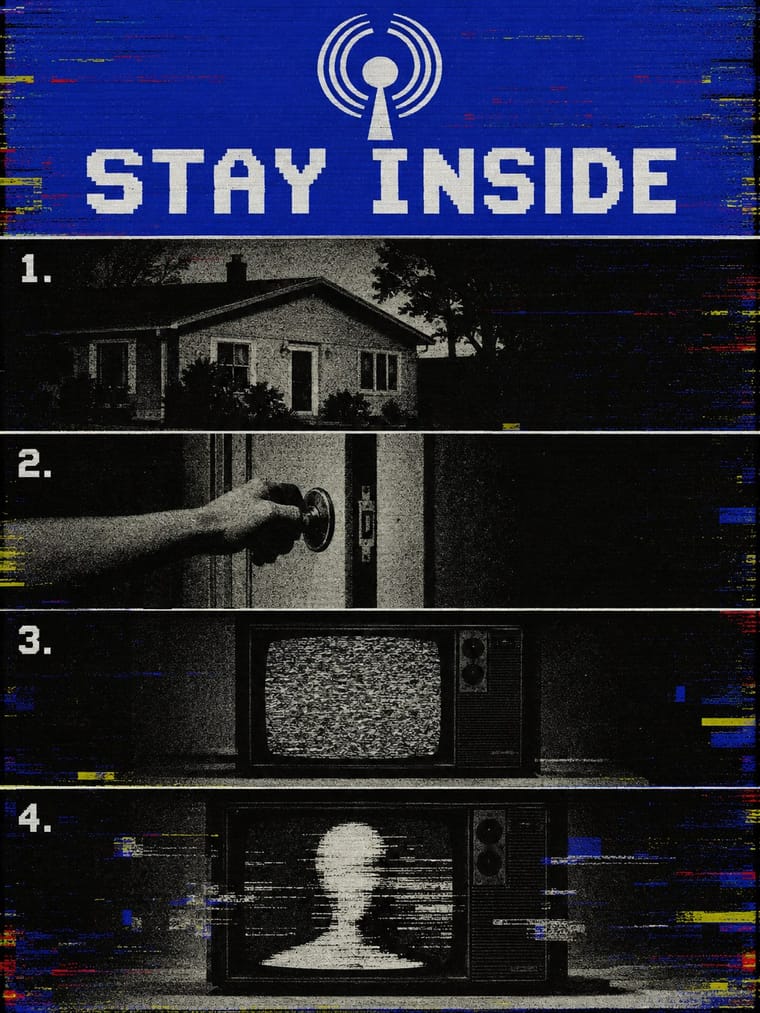
Analog Horror Graphics
Analog Horror Graphics is one of Sovietwave’s nearest styles by choices; no real work of either fits the other better.
Choices that tell Sovietwave and Analog Horror Graphics apart Choice Sovietwave Analog Horror Graphics Earth & mineral characteristic — Central symmetry avoids characteristic Flat vector illustration characteristic — Sequential narrative — defining Dynamic asymmetry characteristic — No shared descent in the atlas: they reached these choices separately.
-
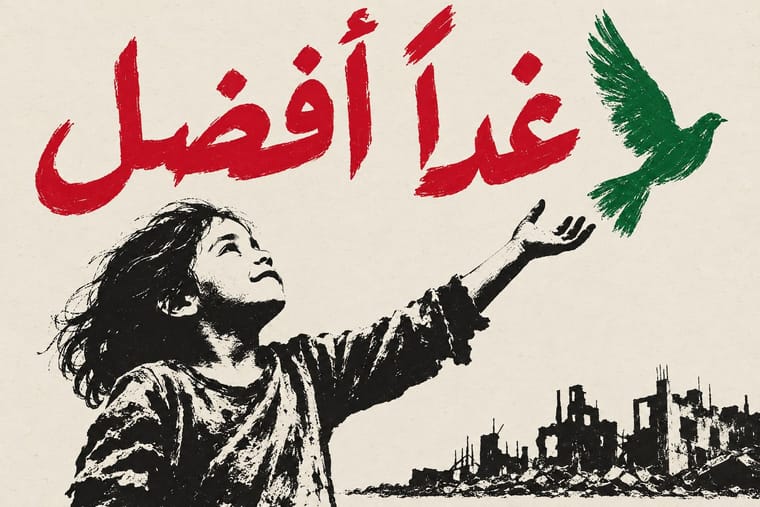
Syrian Revolution Graphics (Kafranbel Banners & Poster Collectives)
Syrian Revolution Graphics is one of Sovietwave’s nearest styles by choices; no real work of either fits the other better.
Choices that tell Sovietwave and Syrian Revolution Graphics apart Choice Sovietwave Syrian Revolution Graphics Found & vernacular imagery defining occasional Brush & pen calligraphy — defining Rectilinear characteristic — Light ground — characteristic Dynamic asymmetry characteristic — No shared descent in the atlas: they reached these choices separately.
-
Forum Signature Art (Sig & C4D Render Graphics)
Forum Signature Art is one of Sovietwave’s nearest styles by choices; no real work of either fits the other better.
Choices that tell Sovietwave and Forum Signature Art apart Choice Sovietwave Forum Signature Art Flat fields characteristic avoids Analogous harmony — defining Limited spot colours defining — Borders & frames — defining Earth & mineral characteristic — No shared descent in the atlas: they reached these choices separately.
-
Italian Fascist Graphics (Romanità & Exhibition Photomontage)
Italian Fascist Graphics is one of Sovietwave’s nearest styles by choices; no real work of either fits the other better.
Choices that tell Sovietwave and Italian Fascist Graphics apart Choice Sovietwave Italian Fascist Graphics Found & vernacular imagery defining — Central symmetry avoids characteristic Grain & noise defining — Type as image — defining Treated photography characteristic — No shared descent in the atlas: they reached these choices separately.
— means the choice isn’t among the style’s recorded choices. Critics recorded each work’s choices with the styles’ descriptions in view, so this shows whether the descriptions hold together, not proof that they are right.
06
Combine it with
Styles Sovietwave pairs well with or plays against, from the research. Each is worked out as a combination: which style gives the type, the colours and the forms.
- Socialist Realist Propaganda Poster Contrasts · Heroic state painting and slogans are the official register; sovietwave keeps poster compositions but is a private, melancholy longing rather than a command.
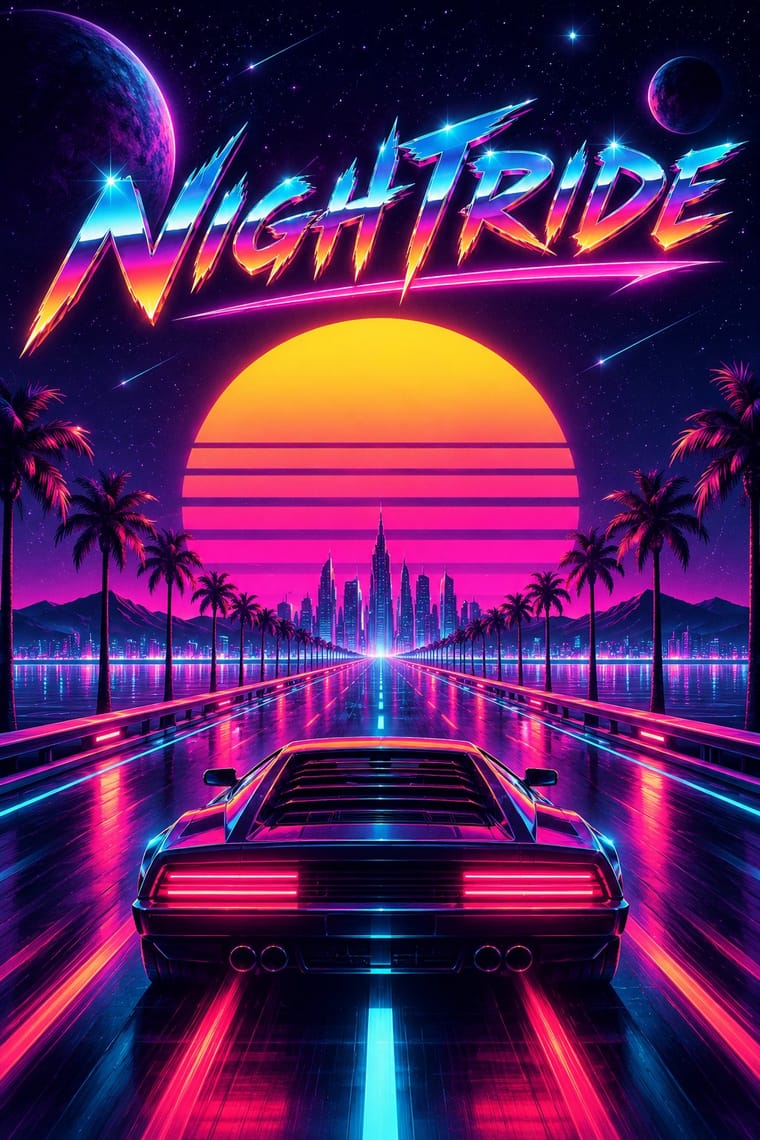
- Synthwave / Outrun Contrasts · Choose synthwave for American chrome, neon and palm-tree sunsets; choose sovietwave for muted print colours, Cyrillic and Space Age housing blocks.
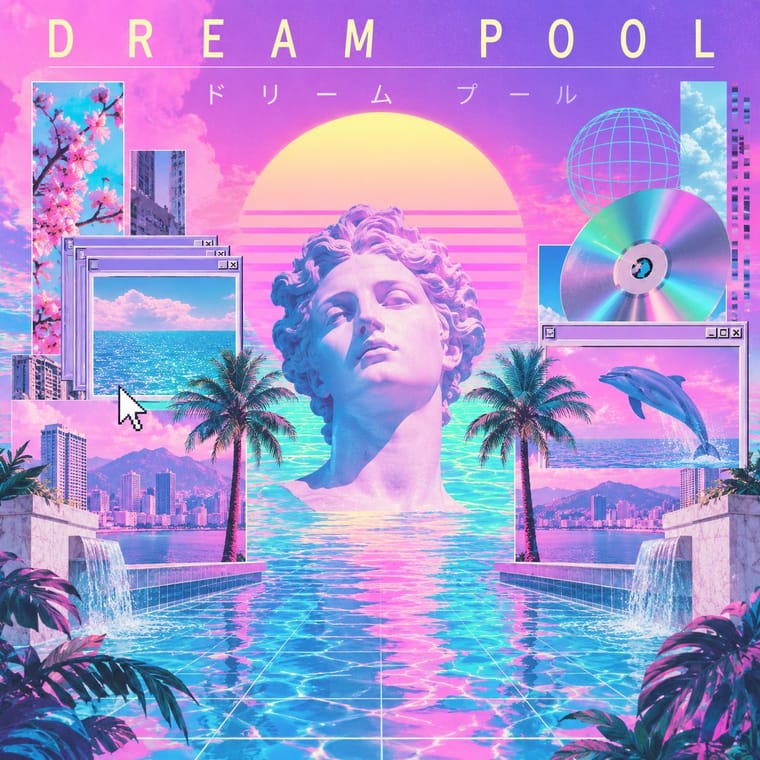
- Vaporwave Pairs well · Its Western counterpart: share the degraded found footage and wistfulness, but replace the mall and pastel irony with Soviet space imagery.
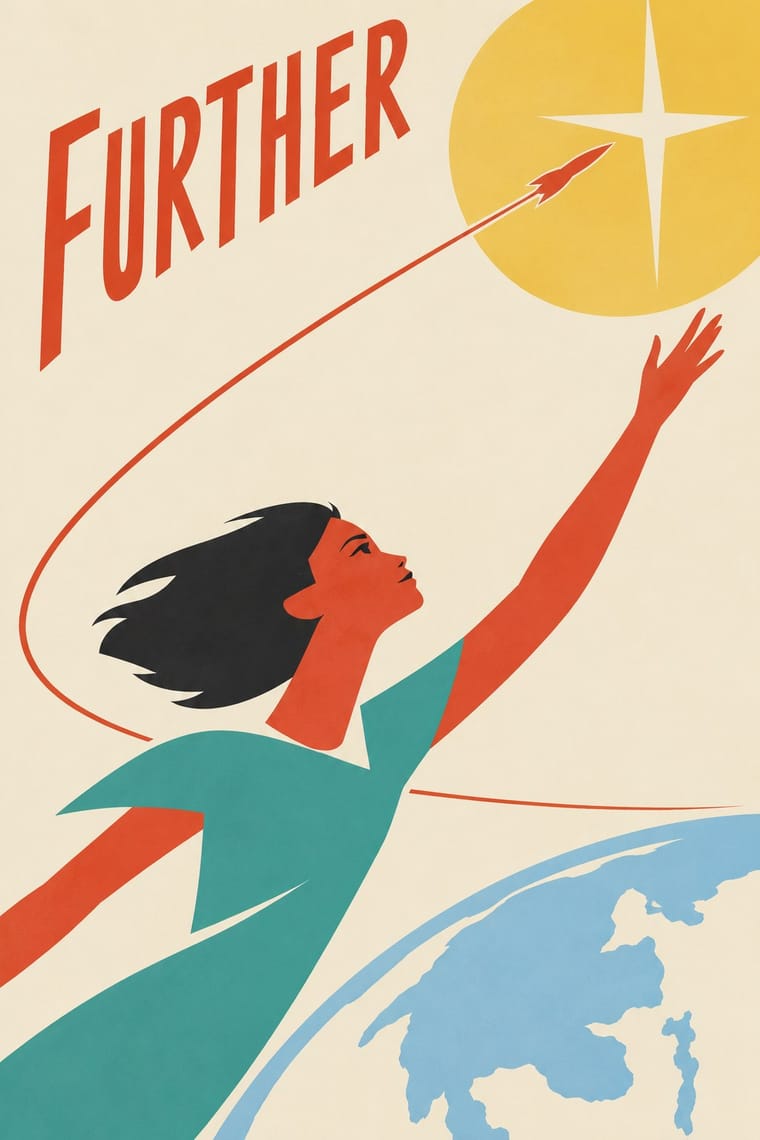
- Thaw Modernism (Soviet and Czechoslovak) Pairs well · The real period style sovietwave quotes: take its flat optimistic cosmonaut figures and flat optimistic fields, then add grain and scanlines for the memory-of-a-memory look.
07
Sources
- https://en.wikipedia.org/wiki/Sovietwave
- Natalija Majsova, essay on nostalgia for the past future, Alternator research centre (2021), as cited in the Wikipedia article
- Pitchfork (2020), article on Molchat Doma, as cited in the Wikipedia article
- https://en.wikipedia.org/wiki/Sovietwave (motifs: retrofuturism, technological utopianism, Space Age, Soviet-era architecture and art; criticism by Molchat Doma, Shevchenko)
How Stylogeny researches and checks a style: where the facts come from.