Avant-garde · 1919–1922 · Eastern Europe
ROSTA Windows
Also known as Okna ROSTA, ROSTA satire windows, Okna satiry ROSTA
Hand-stencilled satirical news posters made by the Russian Telegraph Agency during the Civil War and hung in empty shop windows, first in Moscow, then in Petrograd and provincial towns. Mikhail Cheremnykh, Vladimir Mayakovsky, Dmitry Moor and others turned the day's news into numbered sequences of crude, flat stock figures in two or three colours, each frame with a short rhymed caption, reviving the lubok as Futurist street agitation.
Make something in this styleGet advice in this styleMix it with another style

01
How it works
- Break the message into numbered frames read in sequence, like a comic strip or a lubok sheet.
- Reduce people to flat, instantly legible stock types (worker, Red Army soldier, kulak, bourgeois) drawn as silhouettes.
- Limit colour to two or three flat paints applied through cut stencils, with red doing the heavy lifting.
- Pair every picture with a short, punchy rhymed caption in hand-drawn Cyrillic lettering.
- Work at the speed of the news: draw, stencil and post a new window within days, sometimes hours, of a telegram.
Moscow (Russian Telegraph Agency, ROSTA), with branches in Petrograd and provincial cities
02
Its design choices
From Stylogeny’s vocabulary of design choices: defining choices make the style, characteristic ones are usual, occasional ones turn up now and then.
- Layout & composition
- Space & hierarchy
- Typography
- Form & shape
- Surface & texture
- Medium & production
- Tone & intent
- Avoids
- Photomontage, Straight photography, Naturalistic depiction, Gradients, Illusion of depth, Abundant decoration, Luxurious & glamorous
Palette
#ece2c9#171512#c7281e#2d5b9e#c99a3b
Typefaces
Hand-lettered Cyrillic captions in brush and pen, one under each frame
Blocky hand-drawn Cyrillic capitals for headings and frame numbers
Known for
Mikhail Cheremnykh, who started the windows with journalist Nikolai Ivanov in Moscow
1919
Vladimir Mayakovsky, drawings and rhymed captions for hundreds of windows
1919–1922
Dmitry Moor
Ivan Malyutin
Amshey Nurenberg
Vladimir Lebedev and Lev Brodaty, Petrograd ROSTA windows
Okna TASS, the Second World War revival by the Kukryniksy and others
1941–1945
03
Make something in this style
Say what you need, and Stylogeny’s image studio draws it from ROSTA Windows’s design choices and checks it against them. It takes about a minute, and you get a link to share.
04
Where it comes from, and what it’s close to
Before it
The style it grew out of, and the styles it borrowed from.


After it
The styles that grew out of it.
No later style in the atlas grew out of it yet.
Alike in its design choices
Styles that make many of the same choices, related or not, besides those above.
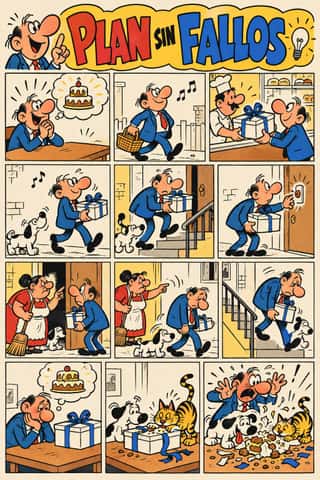
- Bitterkomix (Afrikaans Underground Comics)70% alike
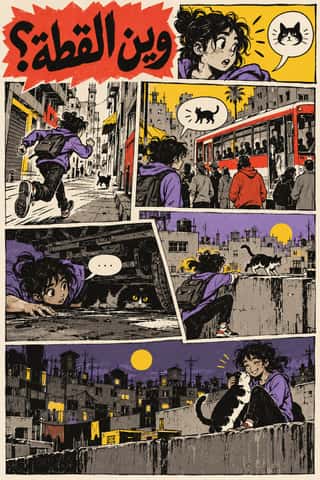
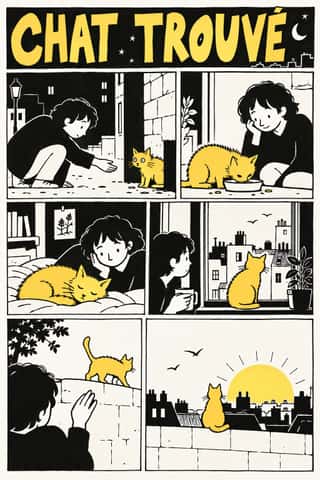
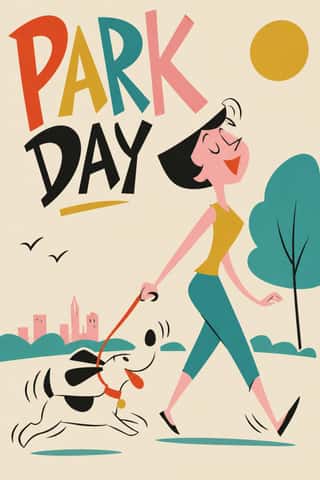
- Atelier Populaire (May '68 Screenprint Poster)60% alike


05
Real works
Artefacts in museums, libraries and archives that show the style, linked at their source.
- Every Absence Is a Joy to the Enemy (Kazhdyi progul – radost' vragu!), ROSTA Window No. 858Vladimir Mayakovsky · 1921 · Russian State Library, Moscow (scan via Wikimedia Commons)
- The Little Entente (Malaia Antanta), ROSTA Window No. 583Vladimir Mayakovsky · November 1920 · Institut Valencià d'Art Modern (IVAM), Valencia (gallery photograph via Wikimedia Commons)
- Comrade, Remember the Children (Tovarishch, pomni o detiakh), Glavpolitprosvet window No. 282Ivan Malyutin · 1921 · Sergo Grigorian collection (redavantgarde.com, private collection and dealer, cat. no. 831; image via Wikimedia Commons)
- ROSTA window on the Noulens famine commission (twelve panels)Mikhail Cheremnykh · 1921 · Victoria and Albert Museum, London (E.1241-1933)
- For the First Time We Greet 1st May with a Hammer, Not a Rifle (Ne s vintovkoi, a s molotom vpervye my vstretim 1-e maia)Vladimir Kozlinsky · May 1921 · Victoria and Albert Museum, London (E.180-1987)


06
Sources
- Wikipedia (ru), 'Окна РОСТА'
- Alexander Roob, 'Graphic illustrated journalism and the avant-garde: the ROSTA windows of the Bolshevik art army', Melton Prior Institut
- Viktor Duvakin, Rostafenster: Majakowski als Dichter und bildender Künstler (Dresden: VEB Verlag der Kunst, 1967)
- Russian Wikipedia: Окна сатиры РОСТА (lubok traditions; stencil copies; autumn 1919–1921): https://ru.wikipedia.org/wiki/Окна_сатиры_РОСТА
How Stylogeny researches and checks a style: where the facts come from.