Avant-garde · 1924–1933 · Eastern Europe
Stenberg Brothers Constructivist Film Poster
Also known as Soviet avant-garde film poster, Stenberg posters, Constructivist cinema poster
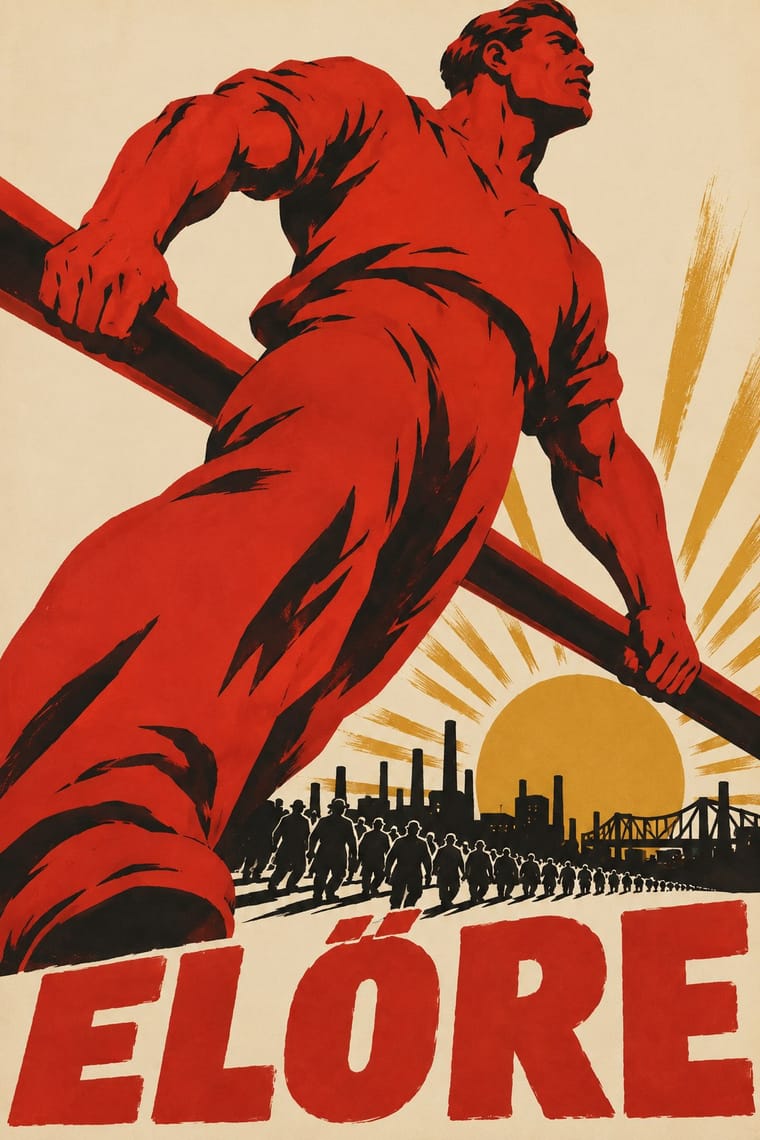
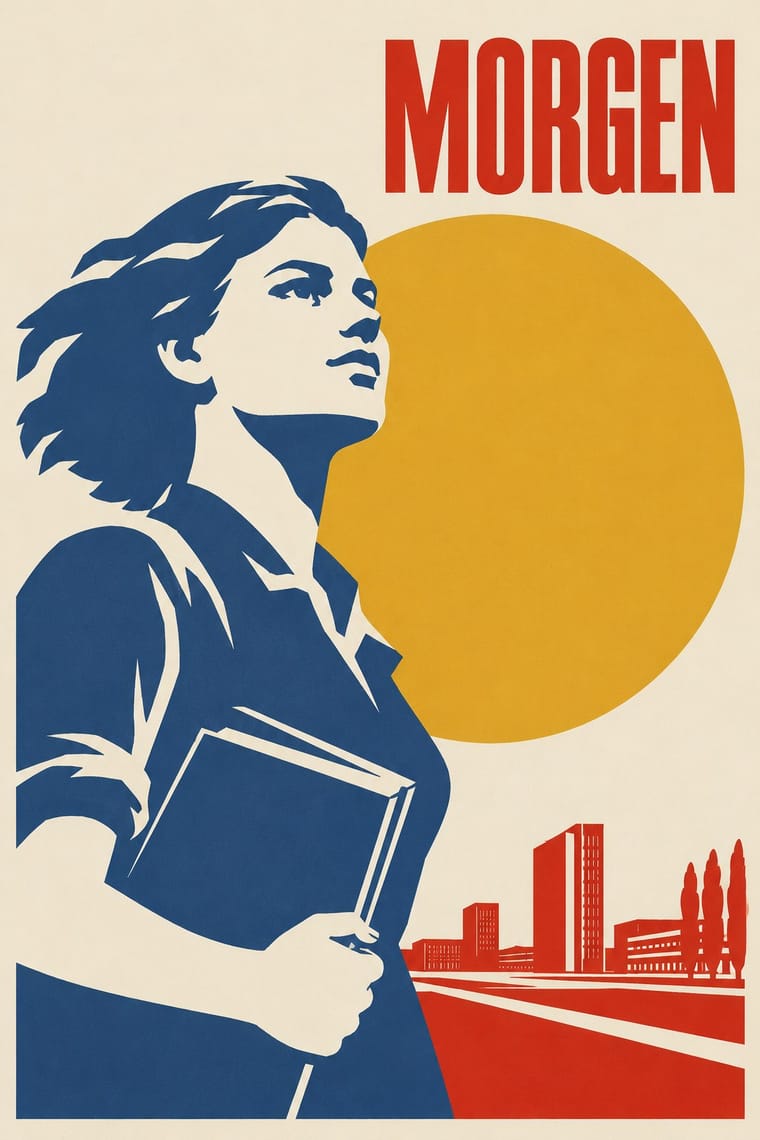
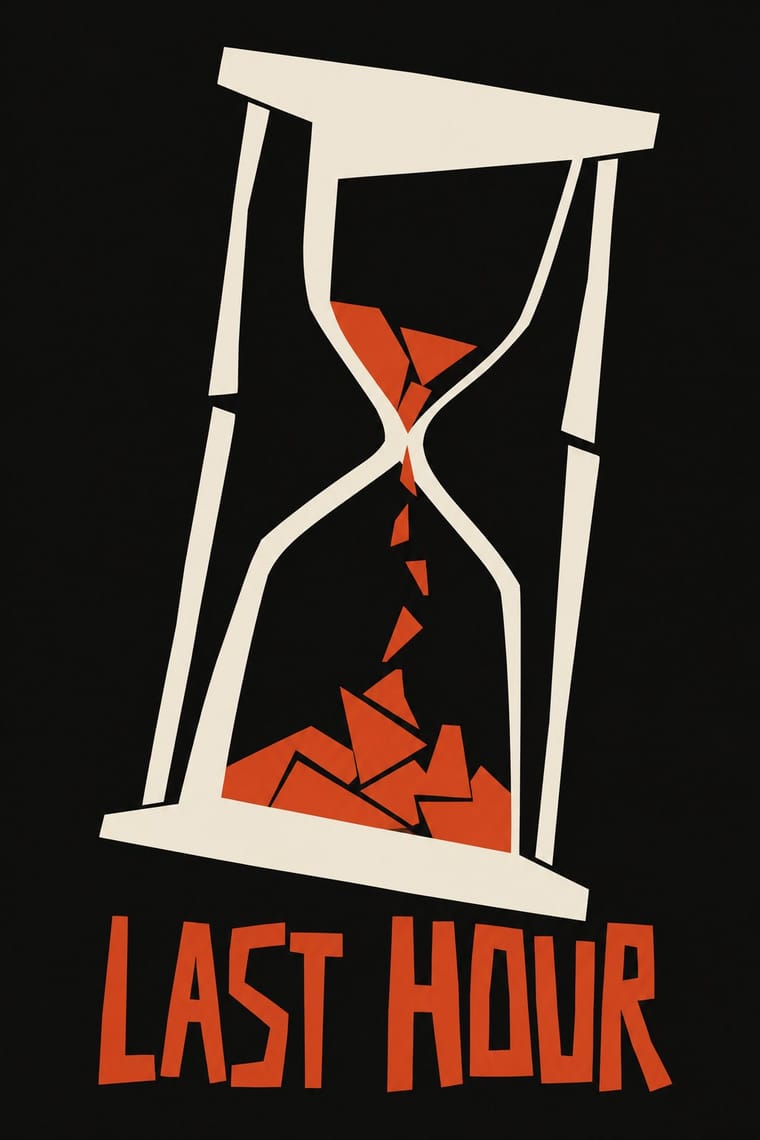
A commercial-cinema subvariant of constructivism: the film posters that Vladimir and Georgii Stenberg made in Moscow from 1924 until Georgii's death in 1933. Where parent constructivism served agitprop and book design, these sheets sold films, using stills and drawn figures pushed through distorted perspective, extreme cropping, exaggerated scale and tilted lettering, so the poster conveys the motion of the screen in bold colour.
Make something in this style Get advice in this style Mix it with another style
01
How it works
- Build the poster from a film's own imagery, assembling stills and drawn figures into one image.
- Crop and enlarge a face or figure until it dominates the sheet and dwarfs the title.
- Distort perspective and tilt or invert figures so the picture appears to move.
- Draw the title lettering by hand, angled and integrated into the image.
- Limit the palette to a few bold, clashing inks and sell the film, not a slogan.
Moscow, USSR: Vladimir and Georgii Stenberg, who made about 300 film posters between 1924 and 1933; the period ends with Georgii's death in 1933
02
Its design choices
From Stylogeny’s vocabulary of design choices: defining choices make the style, characteristic ones are usual, occasional ones turn up now and then.
- Layout & composition
- Space & hierarchy
- Typography
- Colour
- Form & shape
- Surface & texture
- Imagery
- Medium & production
- Tone & intent
- Avoids
- Central symmetry, Classical text block, Floral & vegetal, Abundant decoration, Script, Whiplash line, Calm & contemplative, Nostalgic & retro
Palette
-
#e8dcc0 -
#151515 -
#d62718 -
#f2b705 -
#2457a6
Typefaces
-
Hand-drawn, tilted Cyrillic title lettering integrated with the image
-
Constructed block capitals in the Soviet avant-garde manner
Known for
-
Stenberg brothers, poster for Man with a Movie Camera
1929, lithograph
-
Stenberg brothers, poster for Symphony of a Great City
c. 1928
-
Stenberg brothers, Kamerny Theatre Paris tour poster
1923, a theatre precursor rather than a film poster
03
Make something in this style
Say what you need, and Stylogeny’s image studio draws it from Stenberg Brothers Constructivist Film Poster’s design choices and checks it against them. It takes about a minute, and you get a link to share.
04
Where it comes from, and what it’s close to
Before it
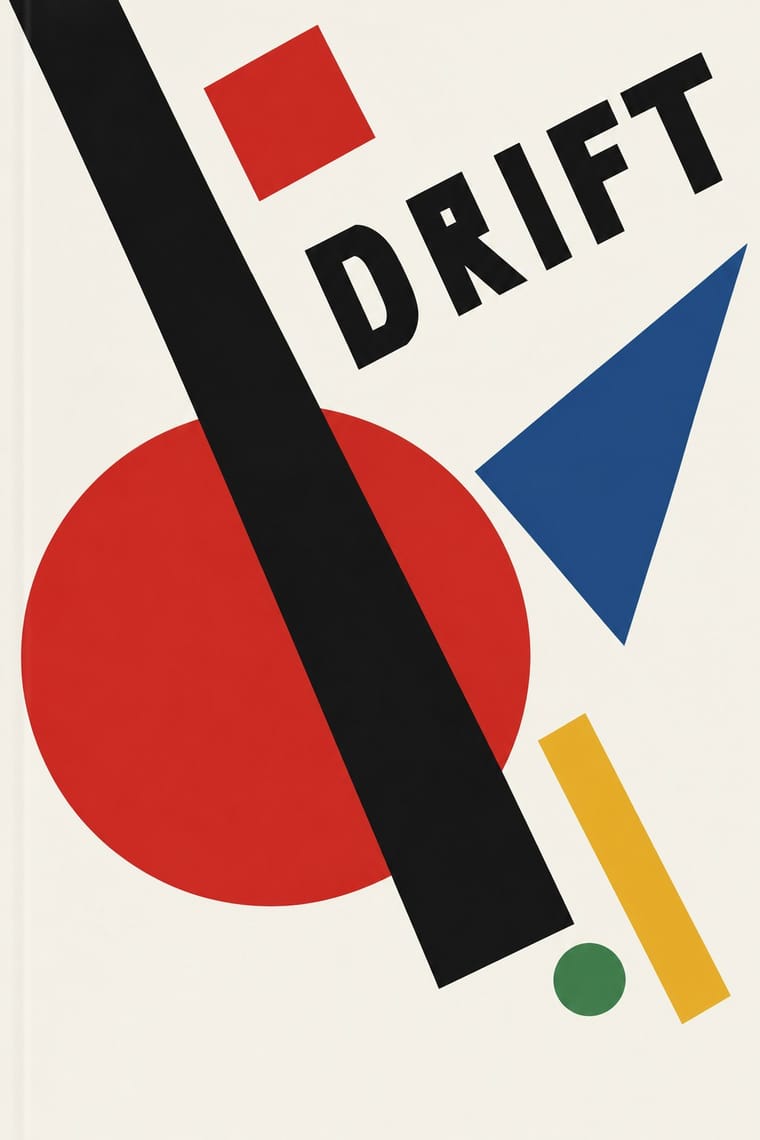
The style it grew out of, and the styles it borrowed from.
After it
The styles that grew out of it.
No later style in the atlas grew out of it yet.
Alike in its design choices
Styles that make many of the same choices, related or not, besides those above.
05
Often taken for
Stenberg Brothers Constructivist Film Poster has no real works recorded yet, so these are its nearest styles by its choices alone, with the choices that tell them apart.
-
Russian Constructivism
Russian Constructivism is one of Stenberg Brothers Constructivist Film Poster’s nearest styles by choices; no real work of either fits the other better.
Choices that tell Stenberg Brothers Constructivist Film Poster and Russian Constructivism apart Choice Stenberg Brothers Constructivist Film Poster Russian Constructivism Distortion & exaggeration defining — Grotesque & neo-grotesque — defining Hand-lettering defining occasional Rules & bars occasional defining Complementary clash characteristic — Stenberg Brothers Constructivist Film Poster descends from Russian Constructivism: a shared line, so the likeness is inherited.
-
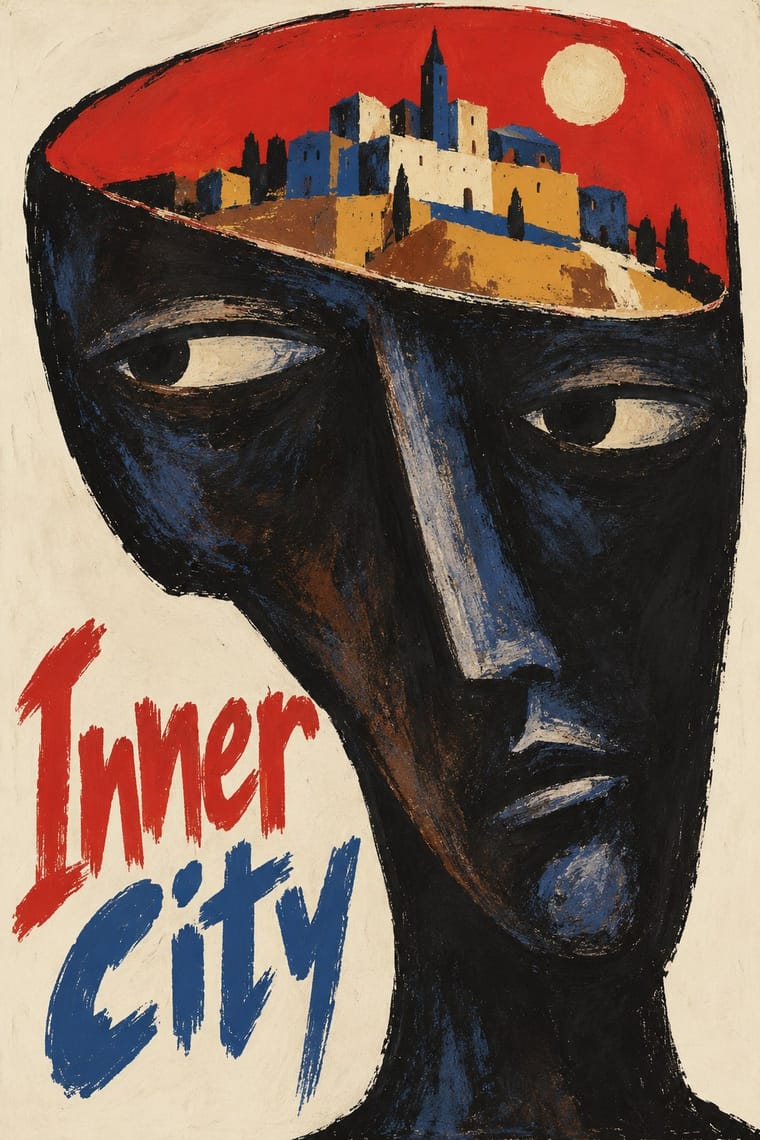
Polish Poster School
Polish Poster School is one of Stenberg Brothers Constructivist Film Poster’s nearest styles by choices; no real work of either fits the other better.
Choices that tell Stenberg Brothers Constructivist Film Poster and Polish Poster School apart Choice Stenberg Brothers Constructivist Film Poster Polish Poster School Diagonal axis defining — Painterly illustration — defining Extreme scale contrast defining occasional Painterly brushwork — defining Angular & zigzag characteristic — No shared descent in the atlas: they reached these choices separately.
-
Italian Futurism
Italian Futurism is one of Stenberg Brothers Constructivist Film Poster’s nearest styles by choices; no real work of either fits the other better.
Choices that tell Stenberg Brothers Constructivist Film Poster and Italian Futurism apart Choice Stenberg Brothers Constructivist Film Poster Italian Futurism Distortion & exaggeration defining — Eclectic mixing occasional defining Hand-lettering defining occasional Monochrome — characteristic Limited spot colours characteristic — Stenberg Brothers Constructivist Film Poster descends from Italian Futurism: a shared line, so the likeness is inherited.
-
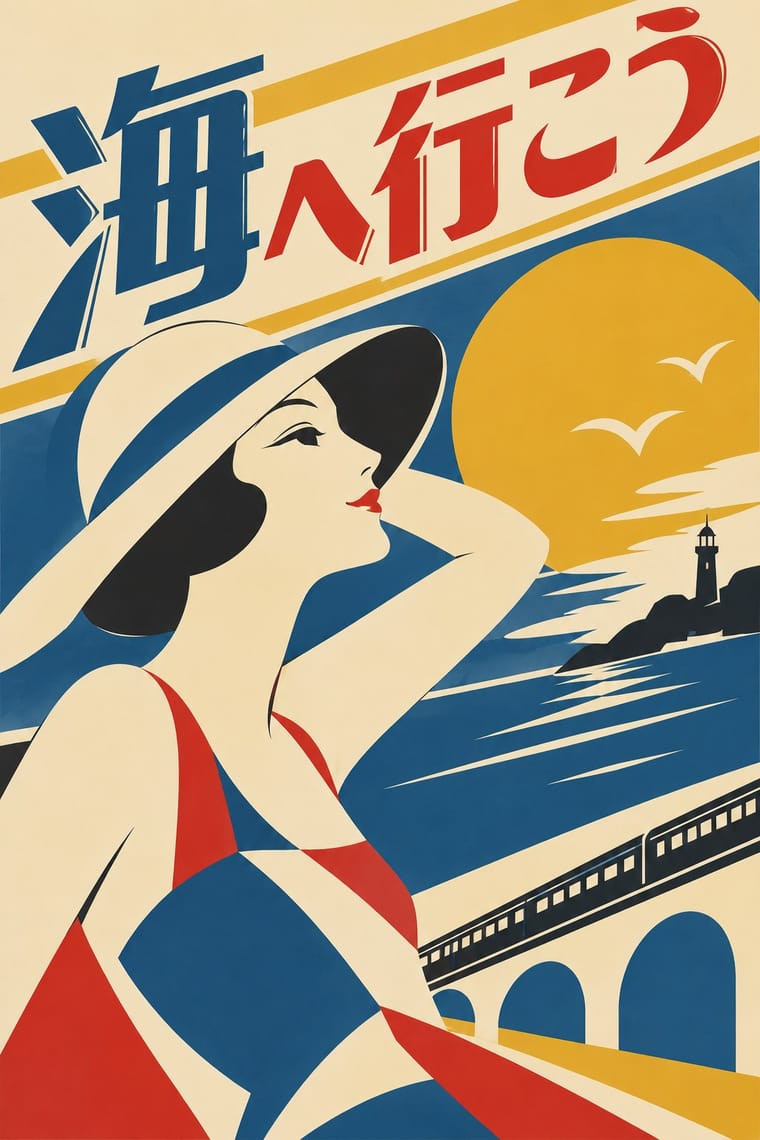
Showa Modern Commercial Art and Zuan-moji
Showa Modern Commercial Art and Zuan-moji is one of Stenberg Brothers Constructivist Film Poster’s nearest styles by choices; no real work of either fits the other better.
Choices that tell Stenberg Brothers Constructivist Film Poster and Showa Modern Commercial Art and Zuan-moji apart Choice Stenberg Brothers Constructivist Film Poster Showa Modern Commercial Art and Zuan-moji Distortion & exaggeration defining — Geometric primitives — defining Extreme scale contrast defining occasional Ornamented display — defining Photomontage characteristic — No shared descent in the atlas: they reached these choices separately.
— means the choice isn’t among the style’s recorded choices. Critics recorded each work’s choices with the styles’ descriptions in view, so this shows whether the descriptions hold together, not proof that they are right.
06
Combine it with
Styles Stenberg Brothers Constructivist Film Poster pairs well with or plays against, from the research. Each is worked out as a combination: which style gives the type, the colours and the forms.
- Egyptian Painted Film Poster Contrasts · Painted star portraits against assembled stills: two ways to sell a film on a lithographed sheet.
- Dada Pairs well · Dada's montage supplies the method; the Stenbergs discipline it into a diagonal composition with a clear product to sell.
- AIZ Political Photomontage (Heartfield) Pairs well · Borrow the political photomontage cut-and-assemble method, then add the Stenbergs' exaggerated scale for dynamism.
- ROSTA Windows Contrasts · Both are Soviet street posters, but ROSTA's flat stencilled satire is the opposite of the Stenbergs' montage and distorted-perspective cinema sell.
07
Sources
- https://en.wikipedia.org/wiki/Stenberg_brothers
- https://thecharnelhouse.org/2015/08/05/the-stenberg-brothers-and-the-art-of-soviet-movie-posters/
How Stylogeny researches and checks a style: where the facts come from.