Pictorial & machine age · 1917–1920 · Eastern Europe
Narbut School (Ukrainian Baroque Revival Graphics)
Also known as Ukrainian graphic design of the 1910s, Narbut and the Ukrainian Academy of Arts
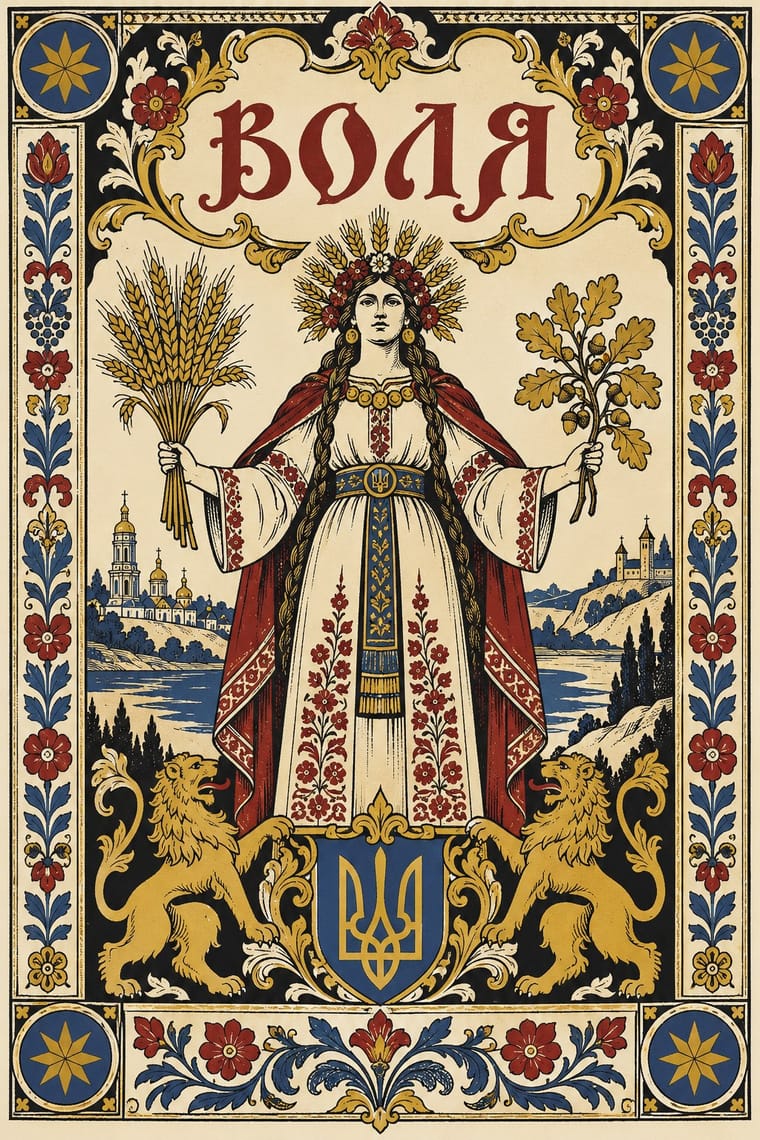
A Kyiv graphic idiom of 1917 to 1920 in which Heorhiy Narbut recast Ukrainian Baroque, Cossack heraldry and folk motifs as crisp black-and-white pen drawing, hand-drawn lettering and framed emblems. It served the Ukrainian People's Republic on banknotes, stamps, charters and seals, and was taught at the Ukrainian State Academy of Arts, where Narbut was professor from 1917 and rector from 1918.
Make something in this style Get advice in this style Mix it with another style
01
How it works
- Draw the image in crisp black line, adding spot colour sparingly for banknotes, stamps and painted plates.
- Build state documents and covers from Ukrainian Baroque and Cossack heraldic emblems, shields and cartouches.
- Letter titles and initials by hand, drawing them from Baroque and folk forms instead of setting a typeface.
- Enclose text and image in ornamental borders and symmetric frames.
- Treat national identity as a coherent system across currency, stamps, charters and books.
Kyiv, Ukraine; Heorhiy Narbut (1886-1920), a member of Mir iskusstva who trained in Saint Petersburg under Bilibin and Dobuzhinsky, moved to Kyiv in 1917. A Ukrainian state-identity tradition formed amid Russian imperial and Soviet framing, not a regional variant of Russian graphics; 'Little Russian' in the heraldry book title is that book's imperial-era name for Ukraine
02
Its design choices
From Stylogeny’s vocabulary of design choices: defining choices make the style, characteristic ones are usual, occasional ones turn up now and then.
- Layout & composition
- Space & hierarchy
- Typography
- Colour
- Surface & texture
- Ornament
- Medium & production
- Tone & intent
- Avoids
- Modular grid, Grotesque & neo-grotesque, Straight photography, Gradients, Gloss & highlights, Visual tension, Ornament-free
Palette
-
#f1ead8 -
#111111 -
#7a1f1a -
#c9a227 -
#2f4a73
Typefaces
-
Narbut's hand-drawn Ukrainian Baroque lettering and initials
Abetka, 1917-1919
-
Hand-drawn Cossack-baroque title lettering on charters and banknotes
Known for
-
Banknotes, postage stamps, charters, seals and coat of arms of the Ukrainian People's Republic
1917-1920
-
Ukrainian alphabet book (Abetka) drawings and initials
1917, 1919
-
Gouache frontispiece for Kotliarevsky's Eneida
1919
-
Heraldic illustrations for Lukomsky and Modzalevsky's 'Little Russian' heraldry book (1914; the imperial-era title for Ukraine) and Cossack hetman coats of arms (1915)
-
Ukraine's first definitive stamps (1992), based on Narbut's drawings
03
Make something in this style
Say what you need, and Stylogeny’s image studio draws it from Narbut School (Ukrainian Baroque Revival Graphics)’s design choices and checks it against them. It takes about a minute, and you get a link to share.
04
Where it comes from, and what it’s close to
Before it
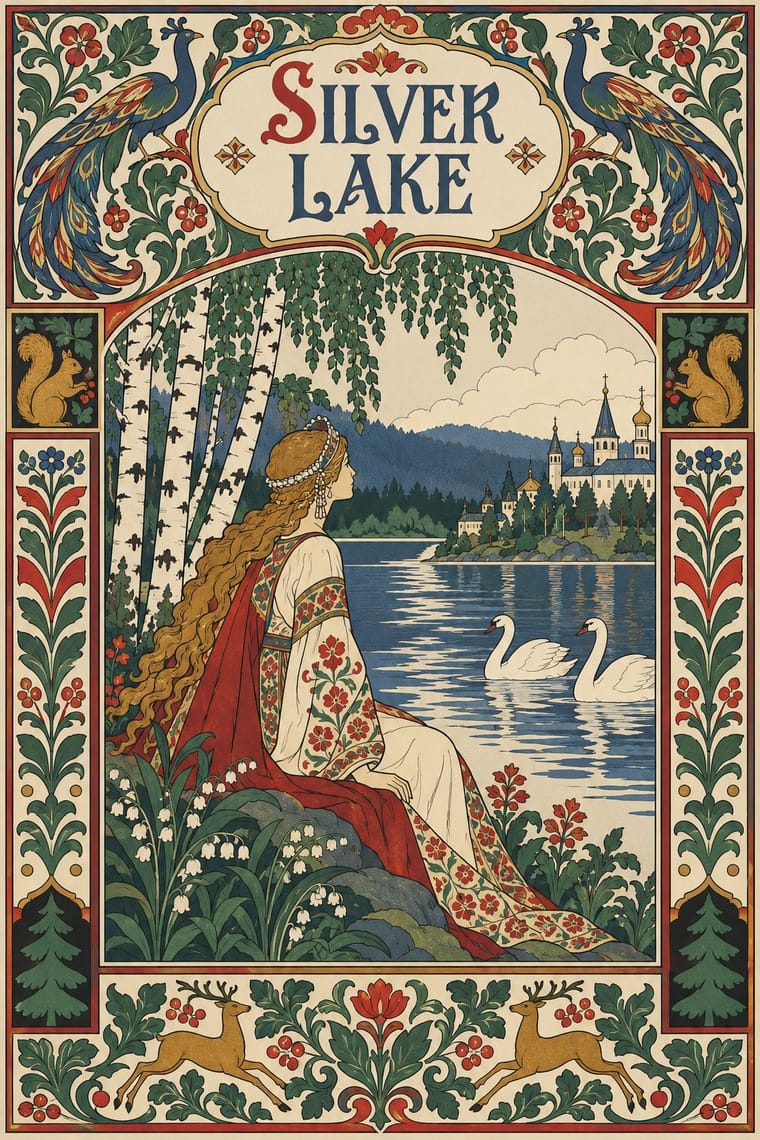
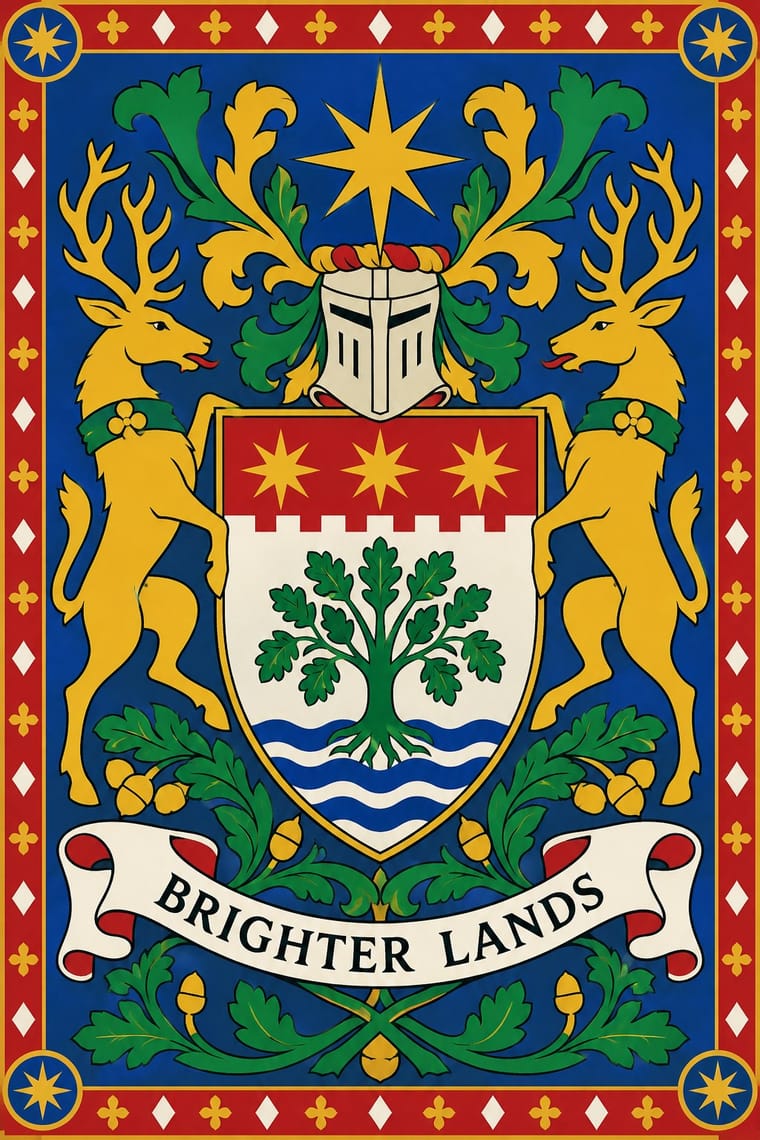
The style it grew out of, and the styles it borrowed from.
After it
The styles that grew out of it.
No later style in the atlas grew out of it yet.
Alike in its design choices
Styles that make many of the same choices, related or not, besides those above.
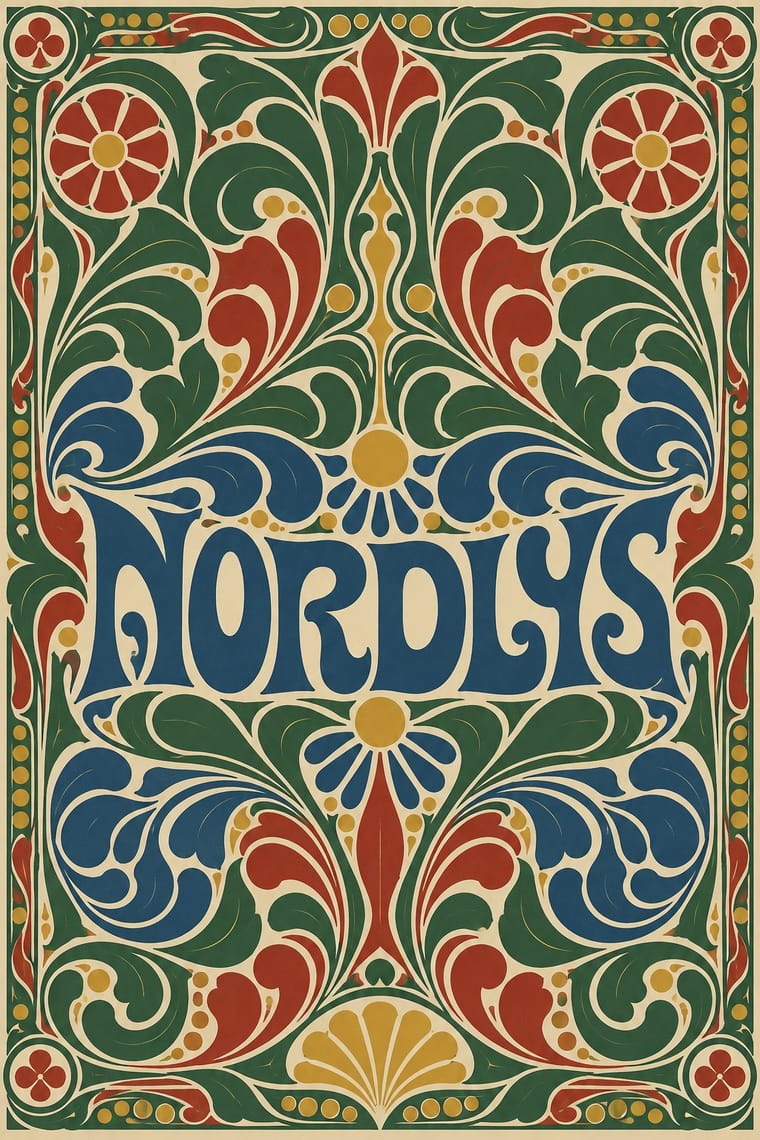
- Norwegian and Finnish National Romantic Graphics (Munthe & Karelianism) 76% alike
-
-
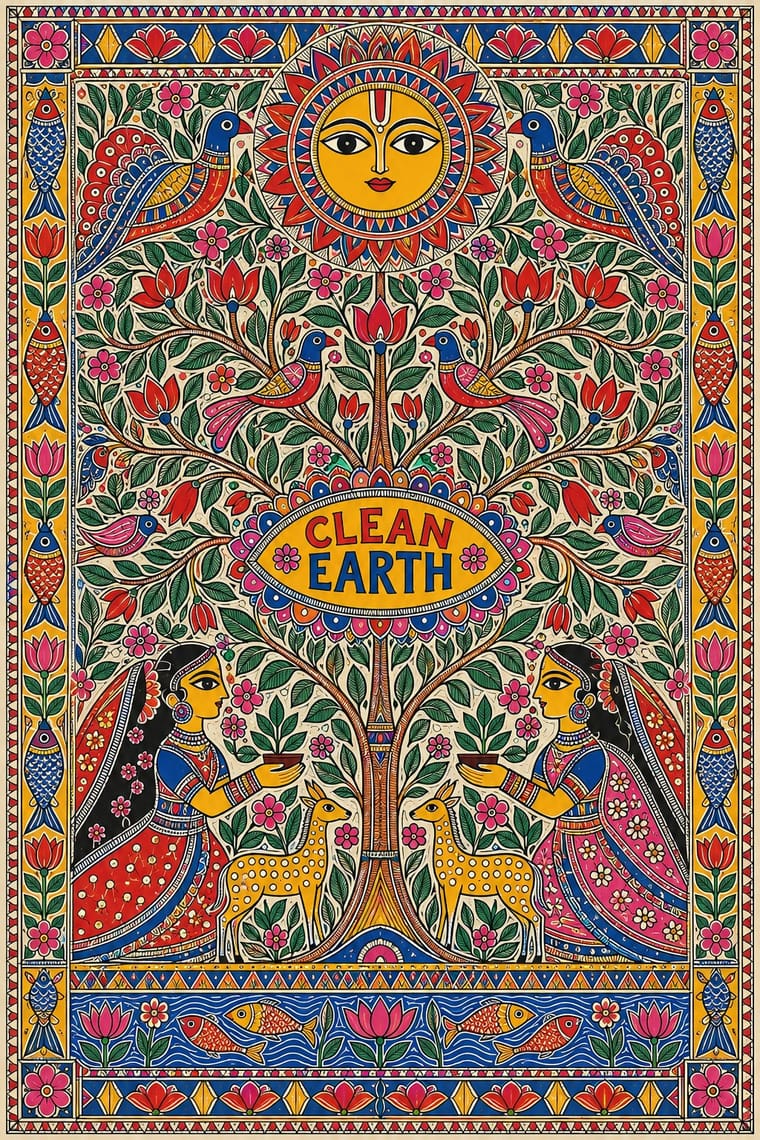
- Bezalel School 69% alike
-
-
05
Often taken for
Narbut School has no real works recorded yet, so these are its nearest styles by its choices alone, with the choices that tell them apart.
-
Mir iskusstva Book Art
Mir iskusstva Book Art is one of Narbut School’s nearest styles by choices; no real work of either fits the other better.
Choices that tell Narbut School and Mir iskusstva Book Art apart Choice Narbut School Mir iskusstva Book Art Limited spot colours defining — Earth & mineral — characteristic Emblems & badges defining — Painterly illustration — characteristic Brush & pen calligraphy characteristic — Narbut School descends from Mir iskusstva Book Art: a shared line, so the likeness is inherited.
-
Norwegian and Finnish National Romantic Graphics (Munthe & Karelianism)
Norwegian and Finnish National Romantic Graphics is one of Narbut School’s nearest styles by choices; no real work of either fits the other better.
Choices that tell Narbut School and Norwegian and Finnish National Romantic Graphics apart Choice Narbut School Norwegian and Finnish National Romantic Graphics Emblems & badges defining — Flat fields occasional defining Brush & pen calligraphy characteristic — Earth & mineral — characteristic Angular & zigzag — characteristic Both descend from Arts & Crafts Movement in the family tree.
-
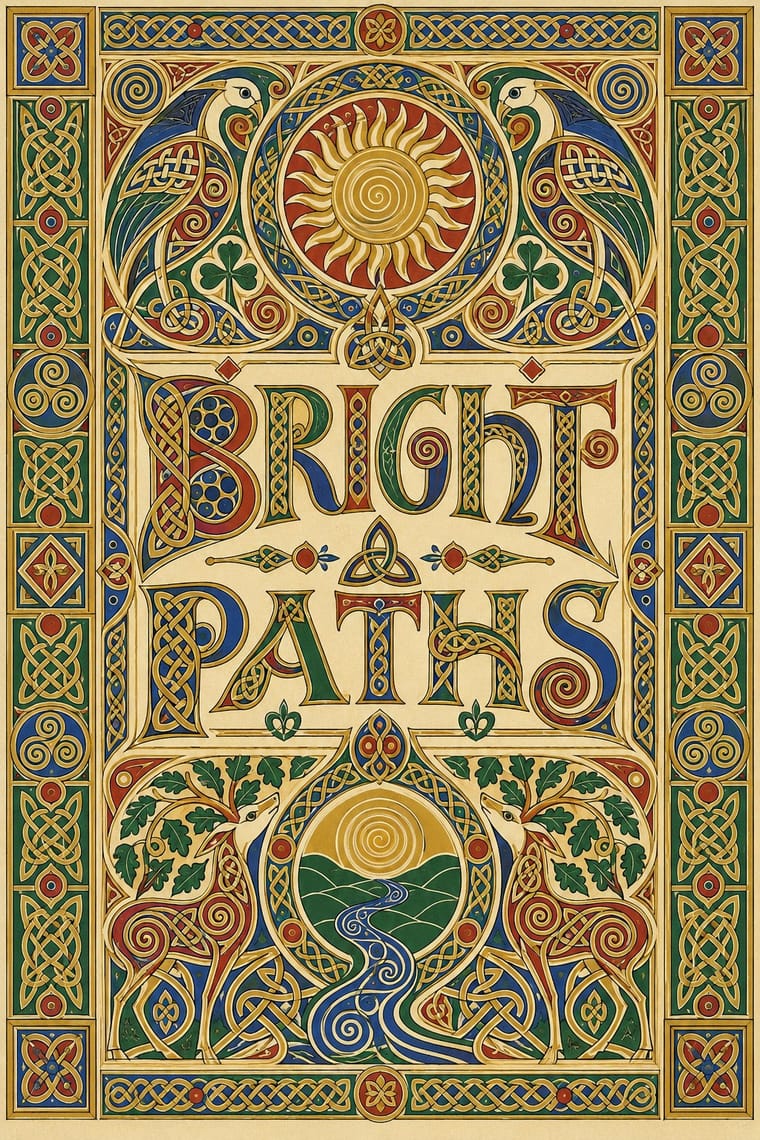
Celtic Revival Illumination & Lettering
Celtic Revival Illumination & Lettering is one of Narbut School’s nearest styles by choices; no real work of either fits the other better.
Choices that tell Narbut School and Celtic Revival Illumination apart Choice Narbut School Celtic Revival Illumination Limited spot colours defining — Geometric tessellation — defining Measured density characteristic — Jewel & metallic — characteristic Full polychrome — characteristic Both descend from Arts & Crafts Movement in the family tree.
-
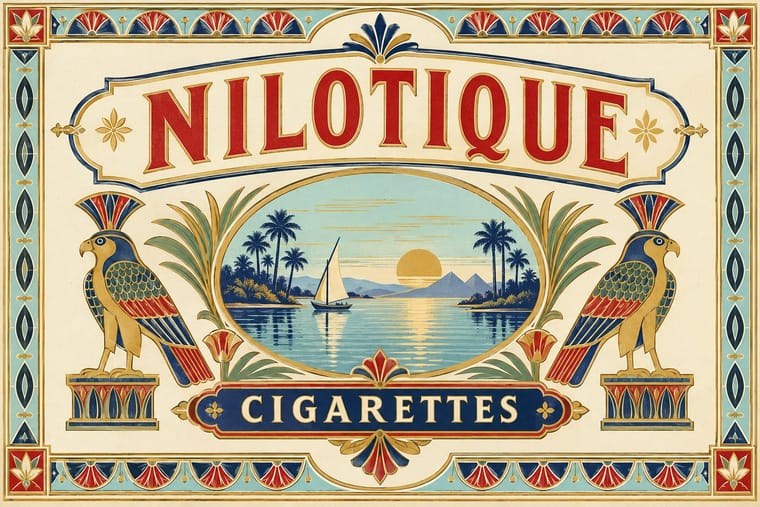
Egyptian Cigarette Packaging (Cairo Tobacco Houses)
Egyptian Cigarette Packaging is one of Narbut School’s nearest styles by choices; no real work of either fits the other better.
Choices that tell Narbut School and Egyptian Cigarette Packaging apart Choice Narbut School Egyptian Cigarette Packaging Hand-lettering defining occasional All caps — defining Monochrome characteristic — Eclectic mixing — defining Pen, brush & ink characteristic — No shared descent in the atlas: they reached these choices separately.
— means the choice isn’t among the style’s recorded choices. Critics recorded each work’s choices with the styles’ descriptions in view, so this shows whether the descriptions hold together, not proof that they are right.
06
Combine it with
Styles Narbut School (Ukrainian Baroque Revival Graphics) pairs well with or plays against, from the research. Each is worked out as a combination: which style gives the type, the colours and the forms.
- Lubok Popular Print Contrasts · Popular, coloured woodcut exuberance against Narbut's academic, restrained black line.
- Ukrainian Wartime Graphics (Saint Javelin, War Stamps and Be Brave Like Ukraine) Pairs well · A later revival (2022 onward) that draws on Ukrainian national imagery; not an influence on Narbut.
- Mir iskusstva Book Art Pairs well · Share the lineage of line drawing and bookish framing; Narbut turns it toward heraldry and state identity.
- International Typographic Style Contrasts · A gridded, ornament-free neutrality opposite to symmetric heraldic ornament.
- Celtic Revival Illumination & Lettering Pairs well · Another national revival that rebuilds a native ornament and hand-lettering tradition as an identity system.
07