Traditions & vernacular · 1900–present · North America, Global / networked
American Traditional Tattoo Flash
Also known as Old school tattoo, Western traditional, Traditional tattoo, Sailor Jerry style, Tattoo flash sheets
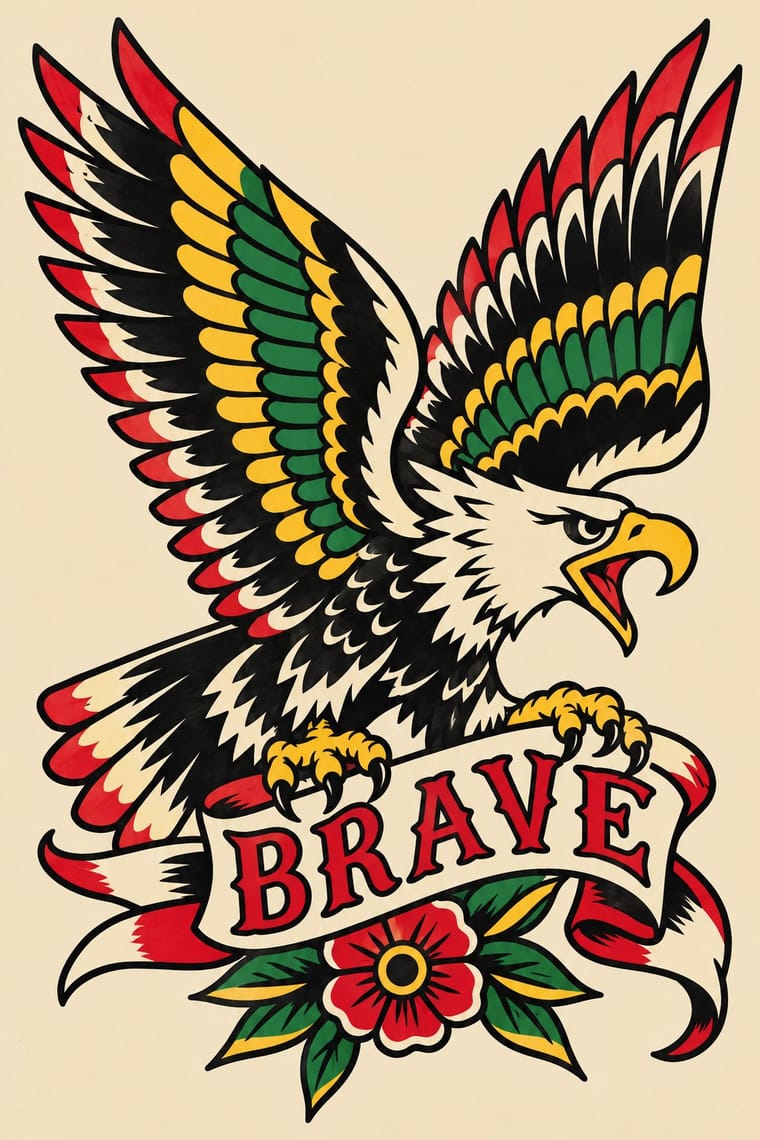
The stock designs of twentieth-century American tattoo shops: eagles, anchors, swallows, roses, hearts, daggers, panthers, skulls, ships, pin-ups and nautical stars, each drawn as an isolated emblem with a bold black outline, black shading and a few saturated flat colours (mainly red, yellow and green) chosen to stay legible on skin for a lifetime. Painted or printed on sheets and hung on shop walls, the designs carry vows, luck and service memories, and the look now travels far beyond the tattoo shop.
Make something in this style Get advice in this style Mix it with another style
Use it with care
Tattoo flash is the working craft of a living community of tattooers, who still trade, copy and repaint the old sheets by their own customs, and Sailor Jerry Ltd holds the commercial rights to Collins's letters, art and flash: draw new designs in the idiom rather than lifting a named artist's flash for branding or merchandise. Period sheets also include caricatures of other peoples, exoticised hula girls and geishas, and wartime jingoism; leave those out when quoting the style.
01
How it works
- Draw every design inside a heavy, even black outline that will still read after decades on skin.
- Shade with solid black and fill with a few saturated flat colours, mainly red, yellow and green, with no blending.
- Isolate each motif as a self-contained emblem with no background, sized to be traced and transferred.
- Wrap the image in a ribbon banner and letter a name or motto in script or shaded block capitals.
- Lay many designs side by side on one sheet so a customer can choose from the wall.
- Keep to a shared repertoire of patriotic, nautical, lucky and sentimental symbols, and make it yours by line and colour rather than by new subjects.
Tattoo shops and carnival booths in US port towns, navy cities and amusement piers, which hung their stock designs ('flash') where walk-in customers could choose them: Cap Coleman, Amund Dietzel in Milwaukee (1913-1967), Bert Grimm on the Nu-Pike in Long Beach, Norman 'Sailor Jerry' Collins on Hotel Street and later Smith Street in Honolulu. Start date approximate.
02
Its design choices
From Stylogeny’s vocabulary of design choices: defining choices make the style, characteristic ones are usual, occasional ones turn up now and then.
- Layout & composition
- Space & hierarchy
- Typography
- Colour
- Surface & texture
- Ornament
- Medium & production
- Tone & intent
- Avoids
- Gradients, Pastel, Straight photography, Ornament-free, Grotesque & neo-grotesque, Gloss & highlights, Non-representational, Rational & objective
Palette
-
#111111 -
#c8102e -
#f2c12e -
#1f7a3a -
#f1e4c8
Typefaces
-
Script names and mottoes lettered in ribbon banners
-
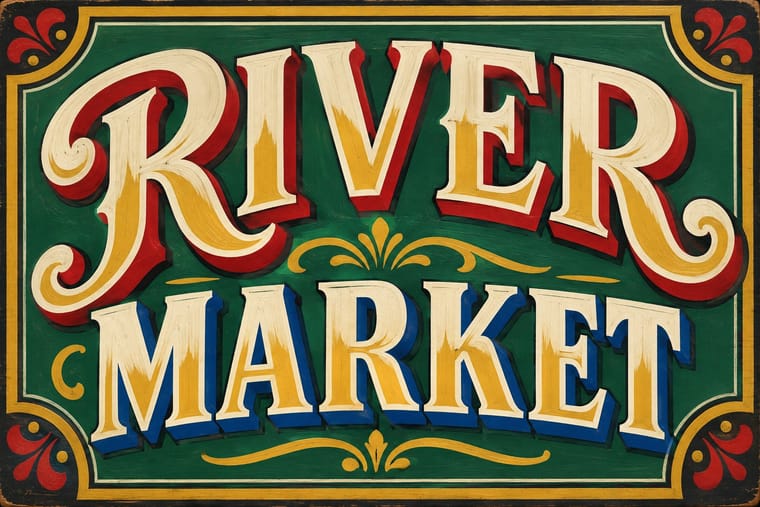
Shaded and drop-shadowed block capitals in the sign writer's manner
-
Numbers beside each design on the sheet, for choosing from the wall
Known for
-
Norman 'Sailor Jerry' Collins (1911-1973), flash from his Honolulu shops on Hotel Street and at 1033 Smith Street, Chinatown; his flash drawings shown at the Musée du quai Branly, Paris, and the Field Museum, Chicago
-
Amund Dietzel, the 'Master in Milwaukee', who tattooed there from 1913 until the 1967 city ban and claimed more than 5,000 designs; Milwaukee Art Museum exhibition 'Tattoo: Flash Art of Amund Dietzel' (2013)
-
August 'Cap' Coleman (1884-1973), who made flash more readable and durable with strong black outlines and shading
-
Milton Zeis (1901-1972), whose mail-order tattoo supply business sold thousands of flash designs in the 1940s and 1950s
-
Lew Alberts (1880-1954), prolific maker and seller of sheets of designs on which many shop designs were based
-
Bert Grimm's shop at the Nu-Pike, Long Beach, sold to Bob Shaw in 1970
-
Don Ed Hardy and Mike Malone, Collins's protégés, who with Steven Grasse founded Sailor Jerry Ltd (1999) to hold the rights to his flash
03
Make something in this style
Say what you need, and Stylogeny’s image studio draws it from American Traditional Tattoo Flash’s design choices and checks it against them. It takes about a minute, and you get a link to share.
04
Where it comes from, and what it’s close to
Before it
The style it grew out of, and the styles it borrowed from.
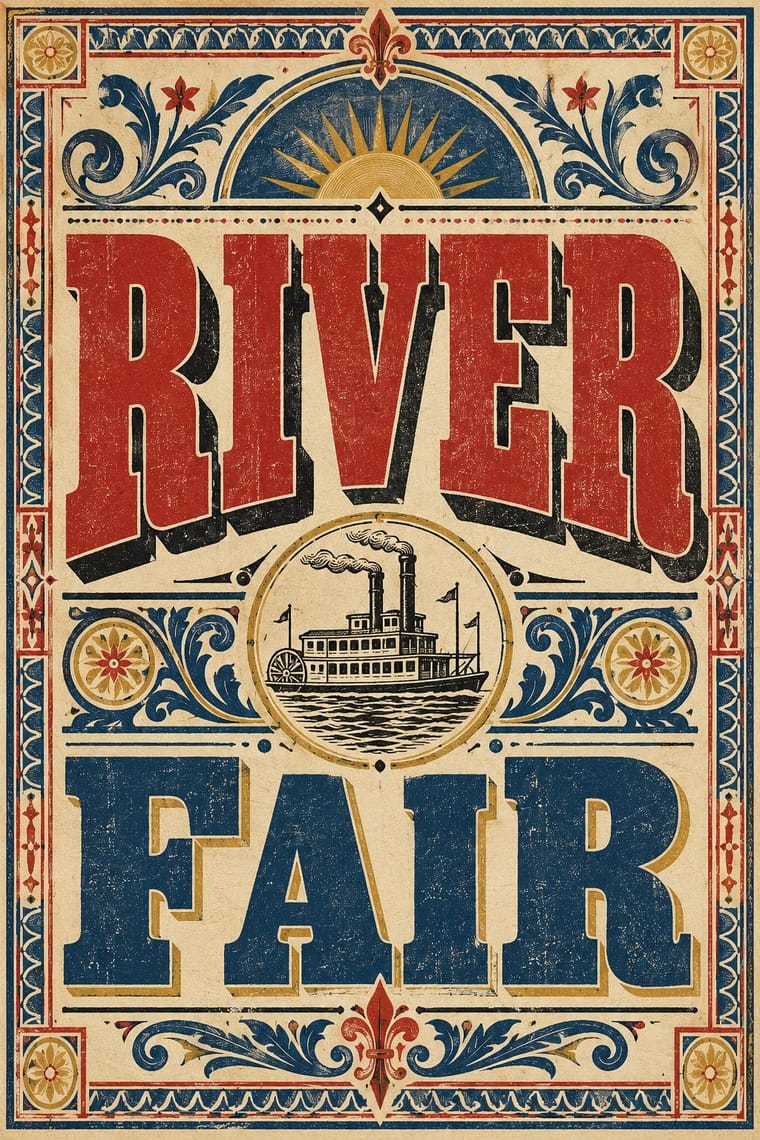
After it
The styles that grew out of it.
No later style in the atlas grew out of it yet.
Alike in its design choices
Styles that make many of the same choices, related or not, besides those above.
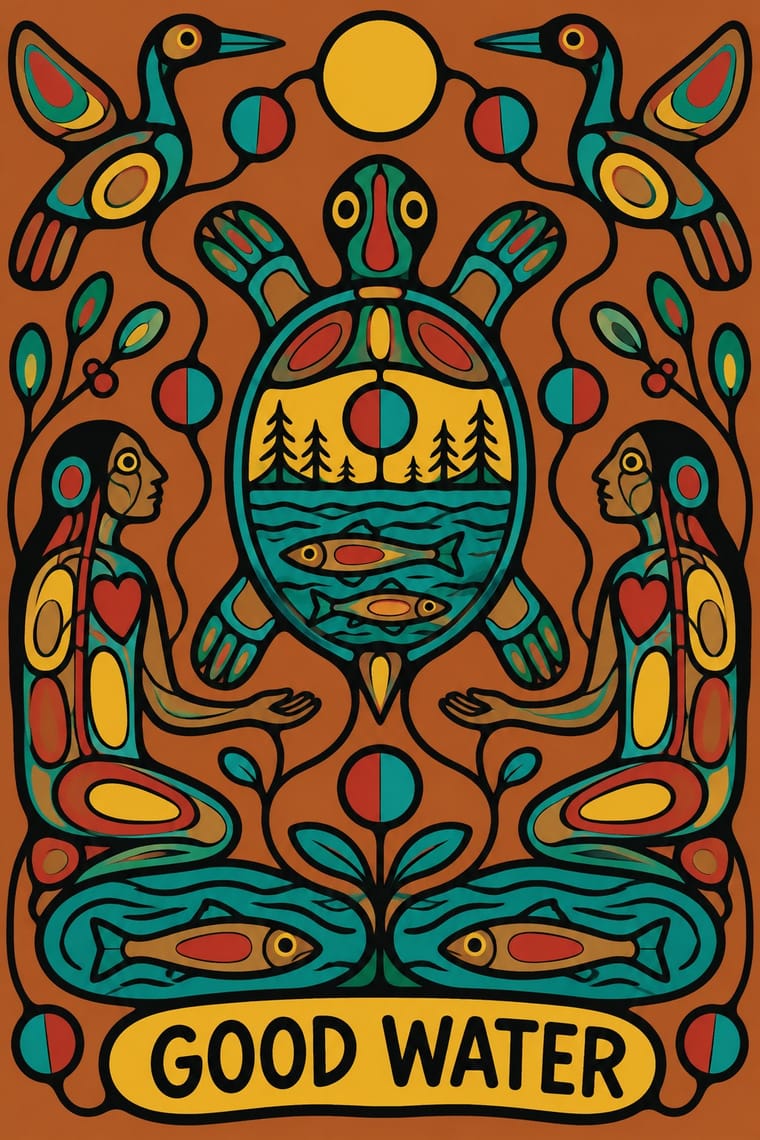
- Pardhan Gond Painting (Jangarh Kalam) 67% alike
-
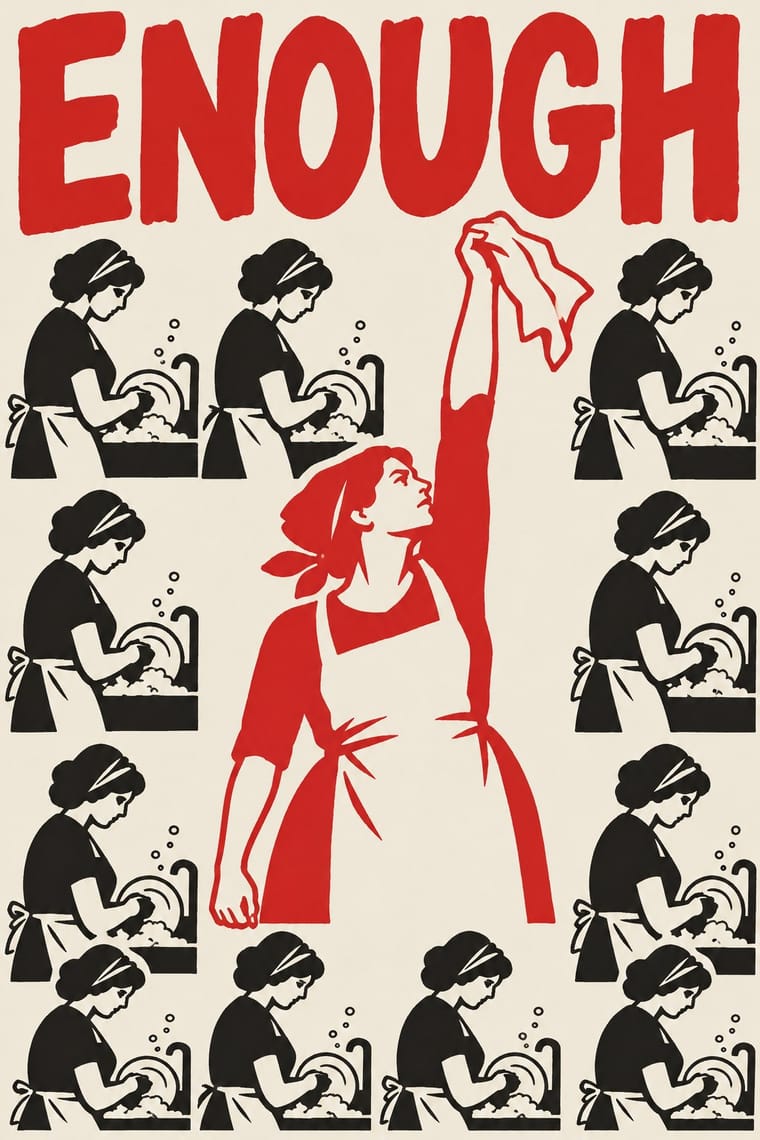
- Sudanese Revolution Graphics (Digital Illustrations and Sit-in Murals) 65% alike
-
-
-
05
Often taken for
American Traditional Tattoo Flash has no real works recorded yet, so these are its nearest styles by its choices alone, with the choices that tell them apart.
-
Pardhan Gond Painting (Jangarh Kalam)
Pardhan Gond Painting is one of American Traditional Tattoo Flash’s nearest styles by choices; no real work of either fits the other better.
Choices that tell American Traditional Tattoo Flash and Pardhan Gond Painting apart Choice American Traditional Tattoo Flash Pardhan Gond Painting Emblems & badges defining — Full polychrome — defining Naturalistic depiction occasional avoids Pattern & repeat — defining Limited spot colours defining occasional No shared descent in the atlas: they reached these choices separately.
-
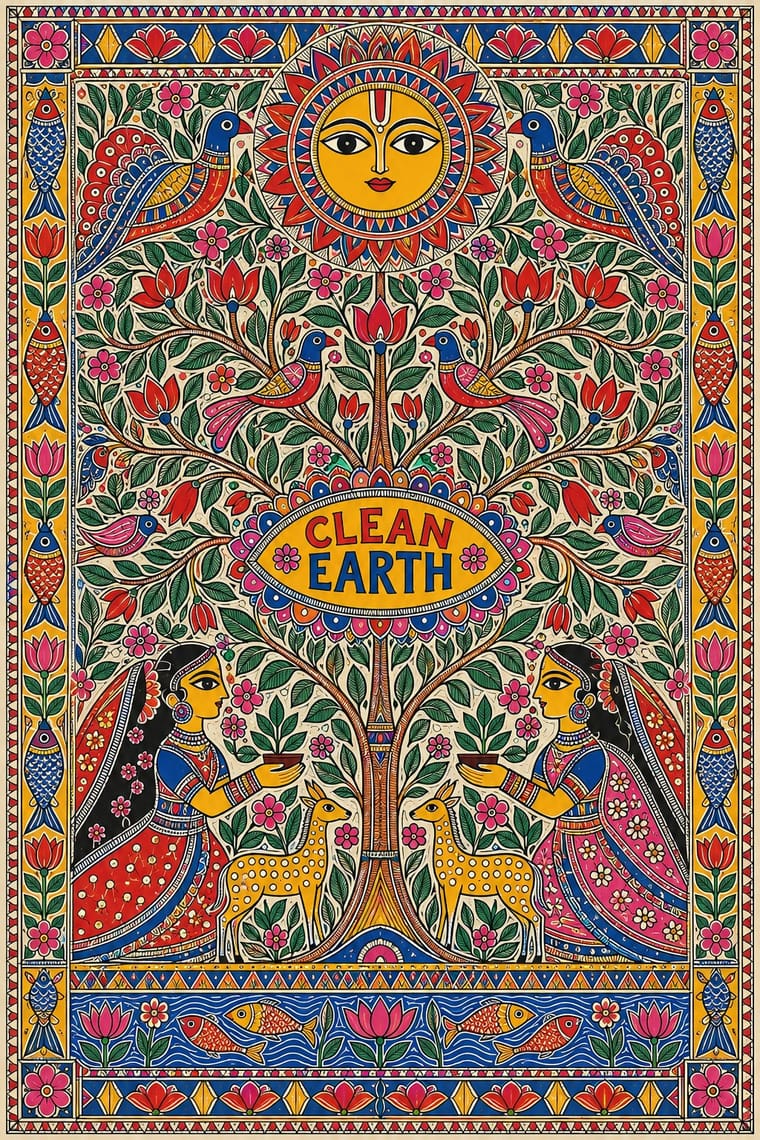
Woodland School (Legend Painting)
Woodland School is one of American Traditional Tattoo Flash’s nearest styles by choices; no real work of either fits the other better.
Choices that tell American Traditional Tattoo Flash and Woodland School apart Choice American Traditional Tattoo Flash Woodland School Emblems & badges defining — Full polychrome — defining Naturalistic depiction occasional avoids Earth & mineral — characteristic Limited spot colours defining occasional No shared descent in the atlas: they reached these choices separately.
-
Sudanese Revolution Graphics (Digital Illustrations and Sit-in Murals)
Sudanese Revolution Graphics is one of American Traditional Tattoo Flash’s nearest styles by choices; no real work of either fits the other better.
Choices that tell American Traditional Tattoo Flash and Sudanese Revolution Graphics apart Choice American Traditional Tattoo Flash Sudanese Revolution Graphics Ornamented display characteristic avoids Monochrome — characteristic Emblems & badges defining occasional Comic & cartoon — characteristic Primary triad characteristic — No shared descent in the atlas: they reached these choices separately.
-
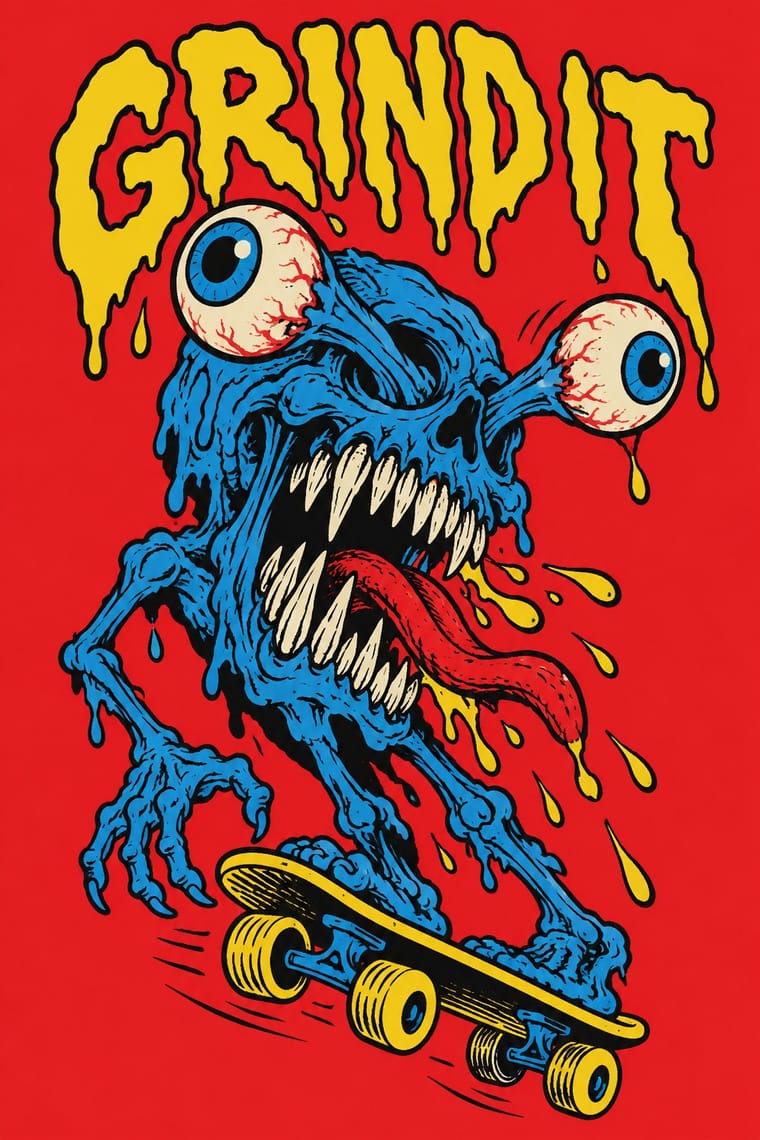
Skateboard Deck Graphics
Skateboard Deck Graphics is one of American Traditional Tattoo Flash’s nearest styles by choices; no real work of either fits the other better.
Choices that tell American Traditional Tattoo Flash and Skateboard Deck Graphics apart Choice American Traditional Tattoo Flash Skateboard Deck Graphics Central symmetry occasional avoids Distortion & exaggeration — defining Primary triad characteristic — Ornament-free avoids occasional Modular grid characteristic — No shared descent in the atlas: they reached these choices separately.
— means the choice isn’t among the style’s recorded choices. Critics recorded each work’s choices with the styles’ descriptions in view, so this shows whether the descriptions hold together, not proof that they are right.
06
Combine it with
Styles American Traditional Tattoo Flash pairs well with or plays against, from the research. Each is worked out as a combination: which style gives the type, the colours and the forms.
- International Typographic Style Contrasts · Rational grid and sans-serif against sentimental, hand-lettered emblems: one flash motif on a Swiss layout makes a sharp contrast.
- Hand-Painted Signage & Vernacular Lettering Pairs well · Both are sign-painter crafts of the same shopfront streets; pair flash emblems with brushed shop lettering for a whole storefront.
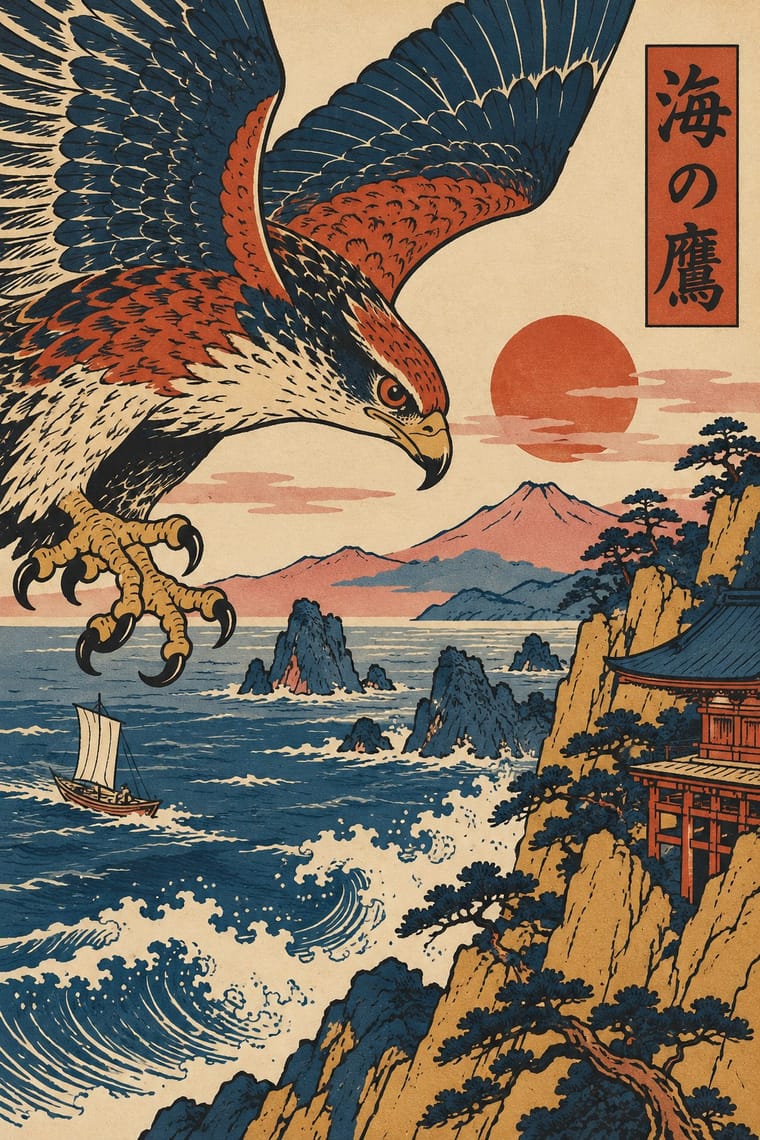
- Ukiyo-e Woodblock Prints Pairs well · Japanese prints and tattoo art fed Collins and Hardy; borrow waves and dragons but keep the bold American outline.
- American Four-Colour Comic Book (Golden to Bronze Age) Pairs well · Shares heavy black line and flat primaries; comic panels add story where flash keeps one emblem.
- Skateboard Deck Graphics Pairs well · Both use bold outline and flat limited colour on a single emblem; borrow the flash sheet's emblematic symmetry, but keep the deck's comic humour.
07
Sources
- https://en.wikipedia.org/wiki/Old_school_(tattoo)
- https://en.wikipedia.org/wiki/Sailor_Jerry
- https://en.wikipedia.org/wiki/Flash_(tattoo)
- https://en.wikipedia.org/wiki/Amund_Dietzel
- https://mam.org/exhibitions/amund-dietzel/
- Jon Reiter, These Old Blue Arms: The Life and Work of Amund Dietzel (Solid State Publishing, 2010)
How Stylogeny researches and checks a style: where the facts come from.