Pictorial & machine age · 1980–2003 · Sub-Saharan Africa
Sani and Swahili Humour-Magazine Comics
Also known as SANI comics, Komredi Kipepe comics, Tanzanian Swahili humour comics
A Swahili-language humour-magazine comic tradition from Dar es Salaam, built on caricatured characters such as Madenge. Framed panels and hand-lettered balloons stage urban-rural jokes. Unlike Bruguera it works in Swahili with Tanzanian social types; the one documented Asterix adaptation is a single serial, Katembo's Komredi Kipepe (Sani 65-71, 2000-01). Madenge and Kipepe also appear in other magazines. Start year 1980 is from Beez, unconfirmed.
Make something in this style Get advice in this style Mix it with another style
Use it with care
Caricature of rural and ethnic types and of gender carries stereotypes that should be audited, not copied as a cultural signature; this is a living commercial comic culture whose artists' rights are uncleared, so credit the makers and do not reproduce their characters without permission.
01
Make something in this style
Say what you need, and Stylogeny’s image studio draws it from Sani and Swahili Humour-Magazine Comics’s design choices and checks it against them. It takes about a minute, and you get a link to share.
02
How it works
Palette
-
#f1e9d6 -
#1b1b1b -
#c8382b -
#e3b23c -
#2f6f8f
Typefaces
-
Hand-lettered Swahili balloon capitals
-
Hand-drawn comic title lettering
- Build each joke on a recurring named character whose silhouette and costume can be recognised at once.
- Frame the story in a sequence of bordered panels that read left to right and end on the punchline.
- Carry the dialogue in hand-lettered Swahili speech balloons set directly into the drawing.
- Exaggerate bodies and faces to stage a contrast of social types, and check that the caricature mocks the situation rather than a people.
- Draw in confident black contour with flat or lightly shaded fills, keeping the line simple and legible at magazine size.
Dar es Salaam, Tanzania: Sani magazine and its recurring Swahili-language comic characters
Change it with an idea. Any of the 73 moves that make a design say something can go on this style.
03
Its design choices
From Stylogeny’s vocabulary of design choices: defining choices make the style, characteristic ones are usual, occasional ones turn up now and then.
- Layout & composition
- Space & hierarchy
- Typography
- Surface & texture
- Medium & production
- Tone & intent
- Avoids
- Modular grid, Generous white space, Experimental & distorted, Gradients, Gloss & highlights, Abundant decoration, Straight photography, Luxurious & glamorous
How its pictures are made Drawn & painted
Kind of picture: Drawn & painted
Known for
-
Chris Katembo, Komredi Kipepe na kisa cha Bi Arafa, Sani issues 65-71, 2000-01, an adaptation of Asterix und die Goten (Katembo b. 1970, at Sani since 1992), examined in Beez's 2003 article
-
Madenge and Komredi Kipepe character designs in Sani, documented by Jigal Beez
designer attribution to Philip Ndunguru is unverified
-
Sani March 2002 Madenge episode with his dog Osama, per Beez; date and issue unverified
-
Sani football episodes (Bush Stars versus Maborn Town), per Beez; unverified, dated issues not retrieved
04
Where it comes from, and what it’s close to
Nothing earlier is recorded: in the atlas it is a starting point.
Sani and Swahili Humour-Magazine Comics 1980–2003
No later style in the atlas grew out of it yet.
Alike in its design choices
05
Combine it with
Styles Sani and Swahili Humour-Magazine Comics pairs well with or plays against, from the research. Each is worked out as a combination: which style gives the type, the colours and the forms.
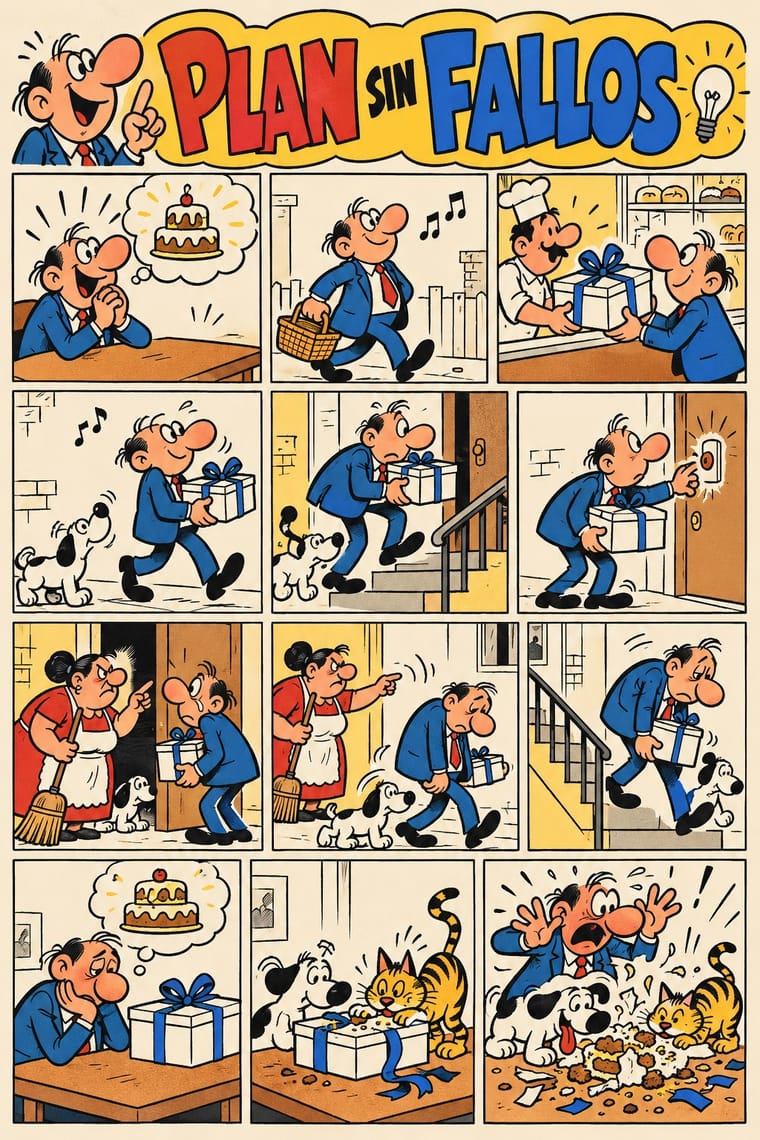
- Escuela Bruguera (Spanish Humour Comics) Pairs well · Another humour-magazine comic tradition of framed panels and caricature; Sani differs in language, social types and its serial reworking of a Franco-Belgian model.
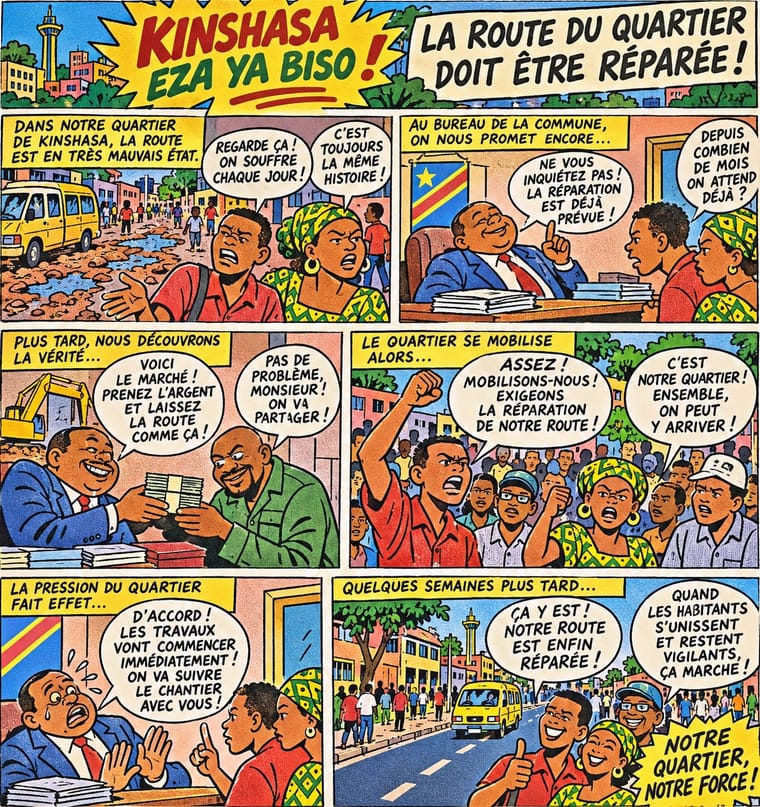
- Congolese Bande Dessinée (Kinshasa Comics Scene) Pairs well · Both are African urban comic lineages; borrow its page craft but do not assume Sani shares its format.
- Tingatinga Painting Contrasts · Tanzanian too, but painted, flat and image-led; narrative panels and dialogue govern reading here.
06
Often taken for
Sani and Swahili Humour-Magazine Comics has no real works recorded yet, so these are its nearest styles by its choices alone, with the choices that tell them apart.
-
Escuela Bruguera (Spanish Humour Comics)
Escuela Bruguera is one of Sani and Swahili Humour-Magazine Comics’s nearest styles by choices; no real work of either fits the other better.
Choices that tell Sani and Swahili Humour-Magazine Comics and Escuela Bruguera apart Choice Sani and Swahili Humour-Magazine Comics Escuela Bruguera Modular grid avoids characteristic Light ground — defining Limited spot colours — characteristic Monochrome — characteristic No shared descent in the atlas: they reached these choices separately.
-
Congolese Bande Dessinée (Kinshasa Comics Scene)
Congolese Bande Dessinée is one of Sani and Swahili Humour-Magazine Comics’s nearest styles by choices; no real work of either fits the other better.
Choices that tell Sani and Swahili Humour-Magazine Comics and Congolese Bande Dessinée apart Choice Sani and Swahili Humour-Magazine Comics Congolese Bande Dessinée Ornament-free characteristic — Light ground — characteristic Horror vacui — characteristic Agitational & persuasive — characteristic Rebellious & subversive — characteristic No shared descent in the atlas: they reached these choices separately.
-
Bitterkomix (Afrikaans Underground Comics)
Bitterkomix is one of Sani and Swahili Humour-Magazine Comics’s nearest styles by choices; no real work of either fits the other better.
Choices that tell Sani and Swahili Humour-Magazine Comics and Bitterkomix apart Choice Sani and Swahili Humour-Magazine Comics Bitterkomix Communal & popular characteristic — Modular grid avoids characteristic Monochrome — defining All caps occasional defining Light ground — characteristic No shared descent in the atlas: they reached these choices separately.
-
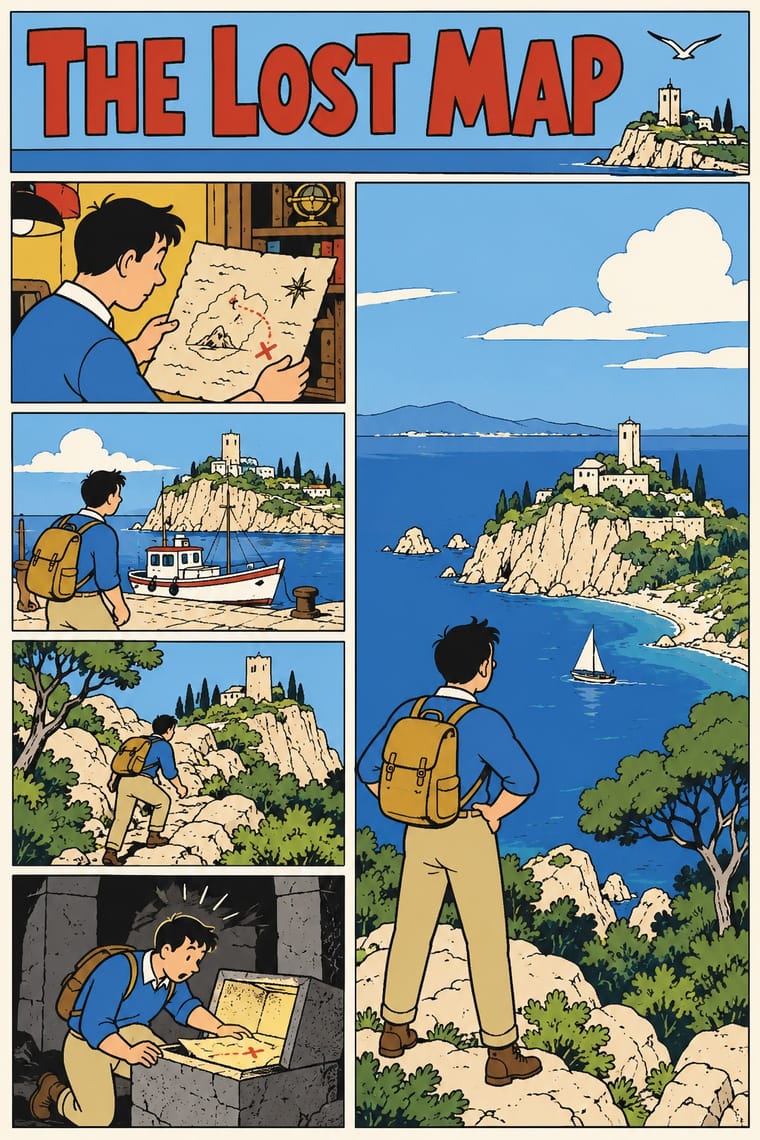
Ligne Claire (Franco-Belgian Clear Line)
Ligne Claire is one of Sani and Swahili Humour-Magazine Comics’s nearest styles by choices; no real work of either fits the other better.
Choices that tell Sani and Swahili Humour-Magazine Comics and Ligne Claire apart Choice Sani and Swahili Humour-Magazine Comics Ligne Claire Distortion & exaggeration defining — Modular grid avoids occasional Ironic & self-aware defining occasional Light ground — characteristic Communal & popular characteristic — No shared descent in the atlas: they reached these choices separately.
— means the choice isn’t among the style’s recorded choices. Critics recorded each work’s choices with the styles’ descriptions in view, so this shows whether the descriptions hold together, not proof that they are right.
07
Sources
- Jigal Beez, They Are Crazy These Swahili: Komredi Kipepe in the Footsteps of Asterix, International Journal of Comic Art 5(1), 2003, pp. 95-114 (https://www.comedix.de/lexikon/special/swahili/pdf/They_are_crazy_these_Swahili_Komredi_Kip.pdf)
- Comedix, Swahili comics special, https://www.comedix.de/lexikon/special/swahili/
How Stylogeny researches and checks a style: where the facts come from.