Pictorial & machine age · 1950–1990 · Eastern Europe
Polish Poster School
Also known as Polish School of Posters, Polska Szkoła Plakatu
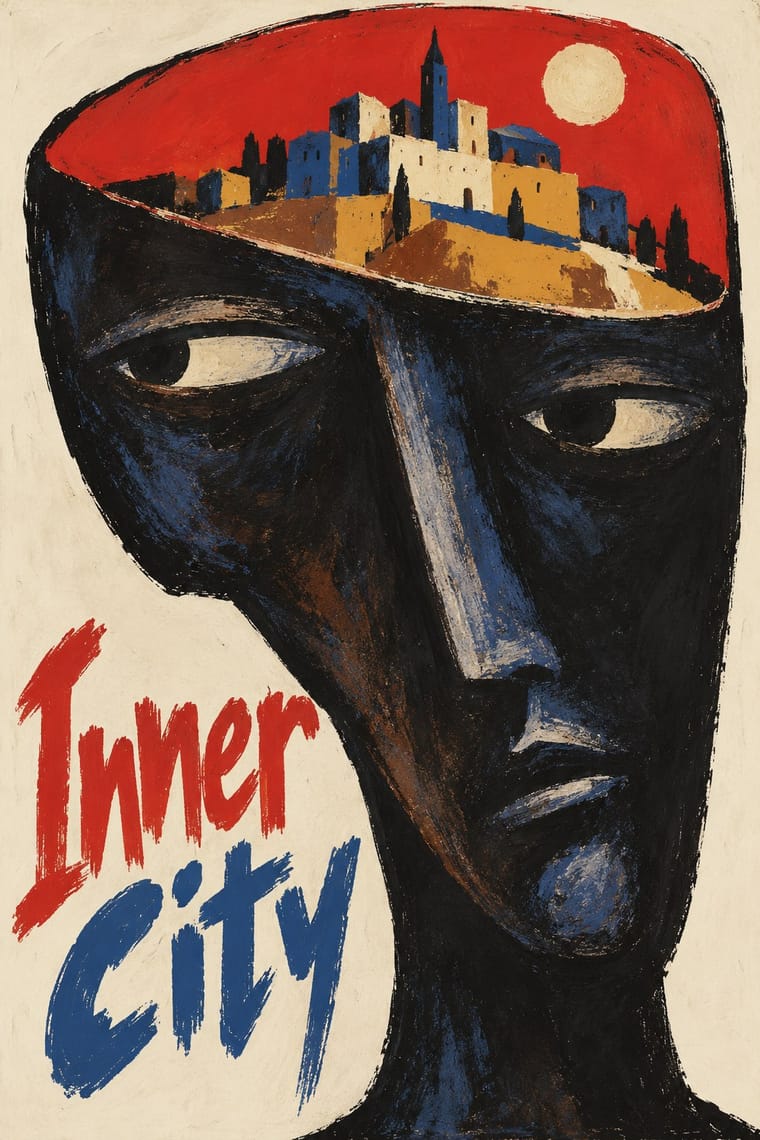
A painterly, metaphorical poster culture that flourished in communist Poland, chiefly for film, theatre, opera and circus. Working for state publishers, free of commercial pressure but under censorship, designers such as Henryk Tomaszewski, Jan Lenica and Roman Cieślewicz replaced star photographs with a single witty or unsettling visual idea, painted or collaged by hand and lettered in the artist's own handwriting.
Make something in this styleGet advice in this styleMix it with another style
01
How it works
- Condense the whole film or play into one visual metaphor rather than illustrating a scene or showing its stars.
- Paint, draw or collage the image by hand and let the brushwork and the artist's handwriting stay visible.
- Letter the title by hand as part of the picture, in a casual, painterly or cut-paper style.
- Use surreal juxtaposition, distortion and dark humour to say what could not be said directly.
- Keep text to a minimum (title, names and venue) and place it wherever the image allows.
Warsaw, Poland (Academy of Fine Arts; state film and art publishers)
02
Its design choices
From Stylogeny’s vocabulary of design choices: defining choices make the style, characteristic ones are usual, occasional ones turn up now and then.
- Layout & composition
- Space & hierarchy
- Typography
- Colour
- Form & shape
- Surface & texture
- Ornament
- Imagery
- Medium & production
- Tone & intent
- Avoids
- Straight photography, Naturalistic depiction, Modular grid, Layered information, Grotesque & neo-grotesque, Abundant decoration
Palette
#efe9dc#1c1c1c#d4352b#d6a23a#2f5d9e#7b4b2a
Typefaces
Henryk Tomaszewski's casual handwritten capitals
Brush- and crayon-drawn title lettering
Jan Młodożeniec's rounded, cut-paper display letters
Known for
Henryk Tomaszewski
Jan Lenica
Wozzeck, 1964
Roman Cieślewicz
Vertigo / Zawrót głowy, 1963
Franciszek Starowieyski
Waldemar Świerzy
Jimi Hendrix, 1974
Józef Mroszczak and Wojciech Fangor
International Poster Biennale, Warsaw (from 1966) and the Poster Museum at Wilanów
1968
03
Make something in this style
Say what you need, and Stylogeny’s image studio draws it from Polish Poster School’s design choices and checks it against them. It takes about a minute, and you get a link to share.
04
Where it comes from, and what it’s close to
Before it
The style it grew out of, and the styles it borrowed from.


After it
The styles that grew out of it.


Alike in its design choices
Styles that make many of the same choices, related or not, besides those above.


05
Real works
Artefacts in museums, libraries and archives that show the style, linked at their source.
- Ksiądz Marek (Father Mark)Roman Cieślewicz · 1963 · Victoria and Albert Museum, London (S.605-2015)
- Nosorożec (Rhinoceros)Henryk Tomaszewski · 1961 · Victoria and Albert Museum, London (S.781-2015)
- Jajko (The Egg)Jan Lenica · 1957 (premiere January 1958) · Victoria and Albert Museum, London (E.1433-1979)
- Mątwa (The Cuttlefish)Waldemar Świerzy · c. 1965 · Victoria and Albert Museum, London (E.416-1967)
- Don GiovanniFranciszek Starowieyski · 1976 · Victoria and Albert Museum, London (S.568-2015)
06
Sources
- Philip B. Meggs & Alston W. Purvis, Meggs' History of Graphic Design
- Culture.pl, articles on the Polish School of Posters (culture.pl)
- Muzeum Plakatu w Wilanowie (Poster Museum at Wilanów, National Museum in Warsaw)
How Stylogeny researches and checks a style: where the facts come from.