Pictorial & machine age · 1956–1989 · East Asia
Chinese National-Style Animation (Shanghai Animation Film Studio)
Also known as Shanghai Animation Film Studio style, Chinese school of animation (Zhongguo xuepai, 中国学派), Shuimo donghua (水墨动画, ink-wash animation), Jianzhi pian (剪纸片, paper-cut animation)
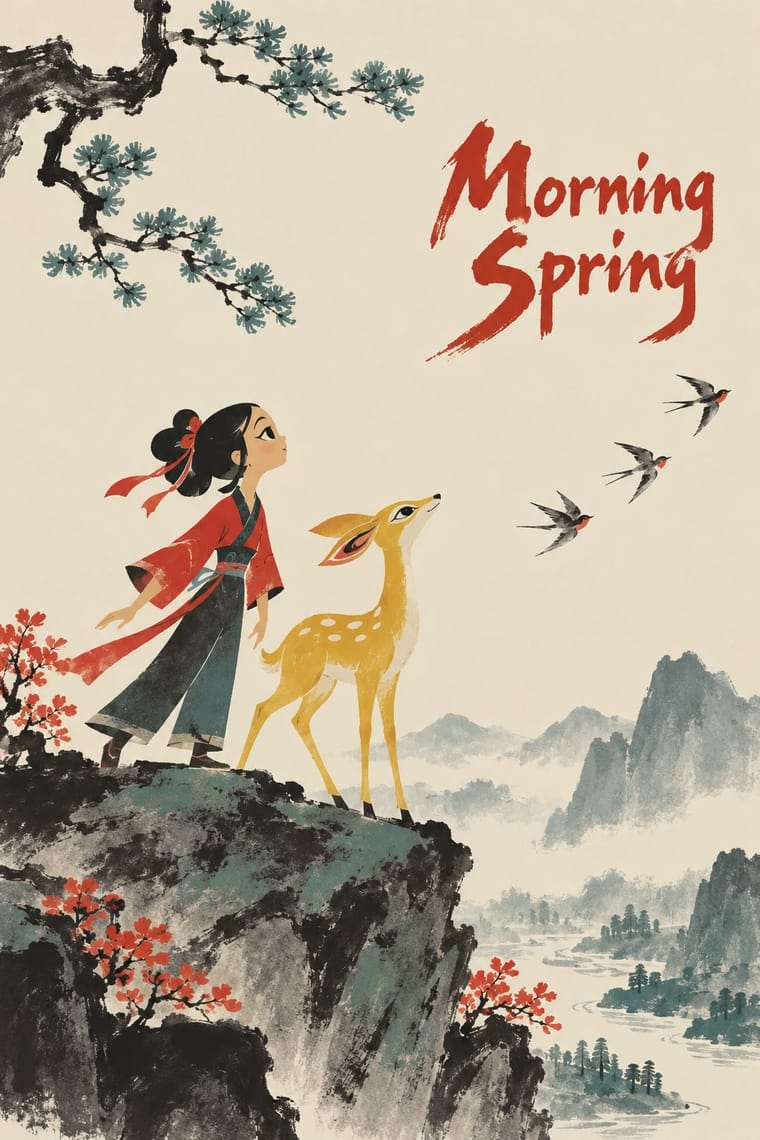
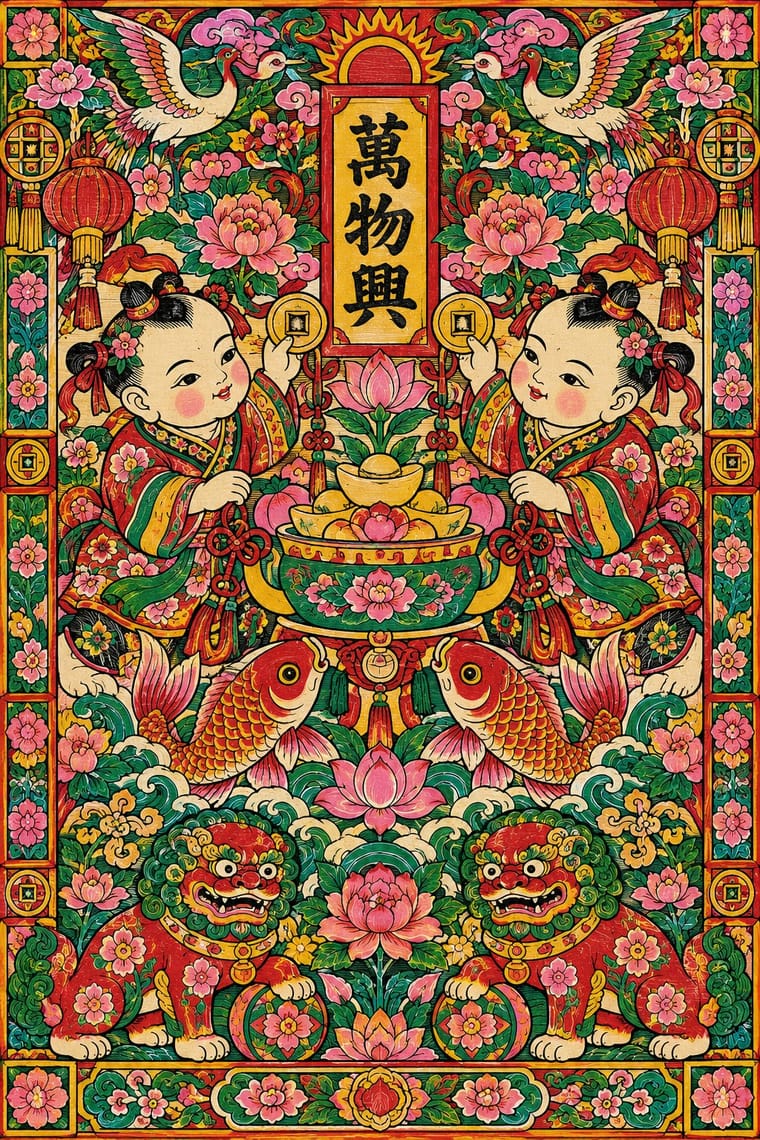
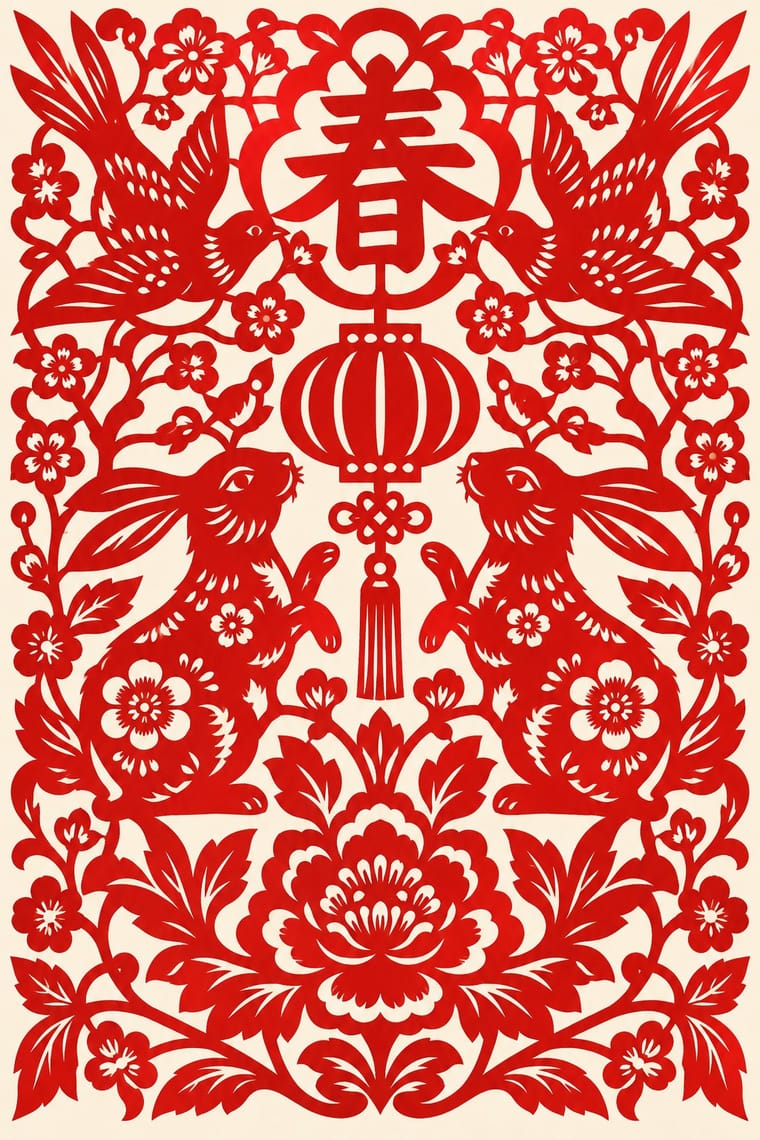
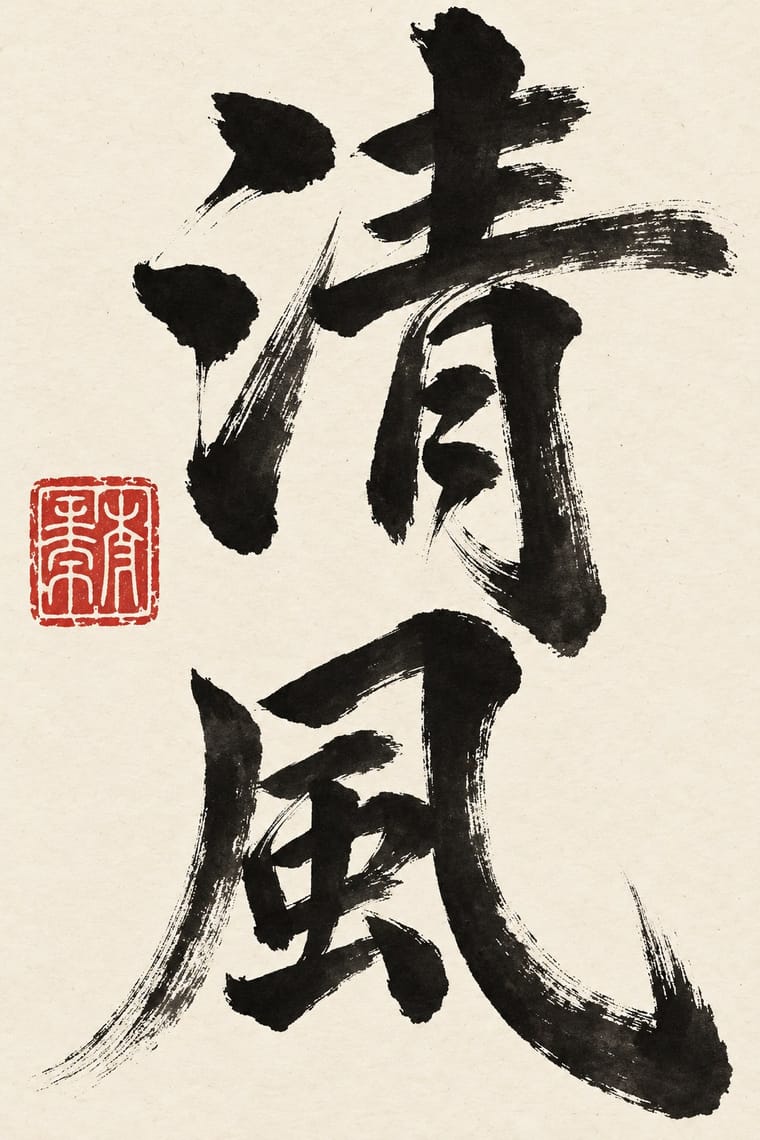
The 'national style' of the Shanghai Animation Film Studio, which turned from Disney and Soviet models to Chinese media: Peking-opera masks and movement, paper-cut and folded-paper figures, mural and New Year print colour and, from 1960, ink-wash painting set in motion after Qi Baishi and Li Keran. Graded ink on empty paper, flat outlined figures over painted grounds and brush-written titles carried fables and myths, from Havoc in Heaven (1961-1964) to Feeling from Mountain and Water (1988).
Make something in this styleGet advice in this styleMix it with another style
Use it with care
The films and their character designs, from Zhang Guangyu's Monkey King to Zhang Ding's Nezha, are the work of named designers at a studio that survives as Shanghai Animation Film Studio Co., Ltd. and still exhibits them: borrow the method (graded ink on empty paper, a jointed paper figure, an opera-mask face), never copy a particular character, and never present a generated image as a studio film. The paper-cut films drew on a living folk craft and shadow theatre, so credit those traditions and their makers rather than treating them as free motifs. Opera-mask colours and patterns mark particular character types, so do not paint them onto real people or ethnic groups as caricature. The national style was itself pursued with state backing (a vice premier proposed animating Qi Baishi, and Nezha was made for the People's Republic's thirtieth anniversary), and the studio also made didactic and political films; in the Cultural Revolution its classics were denounced as 'poisonous weeds' and its artists, Te Wei among them, imprisoned or sent to the countryside. Do not present the films as propaganda or as apolitical folk art, and do not dress a design in revolutionary slogans as period decor.
01
How it works
- Take the look of each film from a Chinese medium instead of the Western cel cartoon: let ink-wash painting, paper-cut, folded paper, Peking opera, cave and temple murals or New Year prints decide the figure, the colour and the way it moves.
- Paint with graded ink on an empty, paper-pale ground: let soft washes of tadpoles, reeds, buffalo and mountains float without hard outlines, and leave most of the frame unpainted.
- Cut figures as flat, jointed pieces of coloured paper, painted or incised with detail like a shadow puppet, shown in profile or three-quarter view and moved across a plain ground; or, from the 1980s, tear them from fine-fibred paper instead of cutting them (the lamao technique), so that the fluffy outlines of animals soften into ink wash.
- For myth and legend, outline flat, saturated figures with opera-mask faces and ornamented costume, and set them against atmospheric painted grounds of blue-green with scrolling clouds, waves and fluttering ribbons.
- Tell the fable through picture, music and movement with few or no words, and write the title and credits with a brush, as on a painting or an inscribed board.
Shanghai, China: the animation department of the Shanghai film studios (its cartoon unit began at the Northeast Film Studio in 1946 and moved via Changchun to Shanghai), made independent as the Shanghai Animation Film Studio in April 1957 with Te Wei as its first head. Its leaders came out of Shanghai's cartoon and commercial art: Te Wei, born in Shanghai, had drawn political cartoons; the Wan brothers had developed animation there from the 1920s; and Zhang Guangyu, who designed the characters of Havoc in Heaven, had designed tobacco advertising and covers for Shanghai Manhua. After Te Wei's The Proud General (1956) the studio set out to 'explore the path of national style', adding paper-cut (1958), ink-wash (1960) and folded-paper (1960) films. The Cultural Revolution halted this work from the mid-1960s to the late 1970s; a second flowering ran from Nezha (1979) to Te Wei's Feeling from Mountain and Water (1988), before cuts in state funding, outsourcing and imported Japanese and American cartoons ended it.
02
Its design choices
From Stylogeny’s vocabulary of design choices: defining choices make the style, characteristic ones are usual, occasional ones turn up now and then.
- Layout & composition
- Space & hierarchy
- Typography
- Colour
- Form & shape
- Imagery
- Tone & intent
- Avoids
- Straight photography, Photomontage, 3D render, Gloss & highlights, Chrome & 3D render, Fluorescent & neon, Grotesque & neo-grotesque, Horror vacui, Ironic & self-aware
Palette
#ede6d3#1d1b19#8f8c85#c63a2c#2e5d57#e3bb3a
Typefaces
Running-script brush calligraphy for main titles
the title of Where Is Mama?, 1960, written in white on a wooden board
Regular-script brush calligraphy for credits, written in black on pale paper
the credit cards of Where Is Mama?, 1960
Known for
Te Wei (with Li Keruo), The Proud General (骄傲的将军, 1956)
characters and movement modelled on Peking opera, the first step towards a national style
Wan Guchan, Pigsy Eats Watermelon (猪八戒吃西瓜, 1958)
the first paper-cut film, flat cut-paper figures with painted line detail on a pale plain ground
Where Is Mama? / Little Tadpoles Looking for Mama
(小蝌蚪找妈妈, 1960; directed by Tang Cheng, A Da and others, artistic guidance Te Wei, technical guidance Qian Jiajun): the first ink-wash film, after Qi Baishi's paintings; ink tadpoles, frogs and reeds on an empty pale ground, its title brush-written on a wooden board
Yu Zheguang, A Clever Duckling (聪明的鸭子, 1960)
the first folded-paper (zhezhi) film, its ducks, cat and sets all folded from paper in very simple forms and bright colours
Wan Laiming, Havoc in Heaven (大闹天宫, part 1 1961, part 2 1964; art direction and design Zhang Guangyu, art and background design Zhang Zhengyu): an opera-masked Monkey King in flat outlined colour against painted blue-green grounds with scrolling clouds and waves
Te Wei and Qian Jiajun, The Cowboy's Flute (牧笛, 1963)
an ink-wash buffalo boy after Li Keran's ink paintings, in sparse landscapes that verge on abstraction
Wang Shuchen, Yan Dingxian and Xu Jingda (A Da), Nezha Conquers the Dragon King (哪吒闹海, 1979; chief art designer Zhang Ding)
figures drawn from door-god paintings and murals in a decorative style with simple lines, in blue, green, red, white and black
A Da, Three Monks (三个和尚, 1980, released 1981)
three caricatured monks told apart by flat red, yellow and blue robes (character design Han Yu), set on an empty pale ground in a flat composition with the scattered perspective of Chinese painting, told without dialogue; Silver Bear for best short film at Berlin, 1982
03
Make something in this style
Say what you need, and Stylogeny’s image studio draws it from Chinese National-Style Animation (Shanghai Animation Film Studio)’s design choices and checks it against them. It takes about a minute, and you get a link to share.
04
Where it comes from, and what it’s close to
Before it
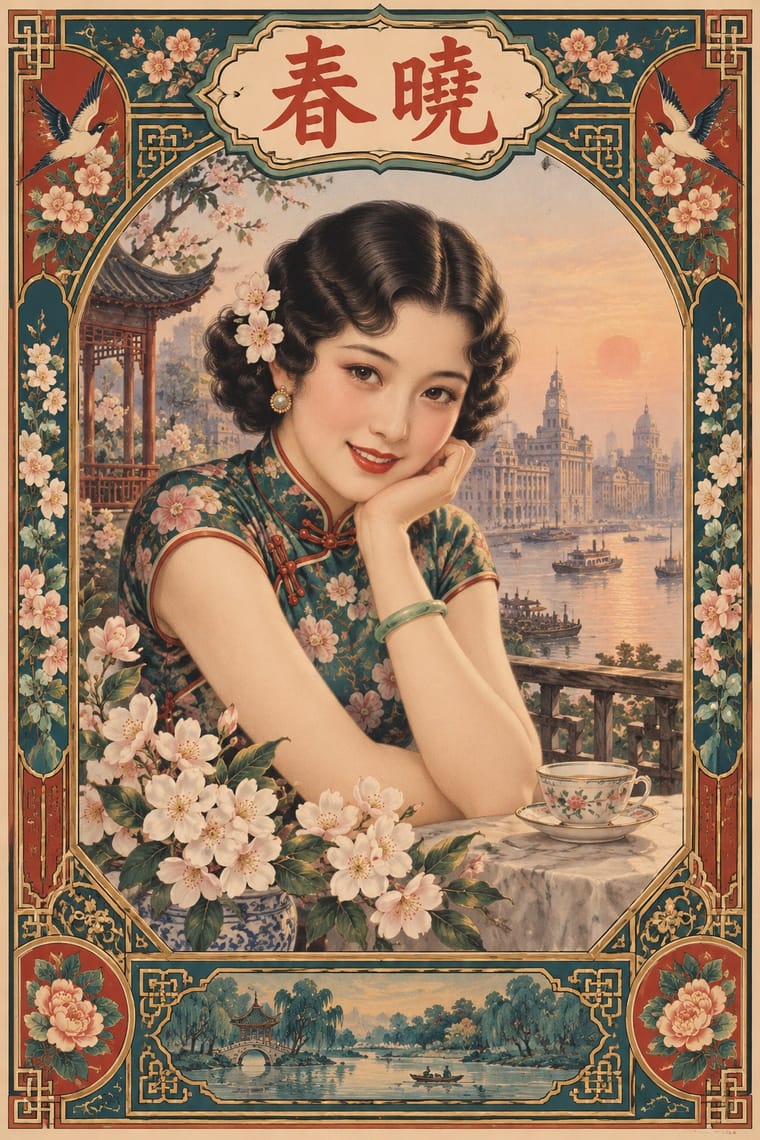
The style it grew out of, and the styles it borrowed from.
After it
The styles that grew out of it.
No later style in the atlas grew out of it yet.
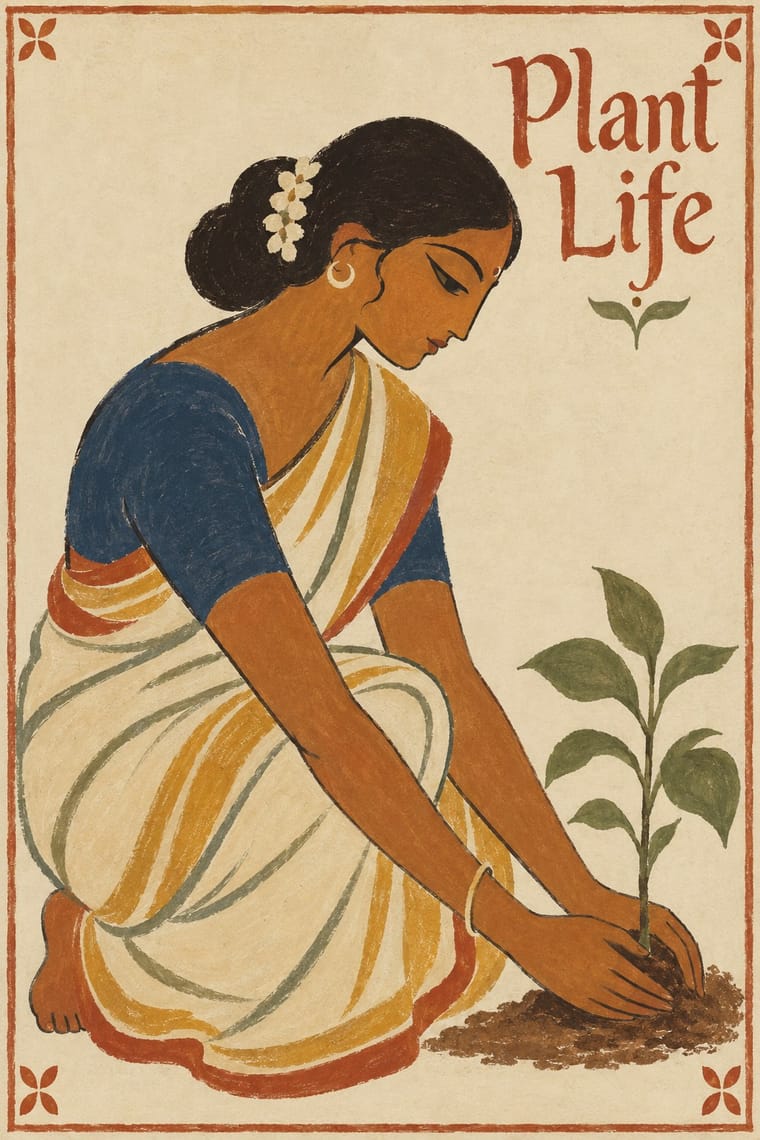
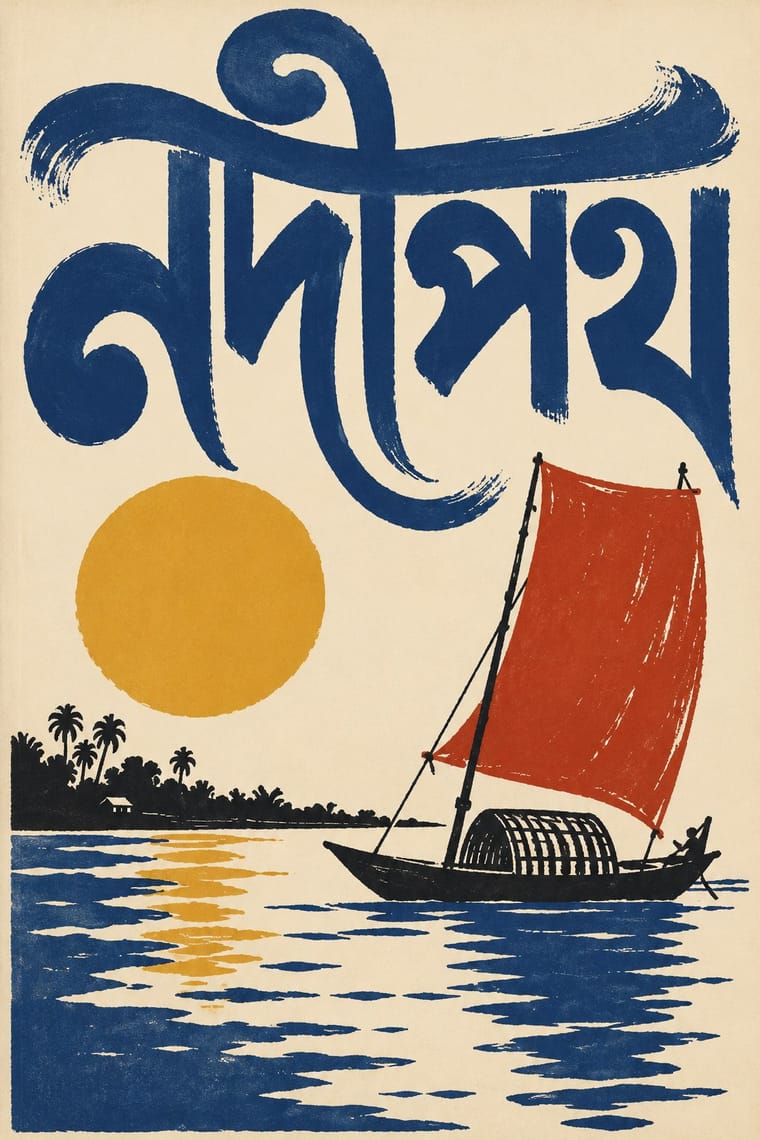
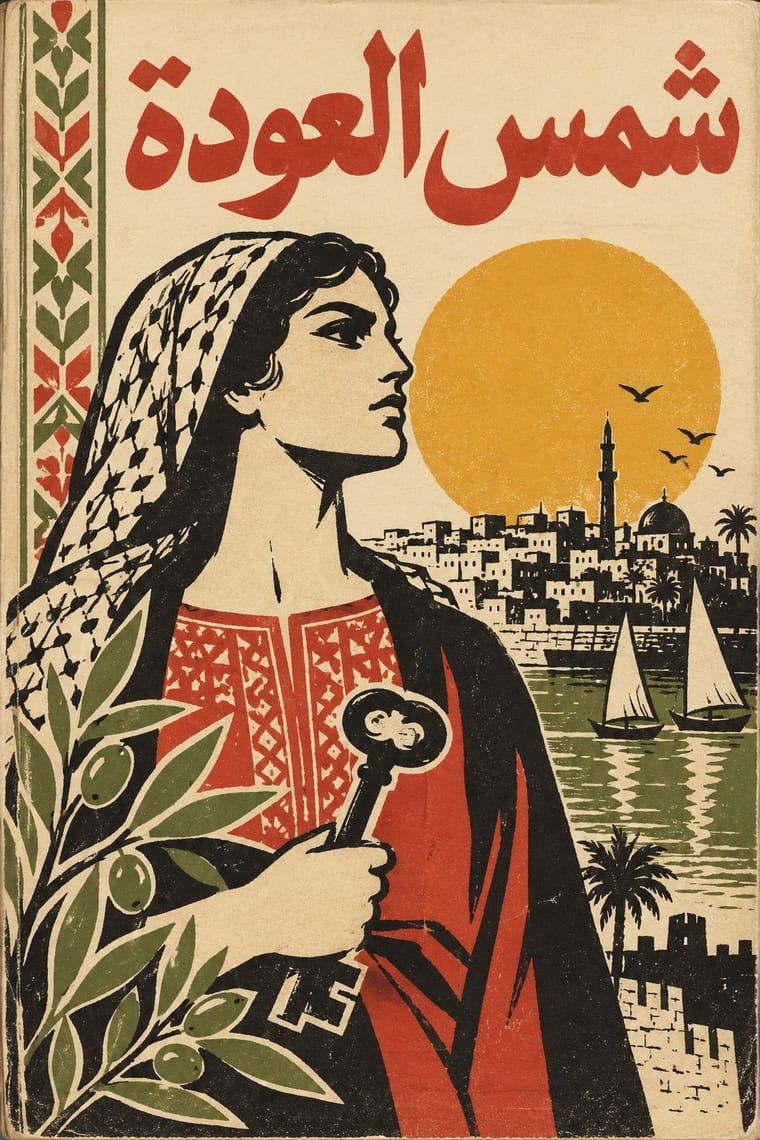
Alike in its design choices
Styles that make many of the same choices, related or not, besides those above.
- Kalighat Pat & Battala Bazaar Prints64% alike
- Zoomorphic & Figural Calligraphy (Islamic Calligrams)64% alike
- Đông Hồ & Hàng Trống Folk Prints63% alike
05
Sources
- Shanghai Animation Film Studio, Wikipedia (officially established in April 1957; Te Wei its first head; films 'with Chinese artistic characteristics' in jianzhi, shuimohua, puppetry, zhezhi and shadow puppetry; Pigsy Eats Watermelon, 1958, the first paper-cut film by Wan Guchan and Hu Jinqing; Little Tadpoles Looking for Mama, 1960, the first ink-wash film; Havoc in Heaven 1961 and 1964; Japanese and American animation taking over the market from 1985; many of the studio's leaders and artists 'rounded up and sent to peasant villages' in the Cultural Revolution), https://en.wikipedia.org/wiki/Shanghai_Animation_Film_Studio
- 上海美术电影制片厂, Chinese Wikipedia (founded 1 April 1957; '探民族风格之路', exploring the path of national style; first paper-cut film 1958, first ink-wash film 1960, first folded-paper film 聪明的鸭子 1960; production stopped for ten years until after the fall of the Gang of Four; 哪吒闹海 1979), https://zh.wikipedia.org/wiki/上海美术电影制片厂
- Havoc in Heaven, Wikipedia (parts released 1961 and 1964, first shown together in 1965; directed by Wan Laiming; art direction and design Zhang Guangyu, art and background design Zhang Zhengyu; 'stylized animation and drums and percussion accompaniment' heavily influenced by Peking opera), https://en.wikipedia.org/wiki/Havoc_in_Heaven
- Te Wei, Wikipedia (1915-2010; born in Shanghai, a manhua artist who drew political cartoons as a teenager; Vice Premier Chen Yi suggested animating the paintings of Qi Baishi; The Proud General, 1956, with character designs and music inspired by Peking opera; ink-wash style influenced by Qi Baishi from about 1960; The Cowboy's Flute, 1963; Feeling from Mountain and Water, 1988, his last film; in the Cultural Revolution the studio was shut down and he 'was placed in solitary confinement for a year', then exiled to the countryside), https://en.wikipedia.org/wiki/Te_Wei
- Alex Dudok de Wit, 'Te Wei, founding father of Chinese animation', BFI Sight and Sound, 28 August 2015, updated 3 August 2017 (Te 'laid down the fundaments of a national animation style'; the Peking-opera scenes of The Proud General 'mark a new departure'; Where Is Mama? emulating 'the exquisitely graded ink-and-water style'; The Cowboy's Flute's backgrounds 'drawn with a characteristically Chinese sparseness, verging on abstraction in places'; Feeling from Mountain and Water's more monochrome palette, more empty space and long silences; funding cuts after Deng's reforms), https://www.bfi.org.uk/sight-and-sound/features/te-wei-founding-father-chinese-animation
- Fung Yuk-sung, 'In Full Bloom: The Development of Contemporary Chinese Animation (1)' and '(2)', Hong Kong Film Archive e-Newsletter 68 and 69 (2014) (the CCP's arts strategy, so that 'the revolutionary message was genetically embedded in the medium from its birth'; the Northeast Film Studio's cartoon department of 1946 and its move to Changchun; Te Wei a 'leftist comic book artist'; the Wan brothers developing animation from the 1930s and moving from Shanghai to Hong Kong in 1949; The Little Carp Jumps Over Dragon Gate, 1958, reflecting 'the spirit of the times' and Golden Dreams, 1963, 'a political fable satirising imperialism and capitalism'; Where is Mamma? co-directed by Tang Cheng, A Da and others with Te Wei as consultant; The Cowherd's Flute based on the ink paintings of Li Keran; in the Cultural Revolution Chinese animation 'branded as a "poisonous weed"' and Te Wei, Wan Laiming and Qian Jiajun imprisoned; Nezha intended to celebrate the 30th birthday of the People's Republic; Nezha Conquers the Dragon King, 1979, 'an important milestone in the revival of the "national" style'; Three Monks, 1980, and its 'bold experiments in style'; Feelings of Mountains and Waters; the 1988 Shanghai International Animation Festival introducing 'the unique national style of Chinese animation'; foreign animation and outsourcing in the 1980s and 1990s), https://www.filmarchive.gov.hk/documents/18995340/19057014/68_more_e.pdf and https://www.filmarchive.gov.hk/documents/18995340/19057014/69_more_e.pdf
- KMBO, 'Les Petits Canards de papier' press kit, with Jiao Da, Léa Wu and Marie-Claire Kuo (Paris, 2013) (A Clever Duckling, 1960, characters, sets and direction by Yu Zheguang, the first folded-paper film after a year of research; folded-paper films with 'formes extrêmement simples et les couleurs vives' and sets not drawn from Chinese painting; the studio established as an independent body in 1957, 380 staff in the early 1960s; its sources in the literati arts of calligraphy and painting, the popular arts of paper-cut, folded paper, prints, puppet, shadow and opera theatre, and the decorative arts), https://www.3continents.com/wp-content/uploads/dp_lpcdp_final.pdf
- CAFA ART INFO (Central Academy of Fine Arts), 'From "Frontstage" to "Backstage": Returning to the Golden Age of Chinese Animation Films', 13 August 2025, on the exhibition 'Animating China: A History of Shanghai Animation Films', Taikang Art Museum, Beijing, 13 July-2 November 2025 (separate departments for hand-drawn and ink-wash, puppet, paper-cut and folded-paper animation after 1960; ink-wash animation drawing on Qi Baishi; character paper puppets for Monkey Fishing for the Moon, 1980, designed by A Da, and Fox Hunter, 1977-1978, designed by Han Meilin; the Havoc in Heaven poster and Three Monks still reproduced there were viewed for the visual traits), https://www.cafa.com.cn/en/NEWS/details/8332797
- Academy of Arts & Design, Tsinghua University, 'Generations Have Their Own Ne Zha', 19 February 2025 (Zhang Guangyu, 'renowned for his satirical comic "Journey to the West"', designing the characters of Havoc in Heaven from 1960, 'Merging Peking Opera masks, folk toys, and woodblock prints'; Zhang Guangyu's approach to line and colour credited with founding the 'Chinese School' of animation; Zhang Ding the chief art designer of Nezha Conquers the Dragon King, drawing on Dunhuang murals, Ming-era temple art and folk woodblock prints), https://www.enad.tsinghua.edu.cn/info/1061/1816.htm
- Animation Obsessive, 'Chinese Animation', 24 February 2025 (the animators' wish to make something 'actually Chinese'; Havoc in Heaven styled after Peking opera and drawing on folk prints of Sun Wukong, New Year paintings of Nezha and the Yongle Palace murals; paper-cut films grown from shadow-puppet plays; Zhang Ding's Nezha 'a decorative style with simple lines' in blue, green, red, white and black; the style abandoned from the mid-1960s to the late 1970s and the second golden age ending in the late 1980s), https://animationobsessive.substack.com/p/chinese-animation
- M+, 'Chinese Mainland: Revisiting the Classics', programme in the series Animation Pioneers in Asia, 2023 (Where Is Mama?, 1960, drawing on images from Qi Baishi's ink painting with ink-and-water washes instead of flat single-line painting; Monkeys Fish the Moon, 1981, Zhou Keqin, papercut animation capturing traditional shadow plays; Three Monks without dialogue and its Silver Bear at Berlin), https://mplus.org.hk/en/cinema/animation-pioneers-in-asia/mainland-china-revisiting-the-classics
- Berkeley Art Museum and Pacific Film Archive, 'Chinese Animation: The Screen and the Scroll', 15 January 2023 (animation called meishupian, 'fine art films'; A Deer of Nine Colors, 1981, Qian Jiajun and Dai Tielang, referring to the Dunhuang Mogao cave paintings; Where Is Mama? and A Shepherd's Flute, 1963, after Qi Baishi), https://bampfa.org/event/chinese-animation-screen-and-scroll
- USC US-China Institute, 'China Onscreen Biennial: Animated, Golden and Restored', 23 October 2012 (China Film Archive restorations: Pigsy Eats Watermelon, 1958, Wan Guchan; Little Tadpoles Look for Their Mother, 1960, Te Wei and Tang Cheng; The Cowherd's Flute, 1963, Te Wei and Qian Jiajun; Three Monks, 1980, A Da), https://china.usc.edu/event/china-onscreen-biennial-animated-golden-and-restored-international-restoration-premiere
- Nezha Conquers the Dragon King, Wikipedia (released 19 May 1979; directed by Wang Shuchen, Yan Dingxian and Xu Jingda), https://en.wikipedia.org/wiki/Nezha_Conquers_the_Dragon_King; Three Monks, Wikipedia (released 1 January 1981; directed by A Da; no dialogue; Silver Bear for best short film, Berlin 1982), https://en.wikipedia.org/wiki/Three_Monks; Feelings of Mountains and Waters, Wikipedia (山水情, 1988, 'essentially a landscape painting in motion'), https://en.wikipedia.org/wiki/Feelings_of_Mountains_and_Waters
- Chineseposters.net, 'Zhang Guangyu (张光宇)' (1900-1965; studied in Shanghai from 1918 and designed advertising for the Nanyang Tobacco Company and the British American Tobacco Company; covers for Shanghai Cartoons (Shanghai manhua) in 1928-1929; the anti-Guomindang cartoon series Journey to the West, 1945; head of the Decorative Art Department of the Central Art Academy 1949-1963; chief cartoonist of the film of Journey to the West; after Michael Sullivan, Modern Chinese Artists, 2006), https://chineseposters.net/artists/zhangguangyu
- Wikimedia Commons, works viewed for the visual traits: 小蝌蚪找妈妈 1960.webm (title on a wooden board in running-script brush calligraphy, credits in regular-script brush on pale paper, ink tadpoles and reeds on an empty ground), https://commons.wikimedia.org/wiki/File:小蝌蚪找妈妈_1960.webm; Havoc in Heaven cels and a People's Pictorial page of April 1962 (opera-masked Monkey King in flat outlined colour on painted blue-green grounds with scrolling clouds), https://commons.wikimedia.org/wiki/File:The_Monkey_King_fights_the_god_Nezha_in_Havoc_in_Heaven_(1961-1964_film)_-_Cel_Animation_Art.jpg and https://commons.wikimedia.org/wiki/File:1962-04_1962年_电影_大闹天宫.jpg; a still of Pigsy Eats Watermelon (flat cut-paper pieces with painted line detail on a pale plain ground), https://commons.wikimedia.org/wiki/File:猪八戒吃西瓜.jpg; the deep blue-green palette colour sampled from the grounds of the Havoc in Heaven cel and People's Pictorial page
- 骄傲的将军, Chinese Wikipedia (directors 特伟 and 李克弱, screenwriter 华君武), https://zh.wikipedia.org/wiki/骄傲的将军; 小蝌蚪找妈妈, Chinese Wikipedia (1960, China's first ink-wash animated film; 艺术指导 特伟, 技术指导 钱家骏), https://zh.wikipedia.org/wiki/小蝌蚪找妈妈
- The Fight Between the Snipe and the Clam, Wikipedia (1983; directed by Hu Jinqing at the Shanghai Animation Film Studio; 'combines painted and cutout animation'; Silver Bear for best short film, Berlin, February 1984), https://en.wikipedia.org/wiki/The_Fight_Between_the_Snipe_and_the_Clam
- 小楉, 《中国美术片时代的绝响:世间再无《葫芦兄弟》》, Mtime, republished by Huxiu, 24 May 2019 (in the 1980s Hu Jinqing created ink-wash paper-cut animation and the 'lamao' (拉毛) technique, tearing the paper by hand instead of cutting it to give animals' outlines a fluffy look; The Fight Between the Snipe and the Clam looking like ink-wash animation but in fact a paper-cut made with the lamao technique; Silver Bear at the 34th Berlin festival), https://m.huxiu.com/article/300971.html
- 《这个比《复联》还爆的中国IP,火了33年!但创作者直到去世,才为人所知》, Pedaily (from the WeChat account 金错刀), 15 May 2019 (Hu Jinqing's lamao technique: paper-cuts of fine-fibred paper pulled into fluffy edges to show animal hair; used for the ink-wash film The Fight Between the Snipe and the Clam), https://news.pedaily.cn/201905/443052.shtml
- ACGx, 《“爷爷”去世后,童年记忆中的定格动画真的消失了吗?》, Gcores, 18 May 2019 (in the 1980s the paper-cut films tried the lamao technique and made the ink-wash-style paper-cuts 鹬蚌相争 and 猴子捞月), https://www.gcores.com/articles/109898; Xinhua, 《中国经典动画〈葫芦兄弟〉〈鹬蚌相争〉导演胡进庆在上海去世》, via China Writers Association, 14 May 2019 (Hu Jinqing invented the lamao paper-cut technique and made ink-wash-style paper-cut films; 鹬蚌相争 in ink-wash form), https://www.chinawriter.com.cn/n1/2019/0514/c403994-31084773.html
- Tristan Shaw, 'Remembering animator Hu Jinqing, father of the Calabash Brothers', The China Project, 28 June 2019 (Hu assisted on Pigsy Eats Watermelon, 1958, and took up ink-wash painting in his own style; in The Fight Between the Snipe and the Clam 'The backgrounds consist of inky black mountains and trees, and a clear, misty body of water'), https://thechinaproject.com/?p=178627
- Xinmin Weekly (新民周刊), issue of 24 October 2022, p. 44 (Three Monks: Han Yu's character design; the monks clearly told apart by red, yellow and blue, borrowing the colours of folk art; scenes in flat composition (平面构图) after the scattered perspective (散点透视) of Chinese painting), https://img1.xinmin.cn/xmzk/2022-10-24/441024.pdf; Rarebit Early Animation Wiki, 'Three Monks (三个和尚)(1980)' (the monks 'dress in primary colours, that is, red, blue, and yellow, so as to easily distinguish them from one another'), https://rarebit.org/?p=8831


How Stylogeny researches and checks a style: where the facts come from.