Traditions & vernacular · 1869–present · North America
Western Americana Graphics ( Wild West, Rodeo & Ranch Marks )
Also known as Western vernacular graphics, Wild West show graphics, Rodeo poster graphics, Cowboy commercial graphics
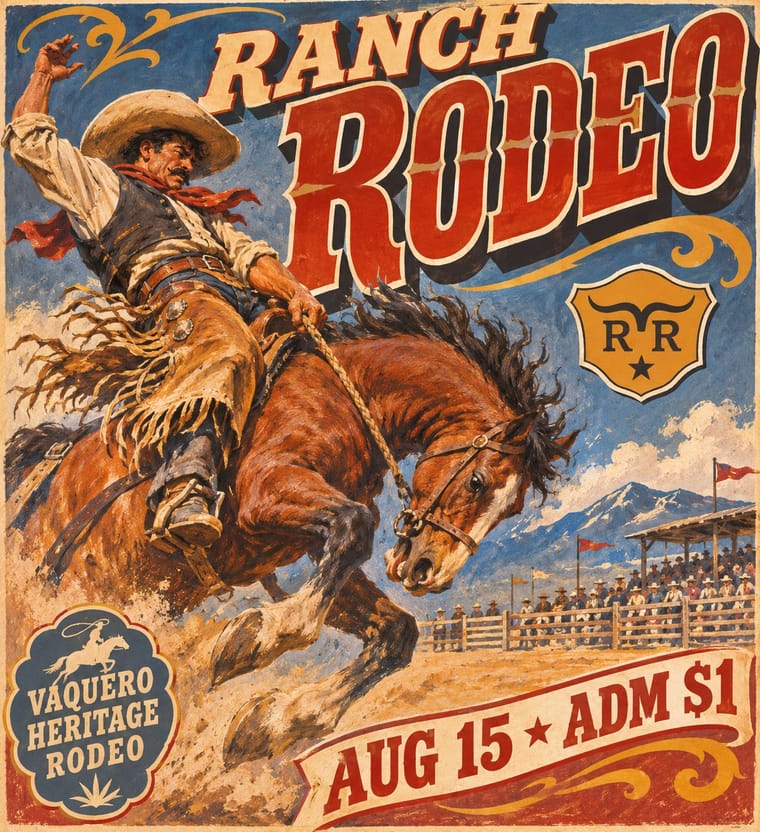
A vernacular of show, rodeo and ranch graphics from the late nineteenth century on: a monumental event name over a galloping or bucking horse-and-rider image, rendered as a naturalistic chromolithograph or a simplified cut silhouette, with dates and admissions subordinate. A parallel strand compresses letters into a brand mark that travels onto cattle, leather and denim.
Make something in this style Get advice in this style Mix it with another style
Use it with care
The imagery of the cowboy West is entangled with conquest and with the erasure and caricature of Indigenous peoples; Diné weaving, Pueblo designs, sacred imagery, feather headdresses and generic tribal motifs are not available as Western decoration. Credit the Spanish and Mexican vaquero antecedents, treat historical conquest imagery critically, and commission practitioners from the relevant living community for any community-specific work.
01
Its picture in other colours
Change a colour and every picture on this page follows. It happens in your browser, from the same pictures: nothing new is made or saved.
Choose a colour to change it
-
#e8d9b5 -
#b5381f -
#2b2a28 -
#c8892f -
#4f6b8a
A faded colour isn’t in these pictures, so changing it changes nothing.
Light and dark stay where they are; greys hardly move.
More colours: any style’s, or your own
The pictures show the style’s own colours.
02
Make something in this style
Say what you need, and Stylogeny’s image studio draws it from Western Americana Graphics (Wild West, Rodeo & Ranch Marks)’s design choices and checks it against them. It takes about a minute, and you get a link to share.
03
How it works
Palette
-
#e8d9b5accent · 9% -
#b5381faccent · 24% -
#2b2a28ink · 8% -
#c8892fground · 29% -
#4f6b8anot in its pictures
Shares measured from its picture. The ground is what the pictures sit on (of the colours covering most, the most neutral), the ink stands out from it most, the rest are accents.
Typefaces
-
Wood-type slab serifs and Tuscan-style Western display letters
-
Condensed poster capitals
-
Hand-lettered ranch-brand monograms
-
Calvous
slab display, San Antonio Stock Show & Rodeo 2026-27 guide
- Give the event name monumental scale in condensed or slab capitals and push dates and admission details to a lower tier.
- Centre the poster on one dynamic figure, a bucking horse and rider, composed on a diagonal with a naturalistic or silhouette rendering.
- Print in saturated, layered lithographic inks with outlined or shadowed headline letters over the picture.
- Reduce a ranch identity to a single continuous or joined letter-and-sign brand that can be burned, stamped or sewn onto goods.
- Keep two strands distinct: the pictorial show and rodeo poster (diagonal figure, lithographic colour, display capitals) and the ranch-mark strand (a joined monochrome mark), and do not merge their traits.
Where and when The commercial visual culture of the ranching West and its touring entertainments, produced by lithographers such as Strobridge (Cincinnati, publisher of the 1908 Buffalo Bill sheet) and Denver Lithograph Company (printer of the 1902 rodeo poster).
The commercial visual culture of the ranching West and its touring entertainments, produced by lithographers such as Strobridge (Cincinnati, publisher of the 1908 Buffalo Bill sheet) and Denver Lithograph Company (printer of the 1902 rodeo poster). The start is a corpus anchor, King Ranch's 1869 registration of the Running W, not the beginning of branding, which Spanish and Mexican ranching precede.
Change it with an idea. Any of the 73 moves that make a design say something can go on this style.
04
Its design choices
From Stylogeny’s vocabulary of design choices: defining choices make the style, characteristic ones are usual, occasional ones turn up now and then.
- Layout & composition
- Space & hierarchy
- Typography
- Colour
- Form & shape
- Surface & texture
- Medium & production
- Tone & intent
- Avoids
- Modular grid, Generous white space, Ornament-free, Lowercase only, Bitmap & pixel, 3D render, Frosted glass
How its pictures are made Drawn & painted
Kind of picture: Drawn & painted
Known for
-
King Ranch, Running W ownership mark, first registered 1869 and still used on cattle and leather goods
-
Denver Lithograph Company, Rodeo Advertising Poster, 1902, National Cowboy & Western Heritage Museum
-
Strobridge Lithograph Co., Buffalo Bill's Wild West & Rough Riders, 1908, chromolithograph, Amon Carter Museum of American Art (1969.174), artist unknown
-
Lead, not inspected
Levi Strauss & Co. and Lee mid-century denim logos with cattle-brand imagery, as analysed in Abrego (2021); no individual label inspected
-
Contemporary lead
San Antonio Stock Show & Rodeo, 2026-27 Branding Guide (S-Hat icon and event logo), a 2026 corporate identity, not evidence of continuity
05
Where it comes from, and what it’s close to
Nothing earlier is recorded: in the atlas it is a starting point.
Western Americana Graphics (Wild West, Rodeo & Ranch Marks) 1869–present
No later style in the atlas grew out of it yet.
Alike in its design choices
06
Combine it with
Styles Western Americana Graphics (Wild West, Rodeo & Ranch Marks) pairs well with or plays against, from the research. Each is worked out as a combination: which style gives the type, the colours and the forms.
- Mexican Popular Graphics (Posada) Pairs well · Credits the Spanish and Mexican ranching world that preceded Anglo Western imagery, and its direct popular-print energy.
- Chicano Screenprint Poster Contrasts · Offers a living Southwest counter-narrative to the Anglo cowboy myth.
- Hipster Artisanal Revival Contrasts · The recent badge, crossed-arrow and Est. template borrows Western cues but is circular, symmetric and monochrome where show posters are pictorial and diagonal.
- Hand-Painted Signage & Vernacular Lettering Pairs well · Painted shopfront and showcard lettering gives the same bold outlined capitals and hard shadows.
07
Often taken for
Western Americana Graphics has no real works recorded yet, so these are its nearest styles by its choices alone, with the choices that tell them apart.
-
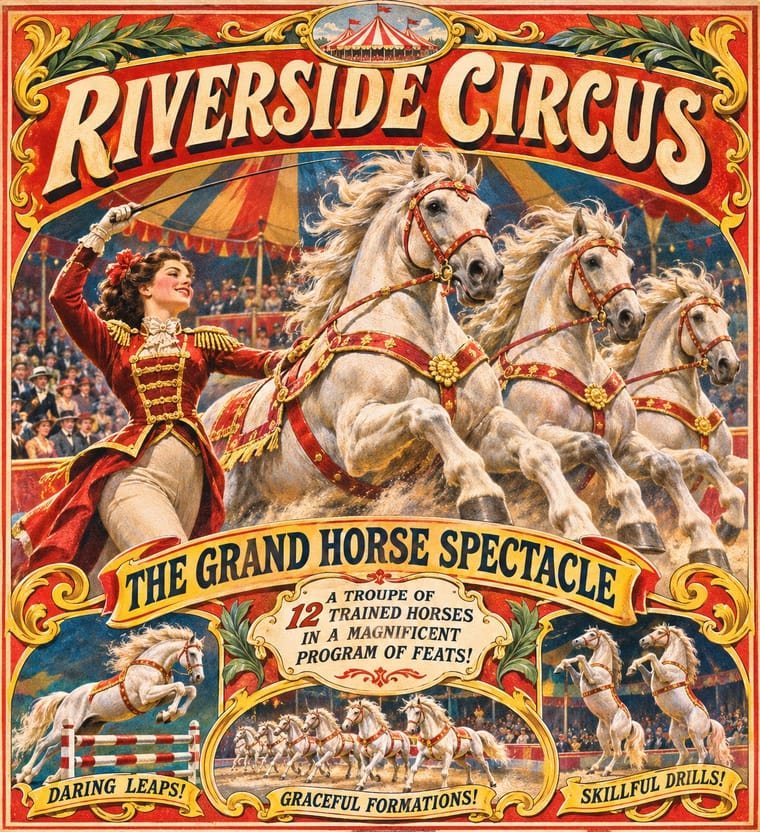
Circus Chromolithographic Show Poster
Circus Chromolithographic Show Poster is one of Western Americana Graphics’s nearest styles by choices; no real work of either fits the other better.
Choices that tell Western Americana Graphics and Circus Chromolithographic Show Poster apart Choice Western Americana Graphics Circus Chromolithographic Show Poster Single focal point defining — Illusion of depth occasional defining Monochrome occasional avoids Gradients — characteristic Nostalgic & retro characteristic — No shared descent in the atlas: they reached these choices separately.
-
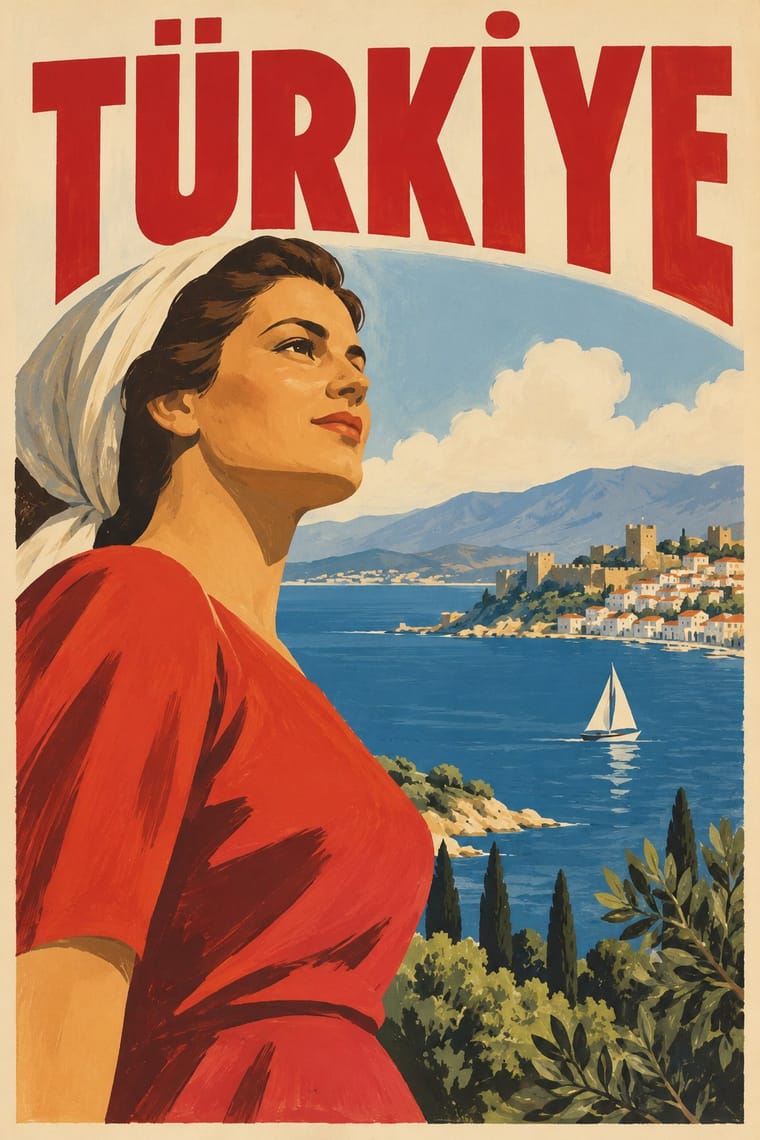
Early Turkish Republican Graphic Design
Early Turkish Republican Graphic Design is one of Western Americana Graphics’s nearest styles by choices; no real work of either fits the other better.
Choices that tell Western Americana Graphics and Early Turkish Republican Graphic Design apart Choice Western Americana Graphics Early Turkish Republican Graphic Design Extreme scale contrast defining occasional Stylised figuration occasional defining Ornamented display defining occasional Light ground — characteristic Slab serif characteristic — No shared descent in the atlas: they reached these choices separately.
-
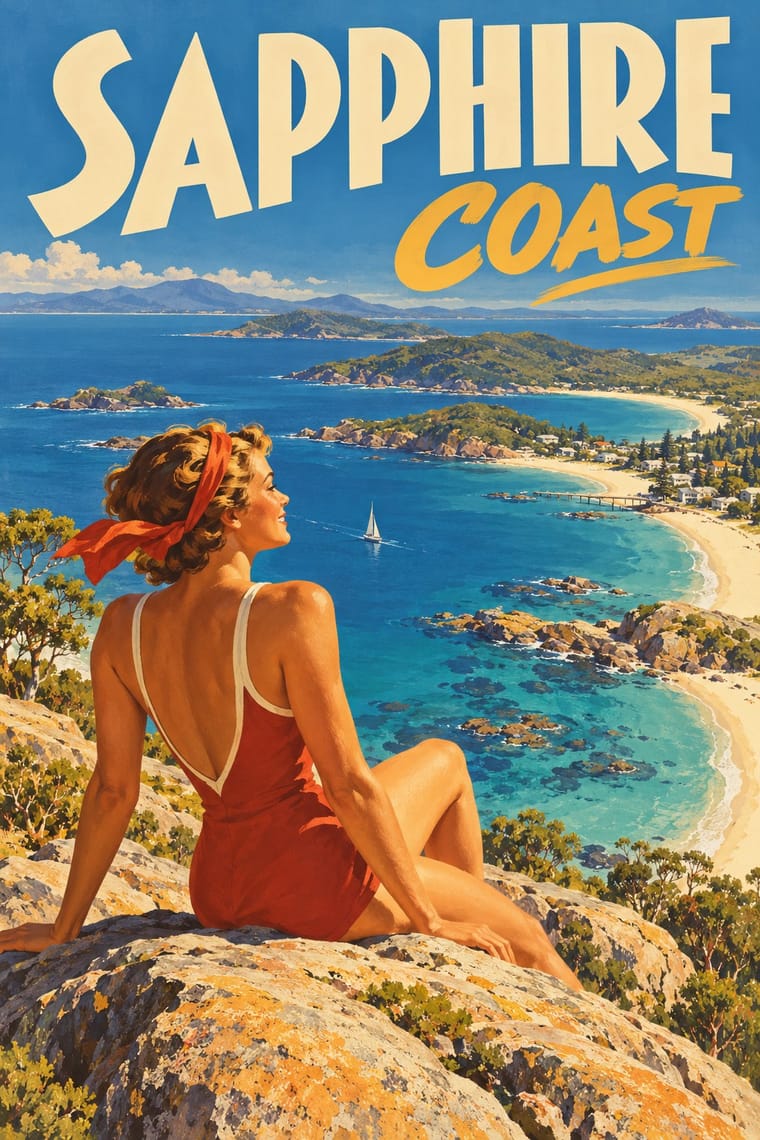
Australian Travel Poster (ANTA Era)
Australian Travel Poster is one of Western Americana Graphics’s nearest styles by choices; no real work of either fits the other better.
Choices that tell Western Americana Graphics and Australian Travel Poster apart Choice Western Americana Graphics Australian Travel Poster Ornamented display defining occasional Illusion of depth occasional defining Dynamic asymmetry characteristic — Full bleed — characteristic Hard offset shadow characteristic — No shared descent in the atlas: they reached these choices separately.
-
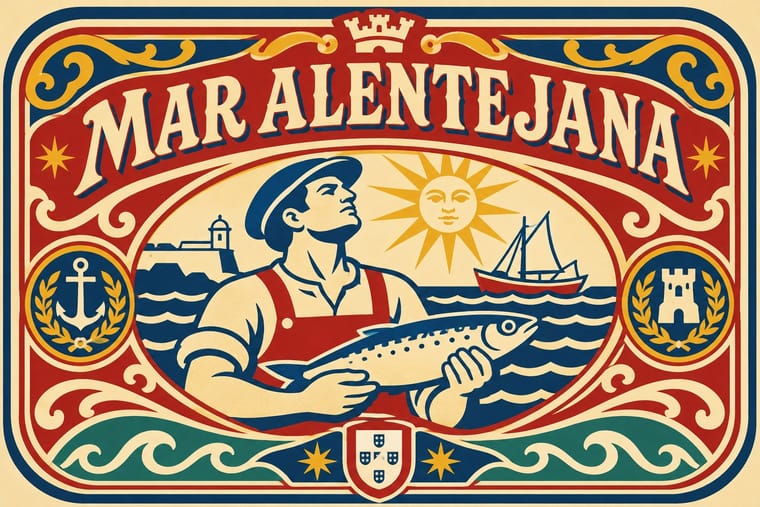
Portuguese Tinned-Fish Packaging (Conservas)
Portuguese Tinned-Fish Packaging is one of Western Americana Graphics’s nearest styles by choices; no real work of either fits the other better.
Choices that tell Western Americana Graphics and Portuguese Tinned-Fish Packaging apart Choice Western Americana Graphics Portuguese Tinned-Fish Packaging Extreme scale contrast defining — Script — defining Dynamic asymmetry characteristic — Flat fields occasional defining Diagonal axis characteristic — No shared descent in the atlas: they reached these choices separately.
— means the choice isn’t among the style’s recorded choices. Critics recorded each work’s choices with the styles’ descriptions in view, so this shows whether the descriptions hold together, not proof that they are right.
08
Sources
- King Ranch, The Running W: https://king-ranch.com/about-us/history/the-running-w/
- Amon Carter Museum of American Art, Buffalo Bill's Wild West & Rough Riders (1969.174): https://www.cartermuseum.org/collection/buffalo-bills-wild-west-rough-riders-1969174
- National Cowboy & Western Heritage Museum, Rodeo Advertising Poster (Google Arts & Culture): https://artsandculture.google.com/asset/rodeo-advertising-poster-0156/pgFzvRNjQZY_vg
5 more sources
- Sonya Abrego, From Cattle Brand to Corporate Brand, Journal of Design History, 2021: https://doi.org/10.1093/jdh/epab007
- David Dary, Cattle Brands, Handbook of Texas Online: https://www.tshaonline.org/handbook/entries/cattle-brands
- San Antonio Stock Show & Rodeo, 2026-27 Branding Style Guide: https://cdn.saffire.com/files.ashx?t=fg&rid=SARodeo&f=2026-2027_SASSR_Branding_Style_Guide.pdf&cb=09ea0eab
- Gottwald, Typography as theming in the Ol' West, themerica.org: https://www.themerica.org/blog/2018/01/06/typography-as-theming-in-the-ol-west
- Cody Archive, poster index: https://codyarchive.org/images/posters
How Stylogeny researches and checks a style: where the facts come from.