Digital native · 1997–2010 · Global / networked, North America, Western Europe, East Asia
Flash-Era Web Design (Flash Portfolio Sites)
Also known as Flash sites, Flash portfolio sites, Skip-intro era, Macromedia Flash web design
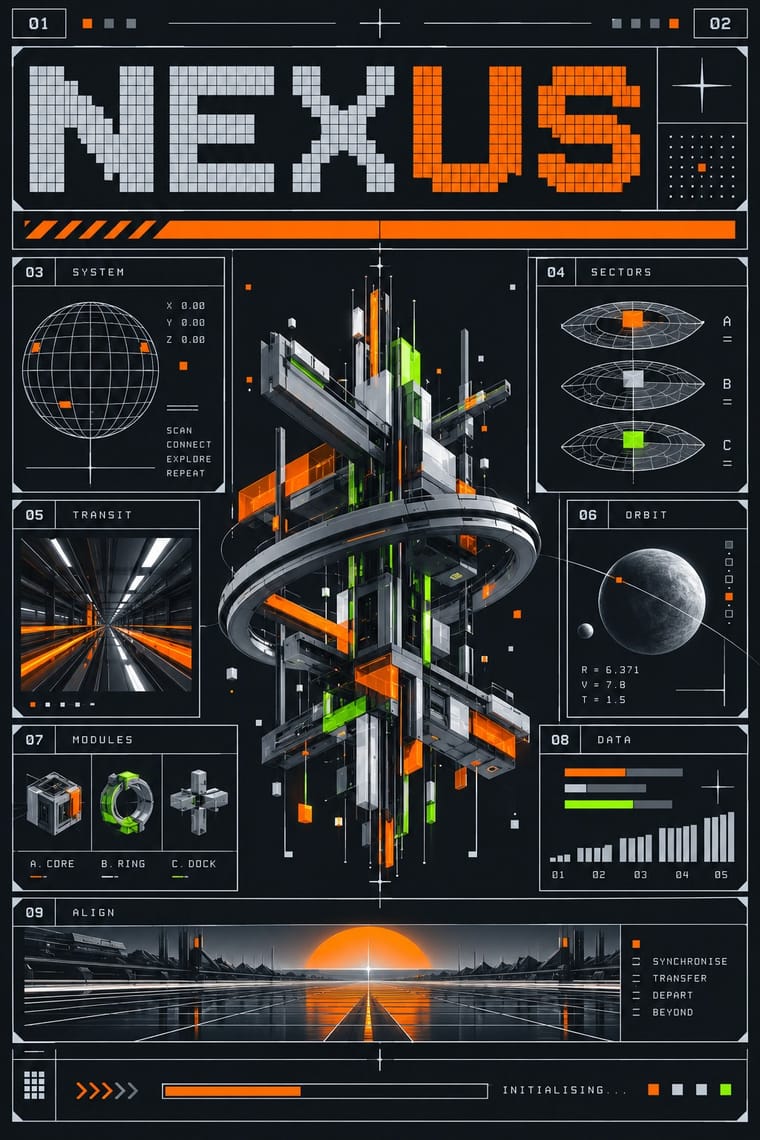
Websites built as one designed Flash movie (a plug-in in the browser) rather than as HTML pages: a fixed-size stage, often dark, entered through a preloader and an animated intro with sound. Inside, navigation is a console of framed panels on a visible technical grid, with hairline rules, numbered sections and readouts, tiny aliased pixel fonts in tracked capitals, a grey or navy key lit by one hot accent, metallic gradients and 3D renders. Menus zoom, slide and react to the mouse. Its experimental wing, from praystation to yugop.com's white page, made the site a field for code-driven play.
Make something in this style Get advice in this style Mix it with another style
01
How it works
- Build the site as one fixed-size animated stage, centred in the browser window, and let visitors in through a preloader bar and a branded intro they may skip.
- Organise the interface as a console of framed panels on a visible grid of hairline rules, crosshairs, coordinates and numbered sections.
- Set navigation and captions in tiny aliased pixel fonts, in tracked capitals at their native 8 px, and keep wide techno lettering for logos and titles.
- Keep colour to one key with one hot accent, often a dark grey, gunmetal or navy, and add depth with metallic gradients, glows and 3D renders; the experimental wing instead leaves a pale, near-empty stage (yugop.com opened on a plain white page).
- Make every control move and answer the mouse: menus zoom, slide and expand, with sound on rollover and cinematic transitions between sections.
- In experimental work, let code draw the composition: rule-based, randomised vector forms that respond to the visitor.
Web studios and designer-coders working in Macromedia Flash, which Macromedia bought as FutureSplash Animator and relaunched as Flash 1.0 in December 1996 (Flash 4 in June 1999; Flash 5 with ActionScript in August 2000): 2Advanced Studios (Aliso Viejo, California, 1999), Joshua Davis's praystation.com (1998), Yugo Nakamura's MONO*crafts / yugop.com (Tokyo, version 2.0 1998-99) and Hi-ReS! (London, 1999), celebrated by Rob Ford's Favourite Website Awards (May 2000); whole-Flash sites faded from the mid-2000s as CSS matured
02
Its design choices
From Stylogeny’s vocabulary of design choices: defining choices make the style, characteristic ones are usual, occasional ones turn up now and then.
- Layout & composition
- Space & hierarchy
- Typography
- Colour
- Form & shape
- Surface & texture
- Imagery
- Medium & production
- Tone & intent
- Avoids
- Pastel, Transitional serif, Script, Paper & letterpress bite, Grain & noise, Floral & vegetal, Found & vernacular imagery, Communal & popular, Carved line
Palette
-
#14181e -
#0d1a2b -
#5f6873 -
#c9ced4 -
#ff6a00 -
#9bd31c
Typefaces
-
Silkscreen (Jason Kottke), a free pixel face for 'extremely small graphical display type', meant for nav bars, menus and captions at 8 pt multiples with anti-aliasing off
-
Miniml pixel fonts, used on the Favourite Website Awards site
-
04b_03 and related bitmap fonts by the Japanese designer 04 (04.jp.org), drawn at 8 px
-
Wide, extended techno sans lettering for logos, section titles and intros
Known for
-
2Advanced Studios (Eric Jordan, Tony Novak and John Carroll, Aliso Viejo, California, founded 1999), site v3 'Expansions' (2001), built mainly in Flash 5 and named 'Most Influential Flash Site of the Decade' in a 2006 Adobe and FWA community poll
-
Joshua Davis, praystation.com (1998), a site of design experiments and one of the first to offer open-source Flash files; Prix Ars Electronica Golden Nica, Net Excellence (2001); once-upon-a-forest.com (1999)
-
Yugo Nakamura, MONO*crafts / yugop.com
(version 2.0, 1998-99: MoMA's Shannon Darrough first saw it in 1998, Ars Electronica dates it 1999), a horizontally scrolling, zooming menu that responds to mouse movement; yugop.com, a simple white page invaded by dark cascading balls, received a Prix Ars Electronica Distinction in 2005
-
Hi-ReS! (Alexandra Jugovic and Florian Schmitt, London, 1999), the Requiem for a Dream film site for Darren Aronofsky (Webby Award 2001) and the Donnie Darko film site
-
Gabocorp.com (1997), an early Flash intro site with a glowing 'GO' button and background music
-
The Favourite Website Awards (Rob Ford, founded May 2000), an orange-and-yellow site whose criticised typography was later saved by Miniml pixel fonts
03
Make something in this style
Say what you need, and Stylogeny’s image studio draws it from Flash-Era Web Design (Flash Portfolio Sites)’s design choices and checks it against them. It takes about a minute, and you get a link to share.
04
Where it comes from, and what it’s close to
Before it
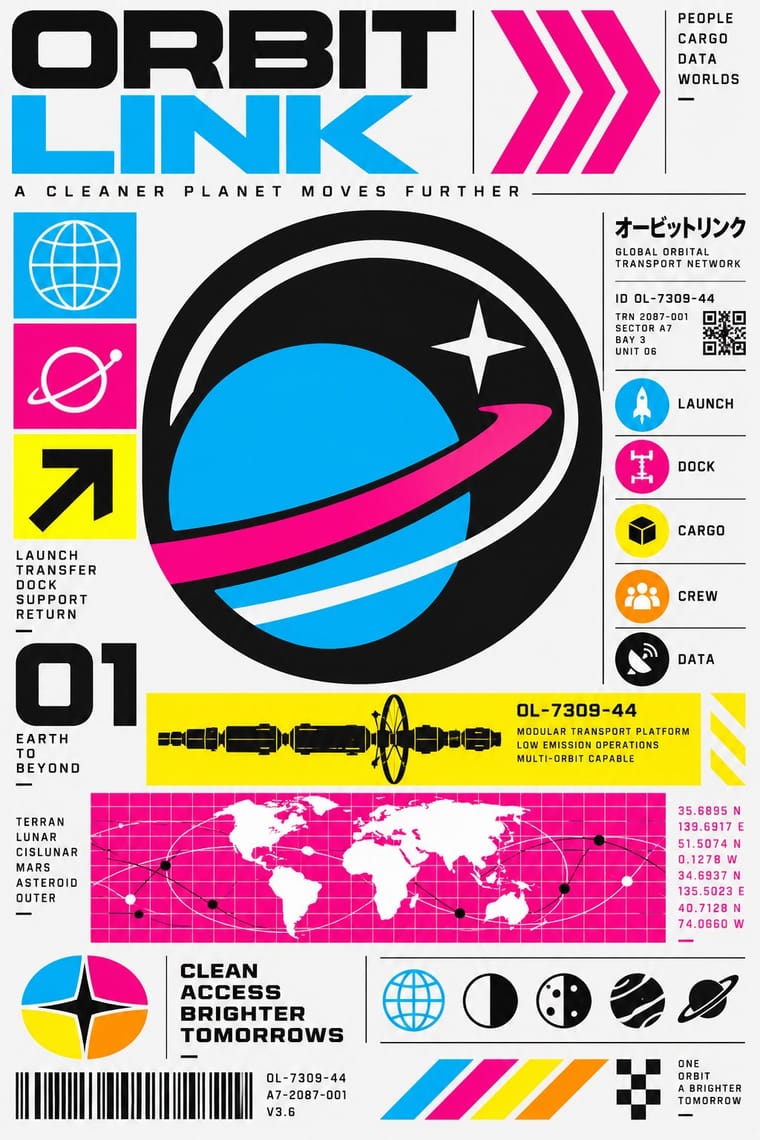
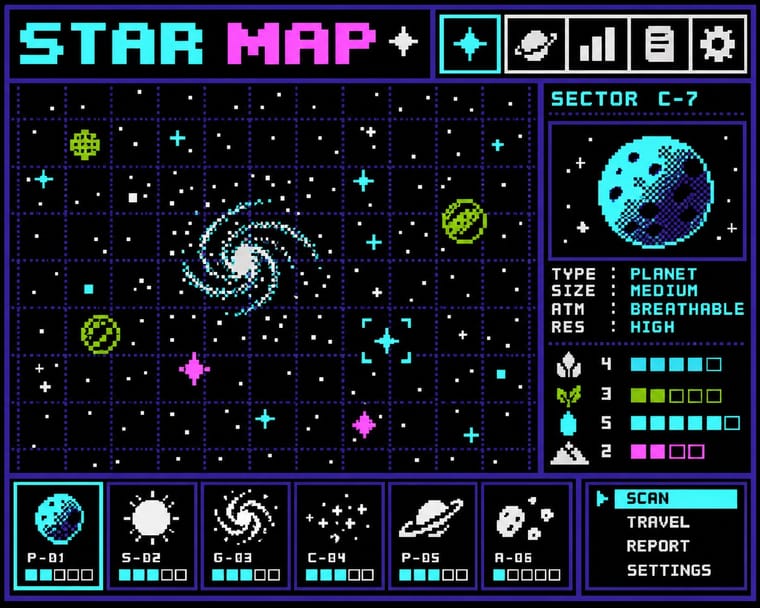
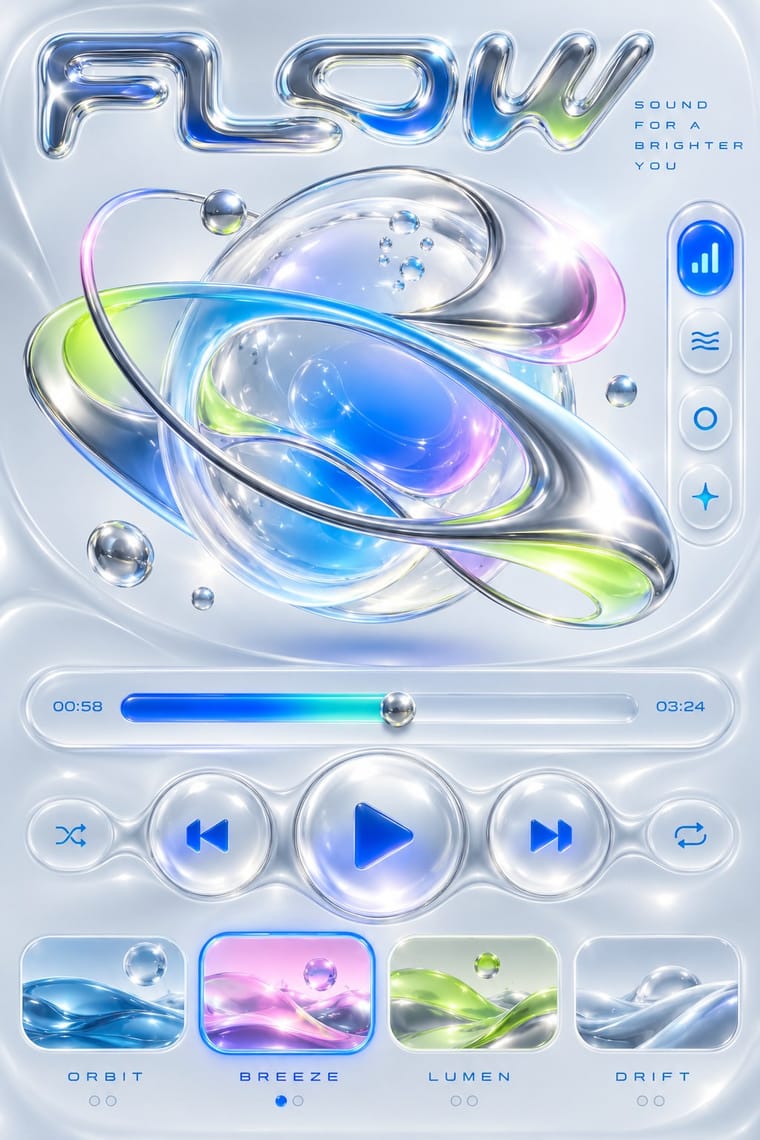
The style it grew out of, and the styles it borrowed from.
After it
The styles that grew out of it.
No later style in the atlas grew out of it yet.
Alike in its design choices
Styles that make many of the same choices, related or not, besides those above.

05
Often taken for
Flash-Era Web Design has no real works recorded yet, so these are its nearest styles by its choices alone, with the choices that tell them apart.
-
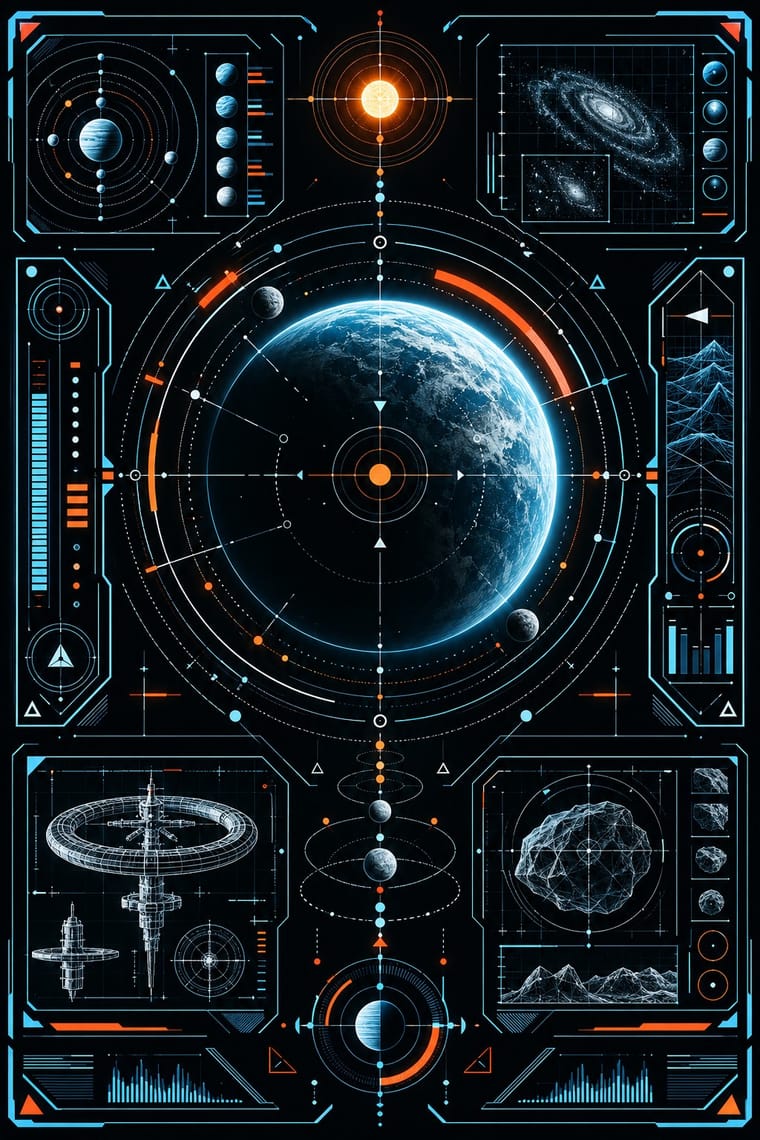
Fantasy User Interface (FUI) & Sci-Fi HUD
Fantasy User Interface & Sci-Fi HUD is one of Flash-Era Web Design’s nearest styles by choices; no real work of either fits the other better.
Choices that tell Flash-Era Web Design and Fantasy User Interface apart Choice Flash-Era Web Design Fantasy User Interface Bitmap & pixel defining — Geometric primitives — defining Light ground occasional avoids Radial & concentric — defining Flat vector illustration characteristic — No shared descent in the atlas: they reached these choices separately.
-
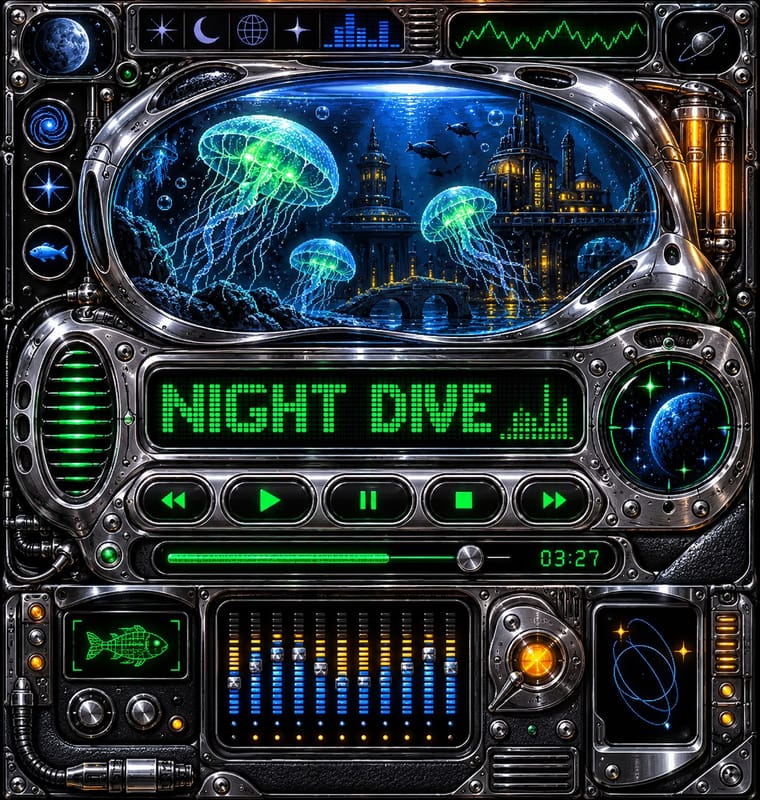
Media-Player & Desktop Skins (Winamp-Era Skinning)
Media-Player & Desktop Skins is one of Flash-Era Web Design’s nearest styles by choices; no real work of either fits the other better.
Choices that tell Flash-Era Web Design and Media-Player apart Choice Flash-Era Web Design Media-Player Limited spot colours characteristic — Found & vernacular imagery avoids characteristic Diagram & data characteristic — Horror vacui — defining Flat vector illustration characteristic — Both descend from Russian Constructivism in the family tree.
-
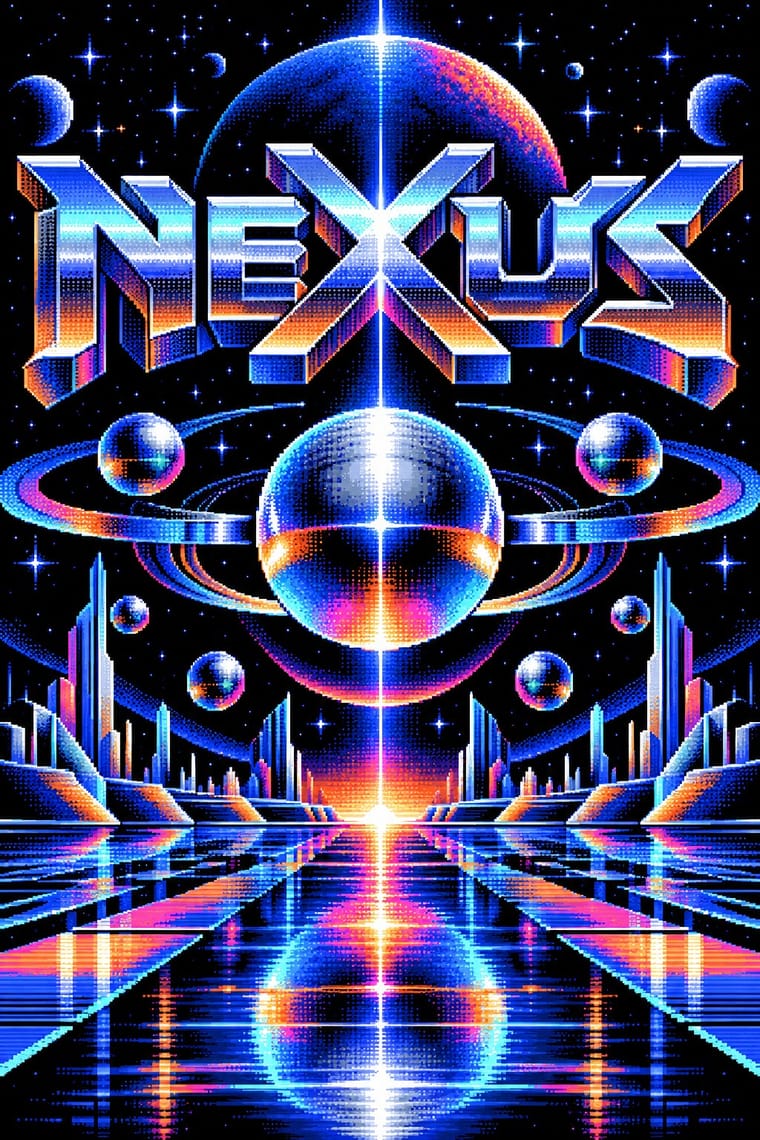
Y2K Futurism
Y2K Futurism is one of Flash-Era Web Design’s nearest styles by choices; no real work of either fits the other better.
Choices that tell Flash-Era Web Design and Y2K Futurism apart Choice Flash-Era Web Design Y2K Futurism Framed panels defining — Rounded & pill — defining Rules & bars defining — Gloss & highlights occasional defining Bitmap & pixel defining — Both descend from Techno-Futurist Graphics in the family tree.
-
Demoscene Graphics (Cracktros, Demos & Text-Mode Art)
Demoscene Graphics is one of Flash-Era Web Design’s nearest styles by choices; no real work of either fits the other better.
Choices that tell Flash-Era Web Design and Demoscene Graphics apart Choice Flash-Era Web Design Demoscene Graphics Framed panels defining — Grain & noise avoids characteristic Layered information defining — Ornamented display — defining Light ground occasional avoids Both descend from Russian Constructivism in the family tree.
— means the choice isn’t among the style’s recorded choices. Critics recorded each work’s choices with the styles’ descriptions in view, so this shows whether the descriptions hold together, not proof that they are right.
06
Combine it with
Styles Flash-Era Web Design (Flash Portfolio Sites) pairs well with or plays against, from the research. Each is worked out as a combination: which style gives the type, the colours and the forms.
- Fantasy User Interface (FUI) & Sci-Fi HUD Pairs well · The film HUD shares its hairlines and tracked caps on black; borrow its radial readouts for a Flash-style console, but keep the stage navigable.
- Flash Vector Cartoon (Newgrounds-Era Web Animation) Contrasts · Made in the same tool at the same time, but the cartoon is bright, loose and character-led, where the portfolio site is dark, gridded and abstract.
- Brutalist Web Design Contrasts · Raw, static HTML defaults against the fully art-directed animated stage.
- Media-Player & Desktop Skins (Winamp-Era Skinning) Pairs well · The skinned player shares the era's chrome bevels, pixel-font readouts and dark consoles; its LCD panels sit naturally on a Flash stage.
- Early Web Vernacular Contrasts · The amateur HTML page with default fonts and tiled clutter is what the controlled, one-piece Flash stage set out to replace.
- Frutiger Aero Contrasts · The glossy era that followed swapped the dark gunmetal console for light, glossy, rounded interfaces.
- International Typographic Style Pairs well · Manovich called the Flash generation a new modernism of pixel-thin grids; a strict Swiss grid steadies the panels and readouts.
07
Sources
- https://en.wikipedia.org/wiki/Adobe_Flash
- https://en.wikipedia.org/wiki/Joshua_Davis_(designer)
- https://en.wikipedia.org/wiki/Yugo_Nakamura
- https://en.wikipedia.org/wiki/Hi-ReS!
- https://en.wikipedia.org/wiki/The_FWA
- Shannon Darrough, 'A Few Words with Legendary Web Designer Yugo Nakamura', MoMA Inside/Out, 19 February 2010, https://www.moma.org/explore/inside_out/2010/02/19/a-few-words-with-yugo-nakamura/
- https://webarchive.ars.electronica.art/en/archives/prix_archive/prix_projekt.asp%3FiProjectID=13392.html
- https://wikipedia2007.classicistranieri.com/2/a/d/2Advanced_Studios_3361.html
- https://webdesignerdepot.com/blast-from-the-past-2advanced-com/
- https://vanschneider.com/hottest-websites-late-90s
- https://kottke.org/plus/type/silkscreen/
- https://www.dafont.com/04b-03.font
- Lev Manovich, 'Generation Flash' (2002), http://manovich.net/index.php/projects/generation-flash
- Anastasia Salter and John Murray, Flash: Building the Interactive Web (MIT Press, Platform Studies, 2014)
How Stylogeny researches and checks a style: where the facts come from.