Pictorial & machine age · 1922–1991 · Eastern Europe
Krokodil Satirical Magazine Style
Also known as Krokodil, Крокодил, Soviet satirical cartoon magazine
The house cartoon idiom of the Soviet state satirical magazine: clean black contour drawing with flat or lightly washed colour, caricatured figures and a printed caption. Aimed at foreign enemies and domestic bureaucrats, drunks and bribe-takers, it is mocking and grotesque where official Socialist Realism is earnest, and state-directed where Simplicissimus was oppositional. The period closes at 1991 with the end of the Soviet state it served; the magazine itself was discontinued in 2000 and a revived version ran 2005-2008.
01
How it works
Palette
-
#f1e8d2 -
#1b1b1b -
#c8241f -
#2b5c8a -
#e0b43a
Typefaces
-
Hand-lettered mastheads and cartoon captions
-
Soviet print grotesques for headlines and text columns
- Draw the target in firm black contour, with the telling feature exaggerated until it is a type.
- Colour in flat or lightly washed fields from two or three inks, never modelled.
- Anchor every cartoon with a caption or dialogue line printed beneath, so the joke is read and not only seen.
- Aim the mockery at an approved target: the foreign enemy or the petty bureaucrat, never the system itself.
- Bring back recurring figures and features so each issue reads as a continuing series in one house hand.
Moscow: begun on 27 August 1922 as a supplement to Rabochaya Gazeta
How it carries an idea Words the picture finishes, Size by rank, Personification, Juxtaposition, Literal saying
- Words the picture finishes signature The caption finishes the joke: in the Kukryniksy's Progress (Krokodil, 1962) two suited capitalists maul each other while cave dwellers ask 'And it's called civilization?' 'Can't you see how they're dressed?'
- Size by rank When a Soviet worker or Red Army soldier meets a capitalist in Krokodil he is often drawn as a giant and his opponent small, so size says at a glance which side matters.
- Personification Nations and systems get bodies: in the Kukryniksy's Tender English Mother (Krokodil, 1960) Britain is a skeletal lioness suckling US submarines; in Ganf's Sewn with White Thread (1956) capitalism is a decrepit old man.
- Juxtaposition Two-frame cartoons, after the lubok's 'them and us' diptych, set a Soviet scene beside a capitalist one, as in Goriaev's American 'Freedom' (Krokodil, 1957), so the reader makes the comparison.
- Literal saying Draws a Russian idiom outright: Iulii Ganf's Sewn with White Thread (Krokodil, 1956) shows tailors refitting a decrepit capitalism, the obvious white stitching exposing the disguise the phrase names.
02
Its design choices
From Stylogeny’s vocabulary of design choices: defining choices make the style, characteristic ones are usual, occasional ones turn up now and then.
- Layout & composition
- Space & hierarchy
- Typography
- Colour
- Form & shape
- Surface & texture
- Medium & production
- Tone & intent
- Avoids
- Non-representational, Photomontage, Gradients, Fluorescent & neon, Horror vacui, Rebellious & subversive, Calm & contemplative, Abundant decoration
How its pictures are made Drawn & painted
Kind of picture: Drawn & painted
Known for
-
Krokodil, Moscow, from 1922
covers and double-page spreads
-
Kukryniksy (Mikhail Kupriyanov, Porfiri Krylov, Nikolai Sokolov), signing jointly from 1924; wartime TASS Windows
-
Yuliy Ganf, Krokodil artist
03
Where it comes from, and what it’s close to
Grew out of
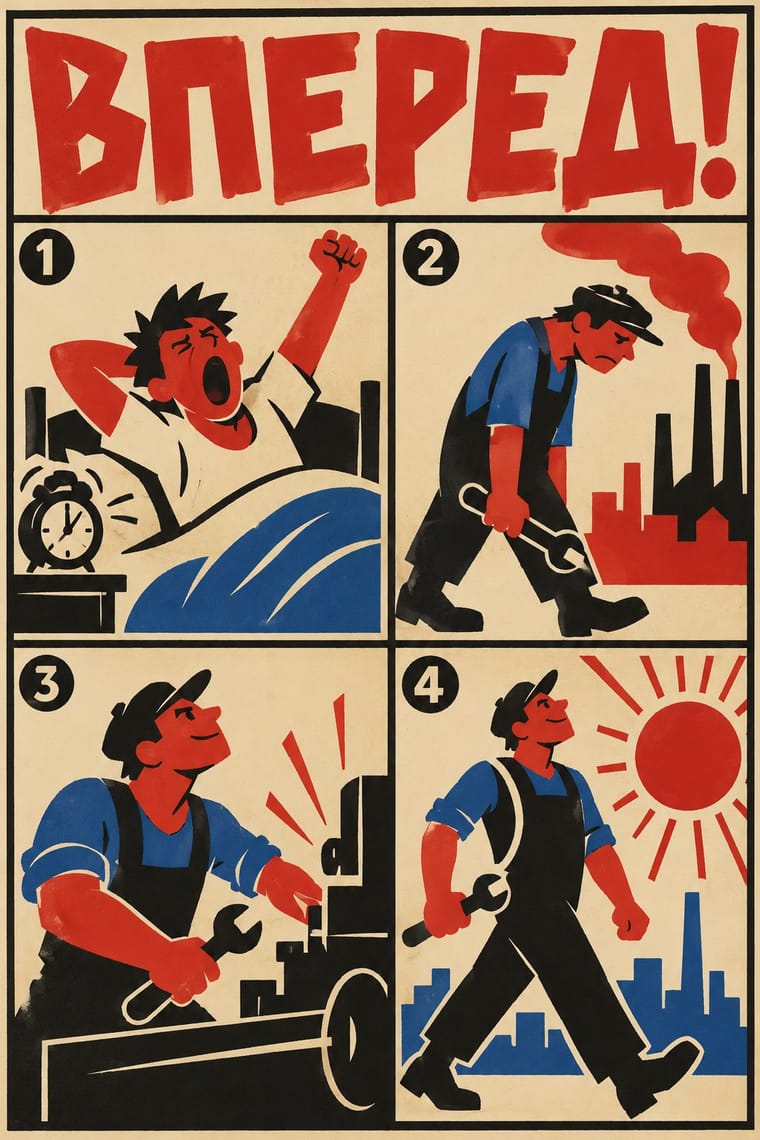
Borrowed from
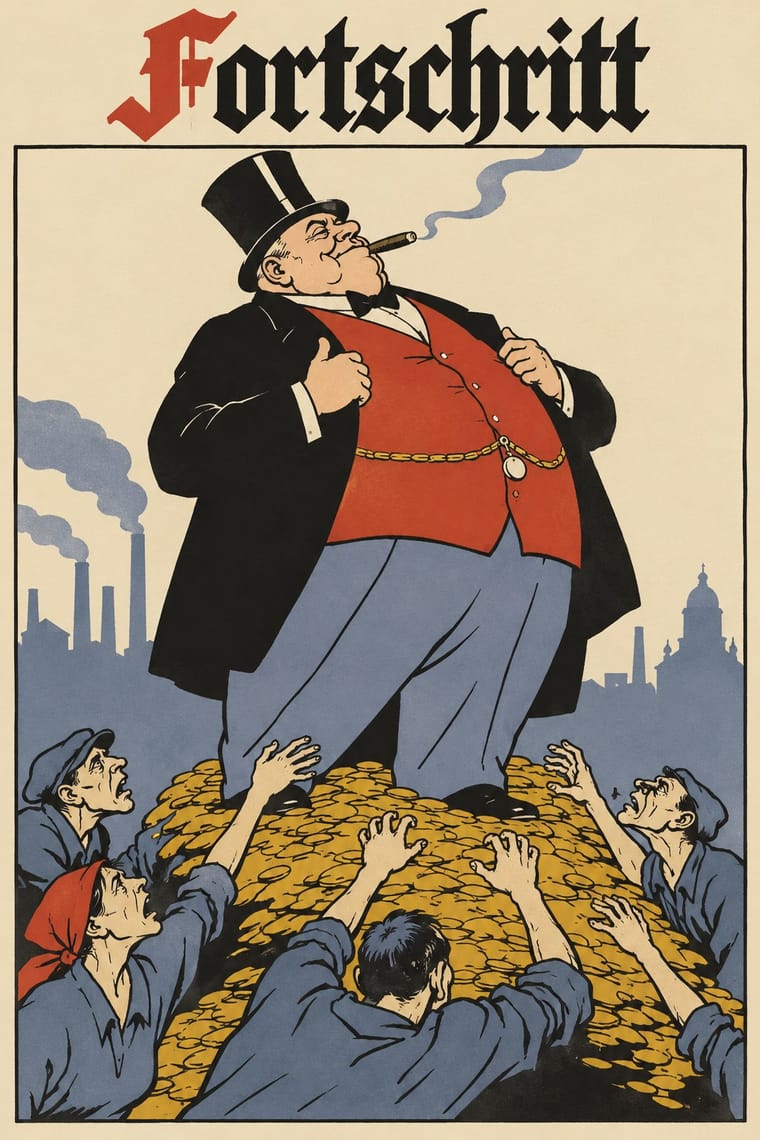
Krokodil Satirical Magazine Style 1922–1991
No later style in the atlas grew out of it yet.
Alike in its design choices
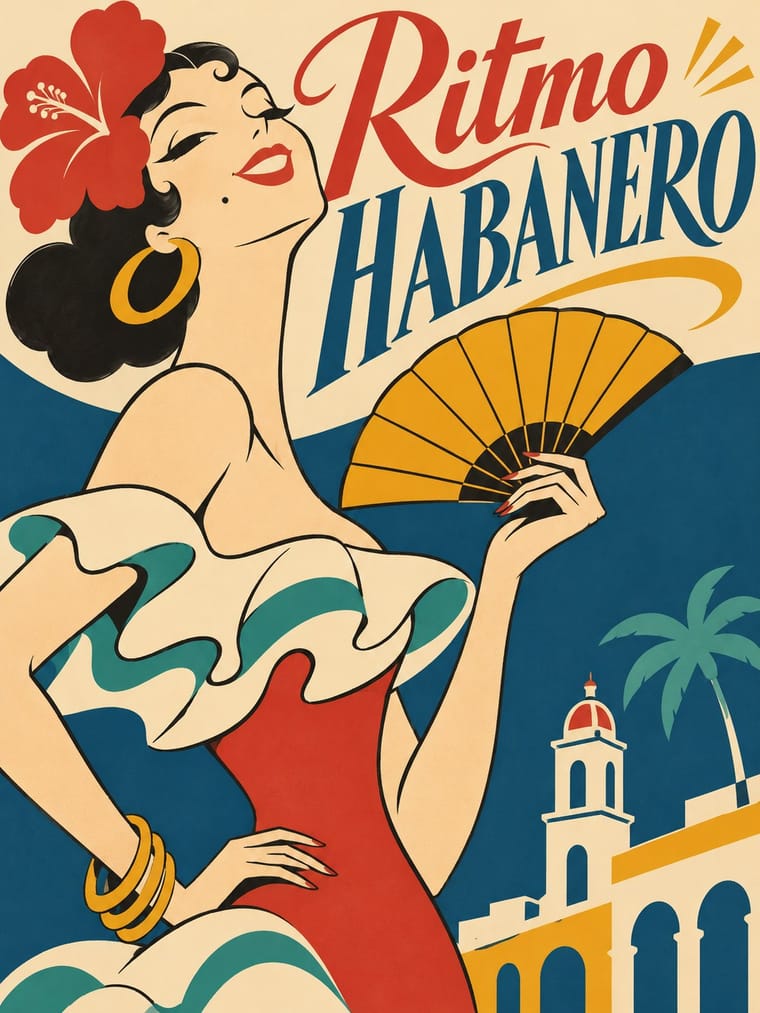
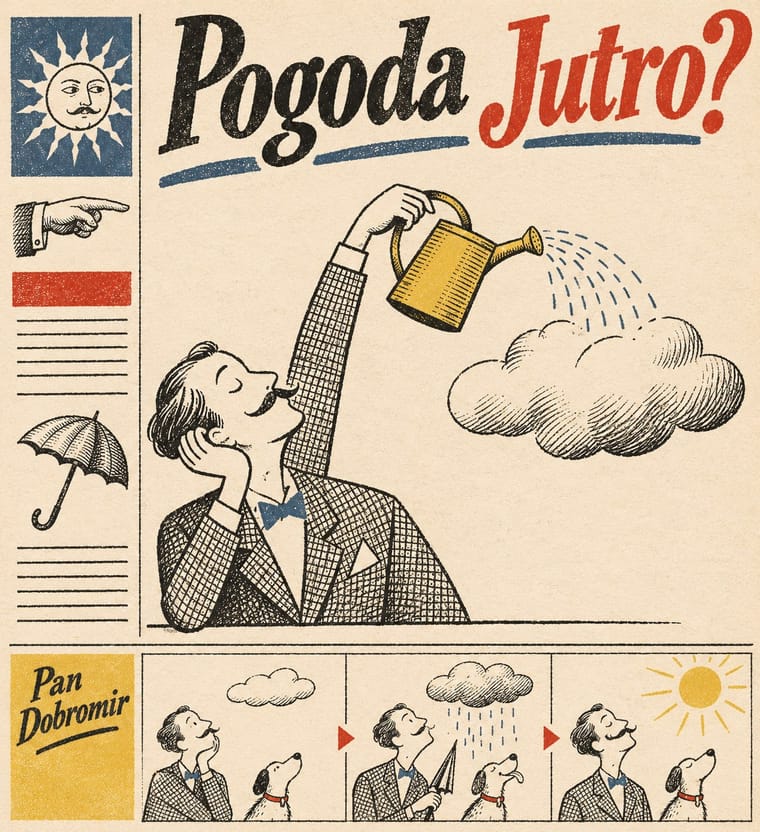
04
Often taken for
Krokodil Satirical Magazine Style has no real works recorded yet, so these are its nearest styles by its choices alone, with the choices that tell them apart.
-
Cuban Republican Magazine Illustration (Social and Carteles)
Cuban Republican Magazine Illustration is one of Krokodil Satirical Magazine Style’s nearest styles by choices; no real work of either fits the other better.
Choices that tell Krokodil Satirical Magazine Style and Cuban Republican Magazine Illustration apart Choice Krokodil Satirical Magazine Style Cuban Republican Magazine Illustration Grotesque & neo-grotesque occasional avoids Isolated object — characteristic Layered information characteristic — Measured density — characteristic Agitational & persuasive characteristic — No shared descent in the atlas: they reached these choices separately.
-
Simplicissimus Satirical Style (Munich)
Simplicissimus Satirical Style is one of Krokodil Satirical Magazine Style’s nearest styles by choices; no real work of either fits the other better.
Choices that tell Krokodil Satirical Magazine Style and Simplicissimus Satirical Style apart Choice Krokodil Satirical Magazine Style Simplicissimus Satirical Style Offset printing defining — Blackletter — defining Monochrome — characteristic Central symmetry — characteristic Measured density — characteristic Krokodil Satirical Magazine Style borrowed from Simplicissimus Satirical Style, but neither descends from the other.
-
Przekrój Magazine Illustration (Eile Era)
Przekrój Magazine Illustration is one of Krokodil Satirical Magazine Style’s nearest styles by choices; no real work of either fits the other better.
Choices that tell Krokodil Satirical Magazine Style and Przekrój Magazine Illustration apart Choice Krokodil Satirical Magazine Style Przekrój Magazine Illustration Painterly brushwork occasional avoids Monochrome — characteristic Flat fields defining occasional Isolated object — characteristic Dynamic asymmetry characteristic — No shared descent in the atlas: they reached these choices separately.
-
L'Assiette au Beurre (French Colour Satirical Press)
L'Assiette au Beurre is one of Krokodil Satirical Magazine Style’s nearest styles by choices; no real work of either fits the other better.
Choices that tell Krokodil Satirical Magazine Style and L'Assiette au Beurre apart Choice Krokodil Satirical Magazine Style L'Assiette au Beurre Layered information characteristic — Sequential narrative occasional defining Offset printing defining — Full bleed — characteristic Rebellious & subversive avoids defining No shared descent in the atlas: they reached these choices separately.
— means the choice isn’t among the style’s recorded choices. Critics recorded each work’s choices with the styles’ descriptions in view, so this shows whether the descriptions hold together, not proof that they are right.
05
Sources
- Wikipedia, Krokodil (https://en.wikipedia.org/wiki/Krokodil)
- Wikipedia, Kukryniksy (https://en.wikipedia.org/wiki/Kukryniksy)
- Wikipedia, Rosta Windows (https://en.wikipedia.org/wiki/Rosta_Windows)
How Stylogeny researches and checks a style: where the facts come from.