Pictorial & machine age · 1948–present · East Asia
North Korean Propaganda Poster & Mansudae Studio Style
Also known as Mansudae poster style, DPRK socialist realism
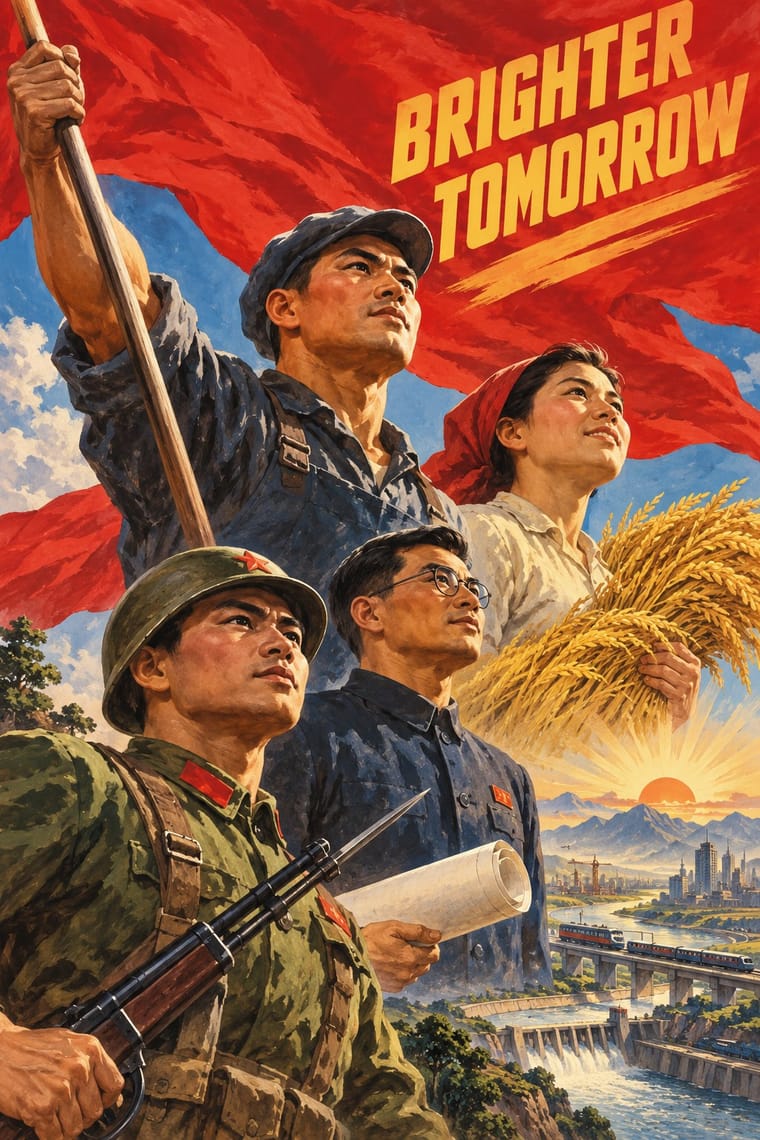
The state-controlled poster and painting language of North Korea: brightly coloured, idealised workers, soldiers and children rendered in smooth, naturalistic paint, set against luminous skies and topped with bold hangul slogans. Posters have been a main propaganda medium since 1945, and the Mansudae Art Studio supplies the official images of the ruling family.
Use it with care
This is the output of a state propaganda apparatus tied to a personality cult and an authoritarian regime; study and cite it as documentation of that system, and do not reproduce its leader imagery or slogans as neutral decoration. Evidence in accessible sources on its specific style rules is thin, so the genome rests on widely observed conventions rather than a dedicated art-historical study.
01
How it works
Palette
-
#c8102e -
#5aa9e6 -
#f5d547 -
#ffffff -
#2e7d32 -
#1f3a5f
Typefaces
-
Bold hangul sans-serif slogan lettering
-
Hand-painted hangul banner lettering
-
Hangul brush calligraphy for monumental slogans
- Place one heroic, idealised figure or group at the centre and make it the single point of entry.
- Paint figures smoothly and naturalistically, with confident faces turned upward toward a bright future.
- Set the scene against a luminous sky with rays or clouds to signal optimism and destiny.
- Write the slogan in bold hangul on a banner or in a block, as a direct command or praise.
- Use saturated, sweet colour with red banners as the strongest accent, and keep the mood uniformly hopeful.
- Keep the composition stable and frontal so the message reads instantly from a distance.
Pyongyang, North Korea: state-run art, centred on the Mansudae Art Studio (founded 17 November 1959)
02
Its design choices
From Stylogeny’s vocabulary of design choices: defining choices make the style, characteristic ones are usual, occasional ones turn up now and then.
- Layout & composition
- Space & hierarchy
- Typography
- Surface & texture
- Ornament
- Medium & production
- Tone & intent
- Avoids
- Ironic & self-aware, Rebellious & subversive, Broken grid, Experimental & distorted, Non-representational, Flat hierarchy, Monochrome
How its pictures are made Drawn & painted, Systematic
Kind of picture: Drawn & painted · Systematic
Known for
-
Chollima Statue, Mansu Hill (completed 1961), the winged-horse emblem of the Chollima Movement
-
Chollima Movement slogan posters
'Let us dash forward in the spirit of Chollima'; the movement dated 1956-58, its start disputed
-
Official posters and paintings issued by the Mansudae Art Studio (founded 17 November 1959), the state studio behind the style
03
Where it comes from, and what it’s close to
Grew out of
North Korean Propaganda Poster & Mansudae Studio Style 1948–present
No later style in the atlas grew out of it yet.
Alike in its design choices
04
Often taken for
North Korean Propaganda Poster & Mansudae Studio Style has no real works recorded yet, so these are its nearest styles by its choices alone, with the choices that tell them apart.
-
Socialist Realist Propaganda Poster
1 of Socialist Realist Propaganda Poster’s 3 real works fits North Korean Propaganda Poster & Mansudae Studio Style’s choices slightly better than its own: 毛主席去安源 (Chairman Mao Goes to Anyuan).
Choices that tell North Korean Propaganda Poster and Socialist Realist Propaganda Poster apart Choice North Korean Propaganda Poster Socialist Realist Propaganda Poster Icons & pictograms characteristic — Diagonal axis — defining Gloss & highlights characteristic — Photomontage — characteristic Brush & pen calligraphy characteristic — North Korean Propaganda Poster & Mansudae Studio Style descends from Socialist Realist Propaganda Poster: a shared line, so the likeness is inherited.
-
Cultural Revolution Propaganda Poster (Red, Bright, Shining)
Cultural Revolution Propaganda Poster is one of North Korean Propaganda Poster & Mansudae Studio Style’s nearest styles by choices; no real work of either fits the other better.
Choices that tell North Korean Propaganda Poster and Cultural Revolution Propaganda Poster apart Choice North Korean Propaganda Poster Cultural Revolution Propaganda Poster Gradients characteristic — Flat fields — defining Full bleed characteristic — Flat — defining Illusion of depth characteristic — Both descend from Socialist Realist Propaganda Poster in the family tree.
-
Indian Calendar & Bazaar Art
Indian Calendar & Bazaar Art is one of North Korean Propaganda Poster & Mansudae Studio Style’s nearest styles by choices; no real work of either fits the other better.
Choices that tell North Korean Propaganda Poster and Indian Calendar apart Choice North Korean Propaganda Poster Indian Calendar Icons & pictograms characteristic — Jewel & metallic — characteristic Full bleed characteristic — Framed panels — characteristic Emblems & badges characteristic — No shared descent in the atlas: they reached these choices separately.
-
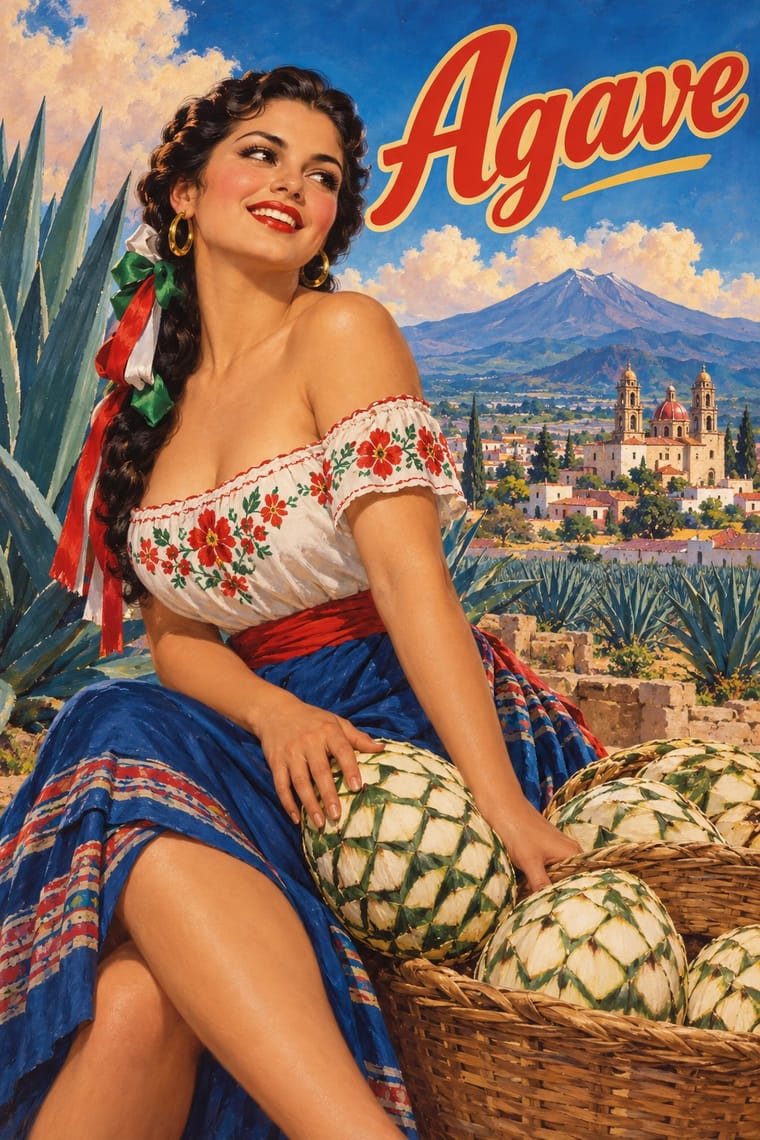
Mexican Calendar Chromo (Cromos calendáricos)
Mexican Calendar Chromo is one of North Korean Propaganda Poster & Mansudae Studio Style’s nearest styles by choices; no real work of either fits the other better.
Choices that tell North Korean Propaganda Poster and Mexican Calendar Chromo apart Choice North Korean Propaganda Poster Mexican Calendar Chromo Type as image occasional avoids Romantic & sensual — defining Icons & pictograms characteristic — Nostalgic & retro — characteristic Cosmic & celestial characteristic — No shared descent in the atlas: they reached these choices separately.
— means the choice isn’t among the style’s recorded choices. Critics recorded each work’s choices with the styles’ descriptions in view, so this shows whether the descriptions hold together, not proof that they are right.
05
Sources
- Wikipedia, Mansudae Art Studio (founding 17 Nov 1959, Chollima Statue 1961, studio produces official images of the leaders)
- Wikipedia, Propaganda in North Korea (posters a main medium since 1945; Propaganda and Agitation Department)
- Wikipedia, Chollima Movement (slogan, 1956-58, winged-horse imagery in posters)
2 more sources
- Wikipedia, Art of North Korea (socialist realism under Kim Il Sung, posters at the core)
- Jane Portal excerpt, Art Under Control in North Korea (openDemocracy): state art is large-scale, dramatic and message-laden; it followed Soviet and Chinese socialist realism
How Stylogeny researches and checks a style: where the facts come from.