Digital native · 1996–present · East Asia, Global / networked
Visual Novel Graphics (Sprites, Backgrounds and Textbox UI)
Also known as Visual novel art, ADV/NVL interface, ノベルゲーム
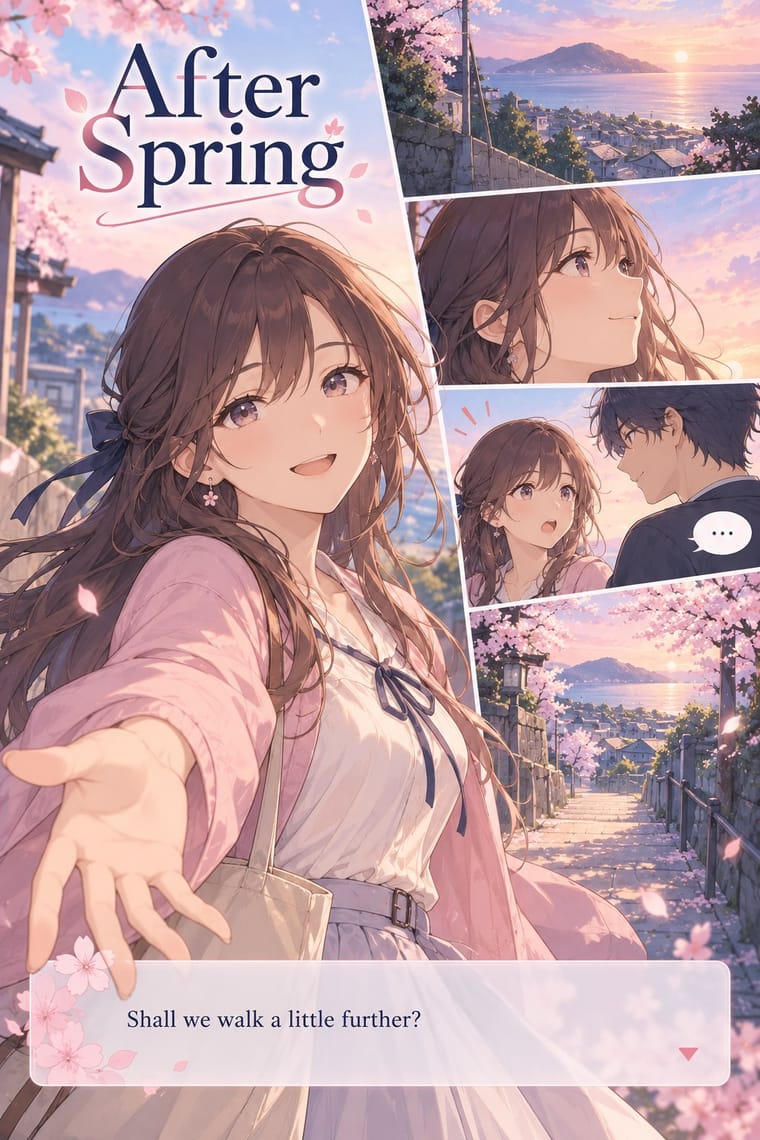
A fixed screen language for interactive reading: anime-derived character sprites stand over painted backgrounds, a semi-transparent textbox runs along the bottom (ADV) or fills the screen (NVL), and full-screen event illustrations replace the scene at dramatic moments. Menus and save screens carry the game's identity. Pacing is set by click, not by scrolling or page turns.
Make something in this style Get advice in this style Mix it with another style
Use it with care
The commercial novel-game market of the 1990s was built largely on adult (eroge) titles, among them Shizuku and the Leaf, Key and Tactics wave, and many sprite and event-CG conventions grew up there, including sexualised depictions of young-looking characters. Borrow the layout, textbox and layering system rather than that figure vocabulary; keep characters clearly adult and depictions non-sexualised unless the context is explicitly adult.
01
How it works
- Stand layered character sprites over a painted background and swap expressions rather than redrawing the scene.
- Place a semi-transparent textbox at the bottom of the screen for ADV, or fill the screen with text for NVL.
- Replace the scene with a full-screen event illustration at the story's dramatic peaks.
- Decorate the title, menu and save screens with the game's own ornament and colour theme.
- Let the click, not the scroll, set the pace: make every screen state one beat of reading.
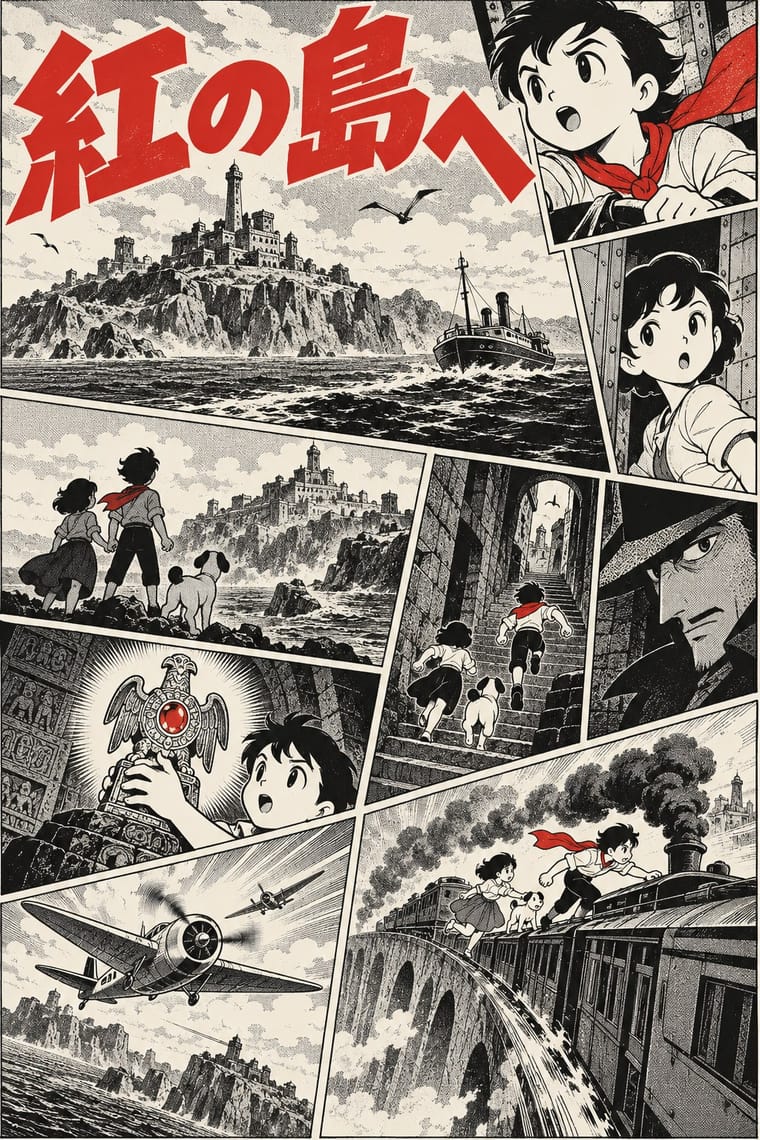
Japan: Leaf's Shizuku (1996) is described as the first commercial game called a visual novel. Earlier text adventures such as The Portopia Serial Murder Case (1983) and Chunsoft's sound novel Otogirisō (1992) are ancestors, but Japanese players do not count Portopia as a visual novel (they say 'novel game'); the Western term was applied retroactively. The parent is story-manga for the character vocabulary only, since the atlas has no entry for anime game art or text adventures
02
Its design choices
From Stylogeny’s vocabulary of design choices: defining choices make the style, characteristic ones are usual, occasional ones turn up now and then.
- Layout & composition
- Space & hierarchy
- Colour
- Form & shape
- Surface & texture
- Imagery
- Medium & production
- Tone & intent
- Avoids
- Modular grid, Broken grid, Rotated & vertical setting, Halftone & Ben-Day dots, Photocopy & distress, Visual tension, Monochrome, Agitational & persuasive
Palette
-
#f6e9f0 -
#f4a6c0 -
#8fc1e3 -
#2b2a4c -
#ffffff -
#e8c872
Typefaces
-
Japanese gothic (sans) system fonts for the textbox
-
Mincho (serif) faces for NVL prose and titles
-
Hand-drawn or brush-style logo lettering for titles
Known for
-
Otogirisō (Chunsoft, 1992), a sound novel and ancestor with sparse graphics
-
The Portopia Serial Murder Case (1983), an adventure-game ancestor not regarded as a visual novel in Japan
-
Shizuku (Leaf, 1996), an adult game described as the first commercial game called a visual novel
-
Kanon (Key, 1999), credited with establishing the novel-game market
-
Higurashi
When They Cry (2002), begun as a doujin game sold at comic markets
-
Doki Doki Literature Club! (2017), a Western-made title built with Ren'Py, showing the form beyond Japan
03
Make something in this style
Say what you need, and Stylogeny’s image studio draws it from Visual Novel Graphics (Sprites, Backgrounds and Textbox UI)’s design choices and checks it against them. It takes about a minute, and you get a link to share.
04
Where it comes from, and what it’s close to
Before it
The style it grew out of, and the styles it borrowed from.
After it
The styles that grew out of it.
No later style in the atlas grew out of it yet.
Alike in its design choices
Styles that make many of the same choices, related or not, besides those above.
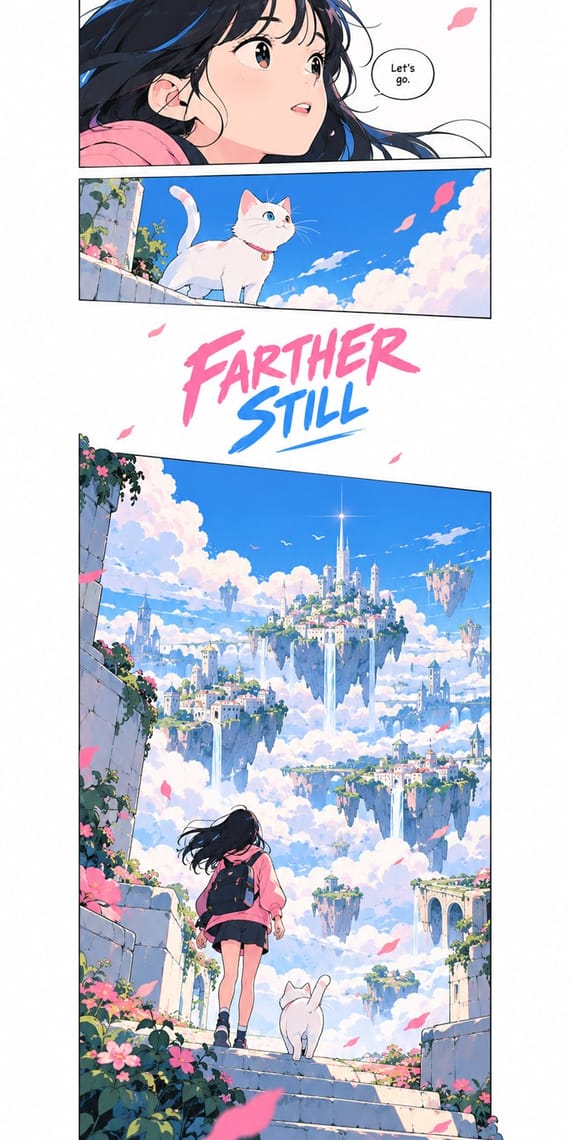
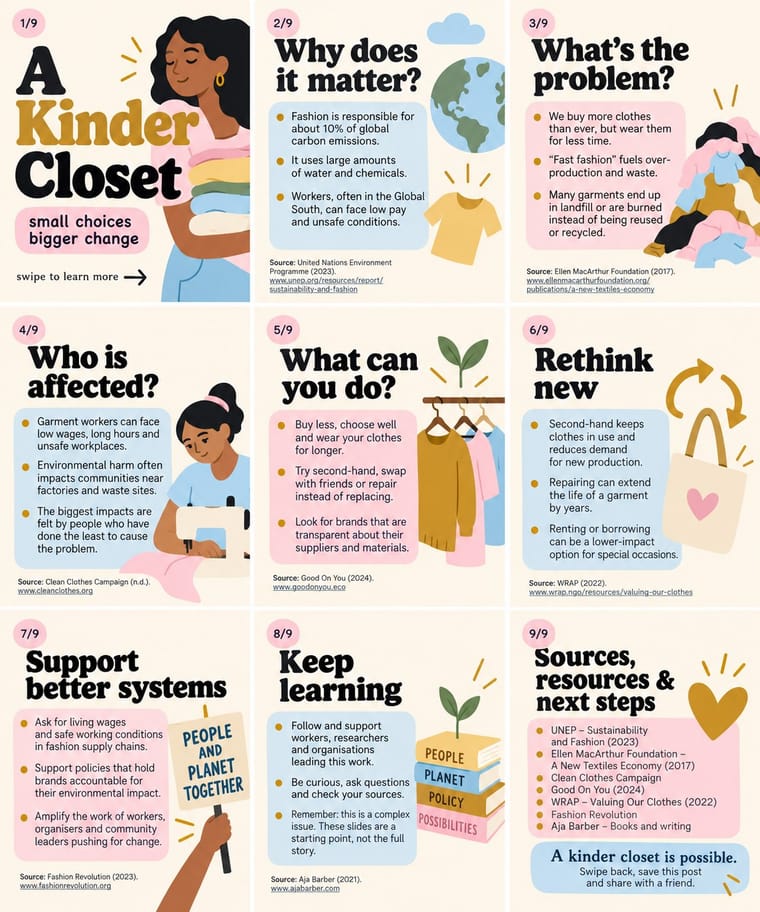
05
Often taken for
Visual Novel Graphics has no real works recorded yet, so these are its nearest styles by its choices alone, with the choices that tell them apart.
-
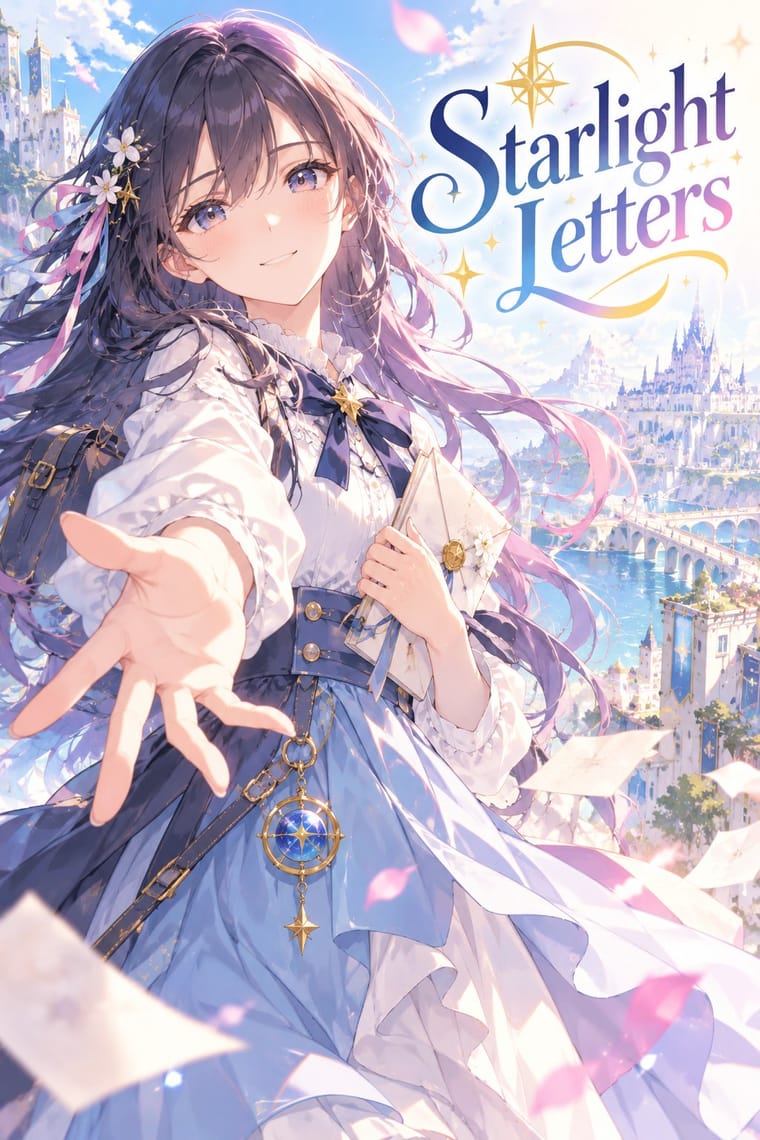
Light Novel Cover Illustration
Light Novel Cover Illustration is one of Visual Novel Graphics’s nearest styles by choices; no real work of either fits the other better.
Choices that tell Visual Novel Graphics and Light Novel Cover Illustration apart Choice Visual Novel Graphics Light Novel Cover Illustration Sequential narrative defining — Ornamented display — defining Framed panels characteristic — Rotated & vertical setting avoids occasional Borders & frames characteristic — Both descend from Story Manga in the family tree.
-
VTuber Avatar and Stream Graphics
VTuber Avatar and Stream Graphics is one of Visual Novel Graphics’s nearest styles by choices; no real work of either fits the other better.
Choices that tell Visual Novel Graphics and VTuber Avatar and Stream Graphics apart Choice Visual Novel Graphics VTuber Avatar and Stream Graphics Sequential narrative defining — Rotated & vertical setting avoids occasional Full bleed characteristic — 3D render — characteristic Frosted glass characteristic — No shared descent in the atlas: they reached these choices separately.
-
Frutiger Aero
Frutiger Aero is one of Visual Novel Graphics’s nearest styles by choices; no real work of either fits the other better.
Choices that tell Visual Novel Graphics and Frutiger Aero apart Choice Visual Novel Graphics Frutiger Aero Stylised figuration defining — Gloss & highlights occasional defining Comic & cartoon defining — Analogous harmony — characteristic Sequential narrative defining — No shared descent in the atlas: they reached these choices separately.
-
Lo-fi Anime Aesthetic
Lo-fi Anime Aesthetic is one of Visual Novel Graphics’s nearest styles by choices; no real work of either fits the other better.
Choices that tell Visual Novel Graphics and Lo-fi Anime Aesthetic apart Choice Visual Novel Graphics Lo-fi Anime Aesthetic Sequential narrative defining — Analogous harmony — characteristic Full polychrome characteristic — Dark ground — characteristic Framed panels characteristic — No shared descent in the atlas: they reached these choices separately.
— means the choice isn’t among the style’s recorded choices. Critics recorded each work’s choices with the styles’ descriptions in view, so this shows whether the descriptions hold together, not proof that they are right.
06
Combine it with
Styles Visual Novel Graphics (Sprites, Backgrounds and Textbox UI) pairs well with or plays against, from the research. Each is worked out as a combination: which style gives the type, the colours and the forms.
- Lo-fi Anime Aesthetic Contrasts · A looping mood against an interface system of fixed parts.
- Korean Webtoon Graphics Contrasts · Scroll-driven panels against click-driven screens: the same drawn figures, opposite pacing.
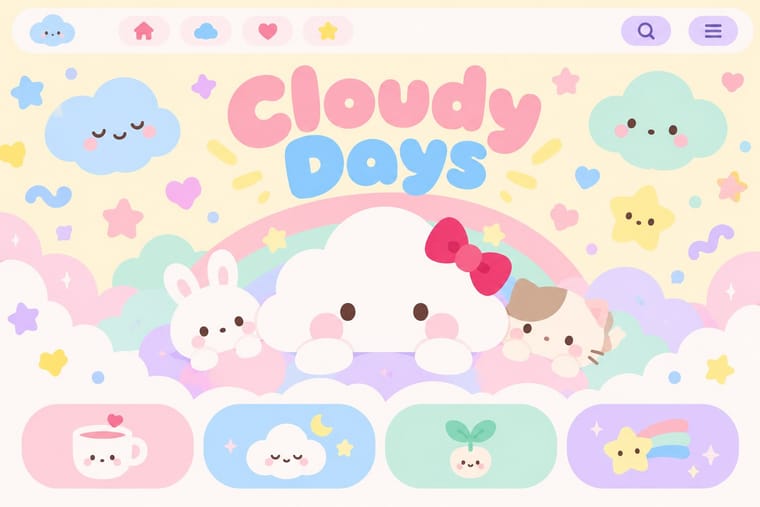
- Kawaii Design Pairs well · Borrow its pastel, rounded decoration for menu and save-screen UI.
- Story Manga (Postwar Japanese Comics) Pairs well · Take its character design and expression vocabulary, then replace panels and page turns with screen states.
07
Sources
- Wikipedia, Visual novel (https://en.wikipedia.org/wiki/Visual_novel)
- Ren'Py documentation, NVL-Mode Tutorial: ADV-style presents one line at a time in a window at the bottom of the screen, NVL-style several lines in a window taking up the entire screen (https://www.renpy.org/doc/html/nvl_mode.html)
- Ren'Py documentation, Layered Images: each layer is a separate sprite and attributes select layers, so one expression replaces another (https://www.renpy.org/doc/html/layeredimage.html)
- Wikipedia, The Portopia Serial Murder Case (https://en.wikipedia.org/wiki/The_Portopia_Serial_Murder_Case)
How Stylogeny researches and checks a style: where the facts come from.