Craft & organic · 1934–present · Northern Europe
Josef Frank and Svenskt Tenn Botanical Prints
Also known as Josef Frank textiles, Svenskt Tenn prints, Swedish Modern floral print
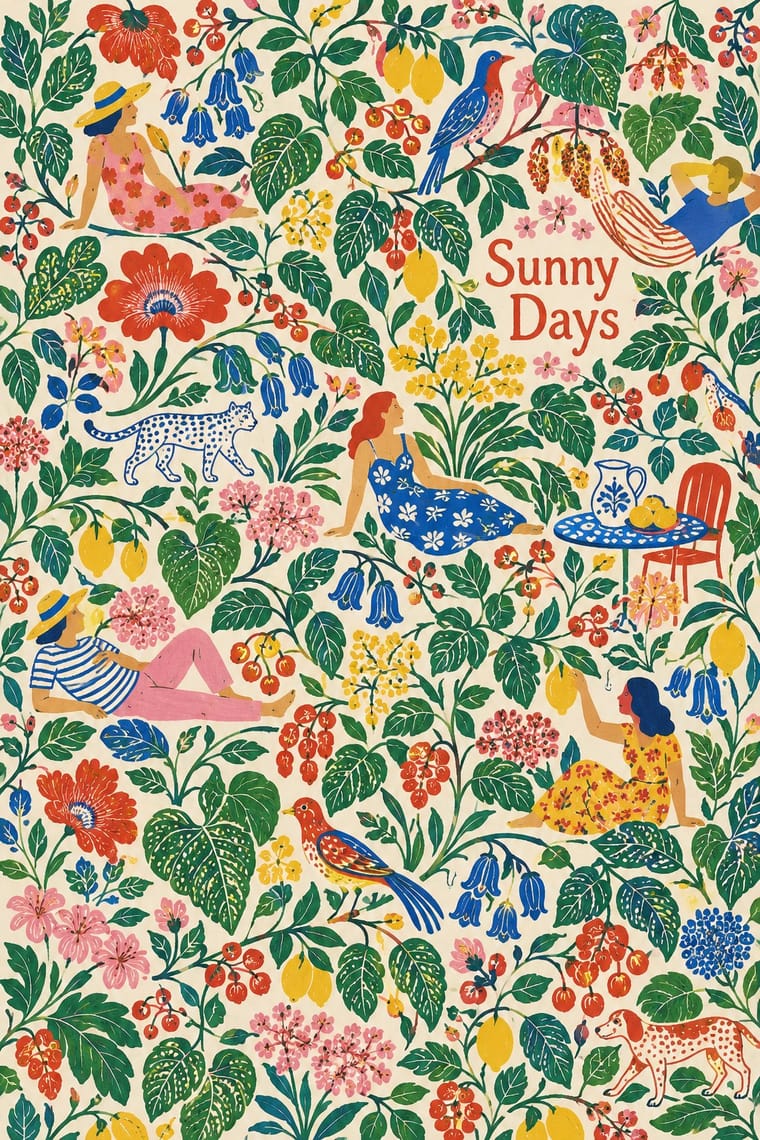
The linens Josef Frank drew for Svenskt Tenn, which still prints them: invented trees, flowers, fruit and birds, even a map of Manhattan, packed edge to edge in long repeats and many clear colours, mostly on white or natural linen. The plants are outlined, stylised but recognisable, loose and asymmetric. Frank meant different patterns to be mixed in one room, against the cold purity of functionalism; his 1958 essay "Accidentism" later named the idea: rooms should look as if they had come about by chance. Unlike Marimekko's single enlarged motif, Frank keeps many small motifs and colours.
Make something in this style Get advice in this style Mix it with another style
01
How it works
- Fill the whole repeat with many small botanical motifs (invented trees, flowers, fruit, birds), so that little ground shows through.
- Draw each plant with an outline and some inner detail, stylised but recognisable, and never reduce it to an abstract shape.
- Print many clear colours, mostly on a white or natural linen ground left unprinted; dark or coloured grounds appear only as alternative colourways.
- Make the repeat long and the arrangement loose and asymmetric, so the eye cannot quickly find where the pattern starts again.
- Let an invented world carry the pattern, such as a tree that grows impossible fruit or a city laid out as a map.
- Mix different patterns in one room or one layout, as if put together by chance, instead of matching them.
Stockholm. The Viennese architect Josef Frank (1885–1967) had founded the interiors firm Haus & Garten in Vienna in 1925 with Oskar Wlach and Walter Sobotka, and designed hand block-printed linens for it, such as Aralia around 1930. He moved to Sweden in 1933, and in 1934 Estrid Ericson hired him for Svenskt Tenn, the interiors firm she had founded in 1924. Many of the best-known prints date from his wartime years in Manhattan (Wikipedia gives 1941–46 for those textile designs): among them Manhattan (Nationalmuseum: 1943–44; LACMA: 1943–45), La Plata and Baranquilla (c. 1943–45) and Vegetable Tree (1944). Frank developed his repeats from watercolour paintings. Svenskt Tenn still prints them on linen and carries them onto goods such as trays (Vegetable Tree, Mirakel, Manhattan), so the patterns also work as the shop's graphics.
02
Its design choices
From Stylogeny’s vocabulary of design choices: defining choices make the style, characteristic ones are usual, occasional ones turn up now and then.
- Layout & composition
- Space & hierarchy
- Typography
- Colour
- Form & shape
- Surface & texture
- Imagery
- Medium & production
- Tone & intent
- Avoids
- Ornament-free, Non-representational, Rectilinear, Limited spot colours, Monochrome, Central symmetry, Generous white space, Rational & objective, Straight photography
Palette
-
#f4efe3 -
#c8372d -
#2f6e45 -
#1f4f8f -
#e3a92b -
#d77a9a
Typefaces
-
Lettering drawn inside the repeat, such as the grey banners naming 'MANHATTAN' that run through the Manhattan print
LACMA M.2019.49.2
-
The printed selvedge mark naming pattern, designer and maker, such as 'La Plata Komp. Av Josef Frank Svenskt Tenn Stockholm'
RISD Museum, 2008.9.1
-
Otherwise none on the cloth
the pattern itself carries the identity, and any text belongs on a plain panel or label beside it
Known for
-
Josef Frank, 'Vegetable Tree', designed 1944 (Cooper Hewitt's record gives Sweden; its 2014 article says New York), printed textile, Svenskt Tenn (Cooper Hewitt, Smithsonian Design Museum, gift of Svenskt Tenn, 1982-60-1)
-
Josef Frank, 'Manhattan', designed 1943–44, printed linen furnishing fabric, Svenskt Tenn AB, printed 2012
Nationalmuseum Stockholm, NMK 195/2017
-
Josef Frank, 'Manhattan', designed 1943–45, printed linen, Svenskt Tenn, printed 2019
map segments in red, blue and green on white with grey 'MANHATTAN' banners (LACMA, M.2019.49.2)
-
Josef Frank, 'La Plata', 1943–45, screen-printed linen, Svenskt Tenn, printed on the selvedge 'La Plata Komp. Av Josef Frank Svenskt Tenn Stockholm' (RISD Museum, 2008.9.1)
-
Josef Frank, 'Baranquilla', c. 1943–45, printed bleached linen, Svenskt Tenn
vines, fruit, flowers and leaves in bright colours on a black ground (Cleveland Museum of Art, 1954.201)
-
Josef Frank, 'Anakreon', c. 1938, printed linen with birds and flowers, manufactured by Svenskt Tenn
Metropolitan Museum of Art, 2010.184
-
Forerunner
Josef Frank, 'Aralia', c. 1930, hand block-printed linen for Haus & Garten, Vienna (V&A, CIRC.823-1967)
03
Make something in this style
Say what you need, and Stylogeny’s image studio draws it from Josef Frank and Svenskt Tenn Botanical Prints’s design choices and checks it against them. It takes about a minute, and you get a link to share.
04
Where it comes from, and what it’s close to
Before it
The style it grew out of, and the styles it borrowed from.
After it
The styles that grew out of it.
No later style in the atlas grew out of it yet.
Alike in its design choices
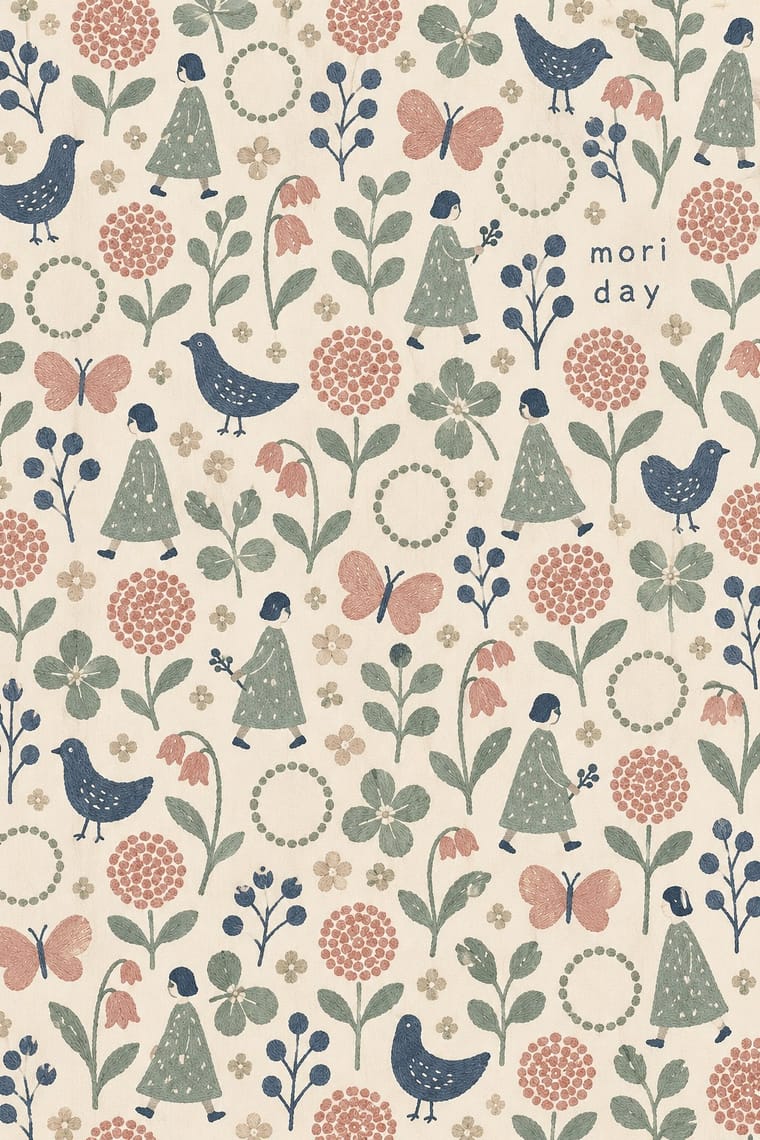
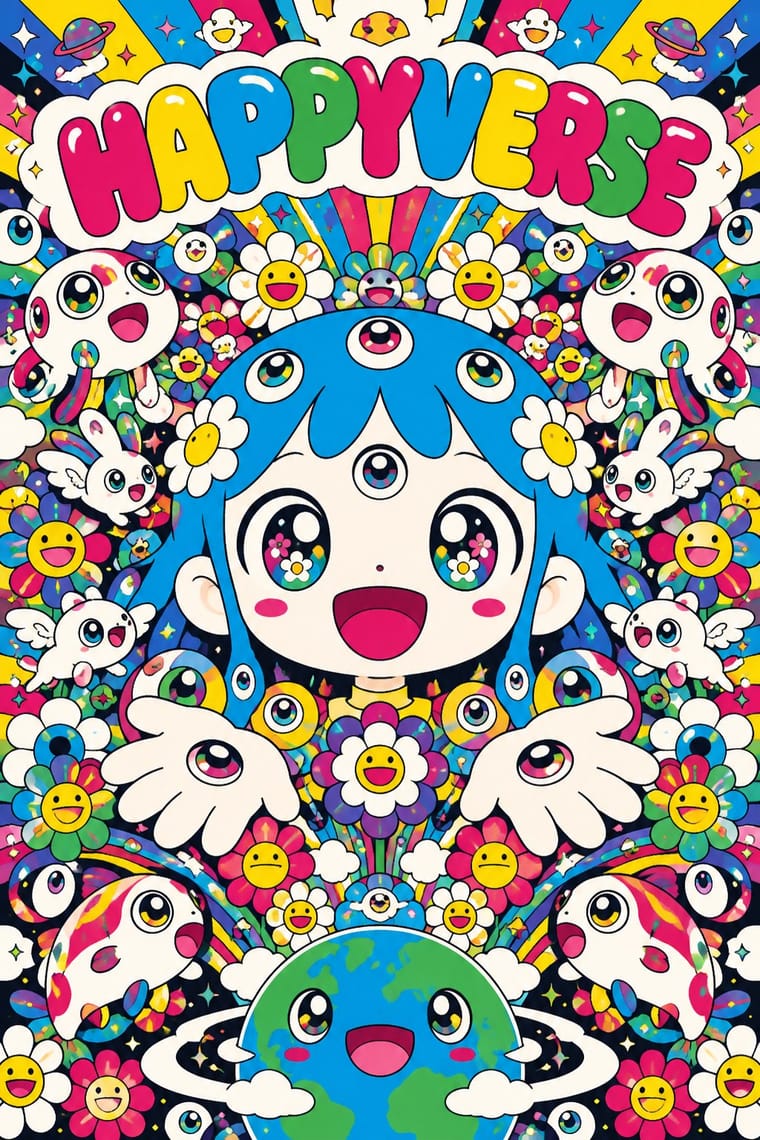
Styles that make many of the same choices, related or not, besides those above.

05
Often taken for
Josef Frank and Svenskt Tenn Botanical Prints has no real works recorded yet, so these are its nearest styles by its choices alone, with the choices that tell them apart.
-
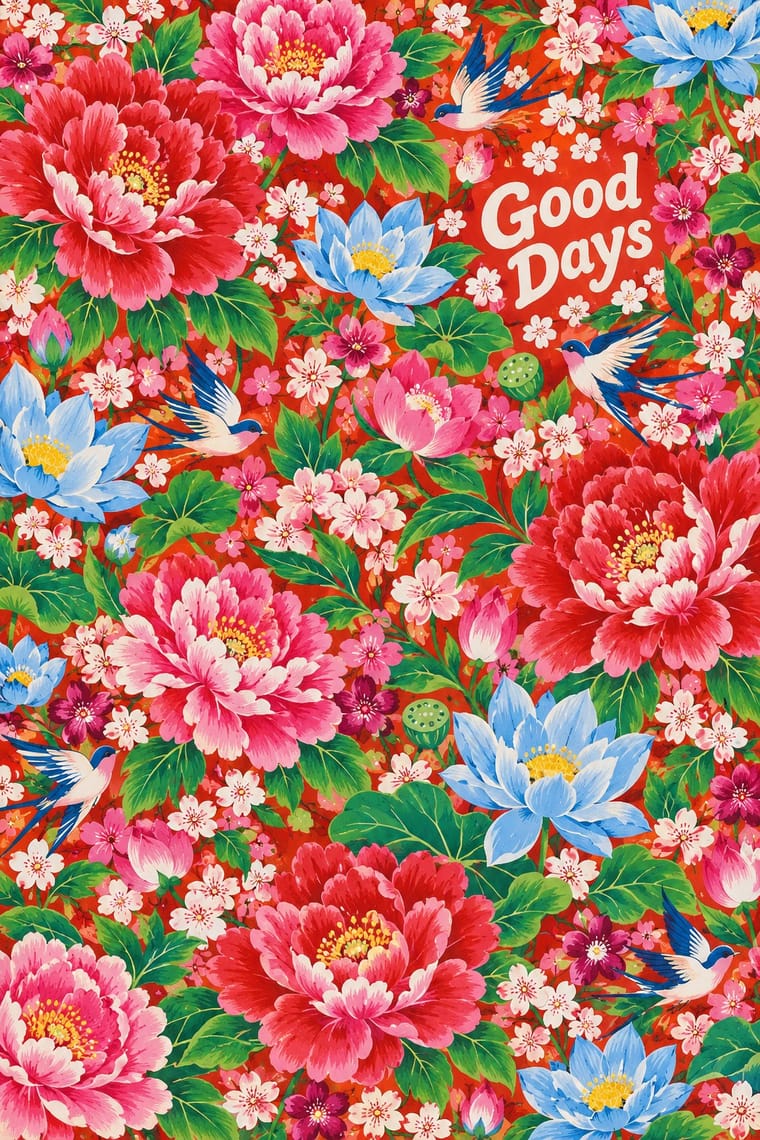
Taiwan Floral Cloth (Huabu)
Taiwan Floral Cloth is one of Josef Frank and Svenskt Tenn Botanical Prints’s nearest styles by choices; no real work of either fits the other better.
Choices that tell Josef Frank and Svenskt Tenn Botanical Prints and Taiwan Floral Cloth apart Choice Josef Frank and Svenskt Tenn Botanical Prints Taiwan Floral Cloth Light ground defining — Complementary clash — characteristic Stylised figuration defining occasional Folk & sacred symbols — characteristic Organic flow characteristic — No shared descent in the atlas: they reached these choices separately.
-
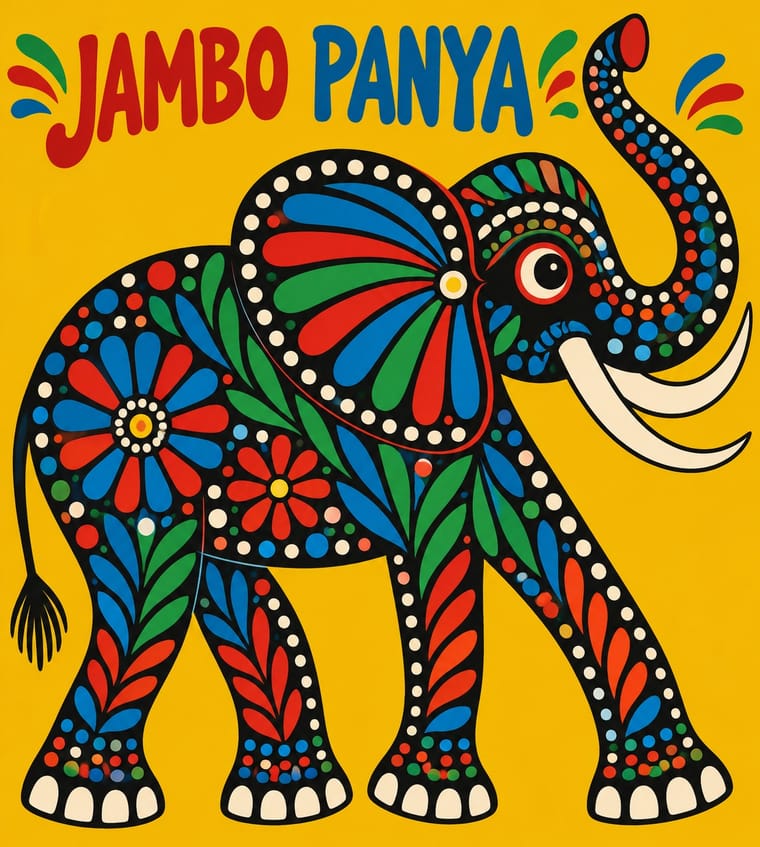
Tingatinga Painting
Tingatinga Painting is one of Josef Frank and Svenskt Tenn Botanical Prints’s nearest styles by choices; no real work of either fits the other better.
Choices that tell Josef Frank and Svenskt Tenn Botanical Prints and Tingatinga Painting apart Choice Josef Frank and Svenskt Tenn Botanical Prints Tingatinga Painting Light ground defining — Isolated object — defining Naturalistic depiction occasional avoids Painterly illustration occasional defining Pattern & repeat defining occasional No shared descent in the atlas: they reached these choices separately.
-
AfriCOBRA
AfriCOBRA is one of Josef Frank and Svenskt Tenn Botanical Prints’s nearest styles by choices; no real work of either fits the other better.
Choices that tell Josef Frank and Svenskt Tenn Botanical Prints and AfriCOBRA apart Choice Josef Frank and Svenskt Tenn Botanical Prints AfriCOBRA Light ground defining — Hand-lettering occasional defining Floral & vegetal defining — Angular & zigzag — characteristic Naturalistic depiction occasional avoids No shared descent in the atlas: they reached these choices separately.
-
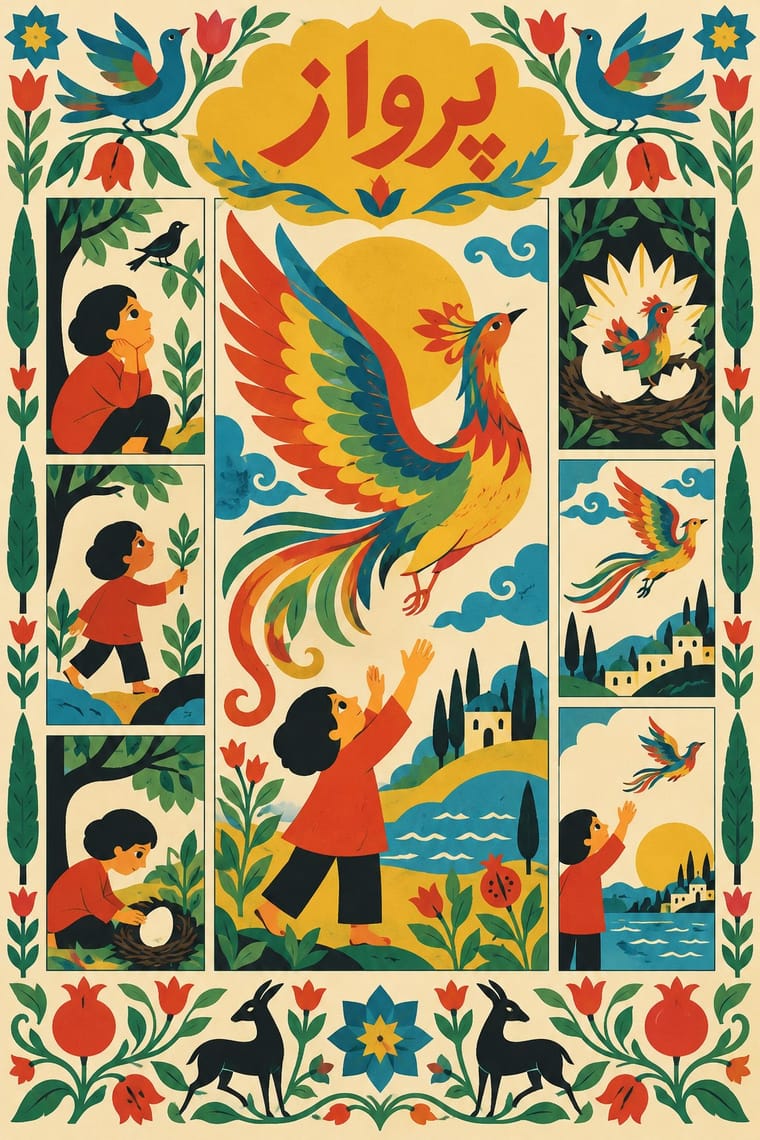
Kanoon Children's Book Illustration (Iran, 1965 to 1979)
Kanoon Children's Book Illustration is one of Josef Frank and Svenskt Tenn Botanical Prints’s nearest styles by choices; no real work of either fits the other better.
Choices that tell Josef Frank and Svenskt Tenn Botanical Prints and Kanoon Children's Book Illustration apart Choice Josef Frank and Svenskt Tenn Botanical Prints Kanoon Children's Book Illustration All-over field defining — Folk & sacred symbols — defining Abundant decoration defining — Sequential narrative — defining Horror vacui defining — Both descend from Renaissance Book Typography in the family tree.
— means the choice isn’t among the style’s recorded choices. Critics recorded each work’s choices with the styles’ descriptions in view, so this shows whether the descriptions hold together, not proof that they are right.
06
Combine it with
Styles Josef Frank and Svenskt Tenn Botanical Prints pairs well with or plays against, from the research. Each is worked out as a combination: which style gives the type, the colours and the forms.
- Vienna Secession Contrasts · Frank came out of Vienna, but his loose, asymmetric plant repeats are the opposite of the Secession's geometric, symmetrical ornament; compare a Wiener Werkstätte grid pattern with his free-growing trees.
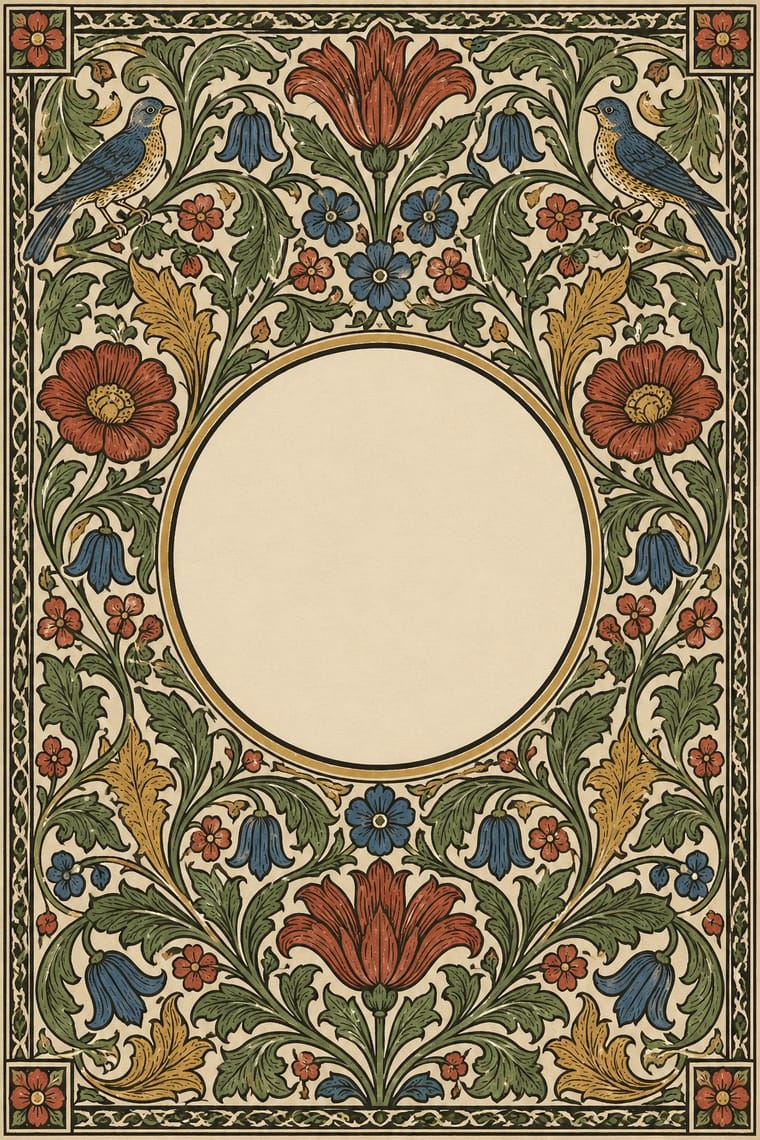
- Arts & Crafts Movement Pairs well · The parent tradition: both fill a repeat with plants on linen, but Morris is symmetrical, earthy and dense with dark grounds, Frank is looser, brighter and mostly light. Pair a Morris-style framed book page with Frank-style endpapers.
- Scandinavian Functionalism Contrasts · Frank's prints were his answer to functionalist austerity in the same Swedish rooms: use a calm functionalist layout and let one Frank-style print be its only ornament.
- Taiwan Floral Cloth (Huabu) Pairs well · Another dense, many-coloured floral cloth; Taiwan huabu is bolder, flatter and more nostalgic, Frank finer in line and more botanical.
- Finnish Bold Print (Marimekko Modernism) Contrasts · Marimekko enlarges one abstracted motif in two or three flat inks with plenty of white; set it beside Frank's many small, detailed, many-coloured plants to show how much each pattern holds.
- NK Textilkammare Geometric Print (Astrid Sampe, Signerad Textil) Contrasts · The other Stockholm house of printed linen in the same decades: Frank fills the cloth with many-coloured invented plants, NK's geometric prints with a few lines in black, white and one accent.
- 10-gruppen (Tiogruppen) Printed Textiles Contrasts · Frank fills a long repeat with many small botanical motifs; 10-gruppen uses one plain everyday motif in few flat colours, the cheerful answer to that richness.
07
Sources
- https://en.wikipedia.org/wiki/Josef_Frank_(architect)
- https://sv.wikipedia.org/wiki/Josef_Frank
- https://en.wikipedia.org/wiki/Svenskt_Tenn
- https://www.cooperhewitt.org/2014/02/01/the-father-of-swedish-modern-design/
- https://collection.nationalmuseum.se/en/collection/item/215599/
- https://collections.lacma.org/object/250890
- https://www.metmuseum.org/art/collection/search/497505
- https://collections.vam.ac.uk/item/O267096/
- https://risdmuseum.org/art-design/collection/la-plata-200891
- https://clevelandart.org/art/1954.201
- https://www.oca.ac.uk/?p=29410
- https://www.svenskttenn.com/se/en/range/table-setting/trays/
How Stylogeny researches and checks a style: where the facts come from.