World region
Graphic-design styles from Eastern Europe
Styles that took shape in Eastern Europe, alone or together with other regions. Stylogeny describes 22 of them. The earliest began in c. 862, the latest in 2022. Of these, 7 are still in use.
The 22 styles
Oldest first. Each has its own page: its design choices, where it comes from, and real works.
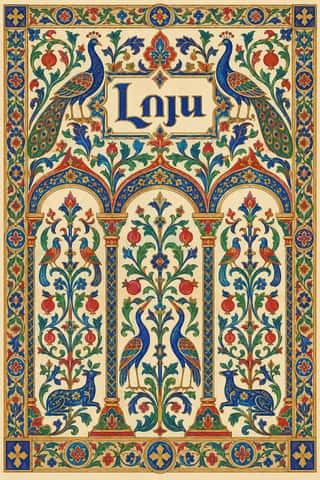
Armenian Manuscript IlluminationThe illuminated books of the Armenian Church, from the Gospel of Queen Mlke (c. 862) and the Etchmiadzin Gospels (989) to the last manuscripts around 1800.
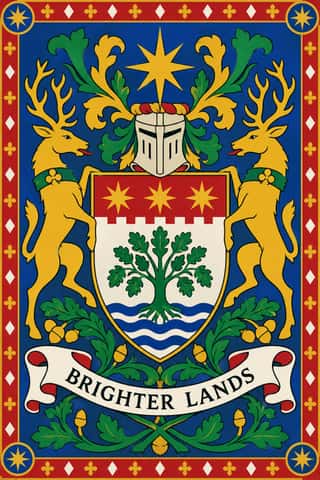
European HeraldryThe hereditary identifying devices of medieval Europe's knights and seals, codified into a rule-bound grammar still used by states, cities, churches, universities and families.
Vyaz (Ornamental Slavonic Lettering)Cyrillic letters bound into one even band of ornament.
- Ottoman Tughra & Dîvânî Chancery CalligraphyThe Ottoman sultan's calligraphic monogram and the chancery hand written beneath it.
- Sápmi Graphic Identity (Duodji & Gákti Colour Code)Duodji is Sámi handicraft: hard work in wood, horn and bone, soft work in skin and cloth; drums painted with alder-bark figures survive from the 17th and 18th centuries.
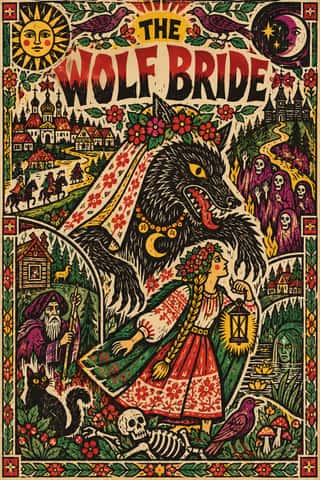
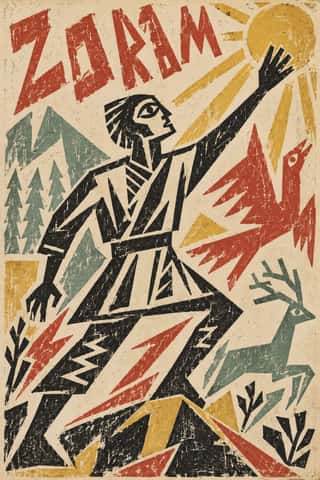
Lubok Popular PrintCheap single-sheet Russian popular prints sold at fairs and by pedlars from the later 17th century: woodcut, later engraved and lithographed pictures of saints, fables, heroes, battles and satire in which text and image share one sheet.
Mir iskusstva Book ArtThe graphic idiom of the St Petersburg World of Art circle (journal 1898–1904, exhibitions until Paris 1927) and the book artists around it.
Russian Futurist BookThe cheap, small-run books of the Russian Cubo-Futurist poets and painters, from Kruchenykh and Khlebnikov to Goncharova, Larionov and Rozanova.
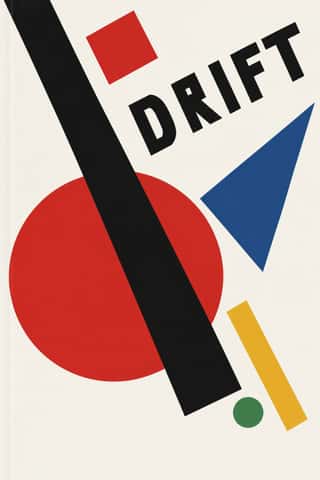
SuprematismKazimir Malevich's non-objective art, unveiled with the Black Square at the 0.10 exhibition in Petrograd in 1915, reduced painting to pure geometric planes floating in white, infinite space.
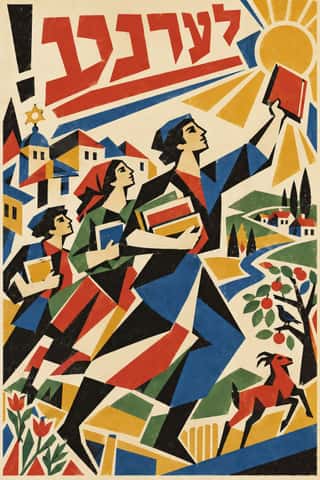
Kultur-Lige & Yiddish Avant-Garde Book DesignThe Yiddish modernist book of the Kultur-Lige, the secular Jewish culture league founded in Kyiv in 1918, and its circle: El Lissitzky, Issachar Ber Ryback, Iosif Chaikov, Boris Aronson and others, who sought a new Jewish art in the shtetl synagogues and tombstones they had recorded and in Cubo-Futurism and Suprematism.
- Russian ConstructivismConstructivism rejected art for art's sake in favour of the artist-engineer building useful things for the new Soviet society.
ROSTA WindowsHand-stencilled satirical news posters made by the Russian Telegraph Agency during the Civil War and hung in empty shop windows, first in Moscow, then in Petrograd and provincial towns.
Leningrad Avant-Garde Picture BookThin, large picture books made in Petrograd/Leningrad from 1922 to the mid-1930s for Raduga and the Gosizdat children's department led by Samuil Marshak, with Vladimir Lebedev as art editor.
Socialist Realist Propaganda PosterThe official art doctrine of the Soviet Union from 1932, later exported across the socialist world, which replaced avant-garde experiment with legible, heroic realism 'national in form, socialist in content'.
Polish Poster SchoolA painterly, metaphorical poster culture that flourished in communist Poland, chiefly for film, theatre, opera and circus.
Polish Cold War Neon (PRL Neonisation)The neon of People's Poland: after the 1956 thaw a state firm, Reklama, and a planned 'neonisation' set out to make war-ruined Warsaw a European capital of neon.
Thaw Modernism (Soviet and Czechoslovak)The light, stylised modernism that replaced Socialist Realist illusionism and Stalinist pomp in Soviet and Czechoslovak graphic and applied design, from the 1956 Secret Speech, the 1957 Moscow youth festival and Expo 58 to the crushing of the Prague Spring in 1968 (a political cut-off; the manner ran on into the 1970s).
Soviet Central Asian Ornamental ModernismThe monumental art of Soviet Central Asia after the 1966 Tashkent earthquake: a strand of Socialist Realism mixed with Islamic and national ornament.
- Ultras Graphics (Curva Banners and Tifo)The graphic language of Italy's organised football supporters, the ultras, from the late 1960s, and of the groups that copied them across Europe, North Africa and beyond.
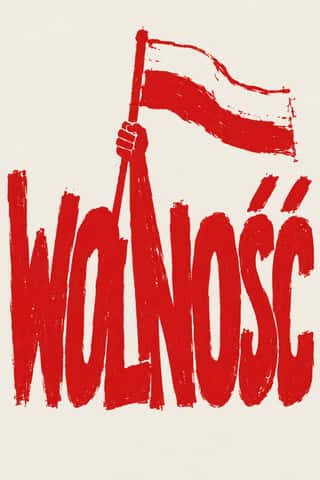
Solidarność & Polish Underground GraphicsThe graphic language of Poland's Solidarność movement, from the August 1980 shipyard strike to the semi-free election of 4 June 1989.
Polish Information Picture Book (Dwie Siostry)Mostly large-format information picture books made since 2008 by the Warsaw publisher Dwie Siostry with young illustrators led by Aleksandra and Daniel Mizieliński, graduates of the city's Academy of Fine Arts: atlases, cross-sections, labyrinths, activity books and wordless seek-and-find board books.
Ukrainian Wartime Graphics (Saint Javelin, War Stamps and Be Brave Like Ukraine)The graphics of Ukraine's defence since Russia's full-scale invasion in February 2022, made by the state, the national post, agencies, illustrators and volunteers at home and abroad.
The design choices they share
The choices these styles make more often than the 359 styles in the atlas as a whole, most telling first.
- Sequential narrativein 12 of 22
- Hand-letteringin 21 of 22
- Limited spot coloursin 18 of 22
- Lithographyin 9 of 22
- Diagonal axisin 9 of 22
- Floral & vegetalin 10 of 22
- Flatin 19 of 22
- Hand-paintedin 11 of 22