Pictorial & machine age · 1930–present · Oceania
Kiwiana
Also known as New Zealand kitsch, Kiwi iconography, Kiwiana packaging
A shared national kit of homely icons (kiwi bird, silver fern, gumboots, pavlova, brand mascots) applied to packaging, stamps, tea towels and souvenirs. Flat, friendly and affectionately self-mocking, it turns everyday settler-era goods into emblems of belonging.
Make something in this style Get advice in this style Mix it with another style
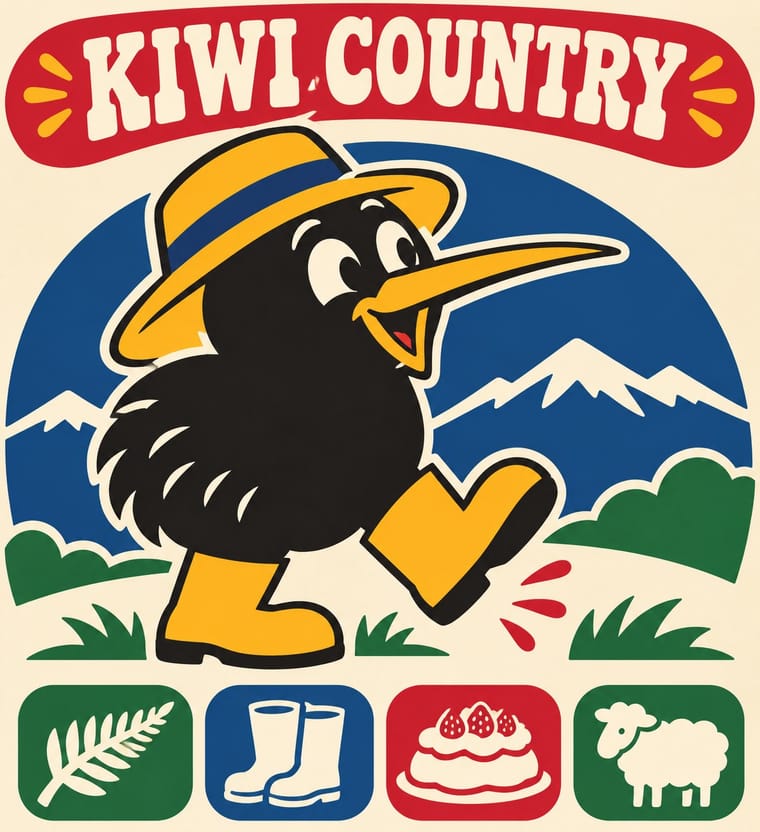
Use it with care
Kiwiana is a shared national kitsch, and koru spirals, hei-tiki and other Māori forms appear in much of it as decoration; that is the contested part of the tradition. Those forms are taonga tied to particular iwi and a living tradition, not generic national emblems. Keep to the settler-era brand icons (kiwi, fern, gumboots, pavlova, mascots), do not use tā moko, koru or tiki as ornament, and commission Māori designers when the subject is Māori.
01
Its picture in other colours
Change a colour and every picture on this page follows. It happens in your browser, from the same pictures: nothing new is made or saved.
Choose a colour to change it
-
#f3ead2 -
#111111 -
#c8202f -
#1d4f91 -
#2f6b3a -
#f2b632
A faded colour isn’t in these pictures, so changing it changes nothing.
Light and dark stay where they are; greys hardly move.
More colours: any style’s, or your own
The pictures show the style’s own colours.
02
Make something in this style
Say what you need, and Stylogeny’s image studio draws it from Kiwiana’s design choices and checks it against them. It takes about a minute, and you get a link to share.
03
How it works
Palette
-
#f3ead2ground · 27% -
#111111ink · 11% -
#c8202faccent · 10% -
#1d4f91accent · 14% -
#2f6b3aaccent · 11% -
#f2b632accent · 11%
Shares measured from its picture. The ground is what the pictures sit on (of the colours covering most, the most neutral), the ink stands out from it most, the rest are accents.
Typefaces
-
Hand-painted sign-writer's lettering
-
Rounded and bold sans-serifs on 1950s-70s packaging
-
Slab-serif advertising display
-
Comic-strip hand lettering
- Draw one everyday New Zealand object as a flat, friendly emblem.
- Choose icons the whole country already knows, such as the kiwi, silver fern, gumboots or pavlova, over new symbols.
- Give brand mascots a cheeky, hand-drawn character with simple outlines.
- Use a few warm flat colours; black and red recur on packaging mascots, but treat the palette as indicative rather than fixed.
- Set the name in a bold hand-lettered or plain sans line, and keep the joke affectionate rather than cruel.
Aotearoa New Zealand; a mid-twentieth-century heritage of packaging, advertising, souvenirs and stamps, later named by blending 'Kiwi' and 'Americana'
Change it with an idea. Any of the 73 moves that make a design say something can go on this style.
04
Its design choices
From Stylogeny’s vocabulary of design choices: defining choices make the style, characteristic ones are usual, occasional ones turn up now and then.
- Layout & composition
- Space & hierarchy
- Typography
- Colour
- Form & shape
- Surface & texture
- Ornament
- Imagery
- Medium & production
- Tone & intent
- Avoids
- Abundant decoration, Modular grid, Horror vacui, Fluorescent & neon, Gloss & highlights, Experimental & distorted, Technological & futurist
How its pictures are made Systematic, Drawn & painted, Synthetic & found
Kind of picture: Systematic · Drawn & painted · Synthetic & found
Known for
-
Mr Four Square, Foodstuffs advertising department
1950s; initial designs by sign writer Ernest Cox, painted by Dick Frizzell since the 1980s
-
The Longest Drink in Town giraffe on paper cups
since 1968
-
Ches and Dale, Chesdale cheese television advertisement
1969; Don Couldrey and Robert Merlyn Jenkins
-
NZ Post stamps depicting Kiwiana items such as pavlova and fish and chips
1994
-
Footrot Flats comic strip
Murray Ball
05
Where it comes from, and what it’s close to
Borrowed from
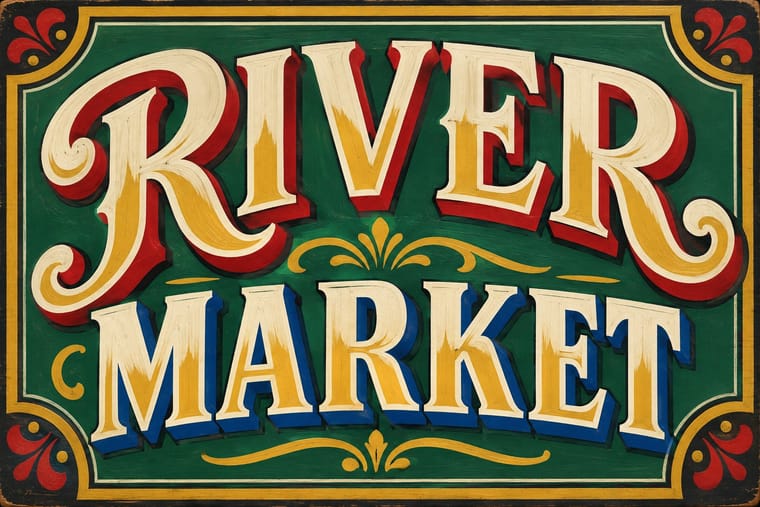
Kiwiana 1930–present
No later style in the atlas grew out of it yet.
Alike in its design choices
06
Combine it with
Styles Kiwiana pairs well with or plays against, from the research. Each is worked out as a combination: which style gives the type, the colours and the forms.
- Kōwhaiwhai & Toi Māori Design Contrasts · Kōwhaiwhai is a living ancestral pattern system with its own meanings, whereas Kiwiana is settler-era brand imagery; keep them apart and work with Māori designers when the subject is Māori.
- Hand-Painted Signage & Vernacular Lettering Pairs well · Have a sign writer paint the shop name beneath a flat mascot so the lettering carries the same hand-made warmth as the emblem.
- Tiki Pop (Polynesian Pop) Contrasts · Both are souvenir kitsch with a grinning mascot, but tiki pop is an outsider's escapist pastiche, while Kiwiana is a domestic, rural and national kit of homely brand icons.
07
Often taken for
Kiwiana has no real works recorded yet, so these are its nearest styles by its choices alone, with the choices that tell them apart.
-
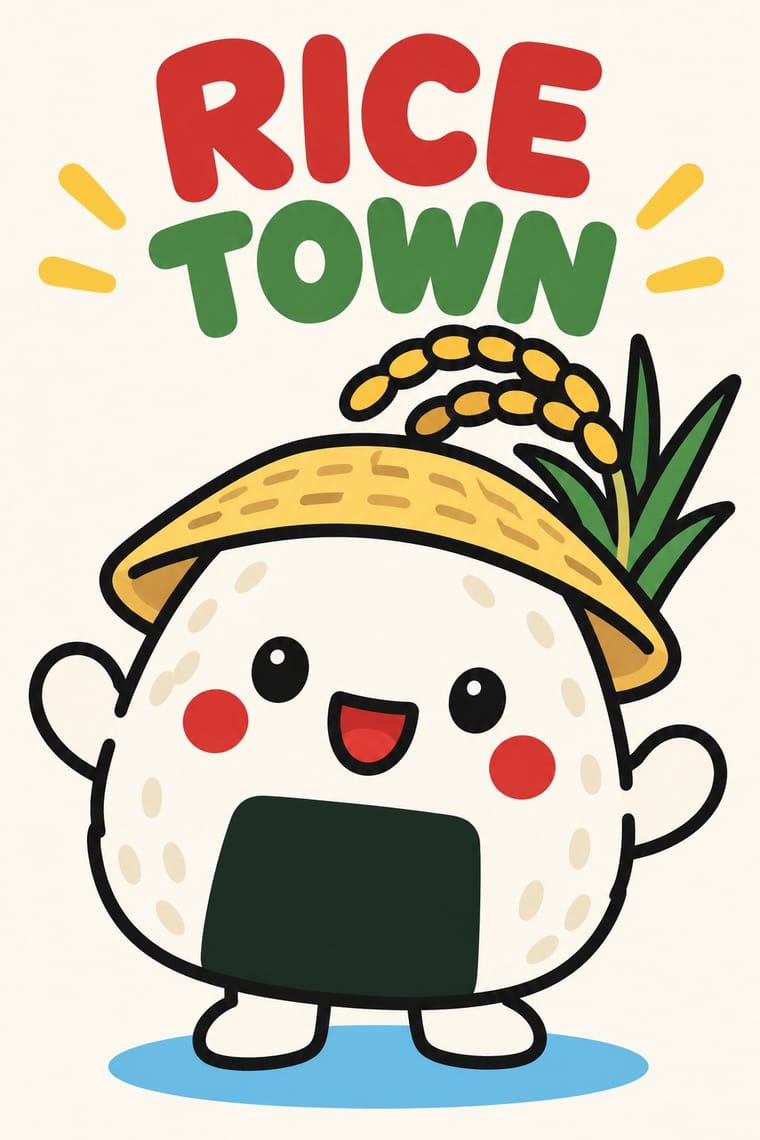
Yuru-chara (Japanese Local Mascot Design)
Yuru-chara is one of Kiwiana’s nearest styles by choices; no real work of either fits the other better.
Choices that tell Kiwiana and Yuru-chara apart Choice Kiwiana Yuru-chara Icons & pictograms defining — Distortion & exaggeration — characteristic Naturalistic depiction occasional avoids Textile & craft — characteristic Found & vernacular imagery characteristic — No shared descent in the atlas: they reached these choices separately.
-
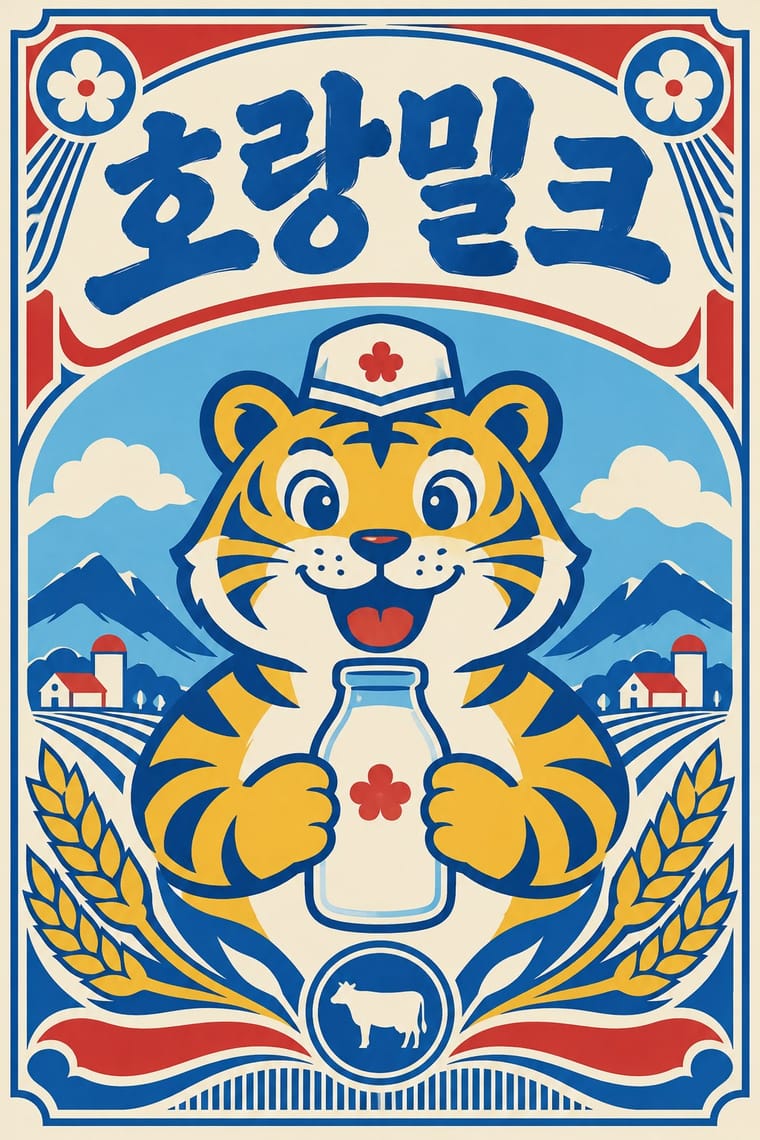
Newtro (Korean New-Retro)
Newtro is one of Kiwiana’s nearest styles by choices; no real work of either fits the other better.
Choices that tell Kiwiana and Newtro apart Choice Kiwiana Newtro Folk & sacred symbols characteristic avoids Central symmetry occasional defining Icons & pictograms defining — Framed panels — characteristic Rounded sans characteristic — No shared descent in the atlas: they reached these choices separately.
-
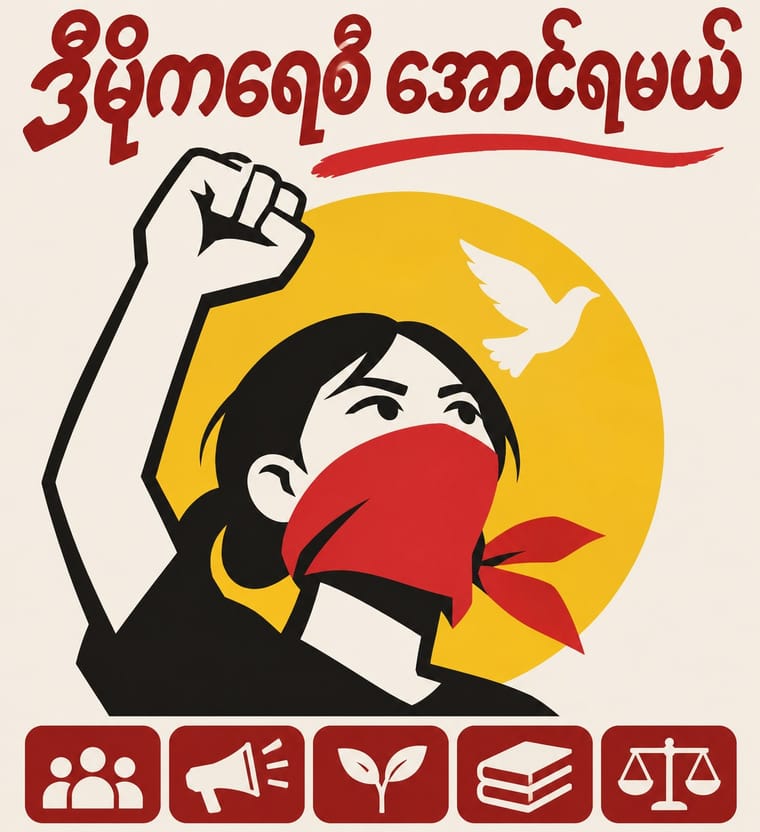
Spring Revolution Protest Art (Myanmar)
Spring Revolution Protest Art is one of Kiwiana’s nearest styles by choices; no real work of either fits the other better.
Choices that tell Kiwiana and Spring Revolution Protest Art apart Choice Kiwiana Spring Revolution Protest Art Found & vernacular imagery characteristic — Pictogram — characteristic Rounded sans characteristic — Eclectic mixing — characteristic Nostalgic & retro defining — No shared descent in the atlas: they reached these choices separately.
-
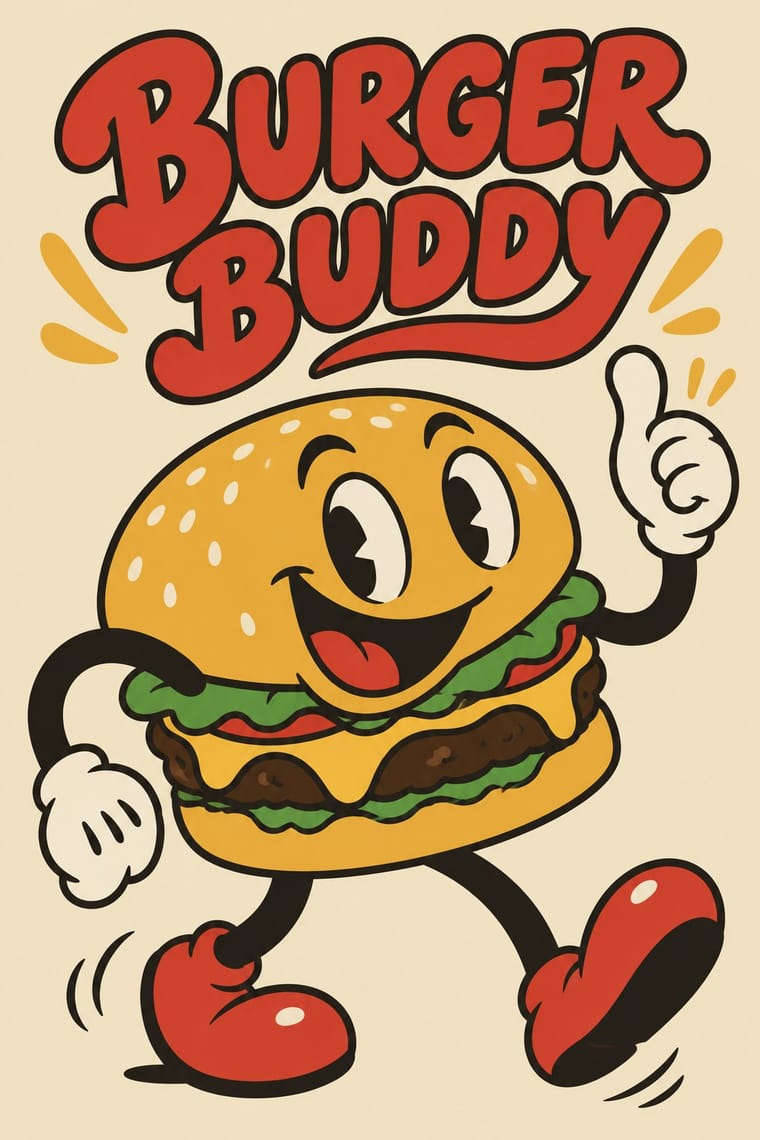
Rubber-Hose Revival (Cartoon Mascot Graphics)
Rubber-Hose Revival is one of Kiwiana’s nearest styles by choices; no real work of either fits the other better.
Choices that tell Kiwiana and Rubber-Hose Revival apart Choice Kiwiana Rubber-Hose Revival Icons & pictograms defining — Distortion & exaggeration — defining Naturalistic depiction occasional avoids Line illustration — defining Found & vernacular imagery characteristic — No shared descent in the atlas: they reached these choices separately.
— means the choice isn’t among the style’s recorded choices. Critics recorded each work’s choices with the styles’ descriptions in view, so this shows whether the descriptions hold together, not proof that they are right.
08
Sources
- Wikipedia, 'Kiwiana' (term blending Kiwi and Americana; icons; Longest Drink in Town paper cups since 1968; 1994 NZ Post stamps; Footrot Flats by Murray Ball; tagged as needing more citations): https://en.wikipedia.org/wiki/Kiwiana
- Wikipedia, 'Four Square (supermarket)' (Mr Four Square created in the 1950s by the Foodstuffs advertising department; initial designs by sign writer Ernest Cox; Dick Frizzell commissioned to paint him since the 1980s): https://en.wikipedia.org/wiki/Four_Square_(supermarket)
- Wikipedia, 'Dick Frizzell' (pop art blending Kiwiana imagery with Māori motifs; 1992 Tiki exhibition): https://en.wikipedia.org/wiki/Dick_Frizzell
2 more sources
- Wikipedia, 'Chesdale' (Ches and Dale animated ad created 1969 by art director Don Couldrey and copywriter Robert Merlyn Jenkins; cartoon characters in gumboots and black singlets; considered an example of Kiwiana): https://en.wikipedia.org/wiki/Chesdale
- The Conversation, 'Kiwiana is past its use-by date' (Kiwiana icons as late-twentieth-century nostalgia for a settler-era world; koru and tiki incorporated as aesthetic, apolitical elements): https://theconversation.com/kiwiana-is-past-its-use-by-date-is-it-time-to-re-imagine-our-symbols-of-national-identity-149967
How Stylogeny researches and checks a style: where the facts come from.