The 11 styles
Oldest first. Each has its own page: its design choices, where it comes from, and real works.
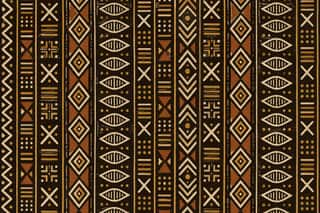
- Guna MolaThe reverse-appliqué blouse panels of Guna women in Panama, made by cutting through two to seven stacked layers of cotton so that every shape is ringed by echoing bands of the colours beneath.
- Senegalese Sufi Devotional Imagery (Souwère Glass Painting and Amadou Bamba Portraits)The devotional imagery of Senegal's Sufi brotherhoods, above all the Mourides: reverse paintings on glass (souwère), made in Senegal's cities since about 1900, and the murals, banners, prints and photocopies that multiply one 1913 photograph of Sheikh Amadou Bamba across Dakar and Touba.

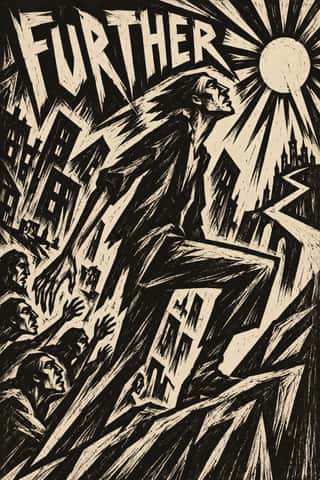

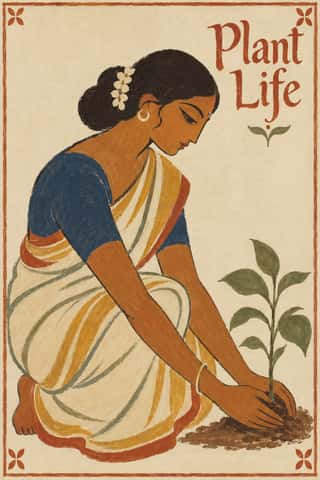
- Bezalel SchoolThe house style of the Bezalel School of Arts and Crafts, opened in Jerusalem by Boris Schatz in 1906 with E.

- London Transport DesignThe design programme Frank Pick built for London's Underground from 1908 and the London Passenger Transport Board (1933–40), continued by Harold Hutchison (1947–66).
- Italian FuturismLaunched by Marinetti's 1909 manifesto, Futurism glorified speed, machines, the city and war, and turned the printed page into an explosive, noisy field.


The design choices they share
The choices these styles make more often than the 359 styles in the atlas as a whole, most telling first.
- Lithographyin 7 of 11
- Non-representationalin 7 of 11
- Angular & zigzagin 6 of 11
- Stylised figurationin 10 of 11
- Architecture & signagein 7 of 11
- Hand-letteringin 10 of 11
- Spiritual & sacredin 6 of 11
- Pattern & repeatin 5 of 11