Counterculture · 1979–present · North America
Lowbrow and Pop Surrealism ( Juxtapoz Scene )
Also known as Lowbrow art, Pop surrealism, Juxtapoz art, Cartoon-tainted abstract surrealism
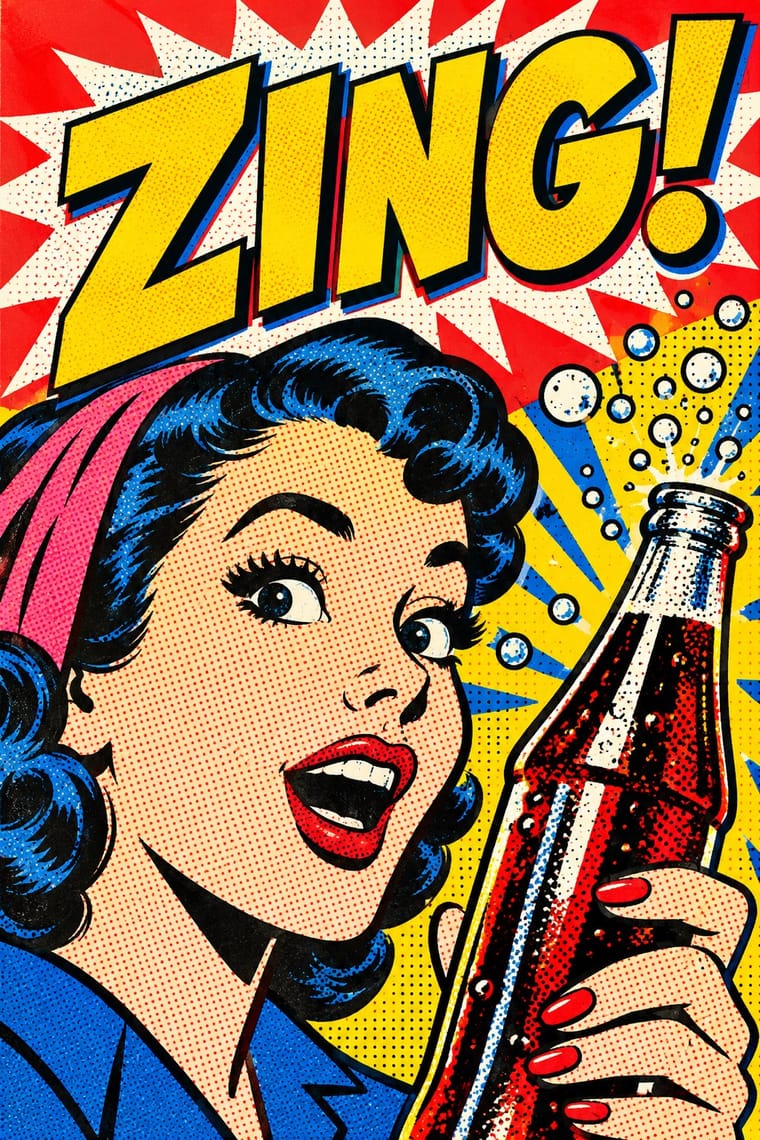
A Los Angeles-born movement that takes the cartoon, hot-rod and underground-comix vocabulary and paints it as glossy, finely rendered surreal scenes of big-eyed, grotesque or saccharine figures. It lives mainly as gallery painting; its graphic life runs through magazine covers and pages (Juxtapoz) and album artwork such as Williams' Appetite for Destruction painting. Content in the scene can be grotesque, erotic or violent, and the Appetite for Destruction image, which depicts sexual violence, was withdrawn from the album cover after outrage: weigh context of use before borrowing its imagery.
Make something in this style Get advice in this style Mix it with another style
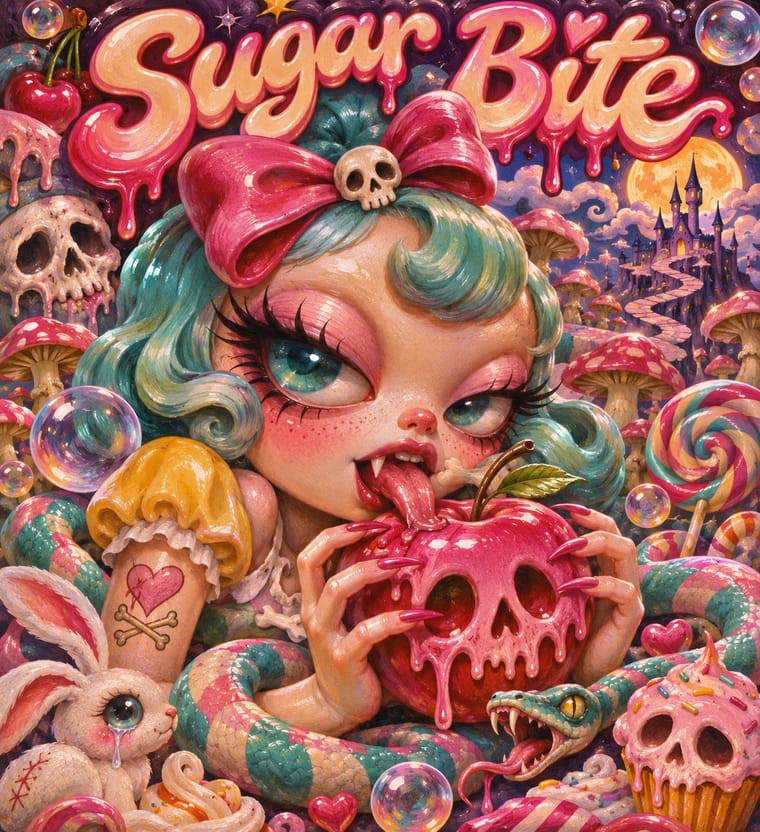
01
Its picture in other colours
Change a colour and every picture on this page follows. It happens in your browser, from the same pictures: nothing new is made or saved.
Choose a colour to change it
-
#f3d9c4 -
#d8345f -
#2fa7a0 -
#f2b134 -
#3b2a6b -
#1b1b1f
A faded colour isn’t in these pictures, so changing it changes nothing.
Light and dark stay where they are; greys hardly move.
More colours: any style’s, or your own
The pictures show the style’s own colours.
02
Make something in this style
Say what you need, and Stylogeny’s image studio draws it from Lowbrow and Pop Surrealism (Juxtapoz Scene)’s design choices and checks it against them. It takes about a minute, and you get a link to share.
03
How it works
Palette
-
#f3d9c4accent · 7% -
#d8345fground · 23% -
#2fa7a0not in its pictures -
#f2b134accent · 10% -
#3b2a6bnot in its pictures -
#1b1b1fink · 5%
Shares measured from its picture. The ground is what the pictures sit on (of the colours covering most, the most neutral), the ink stands out from it most, the rest are accents.
Typefaces
-
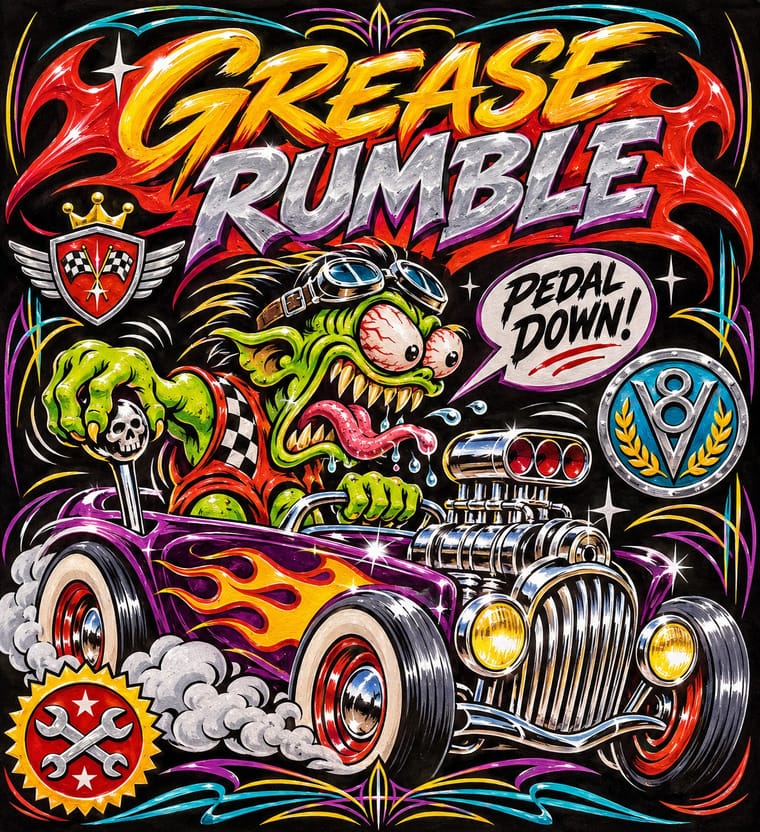
Hand-painted hot-rod and kustom-culture pinstripe lettering
-
Sideshow and circus-poster display lettering
-
Hand-drawn comix title lettering inherited from underground comix
- Render cartoon-derived figures in a polished, painterly finish so that the surface reads as fine art and the subject as low culture.
- Stage one strange, funny or unsettling scene around a single central character, set in a believable illusionistic space.
- Pair sweetness with menace: put big eyes, candy colour and kitsch against grotesque, morbid or erotic content.
- Use saturated polychrome palettes and glossy, lacquered highlights rather than flat comic ink.
- Letter titles and logos by hand in a pinstripe, hot-rod or sideshow manner, and keep type secondary to the picture.
- Mine pop sources freely (cartoons, toys, advertising, tiki, horror) and twist them with ironic humour.
Where and when Los Angeles.
Los Angeles. Wikipedia's Lowbrow page places the movement's rise in the Los Angeles area in the late 1960s, with roots in underground comix, hot-rod and kustom culture, punk and graffiti; the period here starts in 1979, the year the name was fixed. Robert Williams, who joined Zap Comix in 1969 and worked for Ed 'Big Daddy' Roth from 1965 to 1970, claimed the name 'lowbrow' for a book of his paintings that Gilbert Shelton of Rip Off Press planned in 1979 (published as The Lowbrow Art of Robt. Williams; sources date the printing 1981 or 1982). The Lowbrow page lists Juxtapoz, founded in 1994, with Williams, Greg Escalante and Eric Swenson as its founders.
Change it with an idea. Any of the 73 moves that make a design say something can go on this style.
04
Its design choices
From Stylogeny’s vocabulary of design choices: defining choices make the style, characteristic ones are usual, occasional ones turn up now and then.
- Layout & composition
- Space & hierarchy
- Typography
- Colour
- Form & shape
- Surface & texture
- Imagery
- Medium & production
- Tone & intent
- Avoids
- Ornament-free, Generous white space, Grotesque & neo-grotesque, Modular grid, Flat, Typography only, Straight photography, Rational & objective, Authoritative & institutional, Calm & contemplative
How its pictures are made Drawn & painted
Kind of picture: Drawn & painted
Known for
-
Robert Williams, The Lowbrow Art of Robt. Williams
book; Rip Off Press project of 1979
-
Robert Williams, Appetite for Destruction
painting used for the Guns N' Roses album cover; moved to the inside sleeve after public outrage; it depicts sexual violence
-
Juxtapoz Art & Culture Magazine
founded 1994 by Robert Williams, Greg Escalante and Eric Swenson, per Wikipedia's lowbrow page
-
Mark Ryden
listed among lowbrow artists on Wikipedia's lowbrow page
-
Hi-Fructose and Beautiful/Decay magazines
listed among lowbrow magazines on Wikipedia's lowbrow page
05
Where it comes from, and what it’s close to
Grew out of
Borrowed from
Lowbrow and Pop Surrealism (Juxtapoz Scene) 1979–present
No later style in the atlas grew out of it yet.
Alike in its design choices
06
Combine it with
Styles Lowbrow and Pop Surrealism (Juxtapoz Scene) pairs well with or plays against, from the research. Each is worked out as a combination: which style gives the type, the colours and the forms.
- Screenprinted Gig & Alt-Movie Poster Pairs well · A possible route into graphic design: translate a painting into a limited-ink poster or sleeve.
- Superflat Contrasts · Also cartoon-derived and ironic, but flat and graphic where this style is lacquered and illusionistic in depth.
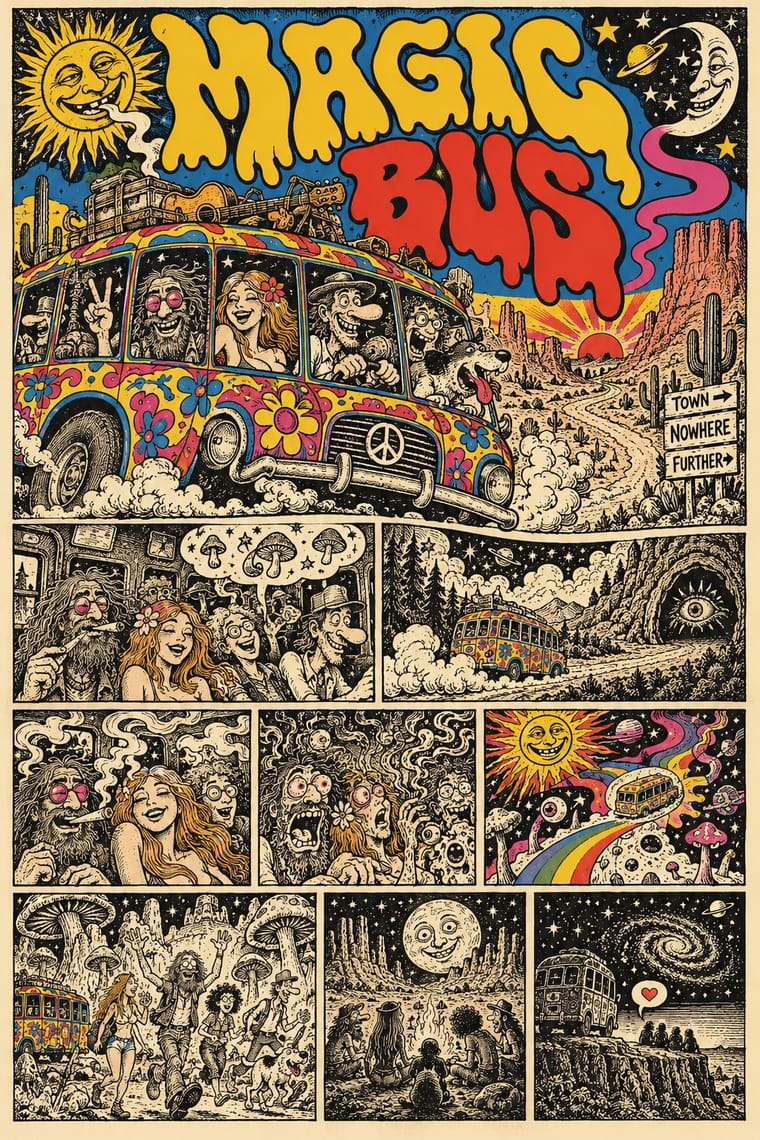
- Underground Comix Pairs well · Keep the cartoon figures and rebel humour but paint them in colour with a glossy, gallery-grade finish.
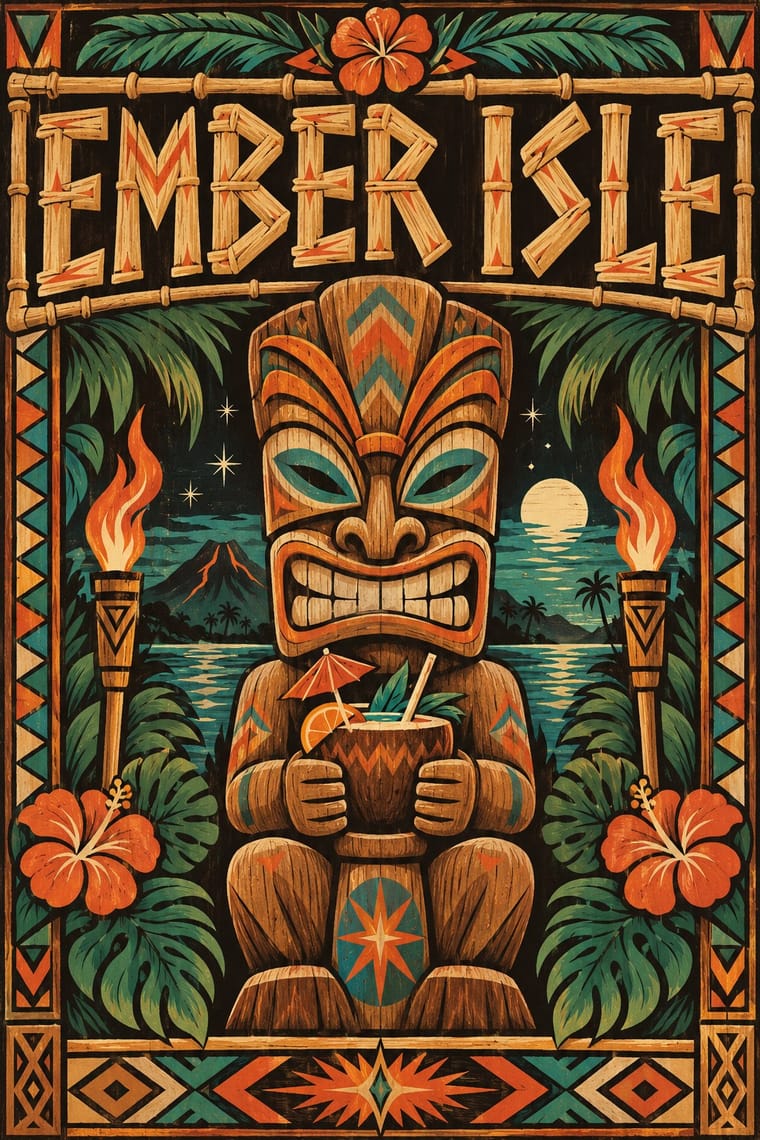
- Tiki Pop (Polynesian Pop) Pairs well · Borrow its kitsch, nostalgic exotica and hand-lettered signage for a bar or record-sleeve context.
- Mambo Graphics (Sydney Loud Shirt Art) Pairs well · Push the cartoon figures towards grotesque, painterly Californian lowbrow for a darker joke.
- Kustom Kulture Graphics (Pinstriping, Monster Art and Hot-Rod Lettering) Pairs well · Its gallery descendant: lift the grotesque cartoon figure and glossy paint finish into an exhibition piece.
07
Often taken for
Lowbrow and Pop Surrealism has no real works recorded yet, so these are its nearest styles by its choices alone, with the choices that tell them apart.
-
Kustom Kulture Graphics (Pinstriping, Monster Art and Hot-Rod Lettering)
Kustom Kulture Graphics is one of Lowbrow and Pop Surrealism’s nearest styles by choices; no real work of either fits the other better.
Choices that tell Lowbrow and Pop Surrealism and Kustom Kulture Graphics apart Choice Lowbrow and Pop Surrealism Kustom Kulture Graphics Painterly illustration defining — Emblems & badges — defining Illusion of depth defining — Dark ground — characteristic Naturalistic depiction characteristic — No shared descent in the atlas: they reached these choices separately.
-
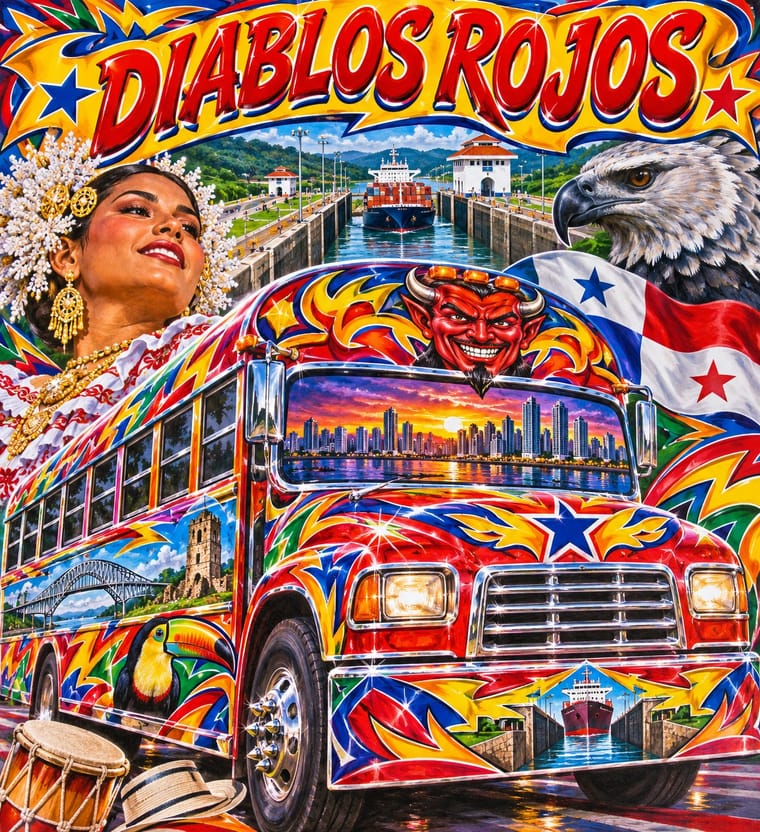
Panamanian Painted Buses (Diablos Rojos) and Their Central American Kin
Panamanian Painted Buses and Their Central American Kin is one of Lowbrow and Pop Surrealism’s nearest styles by choices; no real work of either fits the other better.
Choices that tell Lowbrow and Pop Surrealism and Panamanian Painted Buses and Their Central American Kin apart Choice Lowbrow and Pop Surrealism Panamanian Painted Buses and Their Central American Kin Distortion & exaggeration defining — Abundant decoration — defining Illusion of depth defining — Full bleed occasional defining Rounded & pill characteristic — No shared descent in the atlas: they reached these choices separately.
-
Basel Fasnacht Lantern Painting & Zeedel
Basel Fasnacht Lantern Painting & Zeedel is one of Lowbrow and Pop Surrealism’s nearest styles by choices; no real work of either fits the other better.
Choices that tell Lowbrow and Pop Surrealism and Basel Fasnacht Lantern Painting apart Choice Lowbrow and Pop Surrealism Basel Fasnacht Lantern Painting Single focal point defining — Flat fields — characteristic Gloss & highlights defining — Framed panels — characteristic Naturalistic depiction characteristic — No shared descent in the atlas: they reached these choices separately.
-
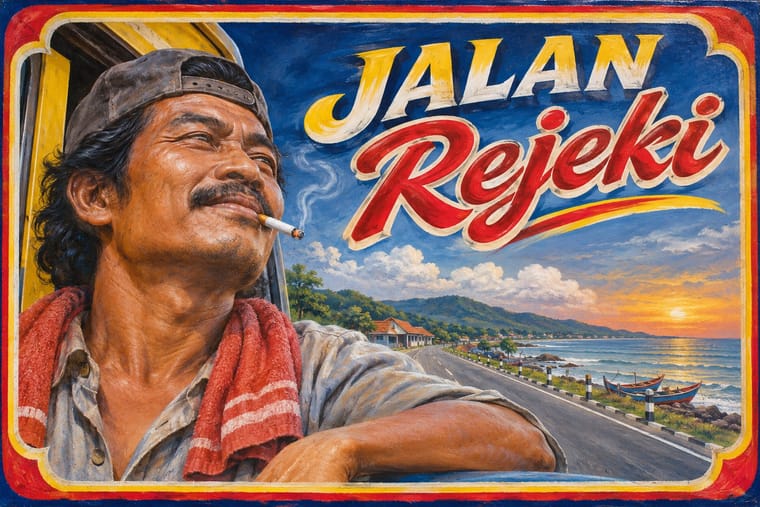
Pantura Truck Painting (Lukisan Bak Truk)
Pantura Truck Painting is one of Lowbrow and Pop Surrealism’s nearest styles by choices; no real work of either fits the other better.
Choices that tell Lowbrow and Pop Surrealism and Pantura Truck Painting apart Choice Lowbrow and Pop Surrealism Pantura Truck Painting Distortion & exaggeration defining — Framed panels — defining Illusion of depth defining — Found & vernacular imagery — characteristic Gloss & highlights defining — No shared descent in the atlas: they reached these choices separately.
— means the choice isn’t among the style’s recorded choices. Critics recorded each work’s choices with the styles’ descriptions in view, so this shows whether the descriptions hold together, not proof that they are right.
08
Sources
- Wikipedia, Lowbrow (art movement), https://en.wikipedia.org/wiki/Lowbrow_(art_movement)
- Wikipedia, Robert Williams (artist), https://en.wikipedia.org/wiki/Robert_Williams_(artist)
How Stylogeny researches and checks a style: where the facts come from.