Traditions & vernacular · 1860–present · Western Europe
British Fairground Art
Also known as Fairground decoration, Showman's art, Gallopers and fairground lettering
The decoration of British travelling-fair rides and organs, which grew with steam-powered roundabouts from the 1860s. Carved and gilded scrollwork, painted figures and panels and show lettering were packed onto symmetrical fronts so that each ride and organ would draw a crowd from across the ground.
Make something in this style Get advice in this style Mix it with another style
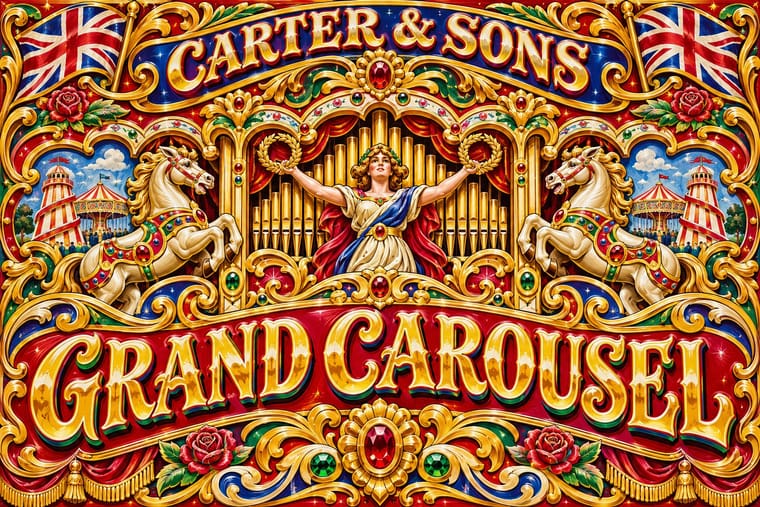
Use it with care
Travelling showmen and their families still keep this tradition alive, and the lettering and ride fronts carry real family names and histories; imitate the visual language only with credit and never reproduce a named showman's board or a family's ride title as your own.
01
Its picture in other colours
Change a colour and every picture on this page follows. It happens in your browser, from the same pictures: nothing new is made or saved.
Choose a colour to change it
-
#b3141c -
#1d3f8f -
#0f6b46 -
#d9a53a -
#f2e6c9 -
#1a1410
A faded colour isn’t in these pictures, so changing it changes nothing.
Light and dark stay where they are; greys hardly move.
More colours: any style’s, or your own
The pictures show the style’s own colours.
02
Make something in this style
Say what you need, and Stylogeny’s image studio draws it from British Fairground Art’s design choices and checks it against them. It takes about a minute, and you get a link to share.
03
How it works
Palette
-
#b3141caccent · 27% -
#1d3f8faccent · 2% -
#0f6b46not in its pictures -
#d9a53aground · 29% -
#f2e6c9accent · 3% -
#1a1410ink · 2%
Shares measured from its picture. The ground is what the pictures sit on (of the colours covering most, the most neutral), the ink stands out from it most, the rest are accents.
Typefaces
-
Hand-painted showman's name boards
-
Hand-lettered ride titles
- Build the front of the ride or organ on a central axis, with matching wings either side.
- Fill every surface with carved, gilded and painted ornament; leave no plain wood showing.
- Letter the showman's name and the ride's title in large, shaded capitals that read from across the ground.
- Set painted panels and figures in framed compartments within the scrollwork.
- Use saturated reds, blues and greens with gold, so the ride glows against the dark and under the lights.
Britain: travelling fairs, steam-powered roundabouts (gallopers) and fairground organs, with carved, gilded and painted fronts and show lettering
Change it with an idea. Any of the 73 moves that make a design say something can go on this style.
04
Its design choices
From Stylogeny’s vocabulary of design choices: defining choices make the style, characteristic ones are usual, occasional ones turn up now and then.
- Layout & composition
- Space & hierarchy
- Typography
- Colour
- Form & shape
- Surface & texture
- Ornament
- Medium & production
- Tone & intent
- Avoids
- Ornament-free, Generous white space, Modular grid, Grotesque & neo-grotesque, Monochrome, Flat
How its pictures are made Drawn & painted
Kind of picture: Drawn & painted
Known for
-
Orton & Spooner of Burton upon Trent
Charles Spooner, a wood-carver, made carved animal figures for roundabouts and carved work for showmen's living wagons and showfronts; records in the National Fairground and Circus Archive, Sheffield
-
Steam gallopers by Robert Tidman & Sons
the 1912 machine at Hollycombe Steam Collection: 24 horses, six cockerels, two chariots and a band organ
-
Frederick Savage of King's Lynn, whose Platform Gallopers carried the galloping-horse ride
an engineer-builder; cited for the ride, not for its decoration
-
A living wagon built for showman Charles Heal, at the Dingles Fairground Heritage Centre, Devon
05
Where it comes from, and what it’s close to
Grew out of
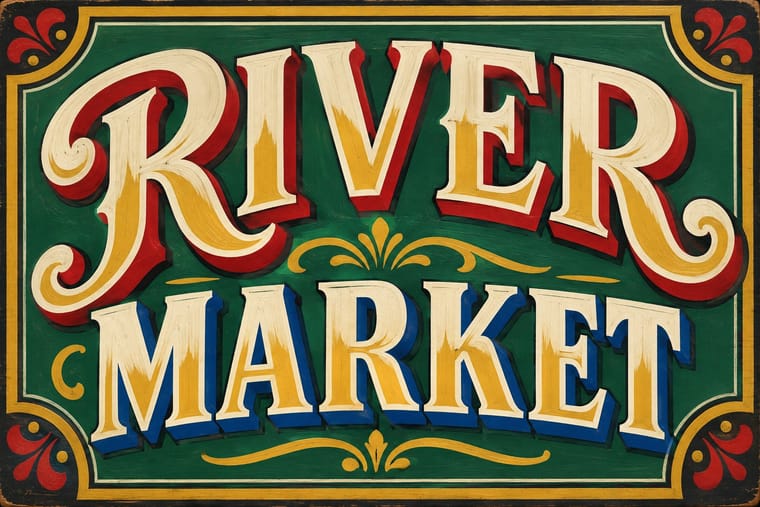
British Fairground Art 1860–present
No later style in the atlas grew out of it yet.
Alike in its design choices
06
Combine it with
Styles British Fairground Art pairs well with or plays against, from the research. Each is worked out as a combination: which style gives the type, the colours and the forms.
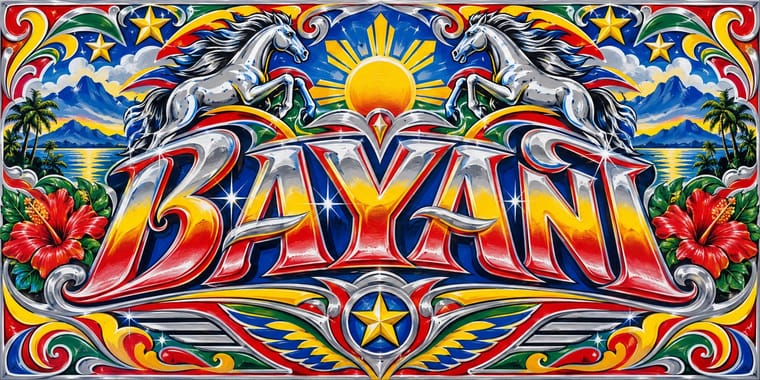
- Jeepney Art Pairs well · Another vehicle-decoration tradition that crowds every surface with colour and lettering; the British fairground adds carved, gilded scrollwork.
- International Typographic Style Contrasts · Its opposite on ornament, density and symmetry; use a grid-set caption to calm one fairground panel.
- Circus Chromolithographic Show Poster Pairs well · Both sell a spectacle with crowded, saturated pictures; borrow the poster's framed figures for ride panels.
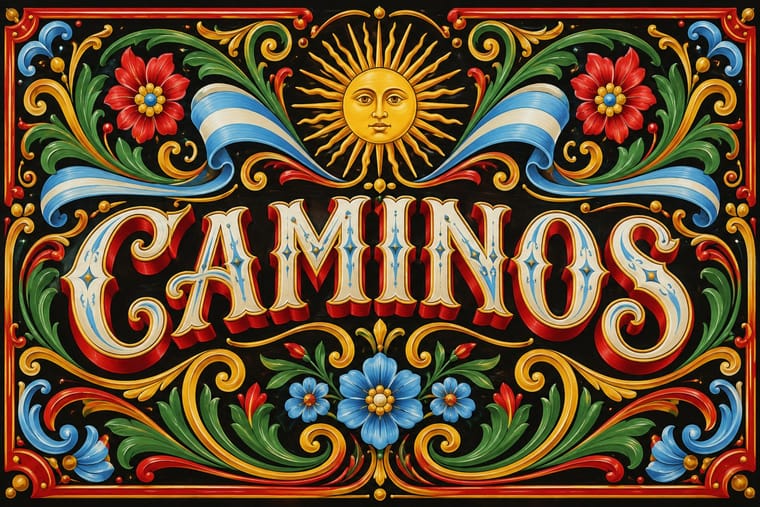
- Fileteado Porteño Pairs well · A sibling vernacular tradition of ornament painted on vehicles and signs; the British difference is carving and gilding in relief on wood.
- Dhaka Rickshaw Painting Pairs well · Another hand-painted vehicle tradition, dense and saturated; the British fairground differs in its carved and gilded wooden fronts.
- Hand-Painted Signage & Vernacular Lettering Pairs well · Its parent craft: borrow the sign-writer's lettering discipline, then add carving, gilding and crowding.
07
Often taken for
British Fairground Art has no real works recorded yet, so these are its nearest styles by its choices alone, with the choices that tell them apart.
-
Mexican Rótulos (Hand-Painted Shop Lettering)
Mexican Rótulos is one of British Fairground Art’s nearest styles by choices; no real work of either fits the other better.
Choices that tell British Fairground Art and Mexican Rótulos apart Choice British Fairground Art Mexican Rótulos Central symmetry defining — Eclectic mixing occasional defining Jewel & metallic characteristic — Flat fields — characteristic Whiplash line characteristic — Both descend from Hand-Painted Signage & Vernacular Lettering in the family tree.
-
Fileteado Porteño
Fileteado Porteño is one of British Fairground Art’s nearest styles by choices; no real work of either fits the other better.
Choices that tell British Fairground Art and Fileteado Porteño apart Choice British Fairground Art Fileteado Porteño Jewel & metallic characteristic — Floral & vegetal occasional defining Repetition & rhythm characteristic — Biomorphic curves — characteristic Gloss & highlights characteristic — Both descend from Hand-Painted Signage & Vernacular Lettering in the family tree.
-
Jeepney Art
Jeepney Art is one of British Fairground Art’s nearest styles by choices; no real work of either fits the other better.
Choices that tell British Fairground Art and Jeepney Art apart Choice British Fairground Art Jeepney Art Jewel & metallic characteristic — Gradients — characteristic Whiplash line characteristic — Comic & cartoon — characteristic Hard offset shadow characteristic — Both descend from Hand-Painted Signage & Vernacular Lettering in the family tree.
-
Pakistani Truck Art
Pakistani Truck Art is one of British Fairground Art’s nearest styles by choices; no real work of either fits the other better.
Choices that tell British Fairground Art and Pakistani Truck Art apart Choice British Fairground Art Pakistani Truck Art Ornamented display defining occasional Floral & vegetal occasional defining Jewel & metallic characteristic — Angular & zigzag — characteristic Whiplash line characteristic — Both descend from Hand-Painted Signage & Vernacular Lettering in the family tree.
— means the choice isn’t among the style’s recorded choices. Critics recorded each work’s choices with the styles’ descriptions in view, so this shows whether the descriptions hold together, not proof that they are right.
08
Sources
- Wikipedia, Carousel (British gallopers, Thomas Bradshaw's steam roundabout at Bolton c. 1861, Savage's Platform Gallopers, Hollycombe Tidman machine)
- Wikipedia, Frederick Savage (engineer) (1828-1897, King's Lynn)
- Wikipedia, Fairground organ (elaborate, eye-catching case fronts with moving figures)
2 more sources
- Wikipedia, Orton & Spooner (Burton upon Trent; Charles Spooner, wood-carver; showfronts and living wagons; Dingles Fairground Heritage Centre holdings)
- University of Sheffield Library, National Fairground and Circus Archive (founded 1994; Orton & Spooner Collection; The World's Fair newspaper run from 1904)
How Stylogeny researches and checks a style: where the facts come from.