Counterculture · 2018–present · Sub-Saharan Africa, Middle East & North Africa, Global / networked
Sudanese Revolution Graphics (Digital Illustrations and Sit-in Murals)
Also known as Sudan uprising art, Art of the December Revolution, Sudanese revolution street art, Jidariyyat of the Khartoum sit-in
The graphics of Sudan's December Revolution from 2018: digital illustrations and cartoons shared on Instagram and Facebook from inside Sudan and the diaspora, and the murals of the 2019 Khartoum sit-in. A clear outline drawing of one figure, often a woman in a white toub, a protester with a flag or a martyr's face, is filled with flat colours from the current flag or the blue, yellow and green independence flag, with a short hand-lettered chant such as tasgut bas ('just fall').
Use it with care
This is the imagery of a living movement whose makers and subjects are real people at real risk: the sit-in was dispersed on 3 June 2019 with at least 120 killed according to the Central Committee of Sudan Doctors (Khiar 2022), murals were painted over, artists have been arrested (in October 2020 the filmmaker Hajooj Kuka, the curator Duaa Tarig Ahmed and nine others were imprisoned over a theatre workshop that depicted the 2019 crackdown; Al Jazeera 2021), and Sudan has been at war since April 2023, so never attribute an unsigned image to a person, never expose participants or the faces of vulnerable protesters, and always credit the named artists and photographers (Lana Haroun took the April 2019 photograph of Alaa Salah that many artists redrew). The martyrs, the blinded and the maimed in these portraits have families; do not reuse them, the 'kandaka' in a white toub or the tasgut bas chant as edgy protest styling, merchandise or brand imagery. Flags carry a choice here: the sit-in revived the 1956 blue, yellow and green independence flag beside the current red, white, black and green, so do not use either as decorative 'African' colour or exotic ornament. Have every Arabic line read by a fluent reader, keep dated protest images apart from later solidarity work, and never present a generated image as a work of the revolution.
01
How it works
- Draw one figure in a clear, closed outline that anyone can fill: a woman in a white toub, a protester holding up the flag, a martyr's face, so that a wall can be drawn by one painter and coloured in by the crowd.
- Fill the outline with flat colour taken from a flag: the red, white, black and green of the current flag, or the blue, yellow and green of the 1956 independence flag that the sit-in revived; a cartoon may stay black and white, and a large sit-in mural may open out into a full-colour scene, but the flag's colours should always be recognisable.
- Put women at the centre as actors, not as victims: draw them leading, chanting and standing their ground, and let the caption say so ('This is a woman's revolution').
- Letter a short chant by hand rather than setting it in type: tasgut bas, hurriya, salam wa 'adala, or a few English words for the world watching online, in marker, brush, stencil or block capitals.
- Make the image for two places at once: a square that travels on Instagram and Facebook, and a wall at the sit-in or on a martyr's street; sign it with your name, your neighbourhood or nothing at all.
Sudan, above all Khartoum, and the Sudanese diaspora, from the uprising that began in December 2018 against Omar al-Bashir's government. Its chants, tasgut bas ('just fall') and hurriya, salam wa 'adala ('freedom, peace and justice'), went onto placards, banners and posters first, then onto walls as stencils and murals (Khiar 2022). In parallel an 'explosion of Instagram protest art from inside Sudan and its diaspora' (shado / Africa Is a Country, March 2019) remixed news photographs, caricatured Bashir and portrayed the injured and the dead. Alaa Satir, an architect turned illustrator, had begun her series We Are the Revolution in November 2018 on women's solidarity and continued it as 'a way of documenting our journey in this revolution' (Polis Project, 2019). From 6 April to 3 June 2019 the sit-in outside the army headquarters (al-Qiyada) drew more than a hundred artists and many first-time painters to its walls; professionals drew outlines and others filled them in with colour (Khiar 2022; Andariya 2020). After the sit-in was violently dispersed on 3 June 2019, soldiers painted over many of its murals (200 to 300 in a few days, by one painter's estimate; Khiar 2022), but painting spread across the city during the transition. The entry covers dated protest images from December 2018 into the transition and the anti-coup cartoons after 25 October 2021; it does not cover all contemporary Sudanese art, nor the solidarity imagery made abroad since the war of April 2023.
02
Its design choices
From Stylogeny’s vocabulary of design choices: defining choices make the style, characteristic ones are usual, occasional ones turn up now and then.
- Layout & composition
- Space & hierarchy
- Typography
- Colour
- Form & shape
- Surface & texture
- Ornament
- Imagery
- Medium & production
- Tone & intent
- Avoids
- Abundant decoration, Fluorescent & neon, Gradients, Gloss & highlights, Chrome & 3D render, 3D render, Authoritative & institutional, Luxurious & glamorous, Ornamented display
Palette
#f4f1ea#141414#d21034#007229#1f4fa0#f2c200
Typefaces
Hand-lettered Arabic chants in marker, brush or spray beside the figure, above all تسقط بس (tasgut bas, 'just fall') and حرية سلام وعدالة
hurriya, salam wa 'adala, 'freedom, peace and justice'
Block capitals painted on the wall, as in 'Tasgot Bas' on Mohaned Honda's tear-gas mural and 'HEY LADIES, STAND YOUR GROUND, THIS IS A WOMAN'S REVOLUTION' on Alaa Satir's first mural
Stencilled lettering cut with the image, as in tasgut bess under stencil portraits of Bashir
Words written across the figure itself
peace, freedom, love and unity across Assil Diab's flag-coloured face, and martyrs' names laced along painted wings in the independence-flag colours at the sit-in entrance from the Blue Nile Bridge
Known for
Alaa Satir, We Are the Revolution, an illustration series begun in November 2018 on women's solidarity and continued through the uprising
Polis Project, 26 July 2019
Alaa Satir, Thawrat Mara ('A Woman's Revolution', early 2019), which turned against misogyny inside the protest movement, including a chant calling Bashir 'the son of a woman' (OkayAfrica, 21 February 2019)
Alaa Satir, her first mural, lettered 'HEY LADIES, STAND YOUR GROUND, THIS IS A WOMAN'S REVOLUTION', on a wall in Khartoum that she painted with two friends and opened to other artists, who filled it within two days (shado, 15 April 2019; Polis Project, 2019)
Abu'Obayda Mohamed, Cry of Home
a cartoon released on 9 December 2018 by a cartoonist whose viral pieces centre on the map of Sudan, and AbdulRahman Alnazeer, The Bread Loaf, a digital work that sets Michelangelo's Creation of Adam, with Adam reaching for a loaf of bread, over a crowded Khartoum bus depot after bread subsidies were cut (OkayAfrica, 2019)
Assil Diab (Sudalove), the portrait of a Sudanese woman on Clinic Street at the sit-in, her face and eyes painted in the red, black, green and white of the flag and written across with the words peace, freedom, imprisonment, love and unity (Andariya, 2020)
Mohaned Honda, a mural of an empty tear-gas canister holding a 'protector of the barricades' sign beside a caricatured spray can, with 'Tasgot Bas' in block letters (Andariya, 2020)
Musab Mohamed, a black-and-white protester throwing flowers, after Banksy, and a heavy gun releasing doves, murals that, like many at al-Qiyada, drew on the blue, yellow and green of the 1956–1970 flag, Clinic Street, al-Qiyada (Andariya, 2020)
Reem Aljeally, one of her three murals of women's part in the revolution, a woman in a white toub carrying people forward, the mural of hers that drew the most attention (Al Jazeera, 30 June 2021)
03
Where it comes from, and what it’s close to
After it
The styles that grew out of it.
No later style in the atlas grew out of it yet.
Alike in its design choices
Styles that make many of the same choices, related or not, besides those above.
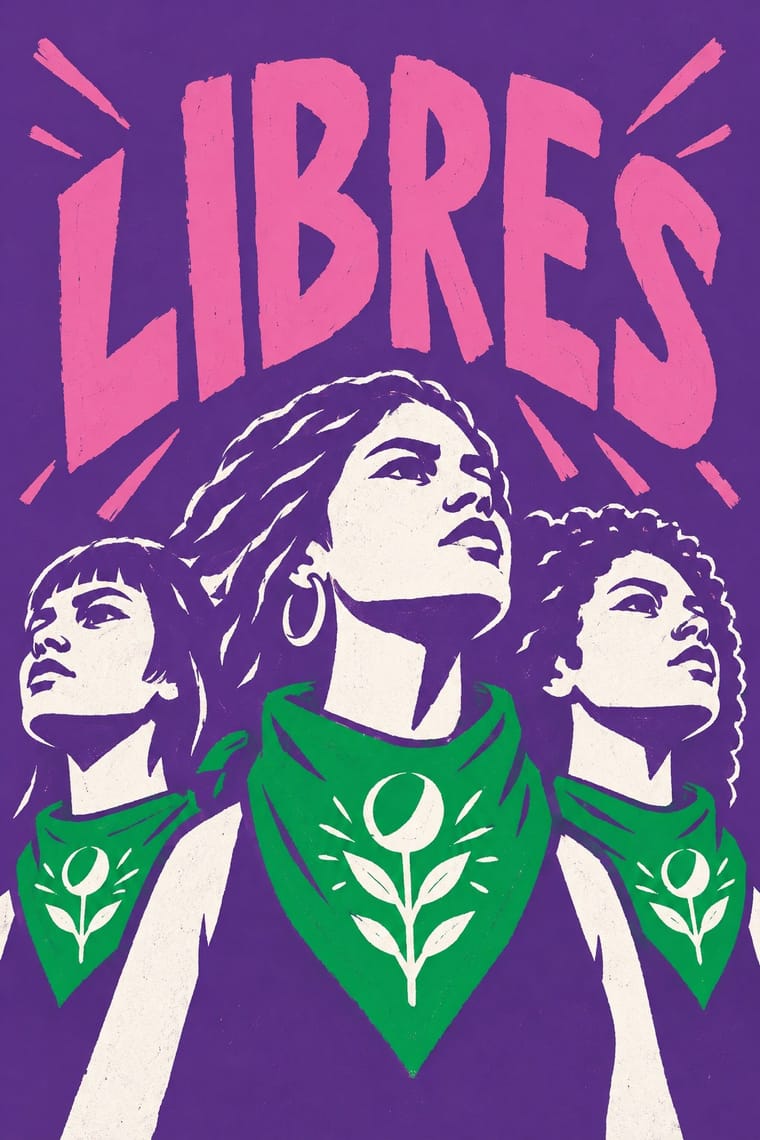
- Woman, Life, Freedom Protest Graphics (Iran and the Diaspora)76% alike
- Palestinian Watermelon and Keffiyeh Graphics74% alike
04
Sources
- Yacine Khiar, 'Les fresques murales à Khartoum pendant la révolution soudanaise de décembre 2018: généralisation et politisation d'un phénomène artistique', Manazir Journal 4 (2022), pp. 17–33, doi:10.36950/manazir.2022.4.2 (https://bop.unibe.ch/manazir/article/view/7753)
- Ilham Ali, 'Meeting the Artists of Al-Qiyada', Andariya (20 August 2020) (https://andariya.com/post/Meeting-the-Artists-of-Al-Qiyada)
- Sudan Revolution Art, map of the sit-in murals, created by Ilham Ali (August 2019) (https://sudanrevolutionart.org/)
- Sara Elhassan, 'How Sudanese Art Is Fueling the Revolution', OkayAfrica (21 February 2019) (https://www.okayafrica.com/how-sudanese-art-is-fueling-the-revolution/190853)
- Anonymous artist for shado, 'Protest art in Sudan's uprising', Africa Is a Country (22 March 2019) (https://africasacountry.com/2019/03/protest-art-in-sudans-uprising)
- Francesca Recchia, 'Fighting for your political rights is kind of self-love … in conversation with Alaa Satir', The Polis Project (26 July 2019) (https://thepolisproject.com/listen/fighting-for-your-political-rights-is-kind-of-self-love-its-a-way-of-realising-your-own-value-and-demanding-more-francesca-recchia-in-conversation-with-alaa-satir/)
- Isabella Pearce, 'Hey ladies, stand your ground, this is a woman's revolution', shado (15 April 2019) (https://shado-mag.com/do/hey-ladies-stand-your-ground-this-is-a-womans-revolution)
- Cartooning for Peace, 'Soudan, une révolution confisquée' (10 November 2021) (https://www.cartooningforpeace.org/editos/soudan-une-revolution-confisquee/)
- Al Jazeera, 'Art on the front lines of a changing Sudan' (30 June 2021) (https://www.aljazeera.com/features/2021/6/30/art-on-the-front-lines-of-a-changing-sudan)
- Wikipedia, 'Kandake of the Sudanese Revolution' (https://en.wikipedia.org/wiki/Kandake_of_the_Sudanese_Revolution)
How Stylogeny researches and checks a style: where the facts come from.