Counterculture · 2020–2021 · Eastern Europe, Global / networked
Belarusian Protest Illustration (2020 Uprising)
Also known as Belarus 2020 protest posters, White-red-white protest graphics, Cultprotest.me posters
An illustrator-led strand of graphics from Belarus's 2020 democracy uprising, circulated online and as solidarity placards rather than through one prescribed identity. Red and white recall the historical flag; a rider, bleeding hand, cockroach or caricature turns national memory and immediate events into a compact visual argument. Brush silhouettes, modelled portraits, cartoons and cross-stitch-style imagery coexist. This entry focuses on the 2020–early 2021 corpus, not all Belarusian design.
Make something in this style Get advice in this style Mix it with another style
Use it with care
These are living artists' political statements and, in Bazlova's work, a contemporary use of Belarusian embroidery traditions, not anonymous decorative stock. Preserve attribution and the difference between national heritage and a particular maker's reinterpretation. Do not turn victims, police violence or imprisonment into commercial atmosphere. Commission and credit practitioners for related work rather than copying an identifiable artist's designs. Consider the safety and consent of people depicted; do not identify unnamed protesters. Online publication, museum reproduction or inclusion in a solidarity archive does not establish an open image licence. No file-level open licence was verified for the works discussed here; any future specimens must remain link-only unless separately cleared.
01
How it works
- Make one visual argument from a recognisable sign: turn a flag stripe into blood, oppose the historical rider to police force, or let a small collective confront an oversized antagonist.
- Use red and white as a shared political reference, adding black for contrast or an adversary; allow individual illustrators to depart into bright cartoon colour instead of imposing a movement-wide palette.
- Give a compact figure or encounter enough clear ground to remain readable on a placard or a circulating image; let the image speak without a compulsory logo or headline.
- Keep each maker's construction visible: use a rough brush silhouette, a clean cartoon outline or a lattice of red cross-stitches, without treating any one of these as obligatory across the movement.
- Draw short slogans in the maker's own hand or set them in direct Cyrillic display capitals when words are necessary; preserve the language and credit of the original rather than inventing a standard campaign typeface.
- Prepare images for online sharing and reproducible solidarity posters, retaining attribution and checking permission separately from access to a downloadable file.
Belarus, particularly Minsk, with Belarusian diaspora and Ukrainian solidarity contributors. The entry covers the uprising-era graphic corpus documented in 2020 and early 2021, not an asserted endpoint for Belarusian resistance or its later art. Work preceded the presidential election of 9 August 2020: Cultprotest.me was established in July by Sergey Shabohin and Maxim Tyminko, and Darya Sazanovich describes making solidarity poster layouts before the election. Global denotes this documented international production and circulation, not a separate origin. The genome describes a selected illustrative strand, not the uprising’s entire photographic, typographic, flag-design or neighbourhood-symbol repertoire.
02
Its design choices
From Stylogeny’s vocabulary of design choices: defining choices make the style, characteristic ones are usual, occasional ones turn up now and then.
- Layout & composition
- Space & hierarchy
- Colour
- Form & shape
- Surface & texture
- Ornament
- Imagery
- Medium & production
- Tone & intent
- Avoids
- Luxurious & glamorous, Rational & objective, Gloss & highlights, Chrome & 3D render, 3D render, Abundant decoration
Palette
-
#ffffff -
#e3342f -
#111111 -
#eee9db -
#9fa0a3
Typefaces
-
Hand-drawn Cyrillic slogan capitals, as in Pisliak's white inscription; a lettering practice, not a common proprietary font
-
Condensed sans-serif Cyrillic display capitals, as in Yermolenko's red headline; no specific typeface identification is claimed
Known for
-
Andrii Yermolenko, 2020 solidarity poster with the slogan translated as 'Believe! We Can! Win!'
red brush stripe, white mounted knight and black riot-police silhouettes; reproduced with the artist's explanation in Eye on Design, 7 September 2020
-
Sergiy Maidukov, 2020 poster of a white historical rider above an overturned black police vehicle on a red ground; reproduced with the artist's account of the national colours and police-car symbolism in Eye on Design, 7 September 2020. The description is not an asserted original title
-
Rufina Bazlova, 2020 cross-stitch-style illustration of a reclining cockroach beside its mess, red on a linen-like ground; reproduced with her explanation in Eye on Design, 7 September 2020. This digitally circulated image is not evidence that every original was physically embroidered
-
Mitya Pisliak, 'We Can Handle It Together!' (2020)
small pink brain-like figures collectively confront a green, crowned, baton-bearing Cyclops; white hand-drawn Cyrillic slogan on violet. Reproduced with the artist's explanation in Eye on Design, 7 September 2020; a deliberate polychrome exception to the red-white majority
-
Darya Sazanovich (sheeborshee), illustration of a bleeding white hand holding a white rose against black, 2020
reproduced and captioned in Filip Noubel's Global Voices interview of 2 September 2020. The caption identifies the white-red-white reference and credits the artist; no original title is asserted
-
Jana Galushkina, 2020 illustration bearing the inscription I SEE BLOOD ON YOUR JACKET, MR. LUKASHENKO
a modelled red portrait in a grey jacket, discussed by the artist in Eye on Design, 7 September 2020; the inscription is not asserted as a formal title
-
Rufina Bazlova, The History of Belarusian Vyzhyvanka, 2020–2021
machine-made cross-stitch embroidery, 45 × 735 cm, documented in Mystetskyi Arsenal's Every Day. Art. Solidarity. Resistance exhibition booklet (Kyiv, 2021). This physical presentation of the illustrative cycle establishes occasional textile production, not the physical medium of the separate cockroach reproduction
03
Make something in this style
Say what you need, and Stylogeny’s image studio draws it from Belarusian Protest Illustration (2020 Uprising)’s design choices and checks it against them. It takes about a minute, and you get a link to share.
04
Where it comes from, and what it’s close to
Before it
The style it grew out of, and the styles it borrowed from.
Nothing earlier is recorded: in the atlas it is a starting point.
After it
The styles that grew out of it.
No later style in the atlas grew out of it yet.
Alike in its design choices
Styles that make many of the same choices, related or not, besides those above.
- Sudanese Revolution Graphics (Digital Illustrations and Sit-in Murals) 74% alike
-
-
- Palestinian Watermelon and Keffiyeh Graphics 69% alike
-
-
05
Often taken for
Belarusian Protest Illustration has no real works recorded yet, so these are its nearest styles by its choices alone, with the choices that tell them apart.
-
Sudanese Revolution Graphics (Digital Illustrations and Sit-in Murals)
Sudanese Revolution Graphics is one of Belarusian Protest Illustration’s nearest styles by choices; no real work of either fits the other better.
Choices that tell Belarusian Protest Illustration and Sudanese Revolution Graphics apart Choice Belarusian Protest Illustration Sudanese Revolution Graphics Pictogram characteristic — Hand-lettering occasional defining Dynamic asymmetry characteristic — Monochrome — characteristic Hand-painted — defining No shared descent in the atlas: they reached these choices separately.
-
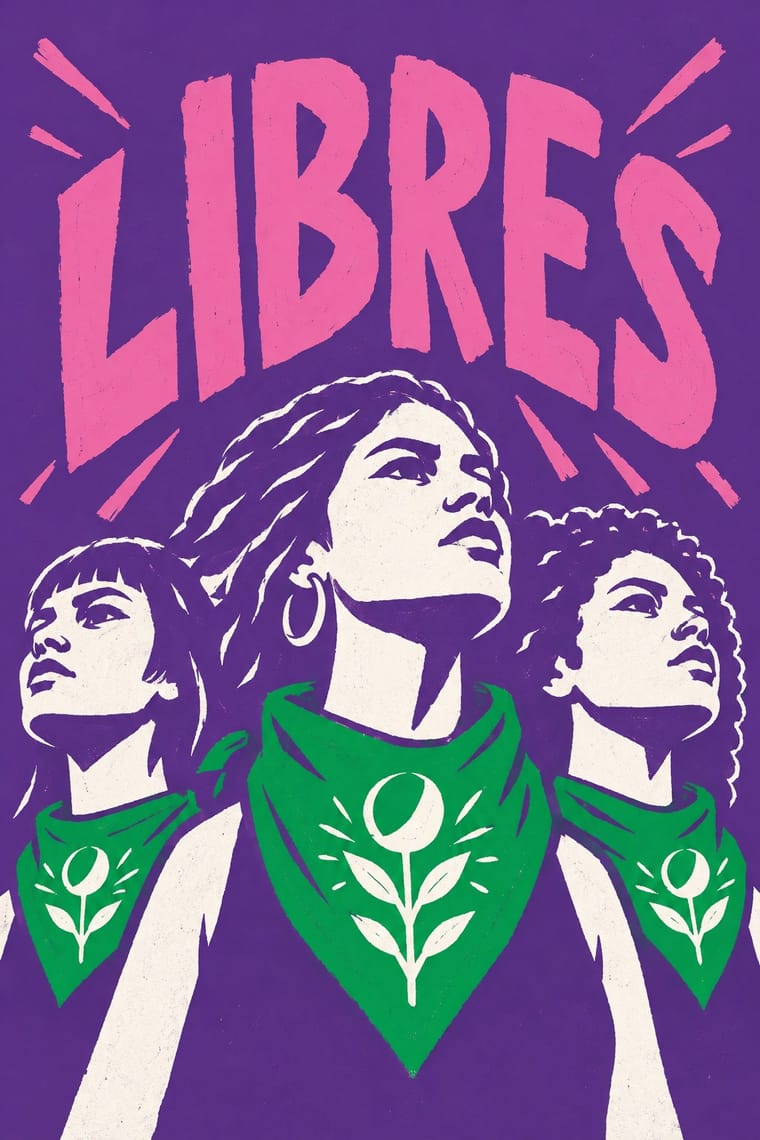
Latin American Feminist Protest Graphics (Ni Una Menos and the Green Wave)
Latin American Feminist Protest Graphics is one of Belarusian Protest Illustration’s nearest styles by choices; no real work of either fits the other better.
Choices that tell Belarusian Protest Illustration and Latin American Feminist Protest Graphics apart Choice Belarusian Protest Illustration Latin American Feminist Protest Graphics Full polychrome occasional avoids Hand-lettering occasional defining Painterly illustration characteristic — Typography only — characteristic Dynamic asymmetry characteristic — No shared descent in the atlas: they reached these choices separately.
-
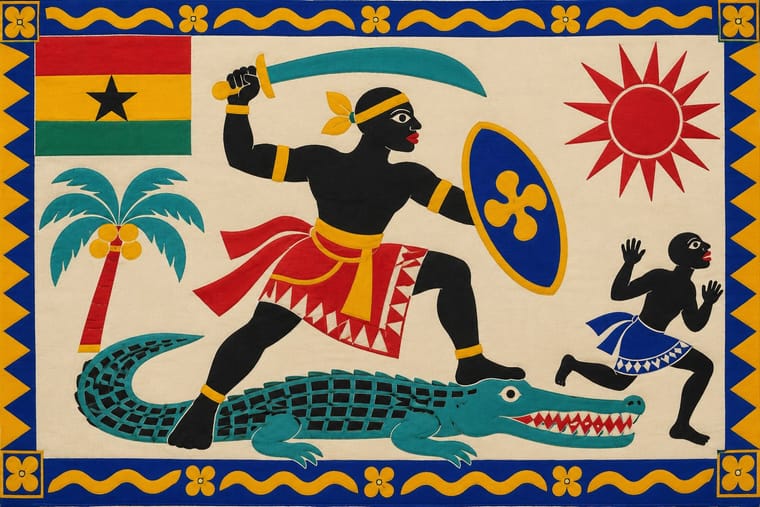
Fante Asafo Flags (Frankaa)
Fante Asafo Flags is one of Belarusian Protest Illustration’s nearest styles by choices; no real work of either fits the other better.
Choices that tell Belarusian Protest Illustration and Fante Asafo Flags apart Choice Belarusian Protest Illustration Fante Asafo Flags Limited spot colours defining — Icons & pictograms — characteristic Naturalistic depiction occasional avoids Framed panels — characteristic Pictogram characteristic — No shared descent in the atlas: they reached these choices separately.
-
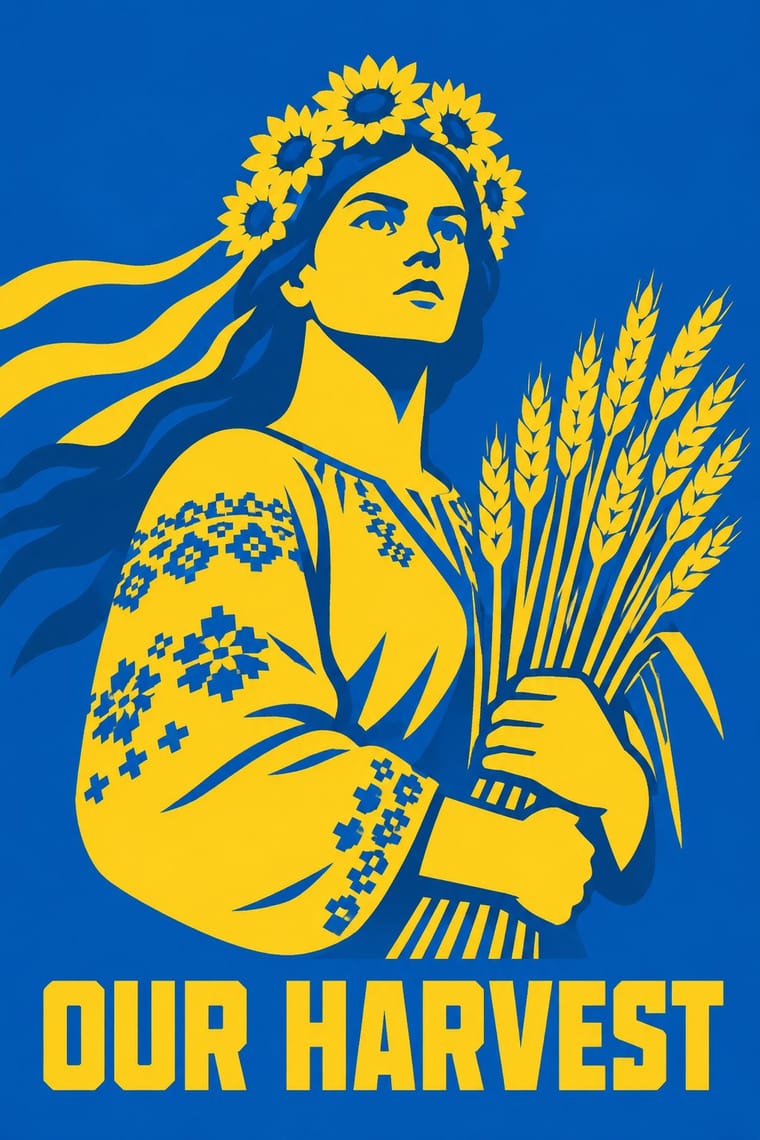
Palestinian Watermelon and Keffiyeh Graphics
Palestinian Watermelon and Keffiyeh Graphics is one of Belarusian Protest Illustration’s nearest styles by choices; no real work of either fits the other better.
Choices that tell Belarusian Protest Illustration and Palestinian Watermelon and Keffiyeh Graphics apart Choice Belarusian Protest Illustration Palestinian Watermelon and Keffiyeh Graphics Full polychrome occasional avoids Flat vector illustration occasional defining Stylised figuration defining occasional Icons & pictograms — characteristic Line illustration characteristic — No shared descent in the atlas: they reached these choices separately.
— means the choice isn’t among the style’s recorded choices. Critics recorded each work’s choices with the styles’ descriptions in view, so this shows whether the descriptions hold together, not proof that they are right.
06
Combine it with
Styles Belarusian Protest Illustration (2020 Uprising) pairs well with or plays against, from the research. Each is worked out as a combination: which style gives the type, the colours and the forms.
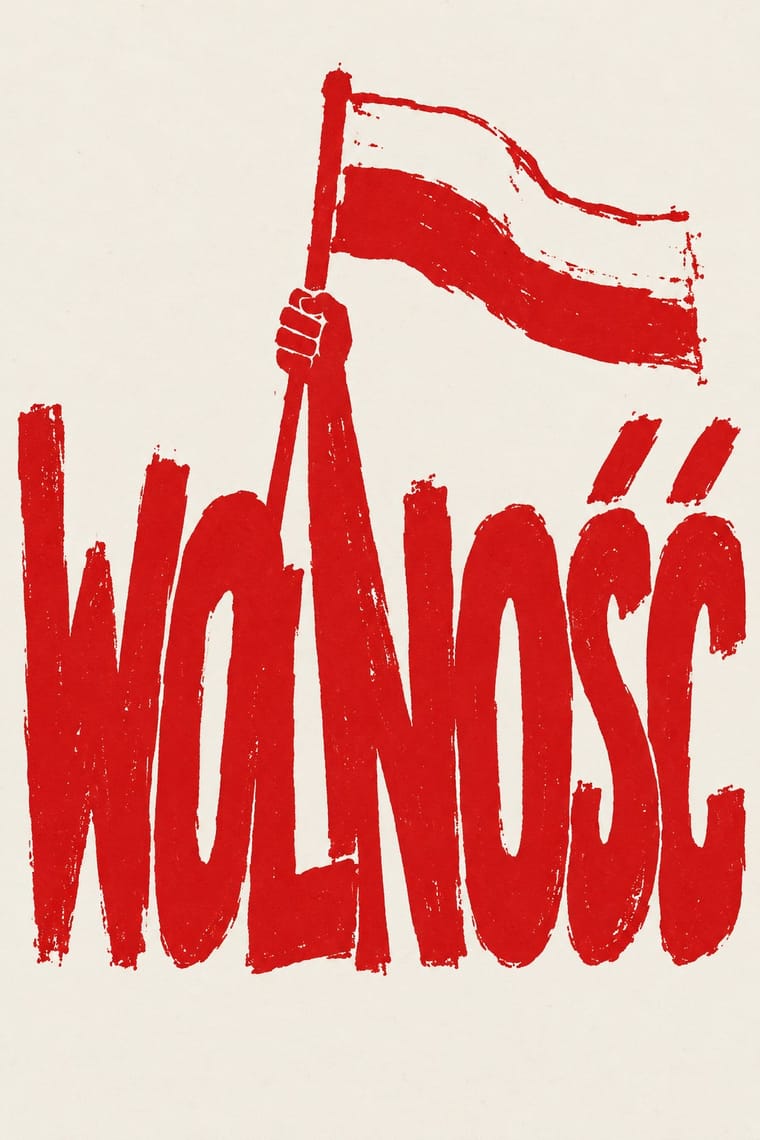
- Solidarność & Polish Underground Graphics Contrasts · Both activate red-white national references, but the Belarusian sample places figures and visual metaphors ahead of the tightly joined lettering that defines Solidarność. Compare the role of a shared flag with that of a shared wordmark; do not infer a direct lineage.
- Extinction Rebellion Graphics Contrasts · Compare a prescribed wood-type and woodcut identity with an illustrator-led shared vocabulary: Belarusian examples do not require XR's oversized headline, carved texture, print workshop or fixed logo. Shared protest tone and few-colour printing are not evidence of descent.
07
Sources
- Zosia Swidlicka, 'Cockroaches, White Knights + One-Eyed Monsters: Decoding Belarus Protest Graphics', Eye on Design, 7 September 2020. https://eyeondesign.aiga.org/cockroaches-white-knights-one-eyed-monsters-decoding-belarus-protest-graphics/ — contemporary interviews with five illustrators; checked the individual explanations and visually inspected the reproduced Yermolenko, Maidukov, Bazlova, Pisliak and Galushkina works. The visible byline is used rather than conflicting HTML author metadata. Supports Cultprotest's July founding and named founders, the rider and cockroach interpretations, and variation of technique and colour. Galushkina's modelled red face and grey jacket support occasional naturalistic depiction; her work and the brushed silhouettes support painterly illustration as characteristic. Flat colour remains a core tendency, not a universal rule. The article describes Galushkina's combination of computer graphics and watercolour, but does not establish ink drawing or paint applied directly to the final poster surface. The institutional history and political meanings are not inferred from image appearance alone.
- Filip Noubel, 'We could present our revolution at a design festival: a Belarusian artist reflects on protest imagery', Global Voices, 2 September 2020. https://globalvoices.org/2020/09/02/we-could-present-our-revolution-at-a-design-festival-a-belarusian-artist-reflects-on-protest-imagery/ — first-person interview with Darya Sazanovich, including Russian originals; checked her pre-election poster preparation, diaspora solidarity work and flag-colour discussion. Visually inspected the captioned bleeding-hand-and-rose image. The page says the illustration is copyrighted and used with permission; its site-wide licence is not a file-level clearance.
- Stephen M. Norris, 'History, Memory, and the Art of Protest in Belarus', Origins: Current Events in Historical Perspective, February 2021. https://origins.osu.edu/article/history-memory-and-art-protest-belarus — historian's contextual account of the uprising and historical memory; documents continued protest into early 2021. Used for the bounded uprising-era scope, not to claim the later end of protest graphics.
- Mystetskyi Arsenal, Every Day. Art. Solidarity. Resistance, exhibition booklet, Kyiv, 2021, Rufina Bazlova entry. https://artarsenal.in.ua/wp-content/uploads/2021/05/Booklet_Every_Day.pdf — the exhibiting institution identifies The History of Belarusian Vyzhyvanka (2020–2021) as machine-made cross-stitch embroidery, 45 × 735 cm. This is object-level evidence for medium.textile at 0.3, limited to an occasional physical presentation of the illustrative cycle; it does not establish how every image in the series was made or make the specific cockroach image a photograph of embroidery.
- Sasha Razor, interview with Rufina Bazlova, 'The History of Belarusian Vyzhyvanka', Chrysalis Mag, 17 February 2021; conversation recorded 25 January 2021. https://chrysalismag.org/project/rufina-bazlova-the-history-of-belarusian-vyzhyvanka — Bazlova distinguishes the vector-graphic sketches posted on Instagram from the subset she physically embroiders, and also mentions prints and silkscreens. Confirms that embroidery-derived appearance and online circulation alone cannot identify an individual work's production method. No additional printing trait is assigned from this general statement.
- Taxonomic calibration: read the atlas entries extinction-rebellion-graphics, solidarnosc-graphics, stencil-street-art and hong-kong-protest-art before assigning weights, then sudanese-revolution-graphics after the first similarity check. The reduced rider and police silhouettes support form.pictogram at 0.6; hand-lettering is only occasional (0.3), since several inspected works are wordless and Yermolenko uses set capitals. A single focal encounter does not necessarily isolate one object: layout.isolated-object is characteristic (0.6), not defining. The scout's proposed influences from XR, Solidarność and stencil street art were not established by the checked artist interviews, so parent remains null and influences empty. The genome describes tendencies in the selected illustrative strand. The avoids are tentative editorial recommendations inferred from that sample, not documented movement-wide prohibitions; online distribution and a brush-like appearance do not establish a production technique. Removed medium.web, medium.hand-painted and medium.hand-drawn: no HTML/CSS production, direct painting of a final poster surface or direct ink drawing was established for the selected works. The medium facet instead records separately documented occasional textile presentation. Galushkina adds visible modelling and painterly variation without turning an appearance trait into a claim about physical production. Cross-stitch geometry and linen simulation are occasional, not universal; the palette's hex values are representative approximations, not official specifications. No universal font, common production process, or claim that these posters never reached print is asserted.
How Stylogeny researches and checks a style: where the facts come from.