Traditions & vernacular · 1600–present · Southeast Asia
Đông Hồ & Hàng Trống Folk Prints
Also known as Tranh Đông Hồ, Tranh Hàng Trống, Vietnamese Tết prints, Tranh dân gian Đông Hồ
Vietnam's two classic folk-print schools, bought for Tết. Đông Hồ families press each colour from its own carved block onto giấy điệp, dó paper brushed with ground scallop shell whose streaked, faintly sparkling surface serves as the white, and print the black line last. Plump animals and children, folk tales and satire such as the Rats' Wedding carry a short Hán or Nôm caption. In Hanoi's Hàng Trống only the outline was printed and the colour was brushed on in graded vờn washes, mostly for worship images. Kim Hoàng and Làng Sình prints fall outside this entry.
Use it with care
Đông Hồ printing is a living family craft. In 2025 UNESCO inscribed it on its List of Intangible Cultural Heritage in Need of Urgent Safeguarding, noting that only a small number of families continue it and that their carved blocks are heirlooms; Vietnamese press counts about three households. Machine-printed fakes also undercut the workshops, so commission, buy from or credit the Đông Hồ workshops rather than tracing their designs. Do not invent pseudo-Hán captions or strip the real ones for decoration; the carved inscriptions state each print's meaning. Treat worship prints, including Hàng Trống images for the Mother Goddess cult and for temples, as devotional objects rather than decor, and keep Vietnamese diacritics intact.
01
How it works
- Print every colour from its own carved block, pressed like a stamp, and lay the black keyline block last, often closing the picture in a thin black rectangular frame.
- Let the brush-streaked, shell-coated paper, with its faint pearly sparkle, be the white of the picture, and leave much of it bare around one plump subject or a compact scene.
- Keep to a few muted mineral and plant colours (ash black, gravel red, flower yellow, indigo or verdigris) laid flat, without shading.
- Draw rounded, well-fed animals and children marked with auspicious signs, such as the yin-yang whorls on a sow's flank, and add a short carved Hán or Nôm caption.
- Tell village jokes and social satire, from rats bribing the cat to a jealous wife's fight or Westernised dandies, with the same deadpan clarity as the luck pictures; some sheets come as mirrored pairs or as sets of four read in sequence.
- For the Hàng Trống variant, print only the black line, then brush on graded vờn washes, mainly blue and pink, and set worship images such as the Five Tigers or the Four Palaces pantheon frontally around a central axis.
Đông Hồ village (Thuận Thành, Bắc Ninh province) and the Hàng Trống and Hàng Nón streets of Hanoi's Old Quarter, Vietnam
02
Its design choices
From Stylogeny’s vocabulary of design choices: defining choices make the style, characteristic ones are usual, occasional ones turn up now and then.
- Layout & composition
- Space & hierarchy
- Colour
- Surface & texture
- Ornament
- Medium & production
- Tone & intent
- Avoids
- Abundant decoration, Fluorescent & neon, Illusion of depth, Non-representational, Straight photography, Gloss & highlights
Palette
#ece4d0#2b2723#b2412e#d8a63a#4d7a6e#3b5a80
Typefaces
Chữ Hán captions carved into the line block beside the image
Chữ Nôm inscriptions on older prints
many later removed or lost in recutting
Known for
Đám cưới chuột (The Rats' Wedding), Đông Hồ
rats bring gifts to the cat so it will spare the newlyweds
Lợn đàn (sow with piglets) and the yin-yang-marked pig (Lợn âm dương), Đông Hồ
Đánh ghen (The Jealousy Fight), Đông Hồ
Thầy đồ Cóc (The Toad Schoolmaster), Đông Hồ
Văn minh tiến bộ (The Progress of Civilisation), a set of four Đông Hồ prints satirising Westernised Vietnamese, before 1914
Vinh hoa and Phú quý, a mirrored Đông Hồ pair made to hang together
Ngũ hổ (Five Tigers), Công đồng Tứ phủ (the Four Palaces pantheon) and the Lý ngư vọng nguyệt pair (Carp Gazing at the Moon), Hàng Trống
Nguyễn Đăng Chế (founded the Đông Hồ folk-painting centre in 2008) and Nguyễn Hữu Quả, son of the late Nguyễn Hữu Sam
heads of two of the roughly three households that still print in Đông Hồ
03
Where it comes from, and what it’s close to
Before it
The style it grew out of, and the styles it borrowed from.

After it
The styles that grew out of it.
No later style in the atlas grew out of it yet.
Alike in its design choices
Styles that make many of the same choices, related or not, besides those above.
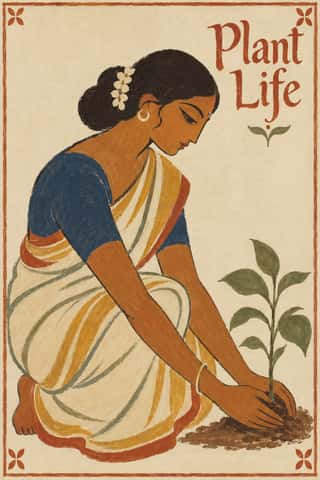

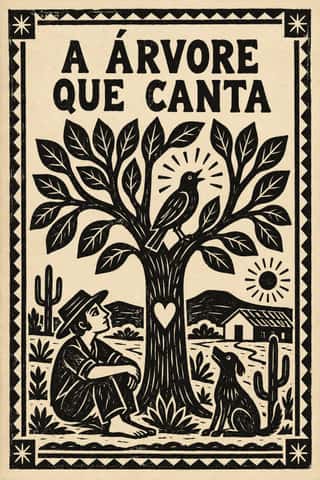
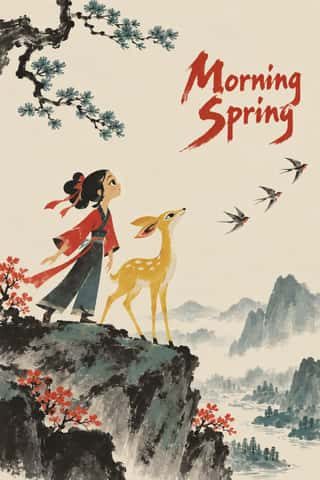
- Kalighat Pat & Battala Bazaar Prints70% alike



04
Sources
- Maurice Durand, Imagerie populaire vietnamienne (École française d'Extrême-Orient, 1960; colour edition with Philippe Papin, 2011)
- UNESCO Intangible Cultural Heritage, 'Craft of making Đông Hồ folk woodblock printings', inscribed 2025 on the List of Intangible Cultural Heritage in Need of Urgent Safeguarding (https://ich.unesco.org/en/USL/01737)
- Wikipedia, 'Đông Hồ painting' (https://en.wikipedia.org/wiki/%C4%90%C3%B4ng_H%E1%BB%93_painting)
- Wikipedia, 'Hàng Trống painting' (https://en.wikipedia.org/wiki/H%C3%A0ng_Tr%E1%BB%91ng_painting)
- Wikipedia (Vietnamese), 'Tranh Đông Hồ' (https://vi.wikipedia.org/wiki/Tranh_%C4%90%C3%B4ng_H%E1%BB%93)
- Wikipedia (Vietnamese), 'Tranh Hàng Trống' (https://vi.wikipedia.org/wiki/Tranh_H%C3%A0ng_Tr%E1%BB%91ng)
- Wikipedia (Vietnamese), 'Tranh dân gian Việt Nam' (https://vi.wikipedia.org/wiki/Tranh_d%C3%A2n_gian_Vi%E1%BB%87t_Nam)
- Embassy of Viet Nam in India, 'The craft of making Đông Hồ folk paintings becomes Vietnam's 17th heritage element inscribed by UNESCO' (https://vietnamembassydelhi.in/the-craft-of-making-dong-ho-folk-paintings-becomes-vietnams-17th-heritage-element-inscribed-by-unesco/)
- Sài Gòn Giải Phóng, 'Giữ hồn tranh Đông Hồ trong đời sống đương đại', 18 December 2025 (https://www.sggp.org.vn/giu-hon-tranh-dong-ho-trong-doi-song-duong-dai-post829289.html)
- Báo Văn hóa, 'Hoàn thiện hồ sơ khoa học "Nghề làm tranh dân gian Đông Hồ" trình UNESCO', 13 March 2020 (https://baovanhoa.vn/doi-song-van-hoa/hoan-thien-ho-so-khoa-hoc-nghe-lam-tranh-dan-gian-dong-ho-trinh-unesco-de-di-san-thoat-khoi-bao-ve-khan-cap-76438.html)
- Báo Văn hóa, 'Nếp nhà gìn giữ "màu dân tộc"', 30 June 2025 (https://baovanhoa.vn/van-hoa/nep-nha-gin-giu-mau-dan-toc-147538.html)
- Nhân Dân, 'Số phận những dòng tranh dân gian Việt', 15 February 2020 (https://nhandan.vn/so-phan-nhung-dong-tranh-dan-gian-viet-post449589.html)
How Stylogeny researches and checks a style: where the facts come from.