Pictorial & machine age · 1940–1970 · North America
American Mid-Century Modernism
Also known as New York School (graphic design), Mid-century modern graphics
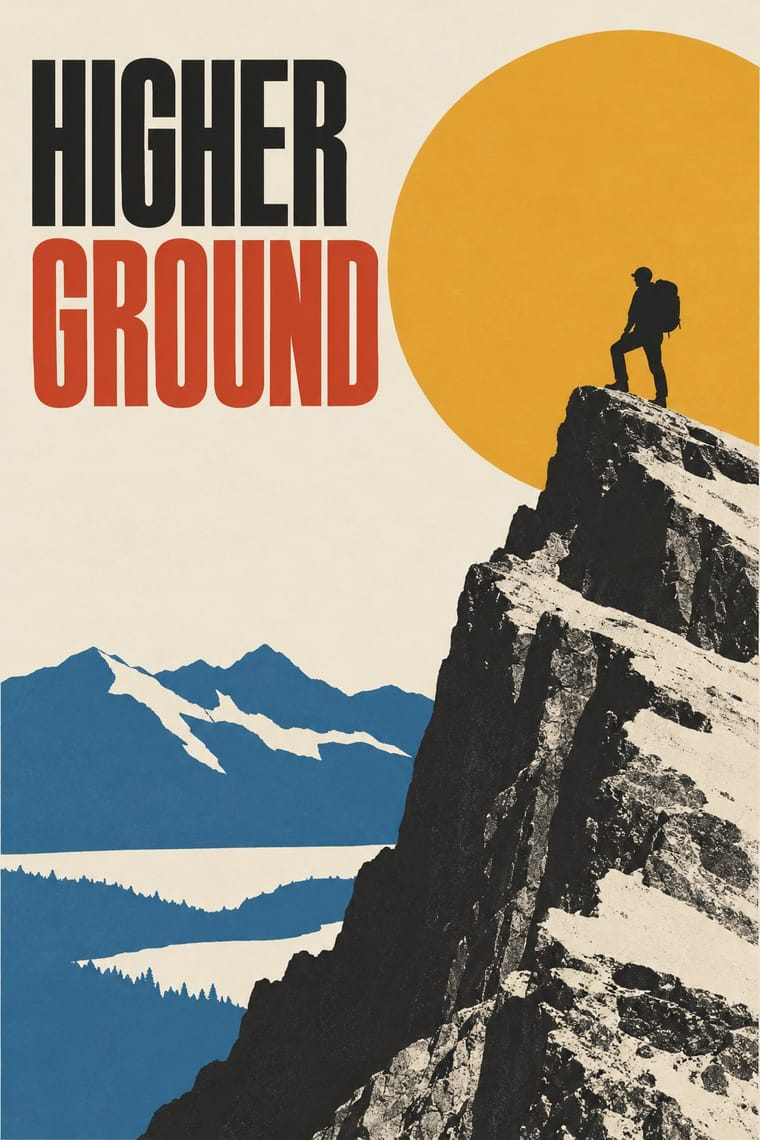
The American synthesis of European avant-garde form with wit, pragmatism and commercial clients, led by Paul Rand, Alvin Lustig, Lester Beall, Bradbury Thompson and Saul Bass. Asymmetric layouts, cut-paper and collaged shapes, photomontage, playful hand-drawn marks and a few bright flat colours turned book jackets, magazines, advertising, film titles and corporate work into idea-driven visual puns.
Make something in this styleGet advice in this styleMix it with another style
01
How it works
- Find one visual idea or pun and express it with the fewest possible shapes.
- Compose asymmetrically, balancing a bold image against open space and compact type.
- Combine cut-paper or torn shapes, photographic fragments and hand-drawn marks in one collage.
- Use two or three flat, bright spot colours on white, letting them overlap.
- Mix a geometric sans or a classic Bodoni with handwritten or hand-cut lettering for warmth.
New York and Chicago, USA
02
Its design choices
From Stylogeny’s vocabulary of design choices: defining choices make the style, characteristic ones are usual, occasional ones turn up now and then.
- Layout & composition
- Space & hierarchy
- Typography
- Colour
- Form & shape
- Surface & texture
- Imagery
- Medium & production
- Tone & intent
- Avoids
- Abundant decoration, Floral & vegetal, Central symmetry, Ornamented display, Horror vacui, Gloss & highlights
Palette
#f2ede1#1a1a1a#d6452f#e2a83a#2f5f8a#5c7a3e
Typefaces
Futura
Bodoni
Franklin Gothic
Hand-cut paper lettering
Saul Bass
Paul Rand's handwritten script
Known for
Paul Rand
Direction covers, 1938–1945; Thoughts on Design, 1947
Alvin Lustig
New Directions book jackets
Lester Beall
Rural Electrification Administration posters, late 1930s
Saul Bass
The Man with the Golden Arm, 1955
Alexey Brodovitch
Harper's Bazaar
Bradbury Thompson
Westvaco Inspirations
Container Corporation of America, 'Great Ideas of Western Man'
from 1950
03
Make something in this style
Say what you need, and Stylogeny’s image studio draws it from American Mid-Century Modernism’s design choices and checks it against them. It takes about a minute, and you get a link to share.
04
Where it comes from, and what it’s close to
Before it
The style it grew out of, and the styles it borrowed from.


Alike in its design choices
Styles that make many of the same choices, related or not, besides those above.


05
Real works
Artefacts in museums, libraries and archives that show the style, linked at their source.
- Light (Rural Electrification Administration)Lester Beall · 1937 (LoC: [193-]) · Library of Congress, Prints and Photographs Division, Artist Posters collection (LCCN 2010646236), via Wikimedia Commons
- It's Fine for Us (Rural Electrification Administration, U.S. Department of Agriculture)Lester Beall · c. 1939 (LoC: [193-]) · Library of Congress, Prints and Photographs Division, Artist Posters collection (LCCN 2010650607), via Wikimedia Commons
- America's Answer! ProductionJean Carlu · 1942 · Hennepin County Library, via DPLA and Wikimedia Commons
- DADA PosterPaul Rand · 1951 · The Art Institute of Chicago (2015.169)
- Poster for the film The Man with the Golden Arm, directed by Otto PremingerSaul Bass · 1955 · The Museum of Modern Art, New York (202.1956)


06
Sources
- Philip B. Meggs & Alston W. Purvis, Meggs' History of Graphic Design
- R. Roger Remington, American Modernism: Graphic Design 1920 to 1960 (2003)
- Steven Heller, Paul Rand (Phaidon, 1999)
How Stylogeny researches and checks a style: where the facts come from.