Traditions & vernacular · 1760–present · Western Europe
Toile de Jouy Narrative Print
Also known as Toile de Jouy, Scenic toile, Monochrome narrative toile
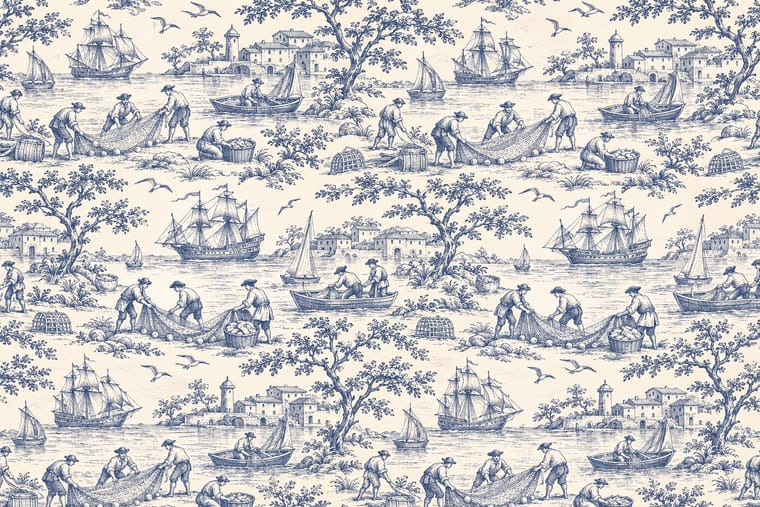
Fine-line scenic prints on pale cotton, in a single ink of red, blue, green or grey. Copperplate-engraved figures, animals, trees and landscape vignettes repeat across the whole cloth, each scene modelled naturalistically yet flattened into an even ornamental field. Made at Oberkampf's Jouy manufacture from 1770, it survives in wallpaper, furnishings and packaging.
Make something in this style Get advice in this style Mix it with another style
01
More pictures in this style
2 pictures, AI-generated from its design choices: none is a real or historical work.
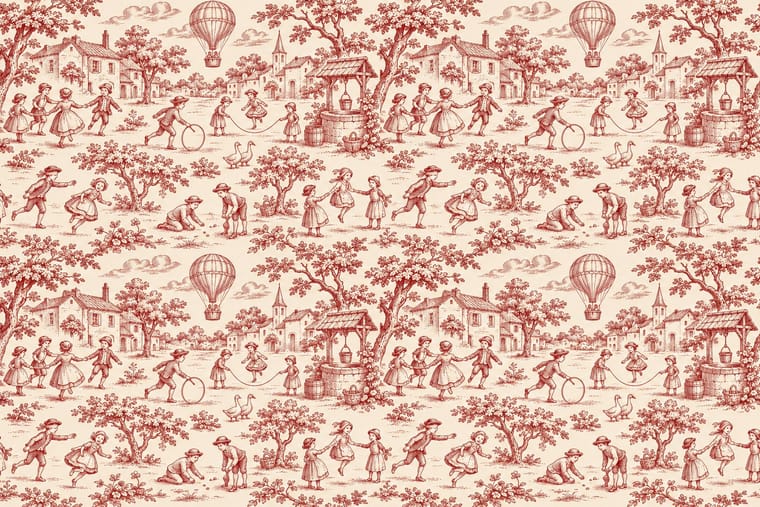
Try other colours
Change a colour and every picture on this page follows. It happens in your browser, from the same pictures: nothing new is made or saved.
Choose a colour to change it
-
#f3ecdc -
#9b2f2f -
#2f4b7c -
#4a5d46 -
#4a4a48
A faded colour isn’t in these pictures, so changing it changes nothing.
Light and dark stay where they are; greys hardly move.
More colours: any style’s, or your own
The pictures show the style’s own colours.
02
Make something in this style
Say what you need, and Stylogeny’s image studio draws it from Toile de Jouy Narrative Print’s design choices and checks it against them. It takes about a minute, and you get a link to share.
03
How it works
Palette
-
#f3ecdcground · 53% -
#9b2f2fnot in its pictures -
#2f4b7cnot in its pictures -
#4a5d46not in its pictures -
#4a4a48not in its pictures
Shares measured from its 2 pictures. The ground is what the pictures sit on (of the colours covering most, the most neutral), the ink stands out from it most, the rest are accents.
Typefaces
-
None on the repeat itself; the cloth is picture-led
-
Where a maker's name or title appears, in the selvedge or on a label, it is set apart from the repeat
the letterforms are not documented in the cited sources
- Print the scene in one ink, red, blue, green or grey, on an off-white ground.
- Engrave each vignette in fine hatched line, so that figures, animals and trees carry light and shade without a second colour.
- Compose small self-contained scenes, such as pastoral, galant, mythological or topical episodes, and repeat them across the whole cloth.
- Space the vignettes evenly with foliage, ground and sprigs, so that no scene outranks the others.
- Keep text out of the repeat, and put any title or maker's mark in the selvedge or on a separate label.
- Choose scenes with care: the period repertoire includes exotic and topical episodes, and a revival picks from it rather than copying all of it.
Where and when Jouy-en-Josas, near Versailles, France: Christophe-Philippe Oberkampf's printed-cotton manufacture, founded in 1760, which began printing from copperplates around 1770 (finer detail than wood blocks; copper rollers followed in 1797); the manufacture closed in 1843 under its later owner Barbet.
Jouy-en-Josas, near Versailles, France: Christophe-Philippe Oberkampf's printed-cotton manufacture, founded in 1760, which began printing from copperplates around 1770 (finer detail than wood blocks; copper rollers followed in 1797); the manufacture closed in 1843 under its later owner Barbet. Its antecedent was the Indian printed cotton (indiennes) and the taste for exotic motifs; Wikipedia adds that toile was first produced in Ireland in the mid-18th century and spread to Britain and France, so Jouy is the canonical example rather than the sole origin. The look lives on in revivals
Change it with an idea. Any of the 73 moves that make a design say something can go on this style.
04
Its design choices
From Stylogeny’s vocabulary of design choices: defining choices make the style, characteristic ones are usual, occasional ones turn up now and then.
- Layout & composition
- Space & hierarchy
- Typography
- Surface & texture
- Medium & production
- Tone & intent
- Avoids
- Type as image, Full polychrome, Fluorescent & neon, Gradients, Dynamic asymmetry, Extreme scale contrast, Single focal point, Straight photography, Non-representational, Ornament-free, Abundant decoration, Rebellious & subversive
How its pictures are made Drawn & painted, Systematic
Kind of picture: Drawn & painted · Systematic
Known for
-
Oberkampf manufacture, Jouy-en-Josas (founded 1760; copperplate printing from 1770), per the Musée protestant notice
-
Jean-Baptiste Huet (1745-1811), the Jouy manufacture's best-known designer of pastoral and figure scenes
-
Jouy subjects recorded by the Musée protestant
galant scenes from novels, children's games, La Fontaine fables animals, the American Revolutionary War, and Egyptian architecture from 1807
-
Barbet's manufacture at Jouy, 1822-1843, the last years of the original works
05
Where it comes from, and what it’s close to
Nothing earlier is recorded: in the atlas it is a starting point.
Toile de Jouy Narrative Print 1760–present
No later style in the atlas grew out of it yet.
Alike in its design choices
06
Combine it with
Styles Toile de Jouy Narrative Print pairs well with or plays against, from the research. Each is worked out as a combination: which style gives the type, the colours and the forms.
- Emblem Book (Motto, Picture & Epigram) Contrasts · Both are monochrome engraved pictures, but toile repeats loose scenes across a field while the emblem book frames one picture with motto and epigram on a page.
- Taiwan Floral Cloth (Huabu) Contrasts · Both are all-over cotton prints. Toile whispers in one ink with narrative scenes; Taiwanese floral cloth shouts with saturated bouquets.
- Hipster Artisanal Revival Pairs well · Borrow the one-ink heritage look for packaging, then add the badge and lettering that toile lacks.
- Arts & Crafts Movement Contrasts · Both love repeat and textile, but Arts and Crafts interlaces flat foliage and sets book type, while toile engraves pictorial scenes.
07
Often taken for
Toile de Jouy Narrative Print has no real works recorded yet, so these are its nearest styles by its choices alone, with the choices that tell them apart.
-
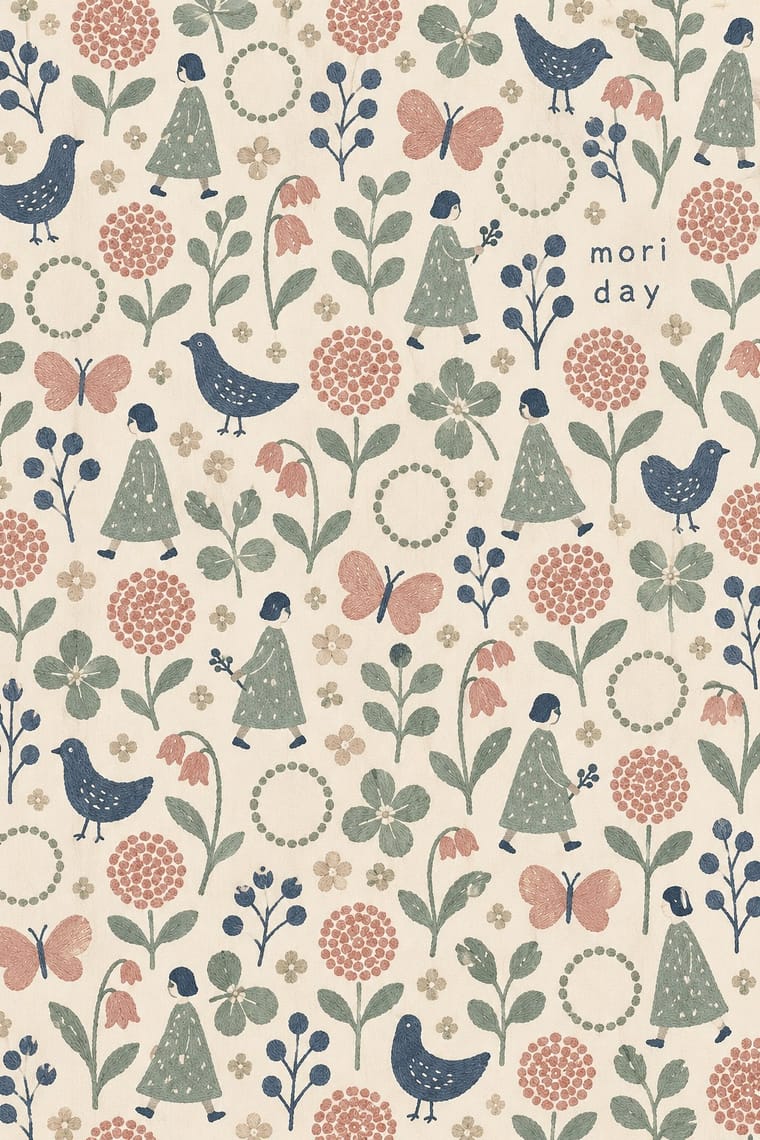
minä perhonen (Hand-Drawn Textile Graphics, Akira Minagawa)
minä perhonen is one of Toile de Jouy Narrative Print’s nearest styles by choices; no real work of either fits the other better.
Choices that tell Toile de Jouy Narrative Print and minä perhonen apart Choice Toile de Jouy Narrative Print minä perhonen Monochrome defining — Limited spot colours — defining Naturalistic depiction defining — Stylised figuration — defining Carved line defining — No shared descent in the atlas: they reached these choices separately.
-
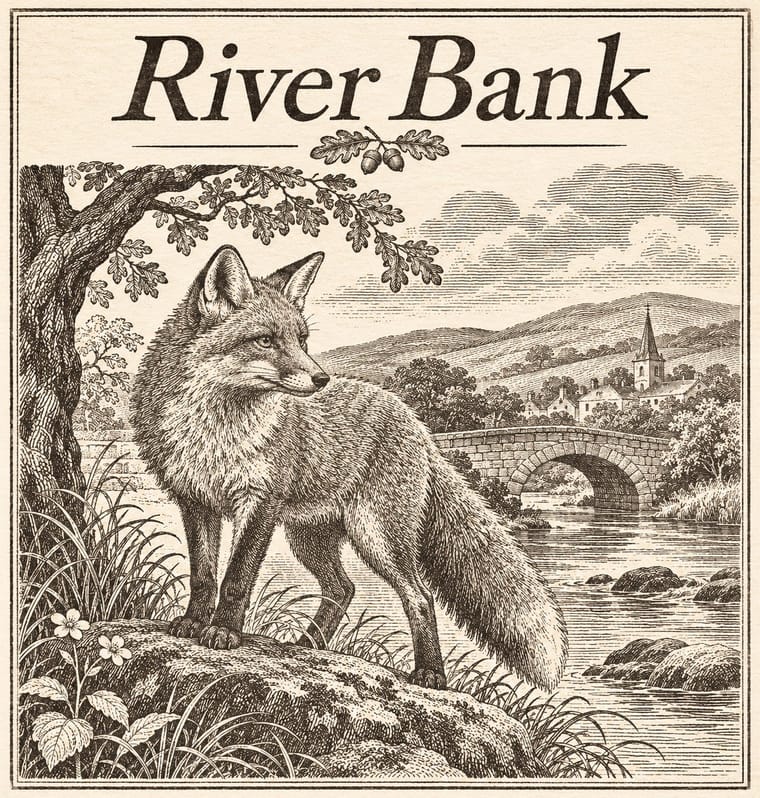
Antique Engraved Illustration & Revival
Antique Engraved Illustration & Revival is one of Toile de Jouy Narrative Print’s nearest styles by choices; no real work of either fits the other better.
Choices that tell Toile de Jouy Narrative Print and Antique Engraved Illustration apart Choice Toile de Jouy Narrative Print Antique Engraved Illustration Pattern & repeat defining — Single focal point avoids characteristic All-over field defining — Illusion of depth — defining Flat hierarchy defining — No shared descent in the atlas: they reached these choices separately.
-
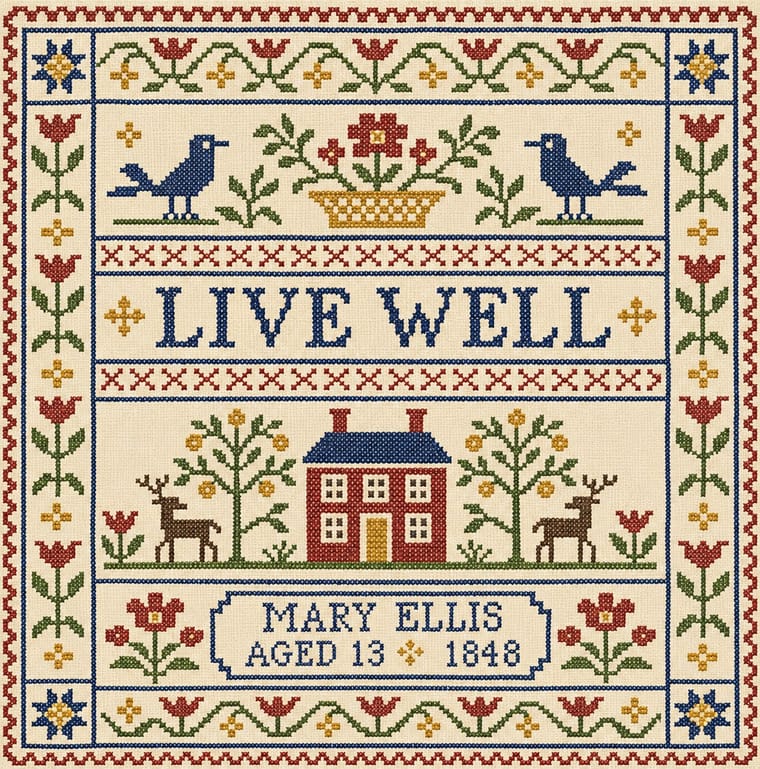
Needlework Sampler Lettering
Needlework Sampler Lettering is one of Toile de Jouy Narrative Print’s nearest styles by choices; no real work of either fits the other better.
Choices that tell Toile de Jouy Narrative Print and Needlework Sampler Lettering apart Choice Toile de Jouy Narrative Print Needlework Sampler Lettering Monochrome defining — Rectilinear — defining Line illustration defining — Borders & frames — defining Carved line defining — No shared descent in the atlas: they reached these choices separately.
-
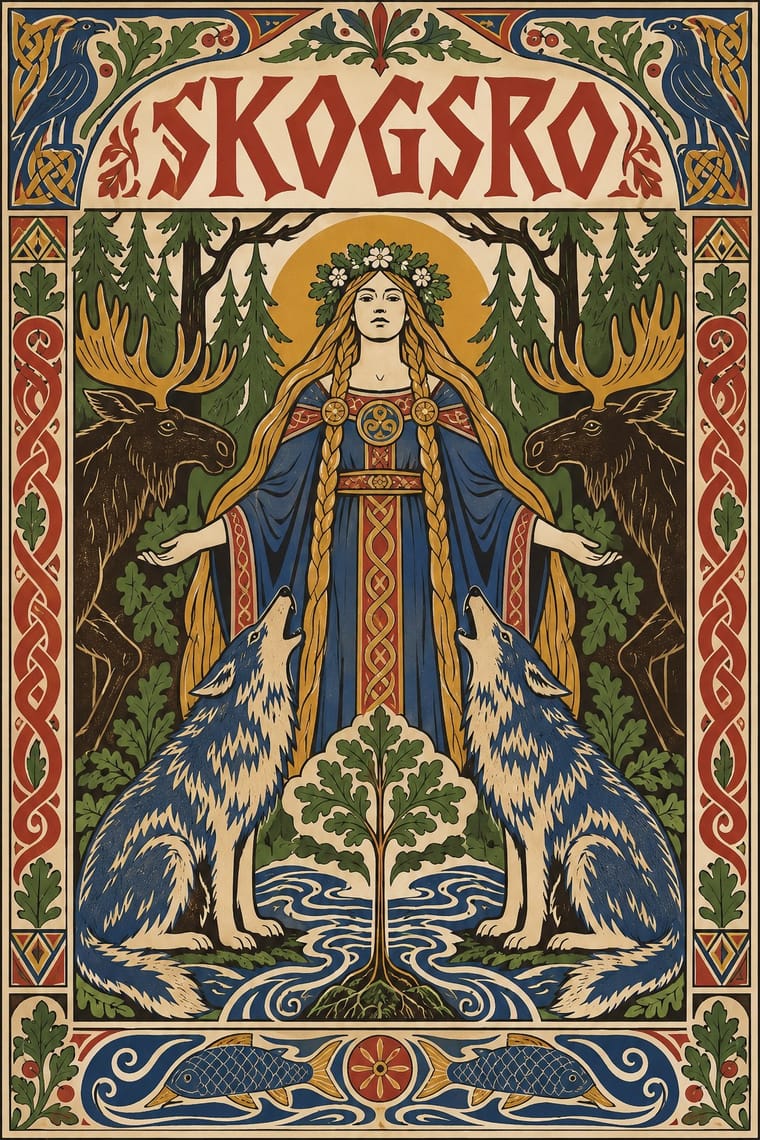
Norwegian and Finnish National Romantic Graphics (Munthe & Karelianism)
Norwegian and Finnish National Romantic Graphics is one of Toile de Jouy Narrative Print’s nearest styles by choices; no real work of either fits the other better.
Choices that tell Toile de Jouy Narrative Print and Norwegian and Finnish National Romantic Graphics apart Choice Toile de Jouy Narrative Print Norwegian and Finnish National Romantic Graphics Naturalistic depiction defining — Abundant decoration avoids characteristic Flat hierarchy defining — Flat fields — defining Pattern & repeat defining occasional No shared descent in the atlas: they reached these choices separately.
— means the choice isn’t among the style’s recorded choices. Critics recorded each work’s choices with the styles’ descriptions in view, so this shows whether the descriptions hold together, not proof that they are right.
08
Sources
- Musée protestant, Les Toiles de Jouy: https://museeprotestant.org/notice/les-toiles-de-jouy-2/
- Wikipedia, Toile (definition of Toile de Jouy as a single-colour repeated scene on an off-white ground): https://en.wikipedia.org/wiki/Toile
- Wikipedia, Toile de Jouy (single-colour repeat, usually black, dark red or blue; Irish and British toile): https://en.wikipedia.org/wiki/Toile_de_Jouy
How Stylogeny researches and checks a style: where the facts come from.