Counterculture · 1957–1979 · East Asia
Gekiga ( Dramatic Pictures )
Also known as Gekiga, 劇画, Adult realist manga, Gekiga Kobo
Japanese comics for adult readers, a term coined by Yoshihiro Tatsumi in 1957 for work by artists who wanted consistently dramatic stories rather than comic children's manga, with aesthetics influenced by film noir and crime novels. Sharp contours, heavy hatching and gritty linework serve cinematic sequences and unglamorous figures in stories of crime, work, history and social unease. Unlike Argentine historieta, it grew from Japan's rental-manga industry and magazines such as Garo and Weekly Manga Action, and it leans on drawn sound-effect lettering.
Make something in this style Get advice in this style Mix it with another style
01
Make something in this style
Say what you need, and Stylogeny’s image studio draws it from Gekiga (Dramatic Pictures)’s design choices and checks it against them. It takes about a minute, and you get a link to share.
02
How it works
Palette
-
#f1ece0 -
#141414 -
#4a4a48 -
#a9a49a -
#8c2a21
Typefaces
-
Hand-lettered sound effects (onomatopoeia) drawn into the art
-
Gothic (sans) and Mincho (serif) typeset dialogue in speech balloons
- Draw figures with realistic proportions and weathered, unidealised faces instead of rounded, big-eyed cartoon bodies.
- Build shadow with dense hatching, cross-hatching and solid black so light falls like film noir.
- Frame each panel like a camera shot: vary close-ups, low angles and wide establishing views across the page.
- Render the page in black ink with hatching and brush or pen line, letting black and white carry the drama.
- Let the story carry adult, social subjects such as crime, poverty, violence and historical conflict, and play them straight.
Japan: Yoshihiro Tatsumi coined the term in 1957 and Yurei Taxi (1957) was the first work called gekiga; the artists worked in the rental-manga industry; Gekiga Kobo formed in Tokyo in 1959 and disbanded in 1960; Garo (1964) was an outlet, and Tezuka founded COM (1967) as a rival for more experimental work
Change it with an idea. Any of the 73 moves that make a design say something can go on this style.
03
Its design choices
From Stylogeny’s vocabulary of design choices: defining choices make the style, characteristic ones are usual, occasional ones turn up now and then.
- Layout & composition
- Space & hierarchy
- Typography
- Form & shape
- Surface & texture
- Ornament
- Medium & production
- Avoids
- Rounded & pill, Playful & witty, Pastel, Fluorescent & neon, Floral & vegetal, Stylised figuration, Gloss & highlights, Modular grid, Calm & contemplative, Flat
How its pictures are made Drawn & painted
Kind of picture: Drawn & painted
Known for
-
Yoshihiro Tatsumi, Yurei Taxi (1957) and Gekiga College
1968
-
Takao Saito, Golgo 13
from 1968
-
Sanpei Shirato, Kamui
serialised in Garo
-
Kazuo Koike and Goseki Kojima, Lone Wolf and Cub
Weekly Manga Action, 1970-1976
-
Garo magazine
1964
04
Where it comes from, and what it’s close to
Grew out of
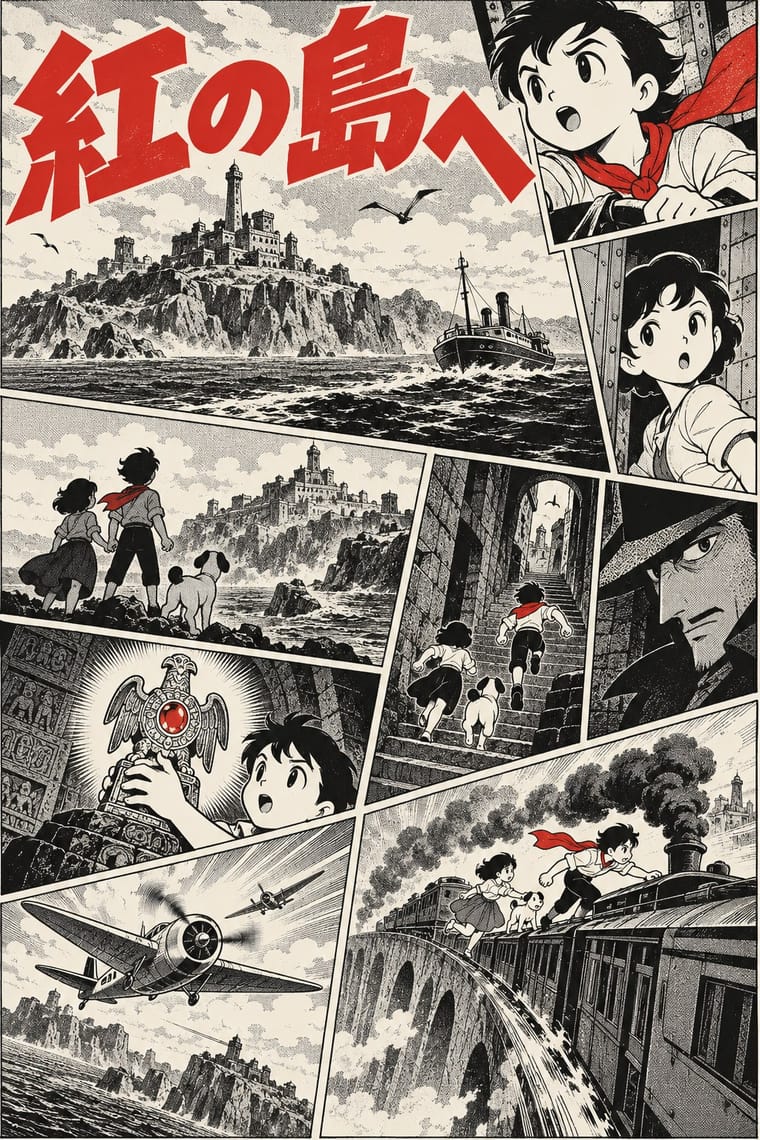
Gekiga (Dramatic Pictures) 1957–1979
No later style in the atlas grew out of it yet.
Alike in its design choices
05
Combine it with
Styles Gekiga (Dramatic Pictures) pairs well with or plays against, from the research. Each is worked out as a combination: which style gives the type, the colours and the forms.
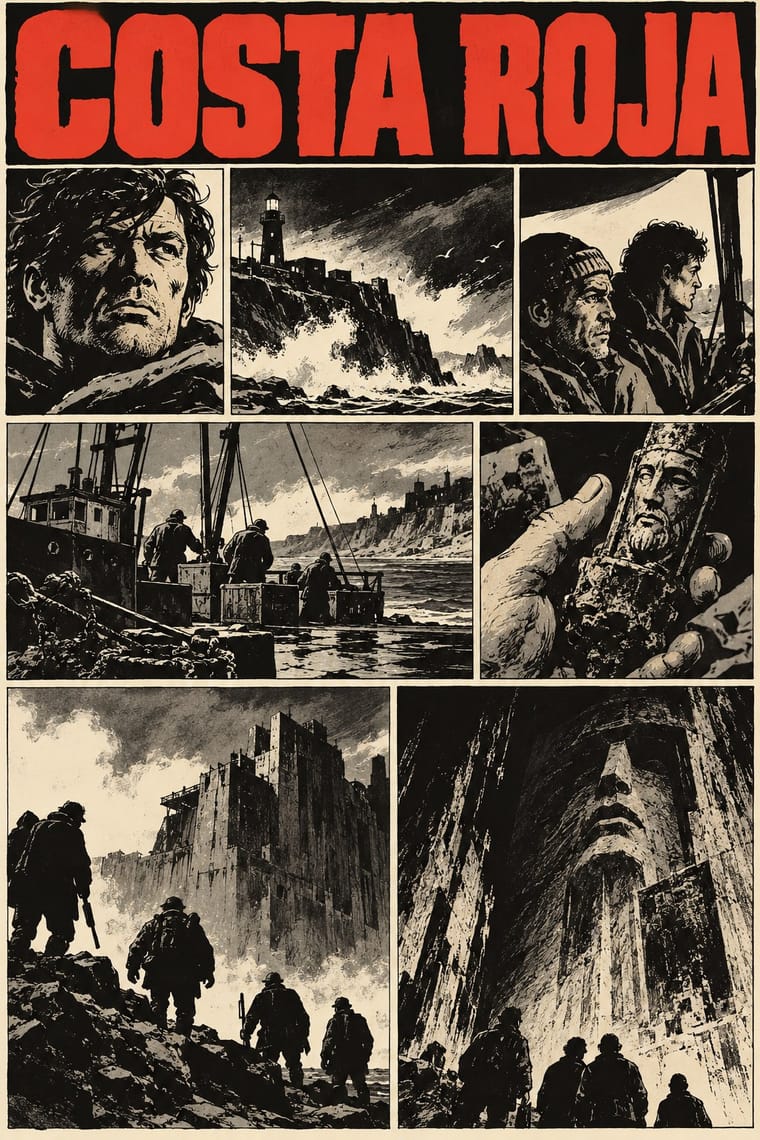
- Argentine Adventure Historieta (Oesterheld–Breccia) Pairs well · Another realist black-and-white adult comics tradition; pair them to compare Japanese hatching and sound-effect lettering with Argentine brush chiaroscuro.
- Garo and Heta-uma (Japanese Underground Manga and 'Bad-Good' Illustration) Pairs well · Loosen the realism toward Garo's later personal, ironic line when a gekiga story needs an underground voice.
- Shōjo Manga (Japanese Girls' Comics) Contrasts · Decorative, soft, emotionally floating pages set against gekiga's hard black shadows make a deliberate tonal clash.
- Pulp Magazine Cover Pairs well · Add pulp's lurid crime and adventure staging for covers while keeping gekiga's hatching and sober faces.
06
Often taken for
Gekiga has no real works recorded yet, so these are its nearest styles by its choices alone, with the choices that tell them apart.
-
Argentine Adventure Historieta (Oesterheld–Breccia)
Argentine Adventure Historieta is one of Gekiga’s nearest styles by choices; no real work of either fits the other better.
Choices that tell Gekiga and Argentine Adventure Historieta apart Choice Gekiga Argentine Adventure Historieta Halftone & Ben-Day dots occasional avoids All caps — defining Angular & zigzag characteristic — Modular grid avoids occasional Dynamic asymmetry characteristic — No shared descent in the atlas: they reached these choices separately.
-
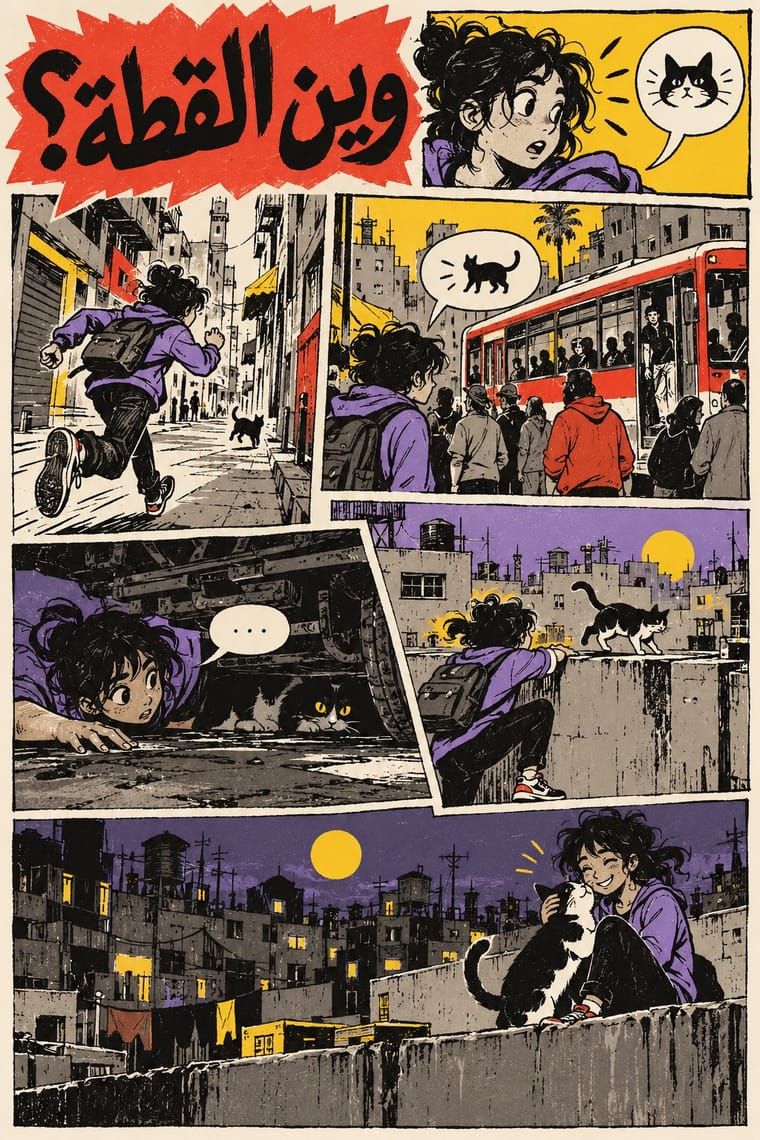
Arab Independent Comics (Samandal, TokTok, Lab619, Skefkef)
Arab Independent Comics is one of Gekiga’s nearest styles by choices; no real work of either fits the other better.
Choices that tell Gekiga and Arab Independent Comics apart Choice Gekiga Arab Independent Comics Naturalistic depiction defining occasional Stylised figuration avoids characteristic Angular & zigzag characteristic — Limited spot colours — characteristic Illusion of depth characteristic — No shared descent in the atlas: they reached these choices separately.
-
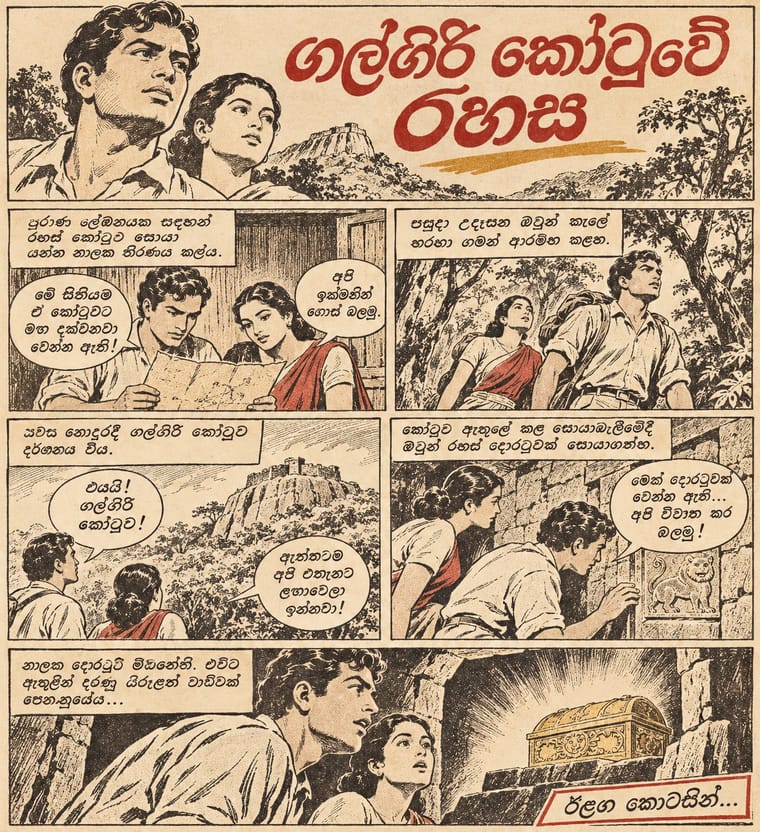
Sinhala Chithra Katha (Popular Narrative Comics)
Sinhala Chithra Katha is one of Gekiga’s nearest styles by choices; no real work of either fits the other better.
Choices that tell Gekiga and Sinhala Chithra Katha apart Choice Gekiga Sinhala Chithra Katha Ornament-free defining — Modular grid avoids occasional Angular & zigzag characteristic — Restrained accents — characteristic Extreme scale contrast characteristic — No shared descent in the atlas: they reached these choices separately.
-
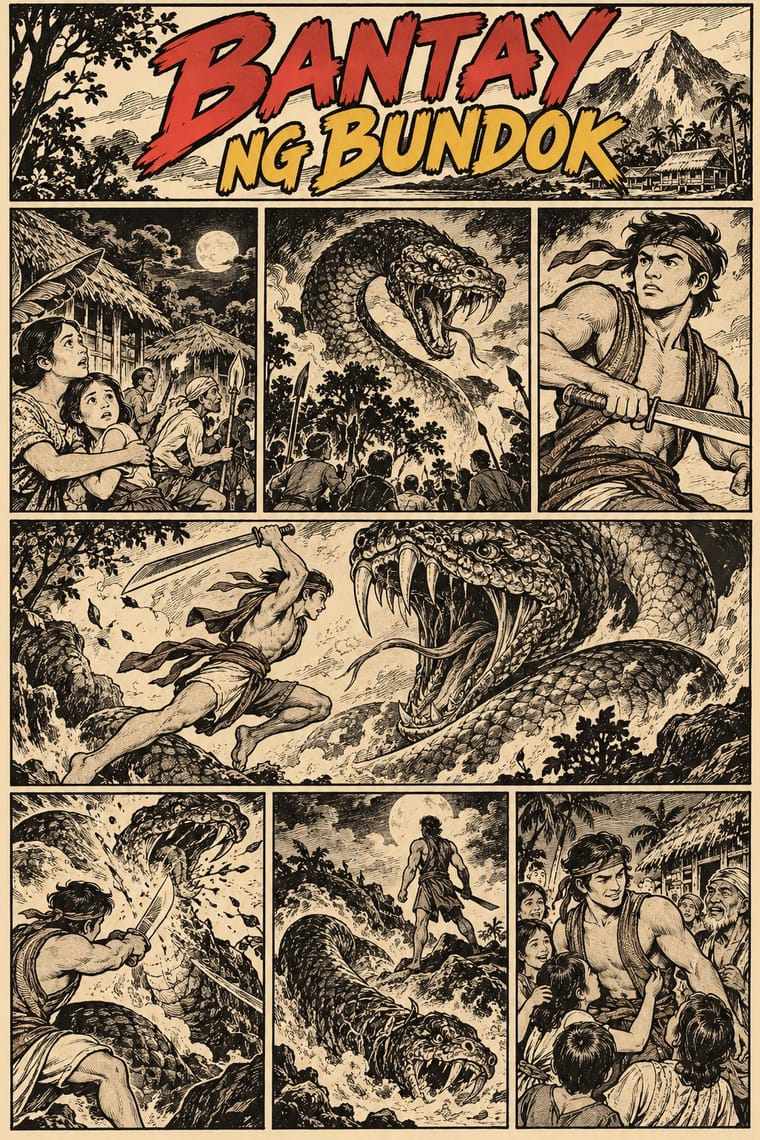
Filipino Komiks
Filipino Komiks is one of Gekiga’s nearest styles by choices; no real work of either fits the other better.
Choices that tell Gekiga and Filipino Komiks apart Choice Gekiga Filipino Komiks Ornament-free defining — Stylised figuration avoids occasional Halftone & Ben-Day dots occasional avoids Modular grid avoids occasional Angular & zigzag characteristic — No shared descent in the atlas: they reached these choices separately.
— means the choice isn’t among the style’s recorded choices. Critics recorded each work’s choices with the styles’ descriptions in view, so this shows whether the descriptions hold together, not proof that they are right.
07
Sources
- https://en.wikipedia.org/wiki/Gekiga
- https://en.wikipedia.org/wiki/Lone_Wolf_and_Cub
- https://en.wikipedia.org/wiki/Golgo_13
How Stylogeny researches and checks a style: where the facts come from.