The 8 styles
Oldest first. Each has its own page: its design choices, where it comes from, and real works.

- Đông Hồ & Hàng Trống Folk PrintsVietnam's two classic folk-print schools, bought for Tết. Đông Hồ families press each colour from its own carved block onto giấy điệp, dó paper brushed with ground scallop shell whose streaked, faintly sparkling surface serves as the white, and print the black line last.

- Sápmi Graphic Identity (Duodji & Gákti Colour Code)Duodji is Sámi handicraft: hard work in wood, horn and bone, soft work in skin and cloth; drums painted with alder-bark figures survive from the 17th and 18th centuries.
- Ten Bamboo Studio Colour Woodblock (Douban & Gonghua)A kind of colour woodblock printing begun in late-Ming Nanjing, made so that a print looks like a brush painting.

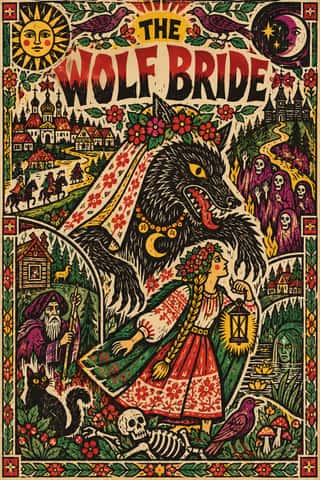
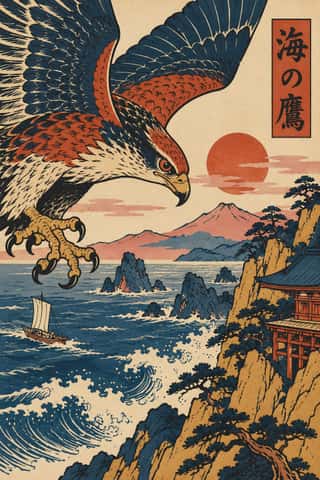


The design choices they share
The choices these styles make more often than the 359 styles in the atlas as a whole, most telling first.
- Floral & vegetalin 8 of 8
- Woodblock & linocutin 7 of 8
- Carved linein 5 of 8
- Paper & letterpress bitein 6 of 8
- Rotated & vertical settingin 5 of 8
- Line illustrationin 7 of 8
- Brush & pen calligraphyin 5 of 8
- Framed panelsin 7 of 8