Craft & organic · 1890–1910 · Western Europe, Central Europe, Southern Europe, North America
Art Nouveau
Also known as Jugendstil, Stile Liberty, Modernisme, Modern Style
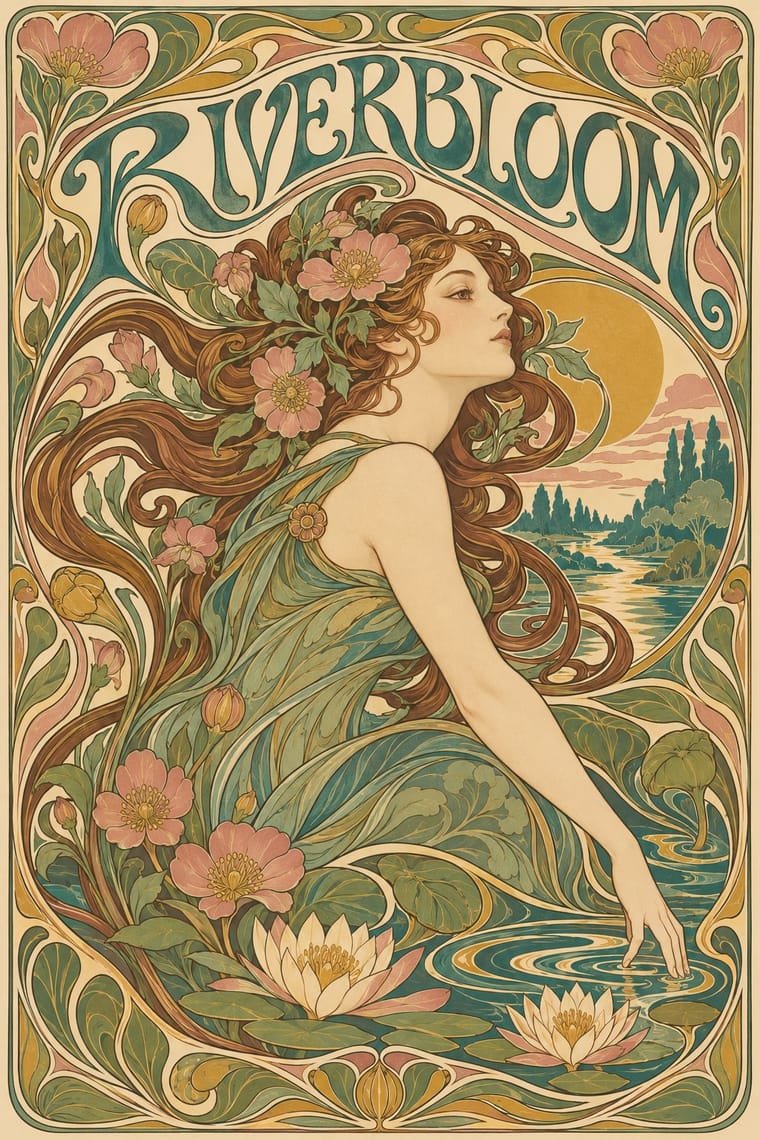
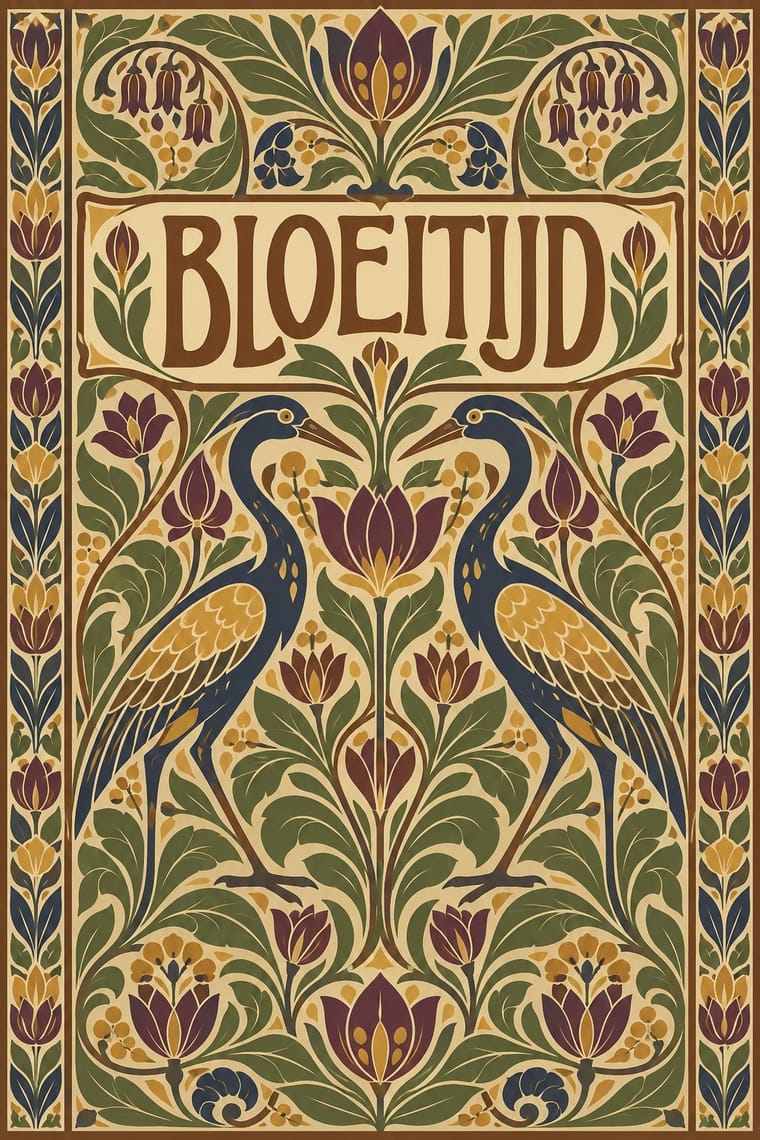
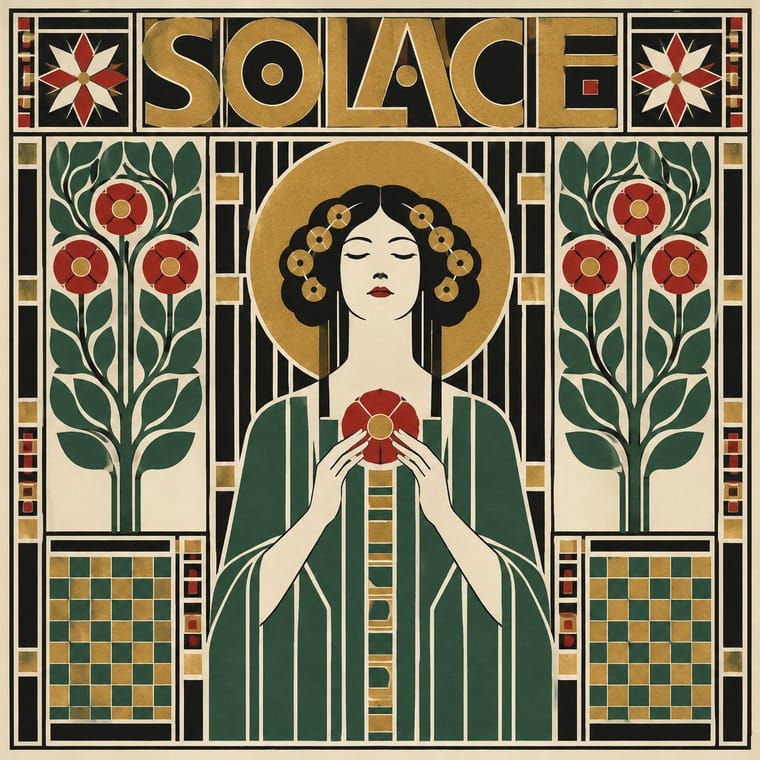
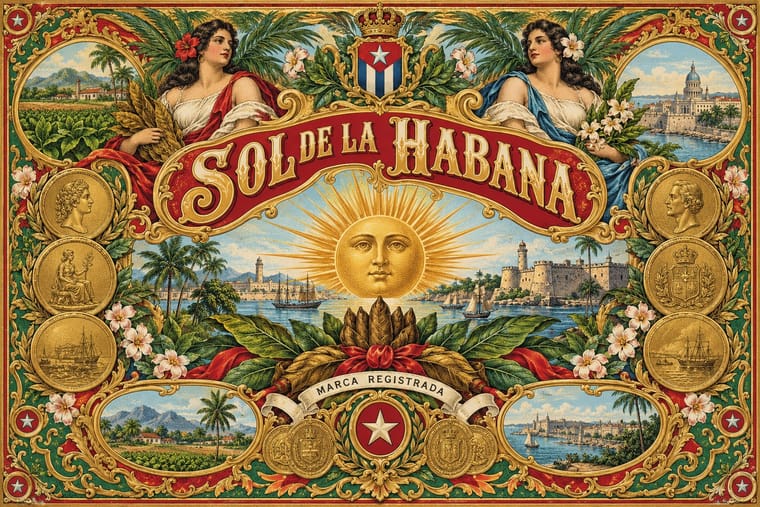
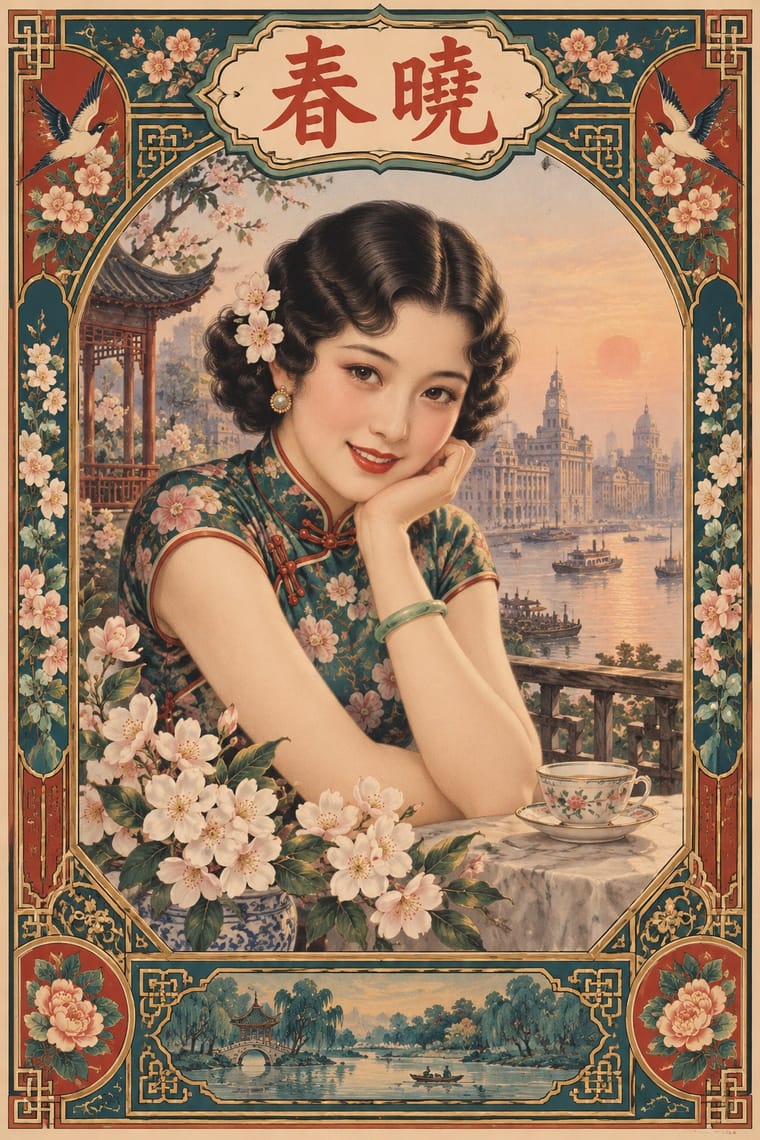
An international 'new art' that sought a modern style free of historical revival, drawing its forms from plant growth and the female figure. Graphic work flows with whiplash curves and stylised flowers, frames idealised women in arches, halos and mosaic borders, and draws custom lettering that bends to fill the space, fusing image, ornament and type into one decorative surface.
Make something in this styleGet advice in this styleMix it with another style
01
How it works
- Let a single sinuous whiplash line drive the composition, flowing through figure, ornament and lettering alike.
- Draw letters by hand and distort them to fill the shapes left by the image instead of setting them in lines.
- Base ornament on stems, tendrils, flowers and flowing hair, stylised into rhythmic contour lines.
- Enclose the central figure in arches, halos, roundels or panels framed by decorative borders.
- Outline flat or softly graded areas of muted, harmonious colour with a confident contour.
- Treat poster, book, interior and building as one Gesamtkunstwerk sharing a single ornamental language.
Brussels, Paris, Nancy and Munich, with offshoots in Barcelona, Turin, Prague and the United States
02
Its design choices
From Stylogeny’s vocabulary of design choices: defining choices make the style, characteristic ones are usual, occasional ones turn up now and then.
- Layout & composition
- Space & hierarchy
- Colour
- Form & shape
- Surface & texture
- Ornament
- Medium & production
- Tone & intent
- Avoids
- Modular grid, Rectilinear, Angular & zigzag, Grotesque & neo-grotesque, Ornament-free, Flush left, ragged right
Palette
#efe2c4#d9a6a0#9fae84#c9a24b#3f7a75#4b3b2a
Typefaces
Arnold Böcklin
Otto Weisert, 1904
Eckmann
Otto Eckmann, Gebr. Klingspor, 1900
Grasset
Eugène Grasset, G. Peignot et Fils, 1898
Mucha's hand-drawn poster lettering
Known for
Alphonse Mucha
Gismonda, 1894–95; JOB, 1896
Eugène Grasset
Henry van de Velde
Tropon poster, 1898
Hector Guimard
Paris Métro entrances, c. 1900
Otto Eckmann and Jugend magazine
Munich, from 1896
Aubrey Beardsley
Salome illustrations, 1894
Will H. Bradley
The Chap-Book covers, 1894–95
03
Make something in this style
Say what you need, and Stylogeny’s image studio draws it from Art Nouveau’s design choices and checks it against them. It takes about a minute, and you get a link to share.
04
Where it comes from, and what it’s close to
Before it
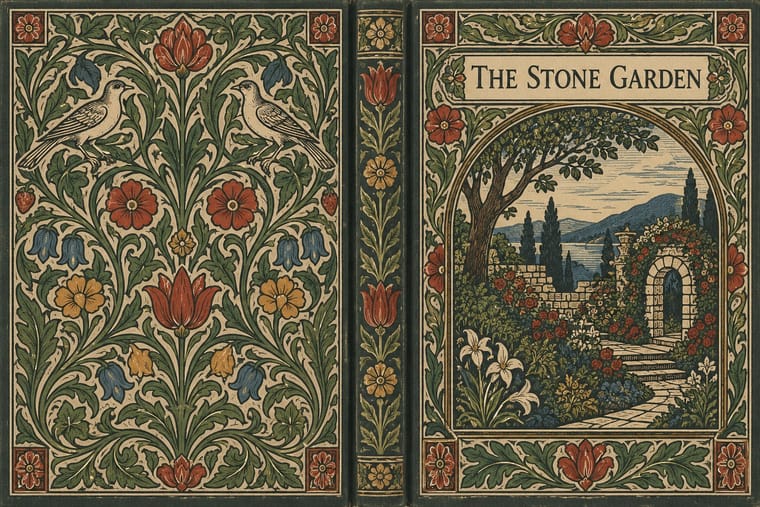
The style it grew out of, and the styles it borrowed from.
After it
The styles that grew out of it.
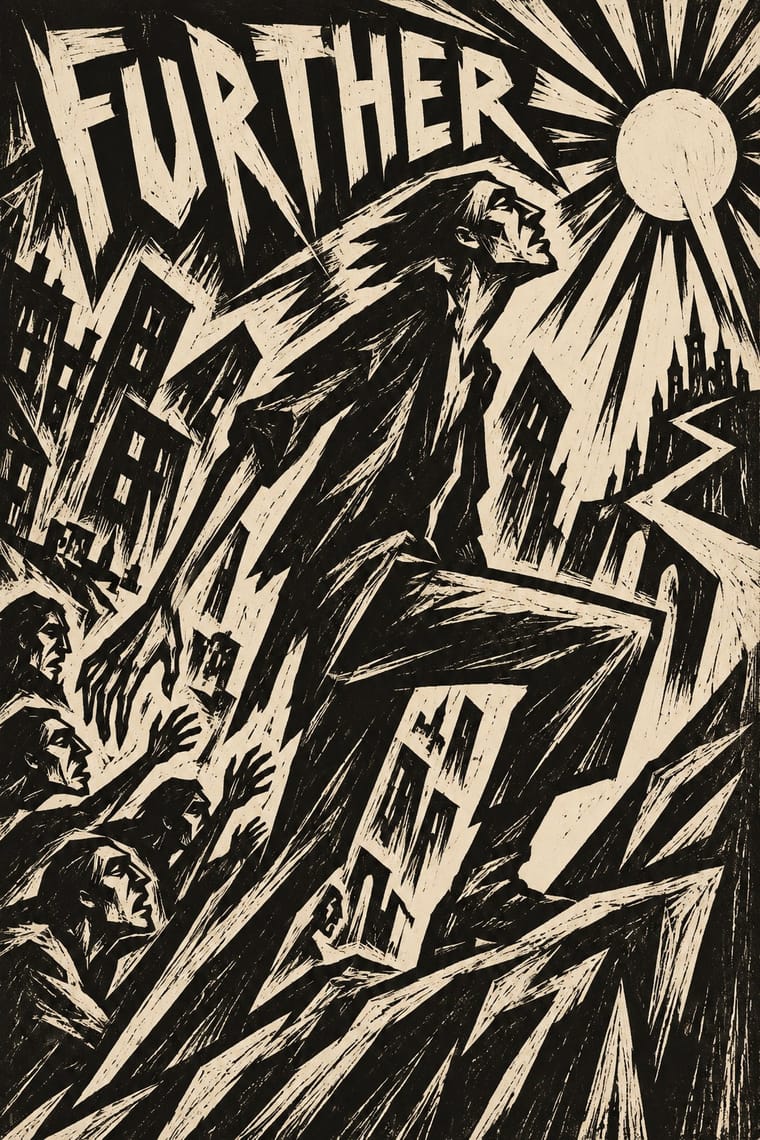
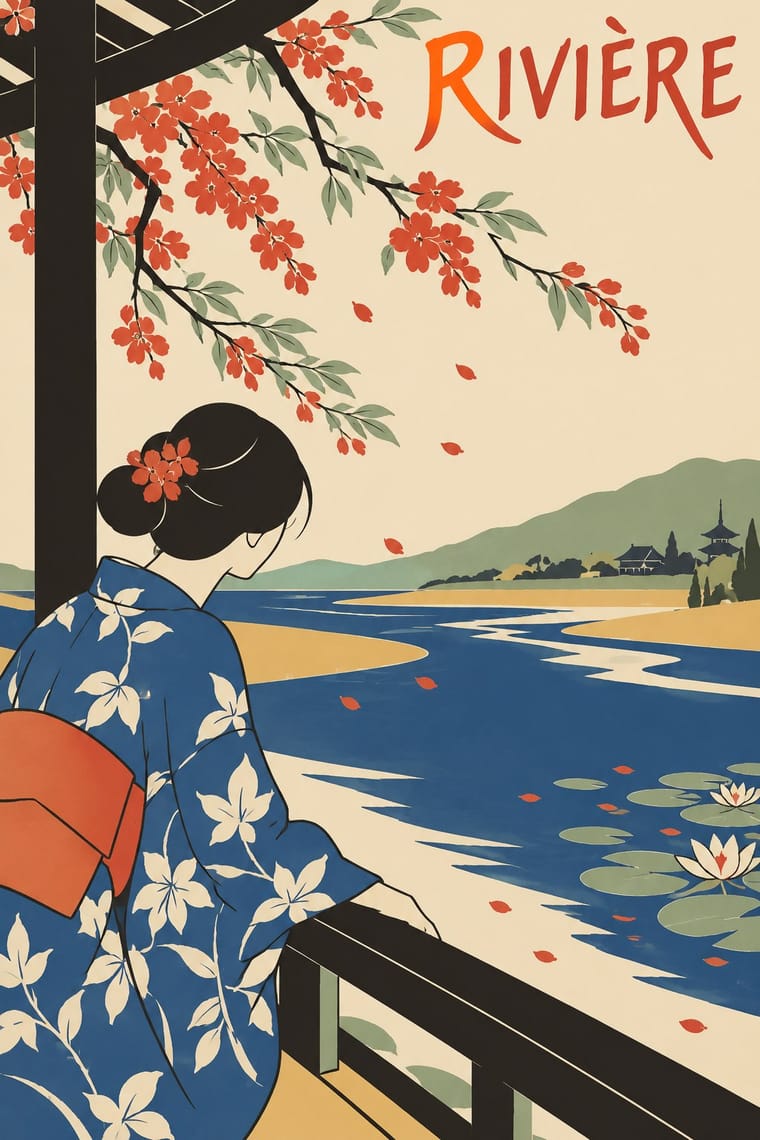
- Led toBezalel School
- Led toTaishō Roman & Lyrical Illustration
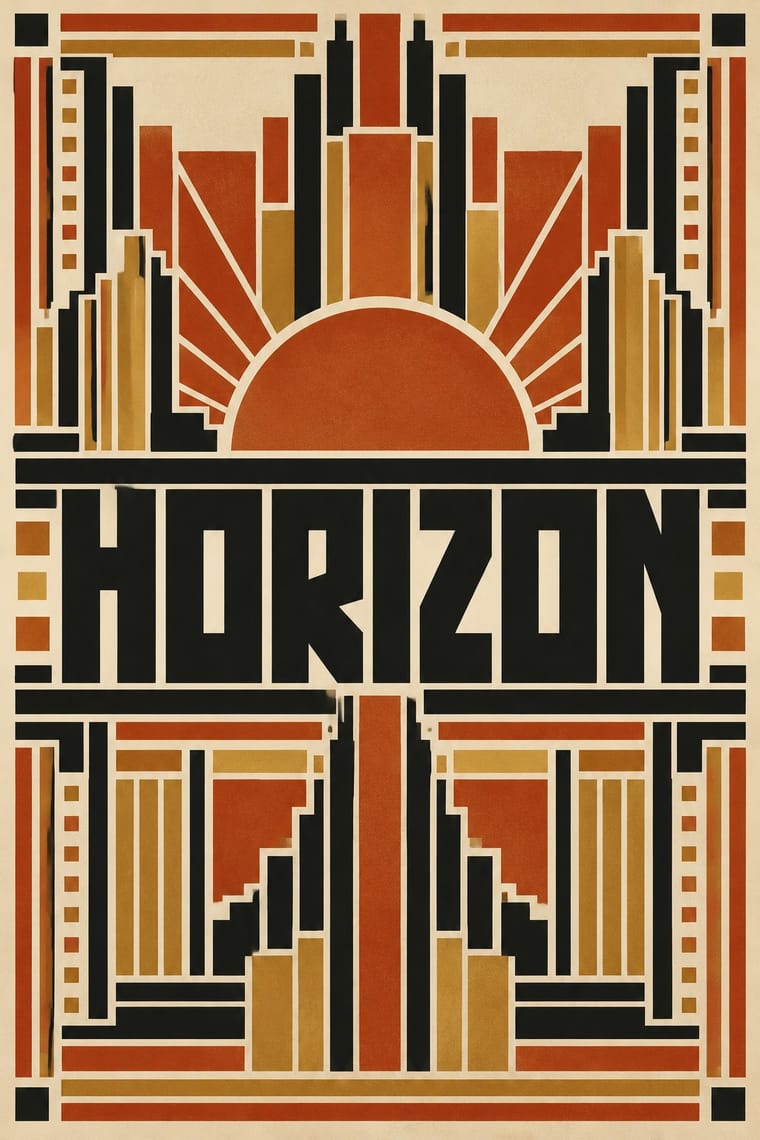
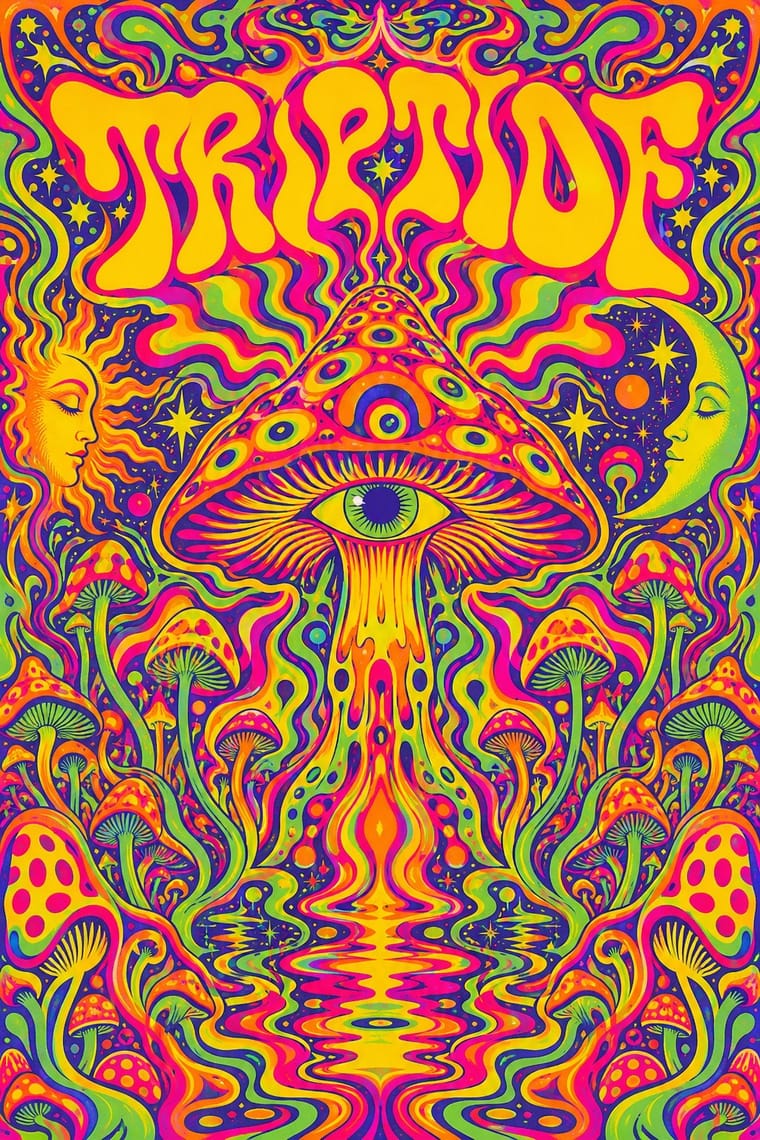
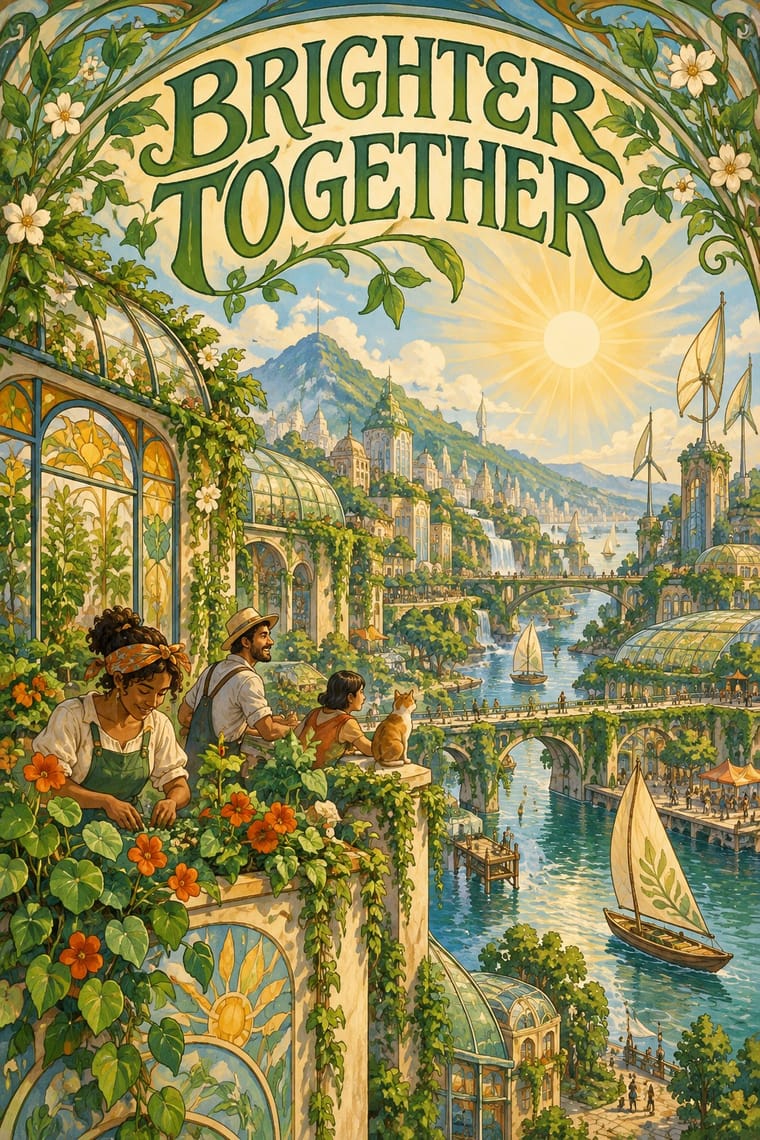
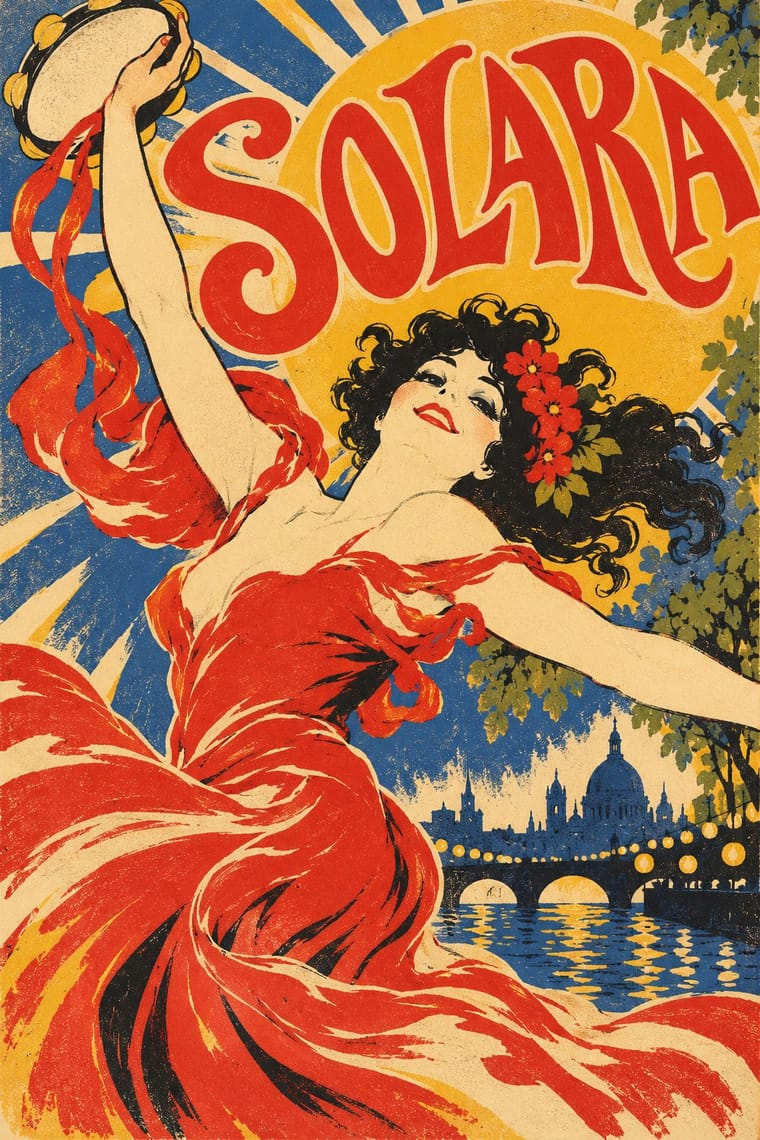
Alike in its design choices
Styles that make many of the same choices, related or not, besides those above.
05
Real works
Artefacts in museums, libraries and archives that show the style, linked at their source.
- Absinthe RobetteHenri Privat-Livemont · 1896 · Bibliothèque nationale de France (via Wikimedia Commons)
- Jugend, Nr. 14 (cover)Otto Eckmann · 4 April 1896 · Wikimedia Commons (scan credited to Kansallisarkisto, National Archives of Finland)
- The Chap-BookWill H. Bradley · 1895 · Library of Congress, Artist Posters collection (via Wikimedia Commons)
- Job (papier à cigarettes)Alphonse Mucha · 1896 · Bibliothèque nationale de France (via Wikimedia Commons)


06
Sources
- Philip B. Meggs & Alston W. Purvis, Meggs' History of Graphic Design
- Paul Greenhalgh (ed.), Art Nouveau 1890–1914 (V&A Publications, 2000)
How Stylogeny researches and checks a style: where the facts come from.