Traditions & vernacular · c. 1140–present · Western Europe, Central Europe, Northern Europe, Southern Europe, Eastern Europe
European Heraldry
Also known as Armory, Coats of arms, Blazon and emblazon, Heraldic art, Armorial art
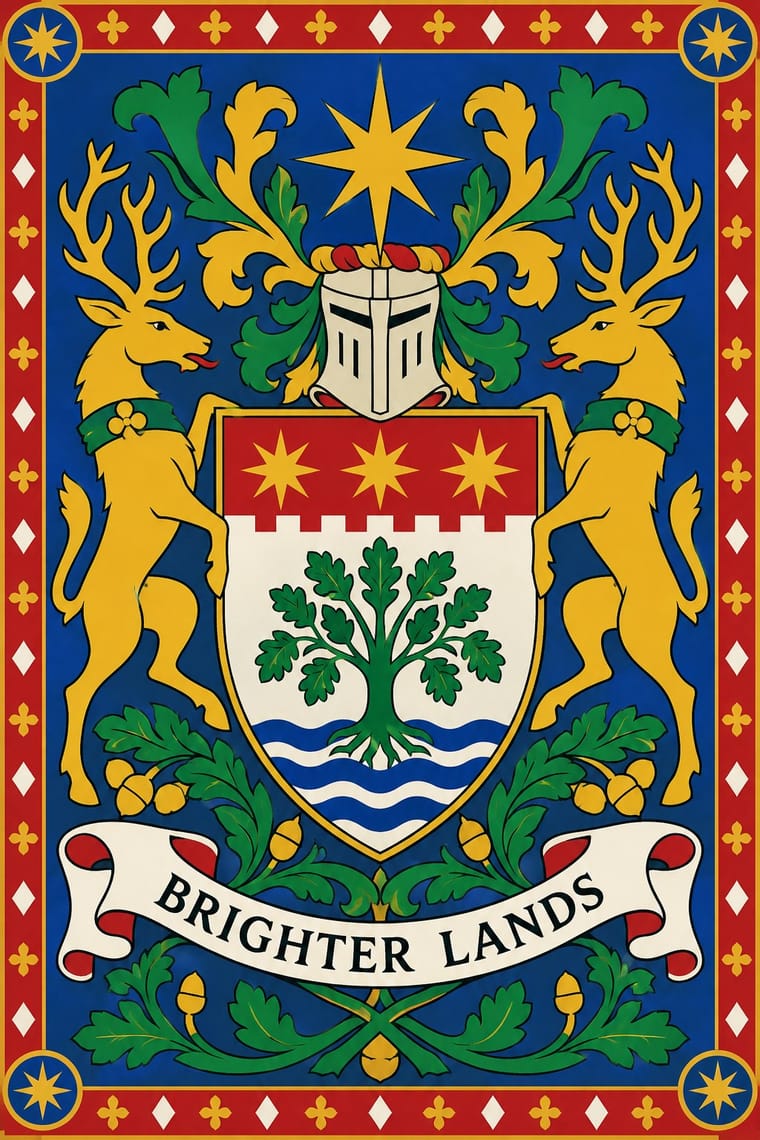
The hereditary identifying devices of medieval Europe's knights and seals, codified into a rule-bound grammar still used by states, cities, churches, universities and families. A coat of arms is defined by its written blazon, not by a drawing: a few flat tinctures (two metals, five colours and the furs) that keep metal off metal and colour off colour, a shield divided by bold ordinaries, and stylised charges in fixed poses, redrawn by every age in its own idiom and combined by impalement and quartering.
Make something in this styleGet advice in this styleMix it with another style
Use it with care
A coat of arms belongs to a particular bearer, lineage or (in Polish heraldry) clan, not to everyone with a surname: in Scotland it can belong to only one person at a time and the Court of the Lord Lyon can fine those who usurp arms and have the offending items removed or destroyed, state arms are protected against unauthorised registration and use as trademarks under Article 6ter of the Paris Convention, and many European cities and universities protect their arms as trademarks. Design new arms by the rules of the tradition rather than copying a real family's, city's or state's arms for decoration or branding, and do not present invented arms as a family's historic coat of arms. Crusader and Templar shields and knights with crosses on their chests or shields have also become far-right insignia (Charlottesville 2017, the US Capitol 2021), and neo-Nazis use an eagle loosely based on German coats of arms, though not every eagle derives from it; check how a cross, an eagle or a crusading knight will read before using it, and avoid pairing them with militant or ethnic-nationalist themes.
01
How it works
- Write the arms first as a blazon (field, then ordinary, then charges, each with its tincture) and draw from the words, so that any artist in any period can redraw them and the identity stays the same.
- Colour from a small closed set of tinctures in flat, unshaded fields (gold or yellow and silver or white as metals; red, blue, black, green and purple as colours; ermine and vair as furs), use strong shades rather than pale ones, and never put metal on metal or colour on colour.
- Divide the shield with bold partitions and ordinaries that run to its edges (pale, fess, bend, chevron, cross, saltire, chief), varied by wavy, indented, embattled or engrailed lines, so the arms can be told apart at a distance.
- Draw each charge as a stylised emblem in a conventional pose that fills the space it is given, such as the lion rampant, the eagle displayed or the fleur-de-lis, and keep natural colours and realistic scenes to a minimum.
- Combine identities by rule instead of designing anew: impale two coats side by side, quarter inherited arms, and, where the tradition differences arms as in England and Scotland, mark junior members with small marks of cadency (Polish heraldic clans share the same undifferenced arms).
- When the occasion calls for the full achievement, stack it around the shield (helm and crest above, mantling falling from the helm, supporters standing on a compartment, the motto on a scroll beneath), and in black and white print encode the tinctures by hatching (older printed armorials such as Siebmacher's marked them with letters).
Western Europe in the twelfth century, when knights' shields and nobles' seals took on regular, hereditary devices (seals of 1135–1155 appear to show the first heraldic devices, and one of the first authentic coloured depictions is the enamel made for Geoffrey Plantagenet's tomb in Le Mans, c. 1155–1165, whose patron is disputed); heralds recorded and regulated them in painted rolls of arms and armorials from the thirteenth century on, and the English heralds were incorporated as the College of Arms in 1484
02
Its design choices
From Stylogeny’s vocabulary of design choices: defining choices make the style, characteristic ones are usual, occasional ones turn up now and then.
- Layout & composition
- Space & hierarchy
- Colour
- Form & shape
- Surface & texture
- Ornament
- Medium & production
- Tone & intent
- Avoids
- Gradients, Pastel, Analogous harmony, Fluorescent & neon, Naturalistic depiction, Straight photography
Palette
#b5121b#1c3f94#e8b923#f4f1e8#141414#1d7a3a
Typefaces
Gothic book and cursive hands naming the bearer above or beside each shield in medieval rolls of arms and armorials, as 'die coninc van denmarke' beside the Danish flag in the Gelre Armorial
Mottoes lettered on a scroll beneath the shield
The blazon itself, conventionally set in italic in heraldic texts
e.g. 'Azure, a bend or'
Otto Hupp's Neudeutsch (1899), Hupp-Gotisch, Hupp-Fraktur and Hupp-Antiqua, typefaces by the German heraldic artist
Known for
Funerary enamel of Geoffrey Plantagenet, Count of Anjou
(d. 1151), made for his tomb in Le Mans c. 1155–1165, probably at his widow's order (French sources name Bishop Guillaume de Passavant): a blue shield with six gold lions ('d'azur à six lionceaux d'or'), one of the first authentic depictions of a coat of arms (Carré Plantagenêt, Le Mans)
Dering Roll (1270–1280), 324 painted shields in 54 rows of six on vellum, the oldest English roll of arms surviving in its original form
British Library, Add. Roll 77720
Codex Manesse (Zürich, c. 1304–1340), whose 137 full-page miniatures show some of the noble poets in full armour in their heraldic colours and devices (Heidelberg University Library, Cod. Pal. germ. 848)
Zürich Armorial (c. 1340), parchment strips with 559 coats of arms and 28 flags of bishoprics, mostly of the lower nobility of greater Swabia (Swiss National Museum, Zürich)
Gelre Armorial, compiled before 1396 by the herald Claes Heinenzoon
some 1,800 coats of arms from across Europe, including the earliest known coloured depiction of the Danish flag (Royal Library of Belgium)
Conrad Grünenberg, Wappenbuch (preface dated 1483), some 2,000 coats of arms, presented to Emperor Frederick III
Bartosz Paprocki, Herby rycerstwa polskiego
(Kraków, 1584), the arms of the Polish knighthood in five books, illustrated with woodcut shields; in Polish heraldry a coat of arms does not belong to a single family but is often borne by a clan of families, sometimes hundreds of them and not necessarily related
Johann Siebmacher, New Wappenbuch (Nuremberg, 1605), 226 plates printed from copper with 3,320 coats of arms, their tinctures marked by letters; reissued and continued for centuries as one of the most important reference works of heraldry
03
Make something in this style
Say what you need, and Stylogeny’s image studio draws it from European Heraldry’s design choices and checks it against them. It takes about a minute, and you get a link to share.
04
Where it comes from, and what it’s close to
Before it
The style it grew out of, and the styles it borrowed from.
Nothing earlier is recorded: in the atlas it is a starting point.

After it
The styles that grew out of it.
No later style in the atlas grew out of it yet.
Alike in its design choices
Styles that make many of the same choices, related or not, besides those above.

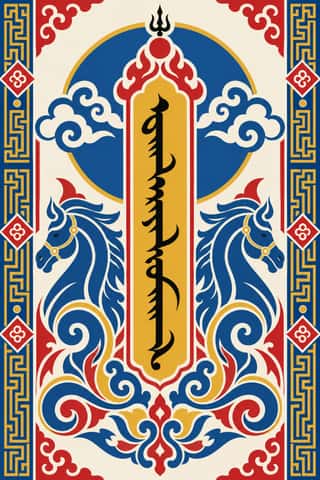
- Sápmi Graphic Identity (Duodji & Gákti Colour Code)67% alike
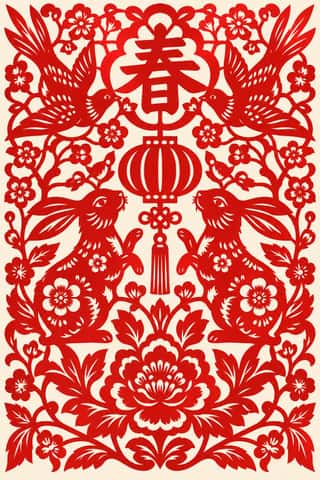
- Northwest Coast Formline Design66% alike
- Norwegian and Finnish National Romantic Graphics (Munthe & Karelianism)65% alike


05
Sources
- Wikipedia, 'Heraldry' (https://en.wikipedia.org/wiki/Heraldry)
- Wikipedia, 'Coat of arms' (https://en.wikipedia.org/wiki/Coat_of_arms)
- Wikipedia, 'Tincture (heraldry)' (https://en.wikipedia.org/wiki/Tincture_(heraldry))
- Wikipedia, 'Rule of tincture' (https://en.wikipedia.org/wiki/Rule_of_tincture)
- Wikipedia, 'Blazon' (https://en.wikipedia.org/wiki/Blazon)
- Wikipedia, 'Geoffrey Plantagenet, Count of Anjou' (https://en.wikipedia.org/wiki/Geoffrey_Plantagenet,_Count_of_Anjou)
- Wikipedia (French), 'Geoffroy V d'Anjou' (https://fr.wikipedia.org/wiki/Geoffroy_V_d'Anjou), for the dating of the enamel to c. 1155–1165, its blazon, its patron as given there (Bishop Guillaume de Passavant) and its keeping at the Carré Plantagenêt, Le Mans
- Wikipedia, 'Dering Roll' (https://en.wikipedia.org/wiki/Dering_Roll)
- Wikipedia, 'Codex Manesse' (https://en.wikipedia.org/wiki/Codex_Manesse)
- Wikipedia, 'Zürich armorial' (https://en.wikipedia.org/wiki/Z%C3%BCrich_armorial)
- Wikipedia, 'Gelre Armorial' (https://en.wikipedia.org/wiki/Gelre_Armorial)
- Wikipedia, 'Conrad Grünenberg' (https://en.wikipedia.org/wiki/Conrad_Gr%C3%BCnenberg)
- Wikipedia, 'Bartosz Paprocki' (https://en.wikipedia.org/wiki/Bartosz_Paprocki)
- Wikipedia (Polish), 'Herby rycerstwa polskiego' (https://pl.wikipedia.org/wiki/Herby_rycerstwa_polskiego), for the 1584 Kraków edition and its woodcut arms
- Wikipedia, 'Polish heraldry' (https://en.wikipedia.org/wiki/Polish_heraldry)
- Wikipedia (German), 'Siebmachers Wappenbuch' (https://de.wikipedia.org/wiki/Siebmachers_Wappenbuch), for the 1605 New Wappenbuch, its 226 plates and 3,320 arms, its tinctures marked by letters and its copper plates
- Wikipedia, 'Johann Siebmacher' (https://en.wikipedia.org/wiki/Johann_Siebmacher)
- Wikipedia, 'Silvester Petra Sancta' (https://en.wikipedia.org/wiki/Silvester_Petra_Sancta)
- Wikipedia, 'Otto Hupp' (https://en.wikipedia.org/wiki/Otto_Hupp)
- Wikipedia, 'Finnish heraldry' (https://en.wikipedia.org/wiki/Finnish_heraldry)
- Wikipedia, 'Gustaf von Numers' (https://en.wikipedia.org/wiki/Gustaf_von_Numers)
- The Heraldry Society, 'Blazoning' (https://www.theheraldrysociety.com/articles/topic/blazoning), on blazon as the written version of a coat of arms
- Wikipedia, 'Court of the Lord Lyon' (https://en.wikipedia.org/wiki/Court_of_the_Lord_Lyon)
- WIPO, 'Article 6ter of the Paris Convention' (https://www.wipo.int/article6ter/en/)
- Matthew Gabriele, 'Vikings, Crusaders, Confederates: Misunderstood Historical Imagery at the January 6 Capitol Insurrection', Perspectives on History (American Historical Association), 12 January 2021 (https://www.historians.org/perspectives-article/vikings-crusaders-confederates-misunderstood-historical-imagery-at-the-january-6-capitol-insurrection/)
- ADL, Hate Symbols Database, 'Nazi Eagle' (https://www.adl.org/resources/hate-symbol/nazi-eagle)
How Stylogeny researches and checks a style: where the facts come from.