Pictorial & machine age · 1936–1966 · Southeast Asia
Singapore–Malayan Social Woodcut Graphics
Also known as Singapore woodcut movement
A regional sub-style of the Chinese modern woodcut: black-and-white woodcuts made by Chinese-educated artists in Singapore and Malaya from the 1930s to the 1960s, printed in Chinese-language newspaper supplements and literary magazines. They moved from war-relief fundraising and the plight of the lower classes to political satire under colonial censorship, and in the 1960s toward sea, landscape and still life. Quieter and more narrative than its agitational parent, with few figures and a story that reads at first glance.
Make something in this style Get advice in this style Mix it with another style
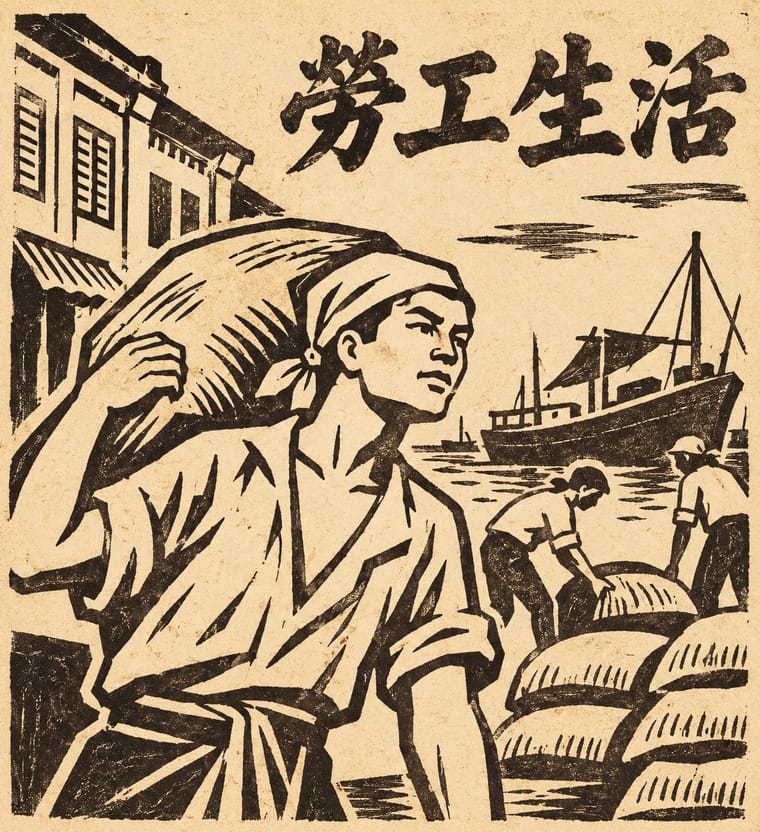
Use it with care
Rights are uncleared. Much of the work was published under colonial censorship and some artists used pseudonyms; the artists and the 1966 show (deliberately apolitical, nation-building) differed in outlook, so do not present it as one political movement.
01
Its picture in other colours
Change a colour and every picture on this page follows. It happens in your browser, from the same pictures: nothing new is made or saved.
Choose a colour to change it
-
#efe6d2 -
#141210 -
#3b3228 -
#8c7b62
A faded colour isn’t in these pictures, so changing it changes nothing.
Light and dark stay where they are; greys hardly move.
More colours: any style’s, or your own
The pictures show the style’s own colours.
02
Make something in this style
Say what you need, and Stylogeny’s image studio draws it from Singapore–Malayan Social Woodcut Graphics’s design choices and checks it against them. It takes about a minute, and you get a link to share.
03
How it works
Palette
-
#efe6d2ground · 42% -
#141210ink · 7% -
#3b3228accent · 14% -
#8c7b62accent · 23%
Shares measured from its picture. The ground is what the pictures sit on (of the colours covering most, the most neutral), the ink stands out from it most, the rest are accents.
Typefaces
-
Brush-lettered Chinese titles on newspaper supplements and magazine covers
-
Chinese characters set within the picture, as on a seascape print
- Carve the image in opposed black and white, letting the cut line carry form and shadow.
- Take the subject from local life: the plight of the lower classes, war relief, post-war political satire, then sea, landscape, bridges and still life.
- Fit the print to the page as a newspaper supplement illustration or literary magazine cover.
- Build the scene from bold, simple shapes and a few figures with emphatic contours, so the story reads clearly at first glance.
- Print in oil-based black ink on mulberry paper, and keep the carved texture visible.
Chinese-language newspapers, literary magazines and art-school networks in Singapore and Malaya
Change it with an idea. Any of the 73 moves that make a design say something can go on this style.
04
Its design choices
From Stylogeny’s vocabulary of design choices: defining choices make the style, characteristic ones are usual, occasional ones turn up now and then.
- Layout & composition
- Space & hierarchy
- Form & shape
- Surface & texture
- Ornament
- Imagery
- Medium & production
- Tone & intent
- Avoids
- Gradients, Fluorescent & neon, Straight photography, Gloss & highlights, Ornamented display, Luxurious & glamorous, Central symmetry
How its pictures are made Drawn & painted
Kind of picture: Drawn & painted
Known for
-
Tai In Long, Flee, reproduced in Nanyang Siang Pao, 7 June 1936
-
Cai Bing, woodcut in Shi Dai Bao, 1 April 1956
-
Cheong Soo Pieng, woodcut in Jiao Feng, 10 April 1958
-
Woodcuts exhibition, National Library, Singapore, 1966
95 prints; Choo Keng Kwang, Lim Mu Hue, Tan Tee Chie and others
-
Tan Tee Chie, Selected Woodcuts (Nanyang Academy of Fine Arts, 1975), a later retrospective outside the period
05
Where it comes from, and what it’s close to
Grew out of
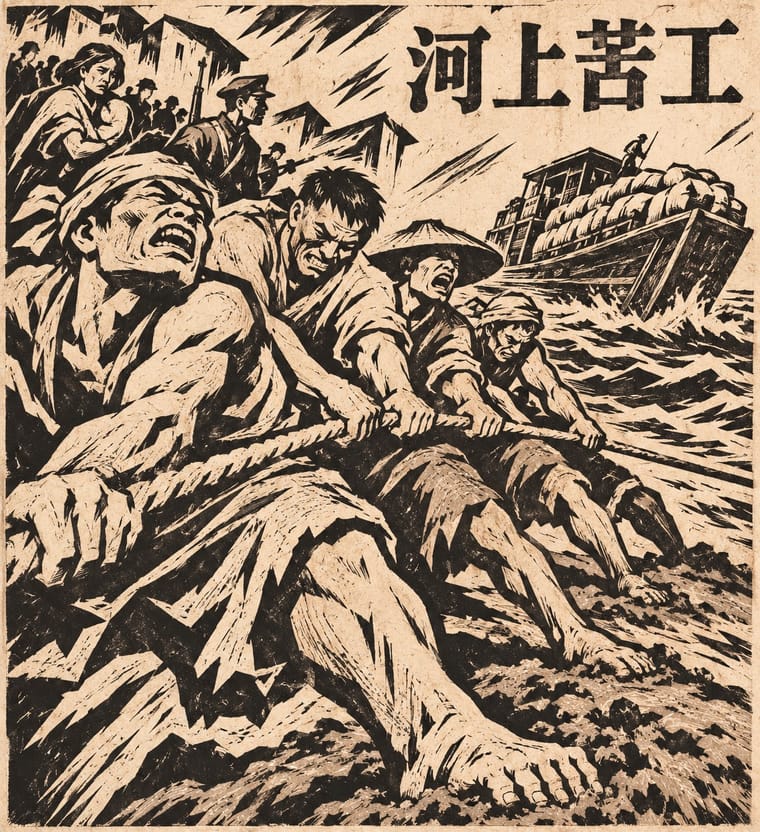
Singapore–Malayan Social Woodcut Graphics 1936–1966
No later style in the atlas grew out of it yet.
Alike in its design choices
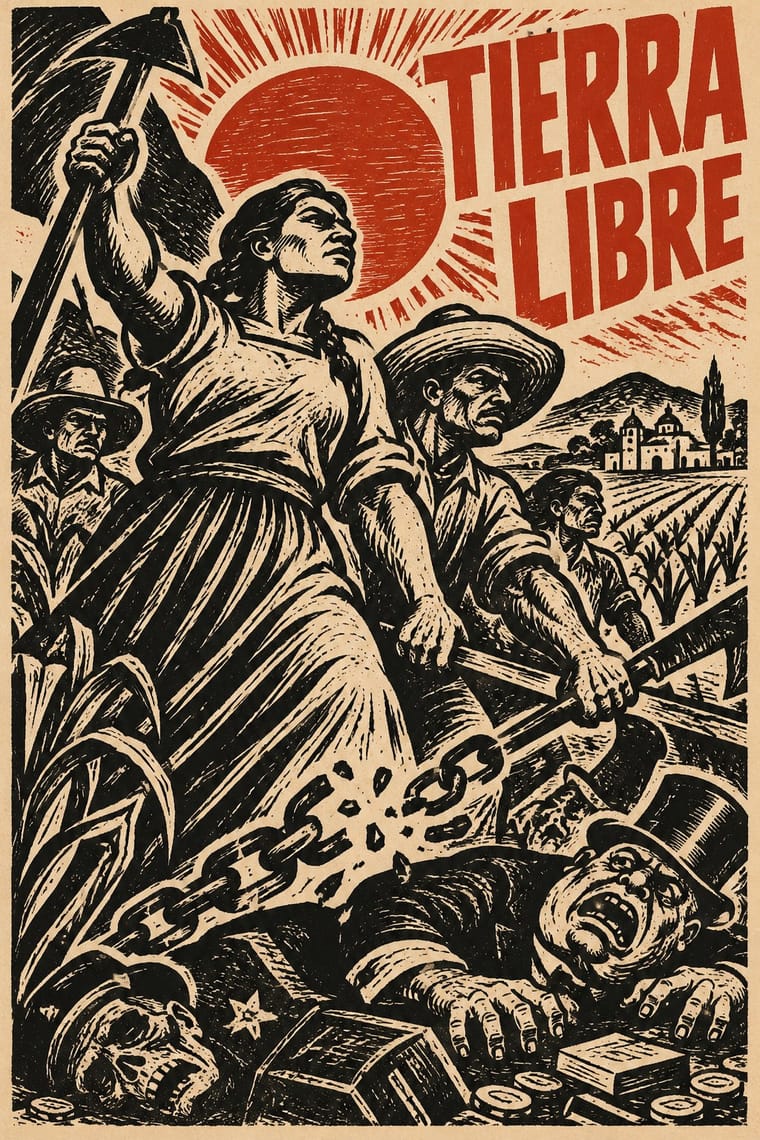
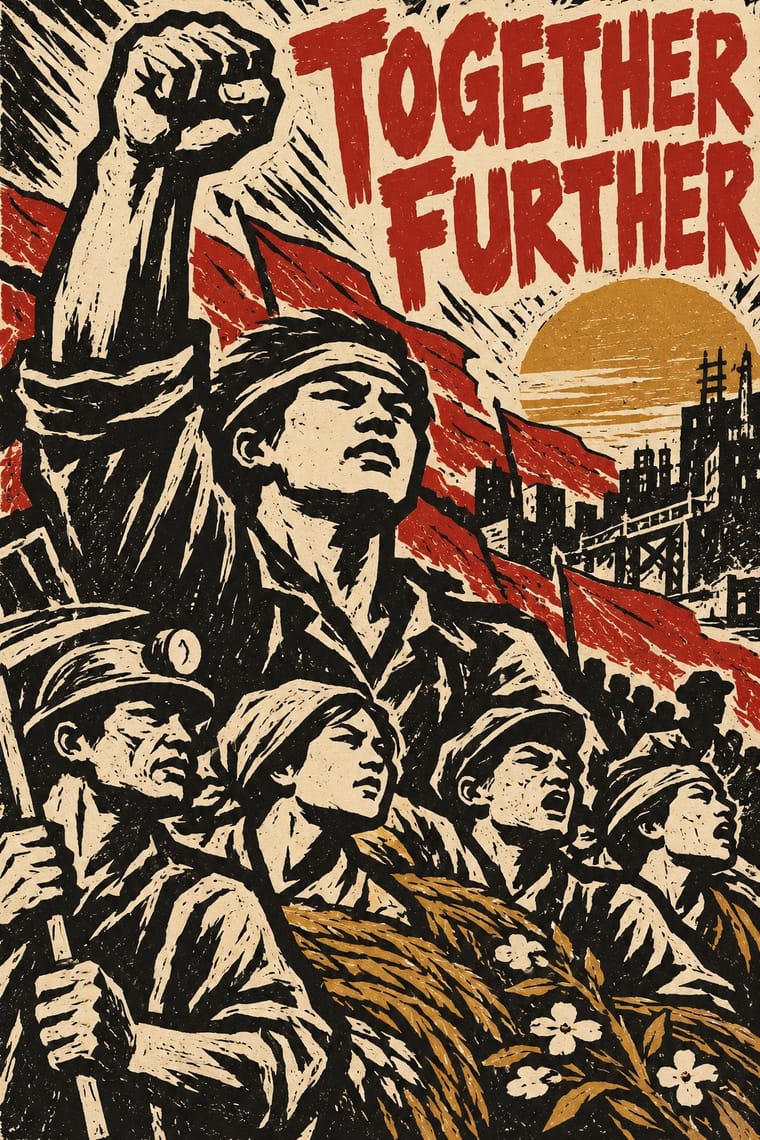
06
Combine it with
Styles Singapore–Malayan Social Woodcut Graphics pairs well with or plays against, from the research. Each is worked out as a combination: which style gives the type, the colours and the forms.
- Chinese Modern Woodcut Movement Pairs well · Start from the mainland movement's carved contrast, then move the subject to Malayan labour, coast and street.
- Ukiyo-e Woodblock Prints Contrasts · Colour woodblock refinement against black-and-white social carving: a strong tension in a series of covers.
07
Often taken for
Singapore–Malayan Social Woodcut Graphics has no real works recorded yet, so these are its nearest styles by its choices alone, with the choices that tell them apart.
-
Chinese Modern Woodcut Movement
1 of Chinese Modern Woodcut Movement’s 4 real works fits Singapore–Malayan Social Woodcut Graphics’s choices better than its own: Production in the Eighth Road Army.
Choices that tell Singapore–Malayan Social Woodcut Graphics and Chinese Modern Woodcut Movement apart Choice Singapore–Malayan Social Woodcut Graphics Chinese Modern Woodcut Movement Flat fields characteristic — Diagonal axis — defining Restrained accents characteristic — Visual tension — defining Warm & approachable characteristic — Singapore–Malayan Social Woodcut Graphics descends from Chinese Modern Woodcut Movement: a shared line, so the likeness is inherited.
-
Ukiyo-e Woodblock Prints
1 of Ukiyo-e Woodblock Prints’s 6 real works fits Singapore–Malayan Social Woodcut Graphics’s choices as well as its own: Street Scene in Yoshiwara.
Choices that tell Singapore–Malayan Social Woodcut Graphics and Ukiyo-e Woodblock Prints apart Choice Singapore–Malayan Social Woodcut Graphics Ukiyo-e Woodblock Prints Monochrome defining occasional Gradients avoids characteristic Hand-lettering characteristic — Diagonal axis — defining Letterpress characteristic — No shared descent in the atlas: they reached these choices separately.
-
Taller de Gráfica Popular
Taller de Gráfica Popular is one of Singapore–Malayan Social Woodcut Graphics’s nearest styles by choices; no real work of either fits the other better.
Choices that tell Singapore–Malayan Social Woodcut Graphics and Taller de Gráfica Popular apart Choice Singapore–Malayan Social Woodcut Graphics Taller de Gráfica Popular Flat fields characteristic — Limited spot colours — characteristic Diagonal axis — characteristic Folk & sacred symbols — characteristic All caps — characteristic No shared descent in the atlas: they reached these choices separately.
-
Minjung Woodcut Graphics (Korean People's Art)
Minjung Woodcut Graphics is one of Singapore–Malayan Social Woodcut Graphics’s nearest styles by choices; no real work of either fits the other better.
Choices that tell Singapore–Malayan Social Woodcut Graphics and Minjung Woodcut Graphics apart Choice Singapore–Malayan Social Woodcut Graphics Minjung Woodcut Graphics Letterpress characteristic — Central symmetry avoids occasional Limited spot colours — characteristic Full bleed — characteristic Folk & sacred symbols — characteristic Both descend from Chinese Modern Woodcut Movement in the family tree.
— means the choice isn’t among the style’s recorded choices. Critics recorded each work’s choices with the styles’ descriptions in view, so this shows whether the descriptions hold together, not proof that they are right.
08
Sources
- BiblioAsia (National Library Board Singapore), Vol. 2 Issue 3, Oct 2006, 'Singapore history: woodcuts': https://biblioasia.nlb.gov.sg/all-sections/vol-2-issue3-oct-2006-singapore-history-woodcuts/
- NAFA Institute of Southeast Asian Art, artist page 'Lim Yew Kuan' (Equator Art Society, social realism, 1966 National Library woodcut show): https://iseaa.nafa.edu.sg/resources/collections/artist/lim-yew-kuan
How Stylogeny researches and checks a style: where the facts come from.