Traditions & vernacular · 1598–1660 · Northern Europe, Central Europe, Western Europe
Auricular Ornament ( Lobate Style )
Also known as Auricular style, Lobate style, Cartilage baroque, Kwabornament, Knorpelwerk
A northern European ornamental style of the early 17th century whose soft, abstract relief forms resemble molten metal or the folds of an ear. Born in ornament books and perfected in Utrecht silver, it travelled through prints, picture frames and cartouches, dissolving Renaissance strapwork into fluid lobes.
Make something in this style Get advice in this style Mix it with another style
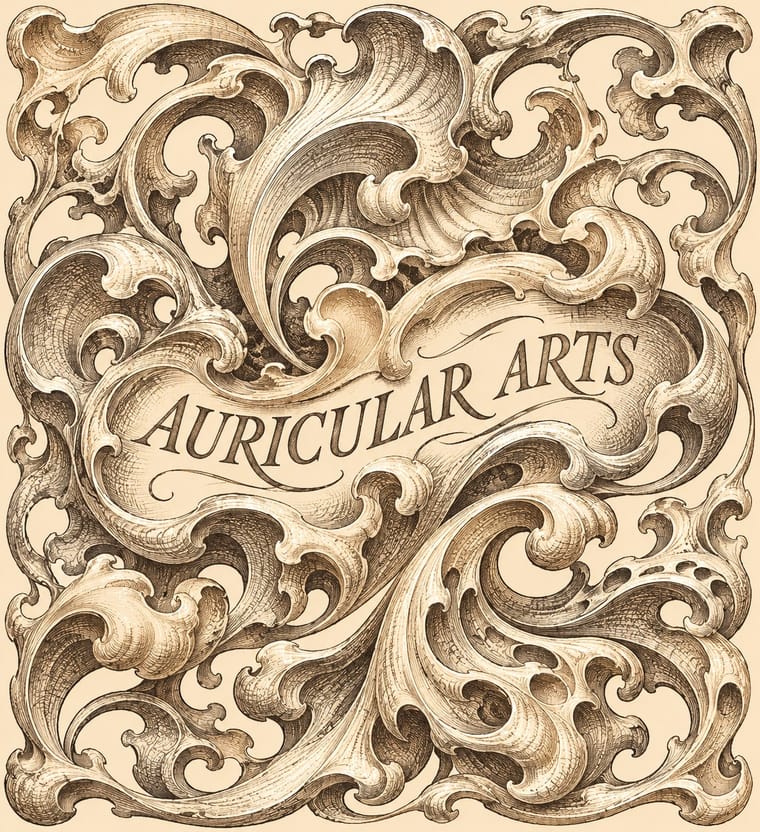
01
Its picture in other colours
Change a colour and every picture on this page follows. It happens in your browser, from the same pictures: nothing new is made or saved.
Choose a colour to change it
-
#efe6d2 -
#2a2420 -
#7d6a4f -
#b8a27a -
#8c8c86
A faded colour isn’t in these pictures, so changing it changes nothing.
Light and dark stay where they are; greys hardly move.
More colours: any style’s, or your own
The pictures show the style’s own colours.
02
Make something in this style
Say what you need, and Stylogeny’s image studio draws it from Auricular Ornament (Lobate Style)’s design choices and checks it against them. It takes about a minute, and you get a link to share.
03
How it works
Palette
-
#efe6d2ground · 31% -
#2a2420not in its pictures -
#7d6a4fink · 14% -
#b8a27aaccent · 29% -
#8c8c86accent · 23%
Shares measured from its picture. The ground is what the pictures sit on (of the colours covering most, the most neutral), the ink stands out from it most, the rest are accents.
Typefaces
-
Roman and italic types of Dutch and German printers
-
Engraved roman capitals on cartouches
-
Chancery italic engraved lettering
- Dissolve every strap, border and frame into soft, flowing lobes with no straight edge.
- Keep the form abstract and asymmetrical, hinting at masks, shells or sea creatures without resolving them.
- Model the shape as relief in shaded engraving so it reads as chased, molten metal.
- Wrap the ornament around the content, as a cartouche, frame or handle, rather than setting it beside it.
- Fill the field densely and let the curves swell and recede like cartilage.
Netherlands and Germany: first seen in the 1598 combined edition of Wendel Dietterlin's Architectura (Stuttgart), worked into silver by the Utrecht silversmiths Paul and Adam van Vianen
Change it with an idea. Any of the 73 moves that make a design say something can go on this style.
04
Its design choices
From Stylogeny’s vocabulary of design choices: defining choices make the style, characteristic ones are usual, occasional ones turn up now and then.
- Layout & composition
- Space & hierarchy
- Typography
- Form & shape
- Surface & texture
- Medium & production
- Tone & intent
- Avoids
- Modular grid, Rectilinear, Angular & zigzag, Ornament-free, Restrained accents, Floral & vegetal, Flat
How its pictures are made Drawn & painted
Kind of picture: Drawn & painted
Known for
-
Wendel Dietterlin, Architectura
combined 1598 edition
-
Paul van Vianen, Diana and Actaeon bowl
1613, Rijksmuseum
-
Adam van Vianen, memorial ewer
1614, Rijksmuseum
-
Christian van Vianen, Dolphin Basin
1635, Victoria and Albert Museum
05
Where it comes from, and what it’s close to
Grew out of
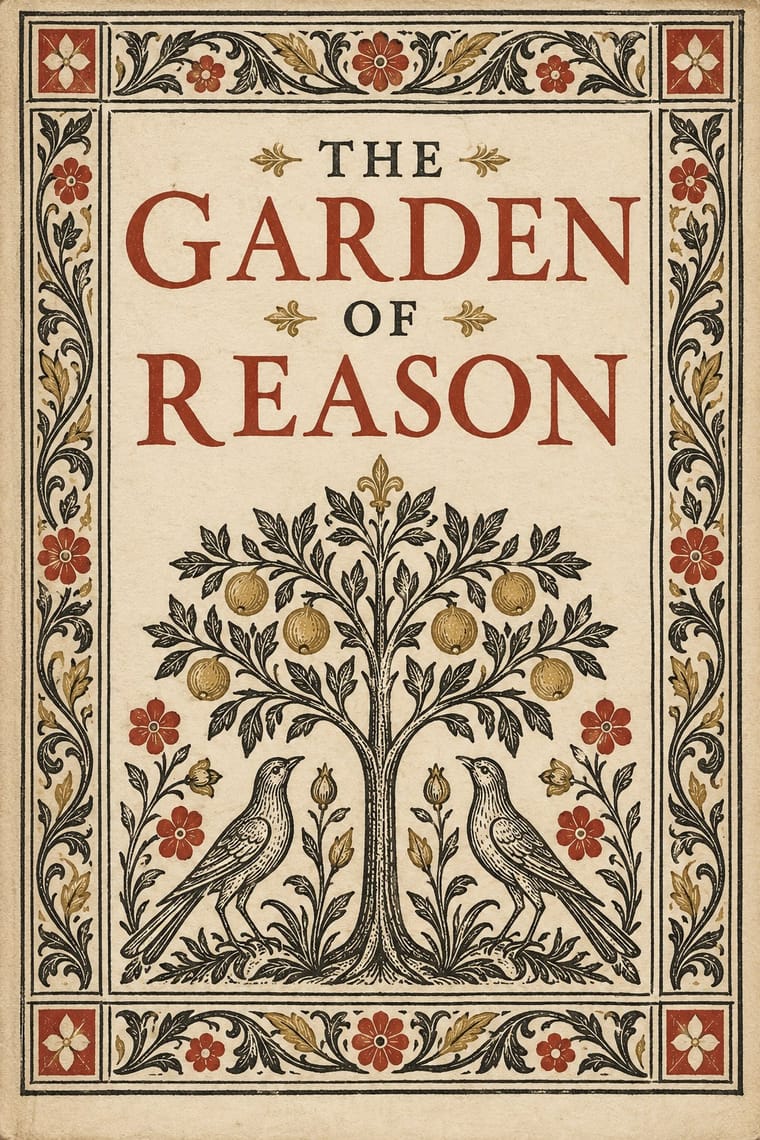
Auricular Ornament (Lobate Style) 1598–1660
No later style in the atlas grew out of it yet.
Alike in its design choices

06
Combine it with
Styles Auricular Ornament (Lobate Style) pairs well with or plays against, from the research. Each is worked out as a combination: which style gives the type, the colours and the forms.
07
Often taken for
Stylogeny checks the choices recorded in each of Auricular Ornament’s 4 real works against all 702 styles. All 4 fit its own choices best, so these are its nearest styles by choices, with the choices that tell them apart.
-
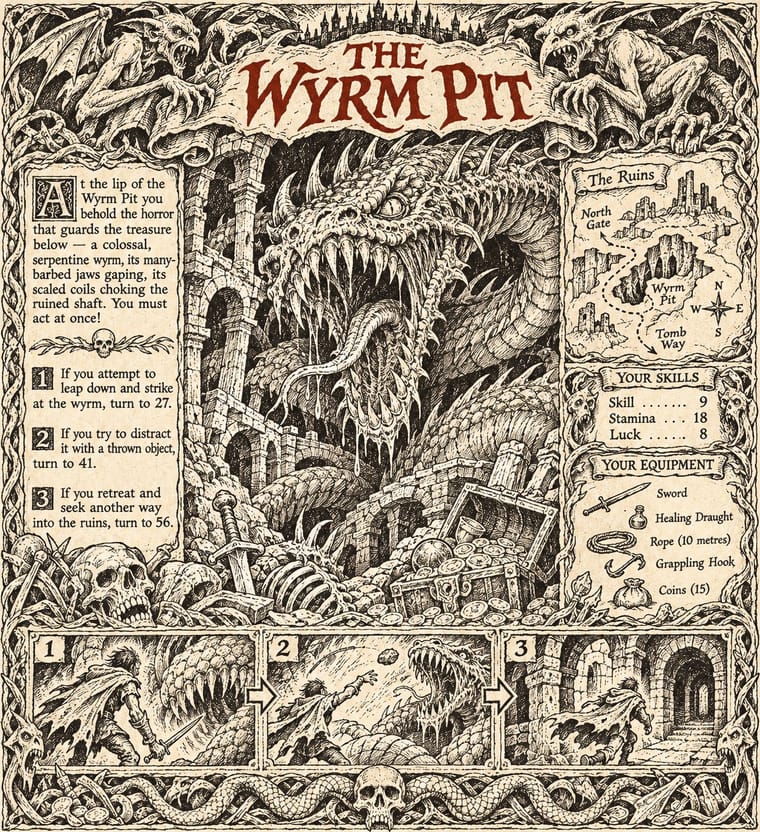
Fighting Fantasy Gamebook Illustration
Fighting Fantasy Gamebook Illustration is one of Auricular Ornament’s nearest styles by choices; no real work of either fits the other better.
Choices that tell Auricular Ornament and Fighting Fantasy Gamebook Illustration apart Choice Auricular Ornament Fighting Fantasy Gamebook Illustration Non-representational defining — Restrained accents avoids occasional Biomorphic curves defining — Distortion & exaggeration occasional defining Whiplash line defining — No shared descent in the atlas: they reached these choices separately.
-
Steampunk Graphics
Steampunk Graphics is one of Auricular Ornament’s nearest styles by choices; no real work of either fits the other better.
Choices that tell Auricular Ornament and Steampunk Graphics apart Choice Auricular Ornament Steampunk Graphics Non-representational defining — Earth & mineral — defining Biomorphic curves defining — Ornamented display — defining Whiplash line defining — Both descend from Renaissance Book Typography in the family tree.
-
Insular Gospel-Book Illumination
Insular Gospel-Book Illumination is one of Auricular Ornament’s nearest styles by choices; no real work of either fits the other better.
Choices that tell Auricular Ornament and Insular Gospel-Book Illumination apart Choice Auricular Ornament Insular Gospel-Book Illumination Monochrome defining — Flat avoids characteristic Biomorphic curves defining — Flat fields — defining Organic flow defining — No shared descent in the atlas: they reached these choices separately.
-
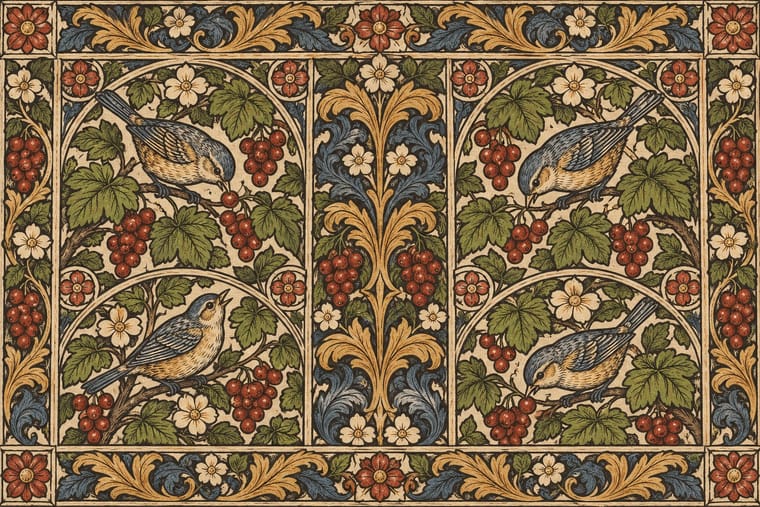
Arts & Crafts Movement
Arts & Crafts Movement is one of Auricular Ornament’s nearest styles by choices; no real work of either fits the other better.
Choices that tell Auricular Ornament and Arts apart Choice Auricular Ornament Arts Non-representational defining — Floral & vegetal avoids defining Whiplash line defining — Carved line — defining Organic flow defining — Both descend from Renaissance Book Typography in the family tree.
— means the choice isn’t among the style’s recorded choices. Critics recorded each work’s choices with the styles’ descriptions in view, so this shows whether the descriptions hold together, not proof that they are right.
08
Real works
Artefacts in museums, libraries and archives that show the style, linked at their source.
- Auricular Cartouche with the Painter Hans von Aachen, the Goldsmith Paulus van Vianen, and the Sculptor Adriaen de Vries Jacob Lutma, after Johannes Lutma the Elder; published by Jacob Lutma · ca. 1653 · The Metropolitan Museum of Art
- Plate 9, from Verscheyde Constige Vindigen om in Gout, Silver, Hout en Steen te wercken Michiel Mosyn, after Gerbrand van den Eeckhout and Johannes Lutma the Elder; published by Cornelis Danckertsz. I · ca. 1651–53 · The Metropolitan Museum of Art
- Veelderhande Niewe Compartimente (Titlepage in Dutch) Michiel Mosyn, after Gerbrand van den Eeckhout; published by Clement de Jonghe · ca. 1650–74 · The Metropolitan Museum of Art
- Plate 27, from Modelli Artificiosi (...), parte seconda Theodor van Kessel, after Adam van Vianen I; published by Christiaen van Vianen · 1646–52 · The Metropolitan Museum of Art
09
Sources
- https://en.wikipedia.org/wiki/Auricular_style
- https://en.wikipedia.org/wiki/Adam_van_Vianen
- James Trilling, The Language of Ornament (2001)
How Stylogeny researches and checks a style: where the facts come from.