Pictorial & machine age · 2003–present · East Asia, Global / networked
Light Novel Cover Illustration
Also known as Light novel covers (ライトノベル), Ranobe covers, Bunko anime-style cover art
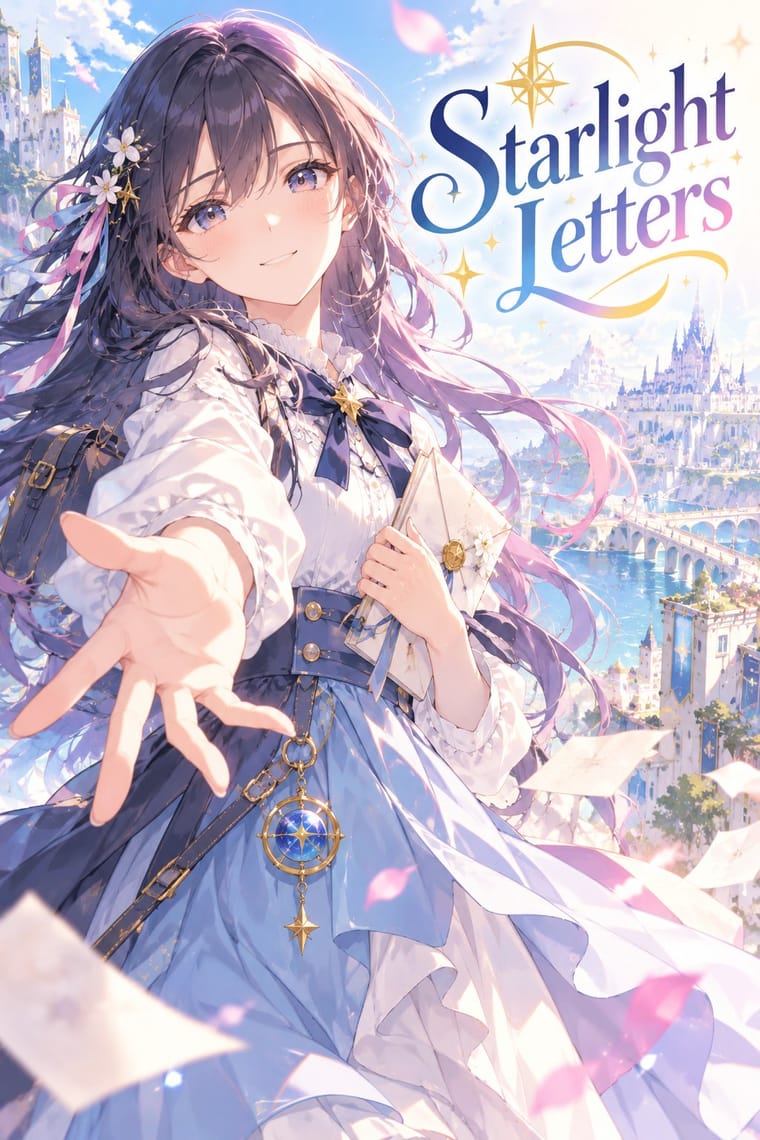
The cover of the Japanese light novel, a prose paperback sold as much by its illustrator as by its author: one or two anime-style characters, usually a heroine, digitally painted with large eyes, cel-shaded hair and soft glow, against a pale or softly painted ground, under a designed title logo that mixes Japanese lettering with Latin or katakana subtitles. A paper band (obi) with sales copy wraps the lower cover, black-and-white illustrations interrupt the text, and colour plates often open the book. The idiom set with Haruhi Suzumiya (2003) and A Certain Magical Index (2004).
Make something in this style Get advice in this style Mix it with another style
Use it with care
Many covers sexualise heroines who look young; in generated images depict characters as clearly adult and avoid fan-service poses.
01
How it works
- Sell the book with one character: put a single heroine, or at most a pair, at full or three-quarter length in the centre, looking out at the reader, so the cover reads as a portrait on the shelf and as a thumbnail online.
- Paint the figure in anime colouring: clean line, cel-shaded hair and skin with hard-edged shadow steps, then soft gradients, rim light and glow over them for a glossy finish.
- Keep the ground light or softly painted (white, sky, a blurred setting) so the figure separates from it, and let a few sparkles, petals or light flares be the only ornament.
- Design the title as a logo, not as set type: Japanese lettering combined with a Latin or katakana subtitle, coloured and outlined to sit over the picture, with the volume number and the label's mark kept the same on every volume of the series; wrap the lower cover in a paper band (obi) with sales copy, a second layer of text over the portrait, and let later titles grow into whole sentences.
- Credit the illustrator beside the author and carry the drawing inside: black-and-white illustrations between chapters, often colour plates (kuchi-e) at the front.
Japan: prose paperbacks in the A6 bunkobon format from labels such as Kadokawa Sneaker Bunko and MediaWorks' (later ASCII Media Works') Dengeki Bunko, illustrated by manga and anime-style illustrators. The term 'light novel' was coined in 1990 by Keita Kamikita, sysop of the SF and fantasy forum on Nifty-Serve; Sonorama Bunko (1975) is one proposed beginning, and Japanese Wikipedia dates the turn to anime-style painted illustration to the early 1990s and Rui Araizumi's Slayers. The cover idiom set around The Melancholy of Haruhi Suzumiya (2003, Noizi Ito) and A Certain Magical Index (2004, Kiyotaka Haimura), and the market boomed around 2006. English editions by Yen Press and Seven Seas carry the Japanese art abroad. The period starts with the digitally painted heroine portrait of Haruhi and the boom that followed it; the anime-painted covers from Slayers (1990) on are its forerunners. Start date approximate
02
Its design choices
From Stylogeny’s vocabulary of design choices: defining choices make the style, characteristic ones are usual, occasional ones turn up now and then.
- Layout & composition
- Space & hierarchy
- Typography
- Colour
- Surface & texture
- Ornament
- Medium & production
- Tone & intent
- Avoids
- Straight photography, Typography only, Non-representational, Photocopy & distress, Horror vacui, Modular grid, Rational & objective, Agitational & persuasive
Palette
-
#fbfaf7 -
#8fc8f0 -
#f6a5c0 -
#b9a8e6 -
#f2c94c -
#1d2340
Typefaces
-
Custom title logos drawn for each series, combining kanji and kana with a Latin or katakana subtitle, outlined or shadowed to sit over the illustration
-
The plain body type of the bunkobon pages, which the illustrations interrupt
-
Gothic (sans) series lettering for author, illustrator and volume number on the cover and label-coloured spine
Known for
-
Nagaru Tanigawa and Noizi Ito, The Melancholy of Haruhi Suzumiya (Kadokawa Sneaker Bunko, from 6 June 2003); the first volume's cover shows the title character
-
Kazuma Kamachi and Kiyotaka Haimura, A Certain Magical Index
Dengeki Bunko, MediaWorks, from 10 April 2004
-
Reki Kawahara and abec, Sword Art Online
Dengeki Bunko, ASCII Media Works, from 10 April 2009
-
Tsukasa Fushimi and Hiro Kanzaki, Oreimo (Ore no Imōto ga Konna ni Kawaii Wake ga Nai, 'My Little Sister Can't Be This Cute'; Dengeki Bunko, from 10 August 2008), a title that is a whole sentence
-
English editions of A Certain Magical Index (Yen On, from 2014) and Sword Art Online (Yen Press, from 2014, credited to illustrator abec), carrying the Japanese illustrators' art abroad
03
Make something in this style
Say what you need, and Stylogeny’s image studio draws it from Light Novel Cover Illustration’s design choices and checks it against them. It takes about a minute, and you get a link to share.
04
Where it comes from, and what it’s close to
Before it
The style it grew out of, and the styles it borrowed from.
After it
The styles that grew out of it.
No later style in the atlas grew out of it yet.
Alike in its design choices
Styles that make many of the same choices, related or not, besides those above.
05
Often taken for
Light Novel Cover Illustration has no real works recorded yet, so these are its nearest styles by its choices alone, with the choices that tell them apart.
-
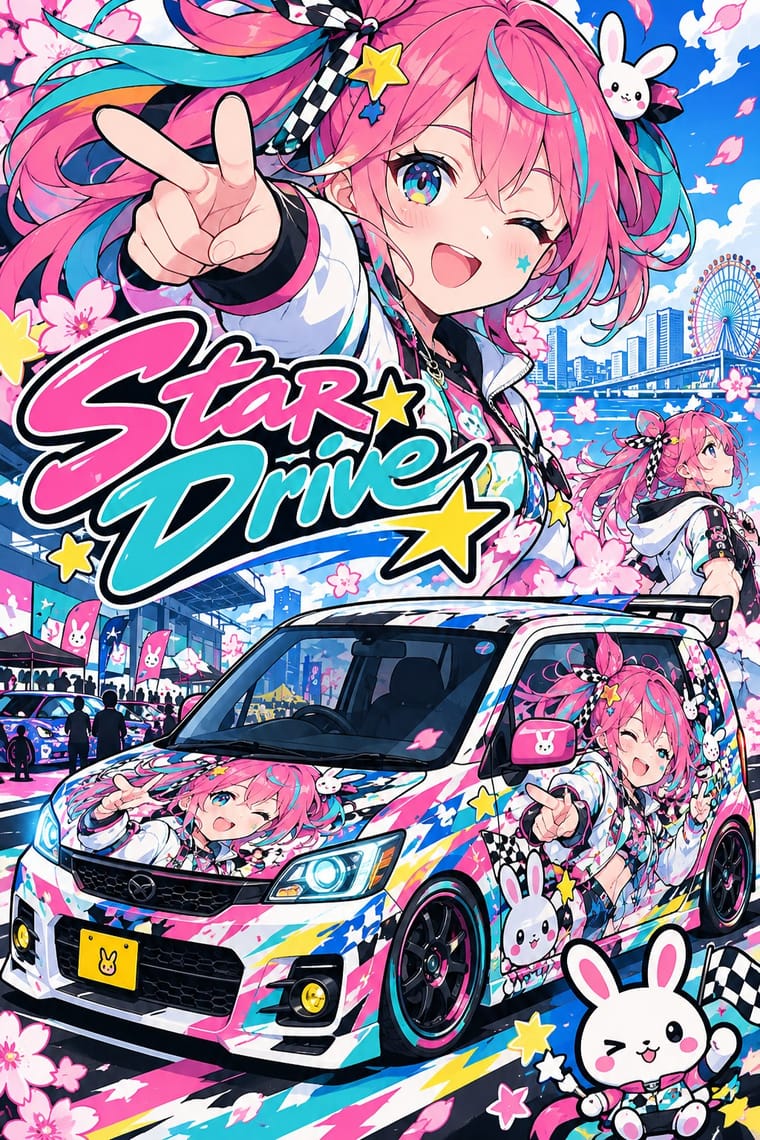
Itasha (Anime Character Car Graphics)
Itasha is one of Light Novel Cover Illustration’s nearest styles by choices; no real work of either fits the other better.
Choices that tell Light Novel Cover Illustration and Itasha apart Choice Light Novel Cover Illustration Itasha Painterly illustration defining occasional Horror vacui avoids occasional Light ground characteristic — Found & vernacular imagery — characteristic Pastel characteristic — No shared descent in the atlas: they reached these choices separately.
-
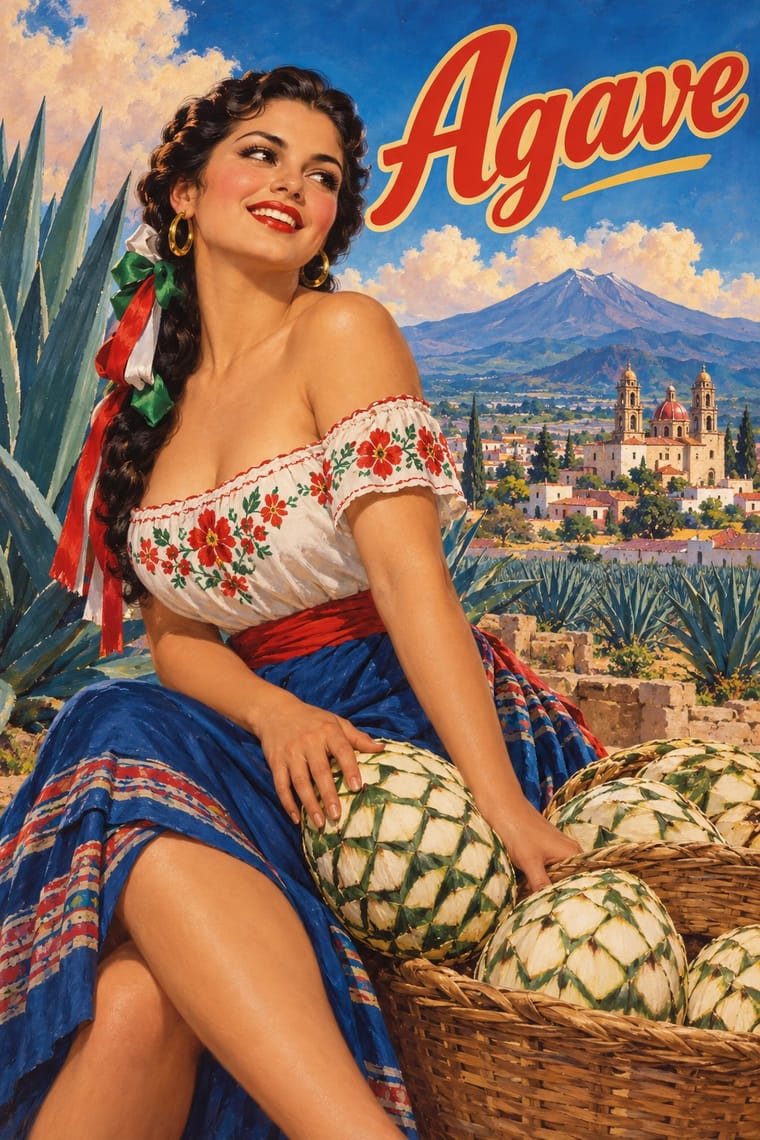
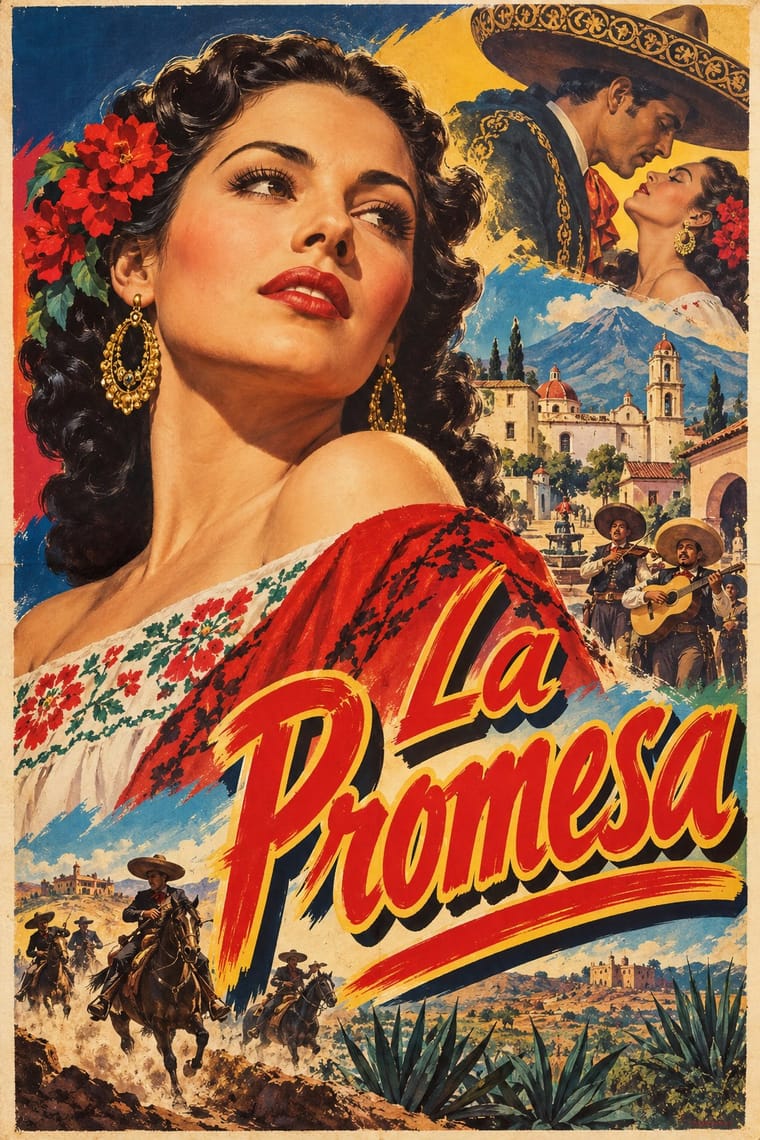
Mexican Calendar Chromo (Cromos calendáricos)
Mexican Calendar Chromo is one of Light Novel Cover Illustration’s nearest styles by choices; no real work of either fits the other better.
Choices that tell Light Novel Cover Illustration and Mexican Calendar Chromo apart Choice Light Novel Cover Illustration Mexican Calendar Chromo Stylised figuration defining — Naturalistic depiction occasional defining Comic & cartoon defining — Lithography — characteristic Type as image occasional avoids No shared descent in the atlas: they reached these choices separately.
-
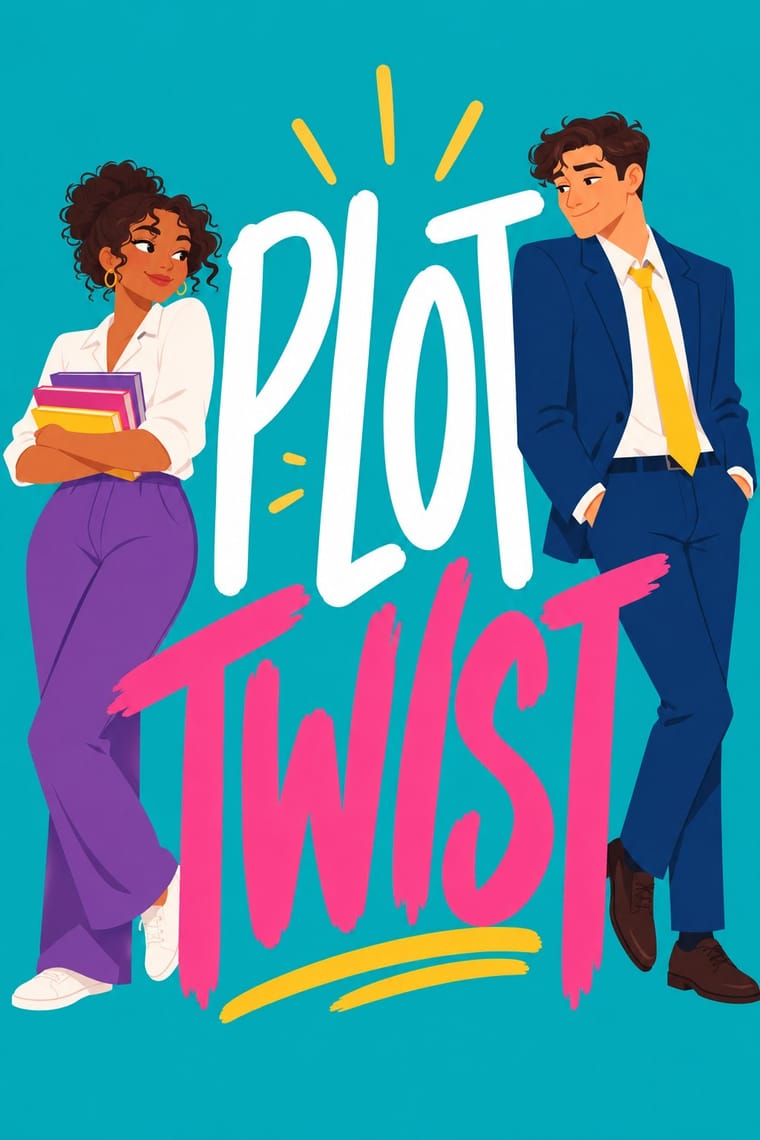
Illustrated Rom-Com Book Cover (Cartoon Couple Cover)
Illustrated Rom-Com Book Cover is one of Light Novel Cover Illustration’s nearest styles by choices; no real work of either fits the other better.
Choices that tell Light Novel Cover Illustration and Illustrated Rom-Com Book Cover apart Choice Light Novel Cover Illustration Illustrated Rom-Com Book Cover Gradients defining — Flat fields — defining Ornamented display defining — Flat vector illustration — defining Naturalistic depiction occasional avoids No shared descent in the atlas: they reached these choices separately.
-
VTuber Avatar and Stream Graphics
VTuber Avatar and Stream Graphics is one of Light Novel Cover Illustration’s nearest styles by choices; no real work of either fits the other better.
Choices that tell Light Novel Cover Illustration and VTuber Avatar and Stream Graphics apart Choice Light Novel Cover Illustration VTuber Avatar and Stream Graphics Ornamented display defining — Horror vacui avoids occasional Light ground characteristic — 3D render — characteristic Line illustration characteristic — No shared descent in the atlas: they reached these choices separately.
— means the choice isn’t among the style’s recorded choices. Critics recorded each work’s choices with the styles’ descriptions in view, so this shows whether the descriptions hold together, not proof that they are right.
06
Combine it with
Styles Light Novel Cover Illustration pairs well with or plays against, from the research. Each is worked out as a combination: which style gives the type, the colours and the forms.
- Illustrated Rom-Com Book Cover (Cartoon Couple Cover) Contrasts · Both sell prose with a drawn cover, but the rom-com flattens faceless figures on a saturated ground where the light novel paints one detailed, glossy character on a pale one.
- VTuber Avatar and Stream Graphics Pairs well · The same anime idiom moved onto live avatars; borrow its outlined name logos for a series mark, keep the cover's single still portrait.
- Superflat Contrasts · Murakami's fine-art quotation of the same otaku idiom, flattened and ironic, where the cover sells a book sincerely.
- Itasha (Anime Character Car Graphics) Pairs well · Fans put light-novel heroines and title logos on cars; the cover art is a source the car graphics quote.
- Penguin Paperback Design (Three Bands to the Marber Grid) Contrasts · A paperback sold by its series grid and typography alone; set beside it, the light novel shows how much the illustrator carries.
07
Sources
- https://en.wikipedia.org/wiki/Light_novel
- https://ja.wikipedia.org/wiki/ライトノベル
- https://en.wikipedia.org/wiki/Haruhi_Suzumiya
- https://en.wikipedia.org/wiki/A_Certain_Magical_Index
- https://en.wikipedia.org/wiki/Sword_Art_Online
- https://en.wikipedia.org/wiki/Oreimo
- https://ja.wikipedia.org/wiki/帯_(出版)
- https://ja.wikipedia.org/wiki/口絵
- https://en.wikipedia.org/wiki/Superflat
How Stylogeny researches and checks a style: where the facts come from.