Postmodern · 2007–present · Global / networked, North America
Sketchnoting and Graphic Recording
Also known as Sketchnotes, Visual note-taking, Graphic recording, Doodle notes
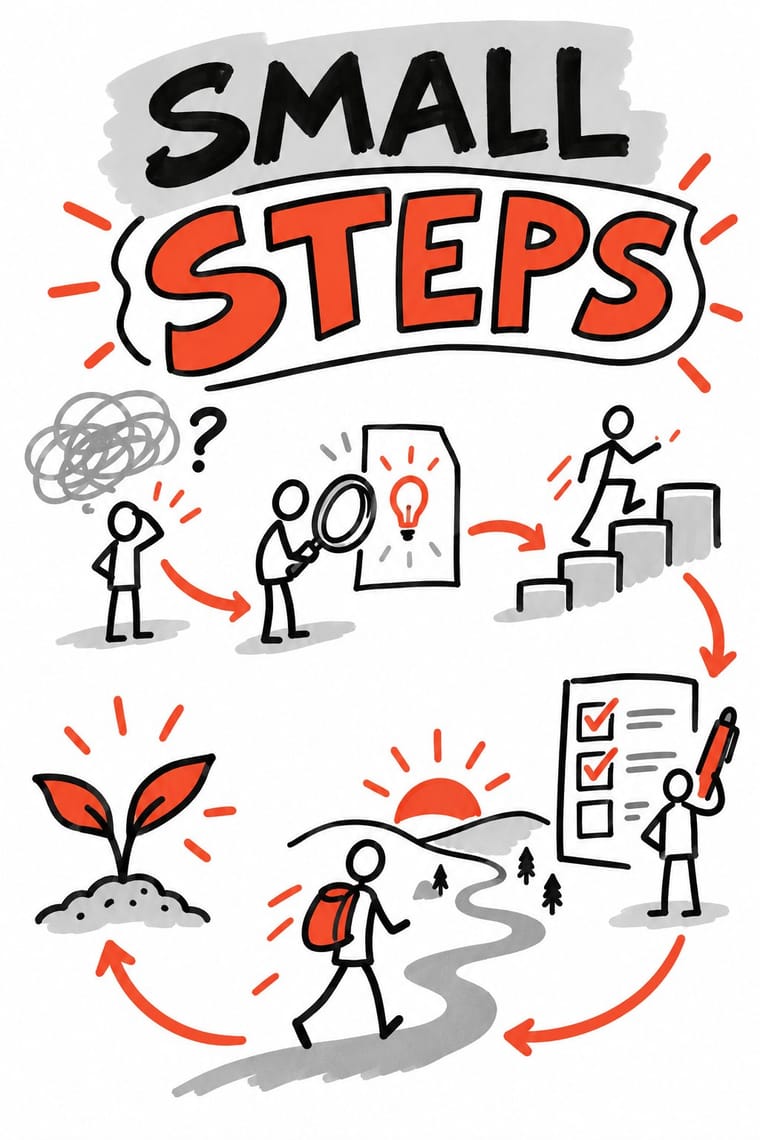
Notes of a talk, book or meeting drawn live by hand on a single page, mixing hand-lettered headings, simple icons, containers and connectors. Scope: this entry treats personal sketchnoting and professional graphic recording as one practice, though graphic facilitation is older than the term. Clarity matters more than aesthetics.
Make something in this style Get advice in this style Mix it with another style
01
How it works
- Draw the notes live while listening, and capture ideas rather than a transcript.
- Letter titles and key phrases by hand in bold capitals and box them in banners, bubbles and frames.
- Carry ideas with improvised icons, stick people and metaphor objects instead of finished illustration.
- Tie the page together with arrows and connectors in a linear, radial, column or path-like flow.
- Keep to black line with one accent colour and grey shading on a white ground.
United States: the designer Mike Rohde began calling his notes mixing handwriting and drawing sketchnotes in 2006-2007 (Wikipedia gives 2006; Rohde's own site says he coined the term in 2007), and spread it through The Sketchnote Handbook (2012) and The Sketchnote Workbook (2014). It builds on the older practice of graphic facilitation and graphic recording at meetings and conferences, which predates 2006.
02
Its design choices
From Stylogeny’s vocabulary of design choices: defining choices make the style, characteristic ones are usual, occasional ones turn up now and then.
- Layout & composition
- Space & hierarchy
- Colour
- Form & shape
- Surface & texture
- Medium & production
- Tone & intent
- Avoids
- Abundant decoration, Straight photography, 3D render, Gloss & highlights, Skeuomorphic material, Modular grid, Script, Geometric sans
Palette
-
#ffffff -
#1a1a1a -
#e8452c -
#9a9a9a -
#d8d8d8
Typefaces
-
Hand-lettered bold capitals
-
Faux-bold outlined lettering
-
Informal printing-style handwriting
Known for
-
Mike Rohde, The Sketchnote Handbook
Peachpit Press, 2012
-
Mike Rohde, The Sketchnote Workbook
Peachpit Press, 2014
-
Sunni Brown, The Doodle Revolution
Unlock the Power to Think Differently
03
Make something in this style
Say what you need, and Stylogeny’s image studio draws it from Sketchnoting and Graphic Recording’s design choices and checks it against them. It takes about a minute, and you get a link to share.
04
Where it comes from, and what it’s close to
Before it
The style it grew out of, and the styles it borrowed from.
After it
The styles that grew out of it.
No later style in the atlas grew out of it yet.
Alike in its design choices
Styles that make many of the same choices, related or not, besides those above.
-
-
- Moomin Graphics (Tove Jansson's Pen-Drawn World and its Licensed Afterlife) 54% alike
-
-
-
05
Often taken for
Sketchnoting and Graphic Recording has no real works recorded yet, so these are its nearest styles by its choices alone, with the choices that tell them apart.
-
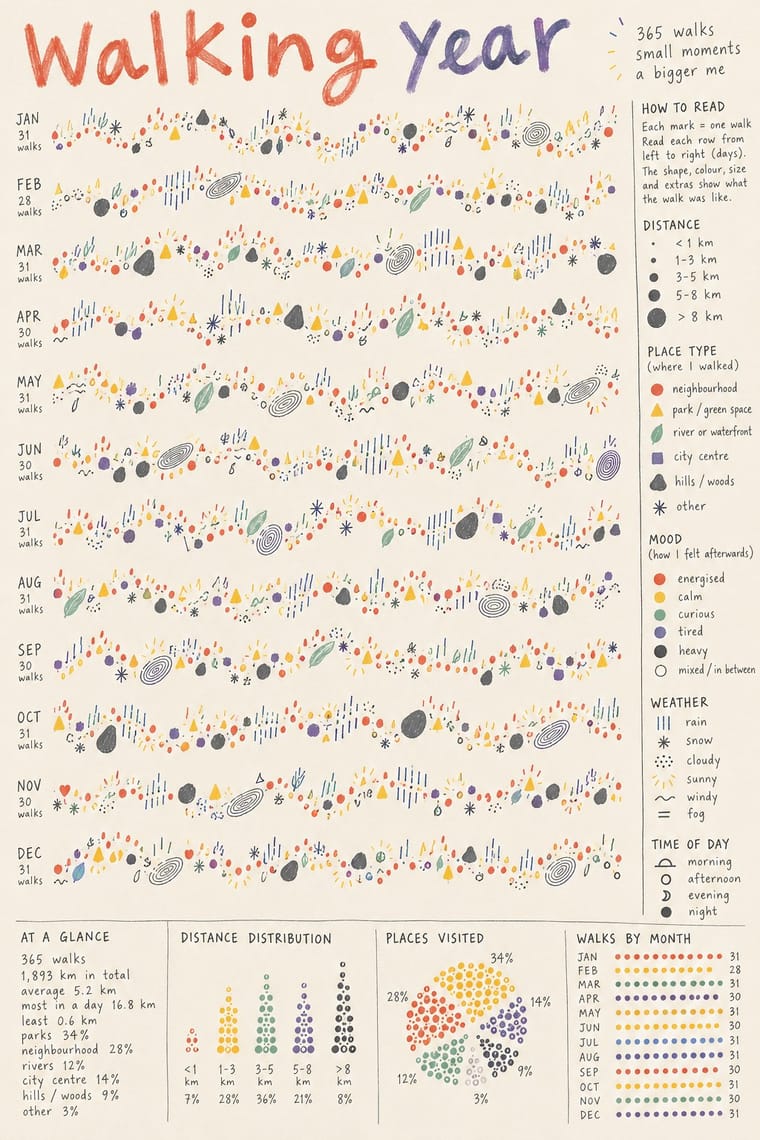
Data Humanism
Data Humanism is one of Sketchnoting and Graphic Recording’s nearest styles by choices; no real work of either fits the other better.
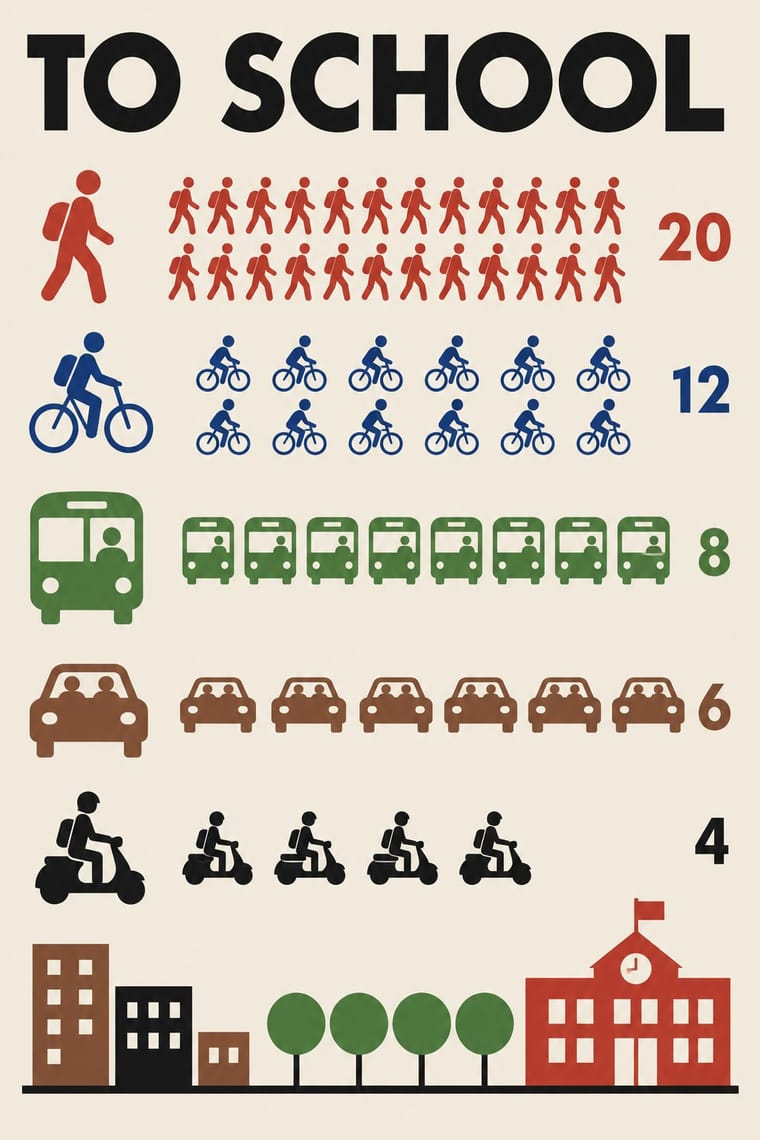
Choices that tell Sketchnoting and Graphic Recording and Data Humanism apart Choice Sketchnoting and Graphic Recording Data Humanism Limited spot colours defining — Repetition & rhythm — defining Pictogram defining occasional Modular grid avoids occasional Icons & pictograms defining occasional No shared descent in the atlas: they reached these choices separately.
-
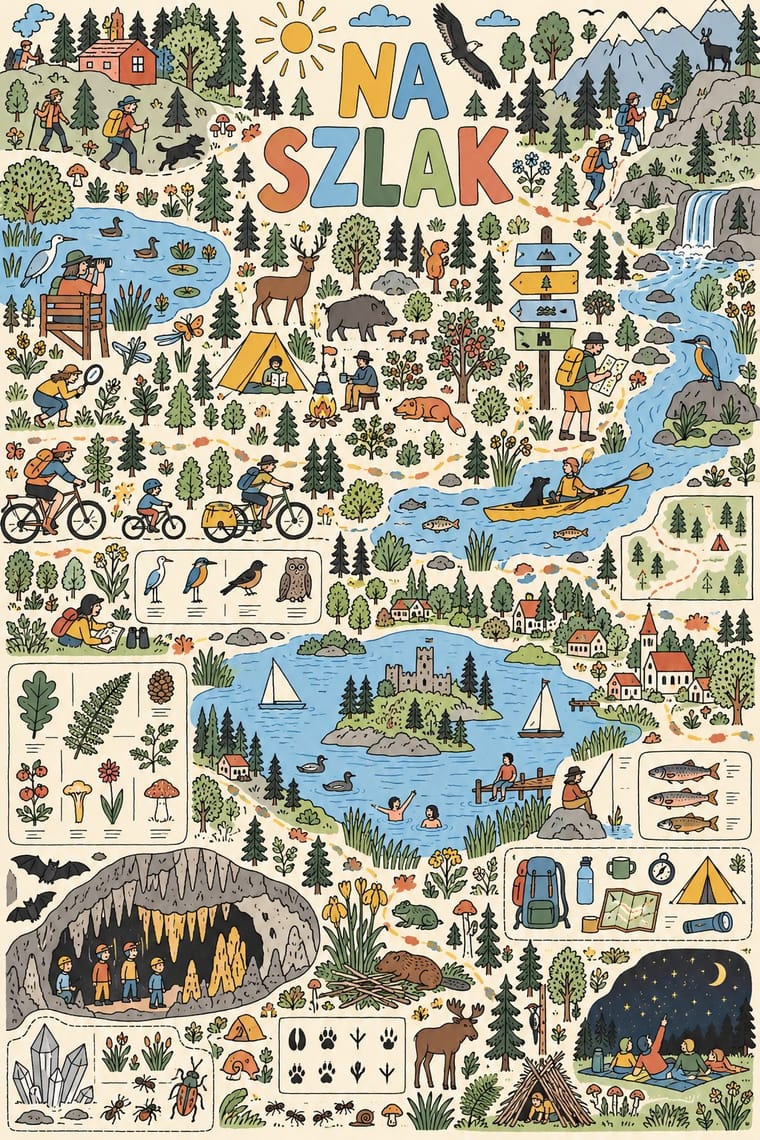
Polish Information Picture Book (Dwie Siostry)
Polish Information Picture Book is one of Sketchnoting and Graphic Recording’s nearest styles by choices; no real work of either fits the other better.
Choices that tell Sketchnoting and Graphic Recording and Polish Information Picture Book apart Choice Sketchnoting and Graphic Recording Polish Information Picture Book Limited spot colours defining occasional All-over field — defining Organic flow defining occasional Flat — defining Geometric primitives characteristic — No shared descent in the atlas: they reached these choices separately.
-
Moomin Graphics (Tove Jansson's Pen-Drawn World and its Licensed Afterlife)
Moomin Graphics is one of Sketchnoting and Graphic Recording’s nearest styles by choices; no real work of either fits the other better.
Choices that tell Sketchnoting and Graphic Recording and Moomin Graphics apart Choice Sketchnoting and Graphic Recording Moomin Graphics Pictogram defining — Rounded & pill — defining Icons & pictograms defining — Comic & cartoon — defining Organic flow defining occasional No shared descent in the atlas: they reached these choices separately.
-
Russian Futurist Book
Russian Futurist Book is one of Sketchnoting and Graphic Recording’s nearest styles by choices; no real work of either fits the other better.
Choices that tell Sketchnoting and Graphic Recording and Russian Futurist Book apart Choice Sketchnoting and Graphic Recording Russian Futurist Book Pictogram defining — Monochrome occasional defining Icons & pictograms defining — Paper & letterpress bite occasional defining Geometric primitives characteristic — No shared descent in the atlas: they reached these choices separately.
— means the choice isn’t among the style’s recorded choices. Critics recorded each work’s choices with the styles’ descriptions in view, so this shows whether the descriptions hold together, not proof that they are right.
06
Combine it with
Styles Sketchnoting and Graphic Recording pairs well with or plays against, from the research. Each is worked out as a combination: which style gives the type, the colours and the forms.
- Isotype Pictorial Statistics Contrasts · Standardised pictogram rows counting statistics against improvised personal icons; borrow its consistency to keep a sketchnote's icons readable.
- Modern Calligraphy and Brush Lettering Contrasts · Decorative lettering as the point versus lettering subordinated to structure and summary.
- Data Humanism Pairs well · Both keep the human hand visible in explanatory drawing; sketchnoting adds live speed and containers.
- Newsroom Data Graphics & Scrollytelling Contrasts · Drawn live from speech rather than constructed from data; the pairing makes a plain summary more personal.
07
Sources
- https://en.wikipedia.org/wiki/Sketchnoting
- https://en.wikipedia.org/wiki/Graphic_recording
- https://rohdesign.com/about
- https://rohdesign.com/sketchnotes
- https://en.wikipedia.org/wiki/Sunni_Brown
- David Sibbet, 'A Graphic Facilitation Retrospective' (2001), on the history of graphic facilitation
- Mike Rohde, The Sketchnote Handbook (Peachpit Press, 2012)
How Stylogeny researches and checks a style: where the facts come from.