Pictorial & machine age · 1879–1918 · Northern Europe
Nordic Fairy-Tale and Troll Illustration (Werenskiold, Kittelsen, Bauer)
Also known as Troll illustration, Scandinavian folk-tale illustration, Asbjørnsen and Moe illustration, Bland tomtar och troll illustration
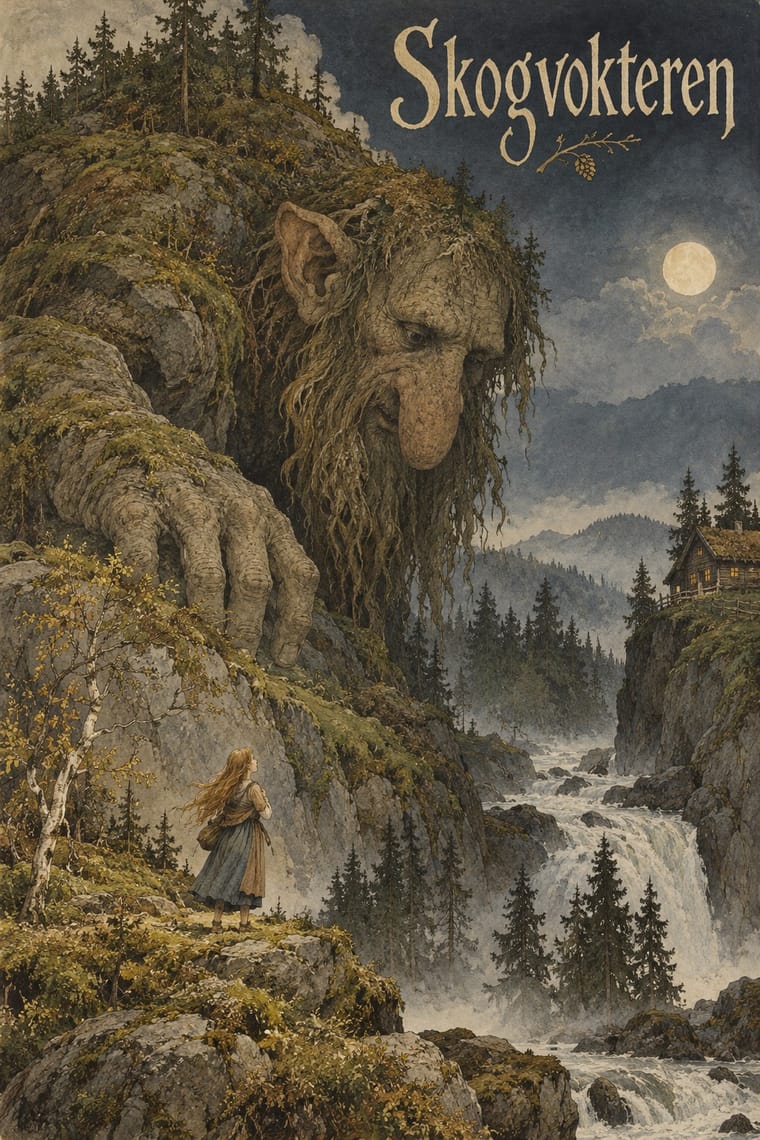
Norwegian and Swedish folk-tale illustration in which trolls, nøkken and huldra live in a real, observed northern landscape of forest, mountain, bog and farm. Werenskiold invented the forest troll type for Asbjørnsen and Moe in 1879, Kittelsen made it grow out of rock, root and water in hatched pen and wash, and Bauer, in muted watercolour plates for Bland tomtar och troll, set small, still princesses among towering firs and lumbering trolls.
Make something in this style Get advice in this style Mix it with another style
Use it with care
Bauer took bent knives, shoes, spears, pots and belts from his 1904 sketches of Sámi life and made them part of his trolls' clothes and ornament: do not dress trolls or other monsters in Sámi gáktis, duodji or tools, or cast the Sámi, a living Indigenous people, as fairy-tale creatures of the northern wilderness. Kittelsen's pictures have also been reused by Norwegian black metal, including on Filosofem by Varg Vikernes, a neo-Nazi, so keep this imagery away from ethnic-nationalist and 'pure North' framings.
01
How it works
- Place the creature in a landscape you have observed: real firs, moss, rock, bog and timber farmhouses, drawn with a naturalist's eye, so the uncanny reads as part of nature.
- Let the troll grow out of the land: give it the bulk and texture of boulders, roots and stumps, and exaggerate nose, ears and size while keeping the light and shadow believable.
- Set a small human figure, a boy, a princess or a peasant, against something enormous, a troll, a tree trunk, a mountain, to make scale the drama.
- Model form in tone, not flat colour: dense pen hatching and wash for the black-and-white book page, transparent watercolour and gouache glazes in moss, bark, ochre and dusk blue for the colour plate.
- Keep the picture itself quiet: a scene with a one-line caption, or a text block with vignettes, and no ornamental border or patterned ground competing with it; gilt borders and ornamented lettering belong to the bindings and title pages.
Kristiania (Oslo), Copenhagen and Stockholm: Erik Werenskiold's drawings for Asbjørnsen and Moe's Norske folke- og huldreeventyr i utvalg (Christmas 1879) and, with Theodor Kittelsen, whom Asbjørnsen hired on Werenskiold's recommendation (first drawings summer 1882), for Eventyrbog for Børn (3 vols, Copenhagen, 1883–87); Kittelsen's own Troldskab (Kristiania: Aschehoug, 1892) and Svartedauen (1900); and John Bauer's watercolour plates for the Swedish annual Bland tomtar och troll (Åhlén & Åkerlund, 1907–10 and 1912–15). It is the pictorial branch that the atlas entry nordic-national-romanticism leaves out. Bauer drew on German Jugend-era illustrators such as Fritz Erler and Max Klinger, with Pre-Raphaelite elements in his paintings, and borrowed motifs from Kittelsen and Werenskiold; both Norwegians had trained in Munich, where Werenskiold turned to French plein-air painting in 1879.
02
Its design choices
From Stylogeny’s vocabulary of design choices: defining choices make the style, characteristic ones are usual, occasional ones turn up now and then.
- Layout & composition
- Space & hierarchy
- Colour
- Form & shape
- Surface & texture
- Medium & production
- Tone & intent
- Avoids
- Flat fields, Flat, Stylised figuration, Abundant decoration, Full polychrome, Geometric primitives, Modular grid, Straight photography, Grotesque & neo-grotesque
Palette
-
#e9e0c9 -
#1f1e1a -
#4b5a3a -
#6b5238 -
#c4a04e -
#50606e
Typefaces
-
Fraktur text and caption type in the Copenhagen Eventyrbog for Børn (1883–87), e.g. the caption '„Hutetu!" sagde Troldet. Tegning af E. Werenskiold.' under a full-page drawing in vol. 2 (1884)
-
Ornamented fantasy display lettering in red on a gilt panel, with nisser (gnomes), a cat and a porridge pot above it, on the publisher's binding of Eventyrbog for Børn vol. 1 (1883), drawn by Gotfred Albert Hartvig and engraved by J. C. S. Danielsen
-
Kittelsen's pen-drawn title pages for his own books, as in his draft title page 'Den sorte død' for Svartedauen
pen on paper, 1894–96, Nasjonalmuseet NMK.2020.0576
Known for
-
Erik Werenskiold, drawings for Asbjørnsen and Moe, Norske folke- og huldreeventyr i utvalg (Christmas 1879)
nearly a quarter of its 100 illustrations, in which he invented a new forest troll type that Kittelsen took up
-
Erik Werenskiold, '"Huttetu! her lukter så kristen manns blod," sa trollet', illustration for 'Soria Moria Slot', Eventyrbog for Børn II (Copenhagen, 1884), Nasjonalmuseet NG.K&H.B.05123
-
Asbjørnsen, Eventyrbog for Børn (3 vols, Copenhagen, 1883–87), illustrated by Werenskiold and Kittelsen, with gilt publisher's bindings drawn by Gotfred Albert Hartvig
-
Theodor Kittelsen, Troldskab (Kristiania: Aschehoug, 1892), his own text and pen drawings, among them 'Paa veien til gilde i Troldslottet' (pen over pencil, before 1892, Nasjonalmuseet NG.K&H.B.06915) and 'En jutulkamp' (pen and brush, 1888, NG.K&H.B.08259)
-
Theodor Kittelsen, Svartedauen (1900), begun 1894, with Pesta as a grey old woman going from farm to farm, drawn in pen, brush, pencil and black chalk; e.g. 'Hun farer landet rundt' (pen, brush, wash and pencil, 1900, Nasjonalmuseet NMK.2011.0193)
-
Theodor Kittelsen, illustrations for Asbjørnsen and Moe's Illustrerede eventyr (1907) and Nye Barne-Eventyr (1910), in a combination of pen, wash and pencil
-
John Bauer, plates for Bland tomtar och troll (Åhlén & Åkerlund, 1907–10 and 1912–15), printed in black and yellow until 1910 and in black, yellow and blue from 1912
-
John Bauer, Broder S:t Martin och de tre trollen (watercolour, signed 1913), for Emil Eliason's 'Broder Martin' in Bland tomtar och troll vol. 7, Nationalmuseum, Stockholm, NMB 364
03
Make something in this style
Say what you need, and Stylogeny’s image studio draws it from Nordic Fairy-Tale and Troll Illustration (Werenskiold, Kittelsen, Bauer)’s design choices and checks it against them. It takes about a minute, and you get a link to share.
04
Where it comes from, and what it’s close to
Before it
The style it grew out of, and the styles it borrowed from.
After it
The styles that grew out of it.
No later style in the atlas grew out of it yet.
Alike in its design choices
Styles that make many of the same choices, related or not, besides those above.
-
-
-
-
-
-
05
Often taken for
Nordic Fairy-Tale and Troll Illustration has no real works recorded yet, so these are its nearest styles by its choices alone, with the choices that tell them apart.
-
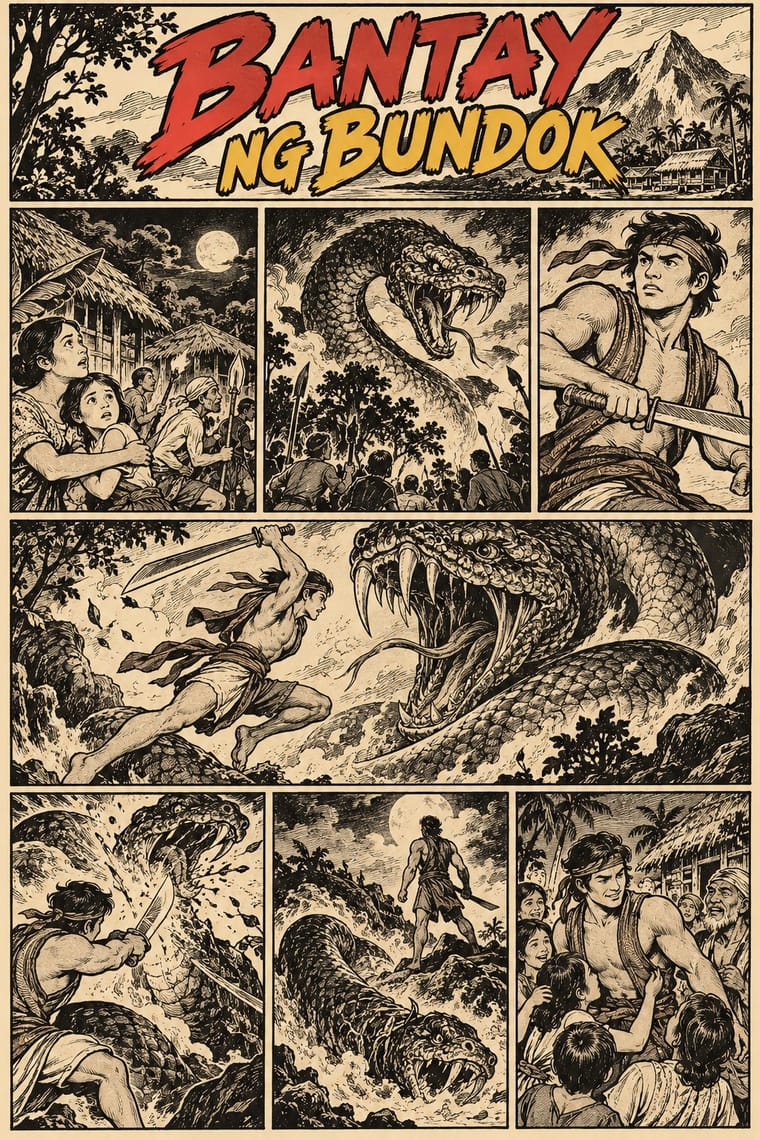
Filipino Komiks
Filipino Komiks is one of Nordic Fairy-Tale and Troll Illustration’s nearest styles by choices; no real work of either fits the other better.
Choices that tell Nordic Fairy-Tale and Troll Illustration and Filipino Komiks apart Choice Nordic Fairy-Tale and Troll Illustration Filipino Komiks Earth & mineral defining — Comic & cartoon — defining Distortion & exaggeration defining occasional Horror vacui — defining Painterly illustration defining occasional No shared descent in the atlas: they reached these choices separately.
-
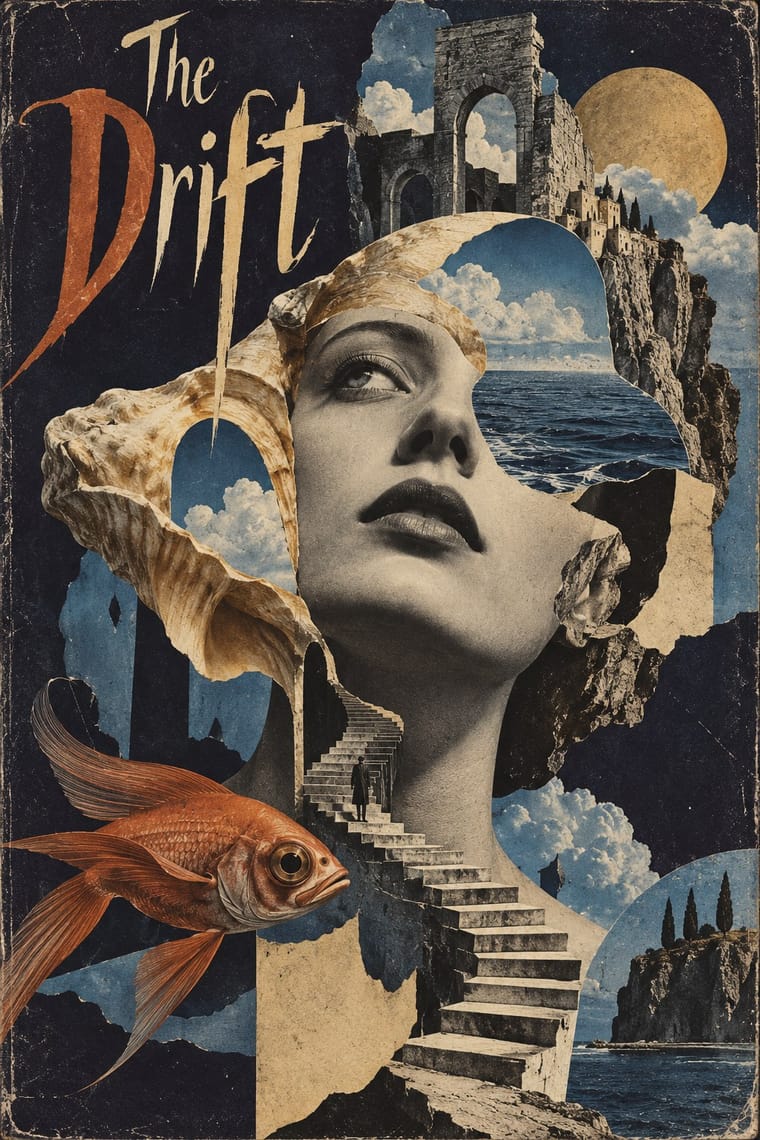
Surrealist Graphics
Surrealist Graphics is one of Nordic Fairy-Tale and Troll Illustration’s nearest styles by choices; no real work of either fits the other better.
Choices that tell Nordic Fairy-Tale and Troll Illustration and Surrealist Graphics apart Choice Nordic Fairy-Tale and Troll Illustration Surrealist Graphics Extreme scale contrast defining — Collage & layering — defining Earth & mineral defining occasional Gradients — characteristic Line illustration defining occasional No shared descent in the atlas: they reached these choices separately.
-
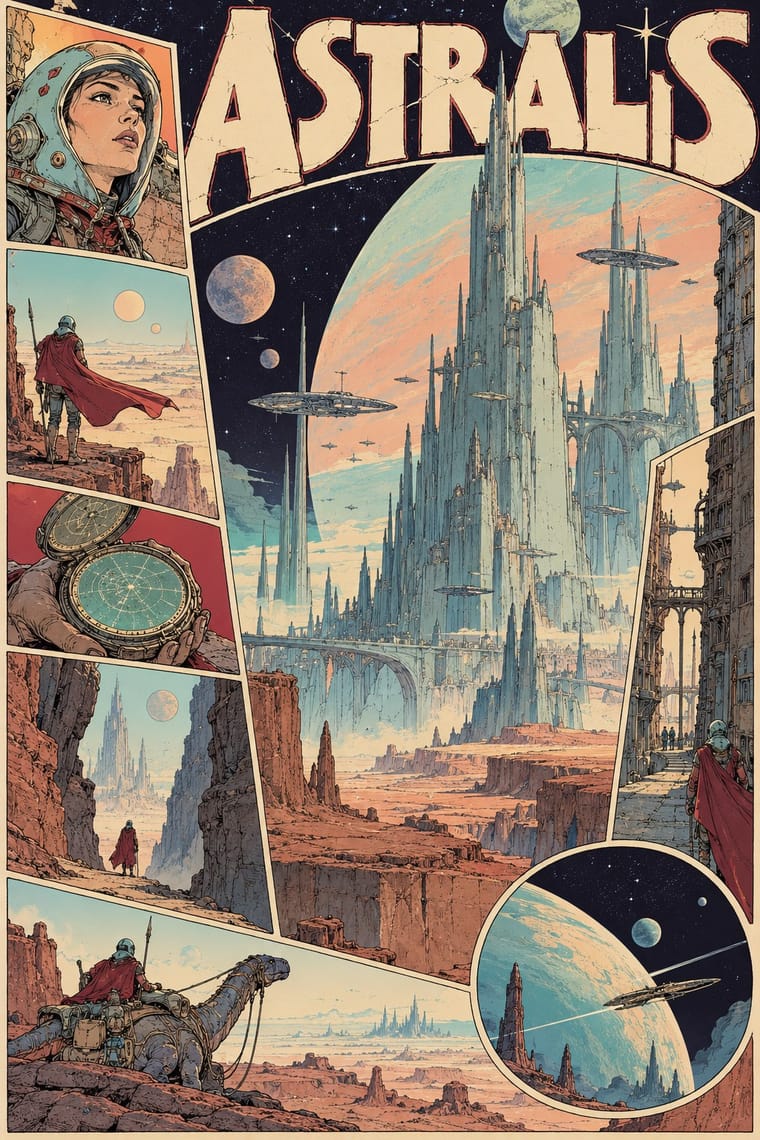
Métal hurlant Science-Fiction Comics (Mœbius, Druillet & Les Humanoïdes Associés)
Métal hurlant Science-Fiction Comics is one of Nordic Fairy-Tale and Troll Illustration’s nearest styles by choices; no real work of either fits the other better.
Choices that tell Nordic Fairy-Tale and Troll Illustration and Métal hurlant Science-Fiction Comics apart Choice Nordic Fairy-Tale and Troll Illustration Métal hurlant Science-Fiction Comics Earth & mineral defining occasional Full polychrome avoids characteristic Analogous harmony characteristic — Stylised figuration avoids characteristic Light ground characteristic — No shared descent in the atlas: they reached these choices separately.
-
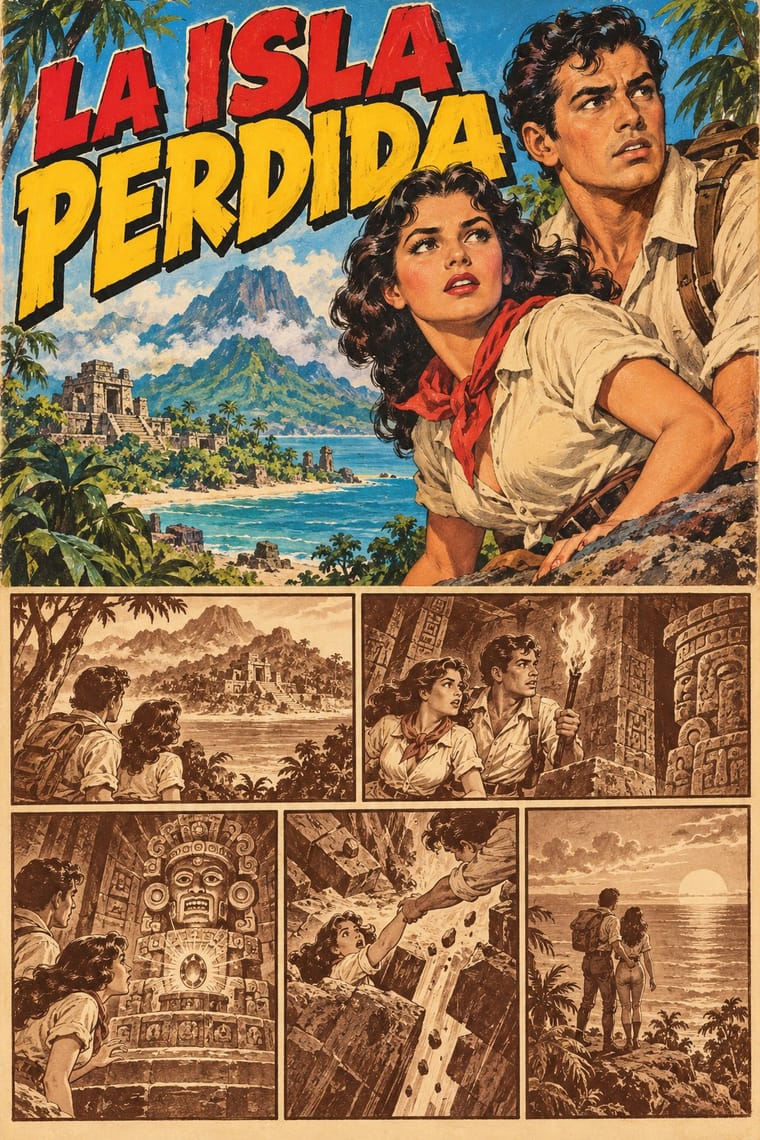
Mexican Historieta (Pepines to Sensacionales)
Mexican Historieta is one of Nordic Fairy-Tale and Troll Illustration’s nearest styles by choices; no real work of either fits the other better.
Choices that tell Nordic Fairy-Tale and Troll Illustration and Mexican Historieta apart Choice Nordic Fairy-Tale and Troll Illustration Mexican Historieta Extreme scale contrast defining — Full polychrome avoids characteristic Analogous harmony characteristic — Modular grid avoids characteristic Dark ground characteristic — No shared descent in the atlas: they reached these choices separately.
— means the choice isn’t among the style’s recorded choices. Critics recorded each work’s choices with the styles’ descriptions in view, so this shows whether the descriptions hold together, not proof that they are right.
06
Combine it with
Styles Nordic Fairy-Tale and Troll Illustration (Werenskiold, Kittelsen, Bauer) pairs well with or plays against, from the research. Each is worked out as a combination: which style gives the type, the colours and the forms.
- Black Metal Graphics Contrasts · Burzum's Filosofem (1996) put Kittelsen's 'Op under Fjeldet toner en Lur' on its cover; mind the caution before borrowing that framing, and keep the folk-tale humour and tenderness the sleeves leave out.
- Finnish Bold Print (Marimekko Modernism) Contrasts · Nordic flat, abstract repeat printing of the 1950s against this tonal, figurative forest; set a single troll silhouette into a bold flat field to bridge them.
- Norwegian and Finnish National Romantic Graphics (Munthe & Karelianism) Contrasts · The same decades and some of the same artists (Werenskiold led the illustrators of the 1899 Kongesagaer), but flat, frontal and ornamental where this is deep, tonal and atmospheric; frame one deep troll forest with a Munthe-style flat border to show the two branches side by side.
- Mir iskusstva Book Art Pairs well · Bilibin's Russian fairy tales are its eastern neighbour; take Bilibin's framed page and lettering and fill it with a Bauer-like deep forest for a northern storybook, keeping Norse and Russian sources distinct.
- Victorian Colour Toy Books (Evans, Crane, Caldecott and Greenaway) Contrasts · Both are children's picture books of the same era, but the toy book's bright flat key-block colour and nursery cheer stand against this dusky, modelled and uncanny northern mood.
07
Sources
- Norsk biografisk leksikon, 'Erik Werenskiold': https://nbl.snl.no/Erik_Werenskiold
- Norsk biografisk leksikon, 'Theodor Kittelsen': https://nbl.snl.no/Theodor_Kittelsen
- Store norske leksikon, 'Theodor Kittelsen' (Katrine Kalleklev): https://snl.no/Theodor_Kittelsen
- https://en.wikipedia.org/wiki/Erik_Werenskiold
- https://en.wikipedia.org/wiki/Theodor_Kittelsen
- https://en.wikipedia.org/wiki/John_Bauer_(illustrator)
- https://en.wikipedia.org/wiki/Among_Gnomes_and_Trolls
- Nasjonalmuseet, Kittelsen, illustration for Troldskab: https://www.nasjonalmuseet.no/en/collection/object/NG.K_H.B.06915
- Nasjonalmuseet, Kittelsen, En jutulkamp (1888): https://www.nasjonalmuseet.no/en/collection/object/NG.K_H.B.08259
- Nasjonalmuseet, Kittelsen, illustration for Svartedauen (1900): https://www.nasjonalmuseet.no/en/collection/object/NMK.2011.0193
- Nasjonalmuseet, Kittelsen, draft title page for Svartedauen: https://www.nasjonalmuseet.no/en/collection/object/NMK.2020.0576
- Nasjonalmuseet, Werenskiold, illustration for Soria Moria Slot (1884), NG.K&H.B.05123, via Wikimedia Commons: https://commons.wikimedia.org/wiki/File:Erik_Werenskiold_-_Ugh!_Ugh!_Here_I_smell_the_Blood_of_a_Christian_Man!_roared_the_Troll_-_NG.K%26H.B.05123_-_National_Museum_of_Art,_Architecture_and_Design.jpg
- Nationalmuseum Stockholm, John Bauer, Broder S:t Martin och de tre trollen (NMB 364): https://collection.nationalmuseum.se/en/collection/item/24306/
- Malmö konstmuseum, John Bauer, Princess Tuvstarr (MM 006811), via Wikimedia Commons: https://commons.wikimedia.org/wiki/File:John_Bauer_-_Princess_Tuvstarr_gazing_down_into_the_dark_waters_of_the_forest_tarn._-_Google_Art_Project.jpg
- Eventyrbog for Børn vol. 2 (1884), page scan with fraktur caption: https://commons.wikimedia.org/wiki/File:Eventyrbog_for_B%C3%B8rn2(1884)-p025-trold.png
- Eventyrbog for Børn vol. 1 (1883), publisher's binding by G. A. Hartvig: https://commons.wikimedia.org/wiki/File:Lysegr%C3%B8nt_bind_til_Eventyrbog_for_B%C3%B8rn_1.jpg
- https://en.wikipedia.org/wiki/Filosofem


How Stylogeny researches and checks a style: where the facts come from.